
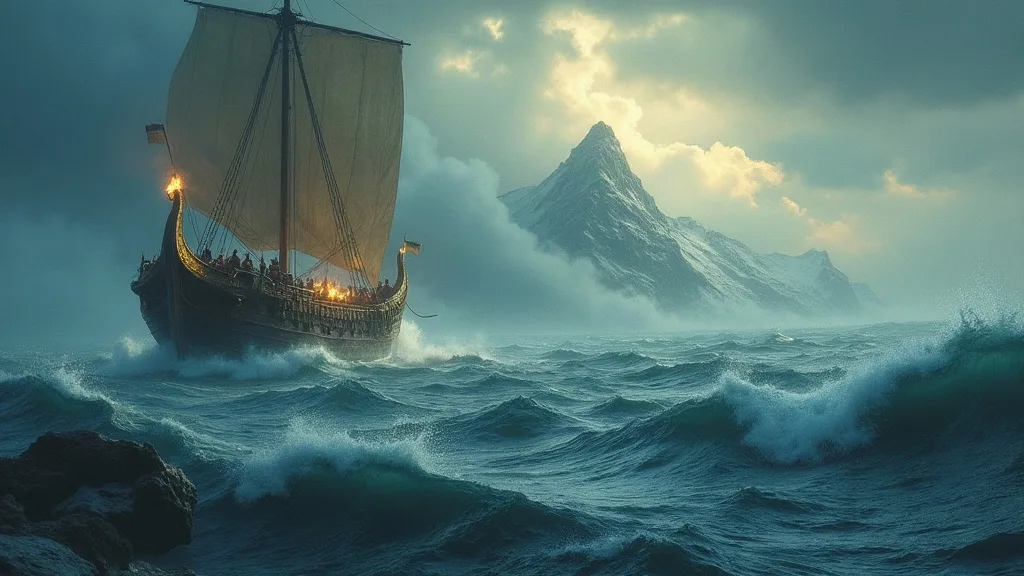
Norse Mythology in Vikings: How the TV Series Rewrote Legend
The Vikings TV series transformed Norse mythology into a global phenomenon, but how much did it keep from the actual sagas? Discover what the show changed, what it got right, and why the Eddas tell a stranger story than Hollywood ever filmed.
Contents
Between 2013 and 2020, a television show set fire to global interest in Norse mythology in Vikings. Millions watched Ragnar Lothbrok raid England, Lagertha command a battle fleet, and Ivar the Boneless scheme toward destiny. The show was not documentary. It was visceral, violent, and unapologetically dramatic. Yet it also planted millions of viewers in front of the Poetic Edda, a collection of Old Norse poems that genuinely describes how the Aesir and Vanir lived, fell in love, quarreled, and faced the end of all things.
The tension is real. What Vikings preserved from the actual mythology is worth understanding. So is what it invented, compressed, or sacrificed to tell a tighter story. This is not a complaint: great television adapts, not transcribes. But if you've watched the show and wondered whether Ragnarok works the way Kacey Rohl's Sibyl describes it, or whether the Seer's prophecies echo the real sagas, the answer requires care.
The Poetic Edda and Prose Edda, written down in medieval Iceland around 1200 AD, preserve centuries of oral tradition about gods and giants, warriors and monsters, and the cosmic cycle that will end and renew the world. Vikings took these myths and refracted them through ten seasons of television. Some fragments shine through unchanged. Others were ground into powder and reassembled into new shapes.
Who Actually Was Ragnar Lothbrok, and Why Did Vikings Create Him?
The historical Ragnar Lothbrok, if he existed at all, is a ghost. No contemporary source mentions him. Saxo Grammaticus, a Danish historian writing in the 1180s, tells a story about a legendary Viking king who invaded England. The Norse sagas, particularly the Ragnarsaga Lothbroka and fragments in other texts, give wild accounts: he sailed in a ship made from a serpent's skin, he married a shieldmaiden, he fathered several famous sons including Ivar the Boneless.
But here is the crucial point: no one can prove this man ever lived. Modern historians debate whether Ragnar is a composite, a myth, or a kernel of history wrapped in centuries of exaggeration. The sagas place him in a foggy past, centuries before the actual Viking Age raids. He is more titan than king, a figure around whom legend crystallized.
Vikings chose to treat him as half-real. The show makes him a 9th-century warlord, born with a destiny. Michael Hirst, the series creator, drew from the sagas but added psychological depth and internal contradiction. The TV Ragnar is ambitious, shrewd, genuinely spiritual, and ultimately self-destructive. He hears the skalds (Norse poets) sing his deeds before they happen. He speaks of fate and the gods as though he touches them personally.
This invented intimacy with the divine is the show's signature move. In the actual sagas, gods and humans rarely meet. The Eddas describe the cosmos in three tiers: Asgard (where the Aesir live), Midgard (where humans and some giants dwell), and Niflheim and Muspelheim (the realms of ice and fire). The World Tree Yggdrasil connects all of them. Gods are distant, majestic, and bound by fate. Vikings makes them intimate. Characters prophesy. They have visions. They commune with the Seer, a deliberately invented figure who channels the Old Norse concept of seidhr, the practice of shamanic magic and prophecy.
The Seer is perhaps the show's most brilliant departure. He speaks in riddles and fragments, sometimes quoted almost directly from the Poetic Edda, but presented as a mortal conduit. In the source texts, prophecy comes from the völva, an Old Norse seer-woman who sits in trance and speaks cosmic truths. Where the völva of the sagas is a traveling woman of considerable social power, Vikings gives this tradition a gender-neutral oracle, burned and disfigured, mute and all-seeing. He represents the real idea: fate is knowable but twisted, and those who glimpse it often cannot escape it. For readers curious about how Norse seers compare to similar figures elsewhere, the parallels with the Greek Pythia are worth exploring: both traditions present the seer as a vessel for truths too large for any single mind to hold, speaking in fragments that only make sense after the fact.
What Did Vikings Get Right: Gods, Fate, and the Seer
When the show pivots to direct dialogue with the source material, it shines. Ragnarok, the apocalypse, is real Norse mythology. The Poetic Edda's poem Völuspá (The Prophecy of the Seer) describes it in precise, terrifying language: the sun will blacken, the earth sink into the sea, the stars vanish from the sky. Heimdall will blow the Gjallarhorn, a great horn, and all bonds will break. Fenrir, the giant wolf, will snap his chains. Jörmungandr, the world serpent, will thrash and cause waves that drown the land. Loki, bound in chains beneath the earth with serpent venom dripping onto his face, will break free. Surtr, the fire giant, will ride across Midgard and set it ablaze.
The Aesir will fall. Odin will be swallowed by Fenrir. Heimdall and Loki will kill each other. Thor will slay Jörmungandr but die from its poison. Yet after, new earth will rise from the sea. Green fields. A new sun. Odin's sons will survive. Two humans, Líf and Lifthrasir, will repopulate the world. This is a vision of apocalypse without permanent loss, destruction folded into renewal.
Vikings captures this cyclical fatalism. The show does not shy away from doom. Characters repeat that "death comes for everyone," that the gods have written their doom, that struggle is noble precisely because it is doomed. This is authentic to the Norse worldview. The Eddas never promise the heroes victory. They promise meaning in the face of inevitable loss. You fight because you are bound by honor, not because you will win.
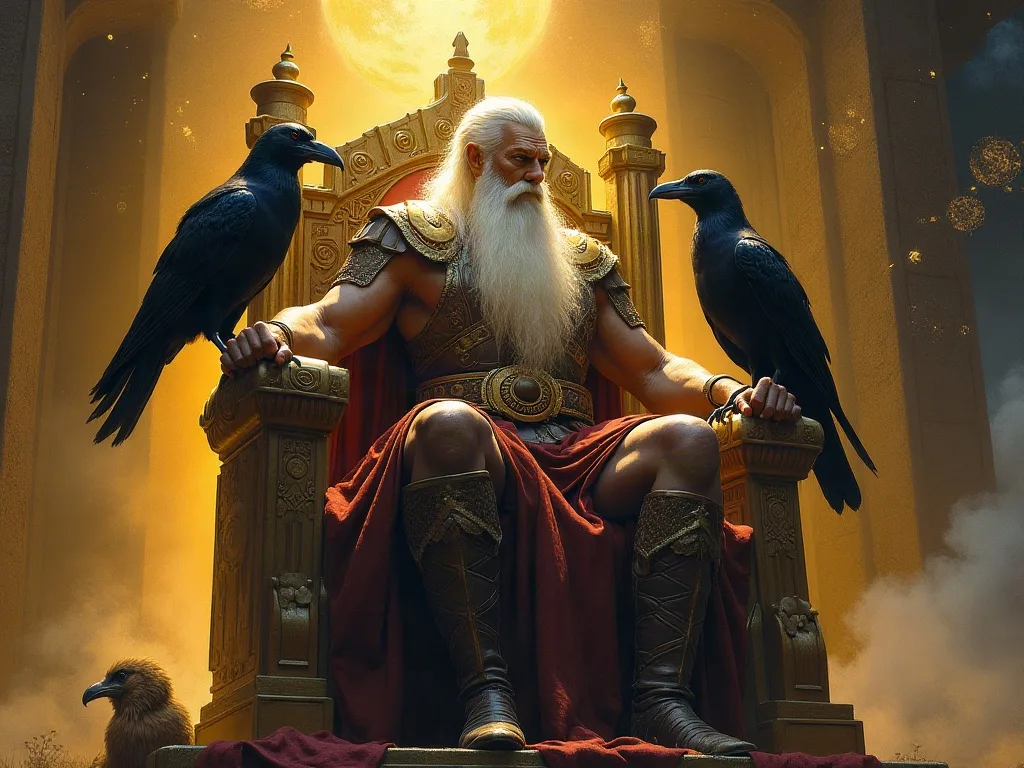
The show also gets the warrior culture correct. When Ragnar speaks of valhöll (the hall of the slain), or when characters seek death in battle to join the Aesir in feasting and fighting, this mirrors the genuine Viking belief. The actual Norse people, as far as archaeology and sagas suggest, honored those who died fighting. Valhalla is not a reward for cowardice or virtue: it is the hall of Odin, god of war and wisdom, and only those who die with a weapon in hand join him. Vikings presents this with respect. The show treats Valhalla as an earned destination, not a fantasy.
Similarly, the show's treatment of Loki as a fundamental force of chaos, neither good nor evil, is aligned with the sagas. Loki is a troublemaker and a necessary antagonist. He delivers insults that sting because they contain truths. He is bound at the end of the world precisely because he cannot be trusted to maintain order. In the TV series, when characters invoke Loki's cunning or when the Seer hints at Loki's hand in events, there is a real tradition beneath it.
The Inventions: Shieldmaidens, Ivar's Destiny, and Spiritual Authority
Yet Vikings also departs significantly from what we know. The historical evidence for female Viking warriors is contentious. Archaeological finds (a 2018 study of a Swedish burial suggests a woman warrior) and some saga references point to exceptional shieldmaidens, but they were rare, not common. Vikings makes them central. Lagertha, Torvi, Astrid: the show's strongest fighters are women. This is a creative choice, not a retrieval of lost history.
The sagas do mention Lagertha as Ragnar's first wife and a formidable warrior. But the Vikings version transforms her into a political leader, a jarl (chief) commanding a settlement, navigating alliance and betrayal. The saga gives her a few sentences. The show gives her a decade of character arcs. This is not wrong; it is adaptive storytelling. The core truth (she was powerful and fought) is preserved; the specifics are invented.
Ivar the Boneless is historically more documented than Ragnar. Ivar appears in the Anglo-Saxon Chronicle as a Viking leader who invaded England in 865 AD, notably in the "Great Heathen Army." The chronicle calls him formidable and cruel. He is mentioned in saga accounts as well, though his "bonelessness" is debated by scholars (some argue it describes a genetic condition like Ehlers-Danlos syndrome; others say it is metaphorical, meaning he was flexible and cunning in strategy).
Vikings takes this sliver of history and constructs a tragic figure: a man crippled, intelligent, driven by prophecy to rule, twisted by it toward tyranny and self-destruction. The show's Ivar claims to speak for the gods in a way the sagas never hint at. He declares himself the Son of Ragnar, the chosen instrument of fate. This is television amplifying historical fragments into operatic psychology. Again, not wrong, but a massive expansion.
The spiritual authority that several characters claim (Ivar as chosen, Ragnar as destined, the Seer as mouthpiece of the cosmos) is borrowed from Norse mythology but dramatized beyond recognition. The actual sagas do speak of prophecy and fate (wyrd), but they do not typically show gods delegating earthly power to chosen humans in the way Christian theology frames it. The show imports this pattern from Abrahamic narrative structures while dressing it in Norse vocabulary.
What the Show Simplified: The Pantheon and Cosmic Order
Vikings must contend with a problem inherent to television: pacing. The Poetic Edda describes a rich, weird cosmos. The Aesir are not omnipotent. They cannot see the future without magical aid. They squabble. They age. They will die. There are two families of gods: the Aesir (Odin, Thor, Frigg, Heimdall, Tyr) and the Vanir (Freyja, Freyr, Njord). In the sagas, these two divine families fought a war and then merged. The Vanir are associated with fertility, sexuality, and worldly abundance; the Aesir with war, wisdom, and sovereignty.
Vikings barely mentions the Vanir. Freyja appears once or twice. The show concentrates its theology on the Aesir, particularly Odin and Thor, because it is easier to weave a warrior culture around them. This is economical but flattens the actual mythology, which is more ambivalent about power and pleasure, violence and sexuality, war-joy and sensual satisfaction.
The show also simplifies the nature of fate. The Eddas describe three Norns, cosmic female beings who control fate and sit by the World Tree's base, watering it daily. Their names are Urd (that which has become), Verdandi (that which is becoming), and Skuld (that which should become). They are mysterious, neither friendly nor hostile to the gods. They simply govern the structure of existence itself. Vikings reduces this to a simpler message: fate is real, it is dark, and prophecy reveals it. The Seer carries the function of the Norns without the full cosmological weight.
This is not a flaw. Television cannot sustain ambiguity the way ancient poetry can. But it matters. The Eddas present fate as impersonal and all-encompassing; no god can truly escape it, but no god is enslaved by an external master either. Everyone is bound by the same cosmic law. Vikings tends toward a more dramatic, personalized version: characters are hunted by prophecy as though pursued by an enemy.
How Vikings Changed What "Norse" Means Globally
The show's impact on how the world understands Norse mythology in Vikings cannot be overstated. Before 2013, most English-speaking audiences encountered Norse mythology through Marvel films (Thor) or academic texts. Vikings brought the sagas into living rooms with visceral storytelling, complex characters, and genuine engagement with source material.
This had consequences. A generation now pictures the Aesir through Vikings' lens. When someone hears "Ragnarok," they may recall the show's prophetic scenes before they encounter Völuspá itself. This is how mythology lives: it is reinterpreted in each generation. The show did not desecrate the sagas; it translated them into a language its audience could feel.
Importantly, Vikings also placed women at the center of Norse stories in a way the sagas themselves, recorded by medieval Christian scribes, largely did not. The role of shieldmaidens, völvas (seers), and female leaders is understated in the written texts but likely more prominent in lived Viking culture. The show corrected a bias in our sources. This is not invention; it is recovery through creative interpretation.
The series also popularized the idea of Norse spirituality as a living, breathing religion with real believers and real stakes. The show does not treat the old gods as quaint archaeology. Characters pray to them, fear them, seek their favor. This mirrors what scholars understand about actual Viking-Age religion: it was active, everyday, and urgent. When a farmer made a sacrifice or a warrior sought a völva's guidance, these were not nostalgic gestures but survival strategies in a world understood as populated by divine forces.
Prophecy, Runes, and the Seer's Language
One of Vikings' most effective inventions is the Seer's riddling speech. The character speaks in fragments, mixing Old Norse concepts (runes, fate, Ragnarok, visions of blood and flame) with mysterious personal utterances. The Seer's prophecies are sometimes nearly direct quotes from the Eddas, woven into cryptic monologues that characters must interpret.
This works because it mirrors an actual Old Norse practice. The völvas (seer-women) were believed to enter altered states and speak prophecy that required interpretation. The Poetic Edda's Völuspá is itself structured as a prophecy delivered by a völva, a seer-woman called forth by Odin. The poem describes how she sees backward to creation and forward to the end of the world, her vision encompassing all of time. She speaks in kennings and metaphors; the imagery is dense and sometimes opaque. Modern readers must puzzle through it.
Vikings captures this texture without attempting word-for-word fidelity. The Seer's language feels archaic and weighted with meaning. When he speaks of "the snake that breaks its bonds," or "the one-eyed god's remaining son," listeners (and viewers) understand these are cosmic hints, not casual remarks. This is true to the spirit of Old Norse prophecy: the future is knowable but hidden, revealed through symbols and paradox.
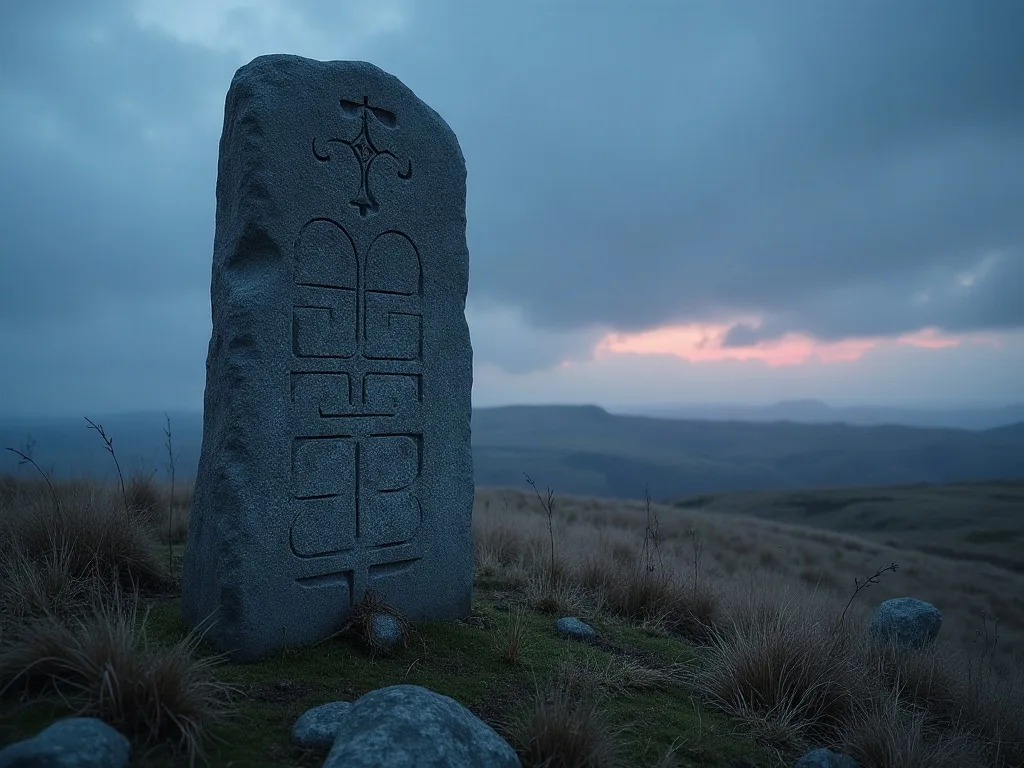
The show also engages with runes, another authentic Norse practice. Runes were carved symbols used for writing and divination. The sagas mention runic magic and diviners casting runes to see the future. Vikings includes scenes where characters mark runes on objects or read runes for meaning. This is historically plausible, though the show's specific depictions are speculative (we do not have surviving texts detailing exactly how Vikings used runes for divination).
The Ending: Did Vikings Understand Ragnarok?
The series finale does not show Ragnarok itself. Instead, it follows characters into old age, revealing that prophecies have been fulfilled in subtle, unexpected ways. Ivar dies in battle, connecting to his destiny but not to Ragnarok. Ragnar dies crucified in England, having shaped history despite (or because of) his doom. Lagertha fades, her power spent.
This is a knowing choice. Vikings refuses to film the literal apocalypse, which would require special effects to rival the end of Avengers: Endgame. Instead, it treats Ragnarok as a metaphor for the characters' personal fates and for the historical end of the Viking Age itself. When the Seer prophesies about darkness covering the earth, the show gradually interprets this as the spread of Christianity, which historically did displace Norse paganism across Scandinavia and beyond.
This is clever allegory but a departure from the actual mythology. In the Poetic Edda, Ragnarok is a cosmic event: the sun and moon are swallowed, the earth sinks, the stars vanish. New earth rises. It is not a metaphor for cultural decline; it is the literal end and renewal of existence. Vikings humanizes it by grounding it in the characters' lives and their struggle against Christian expansion.
Why the Show Works (and Why the Sagas Are Stranger)
Vikings succeeds because it treats its source material with respect while boldly adapting it. The show does not claim to be documentary. It commits to the emotional truth of the sagas: the idea that glory and doom are intertwined, that honor lies in how you face fate, that the gods are real whether or not they are forgiving, that the world is cyclical and change is constant.
The actual Eddas are stranger and more unsettling than anything the show depicted. The sagas are filled with moments of casual cruelty, absurd humor, and metaphysical strangeness. Odin sacrifices his eye for knowledge and hangs himself on Yggdrasil to learn magic. Loki tricks the blind god Höðr into killing the beautiful Baldur. Giants and gods bed each other and bear monstrous offspring. The worldview is tragic, funny, violent, and profoundly strange.
Vikings could not capture all this in network television. Instead, it selected fragments and made them cohere into a story. This is the work of all adaptation: choosing what to keep, what to sacrifice, what to reshape. The show chose to emphasize fate, duty, the beauty of doomed struggle, and the complexity of characters caught between ambition and destiny. These choices align with real themes in the source material, even if the specifics often diverge.
What Vikings Missed: The Stranger Theology
The sagas present a theology that is genuinely alien to modern readers, even more so than most ancient religions. The Aesir do not offer salvation. They do not promise reward for virtue or punishment for sin. Instead, they are bound by the same laws as everyone else. Odin, the chief god, accepts that he will die at Ragnarok. He knows this from prophecy (the Völva's vision). He does not seek to escape it. Instead, he prepares, gathers warriors, and pursues knowledge and power for its own sake, knowing the end is fixed.
This produces a worldview closer to Stoicism or tragic Greek drama than to Christianity or Islam. It is a philosophy of courage in the face of meaninglessness. The universe is not moral; it is simply real. Death is not a punishment but a transition. Fighting is valuable not because you will win but because struggle itself is the substance of life.
Vikings hints at this philosophy but does not fully embrace it. The show sometimes frames actions as though they can prevent or change fate, when the true Norse view holds that fate is fixed and your job is to meet it with grace. Characters scheme to escape prophecy, but in the Eddas, no one can truly escape their wyrd. The difference is subtle but crucial.
Here is where the source texts become especially important: we did not receive them unfiltered. Snorri Sturluson, the Icelandic historian and poet who compiled the Prose Edda around 1220 AD, was a Christian writing about a pagan tradition that had formally ended roughly two centuries earlier. He was brilliant and genuinely interested in preserving these stories, but he framed them through a Christian intellectual lens. Snorri sometimes rationalizes the myths, suggesting the Aesir were originally human kings from Troy who were later worshipped as gods, a technique known as euhemerism. He also quietly downplays elements that would have been most uncomfortable for his 13th-century audience, including the erotic dimensions of seidhr magic and the more sexually ambiguous aspects of Loki's shapeshifting. When Vikings depicts the Norse gods as straightforwardly heroic warrior-patrons rather than strange, morally ambiguous beings, it is, in part, inheriting Snorri's own softening. The show's theology is not just simpler than the Poetic Edda; it is simpler in ways that trace directly to how the Prose Edda was assembled under a Christian-filtered pen.
Similarly, the sagas are thick with dark humor and absurdity. Loki's insults (called flyting) are witty and cruel. The myths describe comically grotesque beings. Gods behave badly. The Prose Edda, written by Snorri Sturluson in the 13th century, is partly a serious mythology and partly a skeptical deflation of the myths, with Snorri sometimes winking at his audience. Vikings plays this mostly straight. The show is rarely funny intentionally (though it is sometimes unintentionally so).
Frequently asked questions about Norse mythology in Vikings
Frequently asked questions
Did the real Ragnar Lothbrok exist?
Almost certainly not, or at least not as a single historical person. The sagas describe a legendary Viking king, but no contemporary written source confirms he lived. Most historians treat Ragnar as a composite myth or a symbol of Viking ambition rather than a documented historical figure. If a man named Ragnar did exist, he was probably far less extraordinary than the sagas claim, and his deeds have been elaborated into legend over centuries.
Is Ragnarok really the end of the world in Norse mythology?
Yes. The Poetic Edda's Völuspá describes Ragnarok as an actual apocalypse: the sun and moon will be devoured, the earth will sink into the sea, and the stars will vanish. However, it is also a renewal. After destruction, new earth will rise from the waves, a new sun will be born, and two humans (Líf and Lifthrasir) will repopulate the world. It is cyclical, not a final ending. The Aesir themselves will mostly die (Odin will be eaten by Fenrir, Thor will slay Jörmungandr but die from its poison), but some gods will survive and rebuild.
Did Vikings sacrifice to gods the way the show depicts?
Yes, but we know surprisingly little detail about how. Norse peoples did perform sacrifices (blót), and archaeological evidence suggests animal sacrifice was common. The sagas mention human sacrifice in emergencies, but we cannot confirm how frequent this was or what rituals accompanied it. Vikings dramatizes what must have been more varied and less theatrical in reality. The spiritual intensity is authentic; the choreography is partly educated guesswork.
Is the Seer a real part of Norse mythology?
The Seer as a character is invented, but the role he plays (a völva or seer-woman who delivers prophecy in a trance state) is authentic. The Poetic Edda's Völuspá is itself delivered by a völva, a seer-woman called forth by Odin. These figures were believed to enter altered states and speak cosmic truths. The show created a specific, gender-neutral oracle who channels this tradition. The riddling prophecy style mirrors actual Old Norse poetic language.
How accurate is the show's treatment of runes and magic?
Runes were real carved symbols used for writing and (probably) divination. The sagas mention magical practices and runecraft, but we have few surviving texts that explain exactly how runes were used for magic or prophecy. Vikings depicts runecraft in plausible ways, but most specific rituals shown are speculative recreations based on fragmentary sources. The emotional truth (that runes held spiritual power) is correct; the details are partly invented.
Were there really female Viking warriors like Lagertha?
Possibly, but they were likely rare. A 2018 Swedish burial study suggests at least one woman was buried as a warrior. The sagas mention exceptional shieldmaidens, and some historical figures (like Freydís Eiríksdóttir) were clearly formidable leaders. Vikings makes female warriors central and common, which is a creative choice rather than historical accuracy. The show corrects a bias in the written record (which was filtered through medieval Christian scribes who may have downplayed women's roles), but it likely overstates how widespread female combat participation was.
The Show's Legacy: How Vikings Changed Modern Norse Paganism
Since Vikings premiered, there has been a measurable surge in interest in historical Norse religion, often called Heathenry or Asatru ("faith in the Aesir"). Some practitioners explicitly cite the show as their entry point. This has created a strange feedback loop: modern practitioners create rituals and theologies inspired partly by the sagas and partly by the show's interpretation of the sagas. Mythology is living; each generation remakes it.
On one hand, the show has introduced millions to genuine sources: the Poetic Edda, the Prose Edda, the sagas themselves. Many viewers have gone on to read the primary texts and deepen their understanding. The show has created a gateway.
On the other hand, some modern practitioners have used the Norse mythology framework to support white supremacist ideology. This is historically distorting: the Nazis perverted Norse mythology in the 1930s by lifting symbols like the Valknut and Odin's ravens out of context and forcing them into a racial hierarchy the sagas themselves never sanction. The Thule Society and later SS designers appropriated runic imagery, turning sacred symbols into badges of genocide. The actual sagas describe a world in constant contact with other peoples: Norse traders and raiders encountered Arabs, Byzantines, and West Africans. The Poetic Edda says nothing about ethnic purity. The gods' enemies are giants and monsters, not ethnic groups.
Vikings, to its significant credit, mostly steers around these traps. The show presents Norse culture as complex and multicultural: characters interact with Muslims, Christians, and people from across Europe and the Islamic world with curiosity and occasional respect rather than contempt. Several prominent Heathen organizations, including the Troth and Heathens United Against Racism, have cited the show's multicultural framing as a useful counterweight to white nationalist readings of the mythology. The show is not a perfect theological document, but its instinct to show the Norse world as wide, interconnected, and curious about difference is both historically defensible and politically important.
The real lesson from both the sagas and the show is this: Norse mythology in Vikings is about human beings trying to live with meaning in an indifferent cosmos. The gods are flawed. The universe is cyclical, not progressive. Courage matters not because it guarantees victory but because it is the right response to an uncertain world. These themes are genuinely radical and genuinely worth understanding. They do not require distortion to be powerful.
Vikings, for all its departures from the source material, honors this core insight. The show is not the sagas. But it is a worthy adaptation, a serious attempt to make ancient words speak to modern viewers. Anyone curious about where the show diverged from the actual mythology has a clear path: read the Poetic Edda, read the Prose Edda, read the sagas. You will find the stories are stranger, sadder, funnier, and more unsettling than any television version could capture. You will also understand why Vikings worked: it selected the truths that could survive adaptation and let them shine.
Free 25-page sample
Want the whole story?
Take the first 25 pages free. If it pulls you in, the full edition is yours as an instant PDF download, with a paperback on Amazon for selected titles.

Mythology
The World Mythology Book: The Gods, Heroes and Myths of Every Culture
The Gods, Heroes and Myths of Every Culture, in One Volume
The whole of world mythology in a single volume: Greek, Norse, Egyptian, Japanese, Hindu, Celtic, Slavic, Mesoamerican and African myths gathered side by side, each drawn from the primary sources.