
Abosom: The Lesser Gods and Spirits of Akan Mythology
The Abosom are the divine intermediaries of Akan religion, each one a living force drawn from rivers, forests, and sky. Meet the spirits who stand between humanity and the supreme god Nyame.
Contents
The river stirs before dawn. A priest kneels at the bank, pours libation into the current, and speaks a name. He is not praying to the water. He is calling on what lives inside it, a force older than the village, older than the trees along the bank. He is calling an Obosom.
Abosom: The Lesser Gods and Spirits are the heart of living Akan religious practice. They are not minor footnotes below a supreme god. They are the points of contact between the infinite and the everyday, the divine voices that answer when human need is urgent and the distance to Nyame, the supreme sky god, feels impossibly vast. To understand them is to understand how the Akan people of West Africa, centered in present-day Ghana and parts of Côte d'Ivoire and Togo, have thought about power, protection, and the sacred for centuries.
There are dozens of them, perhaps hundreds. Rivers carry their own. Mountains hold theirs. Some cross ethnic boundaries and are honored from Kumasi to the coast. They speak through priests, manifest in shrines, and occasionally choose a person to carry their presence into the world. The singular form is Obosom; the plural, Abosom. Both come from the Twi language, one of the main languages spoken by Akan peoples.
Nyame and the Cosmic Architecture the Abosom Inhabit
To place the Abosom correctly, you need to see the full structure of Akan cosmology. It begins with Nyame, whose name in Twi carries meanings including "he who gives and is sufficient." Nyame created everything. He is sky, sun, rain, and the moral order behind them all. But Nyame is also transcendent, so far above daily human affairs that Akan thought developed a rich middle layer of divine beings to bridge the gap.
That middle layer is the Abosom.
Scholars of Akan religion, including the Ghanaian philosopher Kwame Gyekye and the theologian J. B. Danquah, who published his landmark study "The Akan Doctrine of God" in 1944, describe the Abosom as children of Nyame, formed from his power and dispatched into the material world. Danquah uses the phrase "the rivers and streams that flow from the great sea" to capture this relationship. Nyame is the ocean. The Abosom are the rivers that reach the land.
Below the Abosom sits another category: the Asuman (singular: Suman), which are smaller, human-made spiritual objects and charms charged with protective or harmful power. Below them are the Mmoatia, small supernatural forest beings comparable to fairies or trickster-sprites. And then there are the Sasa, spirits of the recently dead that can attach to objects. The Abosom stand well above all of these, closer to Nyame in nature and authority.
Where the Abosom Come From: Rivers, Mountains, and the Sea
Most Abosom arrive in the world through nature. A specific river, a particular mountain, a lagoon, a large tree, or even a violent storm can be the dwelling-place or the manifestation of an Obosom. This is not simple animism, the belief that every stone has a spirit. Akan thought is more precise than that. Not every river holds an Obosom; the ones that do have made themselves known, usually through dramatic events or through a person who begins to exhibit signs of divine possession.
Tano, one of the most powerful and widely honored of all the Abosom, lives in the Tano River that flows through central Ghana. According to oral tradition recorded by early twentieth-century scholars and by the Ghanaian ethnographer R. S. Rattray in his 1923 work "Ashanti," Tano is a son of Nyame who chose to inhabit the river rather than remain in the sky. He is associated with warfare, protection, and royal power. The Asante kingdom had a particularly close relationship with Tano; the god's priest traveled with armies and his shrine received offerings before major campaigns.
Bia, another river Obosom, flows south toward the sea. In some traditions Tano and Bia are brothers, sons of Nyame who raced each other across the land. Tano took the richer, more northerly route; Bia was left with the less fertile southern course. This myth, preserved in various oral forms, explains geographic and cultural differences between Akan groups living in different river valleys, attaching theology directly to landscape.
Bosomtwe, a crater lake near Kumasi, holds its own powerful Obosom. The lake is considered sacred because the souls of the recently dead are believed to visit it before beginning their journey to the afterlife. The Obosom of Bosomtwe is therefore linked not only to water but to death, transition, and the care of ancestors. Fishing in the lake was historically restricted by ritual law, and certain materials like metal hooks were forbidden, a rule that served both spiritual and ecological purposes.
The sea itself, called Bosompow or Bosompo, carries divine status. Coastal Akan groups, including the Fante people, have strong relationships with the sea deity. Fishermen seek the sea Obosom's protection before voyages, offering food and prayers at the shore.
How the Abosom Communicate: Priests, Shrines, and Possession
An Abosom does not speak to everyone. It chooses intermediaries, usually a priest or priestess called an Okomfo (plural: Akomfo). The Okomfo is not a simple ritual specialist who performs fixed ceremonies. He or she is a person the Obosom has claimed, often involuntarily, through an experience of sudden illness, strange visions, or behavior that the community reads as divine seizure.
The training of an Okomfo takes years. It involves learning the specific songs, drumming patterns, and ritual protocols that belong to that particular Obosom. During ceremonies, the Okomfo enters a state of possession in which the deity is said to speak directly through the priest's body. The deity may diagnose illness, give warnings about community threats, settle disputes, or demand specific offerings. Eyewitness accounts from Rattray's fieldwork describe Okomfo falling into trance states, speaking in voices different from their normal register, and performing physical feats that observers considered beyond normal human capacity.
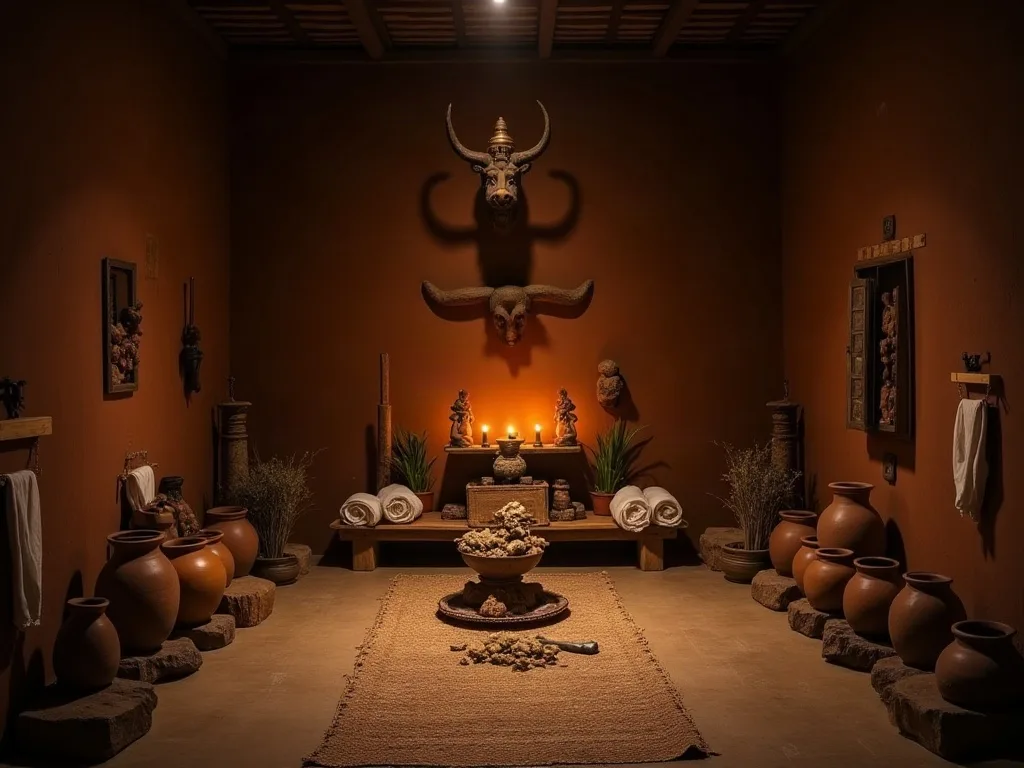
The shrine of an Obosom, called a Nkonwa or more commonly described through the specific objects within it, is not a building in the Western sense. It is often a collection of charged objects: pots, carved figures, animal horns, cloth, and natural items that belong to the deity's domain. The shrine is the deity's earthly home, the point where worshippers can approach without needing a full possession ceremony.
Major Abosom and Their Domains
While hundreds of local Abosom exist across Akan lands, a core group has gathered wide recognition across different Akan-speaking groups. Each has a specific character, a domain, and a body of associated stories.
Tano stands among the most powerful. As noted above, he is a river deity, a guardian of chiefs, and a patron of warriors. His shrines traditionally held symbolic weapons. He required regular offerings of food, particularly eggs and certain meats, along with libations of palm wine or schnapps, the latter a European trade good absorbed into ritual practice over centuries.
Asase Yaa, sometimes classified alongside the Abosom though her nature is debated, is the earth goddess. Her name means "Thursday's Earth," as Thursday is considered her sacred day. Farmers observe her day by resting from agricultural work, a practice that persists in many rural Ghanaian communities. She is called the wife of Nyame by some oral traditions, which would make the earth and the sky the founding couple of existence. Because she receives the dead into her body, she is also a deity of death and fertility simultaneously.
Nyankopon is sometimes treated as an alternate name or aspect of Nyame rather than a separate Obosom, but local traditions in parts of Akan territory honor Nyankopon as a distinct sky deity with his own ritual requirements. The name appears frequently in historical records and in the names of Ghanaian people, pointing to centuries of active devotion.
Anansi, the famous spider figure, occupies a special position in Akan tradition. Anansi is not precisely an Obosom in the classical sense, but he belongs to the category of supernatural forces that interact with both the divine and human worlds. As a trickster and the owner of all stories, he sits in the space between wisdom and mischief. His tales spread across the Atlantic through the slave trade, becoming the Anansi stories of Jamaica, Suriname, and the American South. To read about Anansi the Spider God is to follow one of the most remarkable journeys a mythological figure has ever made.
Abena Budu is an Obosom associated with women's concerns, particularly fertility and childbirth. Her devotees were often women who had suffered miscarriage or struggled to conceive. Her shrines received offerings tied to birth: cloth, specific foods, beads. Her existence points to a quality of the Abosom system that is easy to overlook: it was granular enough to address the specific, intimate crises of individual lives, not only the large-scale concerns of kings and armies.
Abosom and Ancestors: Two Kinds of Sacred Power
Akan religious thought maintains a careful distinction between the Abosom and the ancestors, who are called Nananom Nsamanfo (roughly: "the ancestral spirits"). Both categories carry spiritual authority. Both receive offerings and prayers. But they operate differently.
The ancestors are human dead, specifically people who lived good, morally complete lives and completed their full biological cycle. They remain connected to the living family and can intervene in family affairs, bless the living with prosperity, or send illness as a warning when family obligations are neglected. Their authority is primarily familial and local.
The Abosom, by contrast, are not human in origin. They did not live and die. They were present before the village, before the family line. Their authority extends beyond any single lineage to the landscape itself. A river Obosom belongs to every community on its banks, regardless of clan. This gives the Abosom a different kind of social reach, one that can bind competing groups together under shared ritual obligations.
In practice, a single household might maintain relationships with both an ancestral shrine and a local Obosom shrine, addressing the right power for the right concern. The ancestors might be consulted about a marriage dispute; the Obosom might be approached about illness or a business venture or a question of community safety.
Colonial Pressure and the Survival of Abosom Worship
Christianity arrived in Akan lands along the Gold Coast in significant force by the nineteenth century, carried by Basel Mission, Wesleyan Methodist, and Catholic missionaries. The colonial project that accompanied it framed the Abosom as obstacles to civilization and the Akomfo as frauds or agents of darkness. Many shrines were destroyed. Possession ceremonies were banned in some areas or driven underground.
The response of Akan communities was complicated. Large numbers of Akan people converted to Christianity, and today Ghana is a majority-Christian country. But conversion did not always mean the complete abandonment of Abosom worship. What emerged in many places was a layered religious landscape in which the same person might attend church on Sunday and visit an Okomfo later in the week for a specific problem. Scholars of African religion, including Kwame Bediako in his work on African Christianity, describe this not as hypocrisy but as a pragmatic management of different spiritual resources for different needs.
The 1900s also saw the rise of new Obosom, a process that Akan theology explicitly allows for. One of the most dramatic was the spread of Tigare (also spelled "Tigari"), an anti-witchcraft Obosom that emerged in the Northern Territories and swept south through Ghana in the 1930s and 1940s. Rattray and later scholars documented this phenomenon: a new deity, born from new social anxieties produced by colonial disruption, traveling rapidly across ethnic lines and attracting mass initiation. The Abosom system proved elastic enough to generate new divine responses to new crises.
Abosom in the Diaspora: Echoes in the Americas
The forced movement of Akan people across the Atlantic during the slave trade carried fragments of Abosom belief to the Caribbean and the Americas. The connections are visible but not always direct; enslaved people from many different West African traditions were mixed together on plantations, creating syncretic religious systems where elements fused and transformed.
In Trinidad and Tobago, the Spiritual Baptist faith and certain Orisha traditions show influences from Akan practice. In Jamaica, folk beliefs about river spirits and forest beings carry structural similarities to Akan concepts of the Abosom, even when specific names and rituals have changed. The Anansi tradition is the most clearly traceable Akan export, but specialists in African diaspora religion, including the anthropologist Maureen Warner-Lewis, have traced deeper threads as well.
The Akan practice of honoring local water spirits appears in transformed versions across the Caribbean as beliefs in river mummas (Jamaica) or specific water-dwelling spirits in Trinidad. These are not identical to the Abosom. They passed through the violence of the Middle Passage and generations of adaptation. But the underlying logic, that rivers are alive with divine presence, that spirits require offerings and respect, that certain people are chosen to mediate between the human and the supernatural, endured.
This diaspora connection is part of why the Abosom matter beyond their immediate geographic context. They are not a closed local system. They are one branch of a set of ideas about sacred nature that traveled far and proved durable under enormous pressure.
Frequently Asked Questions about Abosom in Akan Religion
Frequently asked questions
What is the difference between the Abosom and Nyame in Akan belief?
Nyame is the supreme creator god in Akan theology, transcendent and ultimately beyond direct human petition. The Abosom are divine beings who emerged from Nyame's power and took up residence in specific natural features like rivers, lakes, and mountains. They are accessible in ways Nyame is not, acting as intermediaries who can be approached directly through shrines, offerings, and ritual specialists called Akomfo. J. B. Danquah's 1944 study "The Akan Doctrine of God" describes this relationship as analogous to rivers flowing from a great sea.
How does someone become a priest or priestess of an Obosom?
The Okomfo, the priest or priestess of an Obosom, is typically chosen by the deity rather than by personal ambition. The calling usually announces itself through unexplained illness, unusual behavior, or involuntary trance states that the community interprets as divine seizure. Once identified, the candidate undergoes years of training under an established Okomfo, learning the specific songs, drum patterns, ritual protocols, and taboos associated with that particular deity. R. S. Rattray documented this process in detail among the Asante in his 1923 work "Ashanti."
Are the Abosom still worshipped today?
Yes. Abosom worship continues in Ghana and among Akan diaspora communities. While Christianity is the majority religion in Ghana, many Ghanaians maintain a dual religious practice, attending Christian services while also consulting Akomfo and honoring Abosom shrines for specific needs. Certain shrines, particularly those associated with major rivers like the Tano, continue to draw worshippers. New Abosom can also emerge, as happened dramatically with the anti-witchcraft deity Tigare in the 1930s and 1940s, showing that the system remains alive and responsive.
Is Anansi the Spider considered one of the Abosom?
Anansi occupies an ambiguous position. He is not precisely classified as an Obosom in the way that Tano or Asase Yaa are, but he belongs to the broader landscape of Akan supernatural beings who interact with both divine and human worlds. His role as owner of all stories and as a trickster figure gives him a distinctive function. What is certain is that Anansi spread from Akan mythology across the Atlantic through the slave trade, becoming one of the most geographically widespread figures in any mythology, appearing in Jamaican, Surinamese, and African-American folk traditions.
What offerings do the Abosom typically receive?
Offerings vary by deity and by the specific request being made. Common offerings include eggs, palm wine, schnapps (absorbed into ritual practice through European trade), specific meats, white clay, and kola nuts. The color white carries strong ritual associations in Akan belief and appears frequently in offerings across the Abosom system. Food offerings are understood not as literal feeding but as demonstrations of relationship and respect. Major occasions may involve animal sacrifice, particularly of sheep or fowl, with the blood and meat distributed between the deity and the gathered worshippers.
What are the Asuman, and how do they differ from the Abosom?
The Asuman (singular: Suman) are smaller, often human-made spiritual objects charged with protective or harmful power, comparable in some ways to talismans or charms. Unlike the Abosom, which are beings of divine origin that exist independently of human creation, the Asuman are constructed objects that are ritually activated. They sit lower in the Akan spiritual hierarchy. An Asuman might be commissioned to protect a household or harm an enemy; an Obosom has its own will, its own demands, and its own ongoing relationship with the community that serves it.
The Abosom in Living Scholarship and Modern Akan Identity
The academic study of the Abosom is not a closed archive. It is an active field, and much of the most important work has been done by Ghanaian and African scholars reclaiming these traditions from the distortions of colonial ethnography.
Early European accounts, including Rattray's influential but paternalistic fieldwork, captured genuine detail while embedding it in assumptions about "primitive religion" that later scholars have systematically dismantled. Kwame Gyekye's "An Essay on African Philosophical Thought: The Akan Conceptual Scheme," first published in 1987, argued that Akan religion reflects a coherent and sophisticated philosophical worldview, not a pre-rational set of superstitions. The Abosom, in Gyekye's reading, represent a carefully worked-out answer to the question of how an infinite creator maintains relationship with a finite world.
More recently, scholars working in African diaspora studies have begun mapping the connections between Akan Abosom belief and Caribbean spiritual traditions with more rigor than was previously possible. This comparative work, which links the Abosom to Yoruba Orisha traditions and to syncretic systems like Trinidad Orisha, raises questions about the depth and breadth of West African religious influence in the Americas.
Within Ghana, debates about the relationship between Christianity, indigenous Akan religion, and national identity are ongoing and sometimes sharp. Akan royal ceremonies, including the major Asante festival of Odwira, retain ritual elements that connect directly to Abosom veneration, embedding the old divine system into the cultural life of a modern state. When the Asantehene, the paramount chief of the Asante, performs libation at a public ceremony, the gesture acknowledges a cosmological order in which Nyame, the Abosom, and the ancestors all remain present.
The river still stirs at dawn. The names are still spoken. The Abosom have not retreated. They have simply waited, as very old things tend to do, for the world to remember why they were needed.
Read the full book
Want the whole story?
The complete edition is an instant PDF download here, with a paperback on Amazon for selected titles.
Akan
The Akan Mythology Book: Anansi, Nyame, and the Gods of West Africa
Anansi, Nyame, and West Africa
From the Ashanti and the gold coast of Ghana: Nyame the sky god, Asase Yaa the earth, the abosom spirits, and Anansi the spider, the trickster who bought all the world’s stories from the sky and whose tales crossed the Atlantic with the enslaved.
More from Akan
All articles
Akan
Odwira Festival: Purification and Ancestral Rites in Akan Tradition
The Odwira Festival is Akan Ghana's ceremonial cleansing where communities honor ancestors and gods, purging the year's sorrows before harvest. Rooted in sacred kingship and the bond between living and the dead, Odwira binds generations through ritual fire, feasts, and the renewal of covenant.

Akan
Sasabonsam: The Forest Monster of Akan Lore
In the dense forests of Ghana and Ivory Coast, the Sasabonsam stalks the darkness. This powerful forest creature from Akan mythology embodies the dangers lurking beyond the village boundary.
Akan
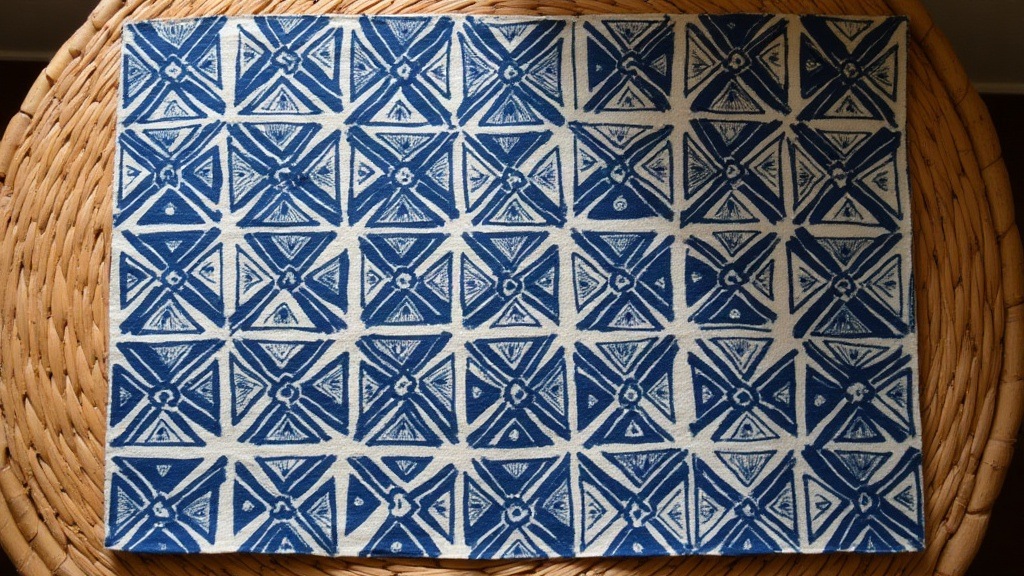
Adinkra Symbols: Visual Proverbs of Akan Wisdom
Adinkra symbols encode centuries of Akan thought into geometric patterns, each a visual proverb that teaches virtue, warns against folly, and connects the living to ancestral wisdom. Discover the stories and spiritual power behind these iconic marks.
Akan
Okomfo Anokye: Legendary Priest and Nation-Builder
Okomfo Anokye unified the Ashanti people through spiritual authority and political vision. Discover how a legendary priest transformed fragmented chiefdoms into a continental empire that challenged European powers.