
Adinkra Symbols: Visual Proverbs of Akan Wisdom
Adinkra symbols encode centuries of Akan thought into geometric patterns, each a visual proverb that teaches virtue, warns against folly, and connects the living to ancestral wisdom. Discover the stories and spiritual power behind these iconic marks.
Contents
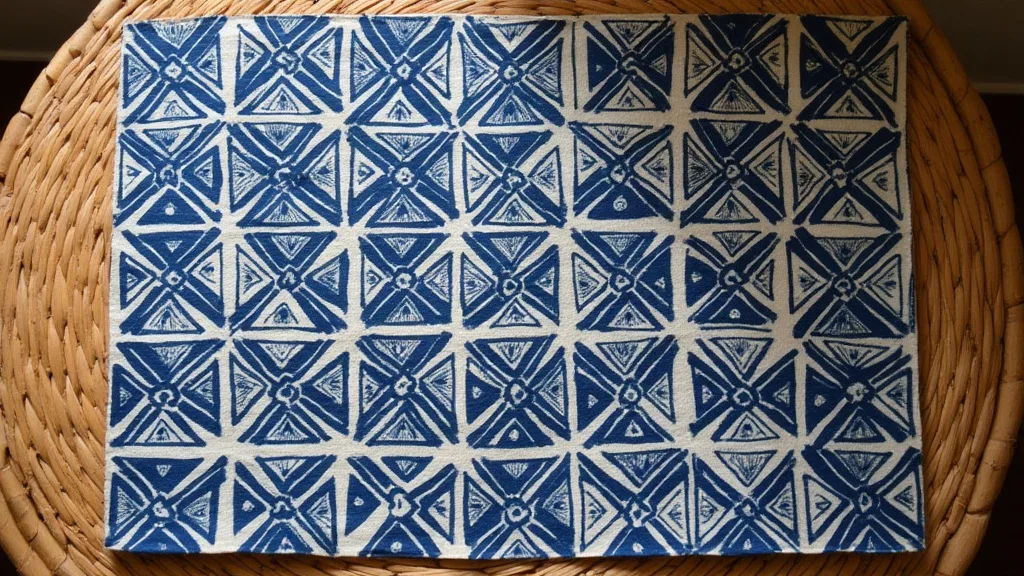
When an Akan weaver passes cloth stamped with the crossed lines of Asuo Den (river crossing), the symbol is not decoration. It is a teaching. It is a warning that life demands caution and careful passage. The Akan people of Ghana and the Ivory Coast have used these geometric forms for centuries, stamping them onto cloth with wooden blocks, embedding moral instruction into every fold and seam. Adinkra symbols are visual proverbs, each one a compressed story about how to live, who to honor, and what forces shape the world.
The word "adinkra" itself means "goodbye" or "farewell" in the Twi language, a hint that these patterns often accompanied mourning cloths worn at funerals. Yet over centuries, they became far more: a visual language spoken by cloth, a way to teach children without speaking, a mark of cultural identity worn at weddings, holidays, and daily life. Every symbol rests on proverb, philosophy, and lived experience.
The Origin and Spirit of Adinkra Cloth
The Asante people, one of the major Akan groups, developed Adinkra cloth most famously, though the symbols ripple across Akan-speaking regions. Oral tradition holds that the craft arose in the seventeenth century. One account traces the name to Adinkra, a chief from the Gyaman kingdom who was captured in battle. The captors allowed him to order one final cloth bearing all his wisdom before his death, so that his teachings would survive him. Whether literal or metaphorical, the story captures the symbols' true purpose: to preserve and transmit knowledge.
The cloth itself began as hand-stamped indigo cotton, each block carved from wood by a craftsperson. The dye came from plants; the blocks from the hands of artists who understood that every line carried meaning. A weaver could spend weeks on a single cloth, repeating the same symbol hundreds of times, letting the repetition itself become meditation and instruction. The rhythm of the stamp becomes the rhythm of memory.
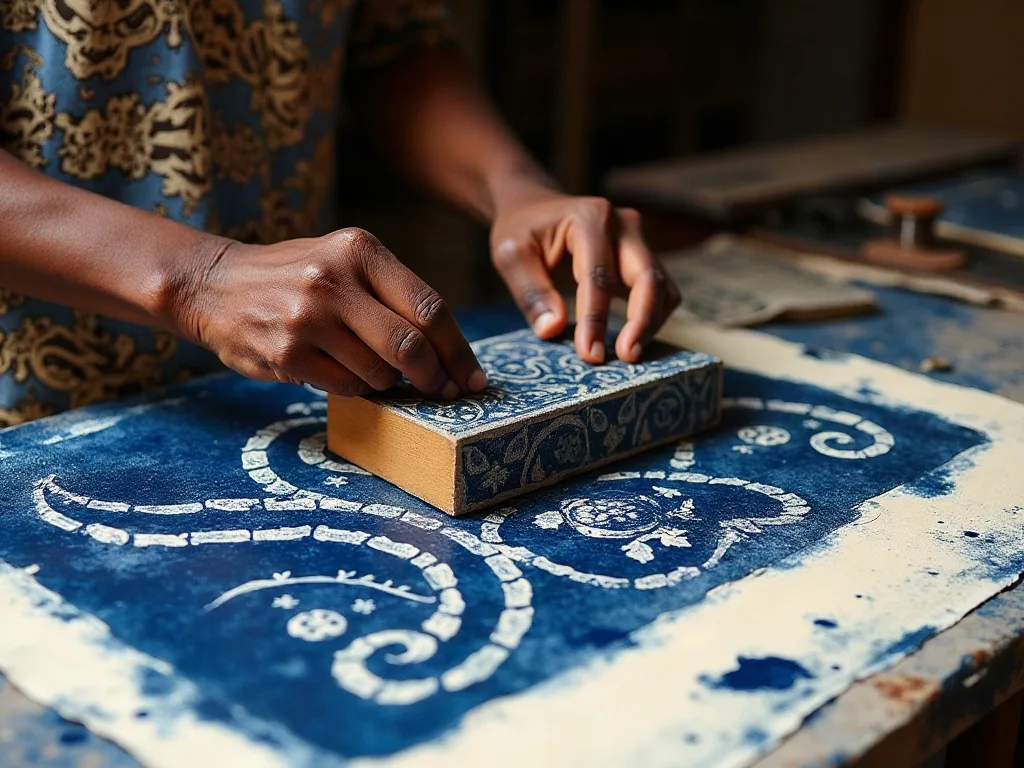
What makes Adinkra unique among world textile traditions is that it is not merely decorative. It is philosophical. The Akan say: "Se wo were fi na wosankofa a yenkyi" - "It is not wrong to go back for that which you have forgotten." This proverb itself is encoded in the symbol Sankofa, a bird looking backward with its beak pointing forward. The symbol visualizes the proverb. Cloth wearing such a symbol reminds the wearer of this wisdom every time the cloth touches skin.
The Philosophy Behind the Symbols
Adinkra symbols function like a written language of virtue and warning. There are over one hundred recognized symbols, though variations exist across regions and families. Each symbol emerges from lived reality: from the cycles of farming, the patterns of kinship, the dangers of pride, the necessity of community.
The symbol Gye Nyame shows a cross or square divided into four equal parts, sometimes with additional flourishes. It means "except for God" or "only God", a statement of submission to divine will and recognition of human limitation. The Akan say: "No one is greater than God." This symbol appears in sacred contexts, worn at baptisms and invoked at the start of important tasks. It is both humility and hope.
The symbol Dendeben depicts a mortar and pestle. It teaches endurance. The Akan say, "Though one may be old, one never becomes decrepit." Like the mortar and pestle, which are used daily and grow stronger with age, humans too can maintain purpose and strength throughout life. When a child is born, cloth bearing Dendeben is sometimes placed nearby. When an elder becomes frail, it offers comfort: your usefulness is not measured by speed but by the grinding on, the patient work.
The symbol Duafe, a comb, teaches the importance of beauty and personal care, but it carries deeper meaning. The comb is used in grooming, in arranging the hair into patterns that mark status, wealth, and aesthetic choice. To wear Duafe is to assert that personal dignity matters, that how one presents oneself to the world is a moral act, not vanity. Women, especially, wore this symbol as a statement of agency.
The symbol Nkyinkyim, a zigzag line, represents "twisting" or the winding path. Life is not straight. Progress requires adaptation, flexibility, and movement through obstacles. Worn by travelers and by those facing transition, Nkyinkyim says: you are walking a difficult path, but difficulty itself is the path. There is no other route.
The symbol Bese Saka, shown as a cluster of cacao pods, teaches the power of unity. Alone, a cacao pod is small. Gathered together, many pods create abundance and strength. The Akan say: "Strength lies in numbers." This symbol was popular on kente cloth and Adinkra worn by groups, families, guilds, councils. It reinforces that the individual is always part of a larger body.
Spiritual and Ritual Meaning
Adinkra cloth was integral to Akan spiritual life, though it was never sacred in the way certain objects are forbidden to touch. Instead, the cloth was animated by intention. A widow wore mourning cloth stamped with symbols of grief, endurance, and the promise of ancestral care. A bride wore cloth with symbols of fertility, unity, and protection. A warrior might wear cloth marked with symbols of courage and truth.
The connection to death and the afterlife was especially strong. The Akan conception of time is cyclical. The living, the ancestors, and the yet-to-be-born exist in relationship. An ancestor is not gone but transformed, present in the soil, in memory, in the words passed down. Adinkra cloth, especially in funeral rites, was a way to speak to this presence. The symbols said: "We remember you. Your teachings live. You are not forgotten."
At funerals, cloth bearing specific symbols would be worn or displayed. The symbol Okodee Mmowere, an eagle's talons holding prey, represented strength in the face of loss. The symbol Nconsonkonson, linked chains, spoke of the unbreakable bonds between the living and the dead. The cloth became a bridge, a visual prayer, a way to conduct the dialogue between worlds.
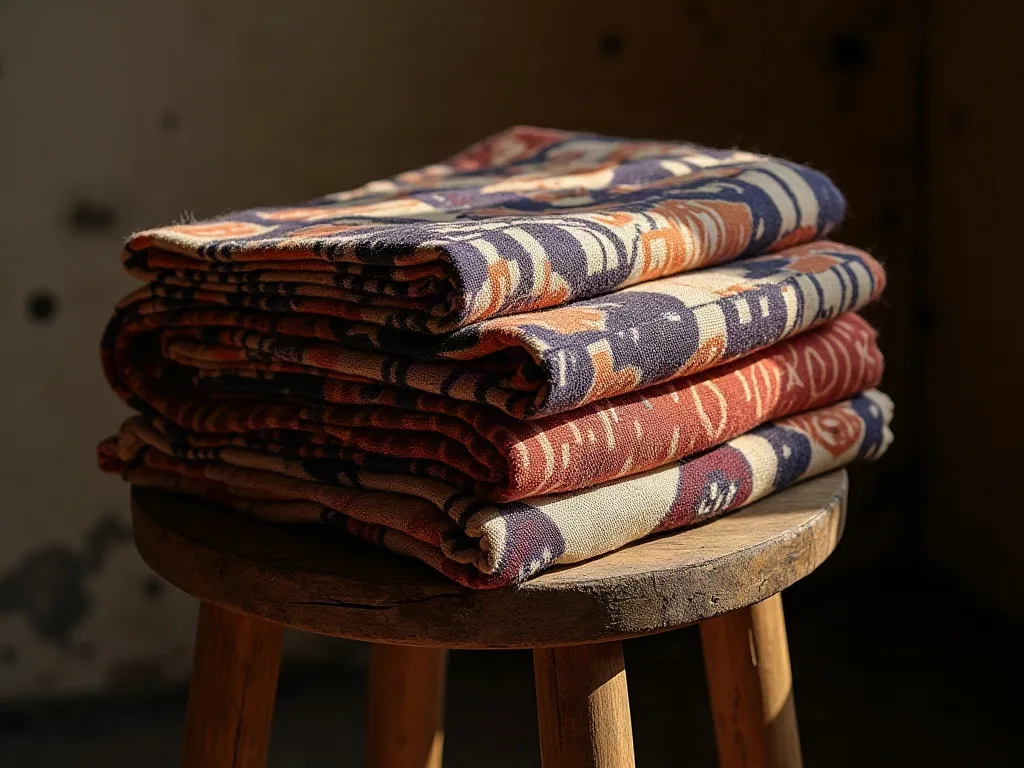
The weaver herself was sometimes seen as a kind of priestess. She understood the power of repetition, of color, of the precise placement of symbol. Some weavers were consulted about which symbols a family should order, not merely for aesthetic reasons but for spiritual guidance. A weaver might suggest that a particular symbol was needed, that its teaching would serve the household.
The Four Pillars of Wisdom in Adinkra
The symbols can be grouped thematically, though overlap is constant. The Akan organized knowledge in ways that Westerners often separate into categories: aesthetics, ethics, cosmology, social order. Adinkra symbols teach across all these domains at once.
Symbols of governance and virtue guide how humans should relate to authority and to each other. Gye Nyame teaches submission to the divine. Owuo Atwedee, an upside-down tree with roots reaching up to the sky, represents death, the ultimate reality that must be accepted. Ananse Ntontan, the spider's web, warns against deceit; the spider is clever, but her webs can trap her too.
Symbols of continuity and protection assert that what was built can endure. Sankofa, the backward-facing bird, says learning from the past is not shame but necessity. Duafe, the comb, affirms that beauty and self-care are not luxuries but part of human dignity. Fihankra, a house or compound, protects the domestic space and the family within it.
Symbols of strength and adaptation acknowledge that life is conflict, change, and growth. Nkyinkyim teaches that the path winds. Adinkra Dwennimmen, the ram's horns, celebrate physical strength, but more deeply, the strength to overcome through persistence. Nyungu Dennen, a knot, represents how different threads are bound together into something stronger.
Symbols of time and cycles reflect the Akan understanding that nothing is permanent, all things return, all moments are part of a larger pattern. Opa, a knot or wrapped bundle, represents togetherness across time. Akoko Nan, a hen's foot, spreads out like the tracks a bird leaves; the future spreads in many directions from each present moment.
Adinkra in Daily Life and Ceremony
Before the colonial period, Adinkra cloth was worn at key moments: funerals, celebrations, initiations, peace ceremonies. A ruler might commission cloth to mark a victory or a change in governance. A family might commission cloth when a child was born or when a marriage was arranged. The cloth was not casual; it was purposeful.
The cloth was most expensive and most elaborate when worn at funerals and festival celebrations. Royal courts kept extensive stores of Adinkra cloth. The Ashanti court, in particular, used the cloth as a form of diplomatic gift. When the British colonial powers arrived in the nineteenth century, they were sometimes presented with Adinkra cloth as a gesture of respect or negotiation. The cloth, in those moments, was not merely art or tradition; it was statecraft.
Women, especially, were associated with wearing and commissioning Adinkra cloth. A woman's cloth was an expression of her status, her taste, her connection to her family and her lineage. Young women were taught to recognize symbols and to understand the proverbs behind them. In this way, the cloth was a curriculum. A mother could point to a symbol on her cloth and ask her daughter: "What does this teach?" The answer was not rote; it was a conversation, an opening to deeper reflection.
After colonialism and forced modernization, Adinkra cloth was nearly lost. Colonial administrators sometimes viewed the tradition as "backward." Cheaper, imported cloth flooded markets. Yet the Akan held. The symbols persisted. In the twentieth century, as Ghana and the Ivory Coast reclaimed independence, Adinkra cloth returned as an act of cultural pride. Modern weavers still use traditional methods, and new artists have created contemporary Adinkra designs, adding symbols that reflect modern life: symbols for technology, for education, for pan-African unity.
Comparative Echoes: Wisdom Symbols Across Cultures
Adinkra symbols are not unique to the Akan, though they are distinctly theirs. Many cultures encode philosophy into visual form. The Native American medicine wheel teaches the four directions, the four aspects of being, the cycles of life. Japanese mon symbols mark family identity and virtue. Islamic geometric patterns encode mathematical and spiritual principles. Celtic knotwork spirals represent eternal recurrence.
What sets Adinkra apart is the explicit link to proverb and the insistence that the symbol is not ornament but instruction. The Akan did not separate art from ethics. A beautiful cloth was beautiful because it taught truth. The two were inseparable.
The I Ching, the ancient Chinese book of divinations and philosophy, similarly condenses wisdom into symbols: each hexagram is a teaching about change, about human nature, about the proper response to circumstance. Like Adinkra, the I Ching assumes that visible pattern reflects invisible principle. But where the I Ching is primarily a text (the hexagrams are meant to be read, consulted), Adinkra symbols are primarily wearable. They live on cloth, on skin, in the home. They are lived with, not consulted; embodied, not interpreted from afar.
The comparison to heraldry is tempting but incomplete. Heraldic symbols marked lineage and rank; Adinkra symbols teach virtue and proverb. An Akan person wearing cloth marked with Nkyinkyim is not claiming rank but asserting a principle: that the path winds, and I walk it knowing this.
Adinkra Symbols
Teach virtue and philosophy; meant to be contemplated and lived with; accessible to all who learn the proverbs; change meaning based on social context and wearer's life stage; encoding proverb directly into geometry.
Heraldic Symbols
Mark lineage, rank, and authority; meant to be recognized from distance; restricted to nobility and the elite; fixed in meaning across contexts; encoding identity and claim through heraldic convention.
The Symbols in the Modern World
Today, Adinkra symbols appear far beyond cloth. They mark logos for African diaspora organizations, appear in contemporary art, are tattooed on bodies as markers of cultural connection and spiritual commitment. The symbols have become globally recognizable, especially among people of African descent seeking to reconnect with ancestral knowledge.
This expansion is complicated. Some see it as a triumph: ancient wisdom reaching across oceans and centuries. Others worry about dilution or misuse. When a symbol is removed from proverb, from the lived context of Akan culture, does it retain its power? Can you wear Gye Nyame as a tattoo if you do not know the Twi language? If you do not speak to your ancestors in the Akan way?
The most honest answer is that symbols are living things. They change. The Akan did not invent Adinkra symbols and then lock them in amber. They adapted them, added to them, changed their meanings subtly over centuries. A symbol that meant one thing in the seventeenth century might mean something slightly different now. The symbol Owuo Atwedee, the upside-down tree, originally spoke to inevitable death and the need for acceptance. Today, it might also speak to revolution, to turning things upside down, to reimagining what has been.
The Akan themselves continue to make new Adinkra cloth. Contemporary weavers use power looms as well as hand-stamps. They create new designs for new times. A designer might create a symbol for environmental stewardship, or for digital connection, or for resistance to injustice. The cloth evolves because philosophy evolves. The proverbs change slightly because life changes.
Reading the Cloth: How to Interpret Adinkra Symbols
If you encounter Adinkra cloth, the first step is to notice: stop, look, let the eye settle on a single symbol. What does the shape suggest? Spirals suggest cycles and return. Circles suggest wholeness and completion. Chains suggest connection. Lines suggest flow and movement.
Then ask: what proverb lives here? If you cannot remember, that is all right. The beauty of a symbol is that it invites curiosity. Ask someone from an Akan background, if you can. Ask an elder, a teacher, a person who has studied the cloth. The conversation itself is part of the tradition.
As you wear the cloth or live with it, let the symbol become familiar. Notice when it seems to speak to your circumstance. If you wear Nkyinkyim and the path of your life winds unexpectedly, the symbol affirms: this is how it should be. The symbol has not changed; your understanding deepens.
This is how wisdom cloth works. It is patient. It waits for you to catch up.
Frequently Asked Questions About Adinkra Symbols
Frequently asked questions
What is the oldest Adinkra symbol we know of?
Historical documentation of specific symbols is difficult before the colonial period, as the Akan transmitted knowledge orally. However, the symbol Gye Nyame (except for God) is among the oldest and most sacred, appearing in Ashanti royal contexts for centuries. Oral tradition suggests that the most fundamental symbols emerged as proverbs themselves became fixed in Akan speech, likely centuries before written records. The symbols grew organically from lived proverbs rather than being invented all at once.
Can you wear Adinkra symbols if you are not Akan?
The short answer is yes, though with respect. Adinkra cloth is now worn globally, and many people of African descent or those drawn to the philosophy wear it. The symbols were always meant to teach; the teaching is available to anyone who wishes to learn. That said, wearing a symbol without knowing its proverb is like wearing words in a language you do not speak. The respectful approach is to learn the meaning, to understand the philosophy behind it, and to wear it with intention rather than as fashion.
How many Adinkra symbols are there?
There is no fixed final count. Scholars generally recognize between 80 and 120 primary symbols, depending on regional variation and whether you include recent contemporary additions. Different families, weavers, and regions had slightly different symbol collections. Contemporary weavers continue to create new symbols as Akan life evolves. The symbols are not a closed alphabet but a living language.
Was Adinkra cloth worn only by the wealthy?
Originally, yes. The hand-stamping process was labor-intensive and expensive. Adinkra cloth in its finest form was worn by royalty and the well-to-do. However, simpler versions of the cloth and symbols appeared on more everyday garments. After colonialism and modernization, cheaper methods of reproduction became available, making the cloth more widely accessible. Today, both hand-stamped heritage cloth and machine-made Adinkra fabric are worn across Akan communities and globally.
Are Adinkra symbols connected to the Akan concept of the divine?
Deeply. Symbols like Gye Nyame (except for God) reflect the Akan understanding of Onyankopon, the supreme creator. Other symbols encode the idea that human life operates within a moral and cosmic order. The proverbs behind the symbols often include reference to divine will, ancestral oversight, and the proper conduct of human life in alignment with these larger forces. The cloth itself, in some contexts, was used in ritual to communicate with ancestors and the divine. So yes, the symbols are theological as well as ethical.
The Cloth That Never Stops Teaching
The Akan say: "A single hand cannot tie a bundle." This proverb itself might be woven into cloth, marked with a symbol of crossed hands or linked threads. The statement is about interdependence, about the necessity of community. But it is also about the nature of the tradition itself. No single person invented Adinkra. No single weaver owns it. It is a collective inheritance, a bundle tied by many hands across many centuries.
Adinkra symbols persist because they work. They condense complex philosophy into simple geometry. They are beautiful to look at, satisfying to repeat, meditative to create. But more than that, they answer a fundamental human need: the need to have wisdom visible, wearable, present in daily life. Not locked in books but stamped onto cloth. Not reserved for the learned but available to anyone who picks up a cloth and asks, "What does this teach?"
The symbols taught the Akan through centuries of change, loss, colonization, and recovery. They are teaching still. In contemporary Ghana and Ivory Coast, in diaspora communities worldwide, in the hands of young weavers learning the traditional methods and contemporary artists creating new designs, Adinkra cloth continues its work. It speaks the proverbs. It carries the ancestors. It teaches the living. It prepares the yet-to-be-born for a world that will ask everything of them, and offers them this: wisdom in geometry, philosophy in cloth, the collective voice of generations saying, "This is what we learned. This is what matters. This is how to live."
Read the full book
Want the whole story?
The complete edition is an instant PDF download here, with a paperback on Amazon for selected titles.
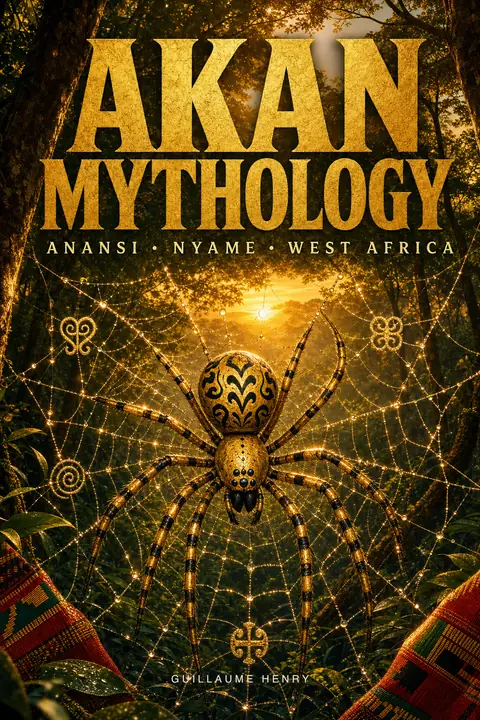
Akan
The Akan Mythology Book: Anansi, Nyame, and the Gods of West Africa
Anansi, Nyame, and West Africa
From the Ashanti and the gold coast of Ghana: Nyame the sky god, Asase Yaa the earth, the abosom spirits, and Anansi the spider, the trickster who bought all the world’s stories from the sky and whose tales crossed the Atlantic with the enslaved.
More from Akan
All articles
Akan
Odwira Festival: Purification and Ancestral Rites in Akan Tradition
The Odwira Festival is Akan Ghana's ceremonial cleansing where communities honor ancestors and gods, purging the year's sorrows before harvest. Rooted in sacred kingship and the bond between living and the dead, Odwira binds generations through ritual fire, feasts, and the renewal of covenant.

Akan
Sasabonsam: The Forest Monster of Akan Lore
In the dense forests of Ghana and Ivory Coast, the Sasabonsam stalks the darkness. This powerful forest creature from Akan mythology embodies the dangers lurking beyond the village boundary.
Akan
Okomfo Anokye: Legendary Priest and Nation-Builder
Okomfo Anokye unified the Ashanti people through spiritual authority and political vision. Discover how a legendary priest transformed fragmented chiefdoms into a continental empire that challenged European powers.

Akan
Asase Ya: Earth Goddess and Mother of the Dead
Asase Ya sustains the living through soil and grain, then welcomes the dead into her body. Meet the Akan earth mother whose dual power over fertility and the afterlife makes her the most essential force in West African cosmology.