
Okomfo Anokye: Legendary Priest and Nation-Builder
Okomfo Anokye unified the Ashanti people through spiritual authority and political vision. Discover how a legendary priest transformed fragmented chiefdoms into a continental empire that challenged European powers.
Contents
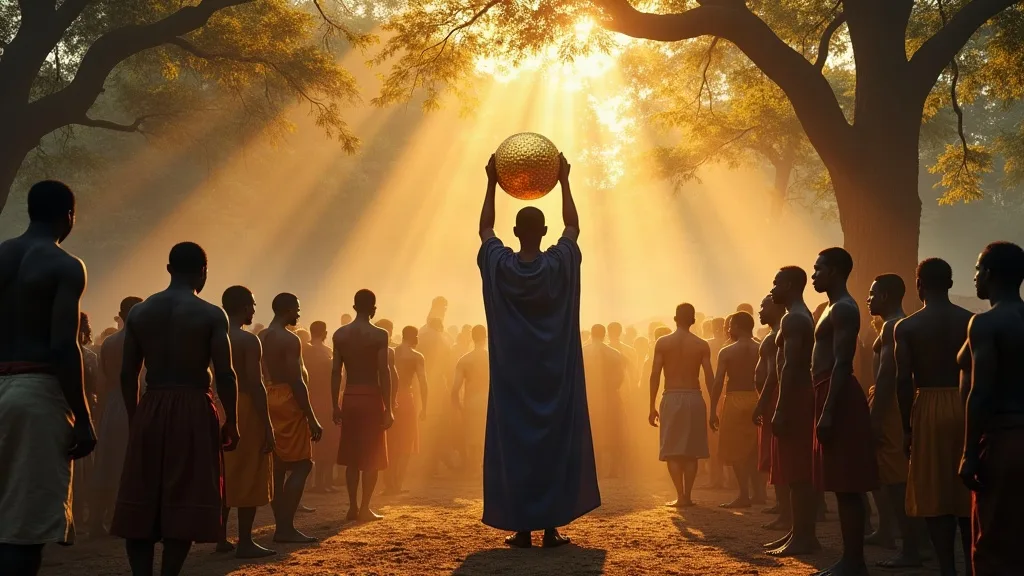
In the forests of West Africa, a priest walked toward a gathered crowd carrying something wrapped in cloth. When he unveiled it, he did not bring a carved idol or an animal sacrifice. He brought a stool. Gold. Spiritual weight made manifest. This moment, around 1700, marked the birth of the Ashanti Confederacy, and the man holding that stool was Okomfo Anokye, a figure who blurs the line between priest, political architect, and legend.
The Ashanti golden stool, the object he presented, became the seat of unity itself. It was not meant for sitting. It held the soul of the nation. And the man who brought it to light reshaped the entire West African coast through a combination of spiritual certainty, strategic brilliance, and an understanding of how symbols bind people to each other.
The Priest Who Became a Kingmaker
Little is certain about Okomfo Anokye's origins, but the traditions are consistent: he emerged from the town of Asokwa, in what is now central Ghana, sometime in the late 17th century. "Okomfo" is a title meaning priest or seer. "Anokye" may derive from a day-name or a description of his spiritual power. He was not born into chieftaincy or royal blood. He rose through spiritual insight and an ability to sense what his people needed.
By the 1690s, the region surrounding modern-day Kumasi was a fragmented landscape of independent Akan chiefdoms. Denkyira, a neighboring power, had begun to dominate trade routes and demand tribute. The Asante chiefdoms, loosely grouped, were paying increasing taxes to Denkyira's king. Resentment simmered. But resentment alone does not unify. Fear can unite people for a moment. Shared belief unites them for generations.
Anokye appears in the oral histories as the spiritual guide who convinced Asantehene (the paramount chief) Osei Tutu that the moment for consolidation had come. Together, they began a radical project: instead of competing for power, the Asante chiefdoms would pool it. Instead of separate courts, a federal structure with Kumasi as the capital. Instead of scattered authority, a single sacred object that every chieftain swore to protect.

The Golden Stool: A Nation Bound by Spirit
The creation narrative of the golden stool is where history and spiritual power meet. According to Ashanti oral tradition, Anokye performed a ritual that drew the stool from the sky into the lap of Osei Tutu. The text itself appears nowhere written until the 19th century, preserved instead in the testimony of priests, drummers, and royal historians who kept these accounts alive by memory and performance.
The stool was no ordinary object. In Akan cosmology, a stool is the seat of a person's soul, the vessel of their life force. Kings and queens possess stools that represent their spiritual authority. But the golden stool belonged to no single chief. It was the embodiment of Ashanti nationhood. To touch it with disrespect meant spiritual death. To die in its defense was the highest honor.
Anokye is recorded as saying that the stool would remain as long as the Asante people kept their unity and their oaths. If they fractured again into competing chiefdoms, it would leave them. This was not a prediction. It was a binding contract written in spirit rather than words.
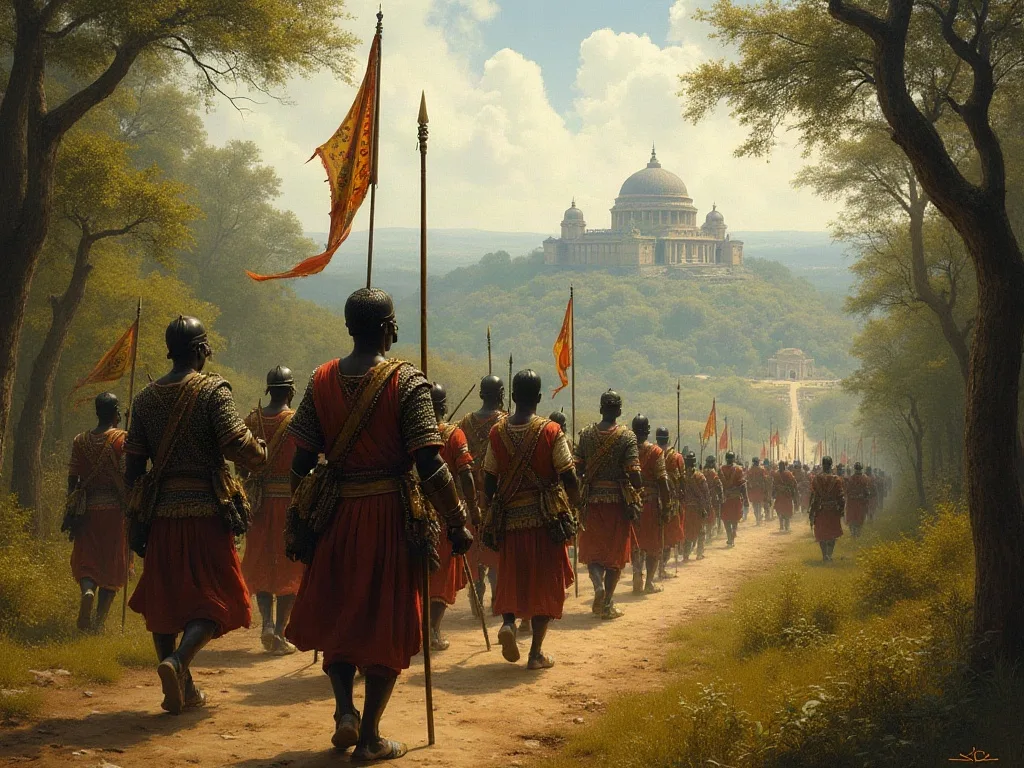
The consolidation worked with astonishing speed. By 1701, the unified Asante forces under Osei Tutu defeated the Denkyira in battle. The tribute flowed the other way now. Power concentrated. Trade expanded. And the figure of Anokye grew larger in memory, not smaller, even as his own historical presence faded.
The Priest's Political Genius
What made Anokye effective was not mystical sleight of hand, but an intuitive grasp of how power actually works. He understood that a priest's authority comes not from claiming supernatural force, but from expressing the beliefs people already hold and giving them a form they can see and defend. The golden stool did this perfectly. It was concrete. It was beautiful. It was portable. It could be paraded before the people to remind them what they had sworn to protect.
He also understood timing. The Denkyira were growing aggressive. The smaller chiefdoms were increasingly anxious. The moment for change was not forced by Anokye; it was ripe. He simply gave it a framework and a sacred shape. Osei Tutu provided the military authority. Anokye provided the spiritual and psychological scaffolding that let dozens of independent rulers accept a subordinate role to a larger whole.
The Asante Confederacy that emerged was not a kingdom in the European sense, with absolute rule flowing from a single throne. It was federal. Local chieftains retained considerable autonomy. But they answered to the Asantehene, the paramount chief, and to the councils that gathered in Kumasi. The constitution of this system, if we can call it that, was enforced by oath and ritual. And Anokye was the architect of the ritual.
Legend, History, and the Problem of Sources
Here lies one of the most challenging aspects of understanding Okomfo Anokye: the line between historical event and mythological embellishment is genuinely difficult to draw. The oral accounts, collected by researchers in the 20th century, give detailed narratives. But they were recorded centuries after the events they describe. Memory in oral cultures is not identical to written record, yet it is also not merely invented. It is a form of knowledge that preserves essential truths in story form.
Some scholars argue that Anokye was the spiritual advisor to Osei Tutu, but that his role has been mythologized. Others insist that the core narratives, especially around the unification and the creation of the golden stool, reflect actual events that occurred around 1700. The British colonial administrators who documented Ashanti customs in the 19th and early 20th centuries generally accepted the stool narrative as historical fact, even if they misunderstood or dismissed its spiritual dimensions.
What is verifiable: the golden stool exists. It is housed in the Ashanti royal palace, and Ashanti people continue to regard it as sacred. The Asante Confederacy, unified around 1700, became one of the most powerful and prosperous West African states, controlling vast territories and trade networks. Kumasi became one of the greatest cities on the continent. Whether Anokye personally performed the ritual to bring down the stool or whether he orchestrated the political consensus that created the confederacy, his role in the consolidation is woven through all Ashanti historical memory.
The Europeans who arrived on the coast in the 18th and 19th centuries encountered the Asante as a formidable power. They did not meet a land of scattered chiefdoms. They met an organized state. That transformation, whether we call it purely historical or mythological or some blend, traces back to the period around 1700 and to the figure of Anokye.

Anokye's Spiritual Legacy and the Ashanti Worldview
To understand what Anokye accomplished, it helps to understand Akan spirituality. The Akan peoples, of whom the Asante are a major branch, believe in a creator deity called Nyame (or Onyankopon), and in a host of lesser spirits called abosom that inhabit natural features like rivers, trees, and hills. Ancestors are understood as living presences who guide and protect their descendants. Priests, through ritual knowledge and spiritual discipline, serve as intermediaries between the visible and invisible worlds.
Anokye, in this framework, was not a god or a miracle-worker in the sense of someone who violated natural law. He was a priest of exceptional power and clarity. His authority derived from his ability to read the spiritual currents of his time and to propose actions that aligned human will with spiritual necessity. The golden stool, brought down from the sky, represented the fact that the unification he was advocating was not merely political strategy; it was spiritually ordained.
This is a crucial point for understanding non-European forms of authority. Anokye did not need to deceive people about whether the stool literally fell from heaven. What mattered was whether the symbolic and spiritual truth of the unification resonated as real. For the Ashanti, it did. The stool remains real. The unity it represented lasted for centuries and shaped the political geography of West Africa.
The Ashanti Confederacy: What Anokye Built
The structure that Anokye helped to create was sophisticated. At its center was the Asantehene, seated in Kumasi. But the Asantehene was not an absolute monarch. The chieftains of the various Asante divisions retained their own courts and authority over local matters. The golden stool, housed in the royal palace, served as the symbol of unity and as a check on the Asantehene's power. If a paramount chief was perceived as corrupt or unfit, the chieftains and priests could depose him. The stool belonged to the nation, not to any individual.
This system produced remarkable stability. The Ashanti Confederacy, once formed, endured for nearly two centuries as a political entity. It became wealthy through control of gold trade, through expanding agricultural production, and through strategic military alliances. Ashanti merchants and warriors were known throughout the Atlantic world. When the British, in the late 19th century, sought to impose direct colonial rule, they encountered an organized, wealthy, and militarily capable state that resisted them fiercely.
The wars of the late 1800s, including the famous resistance of the Ashanti queen Yaa Asantewaa, were rooted in this legacy of unity that Anokye helped to forge. That a woman could rise to lead the nation in resistance spoke to the flexibility and depth of the system he helped to build.
Anokye's Death and the Question of Succession
Like many figures of mythological stature, the circumstances of Anokye's death are recorded in legend rather than documented fact. One account states that he withdrew to Asokwa, his birthplace, and disappeared into the forest, his body never found. This narrative echoes patterns found in other cultures: the wise guide who vanishes, leaving behind a completed work, neither fully alive nor fully dead in the memory of the people.
Other traditions hold that he lived to see the Asante Confederacy firmly established and then announced that his work was done. He is sometimes said to have taken oaths that bound him to the wellbeing of the nation, oaths so powerful that they would follow him even beyond death. Some accounts suggest he passed authority to a successor priest, though no single figure is named with consistency across sources.
What is clear is that by the time the British began to document Ashanti customs in the 19th century, Anokye had passed fully into the realm of legend. He was invoked as the founding priest, the spiritual architect of unity. His name carried power even in memory. When Ashanti people swore oaths, they sometimes invoked his blessing or his warning.
The Unresolved Debate: Prophet, Politician, or Both
Modern scholars continue to grapple with how to categorize Okomfo Anokye. Some historians, influenced by European models of statecraft, emphasize his role as a political strategist working alongside Osei Tutu to consolidate power. Others, drawing on Akan spiritual traditions, treat his spiritual authority as primary and his political effect as secondary. A third group argues that the very distinction between spiritual and political authority is a Western imposition, and that for Anokye and the Ashanti, the two were inseparable.
The truth likely incorporates elements of all three views. Anokye was a priest who understood that ritual and symbol could bind a divided people into a unified whole. He was also politically astute enough to work with Osei Tutu to create structures of governance that would outlast both of them. He was, in a word, a genius of the intersection between belief and power.
The fact that we cannot draw a clear line between the mythological and historical Anokye may be a feature rather than a bug. Oral cultures preserve what they believe is essential. The memory of Anokye that survived was not a transcript. It was a shape that conveyed truth. That a priest played a central role in the unification, that spiritual authority and political consolidation moved together, that the golden stool became the emblem of a new nation: these truths persist in the stories, even where specific details blur.
Anokye's Spiritual Presence in Modern Ashanti Life
For Ashanti people today, Okomfo Anokye remains a touchstone. The golden stool is not a museum piece. It is a living sacred object. When important ceremonies occur, when the Ashanti nation gathers, the stool's presence is felt as a real historical and spiritual connection to the moment of unification.
Some modern Ashanti spiritual practitioners and historians have worked to recover and preserve Anokye's teachings and the ritual knowledge associated with the founding of the confederacy. The stool has survived multiple wars, colonial occupation, and the upheavals of the 20th century. That survival is understood, by many Ashanti people, as evidence that Anokye's work endures, that the spiritual bond he created remains operative.
Contemporary Kumasi, the capital that grew from Osei Tutu and Anokye's vision, remains one of Ghana's major cities. The Ashanti cultural traditions, including the royal ceremonies and the veneration of the stool, continue to be practiced. The Asantehene, the paramount chief, still holds office and represents Ashanti interests. The structures that Anokye helped to put in place proved resilient enough to adapt to colonialism, independence, and modernity.
Why Does Okomfo Anokye Matter Beyond History
The figure of Okomfo Anokye offers a lens into how power actually consolidates in human societies. It was not primarily through conquest or coercion, though those played a role. It was through the creation of a shared symbol so powerful that it could bind people across different lineages and regions into a single identity.
In an age of nation-states and written constitutions, it is easy to forget that nations are themselves spiritual and psychological entities before they are political ones. The golden stool did the work that a flag or an anthem might do in a modern nation: it gave the Ashanti people a single object through which they could contemplate their unity.
Anokye's legacy also reminds us that the most effective leaders often understand the symbolic and spiritual dimensions of power as deeply as the tactical ones. He did not merely advise Osei Tutu on strategy. He provided a cosmology within which the unification made sense. He connected the consolidation of Asante power to the will of the spiritual forces that Ashanti people believed governed the world.
This is a form of political genius that Western historical narratives sometimes overlook, especially when dealing with African societies. It is easier to recognize military or economic power. It is subtler to see how a priest's grasp of his people's inner spiritual world became the foundation for an empire that would last two centuries.
Frequently asked questions about Okomfo Anokye
Frequently asked questions
Did the golden stool really fall from the sky?
The narrative is recorded in Ashanti oral tradition as a spiritual event that occurred around 1700. Whether this describes a literal celestial phenomenon or a metaphorical expression of the stool's sacred origin cannot be verified through written records. What is certain is that the stool exists, is recognized as sacred by Ashanti people, and became the emblem of national unity. The spiritual reality of the stool's significance is documented and continues today.
How much of Anokye's story is historical versus mythological?
The broad outline appears to be historical: a priest named Anokye existed and played a role in the unification of Asante chiefdoms around 1700. However, specific narratives, including details of the stool's creation, come from oral tradition recorded centuries later. Scholars debate the fine details, but the core fact of his role in consolidating Ashanti power is woven through both oral accounts and colonial-era writings about Ashanti history.
What happened to Okomfo Anokye after the unification?
Various accounts describe his later life and disappearance, but none are definitively documented. Some traditions say he withdrew to his birthplace and vanished into the forest. Others describe him as passing authority to successor priests. The ambiguity itself may be intentional in oral tradition, allowing Anokye to remain a timeless figure rather than someone bound to a specific death date and successor.
Is the golden stool still venerated today?
Yes. The stool remains housed in Kumasi in the royal palace and is regarded as a sacred object by Ashanti people. It is brought out for major ceremonies and represents the continuity of Ashanti nationhood and identity. Its presence shapes contemporary Ashanti political and spiritual life, and it has survived colonialism, wars, and multiple transitions of power.
How does Anokye's approach to unification compare to other nation-builders in African history?
Anokye's reliance on spiritual authority and symbolic power distinguishes him from rulers who built empires primarily through conquest. Leaders like Mansa Musa of Mali or Sundiata of the Mali Empire built wealth and power through military expansion and trade. Anokye consolidated power by creating a shared spiritual and political identity. Both approaches were effective, but Anokye's method produced a federal system that balanced power across multiple chiefdoms rather than concentrating it in a single ruler.
What role did Osei Tutu play alongside Anokye?
Osei Tutu, the Asantehene, was the military and political leader of the consolidation, while Anokye provided the spiritual framework and legitimacy. Together they represented the two forms of authority needed to transform scattered chiefdoms into a unified state. Osei Tutu commanded armies and navigated alliances; Anokye convinced the Ashanti people that the unification aligned with their spiritual values and the will of the divine.
The Priest Who Became Eternal
Okomfo Anokye died centuries ago, but he did not fade. His work outlasted him in a way that military victories alone rarely do. The golden stool remains. The Ashanti people remain. The structure of governance that distributed power while centering it around a sacred symbol remains woven into Ashanti political culture even today.
In the end, Anokye's greatest achievement was not a single action or object, but a transformation of consciousness. He helped the Ashanti people to see themselves not as Kumasi or Asokwa or a hundred other scattered towns, but as Ashanti. As a people bound by oath to a stool, to each other, and to a vision of unity that made them formidable across two centuries.
That is the legacy of a priest who understood that the most durable power is not the kind you wield with force, but the kind you plant as belief in other people's hearts.
Read the full book
Want the whole story?
The complete edition is an instant PDF download here, with a paperback on Amazon for selected titles.
Akan
The Akan Mythology Book: Anansi, Nyame, and the Gods of West Africa
Anansi, Nyame, and West Africa
From the Ashanti and the gold coast of Ghana: Nyame the sky god, Asase Yaa the earth, the abosom spirits, and Anansi the spider, the trickster who bought all the world’s stories from the sky and whose tales crossed the Atlantic with the enslaved.
More from Akan
All articles
Akan
Odwira Festival: Purification and Ancestral Rites in Akan Tradition
The Odwira Festival is Akan Ghana's ceremonial cleansing where communities honor ancestors and gods, purging the year's sorrows before harvest. Rooted in sacred kingship and the bond between living and the dead, Odwira binds generations through ritual fire, feasts, and the renewal of covenant.

Akan
Sasabonsam: The Forest Monster of Akan Lore
In the dense forests of Ghana and Ivory Coast, the Sasabonsam stalks the darkness. This powerful forest creature from Akan mythology embodies the dangers lurking beyond the village boundary.

Akan
Adinkra Symbols: Visual Proverbs of Akan Wisdom
Adinkra symbols encode centuries of Akan thought into geometric patterns, each a visual proverb that teaches virtue, warns against folly, and connects the living to ancestral wisdom. Discover the stories and spiritual power behind these iconic marks.

Akan
Asase Ya: Earth Goddess and Mother of the Dead
Asase Ya sustains the living through soil and grain, then welcomes the dead into her body. Meet the Akan earth mother whose dual power over fertility and the afterlife makes her the most essential force in West African cosmology.