
Sunsum and Kra: The Akan Soul Complex
The Akan people of West Africa describe the human soul not as one thing, but as a layered complex of spiritual forces. Unpack Sunsum, Kra, and their divine origins.
Contents
A person dies. The body goes into the earth. But in Akan thought, that is only the beginning of the accounting. Something returns to Nyame, the supreme sky deity. Something else lingers near the family. Something else becomes the ancestor who can still be consulted, appeased, and feared. The Akan do not believe in a single, unified soul sailing off to heaven. They believe the human being arrives in the world already assembled from at least two distinct spiritual components, each with its own origin, its own obligations, and its own destination at death.
This is the Sunsum and Kra: The Akan Soul Complex, and it is one of the most carefully articulated theories of personhood in all of African religious thought. Scholars like Kwame Gyekye, writing in An Essay on African Philosophical Thought (1987), and the philosopher John S. Pobee have spent careers unpacking it. What they found is not primitive superstition but a coherent metaphysical system, one that shapes Akan ritual, ethics, naming customs, and the entire grammar of social life among the Akan-speaking peoples of present-day Ghana, Ivory Coast, and Togo.
What the Kra Is: The Breath Nyame Sends
The Kra (also spelled Okra in some Akan dialects, particularly Twi) is the innermost soul. The Akan say it comes directly from Nyame, the supreme being who presides over the cosmos. Before a child is born, Nyame breathes this spark into the body, and with it comes something specific: a nkrabea, a life-destiny or mission. Think of the nkrabea as a sealed letter the child carries into the world without knowing what is written inside. It contains the broad outline of how long that person will live and what their life will mean.
The Kra is not earned. It cannot be improved or degraded by behaviour. It simply is, the non-negotiable divine core. When Akan people greet one another with the phrase "Akwaba" (welcome) or perform certain purification rites, they are, at one level, saluting the Kra in the other person. The soul inside deserves acknowledgment because it is, quite literally, a piece of Nyame.
At death, the Kra returns to Nyame. This is why the Akan sometimes call Nyame "Kra-bra-foɔ", the Receiver of Souls. There is no ambiguity in this direction: the Kra does not wander, it does not become an ancestor, it goes home. The sunsum handles those other duties.
What the Sunsum Is: The Force That Makes You, You
If the Kra is the divine deposit, the Sunsum is the personal spirit. It is the energy behind a person's character, temperament, and force of personality. Two brothers might share a lineage and the same ritual obligations, but their sunsum are entirely different. One may be bold and magnetic; the other cautious and subtle. That difference, in Akan thought, is the Sunsum at work.
The Sunsum is also the spirit that can leave the body during sleep. Dreams, in this framework, are not random neural noise. They are the wandering experiences of the Sunsum while the body rests. This is why Akan elders treat nightmares seriously: a troubled Sunsum needs attention. Certain ritual specialists, called okomfo (priests or priestesses who work with spiritual forces), are consulted when a person's Sunsum is believed to be under attack by a hostile spiritual force.
The Sunsum is also vulnerable to suman, protective charms and spiritual objects. Wearing or carrying the right suman shields the Sunsum from harm. This explains why protective amulets are not mere superstition in Akan culture but a rational response to a coherent theory of spiritual anatomy.
Unlike the Kra, the Sunsum does not come pre-loaded with a destiny. It grows. It is shaped by experience, community, and moral choices. A person of exceptional spiritual force is said to have a sunsum tenten, a tall or powerful spirit, and this quality commands social respect independently of wealth or age.
Ntoro and Mogya: The Biological Inheritance Lines
The soul complex does not stop at two. The Akan also speak of Ntoro and Mogya as complementary principles that travel through biological descent rather than divine impartation.
Mogya means blood, and it travels through the mother. The Akan practice matrilineal descent, meaning your abusua (clan or lineage group) is entirely determined by your mother's line. The mogya you inherit from her is the social and biological tie that places you within a clan, gives you rights to inherit, and sets the ritual duties your family carries. It is the substance of social belonging.
Ntoro comes from the father. It is a spiritual quality, sometimes described as a kind of personal purity or moral disposition, that fathers transmit to their children. The Akan recognise twelve or more ntoro groups, each with its own taboos and ritual requirements. A man whose ntoro is the Bosompra group, for example, carries different prohibitions than one from the Bosomtwe group.
These four elements together (Kra, Sunsum, Mogya, Ntoro) constitute the full Akan account of what a person is. No single Western concept like "soul" or "self" maps cleanly onto any one of them. The closest translation for Kra might be "soul" in the Christian sense. The Sunsum resembles the Greek pneuma (breath or spirit) or the Yoruba ori (the personal spirit that guides fate). But comparisons only go so far, and a richer side-by-side reading appears in the cross-cultural section below.
The Sunsum in Sickness and Healing
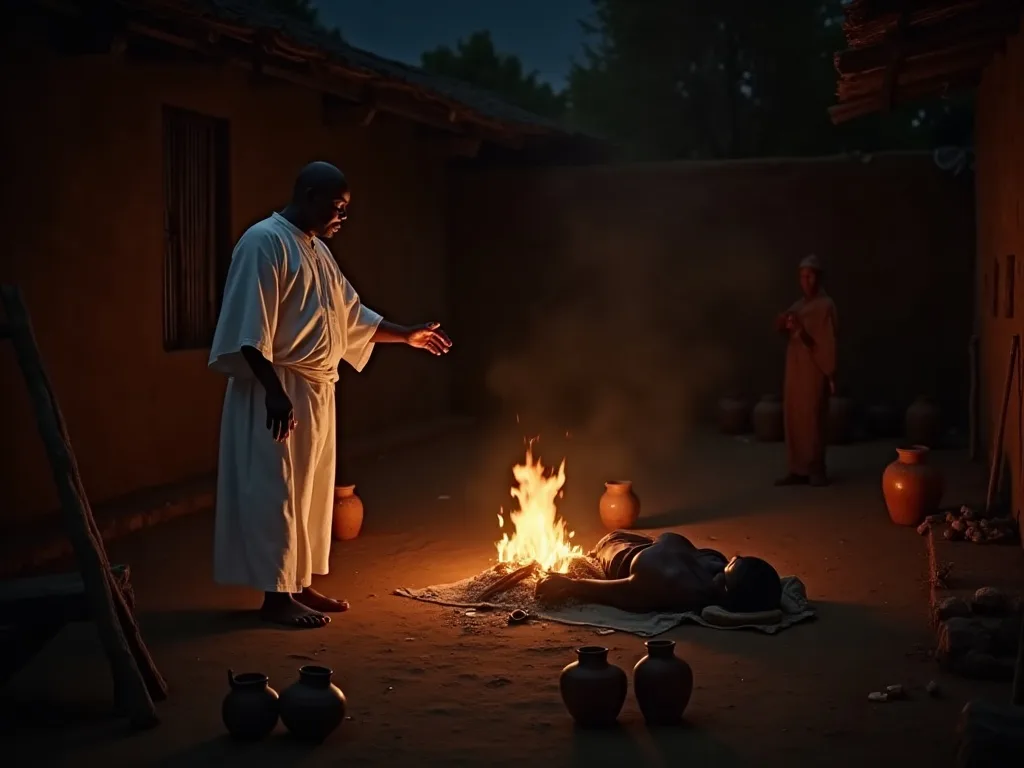
Akan medicine is inseparable from Sunsum theology. When a healer, a traditional practitioner (odunsini), examines a sick person, the diagnosis is not purely physical. The healer asks two questions at once: what is wrong with the body, and what is wrong with the Sunsum?
A body can fall ill because a hostile sunsum from a sorcerer (obayifo) has attacked it. It can also fall ill because the patient's own Sunsum is weakened, wandering too far at night, or carrying an unresolved ritual debt. These are not metaphors for the Akan healer. They are clinical realities that demand specific interventions: herbal preparations combined with prayers addressed directly to the Sunsum, or to the ancestor whose neglected spirit may be sending the illness as a warning.
The interplay between Sunsum and the ancestors is one of the richest threads in Akan spiritual life. After death, the Sunsum does not immediately follow the Kra back to Nyame. It lingers in a transitional state and, if the funeral rites are performed correctly, it eventually joins the community of ancestors (nsamanfo). These ancestors are not remote or decorative. They remain active participants in family life, capable of blessing descendants who honour them and sending illness or misfortune to those who forget them.
This is why Akan funerals are elaborate, multi-day events, and why the adae ceremony (held every six weeks in the Akan calendar) exists: it is a feeding and salutation of the ancestral Sunsum, keeping the relationship alive. For a parallel look at how neighbouring cultures handle this liminal space between the living and the dead, see Yoruba ancestral beliefs.
Nyame and the Moral Weight of the Kra
Because the Kra is a fragment of Nyame, harming another person carries a dimension that goes beyond social offence. You are, in some sense, attacking something that belongs to the supreme being. This gives Akan ethics a vertical weight that is not merely about community norms.
Akan proverbs encode this idea constantly. "Onipa na ohia onipa" (a person needs other people) is often quoted, but underneath it runs a deeper logic: every person you meet holds a Kra from the same source as yours. Cruelty toward others is therefore a kind of disorder in the cosmic fabric, not just a social transgression.
The philosopher Kwame Gyekye argued, in his 1987 study, that this makes Akan ethics communitarian without being collectivist. The individual Kra has dignity in itself because of its divine origin. The community matters enormously, but it does not have the right to erase the individual. Each person's nkrabea (destiny) is singular and non-transferable.
Nyame, the Akan sky god, is therefore not an abstract watchmaker deity. Nyame is actively and personally invested in every human being, because every Kra is a piece of Nyame circulating in the world. This turns cosmology into personal relationship, and it makes neglecting one's Kra a form of ingratitude toward the creator.
How the Soul Complex Shapes Naming and the Day of Birth
Among the Akan, naming a child is not merely a social custom. It carries metaphysical consequences. Every child receives a kradin (literally, "Kra name" or "soul name") derived from the day of the week on which they were born. These seven day-names encode the belief that the Kra enters the body at the moment of birth, and that the day of arrival shapes the character-tone of the Sunsum.
| Day Born | Male Day-Name | Female Day-Name |
|---|---|---|
| Sunday | Kwasi | Akosua |
| Monday | Kwadwo | Adwoa |
| Tuesday | Kwabena | Abena |
| Wednesday | Kwaku | Akua |
| Thursday | Yaw | Yaa |
| Friday | Kofi | Afia |
| Saturday | Kwame | Ama |
Kofi Annan, the Ghanaian diplomat who served as UN Secretary-General, was born on a Friday. The late Kwame Nkrumah, first president of Ghana, was born on a Saturday. Their day-names are not coincidences but a lifelong reminder of when the Kra arrived.
This naming system is one of the most publicly visible expressions of the Akan soul complex. It persists robustly in contemporary Ghana, used by Christians, Muslims, and traditional worshippers alike. The kradin has outlasted colonial pressure and missionary campaigns precisely because it is woven into the grammar of identity itself.
Cross-Cultural Echoes: Sunsum, Ori, and Ba
Akan ideas do not exist in isolation. The West and Central African spiritual belt contains several analogous soul-complex theories that help clarify what is specific to Akan thought and what belongs to a broader regional current.
The Yoruba of Nigeria describe the ori as the personal spirit that each soul chooses before birth. Like the nkrabea, the ori determines destiny. But where the Akan place the origin of destiny in Nyame's breath, the Yoruba place it in a choice the soul makes in the spiritual realm before descending into the body. Yoruba cosmology makes the individual an active participant in their own destiny-selection, which is a subtle but significant theological difference.
Sunsum (Akan) vs. Ori (Yoruba)
| Sunsum | Ori | |
|---|---|---|
| Origin | Inherent personal spirit; grows through life experience | Chosen by the soul before birth in the spiritual realm |
| Destiny relationship | Destiny (nkrabea) set separately by Nyame via the Kra | Destiny embedded within the Ori itself at the moment of choosing |
| Vulnerability | Can be attacked by obayifo (sorcerer); protected by suman charms | Can be misaligned or blocked; restored through ori propitiation rites |
| Post-death fate | Transitions to the ancestral community (nsamanfo) via correct funeral rites | Merges back into the cosmic Ori pool; reincarnates in descendants |
| Ritual address | Consulted through okomfo priests and adae ceremonies | Propitiated directly through personal prayer and oriki (praise poetry) |
The ancient Egyptians had the ba (the personality that could fly free from the body) and the ka (the life-force that stayed with the body and needed feeding). The ba resembles the sunsum in its capacity to travel. The ka resembles mogya in being the life-substance that grounds a person in a specific lineage. Egyptian priests and Akan elders arrived, independently, at surprisingly similar structural answers to the same question: what is a person made of, spiritually?
The Fon people of Benin, close neighbours to the Akan, speak of the se (a personal guardian soul assigned at birth) and the ye (the spirit that animates the body). These map loosely onto Kra and Sunsum respectively, suggesting that the basic architecture of the dual soul is a feature of the broader West African philosophical horizon, not an Akan invention alone. For further context on how Fon spiritual thought developed alongside Akan ideas, Fon and Vodun traditions offer an illuminating comparison.
Frequently Asked Questions About Sunsum and Kra in Akan Belief
Frequently asked questions
Is the Kra the same as a Christian soul?
The Kra shares some features with the Christian soul: it comes from a supreme being, it is present in every human, and it returns to that being at death. But the analogy breaks down quickly. The Kra does not carry moral guilt, it is not judged after death, and it does not go to heaven or hell. Its return to Nyame is more like a breath returning to its source than a soul facing divine judgment. Akan religion has its own moral accounting system, but it operates through the Sunsum and the ancestral community, not through the Kra.
Can the Sunsum be permanently damaged or destroyed?
Akan thought does recognise the possibility of a Sunsum so weakened or polluted that it struggles to function properly in life. A obayifo (sorcerer) can attack the Sunsum, and neglected ritual obligations can leave it exposed. However, total destruction of the Sunsum before death is considered extremely rare and requires the intervention of powerful malevolent forces. Ritual healing, performed by an okomfo, can restore a compromised Sunsum if the damage is caught in time. After death, the Sunsum's trajectory depends heavily on whether proper funeral rites are observed.
What primary sources discuss the Akan soul complex?
There are no ancient texts equivalent to the Egyptian Book of the Dead or the Hindu Upanishads for Akan metaphysics: the tradition was primarily oral. The most authoritative modern sources are Kwame Gyekye's An Essay on African Philosophical Thought: The Akan Conceptual Scheme (1987, Cambridge University Press), J.B. Danquah's The Akan Doctrine of God (1944), and the anthropological studies of Meyer Fortes and Kofi Asare Opoku. R.S. Rattray's early 20th-century fieldwork in Ashanti (1923) also preserves firsthand observations, though its colonial framing requires critical reading.
How does the Sunsum become an ancestor after death?
The transition of the Sunsum into the ancestral community (nsamanfo) is not automatic. It requires the correct performance of funeral rites over several days, and in some cases over weeks. The family must feed the departing Sunsum, address it by name, and formally announce the death to the ancestors so it can be received. An improperly buried person, or one who dies a "bad death" (violently, or far from home without rites), risks becoming a wandering spirit rather than a proper ancestor. This is one reason Akan funerals are treated as the most socially critical ceremony in a person's entire life-cycle, more consequential in ritual terms than birth or marriage.
Do modern Akan people still practice beliefs related to Sunsum and Kra?
Yes, often in layered ways. Ghana has large Christian and Muslim populations, and most Akan people today identify with one of these faiths. Yet the kradin day-name system remains nearly universal. Beliefs about the Sunsum's vulnerability during sleep, about ancestral spirits requiring ritual attention, and about the okomfo's healing role persist across religious boundaries. Many Akan Christians attend church on Sunday and participate in adae ceremonies the same week. The soul complex is not a museum piece: it continues to shape how people understand illness, identity, and obligation in everyday life.
How does the Ntoro system interact with the Sunsum in practice?
The ntoro group a person belongs to prescribes specific taboos and ritual observances that frame how the Sunsum is properly maintained throughout life. Violating a ntoro taboo is understood to expose the Sunsum to spiritual vulnerability, not merely to social censure. In this way, the patrilineal spiritual inheritance and the personal spirit are in constant dialogue: the ntoro sets the ritual container, and the Sunsum operates within it. Elders in some communities hold that a person who consistently honours their ntoro obligations develops a stronger, more resilient sunsum tenten over time.
The Akan Theory of Personhood in Contemporary African Philosophy
The Sunsum and Kra: The Akan Soul Complex has attracted serious attention from African philosophers working to build a distinctly African contribution to global metaphysics. This is not a project of nostalgia. It is an argument that sub-Saharan Africa developed its own rigorous answers to the questions philosophy has always asked: What is a person? What survives death? What grounds moral obligation?
Kwame Gyekye used the Akan material to challenge both Western individualism and shallow readings of African communalism. The Akan theory of personhood is neither the isolated Cartesian self nor the collective hive. The Kra grants irreducible individual dignity. The abusua (clan) and the ancestral nsamanfo embed that individual in a web of mutual obligation. Both truths hold simultaneously, and the tension between them is generative rather than contradictory.
More recently, philosophers like Thaddeus Metz, working on Ubuntu ethics across southern and western African traditions, have drawn on Akan soul theology to argue that African philosophical frameworks offer resources Western bioethics and political theory genuinely lack. Questions about what constitutes personal identity across time, whether a person is the same person after severe trauma or illness, map intriguingly onto Akan debates about Sunsum continuity and Kra constancy. The Kra's unchanging nature provides a ground of identity that survives even the most radical personal transformation; the Sunsum's plasticity accounts for the real and visible ways people change across a lifetime. Together they model a self that is both rooted and in motion, a balance most Western frameworks struggle to hold.
For anyone tracing the intellectual history of the African continent, the Akan account of the soul is not a footnote. It is a fully developed metaphysical position, worked out over centuries of practice, debate, and oral transmission. The Akan theory of personhood invites comparison alongside Aristotle's De Anima, the Upanishadic atman, or the Daoist hun and po, with the seriousness each of those traditions commands, and with the recognition that West Africa's philosophical inheritance is just as ancient, just as internally contested, and just as alive.
Read the full book
Want the whole story?
The complete edition is an instant PDF download here, with a paperback on Amazon for selected titles.
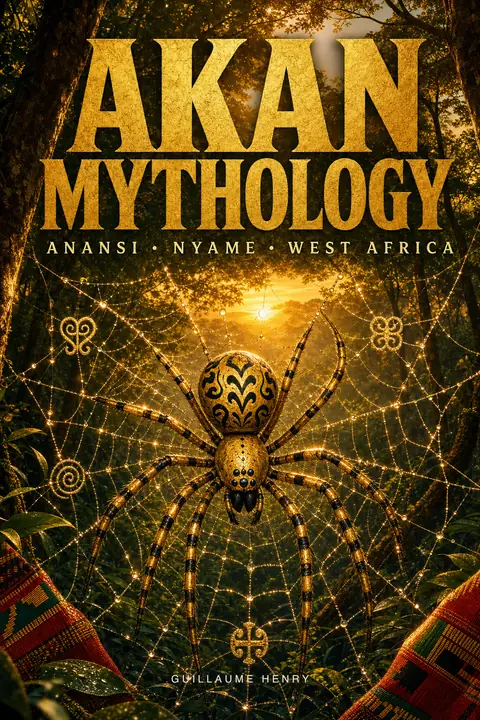
Akan
The Akan Mythology Book: Anansi, Nyame, and the Gods of West Africa
Anansi, Nyame, and West Africa
From the Ashanti and the gold coast of Ghana: Nyame the sky god, Asase Yaa the earth, the abosom spirits, and Anansi the spider, the trickster who bought all the world’s stories from the sky and whose tales crossed the Atlantic with the enslaved.
More from Akan
All articles
Akan
Odwira Festival: Purification and Ancestral Rites in Akan Tradition
The Odwira Festival is Akan Ghana's ceremonial cleansing where communities honor ancestors and gods, purging the year's sorrows before harvest. Rooted in sacred kingship and the bond between living and the dead, Odwira binds generations through ritual fire, feasts, and the renewal of covenant.

Akan
Sasabonsam: The Forest Monster of Akan Lore
In the dense forests of Ghana and Ivory Coast, the Sasabonsam stalks the darkness. This powerful forest creature from Akan mythology embodies the dangers lurking beyond the village boundary.
Akan
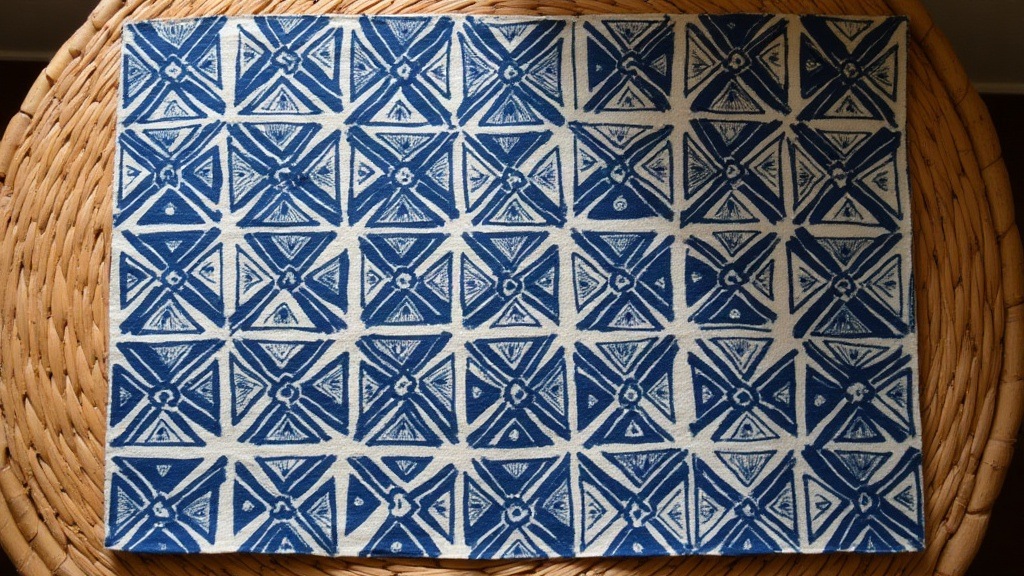
Adinkra Symbols: Visual Proverbs of Akan Wisdom
Adinkra symbols encode centuries of Akan thought into geometric patterns, each a visual proverb that teaches virtue, warns against folly, and connects the living to ancestral wisdom. Discover the stories and spiritual power behind these iconic marks.
Akan
Okomfo Anokye: Legendary Priest and Nation-Builder
Okomfo Anokye unified the Ashanti people through spiritual authority and political vision. Discover how a legendary priest transformed fragmented chiefdoms into a continental empire that challenged European powers.