
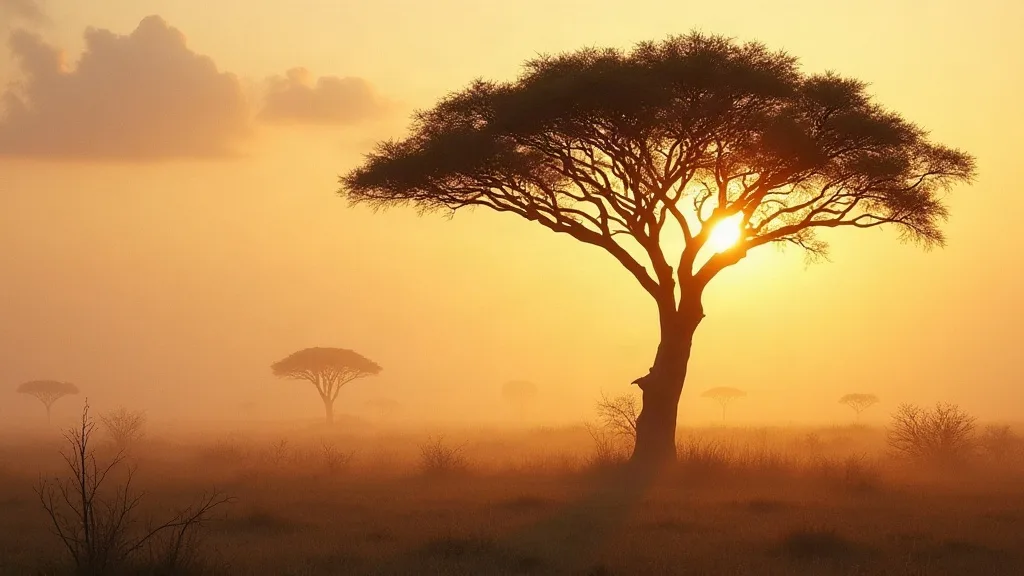
Nyame: The Supreme Sky God of the Akan
Nyame, the creator and supreme sky god of the Akan people, rules the cosmos from his distant realm above the clouds. Discover the origin of Akan cosmology, the creatures and forces that surround Nyame, and why his distant transcendence shaped centuries of West African spiritual life.
Contents
High above the earth, beyond the reach of ordinary sight, Nyame dwells in perfect solitude. The Akan peoples of Ghana and neighbouring regions do not pray to him directly. They do not build temples in his name. Yet every aspect of life on the ground below bears his fingerprint. He shaped the world at the beginning of time. He set the sun in motion. He scattered stars. And despite his removal from daily affairs, his presence pervades the cosmology that holds Akan society together. To understand Nyame is to glimpse the spiritual architecture that sustained millions across centuries.
The Akan traditions are ancient, woven from the lived experience of farmers, traders, warriors, and healers across the forested regions of present-day Ghana, Ivory Coast, and beyond. The name Nyame appears in countless oral recitations, proverbs, and ritual utterances. "Se Nyame," the saying goes: "If God wills." Not as a demand, but as an acknowledgment of a reality so vast and settled that it shapes every sentence spoken in Akan languages.
The Creator at the World's Edge
In the beginning, there was only Nyame. The Akan hold that he existed before existence itself had a shape or name. From his own being, he created the cosmos: the sky above, the earth below, the waters between. Some accounts describe him crafting the sun and moon as his own expressions, sending light into a formless void. Other tellings speak of Nyame drawing creation from speech itself, his words becoming the substance of matter.
What strikes the modern listener is not the creation event alone, but what follows it. Nyame does not hover over his work. He does not constantly intervene or demand adoration. Instead, he withdraws. He ascends to his distant realm in the sky, leaving the world to operate according to patterns he has already established. This act of withdrawal is not absence. It is the architecture of cosmic order. Nyame is so absolute, so complete in power, that the universe can function without his moment-to-moment attention.
The Akan cosmology reflects a profound understanding: a truly supreme god does not compete for attention or demand constant praise. The distances between Nyame and humanity are not barriers built from anger or indifference. They are the natural structure of rank and magnitude. A god who is everywhere is no god at all. A god worth worshipping is one so immense that his very existence sustains everything, even in silence.
The Pantheon That Mediates
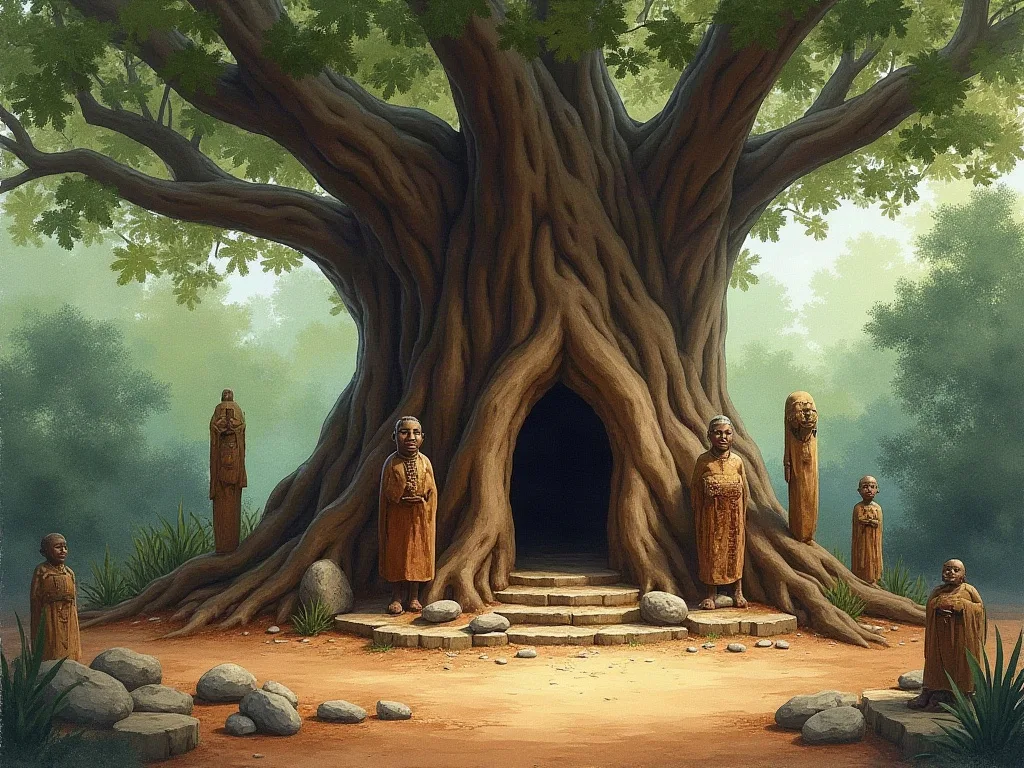
If Nyame is distant, he is not alone. The sky god shares the cosmos with a vast assembly of intermediary powers, collectively called the abosom (plural of obosom). These are not minor figures in a lesser category. They are the living bridges between the high creator and the world below.
Chief among them are the earth deities. Asase Yaa (or Asase Ya, the Earth Mother) rules the soil, fertility, and the cycles of agriculture that sustain Akan life. She is not subordinate to Nyame in essence, but different in domain. Where Nyame is transcendent and distant, Asase Yaa is immediate and tactile. A farmer knows her in the richness of black soil. She is present in the harvest. The relationship between god and earth mother is not hierarchical in a narrow sense. It is complementary. Creation requires both the transcendent principle and the fertile ground.
River deities like Tano, the most revered river god, command respect throughout the regions where the Tano River flows. Tano is a cosmic force in his own right, with shrines, priests, and followers who seek his blessing for safe passage, abundant fish, and protection from dangerous waters. Yet even Tano exists within the order established by Nyame. The sky god's authority does not negate the reality and power of the rivers and earth.
The abosom also include ancestral spirits and village deities, each rooted in a specific location or lineage. These forces are closer to human experience than Nyame could ever be. They remember names. They respond to offerings. They punish disrespect and reward piety. In this way, the Akan cosmology solves a problem that many religions face: how to maintain a transcendent creator while keeping the sacred accessible to everyday life. The answer is the mediating pantheon.

Nyame and the Invisible Order
Central to understanding Nyame is grasping the Akan concept of kra and mogya. The kra (plural nkra) is often translated as "soul" or "spirit" but carries a more nuanced meaning. It is the life force, the animating essence that Nyame grants to every human being. It is not acquired through birth alone. It comes from Nyame directly. The mogya (plural mmogya) is the blood, the lineage principle passed from mother to child. Together, kra and mogya make a complete person.
This dual inheritance reveals the structure of Nyame's creation. The spirit dimension (kra) connects every human directly to the supreme god. Even though Nyame is distant, he is not foreign. Every Akan person carries a fragment of his creative power. At the same time, the blood dimension (mogya) ties individuals to the material world, to family, to place. Nyame does not isolate the human spirit. He embeds it in community and earth.
The concept extends further. Illness, misfortune, and death are understood not as punishments from Nyame, but as disruptions in the proper relationship between kra, mogya, and the cosmic order. A person might offend an ancestor, incur the anger of a local deity, or violate a taboo (abisa). These infractions ripple outward. They can cause sickness or loss. The remedy is not to appease Nyame directly. It is to restore balance through ritual, sacrifice, and restitution to the offended party.
Yet Nyame remains the foundation. The entire system of moral and spiritual causality operates within his created order. Taboos exist because Nyame established patterns of harmony. Ancestors are powerful because Nyame granted them lasting essence. The system holds because Nyame willed it.
The Omniscience That Does Not Interfere
A paradox lies at the heart of Nyame's being. The Akan believe him to be all-knowing. He sees everything. His awareness encompasses past, present, and future. Yet he permits evil, suffering, and injustice to persist in the world below. This is not a flaw in Akan theology. It is a recognition of a deep truth: omniscience does not require intervention. Knowing does not mean controlling.
Nyame permits human beings their freedom. He allows them to choose rightly or wrongly, to prosper or to fail. The consequences of those choices manifest through the natural order and the mediation of lesser powers. An adulterer may suffer illness through the anger of an offended family member or a wronged deity. A thief may be caught and punished by human justice. A person who lives with integrity may enjoy long life and many children. The abosom and the ancestors enforce the moral order. Nyame sustains the framework in which that enforcement occurs.
This theology has profound implications. It places human responsibility at the center of life. One cannot blame Nyame for personal failure. One cannot expect him to spare the cruel or reward the dishonest simply because one prays. The sky god's transcendence is also his refusal to micromanage. That refusal is a gift, not a withdrawal of care.
The Dual Nature of Divine Distance
The distance between Nyame and humanity is sometimes described as cold, even indifferent, by outside observers. This reading misses the Akan perspective entirely. Nyame's distance is not punishment. It is evidence of his completeness. A god who must continually reassure his people is a god with doubts. A god who hovers over his creation is a god insecure in his own power.
Nyame, by contrast, is so secure that he can withdraw. He can trust the world to unfold according to the principles he established. He can allow lesser powers to mediate, ancestors to guide, and humans to choose. This is not absence. It is the ultimate form of presence.
Consider the parallel in human relationships. A parent who hovers, who constantly corrects and interferes, reveals a lack of confidence in what they have taught. A parent who has done their work, who has instilled values and judgment, can step back. They can trust. They can be absent in the physical sense while remaining absolutely present in the values they have transmitted. Nyame is that parent. The Akan world is the child who has learned to walk.
Nyame in Proverb and Daily Speech
The true measure of Nyame's place in Akan life appears not in temples, but in language itself. Countless proverbs invoke his name. "Nyame ne bere a na owo so no," the saying goes: "It is by God's time that a child grows." Another holds: "Nyame woo na o yoo na obuo na," meaning "God has given birth to it, the child bears it, and it comes to pass."
These are not invocations seeking favor. They are observations about reality itself. They are reminders that human intention alone does not determine outcome. There are forces larger than individual will. There are seasons and times. There is a hidden order. Nyame is the name given to that order. To invoke Nyame is to acknowledge that the speaker knows his or her place within something vast.
Oath-taking often invokes Nyame. A person swearing the truth before a community might place a hand on the earth or sky and call upon Nyame to witness and judge. This is not casual. It is a moment of profound responsibility. The swearer opens themselves to cosmic scrutiny. They align their word with the fundamental truth of creation. The consequence of a false oath is understood to extend beyond social shame. It is a violation of the order Nyame established.
In this way, Nyame structures even silence. His name need not be spoken constantly. His presence is woven through the grammar of daily life. To speak Akan is, in some sense, to acknowledge Nyame with every considered utterance.
Comparative Echoes: The Sky God in African Traditions
Nyame is not unique to the Akan. Across West Africa and beyond, supreme sky gods appear with similar characteristics. Among the Yoruba of Nigeria, Olorun (also Olordumare) is the high god, distant and transcendent, while the orisha (like Shango or Oshun) handle the immediate needs of the people. The Bantu peoples of Central Africa venerate Nzambi or similar high gods in corresponding cosmological positions.
What unites these traditions is a common insight: supreme power does not manifest as micromanagement. The highest god is often the most distant. The gods closest to human life are the ones with specific portfolios and immediate concerns. This is not a flaw in African theology. It is a sophistication. It allows for both transcendence and immanence, both cosmic order and personal relationship.
The colonial encounter disrupted these traditions profoundly. European missionaries often interpreted sky gods like Nyame as equivalent to the Christian God, a parallel that partly held but also missed crucial dimensions. Nyame is not a judge who demands worship in exchange for salvation. He is the ground of being. The comparison offered an entry point for conversion, but it also displaced a theology that had worked for centuries.
The Modern Encounter: Resilience and Change
Today, Nyame remains central to Akan identity, even among Christians and Muslims. The phrase "Se Nyame" persists in everyday speech. The moral vision embedded in Akan tradition persists in values and practices. Akan names often invoke Nyame: Nyamekye (gift of God), Nyamesem (God's gift), Nyameboa (God's treasure).
Some contemporary Akan thinkers have worked to recover and articulate the philosophical depth of their indigenous tradition without romanticizing it. They note that Nyame cosmology offered a sustainable relationship between human and natural world, between individual and community, between the spiritual and material dimensions of existence. It is not frozen in the past. It continues to evolve as Akan peoples engage modern challenges while remaining rooted in ancestral wisdom.
The abosom and ancestors continue to receive offerings and veneration in rural areas and among diaspora communities in the Americas and Europe. Asase Yaa still receives libations at planting and harvest. River deities still command respect. And at the heart of it all, Nyame persists as the unreachable foundation, the being whose very distance guarantees that the world below can breathe, choose, and become.
Frequently Asked Questions About Nyame and Akan Cosmology
Frequently asked questions
Why do the Akan not pray directly to Nyame if he is the supreme god?
Nyame's transcendence makes direct appeal impractical and unnecessary. He has established the world and the intermediary powers to maintain it. Praying to Nyame is like asking a monarch to personally deliver a letter when ministers, governors, and officials exist to handle such matters. The abosom, ancestors, and local deities are equipped to hear specific requests and respond. Nyame is thanked through right living and acknowledgment in proverbs, not through petition.
How do Akan people understand the problem of evil if Nyame is all-powerful and all-knowing?
Nyame's omniscience does not require him to prevent evil. The Akan see suffering and wrongdoing as consequences of broken relationships (with ancestors, deities, or cosmic law) or as the exercise of human freedom within the order Nyame created. Responsibility lies with the offender and the community, not with Nyame. The abosom and ancestral courts enforce justice. This places agency and moral weight squarely on humans and the powers immediately accessible to them.
Is Nyame equivalent to the Christian God or Allah?
Colonial missionaries often equated Nyame with God to ease conversion, and the parallel is not entirely false; both are supreme, all-knowing creators. However, Nyame does not demand exclusive worship, does not reveal himself through a single scripture, and does not punish disbelief. He is transcendent but not jealous. The comparison served political and religious purposes but obscured much of Akan theology's unique character.
What role do Nyame's names play in Akan spirituality?
Nyame is also called Odomankoma (the Eternal One), Onini Onyame (God Almighty), and Anansi's father (Anansi being the trickster spider who mediates between worlds). Each name emphasizes different facets: timelessness, power, or creative paradox. Invoking a particular name of Nyame calls upon a specific aspect of his nature. The multiplicity of names reflects the Akan understanding that no single word can contain his fullness.
How does Nyame relate to the concept of destiny (mogya and kra)?
Nyame grants the kra (spirit) and establishes the patterns of mogya (blood lineage) through which a person arrives in the world. One's character, talents, and possibilities are shaped by these twin inheritances, all gifts of Nyame's will. However, how one uses these gifts remains a matter of choice. Nyame does not predestine every action; he sets the boundaries and possibilities within which freedom operates.
The Unreachable God Who Holds Everything
Nyame does not walk among mortals. He does not appear in dreams or visions as lesser deities sometimes do. He does not demand ritual or expect temples. Yet the Akan have held him as the center of their cosmology for centuries, passing his name through generations, embedding his reality in their language, and structuring their entire moral and spiritual life around his presence.
This is the paradox that Western theology sometimes struggles to grasp: a god can be utterly transcendent and yet utterly intimate. Nyame is far beyond reach, yet present in every moment of Akan consciousness. He is silent, yet his silence is eloquent. He is absent from the daily workings of the world, yet his withdrawal is the very condition that makes the world habitable for human choice and community. His distance is not coldness. It is trust.
The Akan sky god stands at the intersection of theology and philosophy, of cosmology and ethics. To study Nyame is to encounter a vision of divinity that does not need to prove itself, that does not compete for attention, that allows the world to breathe. It is a vision that has sustained a people through centuries of change, displacement, hardship, and transformation. That endurance is itself a kind of proof.
Read the full book
Want the whole story?
The complete edition is an instant PDF download here, with a paperback on Amazon for selected titles.
Akan
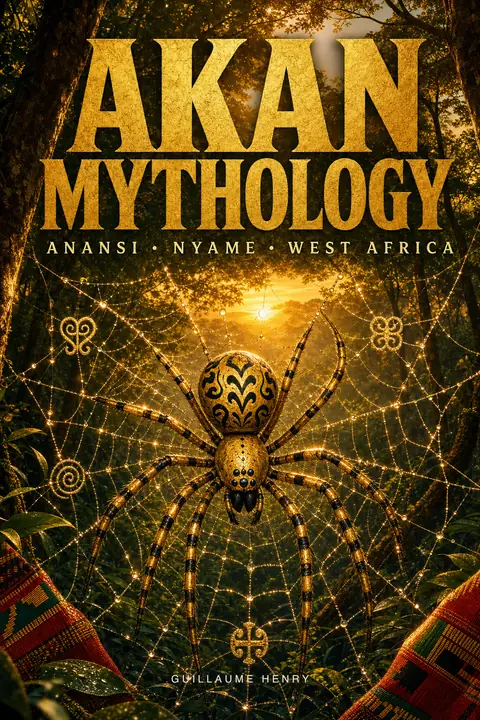
The Akan Mythology Book: Anansi, Nyame, and the Gods of West Africa
Anansi, Nyame, and West Africa
From the Ashanti and the gold coast of Ghana: Nyame the sky god, Asase Yaa the earth, the abosom spirits, and Anansi the spider, the trickster who bought all the world’s stories from the sky and whose tales crossed the Atlantic with the enslaved.
More from Akan
All articles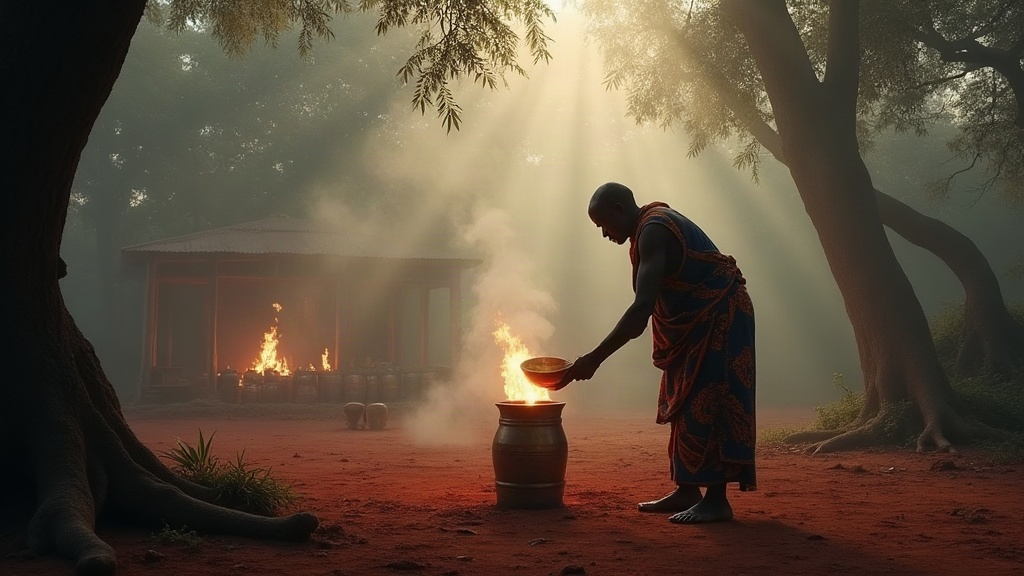
Akan
Odwira Festival: Purification and Ancestral Rites in Akan Tradition
The Odwira Festival is Akan Ghana's ceremonial cleansing where communities honor ancestors and gods, purging the year's sorrows before harvest. Rooted in sacred kingship and the bond between living and the dead, Odwira binds generations through ritual fire, feasts, and the renewal of covenant.

Akan
Sasabonsam: The Forest Monster of Akan Lore
In the dense forests of Ghana and Ivory Coast, the Sasabonsam stalks the darkness. This powerful forest creature from Akan mythology embodies the dangers lurking beyond the village boundary.

Akan
Adinkra Symbols: Visual Proverbs of Akan Wisdom
Adinkra symbols encode centuries of Akan thought into geometric patterns, each a visual proverb that teaches virtue, warns against folly, and connects the living to ancestral wisdom. Discover the stories and spiritual power behind these iconic marks.
Akan
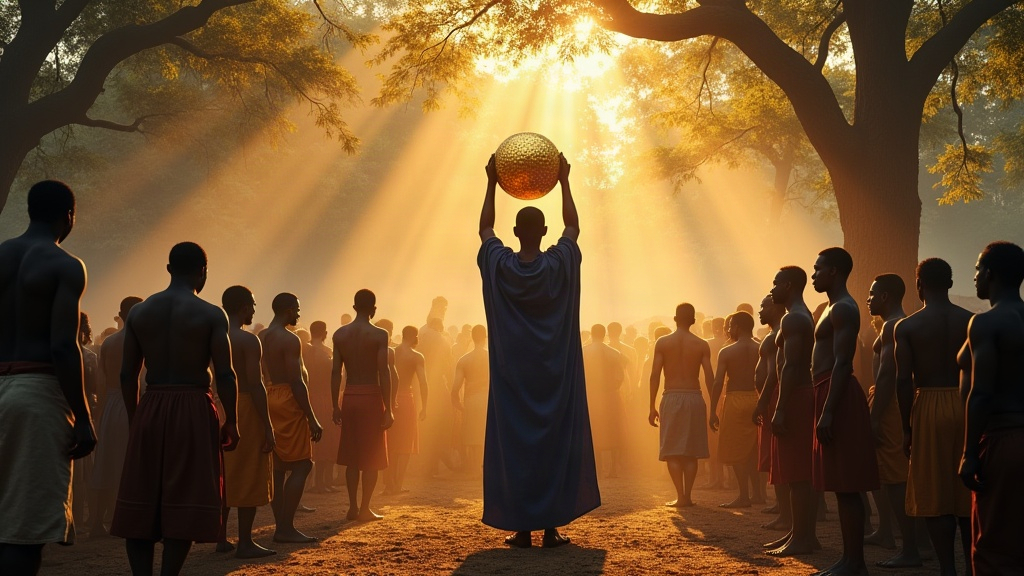
Okomfo Anokye: Legendary Priest and Nation-Builder
Okomfo Anokye unified the Ashanti people through spiritual authority and political vision. Discover how a legendary priest transformed fragmented chiefdoms into a continental empire that challenged European powers.