
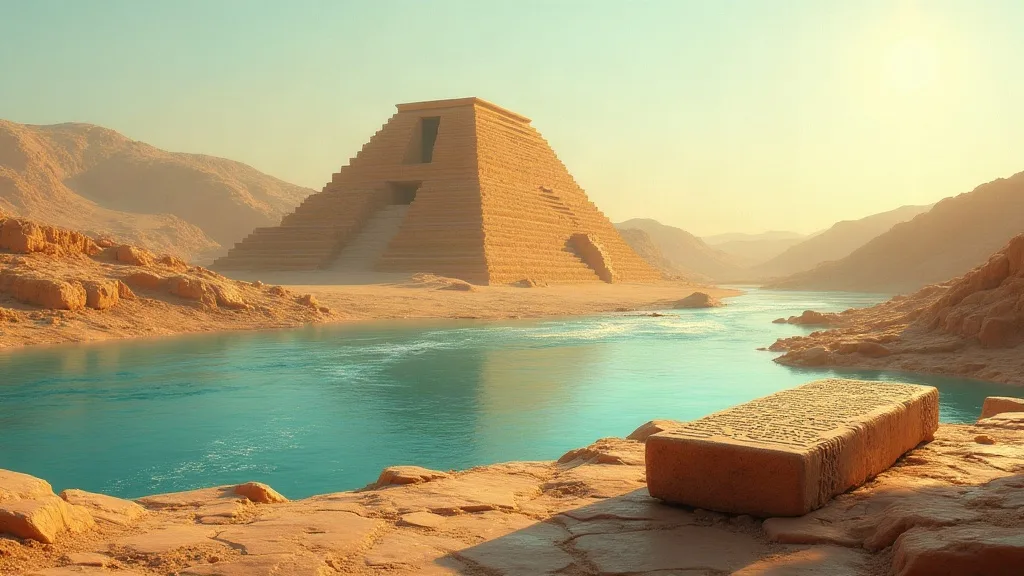
Enki: God of Wisdom, Water, and Creation
Enki shaped human intelligence and filled the rivers with life. This Sumerian god of wisdom, water, and cunning stands at the heart of creation itself, bending the rules when justice demands it. Meet the architect of civilization.
Contents
In the beginning, before the temples rose and the cities took their walls, there was chaos on the waters. The primordial abyss called the Apsû churned in darkness, containing all the unformed potential of existence. Into this chaos moved Enki, the god who would become the living principle of intelligence, fresh water, and creation itself. His name means "Lord of the Earth" in the Sumerian language, though his domain reached far deeper: into the rivers, into human thought, into the very mechanisms by which the world could function.
The Sumerians, who flourished in southern Mesopotamia from roughly 3500 to 1900 BCE, wrote about Enki on clay tablets that survive in museums across the world. They gave him more faces than perhaps any other god in their pantheon. He was generous and cunning, he was the master of magic, he was the keeper of the sacred laws, and he was deeply, almost tragically, invested in humanity's survival. When you read the myths of Enki, god of wisdom, water, and creation, you read about a deity who refused to let mortals remain slaves to the other gods.
Origins and the Cosmic Order
The Sumerian poem called the Enuma Elish (a Babylonian work, though it drew on older Sumerian traditions) describes the world's first moments. Before Enki took his place among the great gods, the cosmos existed as layers: the sky above, the earth in the middle, and the waters below. Enki's home lay in that watery deep, the Apsû, a fresh-water ocean that ran beneath the solid earth. This was not a place of death or danger; it was a place of abundance and infinite creative potential.
The Sumerians were farmers and irrigation engineers. Water meant survival. The Tigris and Euphrates rivers brought life to a region that could otherwise be desert. When they looked at Enki, they saw the god of exactly what kept them alive: irrigation, wells, rain, the springs that never ran dry. But they also saw something more. Enki was the god of wisdom (me in Sumerian, a word meaning both cosmic law and divine intelligence). He knew the words that made things happen. He understood how to make flesh think, how to organize society, how to build cities.
One of the clearest accounts comes from a myth recorded in Sumerian cuneiform called "Enki and the World Order." In this story, the high god Enlil (Enki's elder and often his rival) calls all the great gods together to assign divine responsibilities. Enki speaks last, claiming me (divine decrees) for himself. He declares that through him all order flows: wisdom, craftsmanship, justice, music, kingship itself. The other gods do not contradict him. They recognize that without Enki's intelligence, the cosmos could not remain structured.
The Creation of Humanity
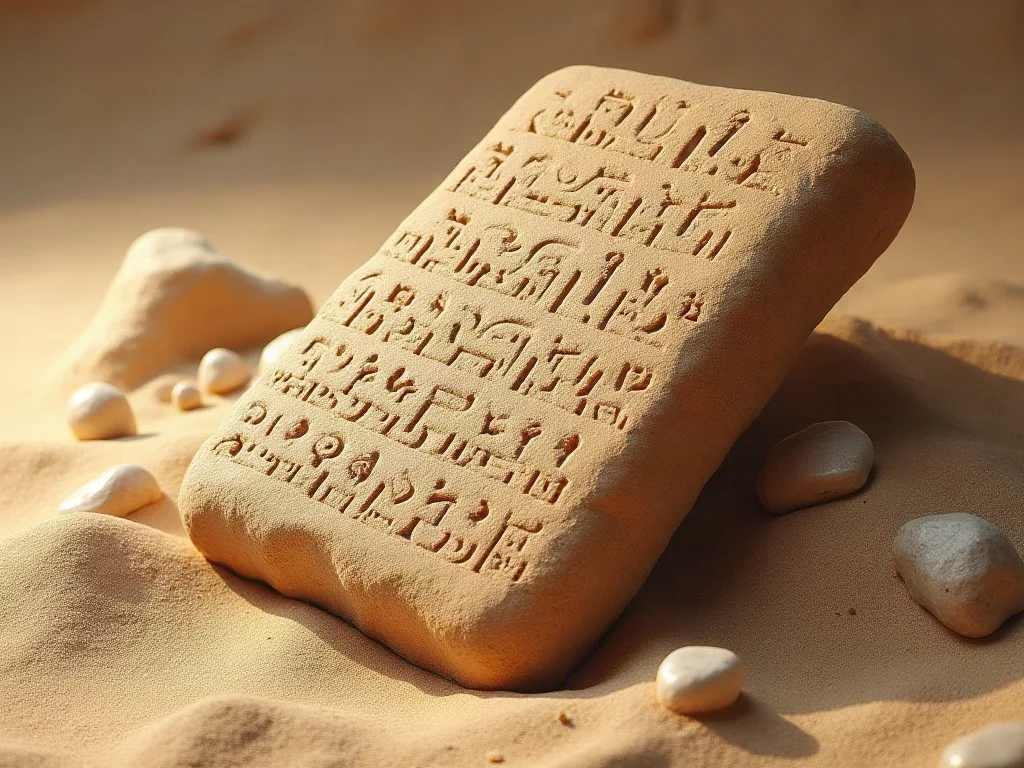
The Sumerian and later Akkadian myths preserve a remarkable account of how humans came to be. The gods had created the world, but they still faced labour: irrigation ditches to dig, fields to tend, temples to build. The lesser gods, called the Igigi, grew tired and rebellious. They refused to work anymore.
It was Enki, god of wisdom, water, and creation, who proposed the solution. He spoke to the assembly: "Let us create a servant in the form of the gods, a being with intelligence but subordinate will." In some versions, Enki himself shapes humans from clay, with Ninhursag (or Nammu), the mother goddess, lending her creative power. In others, Enki designs the form while another deity does the physical work.
The act was not purely selfish. Yes, humans would labor for the gods. But Enki insisted on something revolutionary: they would have me, access to wisdom. He gave them the capacity to learn, to plan, to organize. He taught them agriculture, mathematics, medicine, and law. Some ancient Sumerian texts describe Enki appearing to human kings and priests in dreams, sharing the secrets of kingship and right governance. The god treated humanity not as mere servants, but as beings worthy of knowledge.
This sets Enki apart from other creator deities across world mythologies. He did not remain distant. He had a relationship with his creation. He felt responsibility toward them.
The Flood and the Survival of Wisdom
One of the most striking myths about Enki involves the great deluge. All the high gods met and decided that humanity had become too loud, too numerous, too troublesome. They chose to send a catastrophic flood to wipe the earth clean. Enlil, the king of the gods, led the decision. Enki was bound by an oath not to reveal the gods' plan to mortals.
But Enki kept his oath in a way that bent it beyond breaking. He approached the wall of the home of Atrahasis (or Ziusudra in another version), a pious king and priest. Enki spoke through the wall, as if to the wall itself, ensuring that technically he was not addressing Atrahasis directly. He warned the hidden listener about the coming destruction. Atrahasis heard. He built a great boat, gathered his family and the seeds of all living things, and survived the waters.
When the flood receded and Atrahasis emerged, the other gods were angry. But Enlil, seeing the survival of one righteous man and his cargo of life, accepted it. The sacrifice would not be total. And it was Enki, god of wisdom, water, and creation, who had ensured that some light would remain when the darkness passed. He had turned the instrument of his own domain, water itself, into an agent of salvation.
This myth resonates across cultures. A similar flood story appears in the Epic of Gilgamesh, an Akkadian work that drew on Sumerian themes. The pattern also echoes in later Judeo-Christian traditions. But what makes the Enki version unique is that the god acts not from rage or righteousness, but from compassion. He chooses to defy his peers because he knows that complete destruction would leave the cosmos empty of meaning.

The Seven Me and the Theft of Wisdom
Another crucial myth depicts Enki as a kind of divine trickster. In "Enki and Inanna," the two gods meet at a tavern in the city of Eridu. They share a meal. Enki, made generous by drink (or perhaps seeing an opportunity to empower his daughter-in-law, depending on the version), begins to offer Inanna the me. These are not laws in the modern sense, but rather the fundamental principles and technologies that allow civilization to function: priesthood, kingship, law, craft, music, battle, and dozens more.
Inanna accepts each gift. As Enki grows more inebriated, she collects me by the dozens. By morning, Enki sobers up and realizes what he has done. He sends a storm and several monsters to chase Inanna back to her city of Uruk. She escapes, taking the me with her. When Enki's messengers demand their return, Inanna refuses. She has entered the walls of Uruk, and Enki knows he cannot breach her city's protection. The me stay with Inanna.
This myth reveals something essential about Enki's character. He is not purely a keeper of order. He is also a donor, a champion of decentralized power. He wants the other gods and the younger deities to have agency and the tools to exercise it. This makes him dangerous to Enlil's hierarchy, but it also makes him beloved by those who depended on the gifts of civilization.
The myth also shows Enki's acceptance of limitation. He cannot undo what he has given. Once wisdom leaves the hands of the giver, it belongs to the receiver. This is a mature theology: the acknowledgment that creation, once released into the world, lives by its own rules.
Enki the Healer and Craftsman
The Sumerians saw Enki, god of wisdom, water, and creation, as the source of healing and magic. Fresh water itself was sacred to him; rivers and wells were his sacred spaces. Any person who entered water under Enki's watchfulness was under his protection. The sick came to rivers to be cleansed and healed.
But Enki's healing went beyond the physical. In one myth, the goddess Ninhursag becomes pregnant with Enki's child (a myth that moves through several versions and interpretations in Sumerian lore). When the pregnancy reaches its climax, Enki eats the young plants that have grown from the earth. This kills Ninhursag's unborn children. Ninhursag becomes furious and places a death curse on Enki. But she does not leave him to die. Instead, she agrees to heal him if he will acknowledge the new life she will create. Enki accepts. Ninhursag heals him, and in the process eight new deities are born, each associated with a different part of the body or a different human condition.
This myth shows Enki not as infallible, but as capable of learning and growth. He makes mistakes. He can be cured. He can be held accountable. This made him human in a way that the more distant and imposing gods were not.
Enki was also the god of craftsmen and artists. The metalworker who shaped copper, the potter at her wheel, the mason building a temple, all looked to Enki for inspiration and skill. His me included all practical knowledge. To be an artisan was to be in conversation with Enki's intelligence working through your hands.
Enki and the Architecture of Creation
The Sumerian cosmology depicted reality as organized into distinct realms. The sky was Anu's (the highest god's) domain. The air and storm belonged to Enlil. The earth belonged to Ki. But it was Enki who understood how these realms connected, how water flowed between them, how the seeds of knowledge could germinate in each. In the myth called "Enki and Ninmah," the two deities work together to shape the final form of the world. Ninmah creates different types of human beings, some weak, some strong, some fertile, some barren. Enki responds to each creation by finding it a place and a function in society. No one is wasted. Everyone has a role and receives Enki's blessing within that role.
This reflects the Sumerian understanding that the universe was not a machine to be operated, but an ecosystem to be tended. And Enki was the gardener who ensured that every part of creation served the whole.
The Sacred Me: Laws That Enki Guards
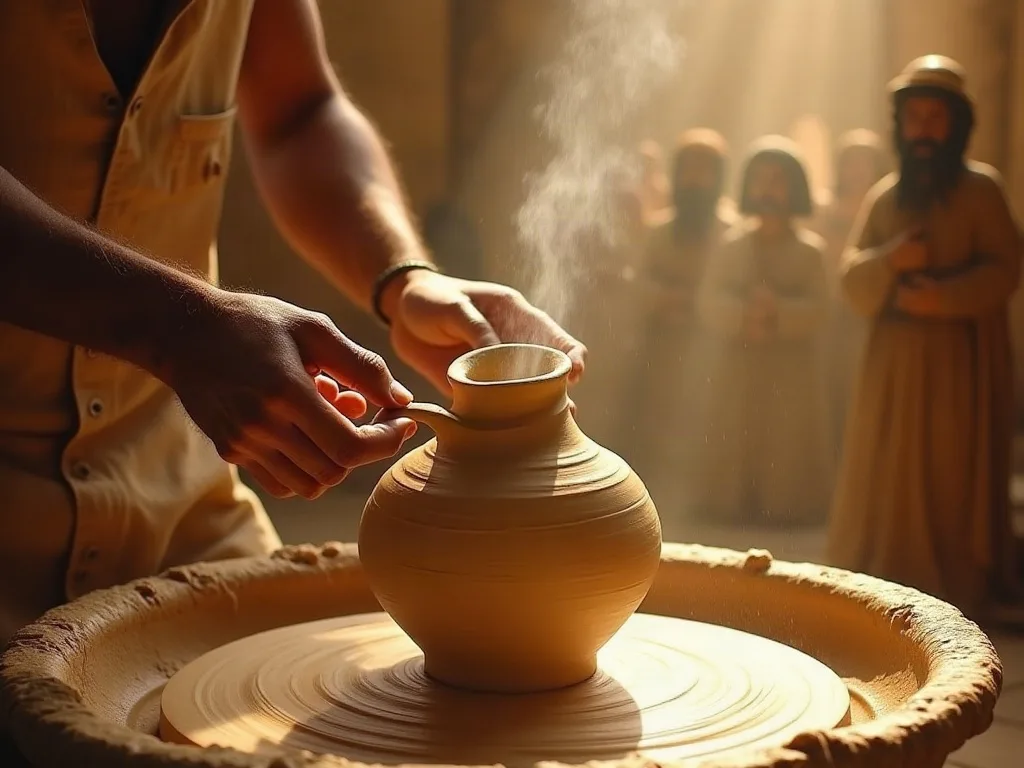
In Sumerian thought, the me (sometimes written as me in English transliterations, also called parsu in Akkadian) represented the fundamental laws and technologies of civilization. Enki held them in trust, but he was not hoarding them. Rather, he distributed them thoughtfully to those he believed could use them wisely.
The me included practical things: metallurgy, carpentry, the law of contracts. But they also included abstract principles: truth-telling, the authority of kingship, the right to make offerings to the gods. To Enki, there was no distinction between technical knowledge and moral knowledge. Both were expressions of wisdom. Both had to be distributed with care.
One of Enki's most important me was the secret of freshwater. He kept the springs flowing. When the world was threatened with drought, it was Enki's waters that could break the spell. This made him indispensable. Even Enlil, the king of the gods, could not function without Enki's cooperation in maintaining the basics of life.
Enki in Akkadian and Later Traditions
When the Akkadians conquered Sumer around 2350 BCE, they absorbed Sumerian gods into their own pantheon. Enki became Ea (or Ayya), and his character evolved. The Akkadians, who inherited Sumerian myths but were not Sumerian themselves, sometimes shifted Enki's role. In the Enuma Elish, an Akkadian creation myth written much later (around 1200 BCE), Ea plays a more defensive role. He is a skilled magician and trickster, but also more cautious, more bound by rules.
What remained constant: Enki/Ea was never a god of war or pure power. He was cunning, patience, the long view. While Marduk (the Akkadian chief god) dominated through force, Ea dominated through wisdom. This reflected a universal truth about power: knowledge often defeats strength in the long run.
The Hittites, who occupied what is now Turkey, also adopted Enki into their pantheon. In Hittite mythology, the god appears in the story of Kumarbi, a Hittite creation myth that borrowed from Mesopotamian sources. Here again, Enki/Ea is the wise elder, the keeper of secrets, the god consulted when the cosmos itself is at stake.
Enki's Legacy in Later Religion and Art
After cuneiform ceased to be written (around the first century BCE), the myths of Enki passed into silence for centuries. Only in the 19th and 20th centuries, when archaeologists began excavating Mesopotamia and deciphering clay tablets, did Enki's voice return to human ears.
What scholars discovered was a god of unexpected sophistication. Not a distant cosmic principle, but a being with agency, humor, compassion, and limits. Enki could be fooled (as happened when he drank too much wine). He could change his mind (as he did when he saw Ninhursag's creation). He could be angry (when his gifts were misused). But above all, he cared.
In modern fiction and games, Enki has become a figure of fascination. Writers and designers recognize in him a template: the mentor god who does not create servants but allies. The wisdom-keeper who recognizes that true intelligence must eventually be shared. This makes him more relevant to contemporary readers than many ancient deities whose main function was to remind mortals of their smallness.
The city of Eridu, where Enki held his primary temple (the E-abzu, or "House of the Deep"), was believed to be the first city ever built. Archaeological evidence from the 5th millennium BCE shows it was indeed one of the earliest urban centers in Mesopotamia. When the Sumerians thought of civilization beginning, they thought of Eridu, and therefore of Enki. He was not just a god; he was the god who made cities possible.
Frequently asked questions about Enki, god of wisdom, water, and creation
Frequently asked questions
Why did Enki protect humans if the gods wanted to destroy them in the flood myth?
Enki saw humans as his own creation and responsibility. When the assembly of gods voted to send the flood, Enki recognized an injustice: destroying the righteous along with the guilty. His loyalty to the righteous king Atrahasis overrode his loyalty to the other gods' decision. This shows Enki's moral independence and his refusal to treat humans as disposable.
How does Enki differ from Enlil, the king of the gods?
Enlil represented authority, law, and punishment. He maintained order through force and hierarchy. Enki represented cunning, healing, and adaptive change. While Enlil said "this is how things must be," Enki asked "is there a better way?" They were complementary but often in tension. Enlil kept the cosmos stable; Enki kept it alive and evolving.
What is the connection between Enki and the later god Ea in Akkadian myth?
When the Akkadians conquered Mesopotamia, they merged Sumerian and Akkadian religious traditions. Enki became Ea in Akkadian texts, and while the core character remained the same, a wise, magical god of water, Ea took on slightly different roles depending on the specific myth. The Enuma Elish presents Ea as more subordinate to Marduk than Enki was to any god in earlier texts.
What were the me, and why were they important?
The me were the fundamental laws, technologies, and principles that made civilization function: everything from kingship and law to music and craft. Enki held them in trust and distributed them. The me represented the idea that wisdom and knowledge, once given, could not be taken back. This made them powerful tools but also potential threats if misused.
Why did Enki give the me to Inanna after drinking wine?
This myth works on two levels. On the surface, it shows Enki as fallible, capable of losing control. But deeper, it reveals his actual values: he wanted other gods and mortals to have access to civilization's tools. His "drunken" generosity may have been a way for the Sumerians to explain why power and knowledge, once held in one place, inevitably spread. The myth accepts this as natural and even necessary.
How did Sumerian worship of Enki translate into actual religious practice?
Enki's main temple was the E-abzu in Eridu, one of the oldest temple sites in Mesopotamia. Worshippers brought offerings of water, fish, and agricultural products. Priests performed rituals to ensure the rivers flowed and the harvests came. Enki was also invoked in magical rites and in the training of scribes, since writing itself was seen as a form of magic and wisdom. Kings consulted his oracles through divination.
Enki and the Question of Divine Rebellion
What sets Enki, god of wisdom, water, and creation, apart from most other ancient deities is his willingness to question authority. He respects Enlil's kingship, but he does not obey blindly. When the assembly decides to destroy humanity, Enki finds a loophole. When asked to give up the me, he eventually accepts Inanna's theft as justice. When cursed by Ninhursag, he permits himself to be healed and learns from it.
This suggests something revolutionary in Sumerian theology: the idea that even the gods are subject to a larger principle of balance and fairness. Enki is not a rebel in the sense of overthrowing the system. Rather, he is a reformer who works within the system to make it more just. His cunning and his wisdom serve not his own aggrandizement, but a vision of a cosmos where intelligence, compassion, and practical knowledge are always available to those who need them.
In an age when the written word was rare and precious, when literacy was power, when knowledge could be monopolized, Enki represented something radical: the belief that wisdom should flow like water, abundant, nourishing, reaching everywhere. That belief echoes across millennia, wherever people have resisted the hoarding of knowledge and insisted that understanding should be shared.
Read the full book
Want the whole story?
The complete edition is an instant PDF download here, with a paperback on Amazon for selected titles.
Sumerian
The Sumerian Mythology Book: Gilgamesh, Inanna, Enki, and the World's Oldest Sacred Stories
Gilgamesh, Inanna, and the world's oldest written myths
The earliest written myths on earth, preserved on clay tablets four thousand years ago. Gilgamesh seeking immortality, Inanna descending to the underworld, Enki shaping the cosmos. Here is what survived.
More from Sumerian
All articles
Sumerian
Inanna: Goddess of Love, War, and the Planet Venus
Inanna commands both ecstasy and carnage: a Sumerian goddess who embodied love, war, and the morning star. Her descent to the underworld remains literature's oldest recorded myth of transformation and return.
Sumerian
Eridu: The First City and Sacred Center of Sumerian Civilization
Eridu was the oldest city on Earth, where the Sumerians believed civilization itself began. Archaeologists have found temples, artifacts, and evidence of the world's first urban settlement here, where gods and humans first mingled.
Sumerian
The Me: Divine Powers and Cosmic Order in Sumerian Mythology
The Me were not objects but fundamental laws of existence itself. Sumerian texts reveal how goddesses stole them, gods hoarded them, and the whole universe bent to their will.
Sumerian
An: The Sky God and Father of the Gods
An ruled the Sumerian heavens as the oldest god in the pantheon - remote, absolute, and sovereign. Learn how this sky father shaped every deity, ritual, and royal claim in ancient Mesopotamia.