Sumerian
Discover Sumerian mythology, humanity's oldest written religious tradition. Meet Anu, Enlil, and Inanna; explore the creation myth, the flood, and how Sumer shaped every mythology that followed.
Browse Sumerian
The world's first recorded story of creation did not come from the Greeks, the Hebrews, or the Hindus. It came from the swamps and cities of ancient Mesopotamia, carved onto clay tablets in wedge-shaped marks called cuneiform. When a Sumerian scribe sat down around 1800 BC to write down the myth of creation, he was recording something his people had chanted and retold for centuries, perhaps millennia. That myth still survives. The gods he named, Anu, Enlil, and Inanna, still speak to us across 5,000 years. Their stories shaped how every culture that followed imagined the divine, the human, and the space between them.
Sumerian mythology is not distant theology. It is the ancestor of all Middle Eastern religion. The Akkadians borrowed it, adapted it, passed it forward. The Hebrews knew it, reacted to it, sometimes rejected it. The Greeks would meet Mesopotamian ideas as they expanded eastward. Every major tradition that came after Sumer stands on ground Sumer first broke. To read Sumerian myths is to read the birth certificate of human storytelling itself.
The Primordial Waters and the Birth of the Gods
Before the gods shaped the cosmos, there existed only water. In Sumerian thought, the universe began as chaos, an undifferentiated state where fresh water and salt water mingled without form or purpose. The earliest Sumerian texts jump over this primordial state; they begin with the gods already present, already acting. But the mythology was clear about one thing: something had to exist before existence itself could take shape.
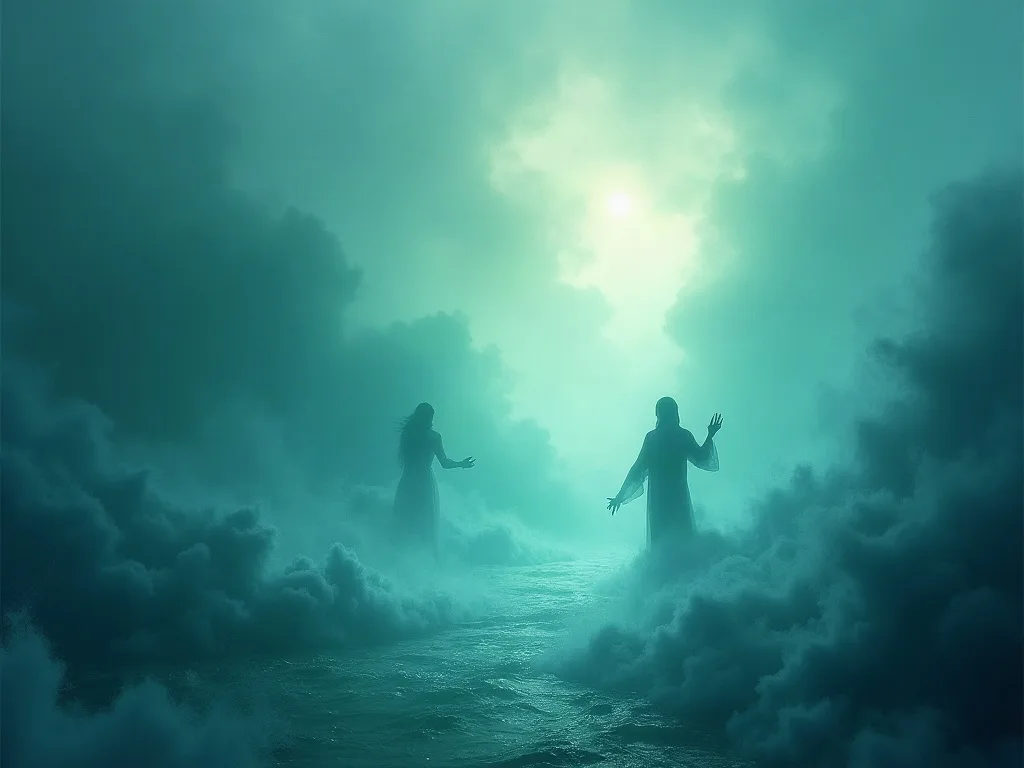
From this primordial chaos emerged An (also called Anu), the sky god, and Ki, the earth. These two were not created; they were the first separation. An rose upward, Ki settled below, and between them grew a space. Into that space fell Enlil, god of the air and the wind, often portrayed as the second most powerful force in the cosmos after Anu himself. Enlil would become the executive power of the Sumerian pantheon, the god who carried out decisions, who shaped the world, who brought order and structure.
This is radically different from later creation myths. There is no titanic battle here. No serpent of chaos dying to become the earth, as in the Babylonian Enuma Elish (though that later myth borrowed Sumerian bones). The Sumerian cosmos organizes itself through separation and relationship, not through violence. The gods do not conquer chaos; they create structure by dividing what was unified.
The Pantheon: Anu, Enlil, Inanna, and the Divine Assembly
Anu represented the highest heaven, the unreachable sky. He was rarely invoked in daily prayer. Farmers did not call to Anu to water their barley. But he held ultimate authority; all other gods deferred to him. Sumerian kings called themselves "priests of Anu" to justify their power on earth.
Enlil was the god most present in human affairs. He dispensed justice. He granted kingship. When the Sumerians wanted a decision from the divine world, they called to Enlil. His seat was in the city of Nippur, which became the religious capital of Sumer not because it was the largest or richest, but because Enlil's temple stood there. Pilgrimages flowed to Nippur like water to the sea.
Inanna, the goddess of love, war, and the sky's brightness, commanded a fiercer devotion than either Anu or Enlil. She was the planet Venus, visible in the morning and evening sky. She could give fertility and abundance, but she could also inflame desire and bring defeat in battle. Worshippers of Inanna understood her as wild, unpredictable, impossibly powerful. She had no patience for the ordered bureaucracy of heaven; she moved by passion.
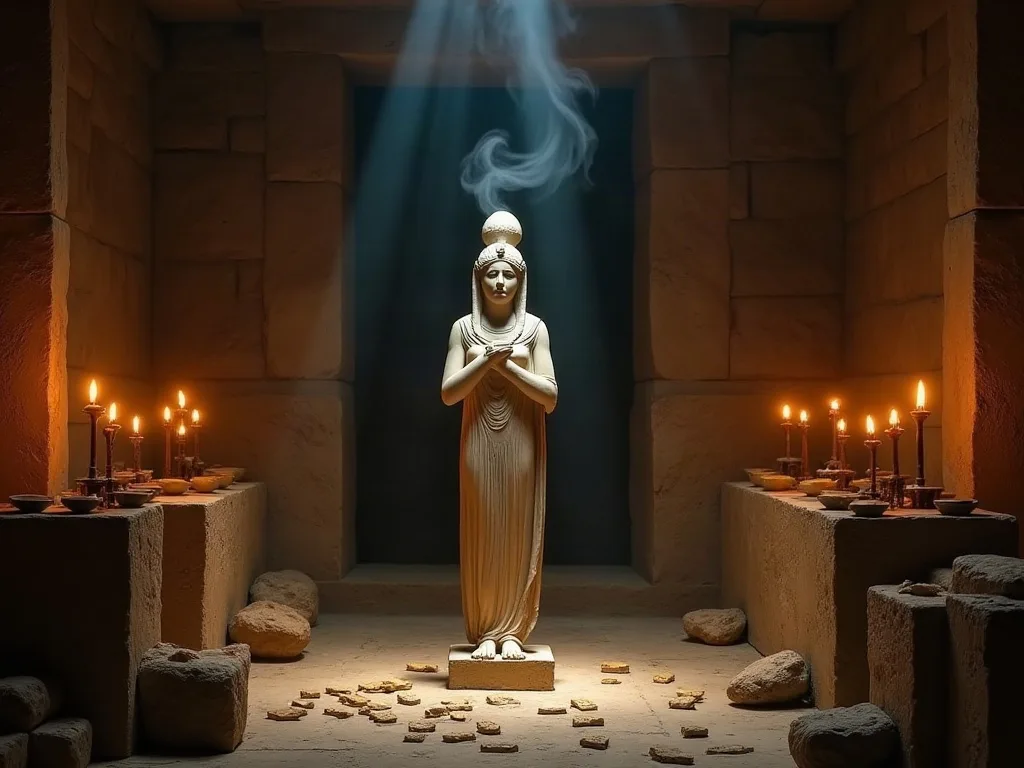
Enki, god of fresh water and wisdom, lived in the apzu, the underground sweetwater ocean beneath the earth. He was the craftsman of the gods, the one who gave humans their tools and their cunning. Unlike Enlil, who governed through authority, Enki worked through cleverness and generosity. He was also unstable, prone to changing his mind, capable of both blessing and curse.
The Sumerian cosmos functioned like a vast temple bureaucracy. At the top, the Anunnaki, a collective of major and minor deities, gathered to make decisions. Each god had a sphere of influence, a temple where priests served him, and a role in maintaining the cosmic order called me (pronounced "may"). The me were divine decrees, laws of nature themselves, written down in the oldest texts as a list of abstract powers: sovereignty, divinity, priesthood, truth, judgment, and dozens more. These me were not mere rules; they were the very fabric of how things were supposed to work.
The Creation Myth and the Flood
The earliest Sumerian creation texts do not present a moment of cosmic origin the way later traditions would. Instead, they describe how the gods organized what already existed. In the tale "Enuma Elish" (a later Akkadian version heavily influenced by Sumerian models), Marduk defeats the chaos-serpent Tiamat and creates humans from her blood. But the Sumerian foundation was simpler and stranger: humans existed to serve the gods, to maintain their temples, to feed them through offerings.
In one of the oldest Sumerian texts, humans are created because the gods are tired of their own labor. Enki and the mother goddess Ninhursag decide to fashion workers from clay. The gods will eat, sleep, and be served. Humanity will do the hard work. It is a tale of radical inequality, but also of purpose: humans exist for something, not merely by accident.
Then came the flood. The Sumerian kings list records that "the kingship came down from heaven" after "the flood swept over." Eight kings ruled before the deluge, reigning for thousands of years each. Then water covered the earth. The details survive in fragments, most completely preserved in later Babylonian sources like the Epic of Gilgamesh, but the Sumerian kernel is clear: a catastrophe swept away the old world. A king named Ziusudra (or Atrahasis in the Akkadian version) received warning, built a boat, and survived with his family and animals. The gods regretted the flood. Humanity was not destroyed, but reduced, reset, humbled.
This story would echo through every Mesopotamian culture, and eventually appear in the Hebrew Bible as the story of Noah. The Sumerians had already told it.
Inanna's Descent to the Underworld
Of all Sumerian myths, the tale of Inanna's descent into the underworld is the most psychologically complex and the most widely retold. It survives on clay tablets, and later Akkadian versions expanded it, but the Sumerian core remains the most arresting.
Inanna decides, for reasons never fully explained, to visit the underworld kingdom of her sister Ereshkigal. The underworld is not a place of moral judgment in Sumerian thought, not yet; it is simply the realm of the dead, a diminished gray existence. But Ereshkigal rules there with absolute power. Inanna approaches the seven gates of the underworld. At each gate, she must surrender something: her crown, her robe, her weapons. With each surrender, her power diminishes.
At the final gate, she stands naked before Ereshkigal and the council of judges. They look at her. Ereshkigal kills her. Inanna hangs, dead, on a hook for three days.
Her servants, loyal to the end, cry out to the gods. Enki hears and acts. He fashions two creatures from dirt, neither male nor female, and sends them to the underworld with instructions to mourn Ereshkigal and share her suffering. Ereshkigal, moved by this empathy, restores Inanna to life. But the laws of the underworld demand a substitute. Inanna returns to the world above, but someone must take her place in the land of the dead.
This myth carries layers: the loss of power, the vulnerability of even the greatest goddess, the possibility of resurrection through empathy, the inevitability of death. No later mythology fully captures what Sumer captured here.
The Legend of Gilgamesh and the Search for Immortality
Gilgamesh begins as a king, two-thirds divine and one-third human, tyrannical and strong. He oppresses his city of Uruk until the gods send Enkidu, a wild man, to be his match. Enkidu and Gilgamesh fight. They become inseparable.
Then Enkidu dies. Gilgamesh, devastated, travels to the ends of the earth seeking Utnapishtim (the Sumerian Noah figure), the only human ever granted immortality by the gods. Gilgamesh wants the secret. He finds Utnapishtim. The old man tells him: there is no secret. The gods grant immortality only once, to him alone, because of the flood. Everyone else must die. Gilgamesh can try to pass a test: stay awake for seven days and nights. Gilgamesh sleeps instantly and wakes defeated.
Yet at the end, Utnapishtim gives Gilgamesh a consolation. There exists a plant that renews youth. Gilgamesh finds it, but a serpent steals it as he sleeps. Gilgamesh returns to Uruk empty-handed. But he has found peace. He accepts that kingship, legacy, and the city he built are the only immortality a mortal receives.
The Epic of Gilgamesh is technically Akkadian, composed in Akkadian, but it is rooted in Sumerian tales of a real Sumerian king. The Sumerians knew the story first. And the truth it carries is Sumerian truth: mortality is not a failure. It is the law. What matters is what you build while you live.
The Me: Divine Order and Cosmic Law
Central to Sumerian religion was the concept of me, often translated as "divine decrees" or "laws of nature." These were not abstract principles but concrete, almost physical forces that governed how the cosmos functioned. Anu held the me of kingship. Enlil held the me of judgment. Inanna held the me of sexual desire and warfare.
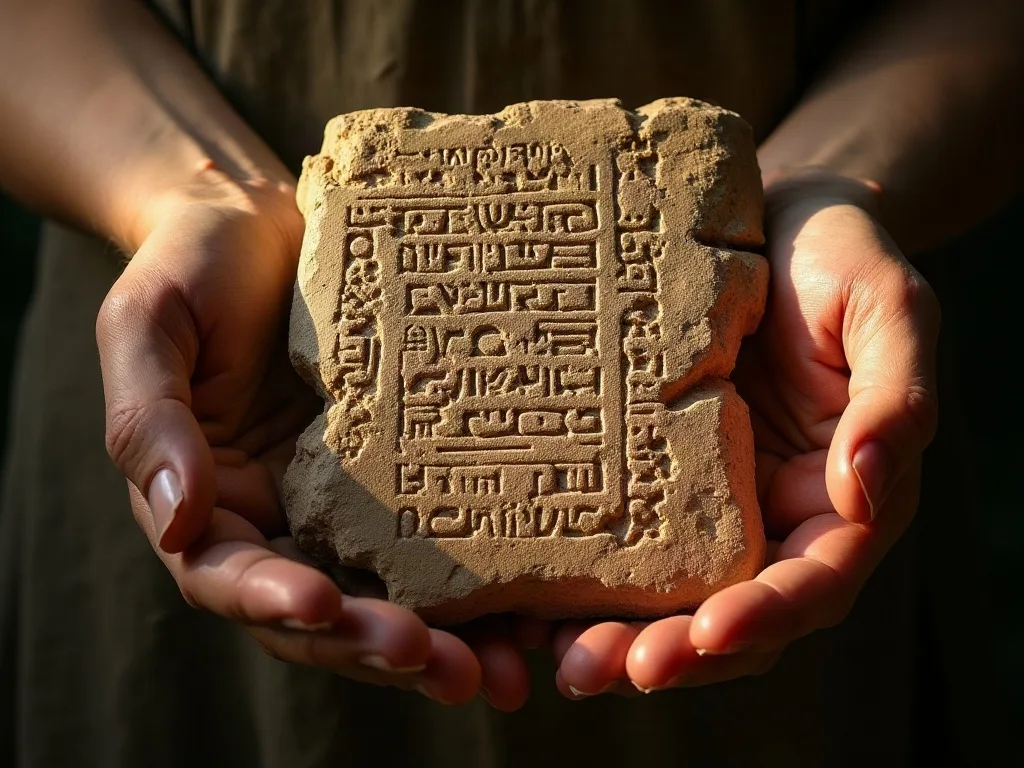
When a Sumerian king was inaugurated, the priests would recite a list of the me he now carried: sovereignty, divine essence, truth, priesthood, power, judgment, counsel, and dozens more. By speaking these words, the king received the authority they contained. The recitation itself was an act of creation. Words shaped reality.
This concept would influence how every later Mesopotamian culture understood law and order. The Code of Hammurabi, created centuries after the height of Sumer, codified the me into written law. The idea that order itself is divine, that rules are not merely practical but sacred, this came from Sumer.
Priests, Temples, and the Daily Work of Religion
Sumerian religion was not primarily about belief. It was about maintenance. The gods required housing, feeding, and service. A temple was not a place where humans gathered to pray in the modern sense; it was a place where the god actually lived. The god needed food twice a day. Priests prepared ritual meals and placed them before the god's statue. The ceremony was not symbolic. The god ate. The leftover food was then eaten by the priests and the community.
Kings funded the temples. The temple owned land. Priests managed irrigation, stored grain, and administered justice. Religion and governance were not separate; they were one system. A weak king meant weak temple support, which meant the gods were angry, which proved the king was unfit. Every Sumerian king's legitimacy depended on his piety.
How Sumer Shaped Every Mythology That Followed
The Sumerians were the first to write down their myths. This gave them outsized power over human imagination. When the Akkadians conquered Sumer, they did not destroy the stories; they adopted them, translated them, added their own gods to the pantheon. When later Babylonians created the Enuma Elish, they built it on Sumerian foundations. The flood, the chaos preceding order, the bureaucratic pantheon of competing divine powers: all Sumerian.
The Hebrews knew these stories. When they composed the creation account in Genesis, they wrote against Sumerian and Babylonian mythology. "In the beginning, God created the heavens and the earth." Not "the heavens and earth separated themselves." Not "a chaos of water existed first." The monotheism of Hebrew scripture was, in part, a deliberate revision of Sumerian polytheism.
The Greeks encountered Mesopotamian ideas through trade and conquest. Echoes appear in Hesiod's Theogony, which describes the Titans and the gods in ways that parallel Sumerian accounts of primordial forces and divine hierarchy.
Even when later cultures rejected Sumerian ideas, they were reacting to Sumerian ideas. The shape of mythology itself, the way humans think about gods, origins, and destiny, was sculpted first by Sumer.
Why Sumerian Tablets Matter Today
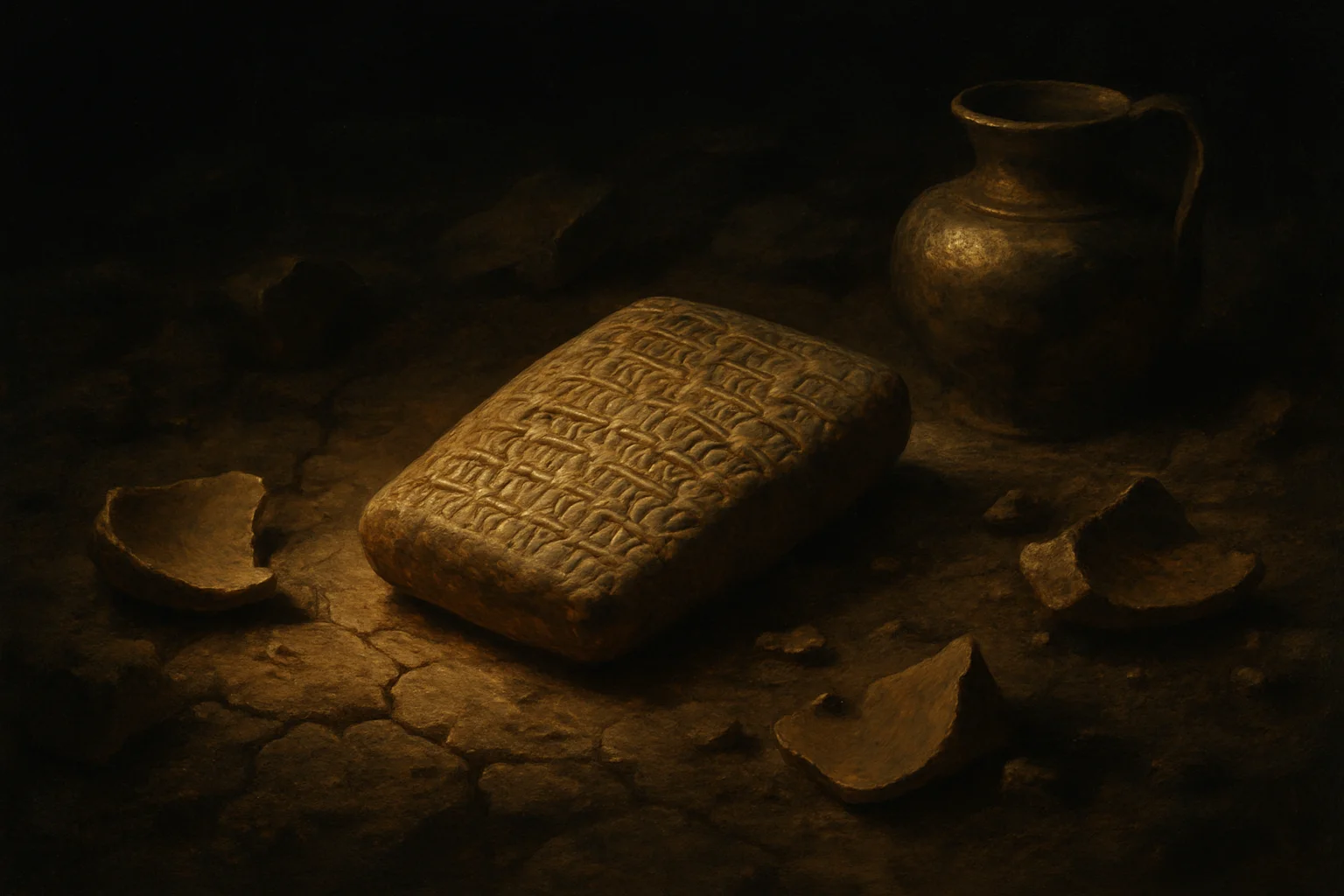
The cuneiform tablets that record these myths are not ancient poetry preserved in a museum. They are evidence of how humans think when they first gain the technology to think in writing. What did the Sumerians choose to write down first? Stories of gods. Stories of floods. Stories of quests for immortality and the inevitability of death.
These stories suggest something consistent across human consciousness: we are obsessed with origins, with power, with mortality, with the relationship between the divine and the human. The Sumerians were not unique in this obsession. But they were first to record it.
Reading Sumerian mythology is not an exercise in anthropology or archaeology. It is an encounter with the human imagination at a foundational moment, when we had just learned to preserve our deepest stories. The gods have changed names a hundred times since then. The cosmic order has been reimagined. But the questions remain the same.
Frequently asked questions about Sumerian mythology?
Frequently asked questions
What is the oldest Sumerian myth we have?
The oldest surviving Sumerian myths are inscribed on clay tablets dating to around 1800-1600 BC, though the stories were likely told orally for centuries before that. The tale of Inanna's descent and fragments of creation myths appear in some of the oldest cuneiform texts. However, scholars debate which stories are "originally Sumerian" versus later Akkadian retellings, since the written record was disrupted by conquest and cultural shifts.
Did Sumerians believe their gods were real beings or symbolic?
Sumerians treated their gods as real inhabitants of the cosmos who required actual food, shelter, and service. Statues of gods in temples were not mere representations but dwelling places where the god's presence concentrated. That said, educated priests and scribes likely understood metaphor and theological subtlety. The gods were real, but reality included both material and symbolic dimensions in ways modern categories do not easily capture.
How did Sumerian mythology influence the Bible?
The Hebrew Bible shares several narrative structures with Mesopotamian myth: a primordial watery chaos, a flood that resets civilization, a bureaucratic divine assembly. The creation account in Genesis emphasizes a single God who creates by command, which directly opposes the polytheistic Sumerian model. Scholars believe Hebrew writers knew Mesopotamian stories and composed their own accounts partly as a theological response and partly as an adaptation to monotheistic worship.
What happened to Sumerian religion after Sumer fell?
When Akkadians conquered Sumer around 2154 BC, Sumerian gods were not abandoned but absorbed into the Akkadian pantheon. Each culture named the gods differently and added their own deities, but the structure, the stories, and the concept of a bureaucratic divine order remained. This pattern continued through Babylonian, Assyrian, and later Mesopotamian cultures. Sumerian religion did not end; it transformed and spread forward through every subsequent Mesopotamian state.
Are there complete Sumerian myths or only fragments?
Most Sumerian myths survive in fragments on clay tablets, often damaged or incomplete. The most complete narratives are reconstructions pieced together from multiple tablet copies. The Epic of Gilgamesh exists in relatively full form because it was so popular it was recopied and translated into Akkadian. Inanna's descent survives almost intact. But many stories are known only through references or scattered episodes, and scholars must infer full narratives from pieces.
Did all Sumerian cities worship the same gods?
Each Sumerian city had a patron deity: Enlil was the god of Nippur, Inanna of Uruk, Enki of Eridu. But the major gods like Anu and Enlil were recognized across all cities, and the pantheon was largely consistent. Regional variations existed, but Sumer was unified enough in its religious vision that a priest from one city would recognize the gods of another. This shared pantheon helped bind the city-states into something approaching a cultural nation.
The Sumerian Legacy: A Mythology That Refuses to Fade
Sumerian civilization fell. The language died. The temples crumbled. But the stories did not. They passed through the hands of the Akkadians, the Babylonians, the Assyrians. They traveled west into Hebrew scripture. They echoed in Greek cosmology. They shaped how the Islamic world, inheriting Mesopotamian scholarship, understood the old stories of the world's beginning.
Today, cuneiform tablets rest in museums. Scholars decipher them, slowly, because the language is alien and the script demands years to master. But each tablet decoded is a reopening of a door that had been sealed for 2,000 years. The stories behind that door are not quaint or primitive. They are the first recorded answers to the questions every human asks: Where did we come from? Why are we here? What happens when we die?
The Sumerians did not have all the answers. But they asked the questions first, and they had the genius to write the answers down. That act of writing, that refusal to let the stories be forgotten, changed everything. Every mythology that came after Sumer stands in its shadow, whether by imitation or reaction.
Major gods of Sumerian
View all →
Sumerian
An: The Sky God and Father of the Gods
An ruled the Sumerian heavens as the oldest god in the pantheon - remote, absolute, and sovereign. Learn how this sky father shaped every deity, ritual, and royal claim in ancient Mesopotamia.
Sumerian
Enki: God of Wisdom, Water, and Creation
Enki shaped human intelligence and filled the rivers with life. This Sumerian god of wisdom, water, and cunning stands at the heart of creation itself, bending the rules when justice demands it. Meet the architect of civilization.
Sumerian
Enlil: Lord of the Wind and King of the Gods
Enlil ruled the air between heaven and earth, held the Tablet of Destinies, and could unmake the world with a word. Meet the most powerful god in the Sumerian pantheon.
Sumerian
Inanna: Goddess of Love, War, and the Planet Venus
Inanna commands both ecstasy and carnage: a Sumerian goddess who embodied love, war, and the morning star. Her descent to the underworld remains literature's oldest recorded myth of transformation and return.
Sumerian
Ninhursag: The Mother Goddess and Lady of the Mountain
Ninhursag was one of Sumer's four highest deities, a goddess who shaped human bodies from clay and healed the gods themselves. Explore her myths, names, and enduring power.
Famous Sumerian myths
View all →Recent in Sumerian
6 entriesSumerian
An: The Sky God and Father of the Gods
An ruled the Sumerian heavens as the oldest god in the pantheon - remote, absolute, and sovereign. Learn how this sky father shaped every deity, ritual, and royal claim in ancient Mesopotamia.
Sumerian
The Descent of Inanna to the Underworld: Death, Power, and Return in Sumerian Myth
Inanna walked into the land of no return and came back. The Descent of Inanna is Sumer's greatest myth: a raw, layered story of death, grief, and the price of resurrection.
Sumerian
Enki: God of Wisdom, Water, and Creation
Enki shaped human intelligence and filled the rivers with life. This Sumerian god of wisdom, water, and cunning stands at the heart of creation itself, bending the rules when justice demands it. Meet the architect of civilization.
Sumerian
Enlil: Lord of the Wind and King of the Gods
Enlil ruled the air between heaven and earth, held the Tablet of Destinies, and could unmake the world with a word. Meet the most powerful god in the Sumerian pantheon.
Sumerian
Eridu: The First City and Sacred Center of Sumerian Civilization
Eridu was the oldest city on Earth, where the Sumerians believed civilization itself began. Archaeologists have found temples, artifacts, and evidence of the world's first urban settlement here, where gods and humans first mingled.
Sumerian
Gilgamesh: The Historical King and Mythic Hero
Gilgamesh ruled Uruk around 2700 BC and became the first named hero in world literature. His Epic asks what any life is worth when death cannot be outrun.