
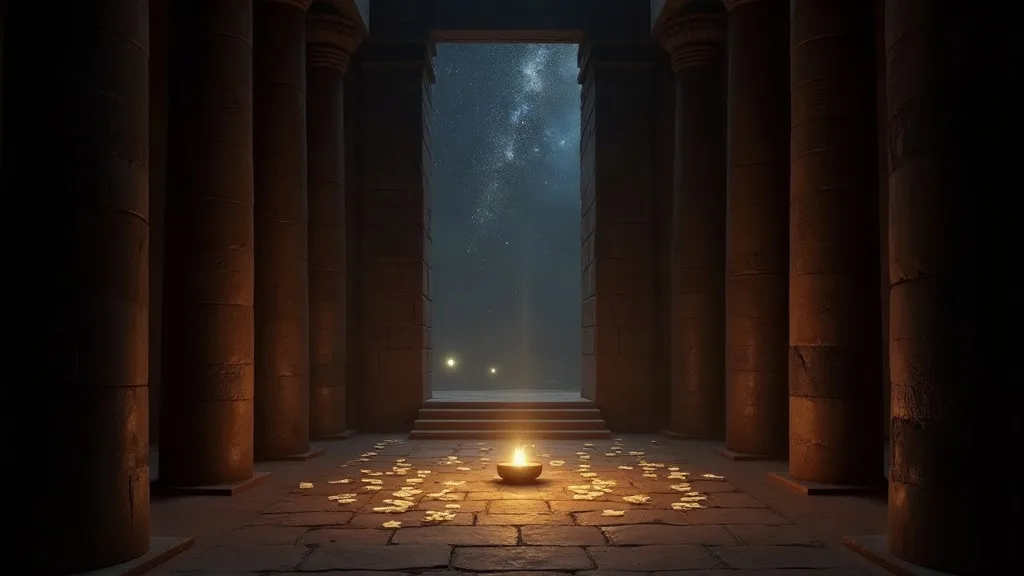
The Me: Divine Powers and Cosmic Order in Sumerian Mythology
The Me were not objects but fundamental laws of existence itself. Sumerian texts reveal how goddesses stole them, gods hoarded them, and the whole universe bent to their will.
Contents
In the deep mythological past, before humans built cities or wrote laws, the Sumerian gods possessed something far more precious than gold or territory. They possessed the me (pronounced "may"), the fundamental powers and principles that governed all existence. To hold the me of fertility was to guarantee the harvest. To command the me of kingship was to rule. These were not abstract concepts or mere symbols; they were the very substance of cosmic order, coveted, stolen, and guarded with the kind of intensity that only immortals could muster.
The Me stands at the heart of how the ancient Sumerians understood power, justice, and the relationship between gods and the world they shaped. Unlike later Greek philosophy, which would speak of abstract universal laws, the Sumerians imagined cosmic order as something concrete, assignable, and transferable. A goddess could steal it. A king could receive it from the gods as a gift. A city could gain prosperity by acquiring the me of a particular craft or blessing.
Origins and Early Accounts of the Me
The earliest Sumerian texts preserve fragments of how the me came into being. In the cosmological mythology preserved in cuneiform tablets, the universe itself emerged from chaos, and with it came the need for structure. The god Enuma Elish would not arrive until much later in Babylonian hands, but the Sumerians had their own creation accounts recorded in poems like "Enuma Elish" and in fragmentary hymns to Enlil, the king of the gods.
The me were conceived as divine attributes and universal laws simultaneously. They existed before individual gods claimed them. In some tellings, they arose from the primordial waters, the endless void called the abzu. In others, they descended from the great sky god An, who held dominion over all cosmic principles. Once they existed, every god who wished to exercise power in the world needed to possess them.
The Sumerian theologians recorded approximately fifty distinct me in the texts that survive. Each one governed a specific aspect of existence. There was the me of truth, of justice (teme), of priesthood, of craftsmanship, of music and dance. War had its own me; so did love, agriculture, metallurgy, and the sacred rites that bound gods and humans together. To own one me gave you authority over that domain. To own several made you a force in the divine assembly.

The Goddess Inanna and the Theft of the Me
The most vivid and structurally important story about the Me comes from the Sumerian myth of Inanna, the fierce goddess of love, war, and the planet Venus. In a poem scholars call "Inanna and Enki," the goddess undertakes one of mythology's great thefts, driven by ambition and cunning in equal measure.
Inanna travels to the abzu, the cosmic deep, where Enki, the god of wisdom and freshwater, keeps the me secured in his temple. Enki was known for his wit and intelligence, but he was also known for his weakness for hospitality and wine. Inanna arrives disguised or approaches with flattery; the texts vary. What matters is that Enki, in his pleasure and pride, begins to show her the me one by one, explaining their power and their use.
With each revelation, Inanna seizes her chance. She gathers the me and, in some versions, loads them into a boat. She takes the me of "righteous judgment," of "leadership," of "the royal throne," of "priesthood," of "music and dance," of "descent into the underworld," of sexual desire, of combat, of craftsmanship. The list goes on, encompassing the very fabric of civilization and divine order.
Once Enki realizes what has happened, he sends demons and guardians to pursue her across the cosmic waters. But Inanna outwits them all, calling upon her servant Ninshubur and invoking her own fearlessness. She escapes the abzu and brings the me to her city of Uruk, enriching it beyond measure. Some versions of the tale suggest this is how Uruk became the greatest city in Sumer; others treat it as an explanation of how the goddess secured her own supremacy among the female deities.
The myth reveals something crucial about how the Sumerians viewed power: it was not fixed or eternal. Gods could lose it through carelessness or cunning. Goddesses could take it through bravery. The cosmos was not a hierarchy set in stone but a constantly negotiated arrangement, held in place by agreements, rituals, and the balance of forces.
The Me as Law and Social Order
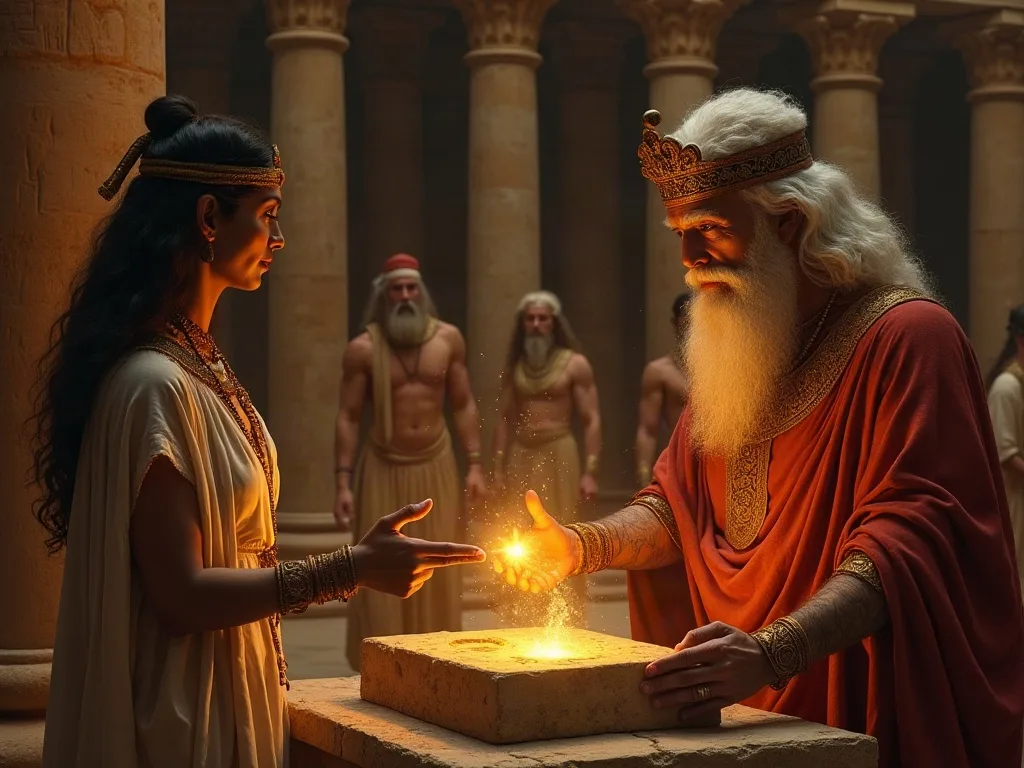
Beyond mythology, the Sumerian concept of the Me extended into law, governance, and religious practice. Kings themselves claimed to receive the me of kingship directly from the gods. In royal inscriptions, a Sumerian king would celebrate his coronation by listing the me the gods had granted him. These were not poetic flourishes; they were the theological foundation of his authority.
A king who possessed the me of justice could claim legitimate right to rule. He was not ruling by mere force but by divine mandate. When a new king took the throne, a portion of his coronation ritual involved the formal presentation of the me by priestess or god-representative, cementing his connection to the cosmic order. The ceremony transformed a mortal into a conduit for divine principle.
The same logic applied to cities and temples. When Sumer's city-states competed for dominance, they did not merely battle for land or resources. They competed for the me, for sacred privileges and divine favor. A city that housed the temple of a powerful god, like Marduk at Babylon, claimed to hold the me of that deity and thus wielded power that transcended the merely political.
Sumerian law codes, such as the Code of Hammurabi (which preserved much Sumerian jurisprudence), embedded the concept of cosmic order into every statute. Justice was not arbitrary human invention but a reflection of universal principle. When a judge rendered judgment, he was not creating law; he was channeling the me, the eternal law encoded in the universe itself.
The Me and the Underworld
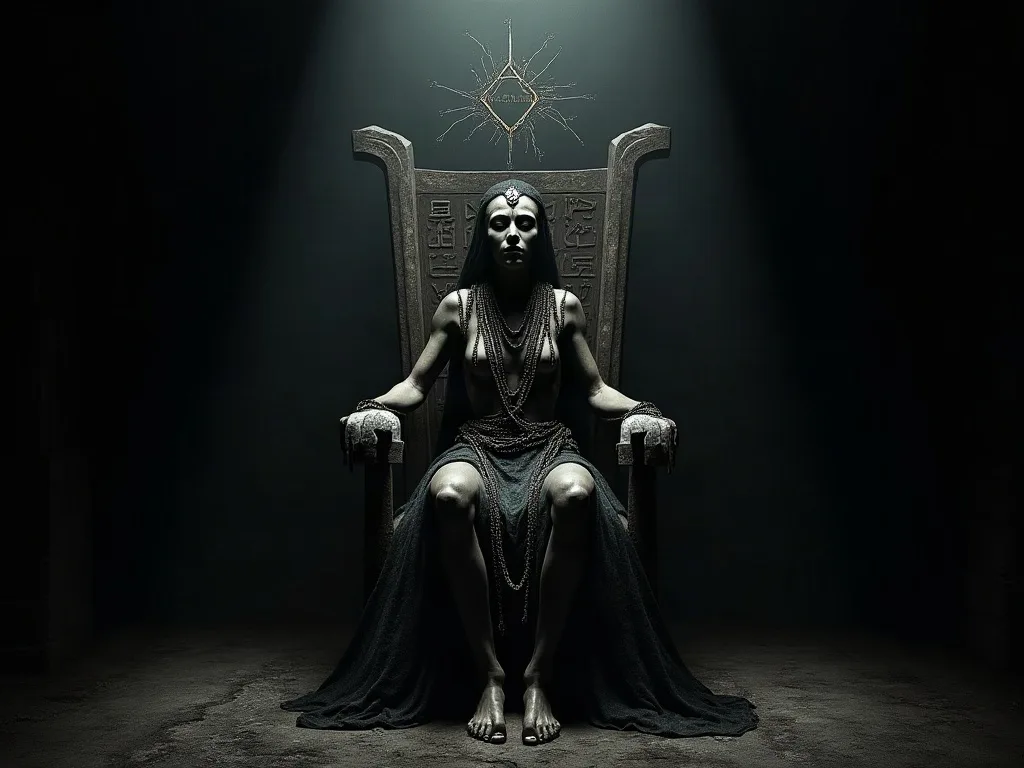
The Me also governed the most terrible realm of Sumerian belief: the underworld, the kigal (the great place), ruled by Ereshkigal, the stern queen of death. In the Sumerian cosmology, Ereshkigal possessed me that no other deity could challenge. The me of death, of the boundary between life and existence, of the inevitability of the grave. These were absolute; even Inanna herself, for all her cunning and courage, found herself trapped when she descended to the underworld.
In the myth "Inanna's Descent to the Underworld," the goddess enters Ereshkigal's domain intending to attend a funeral rite. But Ereshkigal, invoking the sacred me of the underworld, strips Inanna of her power and hung her corpse on a hook. No amount of beauty, courage, or wisdom could overcome the me that governed that realm. Only through negotiation, sacrifice, and the intervention of other gods could Inanna escape. The myth teaches that cosmic order is not meant to be bent by individual will, even divine will. It is meant to be respected.
This notion permeates Sumerian thought: the universe has rules, and even the gods must acknowledge them. The me represent those rules. They are not laws written in a book or proclaimed by an authority; they are woven into existence itself.
Comparison with Later Mesopotamian and Indo-European Concepts
The Sumerian Me evolved as Babylonian and Assyrian powers absorbed Sumerian religion. In Babylonian mythology, the me persisted but took on slightly different roles. Marduk, the Babylonian king of gods, gained prominence and received the me in vast quantities during his triumph over Tiamat, the primordial chaos monster. The acquisition of the me by Marduk became a statement of Babylonian cultural dominance: their god, and therefore their civilization, now held the cosmic order.
Sumerian Me
The me were concrete divine principles assigned to gods and mortals, transferable through theft or gift, governing specific domains. They were particular and plural; many me existed, and power came from acquiring multiple me.
Greek Nomos and Logos
The Greek nomos (law) and logos (reason) emerged later as abstract philosophical principles. They were universal and singular, discovered through reason rather than assigned by divine whim. The shift from Sumerian to Greek thought represents a move from mythological to rational foundations for order.
Among Indo-European peoples, the closest analogue appears in Vedic Sanskrit texts, where the concept of rita (cosmic order, truth, and righteousness) served a similar function: the underlying principle that made the universe coherent and kept gods and humans in their proper places. Like the me, rita was something that could be violated, something that gods themselves must respect, and something that underwrote all legitimate authority.
The Sumerian Me thus represents an earlier stage in humanity's attempt to explain order itself. Before philosophy, before monotheism, before the reduction of all laws to a single rational principle, there was the me: multiple, assignable, and eternally contested.
The Me in Ritual and Religious Practice
In daily religious life, the Sumerian priesthood invoked and honored the Me through elaborate rituals. Priests maintained temples as houses where the me could be preserved and wielded. The god's statue, housed in the inner sanctum, was understood to be the physical locus of divine me. When priests brought offerings of food and drink, they were not simply feeding an idol; they were sustaining the god's power and ensuring that the me within continued to flow outward to protect the city.
During major festivals, such as the New Year celebration, the me were formally renewed. The king would perform rituals acknowledging the me he held and calling upon the gods to reaffirm their grants of power. This was not a one-time event but an annual necessity; without renewal, the me could grow weak, and cosmic order could slip toward chaos. The Sumerians lived with an acute awareness that reality itself required constant maintenance.
In private devotion, ordinary Sumerians appealed to gods who commanded specific me. A farmer might pray to Ninshurshag, who held the me of fertility and childbirth. An artisan might honor Enki, whose me included all craftsmanship. A soldier might invoke Enlil or Inanna for the me of warfare and victory. These prayers were not requests for favors so much as acknowledgments that the god held power that the petitioner needed.
Scholarly Debates and Interpretations
Modern scholars have long grappled with the precise nature of the Me. Early Sumerologists like Samuel Noah Kramer and Thorkild Jacobsen interpreted the me primarily as divine attributes or qualities. More recent work by Joan Goodnick Westenholz and others suggests they functioned more like offices, portfolios of divine responsibility. Some scholars argue the me represented rules or laws, others that they were more akin to functions or domains of power.
The debate hinges partly on how we read the Sumerian word me itself. The cuneiform sign can mean "to be" or "essence," suggesting an existential quality. But in context, the me behave like possessible, transferable entities. They can be stolen, given, hoarded, and lost. This suggests a more concrete interpretation: the me were something like the authority to rule a domain, the fundamental right to exercise power in a particular sphere.
What all scholars agree on is that the Me represented the Sumerian solution to a profound theological problem: how to account for order in a cosmos ruled by gods with competing desires and wills. The answer was to posit an order even prior to the gods themselves, a set of principles they must respect and negotiate over, but cannot ultimately violate. This preserves both divine freedom and universal coherence.
The Me in Literary Works and Hymns
The surviving Sumerian hymns preserve vivid accounts of the Me and how the gods regarded them. The "Hymn to Enlil" celebrates that god's command over the me of rulership. The "Hymn to Inanna" exults in her acquisition of the me stolen from Enki. These were not private texts; they were likely sung in temples and public spaces, teaching the populace about the proper order of the cosmos and the powers that governed existence.
In the epic of Gilgamesh, which draws on Sumerian mythology, the me hover in the background. The king's authority to rule comes from the me granted to him. His quest for immortality, his grief over Enkidu, and even the flood that he hears about all derive their meaning from the larger cosmic order that the me uphold.
The literary testimony shows that the Me were not abstract theological speculation but living, meaningful concepts that shaped how Sumerians understood power, loss, responsibility, and the limits of freedom.
The Me and Modern Understanding of Cosmic Order
The Me offer a window into how an ancient civilization imagined the relationship between chaos and order, freedom and necessity, gods and the universe. They reveal that the Sumerians, far from seeing the universe as arbitrary or ruled by tyrannical gods, imagined reality as coherent and legible. The gods themselves were subject to cosmic principle.
This worldview influenced everything that followed in Mesopotamian and Near Eastern thought. It shaped how later cultures conceived of divine law, kingship, and the nature of reality itself. When later Hebrew prophets spoke of God's law (torah) as immutable and binding even on the powerful, they inherited something of the Sumerian intuition that power without principle is illegitimate.
The Me also speak to something timeless in human thought: the search for order beneath appearances, the sense that reality operates according to intelligible principles, and the belief that these principles matter more than the will of any individual, however powerful. In this way, the ancient Sumerian me are not quaint relics but early articulations of ideas still central to how we understand justice, law, and the structure of reality itself.
Frequently asked questions about the Me
Frequently asked questions
Were the Me the same as the will of the gods?
No. The Sumerians carefully distinguished between the me (impersonal cosmic principles) and the individual desires of gods. A god could want something, but if it violated the me, it was illegitimate. Even Inanna, for all her power, could not override the me of the underworld that Ereshkigal guarded. The me represented an order prior to and binding upon the gods themselves.
Could humans acquire or hold the Me?
In practice, only through delegation from the gods. A king received the me of kingship and justice from the divine assembly; he did not possess them intrinsically. Priests held me in trust, stewarding divine power within temples. Ordinary mortals could invoke and appeal to the me held by gods, but could not claim ownership.
How did the concept of the Me change as Mesopotamia moved from Sumerian to Babylonian rule?
The me persisted in Babylonian religion but shifted in emphasis. Marduk, the Babylonian king god, accumulated vast numbers of me after defeating Tiamat, which reflected Babylon's political ascendancy. The structure remained the same, but the distribution of me among the pantheon changed to mirror political realities.
Is there any evidence the Sumerians actually believed in the Me, or were they purely mythological?
Both. The me appear in myths and hymns, yes, but they also structured Sumerian law, kingship rituals, and daily temple practice. The royal inscriptions of Sumerian kings repeatedly list the me they had received, treating them as real grants of legitimate authority. The me were theological principle enacted in ritual and law.
What happened to the concept of the Me after Sumer fell to conquest?
The me survived in Babylonian and Assyrian religion, adapted to new political contexts. However, as abstract philosophy rose in Greece and rational law codes developed in the Near East, the specifically mythological character of the me faded. Later cultures preferred to ground order in reason or divine will rather than in multiple assignable cosmic principles.
The Me as Mirror of Human Authority
The enduring power of the Me lies in a simple but profound insight: that authority is not absolute. Even the mightiest god must answer to cosmic principle. A king rules not by force alone but by possessing and respecting the me. A law is just not because a ruler decrees it, but because it reflects universal order. This notion, born in ancient Sumer and woven into cuneiform tablets over three thousand years ago, remains a cornerstone of how humans think about justice and legitimacy today.
The me also remind us that the ancients did not imagine power as a zero-sum good. The Sumerians understood that cosmic order required distribution: multiple gods held multiple me, and all of it sustained reality. The universe was not a hierarchy where one god dominated all others, but a complex web of delegated authorities, each necessary, each checking the others. This federalist vision of divine order offers a surprising mirror to how free societies imagine power should be dispersed.
Read the full book
Want the whole story?
The complete edition is an instant PDF download here, with a paperback on Amazon for selected titles.
Sumerian
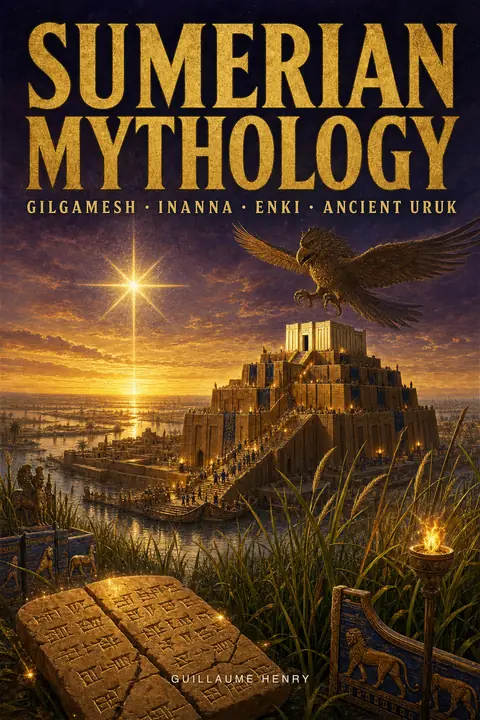
The Sumerian Mythology Book: Gilgamesh, Inanna, Enki, and the World's Oldest Sacred Stories
Gilgamesh, Inanna, and the world's oldest written myths
The earliest written myths on earth, preserved on clay tablets four thousand years ago. Gilgamesh seeking immortality, Inanna descending to the underworld, Enki shaping the cosmos. Here is what survived.
More from Sumerian
All articles
Sumerian
Enki: God of Wisdom, Water, and Creation
Enki shaped human intelligence and filled the rivers with life. This Sumerian god of wisdom, water, and cunning stands at the heart of creation itself, bending the rules when justice demands it. Meet the architect of civilization.
Sumerian
Inanna: Goddess of Love, War, and the Planet Venus
Inanna commands both ecstasy and carnage: a Sumerian goddess who embodied love, war, and the morning star. Her descent to the underworld remains literature's oldest recorded myth of transformation and return.
Sumerian
Eridu: The First City and Sacred Center of Sumerian Civilization
Eridu was the oldest city on Earth, where the Sumerians believed civilization itself began. Archaeologists have found temples, artifacts, and evidence of the world's first urban settlement here, where gods and humans first mingled.
Sumerian
An: The Sky God and Father of the Gods
An ruled the Sumerian heavens as the oldest god in the pantheon - remote, absolute, and sovereign. Learn how this sky father shaped every deity, ritual, and royal claim in ancient Mesopotamia.