
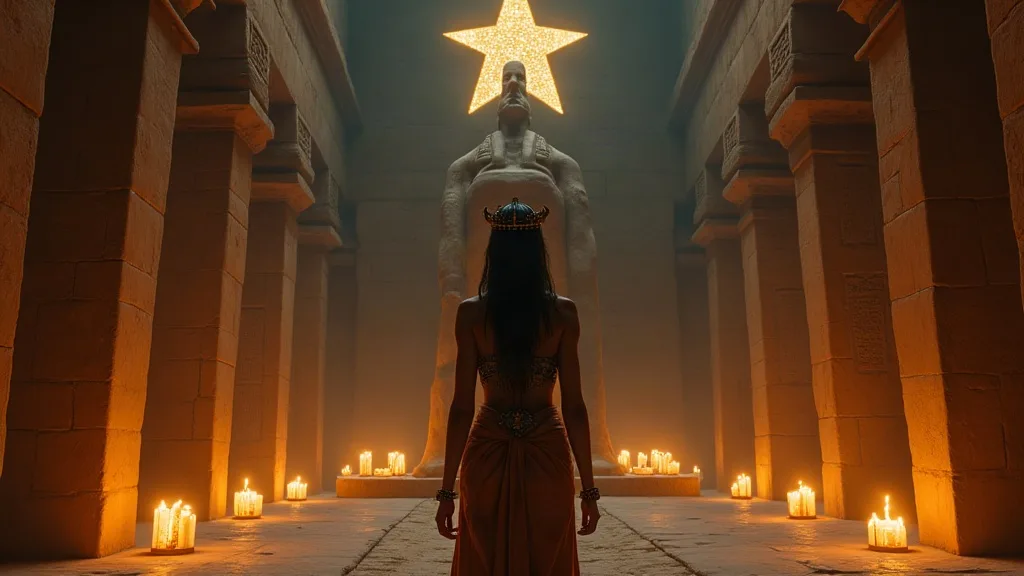
Inanna: Goddess of Love, War, and the Planet Venus
Inanna commands both ecstasy and carnage: a Sumerian goddess who embodied love, war, and the morning star. Her descent to the underworld remains literature's oldest recorded myth of transformation and return.
Contents
The sky blazes at dawn. A single bright point breaks through the darkness before the sun itself arrives. The ancient Sumerians called that star Inanna, and they knew her not as a distant abstraction but as a living, breathing presence in their world. She came down from the heavens to seduce priests and overthrow demons. She waded into battles and emerged victorious. She loved fiercely, destroyed utterly, and refused the rules that bound lesser beings.
Inanna was contradiction made divine. The same goddess who invented sexual pleasure and married the shepherd Dumuzi also commanded armies and demanded the deaths of her enemies. She was tender and terrible, a figure who moves through the oldest recorded literature of human civilization like a force of nature that cannot be contained or explained.
Her story, preserved in clay tablets from ancient Iraq written in cuneiform script, is the ancestor of every myth we know about transformation, desire, power, and the journey between worlds. When you read her, you read the beginning of mythology itself.
The Origins of Inanna in the Sumerian Pantheon
The Sumerians who lived in Mesopotamia between the Tigris and Euphrates rivers around 3500 BCE had already formed clear images of their gods before they invented writing. When they pressed stylus to wet clay and created the first written records, Inanna was already old in their tradition.
Her name itself means "Queen of Heaven" in Sumerian. The cuneiform symbol that represented her was the eight-pointed star, a shape that matched the morning star's peculiar path across the sky. As the planet Venus, she was the brightest object in the heavens after the sun and moon; to ancient eyes, she was unmistakably divine.
The earliest temple dedicated to Inanna stood in the city of Uruk around 3200 BCE. Uruk was the great city, the place where Sumerian civilization reached its peak. Clay tablets found in the ruins show that people brought offerings to Inanna's temple: grain, beer, and precious oils. They asked her blessing on marriages. They sought her protection in war.
What made Inanna different from other Sumerian deities was her refusal to stay in one role. The god Enlil commanded the wind and storms; that was his domain and he stayed within it. But Inanna drifted between worlds. She was both nurturing and destructive. She presided over fertility, but she also made warriors fearless in battle. She loved passionately, but she punished betrayal with death.
The Sumerian texts call her the "Upright Star" and the "Great Queen." Poets describe her standing on mountaintops, her body gleaming like polished lapis lazuli. She wore a crown of seven horns, each one representing power over a different domain of human existence.
The Love of Inanna and Dumuzi: A Marriage That Shattered Death
Among all her relationships, Inanna's love for Dumuzi stands as the most tender and the most tragic. Dumuzi was a shepherd, a simple man but one blessed with extraordinary beauty. Some versions say he was also king; others insist his kingship was temporary, a role granted only by Inanna's favor.
The two of them met, and according to the ancient text "Inanna Prefers the Farmer," Inanna had to choose between two suitors: Dumuzi the shepherd and Enki the farmer. After inspecting both men's offerings (the shepherd brought dairy products and meat; the farmer brought grain and vegetables), Inanna chose Dumuzi. The text carries a simple line: "My lover, whose hand is so pleasant." In that phrase, desire made flesh.

Their union was celebrated in temple rituals that some scholars believe were reenacted annually in Uruk. The king of Uruk, understood to be Inanna's earthly husband, would spend a night with a priestess representing the goddess. This was no secret act. It was public theology: the marriage of heaven and earth, divine and mortal, made visible in ritual.
But Dumuzi could not stay. The myths tell us that he angered Inanna, or that he failed to mourn her properly when she was away, or simply that the natural order demanded his death. Inanna descended to the underworld and did not return. In her absence, Dumuzi withered. He died, and his death was real and final in the minds of those who loved him.
Yet each year, like vegetation that dies in winter and returns in spring, Dumuzi was believed to come back. Inanna descended to bring him home. This myth of death and return, of a beloved rising each year, fed the Sumerian imagination for centuries. When later civilizations encountered this story, they transformed it. The Greek god Adonis carries Dumuzi's pattern. So does Osiris in Egypt. The death-and-return god became a universal symbol of nature's cycles, and Inanna and Dumuzi were the first to teach that mystery.
The Descent of Inanna to the Underworld: A Journey Through Death
The myth called "The Descent of Inanna" is the oldest known written version of a hero's journey to the land of the dead. It was inscribed on clay tablets sometime around 1900 BCE, but the story itself was likely far older, recited in temples and homes generations before anyone carved it into clay.
Inanna prepares for the descent with ritual care. She adorns herself with symbols of her power: seven gates await her in the underworld, and at each one, the gatekeeper will demand that she surrender something. She must leave her world behind.
She wears the great crown, the platform sandals, the breastplate called the "armor," the rod of office, and lapis lazuli stones around her neck. Each piece is precious. Each piece is part of who she is.
At the first gate of the underworld, the gatekeeper stops her. "Who are you?"
"I am Inanna, the Queen of Heaven," she answers.
"The dead do not enter the land of the dead adorned," he says.
At each gate, she must remove one piece of her regalia. By the time she reaches the throne of her older sister Ereshkigal, the goddess of death and the underworld, Inanna stands naked and defenseless.
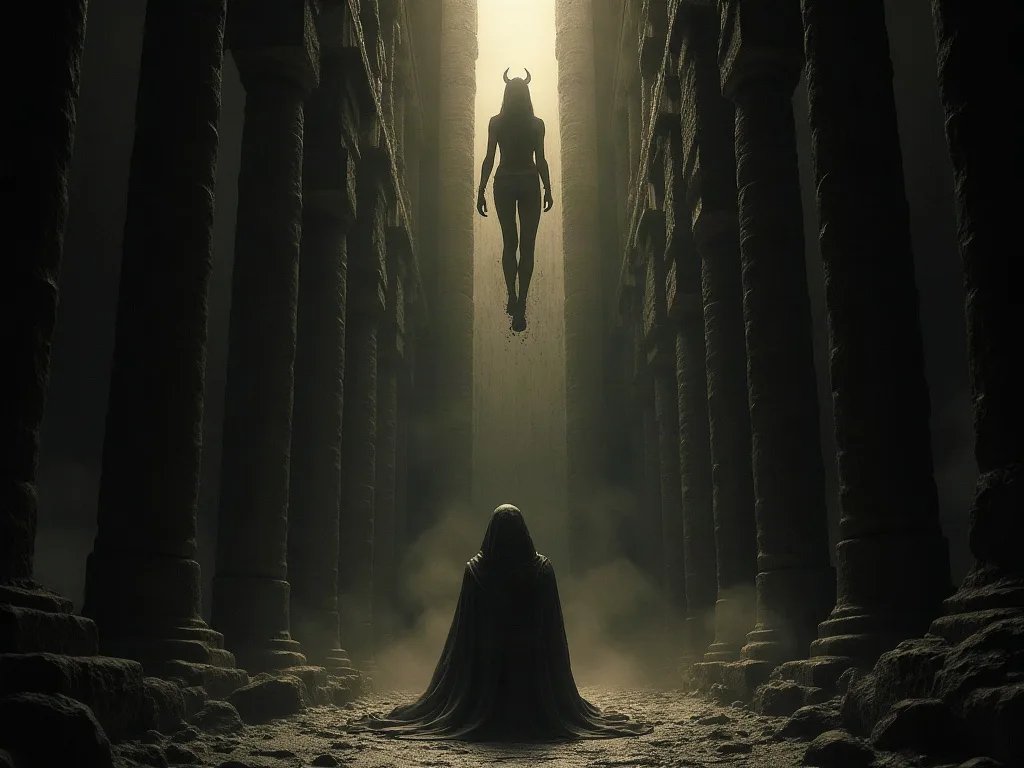
Ereshkigal is nothing like Inanna. She is dark, cold, and bound by laws that cannot be broken. She looks at her younger sister with the gaze of death itself. Ereshkigal's voice carries the weight of inevitability.
"Why have you come to the land of the dead?" Ereshkigal asks.
The text offers no single answer. Some versions say Inanna came to attend a funeral. Others hint at darker ambitions: that Inanna intended to overthrow Ereshkigal and rule the underworld herself. Whatever the reason, Ereshkigal judges her and pronounces sentence.
Inanna is killed. Her corpse is hung on a hook in the land of the dead.
For three days and nights, Inanna remains dead. No one in heaven hears from her. The text describes her floating below, invisible, removed from all power and all existence. The underworld has conquered even the most powerful goddess.
But Inanna had made a plan before she descended. She told her faithful servant Ninshubur to mourn for her, and if she did not return, to alert the other gods. After three days, Ninshubur came to the gates of Ereshkigal with a plea.
The other gods heard the request, but they were afraid. The underworld's laws apply to everyone. No one escapes death.
Then someone moved. It is unclear from the surviving text exactly which god intervened, but through the work of divine effort, Inanna was restored. She rose from the dead, but not unchanged. The underworld had marked her. When she emerged into the light again, she carried something of death within her. She was transformed.
Inanna as the Goddess of War and Conquest
If Inanna's love for Dumuzi shows her capacity for tenderness, her role as a war goddess reveals her capacity for cold, efficient violence. In temple inscriptions and hymns, she is called "She who rains arrows," "The One Who Strides Over the Land," and "She of the Awesome Thighs."
Kings called upon her before battle. Akkadian kings, who conquered the Sumerians around 2370 BCE, adopted Inanna into their own pantheon and renamed her Ishtar. They brought her into their military campaigns. The king Sargon of Akkad claimed Inanna herself spoke to him, commanding him to conquer the world.
She was not portrayed as a distant overseer of warfare, remote on some heavenly peak. She was present. She descended into the battle. The texts describe her standing alongside soldiers, her presence giving them strength. She could make a coward fearless. She could turn victory into slaughter.
One hymn describes Inanna fully armed, moving across the land like a storm. Lightning comes from her mouth. The earth trembles at her approach. This is not romance; this is raw, undeniable power.
The apparent contradiction between Inanna the lover and Inanna the warrior troubled no one. The Sumerians understood that the same energy that could create passion could also destroy enemies. The same intensity, the same refusal to accept limits, the same desire to seize and control. Love and war were not opposites in her domain. They were expressions of the same fundamental force: Inanna's will, made manifest in the world.
The Planet Venus and Inanna's Cosmic Identity
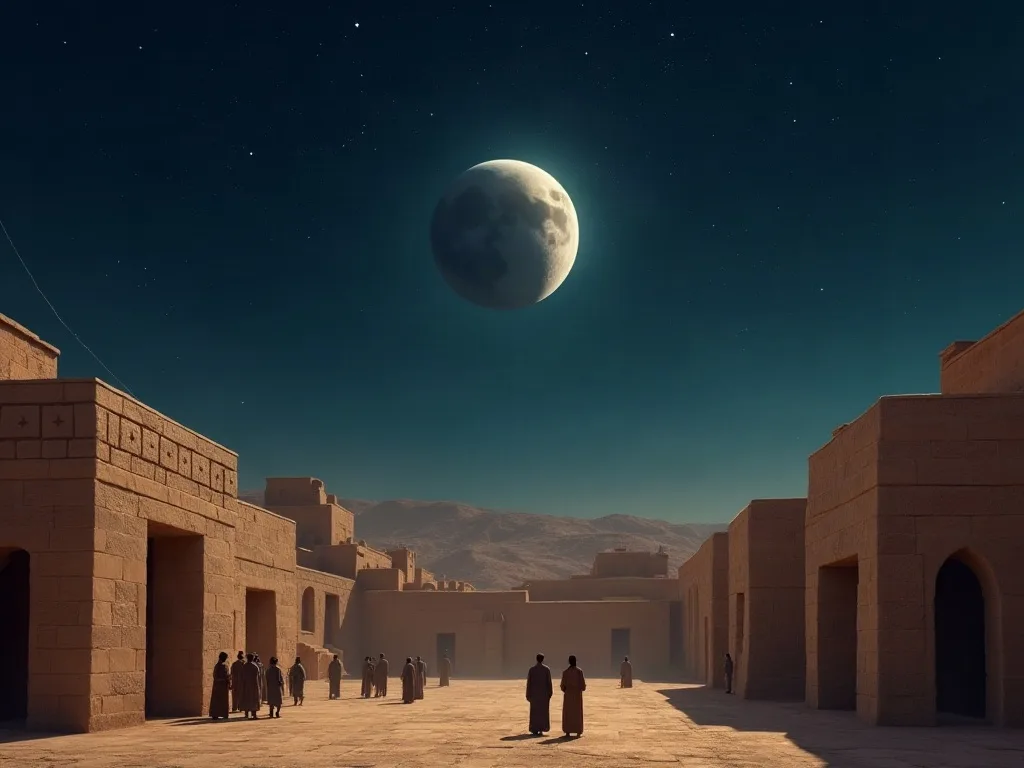
The Sumerians were careful observers of the heavens. They did not see the planets as abstract points of light. They watched them, tracked them, and built explanations for their movements.
Venus is unique among the visible planets. It never strays far from the sun. It is brightest just before dawn, disappearing as the sun rises, then reappearing after sunset as the evening star. For much of the ancient year, it is simply gone from the sky, hidden from view.
The Sumerians named this celestial pattern. When Venus appeared as the morning star, they called it Inanna the Herald of Dawn. When she vanished, they understood it as her descent to the underworld. When she emerged again as the evening star, they celebrated her return.
This mapping of myth onto observable reality was not metaphor. It was explanation. The goddess literally inhabited the planet. Her journey across the sky was her story written in light.
Later cultures inherited this connection. The Akkadians called her Ishtar and kept the same associations. The Babylonians honored her as a living presence in the sky. By the time classical Greece encountered these ideas through trade and conquest, they had developed the story of Aphrodite and Ares, goddess of love and god of war, but they had lost the cosmic scale. For the Sumerians, Inanna was not a personification. She was the heavens themselves, made conscious, made demanding, made undeniable.
The Myth of the Huluppu Tree and Inanna's Holy Power
Among Inanna's greatest deeds was her rescue of the huluppu tree. The huluppu tree grew beside the Euphrates River, and according to the oldest Sumerian texts, it was the tree from which all wooden items in civilization emerged. It was not merely a tree; it was the source of all things made from wood.
But the tree was possessed. A serpent had nested at its roots. A bird called the Zu-bird (sometimes described as an eagle, sometimes as a dragon) had built its nest in the branches. The tree could not flourish with these creatures claiming its interior.
Inanna saw the tree suffering and approached to help. She waded into the water. The serpent tried to bite her. The Zu-bird tried to strike her from above. But Inanna was not an ordinary being. She cut down the tree, extracted the creatures, and carved it into furniture: a bed and a throne.
Scholars have debated what this myth means. Some see it as a story of civilization: the raw tree becomes useful human objects. Others read it as a demonstration of Inanna's power to impose order on chaos. The creatures inhabiting the tree are not purely evil; they represent the wild, uncontrolled forces of nature. Inanna's work is to reshape them into forms that serve human culture.
What matters is that the tree becomes a symbol of Inanna's dominion. The bed and throne she created from it belong to her. They are her instruments and her seat of power.
Inanna's Relationships with Other Sumerian Gods
Inanna did not exist in isolation. She moved through a family of gods, and her relationships reveal her role in Sumerian theology.
Enlil, god of the wind and storms, was the highest authority in the Sumerian pantheon. Inanna owed him respect, but she did not fear him. She was willing to challenge him, and in some myths, she sought his recognition as supreme power after Enlil himself.
Enki, god of wisdom and freshwater, was both ally and rival. Some myths describe him granting Inanna her powers. Others describe them in competition. His story often circles back to Inanna: she is the one who moves quickly, strikes first, takes what she desires.
Ereshkigal, her older sister ruling the underworld, appears in Inanna's mythology as an equal or superior power. The two women are not rivals in a simple way. Ereshkigal governs a domain that even Inanna cannot truly master. The underworld's laws apply to everyone.
An (also called Anu), the father god and god of the sky, is her distant patron. He granted her authority, but he is too remote to be a central figure in her stories.
Dumuzi, as explored earlier, holds a special place. He is not powerful in the way other gods are. His significance lies entirely in his relationship to Inanna and in what his death and return teach about natural cycles.
The Sumerian pantheon was not a hierarchy of equals. It was a system of overlapping powers, and Inanna's power lay in her refusal to accept the limits others tried to place on her. She moved between domains, took what she wanted, and paid the price when she overreached.
The Transformation of Inanna Into Ishtar and Her Influence on Later Cultures
Around 2370 BCE, the Akkadian people, a Semitic-speaking group, conquered and absorbed Sumerian civilization. They did not destroy Sumerian religion; they absorbed it. They took the Sumerian gods and gave them Akkadian names.
Inanna became Ishtar.
The transition was not simple renaming. The Akkadians expanded her role and emphasized different aspects of her character. Under Akkadian rule, Ishtar became still more prominent, still more demanding. She was incorporated into royal ideology. Kings claimed her blessing and her presence in their wars.
A famous text called "The Descent of Ishtar" describes her journey to the underworld in terms similar to the Sumerian original but with new details and darker twists. The Akkadian version emphasizes her suffering and her eventual resurrection in ways that made her a symbol of redemption.
By the time the Babylonians ruled Mesopotamia (around 1800 BCE onward), Ishtar had become one of the most important deities in the pantheon. She was honored in the city of Babylon itself, and her influence spread throughout the Mediterranean and Near East through trade and cultural contact.
The Greeks encountered this goddess through Phoenician traders. They recognized her as similar to their Aphrodite, goddess of love, but they also saw echoes of Ares, god of war. They could not quite fit her into their categories because she transcended them.
The Romans called her Venus and built temples to her as the mother of their people (through her connection to Aeneas). But in Rome, she lost some of the warlike quality that defined her in Mesopotamia.
What all these transformations reveal is that Inanna's character was so powerful, so compelling, that every culture that encountered her kept trying to understand her. She could not be simplified. She could not be safely contained. She demanded new approaches, new interpretations, new frameworks for understanding a divine being who refused to follow the expected patterns.
The Sacred Prostitution and Sexuality of Inanna's Worship
The worship of Inanna involved practices that make modern readers uncomfortable and that require careful historical thinking to understand.
In her temples, particularly in Uruk, priestesses served as representatives of Inanna. Part of this service involved sexual encounter with worshippers or with the king. This was not degradation in the minds of those who participated. It was sacred ritual.
The priestesses were called the "holy prostitutes" or sometimes the "temple servants." They were not enslaved women; they held positions of some status. They were understood to embody Inanna herself during the ritual encounter. The worshipper was not simply having sexual relations; he was participating in a sacred reenactment of Inanna's creative power.
This practice existed in many ancient Near Eastern cultures. It was not unique to Inanna worship, though Inanna's connection to love and fertility made her temples particularly associated with these rites.
Later religions, particularly Christianity and Islam, would condemn this practice as abominable. Christian authorities used the memory of these practices to stigmatize Inanna/Ishtar as a demon or false god. What had been sacred in Mesopotamia became unspeakable in the religious frameworks that succeeded it.
Modern scholars debate the exact nature of these practices and the experiences of the women involved. What seems clear is that in Sumerian and Akkadian culture, sexuality was understood as a divine force, Inanna presided over it, and her worship channeled that force in rituals that connected the earthly and the heavenly.
The practice declined and eventually disappeared as the ancient Near Eastern religions gave way to later faiths. But it reminds us that Inanna operated according to rules very different from later goddesses of love. She was not chaste or demure. She seized sexual power as one of her domains and wielded it without apology.
Inanna in Modern Literature and Scholarship
The recovery of cuneiform texts in the 19th and 20th centuries brought Inanna back into human awareness. Scholars like Samuel Noah Kramer, one of the great Sumerologists, translated her myths and published them in forms that modern readers could encounter.
What emerged was startling. Here was a goddess older than Homer, older than the Bible, whose stories contained many of the patterns that would become central to Western literature. The death-and-return god. The descent to the underworld. The triumphant woman who refuses to follow men's rules.
Feminist scholars in the late 20th century found Inanna compelling precisely because she was powerful and sexual without apology. She was not modeled on a patriarchal ideal of womanhood. She was fierce, autonomous, and her sexuality was her own.
Contemporary poets and writers have drawn on Inanna's mythology. Diane Wolkstein and Samuel Noah Kramer published a modern translation of her myths that became influential. The scholar Anne Baring incorporated Inanna into broader conversations about the goddess in human culture. Musicians, artists, and spiritual practitioners have invoked her name and her stories.
This modern recovery has sometimes idealized her in ways that the ancient texts do not support. Modern feminists sometimes cast her as a pure liberatory figure, stripped of her capacity for cruelty and indifference to human suffering. The ancient Sumerians understood her as simultaneously nurturing and destructive, an expression of forces in the cosmos that could not be neatly categorized as good or evil.
Inanna's Cosmic Significance: The Morning Star and the Evening Star
The Sumerian observation of Venus as Inanna was not simple poetic metaphor. It was a framework for understanding the heavens and the divine. The planet's visibility and invisibility mapped onto Inanna's mythic journey.
For much of the year, Venus appears in the western sky after sunset, the Evening Star. For a period, it disappears entirely, lost in the sun's glare. Then it reappears in the east before sunrise, the Morning Star. After another period, it disappears again.
The Sumerians calculated these cycles and built them into their religious calendar. When Venus reappeared as the Morning Star, it was Inanna's return from the underworld, cause for celebration. When she disappeared, it was her descent, time for lamentation and ritual preparation.
This cosmic mythology taught a lesson about existence itself. Nothing remains constant. Even the brightest star must disappear. Even death can be followed by return. The cycles of the heavens are the cycles of life, and Inanna's story is written in light across the vault of the sky.
Modern astronomy has explained Venus's movement through the solar system. The ancient meaning-making has been replaced by physical law. Yet something is lost in this translation. For the Sumerians, understanding the heavens was not separate from religious experience. It was an encounter with the divine made visible. When you looked at Venus, you were looking at Inanna herself, moving through her eternal journey.
Frequently asked questions about Inanna: Goddess of Love, War, and the Planet Venus
Frequently asked questions
What is the Descent of Inanna and why is it important?
The Descent of Inanna is the oldest known written myth of a divine being journeying to the land of the dead. Carved into clay tablets around 1900 BCE, it describes Inanna removing her regalia at seven gates before facing her sister Ereshkigal, being killed, and ultimately returning to life. This myth established the pattern of death-and-resurrection that would echo through countless later stories, from Greek mythology to Christian theology, making it foundational to how cultures understand transformation and renewal.
Who was Dumuzi and what was his relationship to Inanna?
Dumuzi was a shepherd whom Inanna chose as her earthly husband. Their love is tender and central to fertility mythology, but Dumuzi dies and returns in an annual cycle. Some scholars believe Sumerian temple rituals reenacted this union yearly, connecting cosmic patterns of death and rebirth to human sexuality and agriculture. Dumuzi's story, intertwined with Inanna's, influenced later myths of gods like Adonis and Osiris.
How did Inanna become the goddess of both love and war?
To the Sumerians, these were not contradictory domains but expressions of the same force: Inanna's refusal to accept limits and her capacity to seize power. The intensity that creates passion and sexual attraction is the same intensity that makes warriors fearless in battle. She was not distant from either sphere; she descended into both, making love sacred and war divine through her presence.
What connection did Inanna have to the planet Venus?
The Sumerians mapped Inanna's mythology onto the planet's visible cycles. When Venus appeared as the Morning Star before sunrise, it was Inanna returning from the underworld. When she disappeared into the sun's glare, it was her descent. This was not metaphor but lived theology: observing Venus meant witnessing the goddess's journey written in light. The planet itself was Inanna, making her presence undeniable in the night sky.
How did Inanna influence later goddesses and religions?
When Akkadians conquered Sumer, they renamed Inanna as Ishtar and amplified her role in royal warfare. Greeks encountered her through Phoenician traders and saw echoes of both Aphrodite and Ares. Romans adopted her as Venus. Each culture transformed her according to their own needs, but her core character, as a being of uncontainable power, endured. She could not be simplified, making her influence spread further than any single monotheistic deity could have.
Inanna's Legacy: Why She Still Matters
Thousands of years separate us from the clay tablets on which Inanna's myths were inscribed. The cities where she was worshipped are archaeological sites. The priestesses who embodied her in temples are dust. The language in which her stories were told, Sumerian, ceased to be anyone's native tongue centuries ago.
Yet Inanna remains vivid. She reaches across time because her character resists reduction. She was not a symbol standing for one thing. She was a force: creative and destructive, tender and merciless, bound by no one's rules but subject to cosmic laws she could not escape.
Modern readers encounter her through translations and scholarly reconstructions. What they find is a figure who seems surprisingly contemporary. A woman claiming power over her own sexuality. A warrior who demands respect. A being who refuses to be contained or explained. A goddess who dies but does not stay dead.
The Sumerian civilization that created her faded into history. Their language became indecipherable until scholars learned to read cuneiform again. But Inanna survived in cultural memory, transformed, reinterpreted, but never forgotten. She moves through Mesopotamian texts, Akkadian hymns, Greek stories, modern poetry. She is the morning star still, the brightest point in the night sky, still drawing the eye, still impossible to ignore.
Read the full book
Want the whole story?
The complete edition is an instant PDF download here, with a paperback on Amazon for selected titles.
Sumerian
The Sumerian Mythology Book: Gilgamesh, Inanna, Enki, and the World's Oldest Sacred Stories
Gilgamesh, Inanna, and the world's oldest written myths
The earliest written myths on earth, preserved on clay tablets four thousand years ago. Gilgamesh seeking immortality, Inanna descending to the underworld, Enki shaping the cosmos. Here is what survived.
More from Sumerian
All articles
Sumerian
Enki: God of Wisdom, Water, and Creation
Enki shaped human intelligence and filled the rivers with life. This Sumerian god of wisdom, water, and cunning stands at the heart of creation itself, bending the rules when justice demands it. Meet the architect of civilization.
Sumerian
Eridu: The First City and Sacred Center of Sumerian Civilization
Eridu was the oldest city on Earth, where the Sumerians believed civilization itself began. Archaeologists have found temples, artifacts, and evidence of the world's first urban settlement here, where gods and humans first mingled.
Sumerian
The Me: Divine Powers and Cosmic Order in Sumerian Mythology
The Me were not objects but fundamental laws of existence itself. Sumerian texts reveal how goddesses stole them, gods hoarded them, and the whole universe bent to their will.
Sumerian
An: The Sky God and Father of the Gods
An ruled the Sumerian heavens as the oldest god in the pantheon - remote, absolute, and sovereign. Learn how this sky father shaped every deity, ritual, and royal claim in ancient Mesopotamia.