

Angakkuit: Inuit Shamans and Spirit Mediators
Angakkuit are the shamans and spirit mediators of Inuit cultures, channeling power from the animal and spirit worlds to heal, guide, and maintain balance between the human and sacred realms. Discover how these intermediaries shaped Arctic survival and cosmology.
Contents
An Inuit shaman sits in darkness, body trembling as he sings words that belong to neither human tongue nor beast. His spirit has left his flesh. It travels now through the layers of the cosmos, seeking the seal's keeper, the weather spirit, the ancestor who holds knowledge. This is the Angakkuq at work, and in the Arctic ice, this work means survival.
The word angakkuq (plural: angakkuit) comes from the Inuktitut and Inuit languages and means literally "he who works with spirits" or "he who masters spirits." These shamans were not priests of a formal religion, nor were they chosen by distant gods. They were ordinary people seized by visions, marked by spirits, sometimes shattered by encounters with forces most humans only glimpse in dreams. Once transformed, they became bridges between the human community and the hidden intelligences that governed weather, animals, health, and fortune. In the harsh world of the Arctic, where a hunter's success or failure meant the difference between abundance and starvation, the angakkuit held immense power.
Their role was practical and sacred at once. When a man fell ill, an Angakkuq sang and drummed until a spirit revealed the sickness' source. When seals avoided the hunters' nets, the shaman journeyed into the spirit world to learn why. When a child was born twisted or a hunter went mad, the community turned to the shaman for guidance. They were healers, counselors, arbiters of taboo, and repositories of knowledge about the invisible forces that shaped Arctic life. They were also dangerous, feared, and sometimes despised, because their power reached into domains that ordinary humans could not touch and barely understood.
The Calling and the Crisis of Becoming Angakkuq
Not every Inuit became a shaman. The calling came unbidden, often violent, and the path to mastery was one of ordeal.
Many who would become angakkuit first experienced a profound crisis. A person might fall dangerously ill, with no fever or wound but a wasting that medicine could not cure. Or they might wander into the ice, hearing voices. Or they would be seized by convulsions, eyes rolling back, speaking in voices not their own. These episodes were not sickness in the ordinary sense. They were the signs of a spirit or a helping-spirit seeking to claim the person for shamanic work.
The crisis could last days or weeks. The future shaman might refuse food. They might flee into the wilderness. They might weep or rage or fall silent. During this time, according to Inuit belief, their soul journeyed to the spirit realm. There they encountered beings of immense power. Sometimes these beings tore the shaman's body apart in vision, stripped away the flesh, and rebuilt them from bone and ice. Sometimes they were instructed by an elder spirit, an animal, or an ancestor. When the crisis passed, the person emerged transformed, marked by the encounter. They had not chosen this path. It had chosen them.
Once the calling was confirmed, the apprentice would seek training from an established Angakkuq. This education was long and rigorous. The apprentice learned songs, the names and natures of spirits, the secrets of flight through the sky-layers, the art of divination, the use of sacred objects like drums and amulets. They learned which taboos must be kept and which spirits must never be called. They learned to control their visions through discipline and fasting. They were taught that power without control could destroy them and everyone around them.

The training was not only intellectual. It was embodied. An apprentice might be instructed to sit naked on ice through a winter night to harden their spirit-body. They might be ordered to dream deliberately, to seek visions through methods that would have broken an untrained mind. The goal was integration. The helping-spirits had to be brought fully into the shaman's being, not merely possessed or channeled sporadically. A true Angakkuq was someone who had died into ordinariness and been reborn as a vessel and master of spirit-power.
The Helping-Spirits and the Layers of Cosmos
An Angakkuq did not operate in isolation. They were embedded in a vast community of non-human persons and intelligences.
Chief among these were the qallak or helping-spirits. These were guardian entities, often animal in form or aspect, who attached themselves to a shaman early in their calling. A shaman might have one primary helping-spirit or several. Common helping-spirits included the seal, the walrus, the whale, the raven, the bear, and occasionally figures from human or spirit lineages. These entities were real to the Inuit cosmology. They were not metaphors for psychological forces or inner strengths (though shamanic traditions everywhere weave inner and outer worlds together). They were actual beings with agency, will, and knowledge. The shaman's relationship to them was one of mutual obligation and respect.
To contact and work with these spirits, the shaman learned to navigate the layers of the cosmos. Inuit cosmology recognized multiple realms, stacked vertically and horizontally. Above the world lay several sky-realms, where celestial beings dwelt. Below the visible earth lay an underworld, sometimes called the Adlet realm or the realm of the sea-mother. The visible world where humans and animals lived was a kind of middle ground, permeable at certain points. The shaman's most common journey was downward, to the underworld and specifically to the dwelling place of Arnapkapfaaluk (sometimes called Arnapkapfashk or the Mother of the Sea), the great sea-spirit who controlled the seals, whales, and walruses on which Inuit survival depended.
To reach this spirit, the shaman would enter trance through drumming, singing, or fasting. In this altered state, their tarniq (soul or free soul) would leave the body and descend through the ocean, past rocks and currents, to a house beneath the waves. There sat Arnapkapfaaluk, often described as an old woman covered in hair or filth. Her hair was matted with the sins and taboo-breaches of the living. When hunters broke taboos related to sealing, Arnapkapfaaluk grew angry and withheld the animals from the sea. The shaman's task was to approach her, to comb and clean her hair, to plead with her to release the seals and whales. Sometimes the shaman had to confess to the community's violations. Sometimes the shaman had to offer appeasement through a ritual or a fast. The journey to Arnapkapfaaluk was one of the most common and most important shamanic undertakings.

Healing, Divination, and the Work of Restoration
The most visible face of shamanic practice was healing.
When an Inuit fell ill, the cause was often attributed to spiritual rather than physical factors. A person might have had their silla (life-force or breath) stolen by a malevolent spirit. They might have broken a taboo, bringing spiritual illness. They might have been struck by the evil eye of a sorcerer. An Angakkuq called to heal would perform a complex set of rituals to diagnose and remedy the condition.
The shaman might sing and drum over the patient, their voice rising and falling in rhythms that seemed to open a door between worlds. A helping-spirit would speak through the shaman or appear to the shaman in vision. The spirit would reveal what was wrong. Sometimes a shaman would "suck" the illness from the patient's body, making great gestures of drawing and expelling. Sometimes they would massage the afflicted part, calling back the stolen soul. Sometimes they would ask the patient and the community to confess hidden taboo-breaches, believing that the illness would not lift until the transgression was acknowledged.
The success of such practices cannot be easily assessed from outside. Modern medicine recognizes that psychological suggestion, stress relief, and ritual drama can produce measurable physiological changes. The presence of a healer who commanded respect and embodied authority might genuinely reduce pain or accelerate recovery. At the same time, not all illnesses were cured, and shamans did not claim to heal every ailment. They worked within a cosmology that acknowledged death and limitation. Their role was to restore balance, not to abolish all suffering.
Divination was another crucial function. An Angakkuq might be consulted about where to find game, whether a marriage was wise, whether a journey would be safe. To divine the future or hidden knowledge, the shaman employed various methods. Some shamans used the aanguti or divining-board, a flat piece of wood or bone. Others read signs in the flight of birds or the cracks in heated bone. Others simply entered a trance and let a helping-spirit bring knowledge. The methods varied by region and individual shaman, but the principle was the same: the shaman could access information unavailable to ordinary perception.
The Darker Arts and the Ambiguity of Power
Not all shamanic power was directed toward healing and protection. Some angakkuit were feared for their capacity to harm.
Inuit tradition recognized the possibility of sorcery, malevolent witchcraft, and the misuse of shamanic powers. A shaman might send a spirit to sicken an enemy, or dispatch a phantom to steal a person's soul. They might place a curse on a rival hunter to spoil his catches. Such acts were grave transgressions and could lead to punishment or death. Yet the knowledge to perform them was sometimes part of shamanic training, and the temptation to use power for personal gain or revenge was always present.
This ambiguity made shamans figures of simultaneous respect and dread. A community needed its Angakkuq. At the same time, they could never entirely trust them. Stories tell of shamans who were eventually killed by their own communities when their power grew too dangerous or their violations of moral restraint became too flagrant. There are accounts of shamans being taken out to sea in winter and abandoned, or of their bodies being dismembered after death to prevent their spirits from rising again.
Healer's Work
Shamans journeying to Arnapkapfaaluk to restore the sea-mother's goodwill and bring seals back to hunters; healing the sick by identifying and removing spiritual causes of illness; using their power to maintain community harmony and fertility.
Sorcerer's Misuse
Shamans sending malevolent spirits to curse enemies or steal souls; using their visions to gain personal wealth or revenge; breaching sacred taboos for power and arousing the wrath of greater spirits; risking the community's survival through selfish misuse of spiritual knowledge.
This duality was not a flaw in the system. It was intrinsic to the Inuit understanding of power. Power was amoral. A knife could cut meat or cut flesh. Fire could warm or burn. Shamanic ability was a force, and like all forces, it demanded moral choice and restraint. A true Angakkuq was one who chose rightly, who served the community even when personal benefit tempted them to do otherwise. Those who failed this test risked death or exposure as frauds.
Shamanic Ecstasy and the Soul's Journey
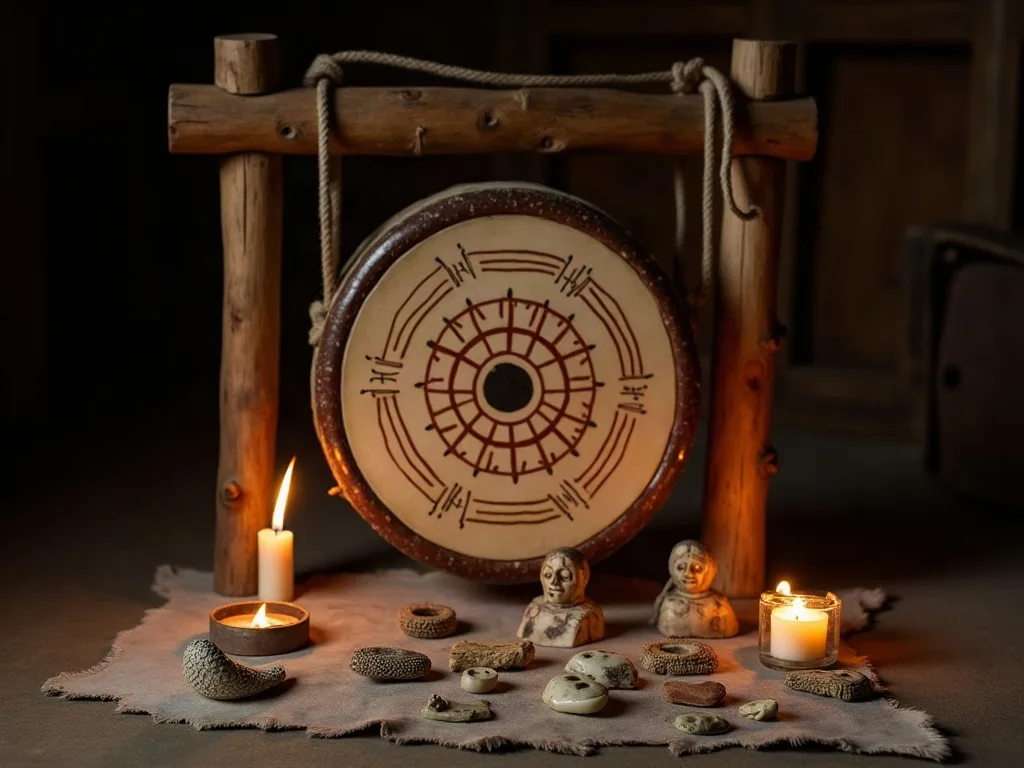
The trance-state, or qilak, was central to shamanic work, and its phenomenology was carefully observed and described by those who experienced it.
Early European observers of Inuit shamanism often dismissed the trance as fraud or hysteria. Modern anthropologists and scholars of shamanism have come to understand that ecstatic experience is a genuine psychological and neurological phenomenon, real to the person experiencing it regardless of whether external spirits are objectively present. An Angakkuq entering trance might exhibit a range of signs: trembling, loss of bodily control, a change in voice or speech pattern, apparent detachment from the physical environment, and the utterance of words or knowledge the shaman in ordinary consciousness did not possess.
The shaman themselves reported leaving the body. During these journeys, they experienced vivid perceptions: traveling through the layers of sky or descending through water to the underworld, encountering spirits in their own dwellings, receiving instruction or assistance, and then returning to the body to report what they had learned. To the shaman, these experiences were as real as any waking event. They were not metaphors. They were actual journeys into a realm of being that ordinary humans could not access except through the shaman's intermediation.
Some scholars have speculated about the neurological basis of this experience. Repetitive drumming, chanting, and fasting can induce altered states of consciousness. The Arctic environment itself, with its extremes of light and dark, its vast silences, and its constant threat of danger, may have conditioned the nervous systems of Inuit peoples to states of heightened perception. Some researchers have even suggested that certain dietary practices, the consumption of specific marine animals or plants, might have conveyed psychoactive compounds, though this remains speculative and controversial. What is clear is that the angakkuit themselves understood their work as real, demanding, and requiring years of disciplined practice to master safely.
The Encounter with Colonial and Christian Power
The arrival of European explorers, traders, and missionaries fundamentally disrupted the shamanic traditions of the Arctic.
From the 18th century onward, European accounts of Inuit shamanism grew more abundant and more hostile. Early Arctic explorers like Hans Egede and missionaries saw the angakkuit as obstacles to Christian conversion. They documented shamanic practices with a mix of fascination and moral disapproval, often portraying shamans as charlatans or demon-worshippers. By the 19th and 20th centuries, in regions where Christian missions became established, shamanic practice declined sharply. Young people were sent to mission schools. Shamans were discouraged and sometimes formally persecuted. The cosmology that had sustained the angakkuit for centuries was challenged by a monotheistic worldview that had no place for spirits, helping-animals, and multiple cosmological layers.
Yet shamanic practice did not vanish entirely. In remote regions and among certain communities, knowledge and practice persisted in modified forms. In contemporary times, there has been renewed interest in traditional Inuit spirituality, including shamanism, as part of broader movements toward cultural reclamation and indigenous self-determination. Some communities have worked to restore and maintain traditional shamanic knowledge, though always in dialogue with modern contexts and Christian traditions that have long roots in the Arctic.
The Angakkuq in Inuit Literature and Contemporary Culture
The figure of the Angakkuq has lived beyond the shamanic practice itself, finding new expression in Inuit literature, film, and contemporary spirituality.
Modern Inuit writers and artists have drawn on shamanic imagery and themes to explore identity, cultural survival, and the relationship between the spiritual and material worlds. The shaman appears as a character of wisdom and power in stories and poems by Inuit authors. Documentary filmmakers have recorded interviews with elders who remember shamanic practices or who have studied them through their families' oral histories. Museums in the Arctic regions have created exhibitions dedicated to shamanic objects, songs, and practices, treating them not as relics of a dead past but as part of living cultural heritage.
At the same time, there is significant diversity within contemporary Inuit communities about how to relate to shamanism. Some see it as essential to cultural reclamation. Others view it as incompatible with Christianity or with modern scientific understanding. Still others navigate a pragmatic middle ground, honoring shamanic traditions as part of their heritage while integrating Christian or secular frameworks. These conversations are ongoing and contested, shaped by each community's particular history and values.
The academic study of Inuit shamanism has also evolved. Early anthropological accounts, written by non-Inuit observers, sometimes distorted or stereotyped shamanic practice. Contemporary scholarship increasingly includes Inuit voices and perspectives, treating shamanism as a sophisticated and coherent knowledge system rather than as exotic superstition or universal human primitive religion. This scholarly reorientation has contributed to broader cultural recognition of angakkuit as specialists and philosophers, not merely as curiosities or survivals of a pre-modern past.
Frequently asked questions about Angakkuit, Inuit shamans and spirit mediators?
Frequently asked questions
What is the difference between an Angakkuq and a Western priest or doctor?
An Angakkuq was not a priest of a formal institution or a physician trained in systematic medical theory. They were intermediaries with the spirit-world, called by visions and trained through direct experience with non-human intelligences. Their authority came from their personal relationship with helping-spirits and their demonstrated ability to heal, divine, and communicate with the unseen. A Western priest answers to a church hierarchy and doctrinal theology. A Western doctor studies anatomy and physiology. An Angakkuq answered directly to the spirits and to their community's need.
Did all Inuit communities have shamans, and did shamanic practice vary by region?
Yes, shamanic practice was widespread across Inuit regions from Greenland to Alaska to Siberia, though the specifics varied. The fundamental calling, the trance-journey, and the relationship to helping-spirits were common patterns. However, regional variations existed in the names of spirits, the specific cosmological layers, ritual methods, and the social status of shamans. Some communities had multiple shamans; others had one or very few. Some shamans were highly prestigious; in others, their role was more peripheral or contested.
How did Inuit shamanism relate to animals and hunting?
The relationship was central. Helping-spirits were often animals, and the shaman's most important function was maintaining a right relationship between the human community and the animal powers, especially the sea-animals like seals and whales on which Inuit survival depended. When hunting failed, the shaman might journey to Arnapkapfaaluk, the sea-mother, to learn what taboo had been broken or to plead for the animals' return. Shamans taught hunters the taboos they must keep to keep the animals' goodwill. Hunting and shamanism were woven together.
What happened to shamanic practice when Christianity arrived in the Arctic?
Christianity and European colonial presence disrupted shamanic traditions significantly. Missionaries viewed shamans as competitors and obstacles to conversion. Mission schools discouraged traditional practices. By the 20th century, shamanism had declined sharply in most Inuit regions where Christian missions were strong. However, it did not disappear entirely. In recent decades, there has been renewed interest in recovering and revitalizing shamanic knowledge as part of cultural reclamation, though this happens alongside and sometimes in tension with Christian traditions that have deep roots in Arctic communities.
Could an Angakkuq harm people, and how was this power checked?
Yes, angakkuit were believed capable of sending malevolent spirits, cursing enemies, and stealing souls. This possibility was part of why shamans were simultaneously needed and feared. Communities dealt with abusive shamans through various means: social pressure, exile, or in extreme cases, death. Shamanic power was understood as amoral; the shaman had to choose to use it rightly, and those who repeatedly violated moral restraints risked losing community support or their lives. A true Angakkuq was one whose personal character and commitment to communal welfare balanced their dangerous spiritual knowledge.
What evidence do we have about Inuit shamanism, and how reliable are these sources?
Evidence comes from several sources: accounts by early European explorers and missionaries (which must be read critically, as they often distorted what they observed); oral histories preserved within Inuit communities; ethnographic fieldwork by anthropologists in the 19th and 20th centuries; museum collections of shamanic objects like drums and amulets; and contemporary interviews with Inuit elders. Modern scholarship increasingly privileges Inuit voices and perspectives over external observers. Archaeological evidence of shamanic practice is limited but suggests deep antiquity. The challenge is that much knowledge was lost during the colonial and missionary period.
The Angakkuq's Legacy and Enduring Questions
The figure of the Angakkuq remains a profound window into how humans across cultures have sought to bridge the material and spiritual worlds, to make sense of suffering and fortune, and to regulate the relationship between community and environment.
Shamanic practices in the Arctic were not primitive attempts at science or proto-psychology, even though they sometimes produced outcomes that modern observers might explain in psychological or medical terms. They were a sophisticated, integrated system of knowledge about cosmos, healing, ethics, and power. The angakkuit were specialists in this system, trained rigorously, held to high standards, and constantly negotiating the dangers inherent in their work. When they succeeded in healing the sick or finding the seals, their authority grew. When they failed repeatedly or behaved immorally, they faced suspicion or exile.
Today, as Arctic communities work to maintain their cultural heritage in the face of rapid environmental and social change, shamanism holds multiple meanings. For some, it represents a connection to ancestors and to a sophisticated spiritual heritage that colonialism nearly erased. For others, it raises questions about how to honor the past while living in a modern, secular, often Christian context. For scholars and artists, the angakkuit remain figures of immense intrigue, embodying questions about consciousness, power, knowledge, and what it means to be a person in relationship with more-than-human worlds.
The trance-journeys and spirit-encounters of the shamans remain impossible to fully verify or refute. We cannot accompany an Angakkuq to the dwelling place of Arnapkapfaaluk or confirm whether the helping-spirits are objectively real or expressions of the psyche. What we can do is treat shamanic practice with the respect it deserves, recognizing that the angakkuit were real people engaging with real experiences, within a cosmology that made sense to them and to their communities, and that shaped the survival and flourishing of Arctic peoples for centuries.
Read the full book
Want the whole story?
The complete edition is an instant PDF download here, with a paperback on Amazon for selected titles.
Inuit
The Inuit Mythology Book: Sedna, Sila, and the Sacred Stories of Ice, Hunger, and the Sea-Goddess at the Bottom of the World
Shamans, Spirits, and Survival in the Arctic
The mythology of the Arctic peoples: Sedna at the ocean floor, Sila in the wind, and the angakkuq shamans who flew between worlds. Drawn from primary sources.
More from Inuit
All articles
Inuit
Inuksuk: Stone Markers of the Arctic Landscape
The Inuksuk stands as a silent guardian across the Arctic: stacked stones shaped by Inuit hands to guide hunts, mark sacred places, and embody the spirit of community. Learn how these markers bridge the visible and spiritual worlds.

Inuit
The Moon Man and Sun Sister: Cosmic Pursuit Myth
In Inuit cosmology, the Moon Man chases his sister, the Sun, across the sky in an endless celestial pursuit born from darkness and shame. Discover how this myth explains the rhythm of day and night, and why it still echoes in Arctic cultures today.

Inuit
Sila: The Breath of Life and Weather Spirit
Sila is the Inuit spirit of weather, breath, and life force itself, a boundless presence that moves through air and water, sustaining hunters and demanding respect. Discover how Arctic peoples understood this invisible power that controlled their survival.

Inuit
The Legend of Sedna: How an Inuit Girl Became Ruler of the Depths
Sedna rules the ocean from the seafloor, her fingers transformed into seals and whales. Discover how a betrayed girl became the most powerful being in Inuit cosmology, and why hunters still honor her with rituals tied to survival itself.