
The Moon Man and Sun Sister: Cosmic Pursuit Myth
In Inuit cosmology, the Moon Man chases his sister, the Sun, across the sky in an endless celestial pursuit born from darkness and shame. Discover how this myth explains the rhythm of day and night, and why it still echoes in Arctic cultures today.
Contents
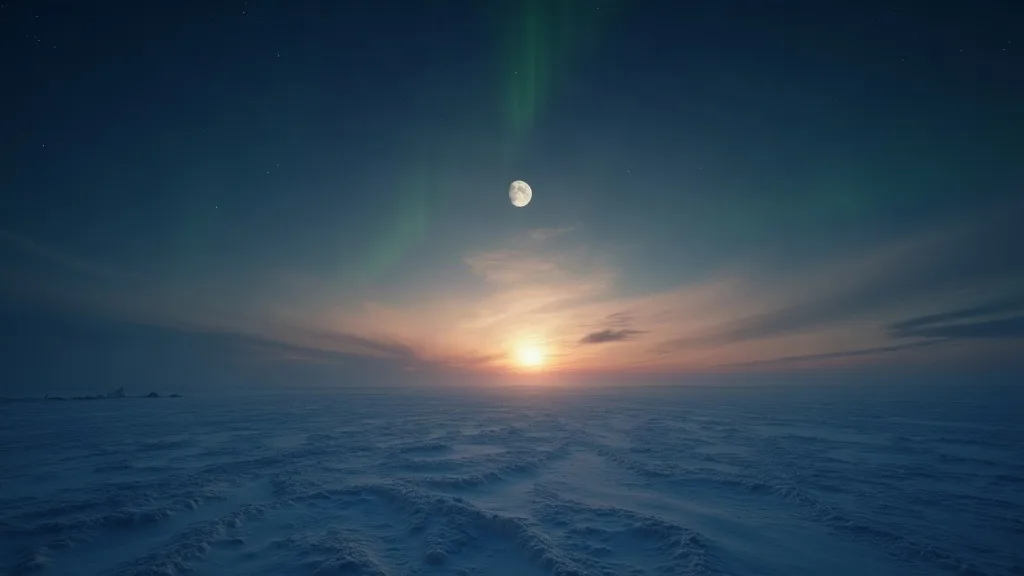
In the frozen dark of the Arctic night, two lights move across the sky in an ancient dance. One flees; one hunts. This is not random. The Inuit peoples of Greenland, Canada, Alaska, and Siberia have watched this same pursuit for thousands of years, and they have a story to explain it.
The Moon Man and Sun Sister myth is one of the most distinctive creation narratives in world mythology, a tale that transforms the cosmos into a family drama written across the heavens. It answers a question every human child asks: why do day and night chase each other? But it also reveals something deeper about shame, transformation, and the boundary between light and darkness.
The Myth of Incest and Flight
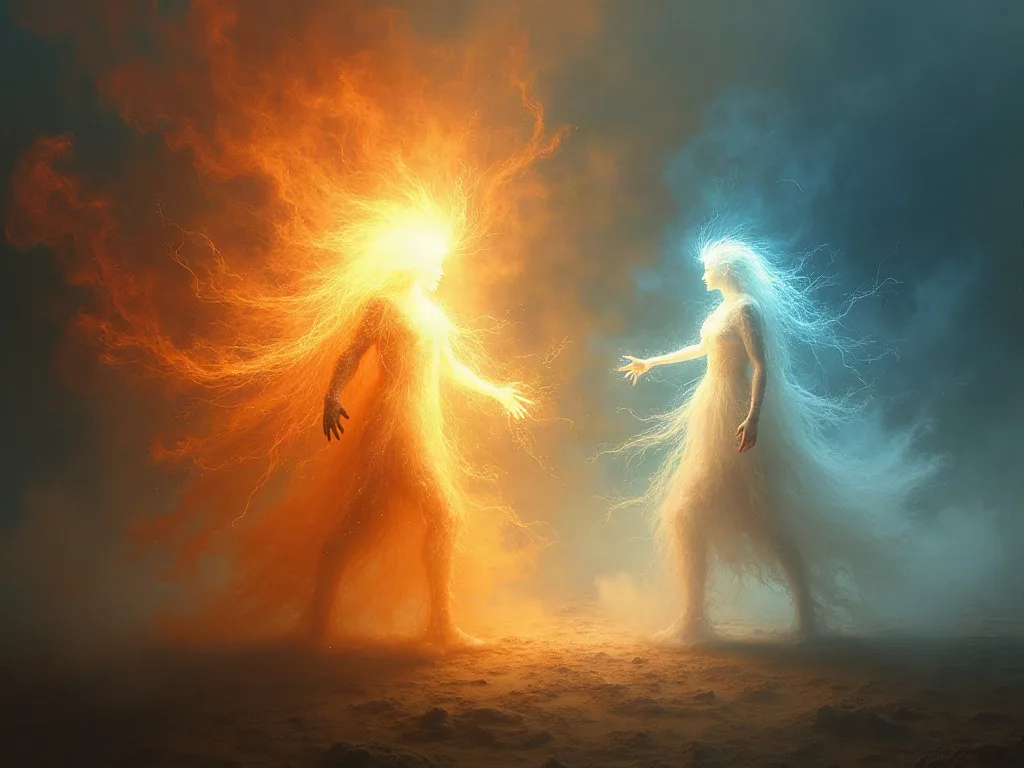
The story begins in darkness, before the sky held any light. Among the Inuit peoples, versions of this myth vary by region, but the core narrative is consistent: a brother and sister lived together in the dark. During the night, the brother entered his sister's bed without her knowing his identity. When she discovered the deception, she was furious and ashamed.
In some versions recorded by anthropologists in the early 20th century, the sister retaliated. She cut off her brother's genitals and hurled them at him in disgust. In other tellings, she simply fled into the night air, her anger and humiliation driving her upward. Her brother, transformed by shame and desperation, chased after her, still pursuing what he could never possess.
As the story moves into cosmological register, the siblings are no longer earthbound. The sister becomes the Sun, burning bright with her anger and moving across the sky to escape her brother's pursuit. The brother becomes the Moon, pale and lesser, forever chasing her across the heavens but never quite catching up. When the Moon catches the Sun, we see a lunar eclipse. When the Sun outruns the Moon, we see the familiar pattern of day giving way to night.
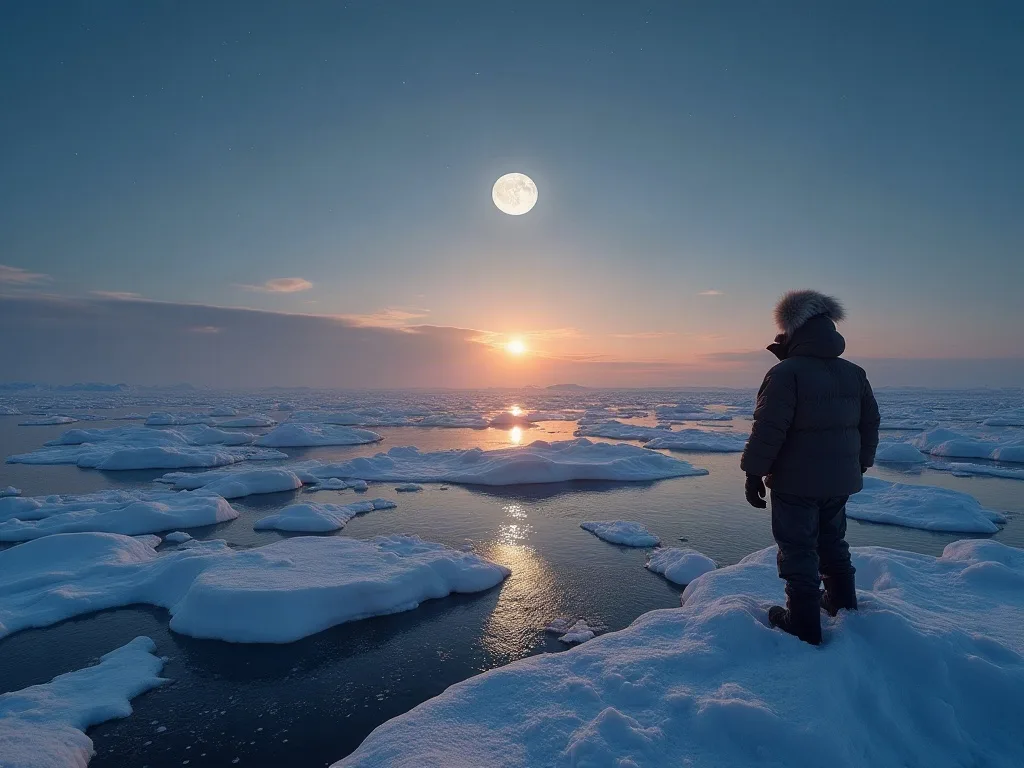
This myth does not celebrate the brother's desire or excuse his transgression. Instead, it makes the cosmos itself a monument to boundary violation and its consequences. The endless chase is not romance. It is punishment, transformation, and the permanent reshaping of the world.
Incest as Cosmic Violation
To understand why this myth carries such power in Inuit cultures, we must set aside modern sensibilities and recognize what incest represented in Arctic societies. It was not merely forbidden; it was cosmically destabilizing.
The Inuit understood the world as a carefully balanced system. Animals had consent and agency. Taboos governed reproduction, hunting, and speech. Violation of these boundaries did not simply break a rule; it fractured the order that kept humans, animals, and spirits in relation to one another. The Moon Man's transgression was not a personal crime alone. It was a wound in reality itself.
Some scholars point to the myth's structure as evidence of its antiquity. The American anthropologist Knud Rasmussen, who conducted extensive fieldwork among the Inuit in the 1920s, recorded versions that placed the incest in the primordial dark before humans even existed. This suggests the myth may have encoded something about the cosmos that predated human settlement in the Arctic, perhaps harking back to even older traditions shared with Siberian and East Asian peoples.
The transformation of the siblings into celestial bodies is not mere punishment, though. It is also revelation. By becoming the Sun and Moon, they become visible. Their crime is written into the structure of day and night itself. Every observer looks up and sees the consequence of boundary violation made eternal and visible.
Variants Across the Arctic
The specifics of the Moon Man and Sun Sister myth shift as one moves across the Arctic geography. Among the Copper Inuit of Canada's north coast, versions recorded in the 20th century emphasized the brother's obsessive pursuit and the sister's desperate flight. Some traditions describe the Sun as so bright that she burns away part of her brother's face, explaining why the Moon is less luminous than the Sun.
In Greenlandic versions, collected from communities along the west coast, the myth sometimes opens with an ambiguous darkness. The brother does not know his sister's identity; she does not know his. The violation is less intentional malice than it is the consequence of living in total darkness, where the normal markers of kinship become impossible to perceive. This detail shifts the myth's moral register slightly, introducing the idea that darkness itself can confound human judgment.
Siberian Inuit traditions, recorded among the Chukchi and Yupik peoples, sometimes embed the myth within a broader creation cycle. The chasing of the Sun by the Moon is not an isolated drama but one movement in a larger cosmic symphony that includes other transformations: the sea spirit Sedna in her abyssal depths, the weather spirits that govern storms, and the animal masters that hold the hunting territories.
Rasmussen's field recordings and later ethnographic work by scholars like Aage Borup Hansen documented these regional variations, revealing that while the core narrative remained consistent, the emotional tone and cultural emphasis changed. What mattered everywhere was the chase, the boundary crossed, and the visible consequence mapped onto the sky.
Incest Taboo in Inuit Culture and Beyond
Incest prohibition was universal across human societies, but Inuit cultures encoded it with particular intensity. In a harsh Arctic environment where family units were small and survival required cooperation, the boundary between familial and sexual relations was absolute. To cross it was to risk not only individual shame but the survival of the whole group.
The anthropologist Ernest Burch, who studied Inuit kinship systems, noted that the elaborate terminology for different types of relatives served a practical purpose: it made incest categorization clear even in conditions of extreme isolation. The Moon Man and Sun Sister myth encoded this taboo in cosmic form, making it impossible for any observer to forget the consequence of boundary violation. The sky itself became a teaching device.
Comparable myths of incestuous transgression appear in other mythologies. The Greek story of Oedipus involves unknowing incest, with blindness as the punishment. The Hindu epic the Mahabharata contains the story of Puru, whose incestuous birth shapes his destiny. But the Inuit myth is unique in its cosmic scale: the crime is not personal tragedy confined to a single hero's fate but becomes the mechanism that generates day and night.
The Role of Darkness in Arctic Cosmology
The Inuit lived in a world of extreme seasonal light and dark. In winter, the sun barely rose above the horizon or disappeared entirely for weeks. In summer, the sun circled the sky without setting. This rhythm shaped not only Inuit calendars but their spiritual understanding of time, morality, and divine order.
The myth's opening in total darkness was not incidental. It reflected the lived experience of Arctic winters, when the boundary between self and other, identity and anonymous touch, could blur in the dark. By placing the incest in this primordial darkness, the myth connected a cosmic crime to the conditions that enable it. Darkness does not just hide wrongdoing; it obscures the kinship boundaries that keep society intact.
Once the brother and sister are transformed into Sun and Moon, they are no longer hidden. The chase is performed in full view of the world. This suggests that the myth encoded another truth: that exposure and witness are part of cosmic justice. The crime cannot be undone, but it can be made visible, explained, and integrated into the ongoing order of things.
The Eclipse as Encounter
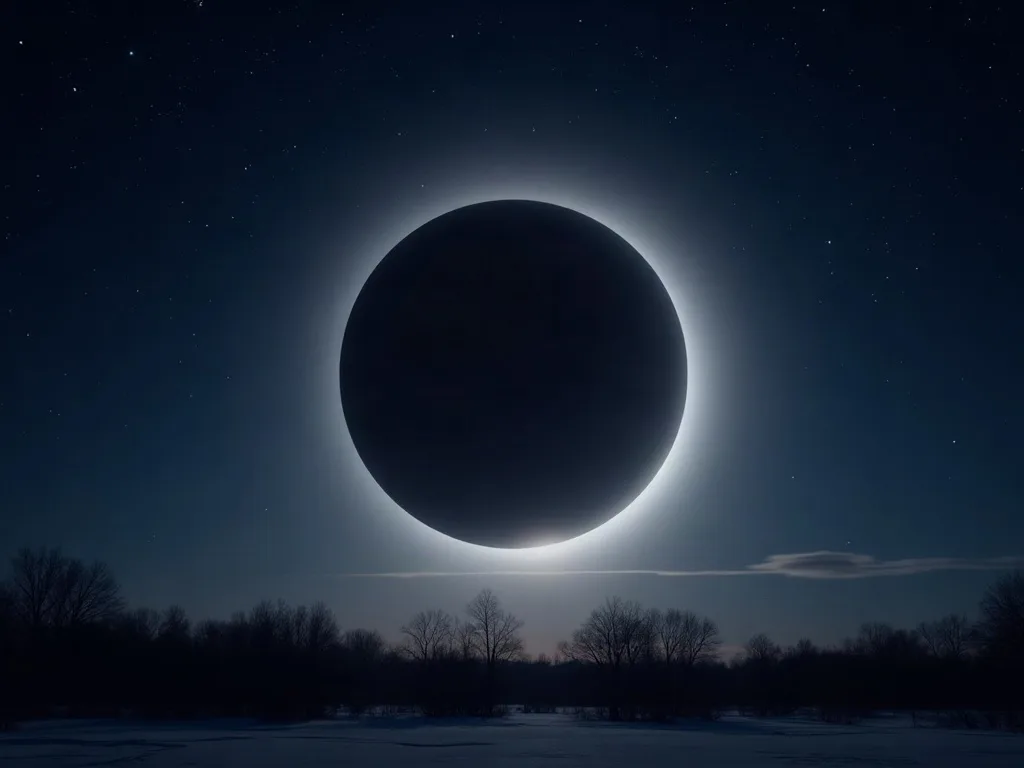
For Inuit peoples, a lunar eclipse held special significance. When the Moon darkened, it was understood as the moment when the Moon and Sun were closest to collision. Some versions of the myth describe eclipses as the moment when the brother almost catches his sister, when the chase nearly reaches its conclusion.
A solar eclipse, though far rarer in the Arctic regions where many Inuit peoples lived, might have been interpreted differently: as a moment when the Sun's brightness was momentarily obscured, perhaps by grief or exhaustion in her endless flight. These astronomical events became narrative moments, times when the mythological time compressed into observable earthly time.
The significance of eclipses in Inuit cosmology also speaks to a broader pattern: the Inuit did not separate astronomy from mythology. The stars, planets, and luminaries were not abstract objects of observation. They were relatives, actors, and consequences. The night sky was a text written in light, and reading it meant understanding the stories embedded in it.
Transformation and Cosmic Order
A key theme running through the Moon Man and Sun Sister myth is transformation. The siblings do not die or vanish; they become something else. They are not destroyed but repositioned within a new cosmic order. This reflects a characteristic feature of Inuit spirituality: the belief that all beings exist on a continuum, capable of shifting form, identity, and status.
This fluidity appears elsewhere in Inuit mythology. The sea spirit Sedna becomes her realm through transformation. Animals shed their skins to reveal human forms beneath. The boundaries between species and states of being are permeable. The Moon Man and Sun Sister myth fits within this cosmological vision: the transgression does not create chaos but a new, sustainable order. The chase is endless, but it is also regular, predictable, and observable.
Scholars have debated whether this mythic vision reflects a philosophy of balance or acceptance of human limitation. Perhaps both. The Inuit lived in conditions where total control was impossible, where survival depended on working with forces larger than oneself. The myth of endless pursuit, neither resolution nor catastrophe, mirrors this understanding: some chases continue forever, and that too is a kind of order.
The Myth in Modern Inuit Culture
The Moon Man and Sun Sister myth remains alive in Inuit communities today, though its transmission has changed. Where once it was taught through oral performance, often in winter gatherings when the sky held particular significance, it now exists in ethnographic recordings, published collections, and in the lived memory of elders who learned it from their ancestors.
Contemporary Inuit artists and writers have drawn on the myth as a foundation for creative work. The chase, the shame, the cosmic consequence, and the relentless motion all resonate with modern concerns: displacement, identity, survival in a changing climate. Some Inuit authors have reinterpreted the myth to reflect contemporary experience, shifting its meaning without breaking its structure.
The myth also appears in museum exhibitions and educational programs across the Arctic, translated from oral tradition into visual display and written text. This process inevitably changes the myth, but it also ensures transmission. The myth's power lies in its adaptability: it has survived the transition from oral culture to written and visual media because its core narrative is strong enough to hold meaning across different forms.
Cosmic Pursuit in World Mythology
The image of celestial bodies in pursuit appears in mythologies across cultures, though rarely with the specific moral weight the Inuit assign to it. In Hindu cosmology, the demon Rahu pursues the Sun and Moon during eclipses, embodying a different cosmic principle: appetite and incompletion. In Scandinavian mythology, the wolf Fenrir chases the Sun across the sky, representing destruction and the approach of the world's end.
What distinguishes the Inuit version is its grounding in family transgression and its refusal of apocalyptic resolution. The chase continues not because one party will eventually triumph but because the violation created a permanent condition. The Sun and Moon will never reunite; they will never stop fleeing and pursuing. This eternal suspension mirrors a philosophical acceptance that some things, once broken, can only be transformed, not repaired.
Comparative mythologists have noted that incest narratives often appear at the foundations of cultures that place high value on kinship boundaries. The more elaborate and essential the kinship system, the more severe the mythic punishment for violating it. The Inuit, living in small, dispersed family groups dependent on intergenerational knowledge transfer, encoded their most sacred boundary violation in cosmic permanence.
Frequently asked questions about the Moon Man and Sun Sister myth
Frequently asked questions
Why do Inuit cultures emphasize the incest violation so heavily?
In Inuit communities, kinship boundaries were essential to survival and social order. Family groups were small, and clear kinship rules prevented internal conflict and enabled cooperation. The Moon Man and Sun Sister myth encoded this taboo at a cosmic level, making it impossible to forget or minimize. The violation is not treated as tragedy for a single hero but as a wound that reshapes reality itself.
Do different Inuit communities tell this myth the same way?
Regional variations exist. Greenlandic versions sometimes emphasize the ambiguity of darkness that enables the transgression. Canadian and Alaskan versions may focus more on the brother's obsessive chase. Siberian Inuit traditions sometimes embed the myth within broader creation cycles involving other spirits. The core narrative remains consistent, but the moral and cosmological emphasis shifts.
What does the myth say about eclipses?
Lunar eclipses were understood as moments when the Moon came closest to catching the Sun. Some versions interpret the darkening of the Moon as the Sun's light overpowering her brother's lesser glow. These astronomical events were narrative moments when mythological time compressed into observable time.
How is this myth different from other incest myths in world mythology?
Unlike the Greek story of Oedipus, where incest is a personal tragedy, or many other traditions where incest is a transgression within a closed family drama, the Inuit myth makes the crime cosmic and eternal. The siblings are not destroyed or trapped in a cycle of personal suffering; they are transformed into the very mechanisms that generate day and night. The punishment becomes the structure of reality.
Is this myth still part of Inuit culture today?
Yes, though transmission methods have changed. The myth appears in ethnographic recordings, published collections, and in the living memory of elders and communities. Contemporary Inuit artists and writers continue to draw on it as a foundation for creative work, reinterpreting its meaning to address modern experience while preserving its core narrative power.
The Enduring Logic of the Chase
What makes the Moon Man and Sun Sister myth remarkable is not just its explanation of day and night but its refusal to offer resolution. The chase continues. The Sun will not be caught. The Moon will not stop pursuing. This is not frustration or failure; it is order. It is the way things must be.
This acceptance of permanent, meaningful motion without resolution marks a philosophical stance distinct from mythologies that work toward apocalypse or redemption. The Inuit cosmos, as expressed in this myth, is not heading anywhere. It is not broken that needs fixing. It is a condition that persists because breaking the most sacred boundary creates a permanent state, not a temporary punishment.
For thousands of years, Inuit peoples have watched the sky and seen their myth written in light. The Moon rises. The Sun sets. The chase continues. The boundary remains violated and eternally visible. In a world where so much is uncertain, where ice cracks and game disappears, where the darkness lasts months and the light burns ceaselessly, the regularity of this celestial pursuit has been something to hold onto: proof that even the worst violations can be integrated into an ongoing order.
Read the full book
Want the whole story?
The complete edition is an instant PDF download here, with a paperback on Amazon for selected titles.
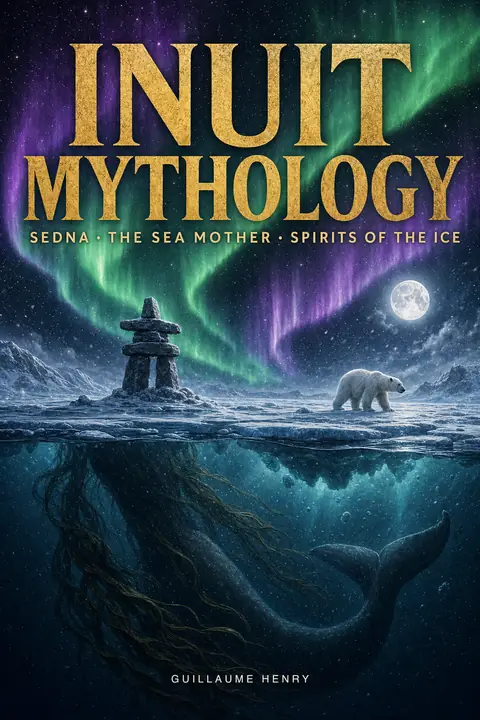
Inuit
The Inuit Mythology Book: Sedna, Sila, and the Sacred Stories of Ice, Hunger, and the Sea-Goddess at the Bottom of the World
Shamans, Spirits, and Survival in the Arctic
The mythology of the Arctic peoples: Sedna at the ocean floor, Sila in the wind, and the angakkuq shamans who flew between worlds. Drawn from primary sources.
More from Inuit
All articles
Inuit
Inuksuk: Stone Markers of the Arctic Landscape
The Inuksuk stands as a silent guardian across the Arctic: stacked stones shaped by Inuit hands to guide hunts, mark sacred places, and embody the spirit of community. Learn how these markers bridge the visible and spiritual worlds.

Inuit
Sila: The Breath of Life and Weather Spirit
Sila is the Inuit spirit of weather, breath, and life force itself, a boundless presence that moves through air and water, sustaining hunters and demanding respect. Discover how Arctic peoples understood this invisible power that controlled their survival.

Inuit
Angakkuit: Inuit Shamans and Spirit Mediators
Angakkuit are the shamans and spirit mediators of Inuit cultures, channeling power from the animal and spirit worlds to heal, guide, and maintain balance between the human and sacred realms. Discover how these intermediaries shaped Arctic survival and cosmology.

Inuit
The Legend of Sedna: How an Inuit Girl Became Ruler of the Depths
Sedna rules the ocean from the seafloor, her fingers transformed into seals and whales. Discover how a betrayed girl became the most powerful being in Inuit cosmology, and why hunters still honor her with rituals tied to survival itself.