
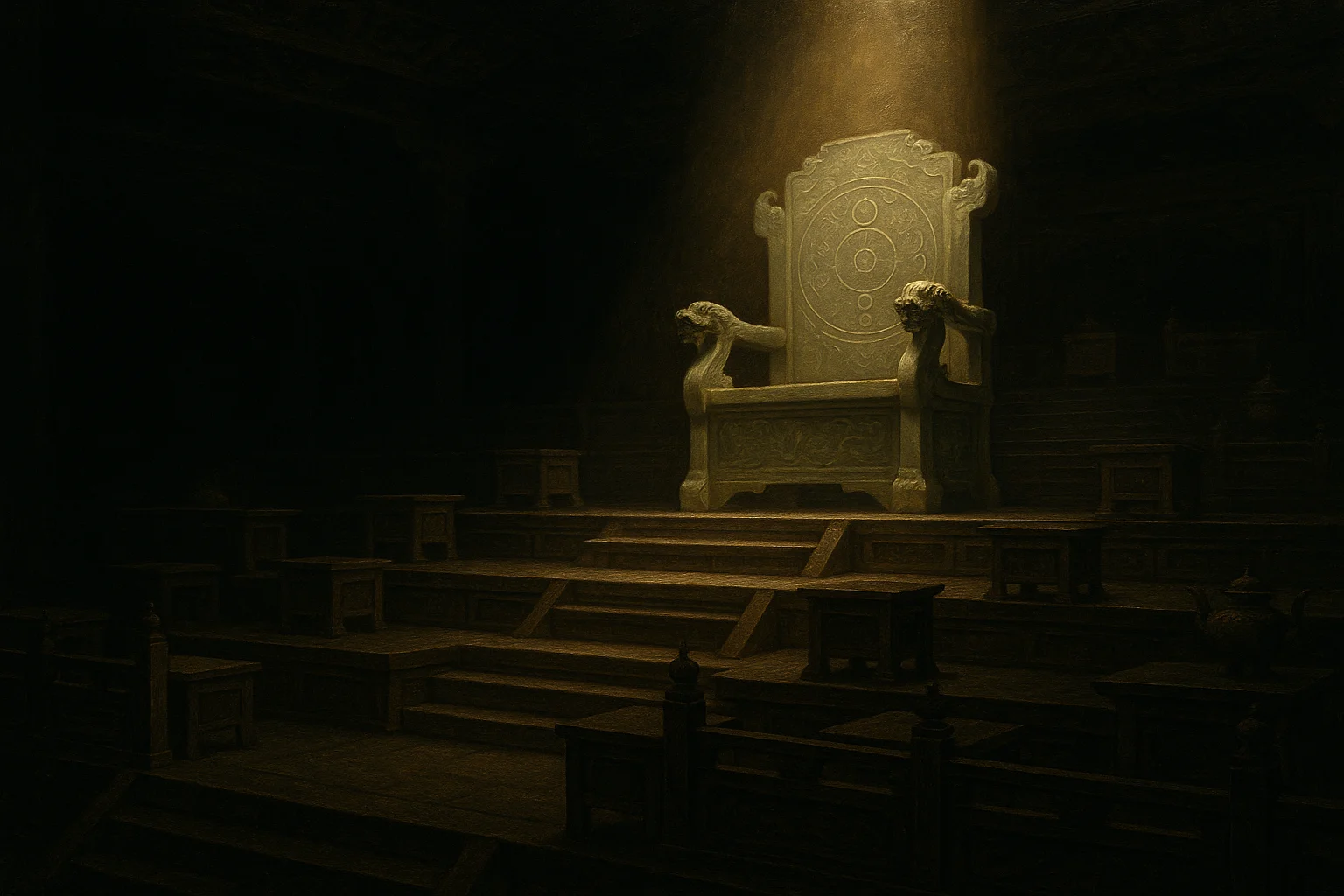
Jade Emperor: Supreme Ruler of Heaven and the Celestial Bureaucracy
The Jade Emperor governs heaven through a celestial bureaucracy mirroring imperial China. His origins, trials, and role in Daoist cosmology.
Contents
The Jade Emperor (Yuhuang Dadi) is the supreme sovereign of heaven in Chinese mythology, presiding over a celestial bureaucracy that mirrors the administrative structure of imperial China. He ranks below the Three Pure Ones in Daoist cosmology but exercises direct executive authority over gods, spirits, and the natural world. His ascension followed three thousand trials of cultivation, transforming him from a prince who renounced his throne into the coordinator of cosmic order.
Most accounts treat him as a static administrator stamping celestial paperwork. The reality is more dynamic. His position evolved across centuries of Daoist theology, folk religion, and classical literature, absorbing elements from earlier sky gods and adapting to the needs of a culture that understood governance as both earthly and divine.
Origins and Ascension
The Jade Emperor's origins appear in Daoist texts compiled during the Tang and Song dynasties, though elements likely predate written records. Unlike gods born from primordial chaos or cosmic eggs common in creation myths, he earned his position through deliberate spiritual effort.
The Prince Who Renounced the Throne
The standard hagiography describes a prince of the Kingdom of Pure Felicity and Majestic Heavenly Lights. At birth, he radiated light that filled the kingdom. His father, the king, had prayed for an heir after years without children. The prince showed early compassion, distributing the royal treasury to the poor and sick.
Upon his father's death, he declined the throne. He retreated to a mountain cave to cultivate the Dao, seeking not power but understanding of the fundamental patterns underlying existence. This renunciation distinguishes him from rulers who claim divine right by birth. His legitimacy rests on merit, not bloodline.
Three Thousand Trials of Cultivation
Daoist texts specify that he endured three thousand trials, each lasting three million years. The arithmetic is symbolic rather than literal. Three is the number of the Sanqing (Three Pure Ones), the highest deities in the Daoist pantheon. The trials tested compassion, wisdom, and detachment from desire.
After completing these ordeals, he attained immortality and was appointed to govern heaven. The Daozang, the Daoist Canon, describes this appointment as recognition by the Three Pure Ones of his fitness to coordinate the myriad spirits and maintain cosmic balance. He did not seize power. It was conferred.
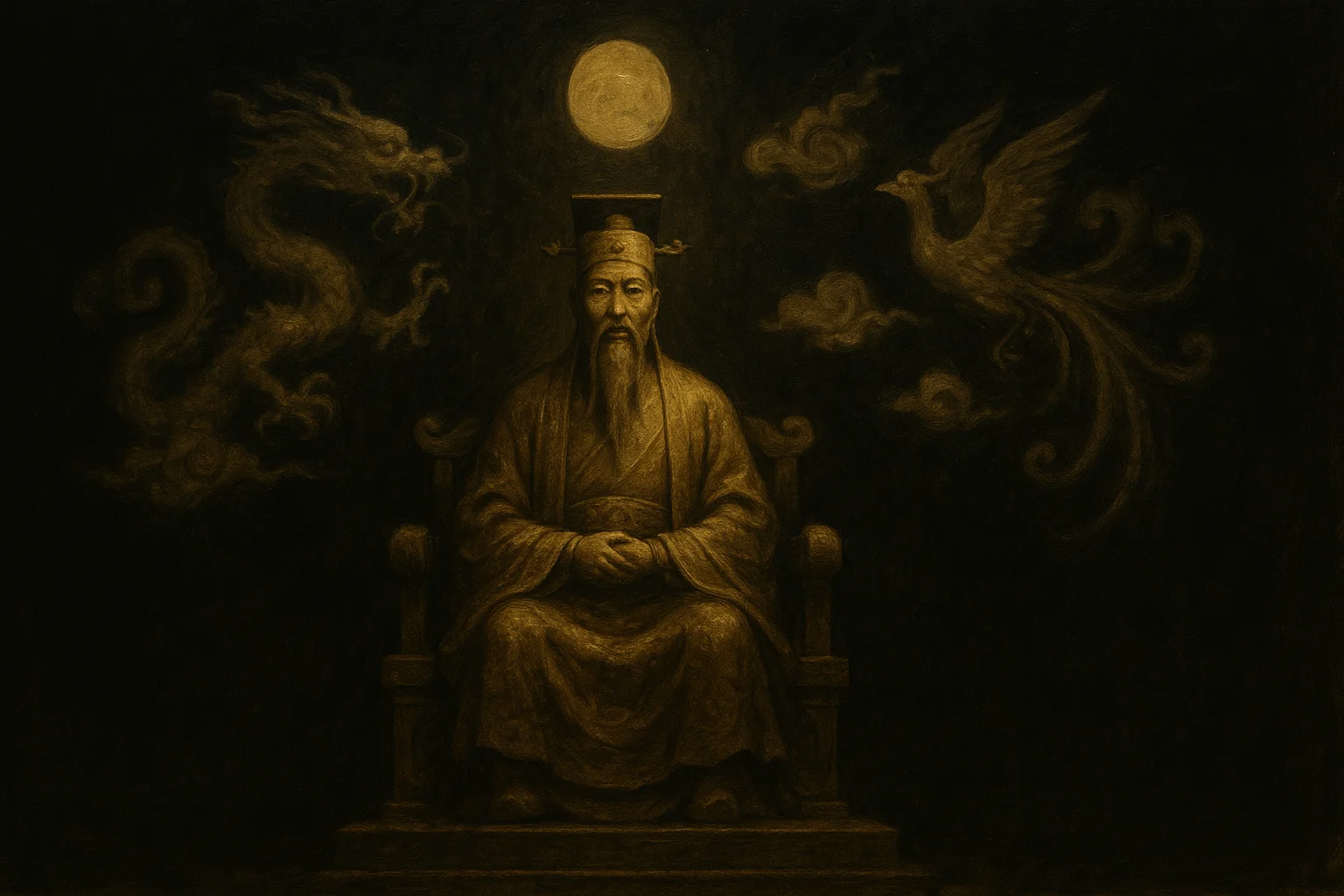
Position in the Daoist Cosmos
Understanding the Jade Emperor's rank requires mapping the vertical structure of Daoist cosmology, which differs significantly from the horizontal pantheons of Greek or Norse traditions.
Below the Three Pure Ones
The Three Pure Ones (Sanqing) occupy the highest tier: the Celestial Worthy of Primordial Beginning, the Celestial Worthy of Numinous Treasure, and the Celestial Worthy of the Way and its Virtue (often identified with Laozi). They represent stages of cosmic unfolding, abstract principles rather than active administrators.
The Jade Emperor functions as their executive officer. He translates their cosmic principles into actionable governance. The Pure Ones do not intervene in daily affairs. He does. This division mirrors the distinction in imperial China between the emperor as ritual figurehead and the bureaucracy that actually ran the state.
Above the Earthly and Underworld Realms
Below the Jade Emperor's court lie the earthly realm and the underworld, each with its own administrative structure. Yanluo Wang (King Yama) governs the underworld's ten courts, judging the dead and assigning reincarnations. The City God (Chenghuang) oversees local earthly jurisdictions.
All report to the Jade Emperor. He coordinates the three realms, ensuring that heavenly decrees reach earth, that earthly petitions reach heaven, and that the dead receive proper judgment. Prayers and offerings ascend through this hierarchy. Blessings and punishments descend through it.
The Celestial Bureaucracy
The celestial administration replicates the structure of imperial Chinese government with precision that would satisfy any cryptographer looking for pattern correspondence. Ministries, ranks, seals, and records operate according to rules as formal as any earthly code.
Ministries and Departments
Heaven contains ministries for thunder, fire, water, wind, plague, wealth, and longevity. Each ministry has a presiding deity, subordinate officials, and clerks who record human deeds. The Ministry of Thunder, for example, employs Lei Gong (Thunder Duke) and Dianmu (Lightning Mother) to execute punishments against the wicked.
The Ministry of Time oversees the Sixty Celestial Stems and Earthly Branches, the cyclical calendar that governs astrology and divination. The Ministry of Epidemics dispatches plague gods during times of moral disorder and recalls them when balance is restored. Each ministry maintains written records, submits reports, and awaits imperial approval for major actions.
Dragons, often treated as independent creatures in Western fantasy, serve as celestial bureaucrats in Chinese cosmology. The dragon kings of the four seas control rainfall, floods, and tides, reporting directly to the Jade Emperor. In Journey to the West, the Dragon King of the Eastern Sea complains to the Jade Emperor about Sun Wukong's rebellion, seeking redress through proper administrative channels.
Appointment and Demotion of Gods
The Jade Emperor appoints gods to office and demotes them for incompetence or corruption. Fengshen Yanyi (Investiture of the Gods), a Ming-dynasty novel, describes the mass appointment of 365 gods to fill vacancies after a cosmic war. Heroes and villains alike receive posts according to their merits and flaws.
Jiang Ziya, the novel's protagonist, wields the Investiture List, a scroll authorizing him to assign divine offices. Even he must submit the list to the Jade Emperor for final approval. No appointment is valid without the imperial seal. This reflects Confucian principles: legitimacy flows from the top, and even heroes require authorization.
"The Jade Emperor summoned the Monkey King to heaven and appointed him Protector of the Horses. Sun Wukong, delighted by the title, did not realize it was the lowest rank in heaven." Journey to the West, chapter 4
Iconography and Worship
Temple images depict the Jade Emperor seated on a throne, wearing the flat-topped imperial crown with dangling beads. He holds a ceremonial tablet, the symbol of authority used by officials addressing the emperor. His robes are yellow or gold, the imperial color forbidden to commoners.
Facial hair is sparse or absent, distinguishing him from martial gods like Guan Yu, who sport long beards. His expression is serene, impassive, the face of a judge rather than a warrior. Attendant figures flank him: celestial generals, recording clerks, and sometimes the Queen Mother of the West, though their relationship varies across traditions.
Temples dedicated to the Jade Emperor are less common than those for more specialized deities. Worshippers seeking rain pray to dragon kings. Those wanting wealth approach Caishen. The Jade Emperor receives prayers on matters of cosmic justice, appeals against unjust local gods, or requests for intervention when other deities fail to respond.
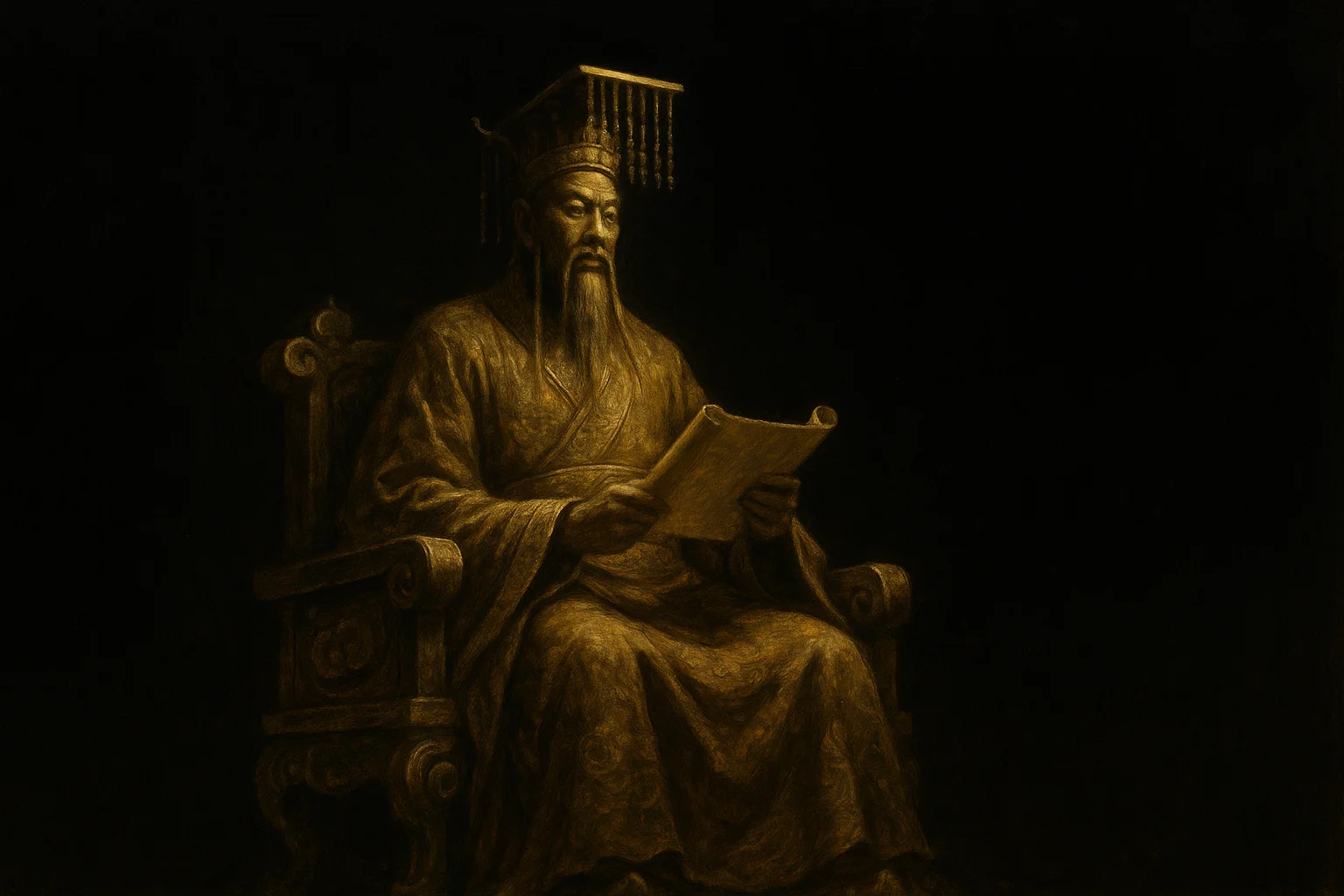
The Jade Emperor in Classical Literature
Classical novels portray the Jade Emperor not as omnipotent but as a ruler constrained by protocol, precedent, and the need to maintain consensus among fractious deities.
Journey to the West
In Journey to the West, Sun Wukong rebels against heaven after discovering his title of Protector of the Horses is an insult. He defeats celestial armies, steals immortality peaches, and declares himself "Great Sage Equal to Heaven." The Jade Emperor, unable to suppress him militarily, seeks help from the Buddha.
This portrayal has puzzled readers expecting an omnipotent deity. The Jade Emperor's power is administrative, not absolute. He cannot simply annihilate Sun Wukong. He must work through channels, consult advisors, and ultimately call in a higher authority. The novel treats heaven as a functioning government, complete with bureaucratic limitations.
Later in the novel, the Jade Emperor appears as a distant but benevolent figure, granting Tang Sanzang permission to travel west and retrieve Buddhist scriptures. He coordinates with Guanyin and the Buddha, demonstrating that heaven operates through negotiation between different religious traditions.
Fengshen Yanyi
Fengshen Yanyi presents the Jade Emperor as newly installed, presiding over a heaven depopulated by war. The novel describes the transition from the Shang to the Zhou dynasty as a cosmic event requiring the recruitment of new gods. Jiang Ziya's investiture fills the celestial bureaucracy with freshly appointed deities, many of whom died in battle.
The text emphasizes meritocracy. Virtuous generals receive high posts. Flawed heroes receive positions suited to their natures. Even some villains are appointed to offices where their vices become useful, such as gods of plague or misfortune. The system absorbs all types, channeling them toward cosmic order.
Jade Emperor
Rules through bureaucratic hierarchy, delegates authority to specialized ministries, appoints and demotes gods based on merit, constrained by protocol and the authority of the Three Pure Ones above him.
Zeus
Rules through personal power and kinship, enforces will through direct intervention and thunderbolts, overthrew his father to claim the throne, constrained primarily by fate and the occasional rebellion.
Folk Religion and Festival
The Jade Emperor's birthday falls on the ninth day of the first lunar month, one of the year's major festivals. Temples fill with offerings of fruit, incense, and paper money. Worshippers abstain from meat for days beforehand, purifying themselves before approaching the supreme deity.
At midnight, firecrackers explode to announce the moment of his birth. Families present offerings at home altars, addressing petitions to heaven. The festival blends Daoist liturgy with folk customs, including puppet shows and opera performances depicting celestial court dramas.
In Fujian and Taiwan, the Jade Emperor receives particular devotion. Some villages maintain elaborate rituals involving processions, spirit mediums, and communal feasts. The festival reinforces social cohesion, as the entire community participates in honoring the cosmic sovereign.
The Yuhuang Jing, a liturgical text recited during the festival, recounts his trials and virtues. Priests chant passages describing his compassion and wisdom, reminding worshippers that even the highest deity achieved his position through cultivation, not birth. The message is Daoist and Confucian at once: virtue is cultivated, hierarchy is earned.
Comparative Notes
The Jade Emperor's bureaucratic heaven contrasts sharply with the warrior halls of Norse Valhalla or the family quarrels of Greek Olympus. Where other mythologies emphasize conflict between gods, Chinese cosmology emphasizes administration. Heaven is not a battlefield but an office.
This reflects the historical reality of Chinese imperial governance, which relied on a literate bureaucracy selected through examinations. Gods, like officials, hold posts rather than inherent domains. They can be promoted, demoted, or transferred. The system values competence and order over individual heroism.
Comparisons with trickster figures illuminate the tension between order and chaos. Sun Wukong's rebellion against the Jade Emperor mirrors Loki's disruptions in Norse myth, but the resolution differs. Loki is bound until Ragnarok. Sun Wukong is reformed and integrated into the celestial order, eventually achieving Buddhahood. The system absorbs rather than expels.
The celestial bureaucracy also parallels the structured cosmologies found in Zoroastrianism, where Ahura Mazda presides over hierarchies of yazatas (divine beings), or in Christian angelology, with its choirs and ranks. The pattern appears across cultures that developed complex state structures: heaven mirrors empire.
Unlike the flood myths across cultures, where gods often destroy and restart creation, the Jade Emperor maintains continuity. He does not reset the world but adjusts it, issuing decrees, dispatching gods, and ensuring that the cosmic machine continues running. His power is regulatory, not revolutionary.
Frequently asked questions
Who is the Jade Emperor in Chinese mythology?
The Jade Emperor (Yuhuang Dadi) is the supreme executive ruler of heaven in Chinese mythology, presiding over a celestial bureaucracy that governs gods, spirits, and natural phenomena according to Daoist cosmology. He ranks below the Three Pure Ones, the highest abstract deities, but exercises direct administrative authority over all other divine beings. He achieved his position through three thousand trials of spiritual cultivation after renouncing an earthly throne, making his authority based on merit rather than birth.
How does the celestial bureaucracy function?
The celestial bureaucracy operates as a divine mirror of imperial Chinese government, with ministries overseeing thunder, fire, water, epidemics, wealth, and other cosmic functions, each staffed by appointed gods who submit reports and await approval for major actions. The Jade Emperor appoints deities to office based on merit, demotes them for incompetence, and coordinates between heaven, earth, and the underworld through formal administrative channels. Dragon kings, city gods, and underworld judges all report to him, creating a hierarchical system where prayers ascend and decrees descend through proper bureaucratic procedure.
Where does the Jade Emperor rank in Daoist cosmology?
The Jade Emperor occupies the highest executive position in Daoist cosmology but ranks below the Three Pure Ones (Sanqing), who represent abstract cosmic principles rather than active administrators. The Three Pure Ones embody stages of cosmic unfolding and do not intervene in daily affairs, while the Jade Emperor translates their principles into actionable governance, coordinating the three realms of heaven, earth, and the underworld. This structure mirrors the distinction in imperial China between ritual authority and executive power.
How is the Jade Emperor portrayed in Journey to the West?
In Journey to the West, the Jade Emperor appears as a ruler constrained by bureaucratic protocol rather than an omnipotent deity, unable to defeat Sun Wukong through military force alone and ultimately requiring the Buddha's intervention. The novel depicts him as a competent administrator who works through proper channels, consults advisors, and coordinates with Buddhist figures like Guanyin, demonstrating that heaven operates through negotiation and consensus rather than absolute power. His portrayal emphasizes the limitations of bureaucratic authority when confronted with chaos that falls outside normal administrative procedures.
When and how is the Jade Emperor worshipped today?
The Jade Emperor's birthday is celebrated on the ninth day of the first lunar month with temple offerings of fruit, incense, and paper money, preceded by days of meat abstinence and culminating in midnight firecrackers to mark the moment of his birth. Worship is particularly strong in Fujian and Taiwan, where villages maintain elaborate rituals including processions, spirit mediums, and communal feasts, while priests recite the Yuhuang Jing liturgy describing his trials and virtues. Worshippers approach him primarily for matters of cosmic justice, appeals against unjust local gods, or intervention when other deities fail to respond, rather than for everyday requests better directed to specialized gods.
What texts describe the Jade Emperor's origins?
The Jade Emperor's hagiography appears primarily in Daoist texts compiled during the Tang and Song dynasties and preserved in the Daozang (Daoist Canon), which describe his renunciation of an earthly throne and three thousand trials of cultivation, each lasting three million years in symbolic rather than literal time. Classical novels like Fengshen Yanyi (Investiture of the Gods) and Journey to the West portray him in narrative contexts, showing how he governs heaven and interacts with other deities. The Yuhuang Jing, a liturgical text recited during his birthday festival, recounts his virtues and serves as a devotional rather than mythographic source.
Further reading on Mythologis
Read the full book
Want the whole story?
The complete edition is an instant PDF download here, with a paperback on Amazon for selected titles.
Chinese
The Chinese Mythology Book: Pangu, Nuwa, the Jade Emperor, and the Sacred Stories of the World's Oldest Living Tradition
5,000 Years of Dragons, Immortals, and the Celestial Court
From Pangu's creation to Sun Wukoku's rebellion: the unbroken mythological tradition of China, spanning the Yellow Emperor, Nuwa's clay humans, and the Jade Emperor's court.
More from Chinese
All articles
Chinese
The Dragon Symbolism in Chinese Myth: Sovereign of Waters, Heaven, and Time
In Chinese mythology, the dragon is not a monster to be slain but a cosmic sovereign: lord of rivers, rain, and imperial destiny. Its symbolism reaches from creation itself to the bones of the earth.
Chinese
Sun Wukong: The Monkey King and Trickster Hero
Sun Wukong, the Monkey King of Journey to the West, rebels against heaven, masters 72 transformations, and escorts a monk to India. His story explained.