
Journey to the West: The Monkey King's Quest for Buddhist Scriptures
Sun Wukong stormed Heaven, defied death, and got crushed under a mountain for five hundred years. Then a monk needed a bodyguard. The greatest road trip in Chinese mythology had just begun.
Contents
Sun Wukong did not begin as a pilgrim. He began as a catastrophe. Born from a stone egg fertilised by Heaven and Earth on the Mountain of Flowers and Fruit, he fought his way into immortality, ransacked the Dragon King's armory for a magic staff, and bullied the rulers of the underworld into erasing his name from the Book of Death. When the Jade Emperor finally gave him a job in Heaven to keep the peace, the Monkey King ate the Peaches of Immortality, drank the divine wine, swallowed Laozi's pills of elixir, and then declared himself "Great Sage, Equal to Heaven." It took all the armies of the celestial court, plus the Buddha himself, to end the rampage.
The Buddha did not destroy him. He simply placed one palm on the ground and bet Sun Wukong he could not somersault out of his hand. The monkey flew to the edge of the universe, carved his name on what he thought were the pillars of the sky, and flew back triumphant. The Buddha turned his palm over. Those five pillars? The fingers. Sun Wukong had never left the Buddha's hand. He was sealed under Five Elements Mountain, alone, for five centuries.
That backstory is only the prologue. The real story of the Journey to the West: The Monkey King's quest for Buddhist scriptures starts when a monk named Xuanzang walks past that mountain, hears a voice calling from the rocks, and agrees to free the prisoner in exchange for one thing: protection on the road to India.
Sun Wukong: Stone, Sage, and Rebel God
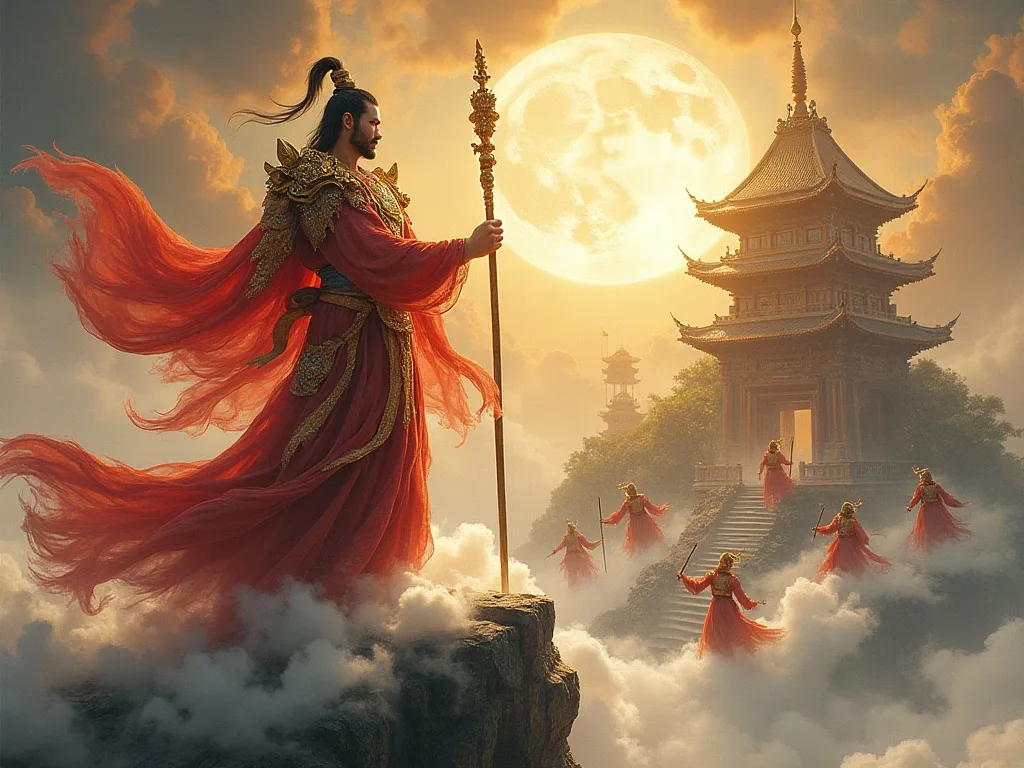
Sun Wukong first appears in the novel as pure potential and pure chaos. He is not born of a mother or father. He crystallises out of a magic stone on a sacred mountain, and the crack of his birth sends twin beams of golden light shooting toward the Jade Emperor's palace. He learns the seventy-two transformations (the ability to become any animal, person, or object) from the Taoist patriarch Subodhi, and he acquires his signature weapon, the Ruyi Jingu Bang (the "As-You-Wish Gold-Banded Staff"), from the Dragon King of the Eastern Sea. The staff originally measured the depths of the ocean. In Sun Wukong's hands it becomes a weapon that can shrink to the size of a needle and hide behind his ear.
His rebellion against Heaven is not framed as pure evil in the novel. Wu Cheng'en gives it a philosophical edge. Sun Wukong refuses to accept that a monkey born from the earth itself could rank below the celestial bureaucrats. He challenges the cosmic hierarchy because he genuinely believes it is unjust. His crime is pride, but it is also the pride of someone who worked for every power he has and refuses to be told it is not enough.
The seventy-two transformations he masters are worth pausing on. In Chinese cosmology, the number seventy-two carries deep significance: there are seventy-two earthly branches in classical calendrical systems, and the number echoes through Taoist texts as a measure of complete mastery. When Sun Wukong learns all seventy-two transformations, he has essentially learned to be everything, except, crucially, himself in a state of peace.
Xuanzang: The Monk Who Started It All
The historical Xuanzang (602-664 AD) really did walk from the Tang dynasty capital of Chang'an (modern Xi'an) to the Nalanda monastic university in northeastern India. He returned with 657 Sanskrit texts and spent the rest of his life translating them. The monk Huili wrote a biography of him that survives, and Xuanzang's own travel record, the Da Tang Xiyu Ji ("Great Tang Records on the Western Regions"), is still read today.
Wu Cheng'en transforms this historical figure into Tripitaka (called Xuanzang or Tang Sanzang in the novel, "Sanzang" meaning "Three Baskets," a reference to the three divisions of Buddhist scripture). The novel's Tripitaka is devout, gentle, and frequently helpless. He cannot fight. He cannot always tell demons from humans. He cries when his disciples are harsh. He is, in other words, pure compassion without power. That is the point: the pilgrimage works only because muscle and faith travel together.
Tripitaka is also, in the novel's cosmology, the reincarnation of a golden cicada, a heavenly disciple of the Buddha who fell to earth for failing to pay attention during a sermon. The journey west is partly his penance, partly his rescue.
The Four Disciples: A Team Built from Fallen Gods
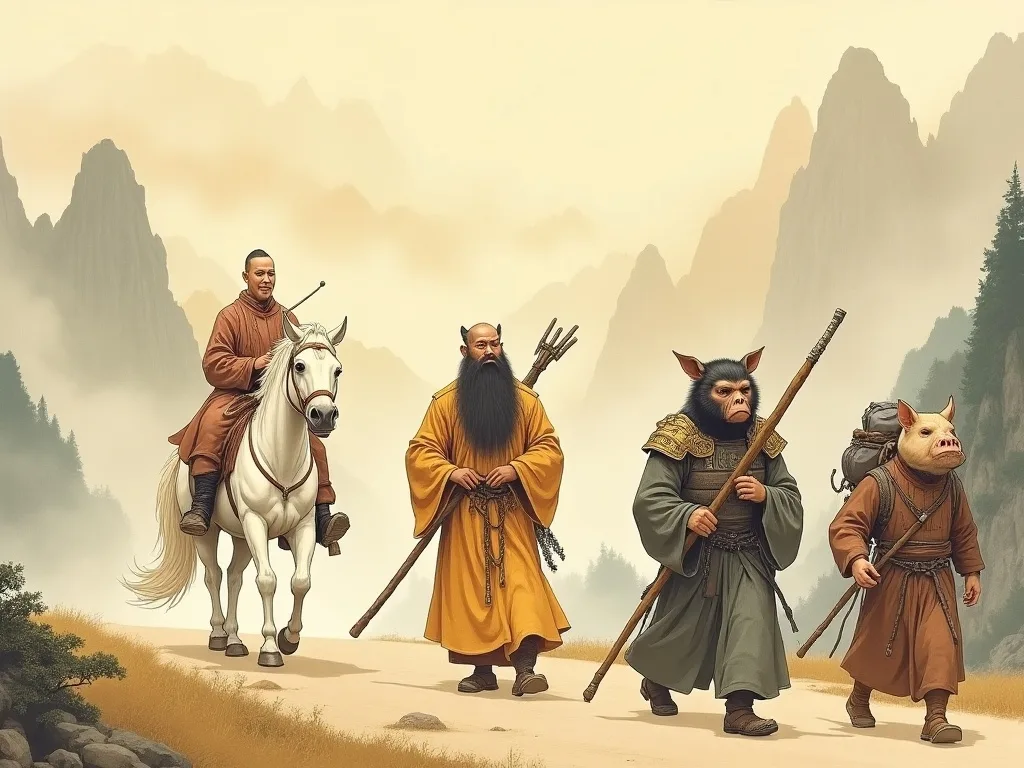
The pilgrimage does not start with a full team. Sun Wukong joins first, freed from Five Elements Mountain when Tripitaka removes a seal placed there by the Buddha. The monk gives the monkey a golden headband to ensure obedience: whenever Tripitaka recites a specific sutra, the band tightens around Sun Wukong's skull until he submits. It is one of the novel's most uncomfortable images, a leash on a genius, and the text never fully lets the reader forget that the Monkey King wears it against his will.
Zhu Bajie joins second. He was once the Marshal of the Heavenly Canopy, a general in charge of one hundred thousand celestial naval troops, until he drunkenly harassed the Moon Goddess and was cast down to earth, where he accidentally entered the womb of a pig and was reborn with a pig's head. In the novel he is greedy, lazy, lustful, and hilariously self-interested. He carries a nine-toothed iron rake as his weapon. He complains constantly. He is also, at critical moments, the one who talks sense.
Sha Wujing (Sandy) was once the Curtain-Raising General, a divine official who stood beside the Jade Emperor's throne. He broke a crystal goblet and was banished to the Flowing Sands River, where he ate travellers to survive. He is the quietest of the four disciples, calm and steady, carrying the pilgrim's luggage on a staff across his shoulders.
The fourth companion is not human at all. The White Dragon Horse was the third son of the Dragon King of the West Sea. He burned a pearl his father treasured and was sentenced to death before Guanyin, the Bodhisattva of Compassion, interceded and transformed him into a white horse to carry Tripitaka west.
This foursome is no accident. Each disciple carries a flaw that mirrors the obstacles to enlightenment in Buddhist thought: Sun Wukong's arrogance, Zhu Bajie's appetite and sloth, Sha Wujing's past violence. The journey is simultaneously a physical road trip and an internal drama about what each figure must conquer in himself.
The Road West: Eighty-One Ordeals
The novel structures the pilgrimage around eighty-one ordeals (jie in Chinese, meaning "calamities" or "trials"). The number is deliberate: nine times nine, nine being the highest single digit in Chinese numerology, associated with the emperor, with heaven, and with completion. Eighty-one ordeals means a complete, total, exhaustive testing.
The ordeals range across an imaginative landscape that mixes real Central Asian geography with pure mythological invention. The pilgrims cross the Flaming Mountain (Huoyan Shan), a range of volcanic peaks that only the Iron Fan of the Rakshasi Princess Iron Fan can cool. Sun Wukong has to trick, fight, and negotiate for three chapters just to borrow the fan, and even then he is outmaneuvered more than once.
They pass through the Kingdom of Women, where the local water causes any woman who drinks it to become pregnant, and where the queen attempts to keep Tripitaka as her husband. They fight the Six-Eared Macaque, a demon so perfectly identical to Sun Wukong that even the Jade Emperor, the Dragon Kings, and the God of the Underworld cannot tell them apart. Only the Buddha can perceive the difference: the macaque is a projection of Sun Wukong's own ego and doubt made manifest.
The ordeals are not all combat. Some are philosophical traps. In the Kingdom of Slow Cart, three Taoist priests have convinced the king that Buddhism is false and forced Buddhist monks into slavery. Tripitaka and his disciples must engage the Taoist priests in magical contests, including a rain-calling competition and, in one of the novel's darkest turns, a beheading contest where heads can be reattached. Wu Cheng'en uses these episodes to stage real debates between Taoist and Buddhist traditions, debates very much alive in Ming dynasty China.
Guanyin, the Bodhisattva Who Designed the Journey
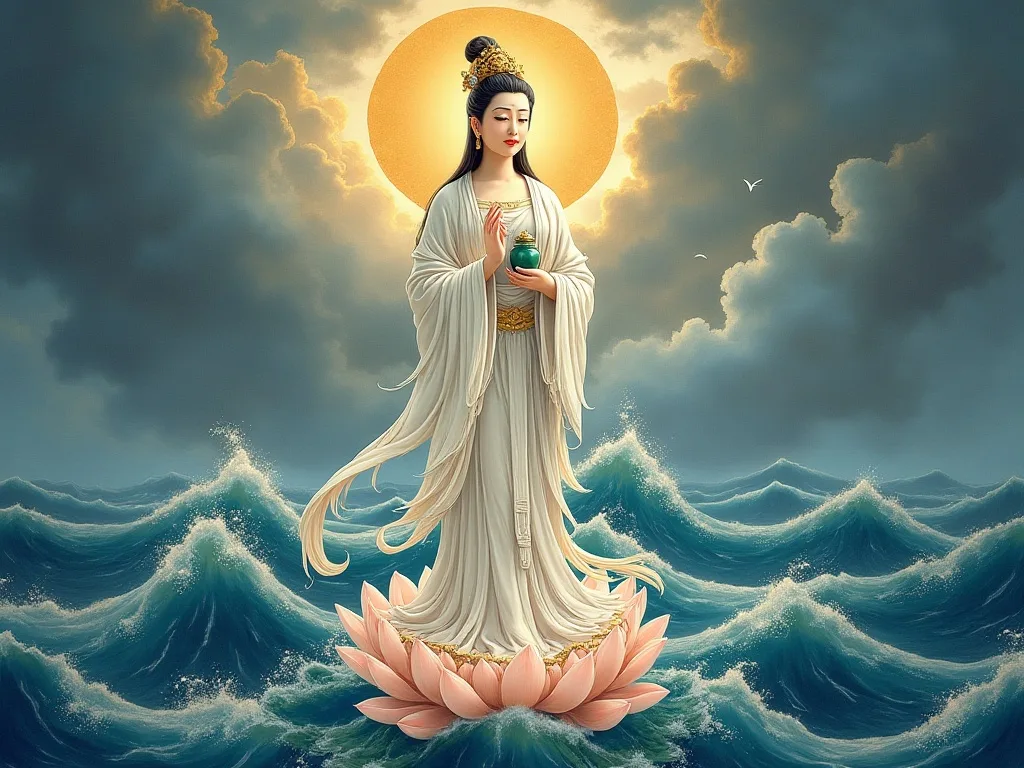
Guanyin (also written Guān Yīn, "She Who Hears the Cries of the World") is the figure who assembles the entire expedition before it begins. It is Guanyin who travels from the Western Paradise to the Tang emperor's capital, disguised as an old monk selling cassocks and a staff, and who identifies Tripitaka as the one destined to make the journey. It is Guanyin who plants Sun Wukong under Five Elements Mountain, who places the golden headband for Tripitaka to use, and who intervenes in crisis after crisis when the pilgrims are overwhelmed.
She is a compassionate architect, not a passive observer. The novel presents her as perhaps the most capable being in the story, more practically effective than the Jade Emperor and more consistently present than the Buddha. She is the embodiment of karuṇā (Sanskrit for compassion) translated into Chinese religious culture, a figure who began in Indian Buddhism as the male Bodhisattva Avalokiteshvara and gradually became female in Chinese tradition between roughly the 10th and 12th centuries AD.
Her role in the journey is also a subtle argument: enlightenment does not happen in isolation. It requires a guide, a community, and someone who cares about the outcome.
The Celestial Bureaucracy: Heaven as Imperial China
One of the novel's sharpest satirical edges is the portrait of Heaven it draws. The celestial court in Xiyouji runs exactly like the Chinese imperial bureaucracy: ranks, titles, petitions, promotions, and endless paperwork. The Jade Emperor responds to crises by summoning committees. Generals fail and pass the problem upward. Immortals who own powerful demons simply request amnesty for their pets once Sun Wukong has already done the hard work of subduing them.
Wu Cheng'en, writing in the 16th century under the Ming dynasty, almost certainly intended this as commentary. The Ming court was known for its elaborate bureaucratic paralysis. Scholars have pointed out that many of Sun Wukong's early rebellions look less like cosmic sacrilege and more like a meritocracy argument: the monkey earned his power, and a system of inherited celestial rank refuses to credit that.
The Jade Emperor sits at the top of this system but rarely acts decisively. He is powerful in theory and cautious in practice. The real problem-solving in Heaven either falls to Nezha, the young warrior prince who fights Sun Wukong in the early chapters, or gets outsourced to the Buddha entirely. The celestial bureaucracy is vast, ancient, and slow, and the novel watches it with affectionate irony.
The Scriptures at the End: What Was Actually Collected
The pilgrims finally reach Lingshan, the Spirit Mountain (the novel's version of the Indian holy site associated with the Buddha's teachings). After eighty-one ordeals, they stand before the Buddha. He instructs two of his disciples, Ananda and Kasyapa, to give Tripitaka the scriptures.
But in one of the novel's most startling turns, Ananda and Kasyapa hand over blank pages. Tripitaka and his disciples carry wordless sutras all the way back toward China before a divine messenger intercepts them and forces them to return for the real texts. When they go back, the Buddha explains: in truth, the wordless scriptures are the purest teachings. Blank pages contain all wisdom. The written texts are only a concession to humans who have not yet reached the understanding to read silence.
It is a moment that cuts straight to the heart of Chan (Zen) Buddhism: the ultimate teaching cannot be written. The journey itself, with its eighty-one ordeals, its failures and recoveries, its arguments and reconciliations, was the scripture all along.
After delivering the texts to the Tang emperor, all five pilgrims are rewarded with divine rank. Tripitaka becomes the Candana-prabha Buddha. Sun Wukong becomes the Victorious Fighting Buddha, a title that honours both his ferocity and his complete transformation. Even Zhu Bajie and Sha Wujing receive titles, though Zhu Bajie gets the lesser rank of "Cleaner of the Altars," because, the Buddha notes, he is still too attached to eating.
Sun Wukong Beyond the Novel: Echoes Across Asian Culture
The Monkey King has not stayed inside Wu Cheng'en's pages. His story has travelled across centuries and borders with unusual force.
In Chinese opera, the role of Sun Wukong is one of the most demanding in the entire repertoire, requiring acrobatics, mime, and vocal extremes. The golden headband became a cultural symbol so recognisable that it needs no explanation to a Chinese audience. Modern Chinese readers call it jingu hoop and it still appears on shop signs, animation characters, and competition trophies as shorthand for both constraint and mastery.
In Japan, the Monkey King became Son Goku via the Japanese reading of the Chinese characters, and that name was deliberately chosen by the manga artist Akira Toriyama for the hero of Dragon Ball in 1984. The connection runs deep: Son Goku begins as a wild boy of extraordinary power who must be guided and challenged before he can fulfil his potential. Toriyama's first arc is, loosely, the Xiyouji prologue reframed as a martial-arts comic.
In Vietnam, the story circulated as Tây Du Ký and became part of the shared literary heritage of communities across Southeast Asia, carried along trade routes alongside Buddhism itself. In South Korea, theatrical adaptations date back centuries. The Ramayana's monkey hero Hanuman has been compared to Sun Wukong by scholars studying how the image of the divine monkey migrated across Asia with Buddhist and Hindu missionaries, though the two figures likely developed independently.
What makes Sun Wukong endure is not the battles. It is the arc. He begins as a creature who wants to be everything and belongs nowhere. He ends as a Buddha, not because he was tamed, but because he finally chose, freely, to walk the road.
Frequently Asked Questions About the Journey to the West
Frequently asked questions
Was the Journey to the West based on a real journey?
Yes. The monk Xuanzang (602-664 AD) made an actual overland journey from Chang'an in Tang dynasty China to the Nalanda monastic university in India, returning with 657 Sanskrit texts. His own travel record, the Da Tang Xiyu Ji, and a biography written by the monk Huili both survive. Wu Cheng'en transformed this historical pilgrimage into mythology roughly nine centuries later, in the Ming dynasty.
Who wrote the Journey to the West, and when?
The novel is traditionally attributed to Wu Cheng'en (c. 1500-1582), a Ming dynasty author from Huaian in modern Jiangsu province. The work was first published around 1592, roughly a decade after his death. At one hundred chapters, it is one of the longest continuous prose narratives in classical Chinese literature.
What does the golden headband Sun Wukong wears actually mean?
The jingubang headband is placed on Sun Wukong by the Bodhisattva Guanyin, at the Buddha's direction, so that the monk Tripitaka can control him with a recited spell. Symbolically, it represents the discipline required to channel extraordinary power toward a good end. Many scholars read it as a commentary on ego: Sun Wukong's intelligence and strength are not wrong, but without restraint they destroy. The headband does not disappear when Sun Wukong reaches enlightenment. He removes it himself when the journey is complete, and it dissolves on its own.
What are the eighty-one ordeals in the Journey to the West?
The eighty-one ordeals (jie) are the trials the pilgrims must survive on the road to India. The number is symbolic: nine times nine, the number of maximum completion in Chinese numerology. The ordeals are listed explicitly at the end of the novel as a kind of divine audit. They include physical battles with demons, magical contests, political entrapments, and interior challenges. The final, eighty-first ordeal is being dropped into a river by a tortoise just before the journey ends, because a scriptural error in the tally meant one trial was still needed.
Why were the first scriptures the pilgrims received blank?
When Tripitaka and his disciples first receive the scriptures from the Buddha's two disciples at Lingshan, they are wordless. The Buddha later explains that the blank sutras are actually the higher truth: real wisdom cannot be captured in writing. The pilgrims must then go back for written texts to bring to China, because ordinary humans need words to begin their understanding. This episode reflects a core teaching of Chan (Zen) Buddhism, which holds that the deepest insight transcends language entirely.
Is Sun Wukong connected to the Hindu god Hanuman?
Scholars have compared the two figures, since both are divine monkeys of extraordinary power in the service of a noble quest. The main difference is origin: Hanuman appears in the Ramayana, composed in Sanskrit centuries before the Xiyouji. Some researchers, including Victor Mair of the University of Pennsylvania, have argued that the image of the divine monkey may have traveled from India to China via Buddhist missionary networks. Others, including the scholar Hera Walker, contend that Sun Wukong developed from indigenous Chinese traditions of stone spirits and trickster figures. The connection is genuine and unresolved; both figures are now read across Asia as symbols of devotion, courage, and the power of a fierce protector.
The Monkey King's Modern Life and the Questions He Still Raises
The journey never quite ended. Sun Wukong has been rendered in ink, stone, animation, film, opera, and video games across four centuries, and each new version re-opens the same questions the novel posed without answering them cleanly.
Can a being who begins as pure instinct and rebellion genuinely reach enlightenment? Or is the golden headband always there, invisible, pressing against the skull of anyone who tries to be too free inside a system that needs them to serve? Wu Cheng'en left that ambiguity in the text deliberately. Sun Wukong's final Buddha title, "Victorious Fighting Buddha," keeps the word fighting in the name. He was not reformed into gentleness. He was recognised as a Buddha who fights.
The 2015 Chinese animated film Monkey King: Hero Is Back and the 2024 video game Black Myth: Wukong both returned to this unresolved tension, asking whether Sun Wukong truly found peace or merely accepted new constraints dressed as liberation. Both versions were massive commercial successes in China, suggesting the question resonates as much now as it did in the Ming dynasty.
For readers drawn to Chinese dragon mythology or the cosmic structures of Taoist cosmology, the Xiyouji is not separate material but the same world seen from the road rather than from above. The dragon kings who furnish Sun Wukong's staff appear in creation myths. The celestial bureaucracy the Jade Emperor runs parallels the divine hierarchies described in the Fengshen Yanyi (the "Investiture of the Gods"), another Ming dynasty novel that recounts how those heavenly positions were filled in the first place.
The Journey to the West is, at its core, a story about what it costs to become something better than what you were. That cost is paid in long roads, bad company that becomes good company, and the slow, reluctant acceptance that the headband was always yours to bear.
Read the full book
Want the whole story?
The complete edition is an instant PDF download here, with a paperback on Amazon for selected titles.
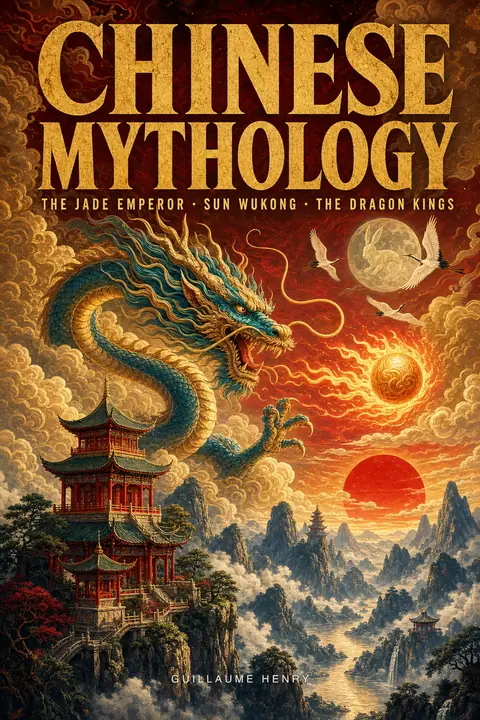
Chinese
The Chinese Mythology Book: Pangu, Nuwa, the Jade Emperor, and the Sacred Stories of the World's Oldest Living Tradition
5,000 Years of Dragons, Immortals, and the Celestial Court
From Pangu's creation to Sun Wukoku's rebellion: the unbroken mythological tradition of China, spanning the Yellow Emperor, Nuwa's clay humans, and the Jade Emperor's court.
More from Chinese
All articles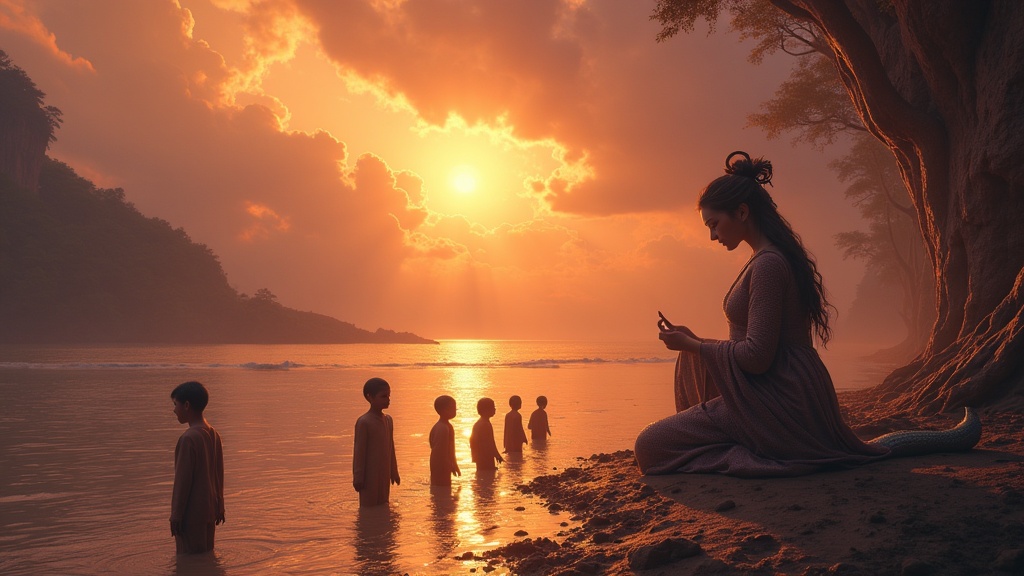
Chinese
Nuwa the Creator Goddess: Myth, Power, and the Making of Humanity
Nuwa shaped the first humans from yellow earth, mended the cracked sky, and held creation together when it threatened to fall apart. She is the oldest mother in Chinese mythology, and her stories run deeper than most Western readers know.
Chinese
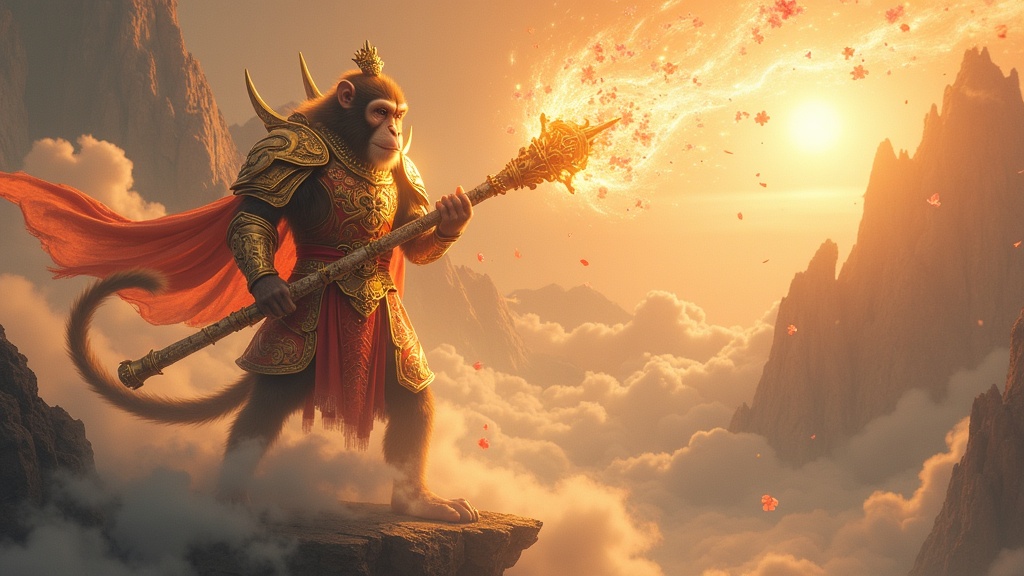
Sun Wukong the Monkey King: Trickster, Rebel, and Immortal of Chinese Myth
Born from stone, crowned king of monkeys, and bold enough to defy heaven itself: Sun Wukong stands as the most electrifying hero in Chinese mythology, a shape-shifter whose story refuses to stay still.
Chinese
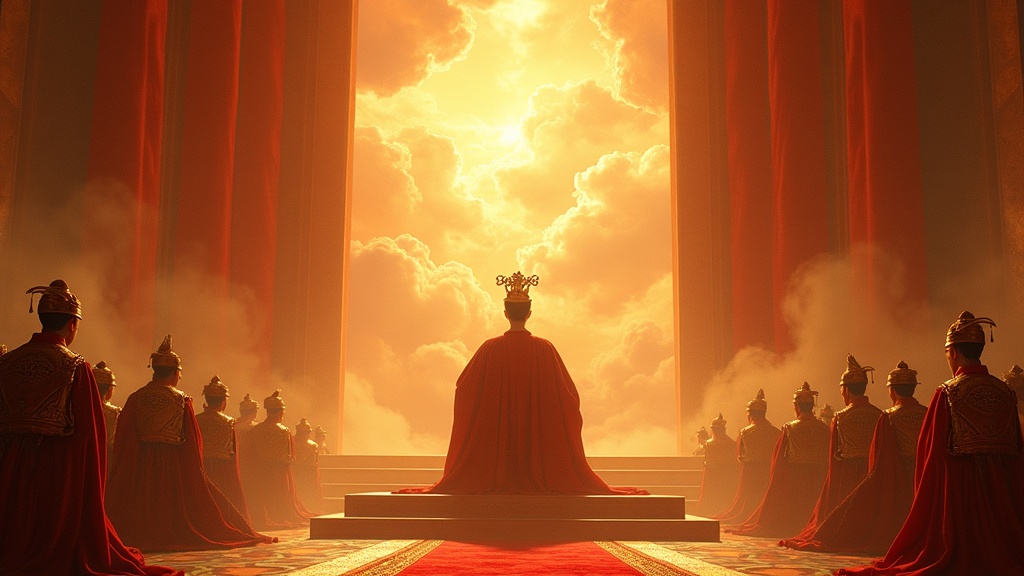
The Jade Emperor: Ruler of Heaven and Lord of the Chinese Cosmos
The Jade Emperor sits atop the Chinese divine bureaucracy as sovereign of heaven, earth, and the underworld. His court mirrors imperial China in every detail, and his reach shapes festivals, folk religion, and literature to this day.
Chinese
The Dragon Symbolism in Chinese Myth: Sovereign of Waters, Heaven, and Time
In Chinese mythology, the dragon is not a monster to be slain but a cosmic sovereign: lord of rivers, rain, and imperial destiny. Its symbolism reaches from creation itself to the bones of the earth.