
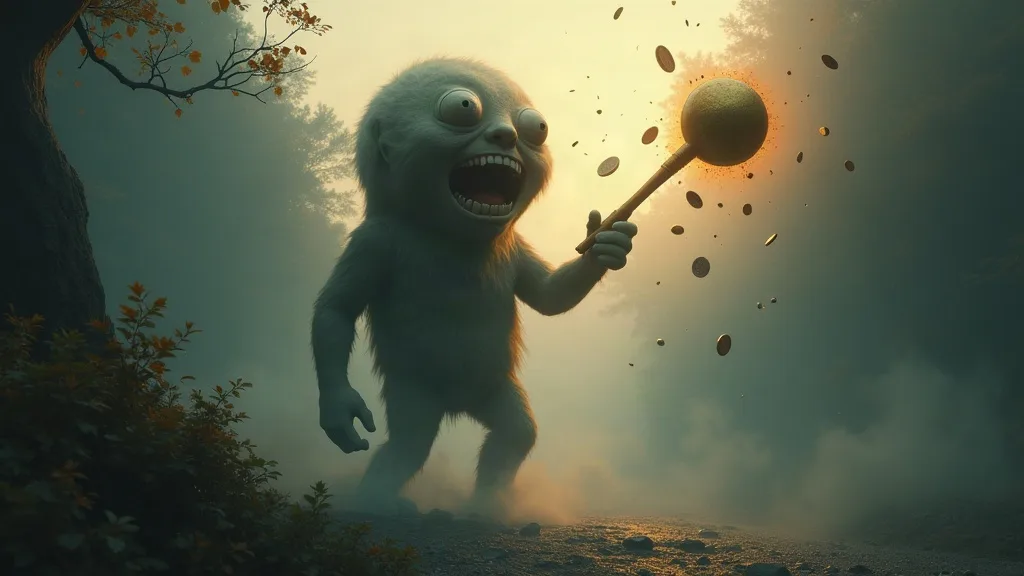
Dokkaebi: The Trickster Goblins of Korean Folklore
The Dokkaebi are shape-shifting trickster spirits in Korean mythology who test human cleverness and greed. Mischievous yet rarely evil, they haunt crossroads and abandoned places, armed with magic clubs and boundless appetite for tricks.
Contents
A lone traveler walks a mountain path at dusk. The light fails faster than it should. Ahead, a child sits weeping by the roadside. When the traveler approaches, the child's face stretches impossibly wide. Sharp teeth. A voice that cuts like wind through winter bamboo. Then laughter. The figure dissolves into smoke. The Dokkaebi has had its entertainment.
Dokkaebi are the trickster spirits of Korean folklore, neither demon nor god, existing in the shadow spaces between the human world and something darker. They are shape-shifters, comedians, and tormentors all at once. Armed with enchanted clubs called bangpae that materialize gold and other treasures, they haunt crossroads, abandoned buildings, and the edges of villages where human certainty breaks down. For centuries, Korean mothers warned children about them. Travelers carried salt and red peppers to ward them off. Yet for all their menace, Dokkaebi were rarely portrayed as malign. A trickster's job is not to destroy but to test, to expose greed, to remind the overconfident that the world is stranger than they think.
The creatures appear across Korean folktales, oral traditions preserved in texts like the Samguk Yusa (Memorabilia of the Three Kingdoms), compiled in the 13th century, and in the vivid storytelling passed hand to hand across villages. Unlike the demons of Chinese or Japanese mythology, Dokkaebi occupy a morally ambiguous space. They steal, they deceive, they play pranks that range from harmless to genuinely dangerous. But they follow their own logic, and a human who outsmarts or satisfies them might walk away not only alive but enriched.
Origins and Spiritual Roots of the Dokkaebi
The word "Dokkaebi" itself has uncertain roots. Some scholars trace it to the Mongol word toqui or to proto-Korean animistic traditions, though no single etymology commands certainty. What is clear is that the creature existed in Korean consciousness long before the written records. The Samguk Yusa mentions creatures of supernatural caprice, and by the medieval period, Dokkaebi had become a fixture in folk belief. They were not imported from Buddhism or Chinese demonology wholesale; they belong to Korea's own stratum of spirit-belief that predates the arrival of organized religion.
The Dokkaebi likely emerge from Korea's shamanic tradition, which honored spirits of nature, crossroads, and the liminal hours. In shamanism, spirits are not categorized as purely evil or good. They are forces, agents, entities with their own desires and hierarchies. A spirit might demand respect, offer blessings, or torment the careless. The Dokkaebi fit this model perfectly. They are not fallen demons or punishing deities. They are simply other. Older than Buddhism or Confucianism, they represent a layer of Korean spirituality that those religions never fully displaced.
Korean shamanism also emphasizes balance and reciprocal obligation. If you offend a spirit through disrespect, carelessness, or greed, it will act. If you treat spirits with courtesy or satisfy their desire, they may reward you. This transactional morality shapes every Dokkaebi tale. They are not agents of cosmic justice. They are mischief-makers with rules you must learn and follow.
Appearance and Supernatural Abilities
In most accounts, a Dokkaebi in its natural form is humanoid but distorted. A massive head, bulging eyes, a long nose, a mouth that stretches too wide. Skin sometimes described as reddish or greenish. Some tales mention a horn on the forehead. But the creature's defining trait is its shapeshifting. A Dokkaebi rarely appears in its true form for long. It might become a beautiful woman to lure a man off the road. It might become an old beggar testing your charity. It might become a child in distress, a monk, an animal. The only consistency is that something rings wrong. The child's eyes are too knowing. The monk walks with an unnatural gait. A perceptive human can sense the wrongness, though fear often overrides perception.
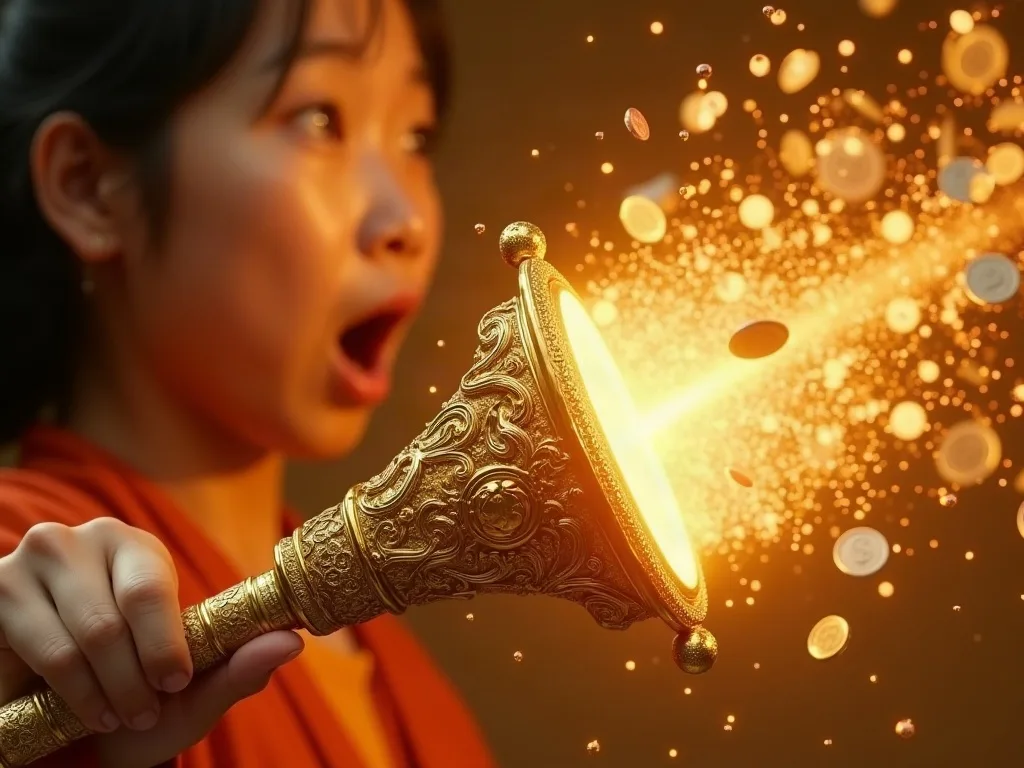
The Dokkaebi's most iconic possession is the bangpae, a golden club that materialized wealth. Strike it, and gold coins spill. Rice. Cloth. Whatever the Dokkaebi desires, or sometimes whatever the human requests. This makes Dokkaebi simultaneously dangerous and potentially profitable. A person desperate enough to bargain with one might gain sudden wealth. But Dokkaebi are capricious. They might revoke the gift. The money might turn to leaves by morning. The terms of a deal made with a trickster spirit are never straightforward.
The creatures also display supernatural speed, strength, and the ability to vanish. They navigate darkness better than humans. They can poison water, spoil harvests, or lead travelers in circles until exhaustion. But these powers have limits. Salt is said to repel them. Fire burns them. A sincere invocation of Buddhist or Confucian principles sometimes drives them off, though not always. Dokkaebi follow their own rules, and those rules are not the rules of the human world.
The Trickster's Code
Many Dokkaebi tales contain the same underlying narrative structure. A human encounters a Dokkaebi, usually at night, at a crossroads, or in an abandoned place. The Dokkaebi challenges the human, proposes a game or bargain, or simply begins to torment them. The human's only escape lies in wit. Outwit the Dokkaebi, and you live. Make a clever counter-offer, and you might profit. Show respect or clever humor, and the creature may decide you are more interesting alive than as a victim.
One common tale involves a Dokkaebi who appears in human form and proposes a game of riddles or a wager. A confident merchant might match wits and win gold. A cowardly traveler might run and find himself chased in circles for hours. A clever farmer might ask the Dokkaebi a question the creature cannot answer, and in exchange for admitting defeat, the Dokkaebi gifts him a night's wages.
Another recurring motif involves a Dokkaebi test of character. A spirit appears as a beggar or a person in distress. A greedy person ignores them and is punished with phantom money that turns to ash. A generous person offers help and receives genuine reward. The Dokkaebi, in these tales, is less a creature of random malice and more an agent of poetic justice. It tests and exposes.
The critical rule across all Dokkaebi lore is that the creature respects a bargain once made. If you agree to a contest and lose, the penalty is real. But if you win fairly, the reward is yours. And if you can amuse the Dokkaebi or impress it with your cleverness, it may become an ally of sorts, offering protection or wealth in exchange for occasional entertainment or tribute.
Dokkaebi in Medieval and Pre-Modern Korean Society
The Samguk Yusa, compiled by the Buddhist monk Iryeon in the 13th century, records several Dokkaebi encounters. These accounts position the creatures as part of Korean reality, neither legendary nor impossible. A merchant meets one and loses a fortune. A scholar outwits one through clever poetry. A young woman is abducted by one and must use her wits to escape. The text treats these events as historical record, not invention.
During the Goryeo period (918-1392), Dokkaebi appear in educated circles as well as folk tradition. Scholars and literati knew the stories. Some dismissed them as superstition. Others recorded them seriously, as evidence of the supernatural layer underlying visible reality. Shamans, who held significant social influence in Korean society, spoke about Dokkaebi as part of their cosmology. A village might hire a shaman to perform a kut (ritual) to appease a troublesome spirit or drive away a Dokkaebi that was harming the community.
By the Joseon period (1392-1910), the rise of Confucianism as an official ideology created tension. Confucian scholars promoted rational order and dismissed spirit belief as ignorance. But Dokkaebi never disappeared from folk consciousness. They remained in the stories mothers told, in the warnings given to children, in the explanations for unexplained misfortune. A sudden illness might be blamed on a Dokkaebi prank. A lost child might be said to have been "abducted by Dokkaebi" (taken into the spirit realm temporarily). The creature persisted in the space between official dismissal and lived experience.
Dokkaebi and Human Greed
Many of the most vivid Dokkaebi tales center on greed. A poor merchant finds a pile of gold in the road. He takes it home. That night, a Dokkaebi arrives, laughing, and takes it back. Or worse: the gold turns to autumn leaves by dawn. A version of this story appears across Korean folklore. The Dokkaebi seems to exist partly to punish excessive desire.
This reflects a deeper moral economy in Korean thought. Greed is not merely a personal flaw. It is an imbalance that attracts supernatural attention. The Dokkaebi, in these tales, is less a malevolent demon and more a corrective force. It exposes excess and punishes those who cannot accept limits. A person who finds wealth through honest labor can keep it. A person who tries to seize it through trickery or luck invites the Dokkaebi's counterattack.
This motif also reveals the creature's strange alignment with justice, albeit justice of a whimsical kind. The Dokkaebi does not punish all transgressions. It seems to target greed specifically. A generous person who feeds a Dokkaebi (or what appears to be a Dokkaebi in disguise) receives reward. A selfish person who refuses charity and hoards wealth loses everything. The creature enforces a moral code built on reciprocal obligation and the dangers of unchecked desire.
Comparison with Other Trickster Traditions
The Dokkaebi shares characteristics with trickster figures across world mythology, yet remains distinctly Korean. Like Anansi the Spider of West African folklore or the Coyote of Native American traditions, the Dokkaebi is morally ambiguous, rule-breaking, and dangerous to the naive. Like the Puck of English folklore or the fairies of Celtic tradition, the Dokkaebi lures humans into traps, plays pranks, and operates on a different moral plane than humanity.
Dokkaebi (Korean)
A trickster spirit bound to Korean shamanic tradition. Appears across folklore as a testing force. Trades in material wealth and practical tricks. Rarely depicted as having a long-term relationship with humans or dwelling in a specific shrine. Associated with crossroads and liminal spaces rather than specific families or houses.
Kitsune (Japanese)
A shape-shifting fox with deep roots in Japanese religion and literature. Often portrayed as having long-term relationships with humans, sometimes benevolent, sometimes malevolent. Can possess humans and cause lasting harm. Often associated with specific shrines or households. Depicted in art and literature as a figure of seduction and intelligence as much as mischief.
Unlike the Kitsune of Japan, the Dokkaebi does not typically form lasting bonds with humans. It appears, tests, and vanishes. Unlike the Chinese demon traditions, the Dokkaebi is not portrayed as inherently evil or in need of exorcism. Unlike European fairies, the Dokkaebi is less sexually threatening and more concerned with material exchange and intellectual contests.
The Dokkaebi's closest mythological kin may be the trickster gods of other traditions. Like Loki of Norse mythology or Anansi of Akan tradition, the Dokkaebi breaks rules, tests boundaries, and forces other beings to adapt. But the Dokkaebi lacks the cosmic significance. It is not a shaper of the universe or a bringer of catastrophe. It is a local annoyance, a source of entertainment, a lesson in the form of a spirit.
The Dokkaebi's Relationship with Buddhist and Shamanistic Traditions
When Buddhism arrived in Korea in the 4th century, it brought its own cosmology of spirits, demons, and celestial beings. Monks recorded encounters with Dokkaebi in Buddhist texts. Some accounts treat the Dokkaebi as a creature that can be converted, taught dharma, or brought under the protection of Buddhist deities. Other accounts preserve the older, shamanistic view: the Dokkaebi is a neutral spirit with its own nature, uninterested in salvation or moral instruction.
Korean shamanism, which predates Buddhism and coexisted with it for over a thousand years, also incorporated the Dokkaebi into its framework. A shaman might perform a ritual to appease an angry Dokkaebi, negotiating on behalf of the afflicted human. The shaman would offer gifts, music, and performance. The Dokkaebi, pleased by the spectacle and the respect shown, might agree to cease its torment.
This religious flexibility reveals something important about Korean spirituality. Rather than replacing older traditions wholesale, Buddhism and later Confucianism negotiated with them. The Dokkaebi survived because it fit no single category. It was neither a demon requiring exorcism nor a deity requiring worship. It was simply part of the landscape, like tigers or storms, requiring respect and caution.
Dokkaebi in Modern and Contemporary Korean Culture
The 20th century brought rapid modernization to Korea. Urban migration, industrialization, and education based on rational science pushed folk belief into the background. Yet Dokkaebi never disappeared. They appear in modern Korean literature, film, and television. The creature became a symbol of Korea's own "otherness," a reminder that rationality cannot fully explain experience.
Contemporary Korean authors have used the Dokkaebi as a literary figure. Writers exploring themes of identity, tradition, and the margins of modern life have drawn on the trickster spirit. The creature appeals to those seeking to recover or honor older layers of Korean culture. It appears in children's stories, comics, and animated films. Young Koreans encounter Dokkaebi as entertainment, but the stories carry older meanings embedded in them.
Television programs and films have depicted Dokkaebi as comedians, anti-heroes, and complex characters. A 2020 Korean television drama titled "Dokkaebi" (also known as "Goblin") portrayed the creature as a supernatural being trapped between worlds, neither fully alive nor dead. While this modern interpretation departed from traditional folklore, it preserved the Dokkaebi's essential nature: a being operating by its own rules, existing in liminal space, testing those it encounters.
The creature has also entered global popular culture. As Korean media has gained international audiences, the Dokkaebi has become known beyond Korea. Gaming, animation, and literature now feature Dokkaebi alongside other Asian spirits. The creature appeals universally because the trickster archetype transcends culture. Everyone recognizes the figure who plays by different rules, tests your wits, and reminds you that the world is more complex than you assumed.
The Dokkaebi's Enduring Appeal and Meaning
Why have Dokkaebi persisted in Korean culture for over a thousand years? The answer lies partly in their utility as folk explanation. When something inexplicable happens, a Dokkaebi did it. A lost child, a sudden illness, money vanished overnight, a person found wandering in circles far from where they began. The Dokkaebi offered an explanation that acknowledged the limits of human understanding without invoking moral judgment.
But the creature also fills a psychological and moral function. The Dokkaebi embodies the testing force of the universe. It confronts greed, exposes weakness, and rewards cleverness. It suggests that the world is not purely rational or lawful, but it is not purely chaotic either. There are rules in the Dokkaebi's realm, unwritten as they may be. Learn those rules, respect them, and you can survive and even prosper.
The creature also represents a form of freedom. Unlike gods who demand worship or demons who demand exorcism, the Dokkaebi simply exists. It follows its own desires, plays its own games, and acknowledges no authority. For a culture often constrained by strict hierarchies and rules, the Dokkaebi offers a figure of radical autonomy. It is this element that likely explains the creature's appeal in modern Korean fiction, where it often appears as a symbol of resistance or liberation.
Frequently asked questions about Dokkaebi in Korean mythology?
Frequently asked questions
What is a Dokkaebi and how is it different from a demon?
A Dokkaebi is a trickster spirit in Korean folklore, morally ambiguous and neither inherently evil nor good. Unlike demons in Chinese or European traditions that seek to harm humans or possess them, Dokkaebi are primarily interested in games, pranks, and tests. They follow their own code and can be outwitted, bargained with, or satisfied through entertainment. They are forces of nature rather than agents of cosmic evil.
What does a Dokkaebi look like, and what is the bangpae?
A Dokkaebi in its true form is humanoid but grotesque, with a large head, bulging eyes, a long nose, and a wide mouth. However, it shape-shifts constantly and rarely shows its true appearance. The bangpae is its iconic magical club, a golden weapon that materializes wealth, gold, rice, or whatever the Dokkaebi desires to manifest. Strike the bangpae, and treasures spill forth.
How can you protect yourself from a Dokkaebi?
Traditional Korean beliefs suggest carrying salt and red peppers as repellents. Fire also burns the creature. But the most effective defense is intelligence. Outwitting a Dokkaebi through clever word play, riddles, or a counter-offer can win you safety or reward. Treating the creature with respect and humor also works better than panic or hostility. Sincere invocation of Buddhist or Confucian principles sometimes drives one away, though Dokkaebi respect cleverness more than piety.
Is there a primary source that documents Dokkaebi?
Yes. The Samguk Yusa (Memorabilia of the Three Kingdoms), compiled by the Buddhist monk Iryeon in the 13th century, contains several documented Dokkaebi encounters. These are treated as historical records rather than mere legend. Dokkaebi also appear extensively in Korean oral tradition, folk tales, shamanic practice, and later literature. They were woven into the fabric of Korean village life and remain present in contemporary culture.
Did Buddhists and Confucianists accept the existence of Dokkaebi?
Buddhism and Confucianism coexisted with folk belief in Dokkaebi for centuries. Buddhist texts acknowledge the creatures, sometimes attempting to convert or teach them, other times recording them as part of the supernatural landscape. Confucian scholars often dismissed Dokkaebi as superstition, yet the creatures persisted in folk consciousness and shamanic practice. Rather than displacing Dokkaebi, organized religion negotiated with older traditions that honored them.
The Trickster as Mirror
The Dokkaebi endures because it functions as a mirror. Every encounter with one is really an encounter with yourself. A greedy person meets greed reflected back at them through the creature's mockery. A clever person finds an equal match in the Dokkaebi's wit. A kind person discovers that generosity has its own rewards. The creature does not impose morality from above. It reveals the consequences of your own choices through pranks and games.
In a world that has grown increasingly rationalized, where every mystery is solved by science and every boundary is mapped, the Dokkaebi represents the irreducible strangeness that refuses to disappear. It exists in the gaps between systems. It plays by rules that logic cannot fully capture. For this reason, it speaks to something persistent in human experience: the sense that the world is stranger, more complex, and more alive than any single framework can contain.
The Dokkaebi is Korean folklore's gift to world mythology. Not a god to worship or a demon to fear, but a trickster spirit that tests, entertains, and reminds us of the limits of certainty. It has survived modernization, religious change, and cultural transformation because it addresses something timeless: the encounter between human logic and the wild intelligence of the other.
Read the full book
Want the whole story?
The complete edition is an instant PDF download here, with a paperback on Amazon for selected titles.
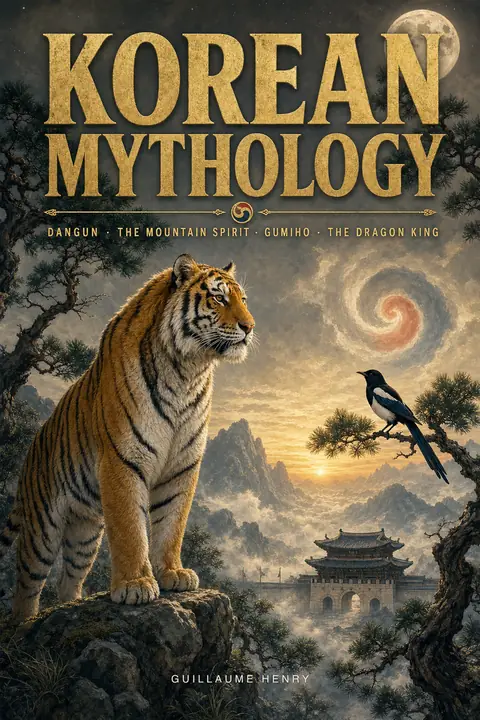
Korean
The Korean Mythology Book: Dangun, Bari, the Dokkaebi Tricksters, and the Shamanic Stories of the Peninsula
From Hwanin's Heaven to the Underworld and Back
The shamanic mythology of Korea: Dangun the founder, Bari the death-walker, the Yongwang Dragon Kings, the dokkaebi goblins, and the gumiho fox spirits.
More from Korean
All articles
Korean
Hwanung: The Heavenly Prince Who Descended to Earth
Hwanung, the celestial prince of Korean myth, descended from heaven to establish human civilization. His union with a bear-woman bore Tangun, founder of Gojoseon, Korea's first kingdom. Discover how this cosmic descent shaped Korean identity and continues to echo through the nation's cultural memory.

Korean
Mago Halmi: The Primordial Creatrix Goddess
Mago Halmi shaped existence itself before time began. The Korean primordial goddess stands at the root of all creation, a force older than the heavens, wiser than fate itself.

Korean
Jumong: The Archer Hero and Founder of Goguryeo
Jumong, a legendary archer and divine prince, fled a deadly throne and established Goguryeo, one of Korea's greatest kingdoms. His story of exile, resurrection, and martial mastery shaped a nation.
Korean
The Seven Star Maidens: Chilseong and Celestial Worship in Korean Tradition
The Seven Star Maidens weave Korean spirituality with the night sky itself. Chilseong worship shaped household rituals, artistic tradition, and how ordinary people imagined fortune for centuries.