
Wyrd: The Anglo-Saxon Concept of Fate
Wyrd is the Anglo-Saxon name for fate, the invisible force that shapes every life and death. Unlike the Greek Moirai, wyrd was understood as weaving itself through the present moment, binding human choice to cosmic inevitability in ways that remain philosophically alive today.
Contents
In the Anglo-Saxon understanding of the cosmos, no one escaped their own wyrd. Not the warrior sharpening his sword in the hall. Not the king watching the horizon. Not the völva, the seer, who could glimpse what was coming but could never turn it aside. Wyrd was the force that bound every breath, every choice, every wound to a pattern larger than any single life. It was neither cruel nor kind. It simply was.
The concept survived the arrival of Christianity in the Anglo-Saxon kingdoms, embedded so deeply in language and thought that it persisted even as new religions tried to name the same invisible architecture. Today, when we speak of destiny, fate, or the feeling that something was "meant to be," we are still working with the bones of a belief system that Anglo-Saxon peoples refined across centuries, before the kingdoms of Mercia, Wessex, East Anglia, and Northumbria ever unified into something called England.
The Nature of Wyrd: No Greek Fates Here
Wyrd does not appear as a character. There is no Anglo-Saxon equivalent to the three Moirai of Greece, those figures who measure and cut the thread. Instead, wyrd was a principle, an active force woven through all things. The Old English word itself comes from the verb "to turn" or "to become," hinting at its fluid, generative nature. Wyrd was not something that happened to you; it was something you moved through, and the moving itself was part of the weaving.
This distinction matters. In Greek mythology, the Fates are external to human action. Clotho spins the thread, Lachesis measures it, Atropos cuts it, and mortals simply live what the thread allows. The system is mechanical, almost bureaucratic. Anglo-Saxon wyrd was more intimate and more unsettling. It suggested that your choices and your fate were not two separate things. They were the same phenomenon seen from different angles.
The closest parallel comes from Norse culture, which shared deep roots with the Anglo-Saxon peoples. The Norse had the Norns, three beings called Urd, Verdandi, and Skuld (representing past, present, and future), who watered the roots of Yggdrasil and carved runes into the destinies of all things. But even this was more personified, more dramatic, than the abstract wyrd of the Anglo-Saxons. The Norns acted; wyrd simply unfolded.
Wyrd in Anglo-Saxon Literature and Belief
The clearest window into Anglo-Saxon understanding of wyrd comes from the epic of Beowulf, composed sometime in the early medieval period (likely 8th or 9th century, though written down later). The poem uses the word "wyrd" repeatedly, and in every use it carries the weight of something that cannot be negotiated with or overcome.
When Beowulf faces the monster Grendel, he knows that his strength alone will not decide the battle. "Wyrd will decide," the poet tells us. When Beowulf faces the dragon in his old age, his followers flee. Wyrd has already written their cowardice into the moment. The poem never doubts that outcomes are fixed, yet it also never suggests that effort or courage is meaningless. A warrior fights because fighting is his nature, because his name and honor demand it, because it is the only response available to him in the shape of his particular life. The outcome rests with wyrd.
This paradox sits at the heart of Anglo-Saxon thought. You were bound to act; you were also bound to an outcome you could not know or change. The two bindings did not cancel each other out. They reinforced each other.
The Venerable Bede, the Anglo-Saxon historian and monk who wrote in the 8th century, recorded that Anglo-Saxon kings would consult with seers (often called wiccans or wise women) to learn what wyrd held in store. These consulters of fate were not priests of the Christian God. They were remnants of older knowing, older ways of reading the invisible. Bede noted this with some disapproval, but the fact that he recorded it tells us how ordinary this practice was. Kings expected fate to be something you could at least glimpse, even if you could not change it.
Wyrd and Christian Theology in Anglo-Saxon Hands
The arrival of Christianity in the 6th and 7th centuries (spearheaded by figures like Saint Augustine of Canterbury in 597 CE) created a profound tension in Anglo-Saxon thought. Christian doctrine taught the omniscience and omnipotence of God. God knew all that would come to pass. God was the ultimate architect of all things. This sounded, in many ways, like wyrd wearing a new name.
Many Anglo-Saxon theologians and writers made this equation deliberately. If God was all-knowing, then God's knowledge encompassed all futures, which meant God's will and wyrd were the same thing. Divine providence and pagan fate could be reconciled. The language of wyrd persisted in Anglo-Saxon Christian writing, now reframed as God's purpose rather than an impersonal cosmic law.
Bede himself, one of the greatest Christian scholars of the age, used the language of fate and providence interchangeably when describing events. A king's victory was wyrd, or God's will. The two frameworks never fully displaced each other because they addressed the same anxiety: the human experience of being both free and utterly constrained by something larger than oneself.
The Web of Wyrd: Interconnection and Pattern
One of the most striking aspects of wyrd in Anglo-Saxon belief was its interconnected nature. Your fate was not isolated. It was woven with the fates of others, and those intersections created the events that rippled through the world. When two warriors met in battle, the collision was not random. Both had moved along their wyrd to reach that exact moment. The outcome belonged to no single choice but to the vast concatenation of all choices, all movements, all strings drawing tight.
This is why fate-reading and divination held such power in the Anglo-Saxon imagination. If wyrd was woven through all things as an interconnected pattern, then one who could read the threads might see the shape of what was coming. The Anglo-Saxons did not believe in divination as prediction in the modern sense. They believed that the future was already written in the present, if only one could read it. Runes, bones, the flight of birds, the entrails of sacrificial animals, these were all texts in which wyrd wrote itself out.
The practice of casting runes (an Anglo-Saxon innovation related to but distinct from Norse rune magic) was an attempt to align oneself with the pattern, not to change it. A person who consulted the runes was asking: "Which threads of my wyrd are taut right now? What pattern am I already moving through?" The answer was not instruction but confirmation, a clarification of the forces already in motion.
Wyrd and the Idea of Consent
This is where Anglo-Saxon wyrd diverges most sharply from modern Western ideas about fate. Wyrd did not strip human will. It required it. A person bound by wyrd was expected to act fully, completely, as if their actions mattered absolutely. The warrior did not charge into battle thinking "I am fated to win, so I need not fear." He charged believing his strength, his courage, his strategy would be tested to their limit. That the outcome was already woven into the pattern did not diminish the reality of the struggle.
This creates a strange kind of freedom within constraint. You are bound, but you are bound to be yourself fully. There is no escape from wyrd, but there is also no hiding from it. Every choice is both utterly free and utterly predetermined, and the paradox resolves itself only in the living of it.
Some scholars argue that this framework made the Anglo-Saxons more psychologically resilient in the face of death, disease, and catastrophe. If wyrd had already woven this moment into the fabric of things, then raging against it was absurd. The appropriate response was dignified acceptance paired with fierce action. Do what your nature demands. Do it with full commitment. Accept the outcome because it was never yours to control anyway.
Wyrd and Modern Resonance
The concept did not die with the Norman Conquest in 1066 or the final conversion of England to Christianity. It transformed. Words like "weird" (an archaic spelling of "wyrd") persisted in English folklore, especially in Scotland, where the three Weird Sisters of Shakespeare's Macbeth are echoes of the Norns and of the Anglo-Saxon idea of inexorable fate. The word "ward" (as in "warden," "toward," "awry") preserves the old root.
More importantly, the philosophical problem that wyrd addressed did not disappear. How do we reconcile human freedom with the existence of forces larger than ourselves? How do we act with full commitment in a universe where outcomes may not be in our hands? These are not medieval questions. They are eternal questions, and every culture generates its own name for the tension.
In Anglo-Saxon thought, wyrd was the name. It was not external providence and not pure chaos. It was a third thing: the shape of the world as it unfolds through the intersection of all will, all chance, all nature. It was what you moved through, what moved through you, and what you and the cosmos moved through together.
How Does Wyrd Differ from Modern Ideas of Destiny?
Frequently asked questions
Is wyrd the same as destiny or fate as we understand it today?
Wyrd and modern fate are cousins, but not twins. Modern Western thought tends to treat fate as something external imposed on you. Wyrd was internal and external at once; it was the pattern you yourself wove through your choices. A modern person might say "fate brought us together"; an Anglo-Saxon would say that two people's wyrd intersected at that moment, meaning their individual threads crossed. The outcome was written, but the writing included their agency.
Could Anglo-Saxons change their wyrd?
No, and they did not expect to. Wyrd was unalterable. What you could do was understand your wyrd more clearly through divination or through wise counsel, and then move through it with eyes open. A warrior could not change whether a sword would kill him, but he could choose to face the blade with courage rather than cowardice. The manner of his death was open to him, even if death itself was written.
Did Anglo-Saxon Christianity preserve the idea of wyrd, or did it replace it?
It both preserved and transformed it. Anglo-Saxon theologians and monks reframed wyrd as God's providence and omniscience, so the concept persisted linguistically and philosophically. But the emotional and spiritual texture changed. Wyrd under paganism was impersonal and inexorable. Christian wyrd (God's will) carried the possibility of grace, redemption, and divine mercy. The framework remained; the meaning shifted.
Is wyrd connected to Norse fate and the Norns?
Yes, deeply. Both cultures shared Germanic roots, and both had a concept of inescapable fate woven by supernatural beings or forces. The Norse Norns (Urd, Verdandi, Skuld) are more personified and dramatic than Anglo-Saxon wyrd, but they serve a similar function. Both traditions saw fate as something that bound gods and humans alike, and both saw divination as a way to read what was already written rather than change it.
Did belief in wyrd persist into modern English culture?
The word itself faded from everyday speech after the Middle Ages, but the idea echoed forward. The concept of weird in folklore (especially Scottish ballads) retains the old meaning. Shakespeare's Weird Sisters in Macbeth are direct descendants of wyrd-readers. More broadly, any English phrase about something being "meant to be" or "written in the stars" carries forward the old Anglo-Saxon intuition that some things are woven into the fabric of how things unfold.
Wyrd in the Modern Philosophical Imagination
The Anglo-Saxon wyrd remains philosophically alive because it posed a problem that determinism, free will, and chance have never fully solved. If everything is written, how can anything matter? If everything is free, what explains the patterns we observe in life, the way certain people meet, the way certain endings seem inevitable?
Wyrd suggests that these are not actually opposing questions. The pattern and the freedom are not contradictory. They are the same thing seen from two different angles. From the outside, looking at the whole web of threads, everything is determined. From the inside, living your own thread, everything is choice. Both perspectives are true simultaneously.
This is why wyrd resonates with modern readers who encounter it through Anglo-Saxon texts or through the broader Germanic mythology that fed into it. It speaks to a real experience: the sensation of being utterly free in your choices and utterly constrained by circumstances beyond your control, both at once, all the time. Wyrd was the Anglo-Saxon name for that paradox, and it remains one of the most psychologically astute ways any culture has ever framed the fundamental condition of being alive.
The old seers who read runes or consulted bone and bird were not trying to escape wyrd. They were trying to read it, to understand their place in the pattern, and to move through it with the clarity and courage the moment demanded. In this, they had something to teach us still.
Read the full book
Want the whole story?
The complete edition is an instant PDF download here, with a paperback on Amazon for selected titles.
Anglo-Saxon
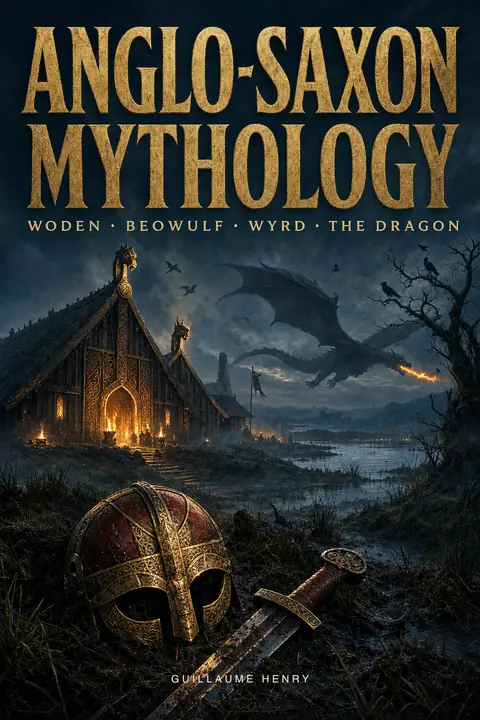
The Anglo-Saxon Mythology Book: Woden, Thunor, Beowulf, and the Lost Gods of Pre-Christian England
The Sacred Stories Before Christianity Buried Them
The mythology of pre-Christian England: Woden's ravens, Thunor's thunder, Beowulf's monsters, and the Wyrd sisters who wove fate. Recovered from Beowulf, royal genealogies, and the grave goods.
More from Anglo-Saxon
All articles
Anglo-Saxon
Hengist and Horsa: Legendary Founders of Anglo-Saxon England
Two brothers from Germanic lands, Hengist and Horsa led the first English settlers across the North Sea. Their arrival around 449 CE marks the beginning of Anglo-Saxon England, though history and legend now blur beyond recognition.
Anglo-Saxon
The Wild Hunt in Anglo-Saxon Belief: Spectral Riders and the Hunt for Souls
The Wild Hunt in Anglo-Saxon belief was a ghostly procession across the night sky, led by divine or demonic riders who hunted both the living and the dead. Discover how this ancient vision shaped English folklore for over a thousand years.
Anglo-Saxon
The Sutton Hoo Ship Burial: Archaeology and Myth
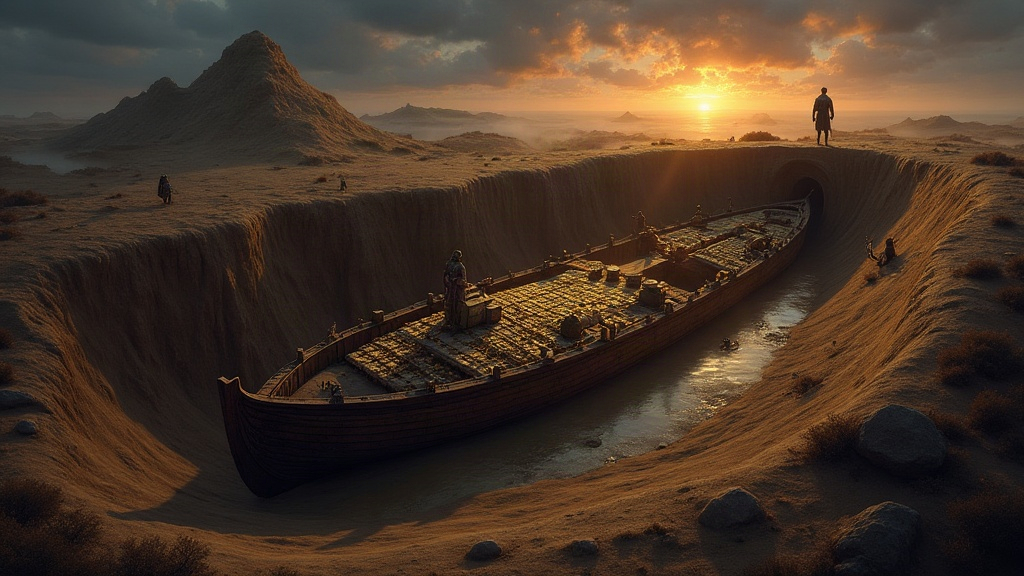
In 1939, archaeologists uncovered a 27-meter ship buried in Suffolk, England, holding treasures and weapons from the 6th century. The Sutton Hoo ship burial bridges Anglo-Saxon reality and the epic worlds of Beowulf, revealing how real kings were sent to their gods.
Anglo-Saxon
Eostre: Goddess of Spring and Dawn
Eostre is the Anglo-Saxon goddess of spring, dawn, and fertility, known through a single historical mention by the Venerable Bede. Discover how this shadowy deity shaped the season of renewal and inspired the modern holiday of Easter.