
Hengist and Horsa: Legendary Founders of Anglo-Saxon England
Two brothers from Germanic lands, Hengist and Horsa led the first English settlers across the North Sea. Their arrival around 449 CE marks the beginning of Anglo-Saxon England, though history and legend now blur beyond recognition.
Contents
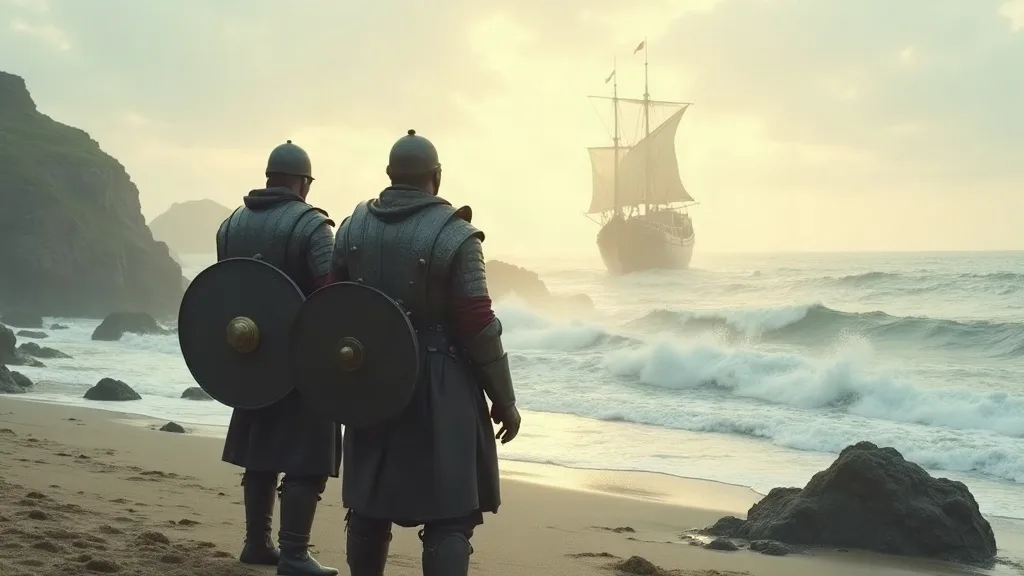
The year is roughly 449 CE. Cold grey water. A fleet of three ships pushing west across the North Sea, oars biting hard, warriors packed hull to hull. A Romano-British ruler facing raids from the north has sent word across the sea: come protect us, and the land is yours. Two brothers hear the call. Their names are Hengist (meaning "stallion") and Horsa (meaning "horse"). They command a fleet of Germanic warriors. They cross the cold waters, land on the southern coast, and within generations their descendants will reshape the entire island. History remembers their conquest as invasion. Legend remembers them as founders. The truth lies somewhere between, lost now to time and the bias of those who wrote it down.
The story of Hengist and Horsa carries the weight of a foundational myth. Unlike the Aesir of Norse tradition or the demigods of Greek epics, these are men who may have actually existed, yet their deeds have been magnified across centuries until we cannot separate the hero from the legend. Every schoolchild in England once learned their names. Yet scholars still argue whether they were one man, two men, or no men at all. What remains undeniable is this: the arrival of Germanic peoples in Britain, whether led by these brothers or by unnamed war-bands, marked the transformation of a Roman province into a Saxon kingdom.
The First Crossing: Mercenaries Become Settlers
The invitation came from Vortigern, a Romano-British leader struggling to hold power as Roman legions withdrew from Britain in the early 5th century. Raids from Scotland and Ireland threatened his authority. His own people weakened. In desperation, Vortigern made a fateful decision: he would hire Germanic mercenaries to defend his borders.
The Venerable Bede, writing his Ecclesiastical History of the English People in 731 CE, recorded this moment. He writes that Vortigern "invited certain warriors from Germany." Bede names them: Hengist and Horsa, brothers from Angeln, a Germanic territory in what is now Schleswig-Holstein, at the base of the Jutland peninsula. They arrived with three ships full of warriors. Their initial task was simple and profitable: serve as hired soldiers, guard the coasts, collect their wages, and maintain order.
But nothing stayed simple.
The first waves of Germanic settlers came as soldiers of fortune. They did exactly what they were paid to do. They fought the Picts and Scots. They won. They returned to Vortigern. They asked for more land, more grain, more payment. What began as a military contract became a negotiation. What began as negotiation became settlement. Hengist proved himself not just a warrior but a political strategist. He requested land grants. He married into local power: according to legend, he married the daughter of Vortigern himself, securing dynastic ties and legitimacy. That marriage story almost certainly grew in the telling, but it captures something real: the shift from hired sword to permanent power.
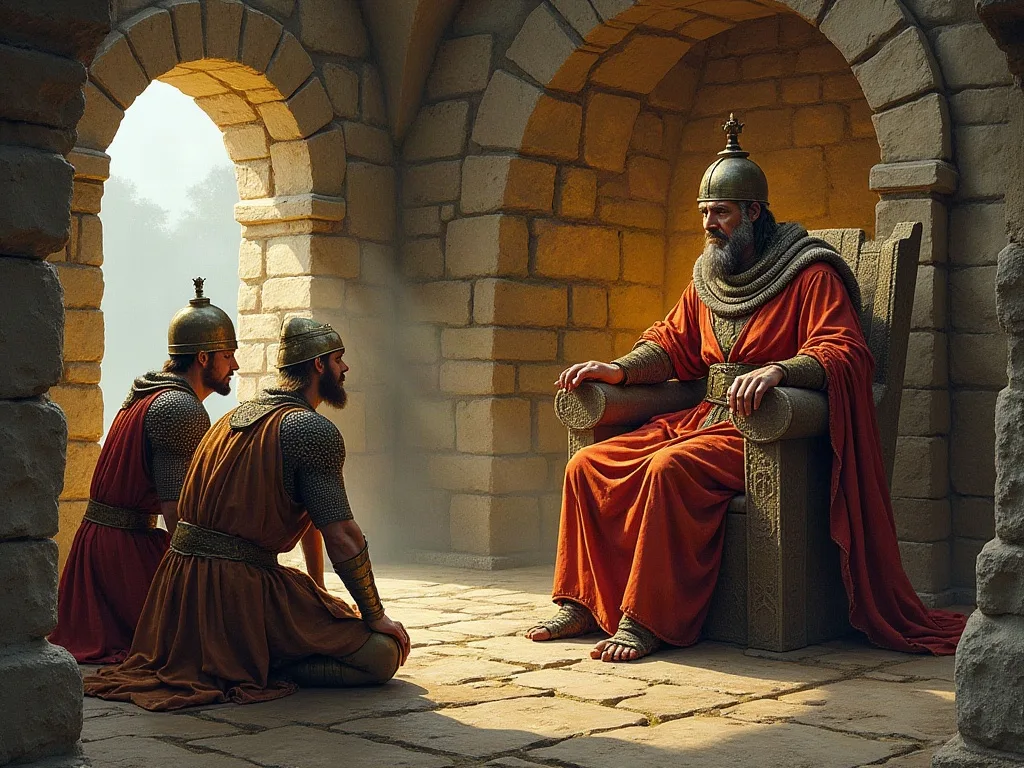
The contract that bound them frayed. Why serve a weakening Romano-British king when you could build your own kingdom? Hengist reportedly invited his own son Octa and nephew Ebissa to bring reinforcements across the North Sea. What had looked like a mercenary force began to look like an invasion. The relationship between Vortigern and his hired protectors ruptured. War erupted. The details blur across the centuries, but the outcome is clear: the Germanic peoples, under leaders like Hengist, pushed the Romano-British westward. The invaders became rulers.
The Legend and the Historical Question
No one can now say with certainty whether Hengist and Horsa were actual historical figures, legendary composites, or pure invention. Modern archaeology and genetics have complicated the older narrative considerably.
Bede's account, written 282 years after the supposed events, is the earliest detailed source we possess. He had access to older texts and oral tradition. But he also served a religious and political purpose: to tell the story of how pagan Anglo-Saxons arrived and were later converted to Christianity. His narrative is not a neutral chronicle. Keep the sentences shorter: Bede wrote to persuade, not simply to record. The Anglo-Saxon Chronicle, compiled centuries later, repeats and elaborates on Bede's account, adding specific dates: 449 CE for the arrival, 455 CE for Horsa's death in battle against Vortigern. Later medieval chronicles added ever more drama and genealogy: the seduction of Vortigern, Hengist's cunning, Horsa's death in single combat.
Archaeological evidence tells a different story, one without heroes or clear villains. DNA analysis and pottery finds suggest Anglo-Saxon settlement in Britain was gradual, not a sudden invasion. Germanic peoples moved across the North Sea in multiple waves over decades, perhaps centuries. Some came as soldiers. Some came as traders. Some came as refugees fleeing climate pressure and political upheaval in their homelands. They settled in small numbers first, then in larger groups. They married into local populations. They adopted some Roman practices while others faded. The transformation happened slowly and messily, in ways that make no epic narrative.
This means Hengist and Horsa, if they existed at all, were likely leaders of early settlement groups whose genuine accomplishments were magnified and mythologized. They may have been composite figures, their deeds spread across multiple historical individuals. Or they may be literary creations, invented to explain the origins of kingdoms. The evidence simply does not permit certainty.
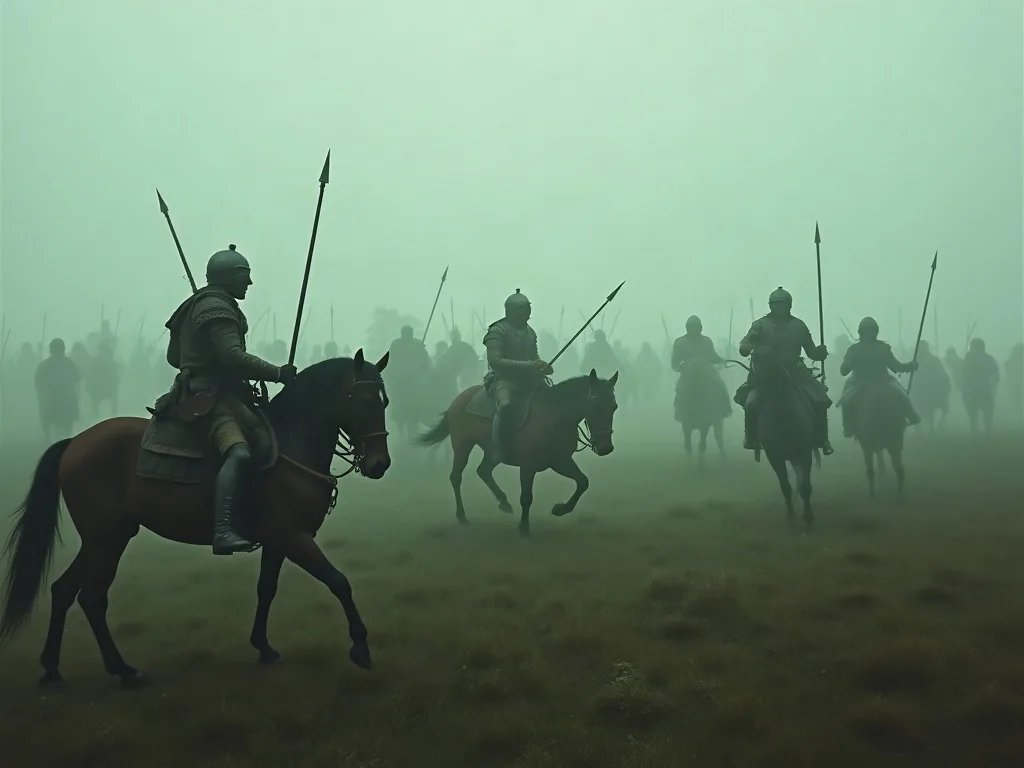
What we do know is this: by 500 CE, Germanic peoples controlled most of what is now England. By 600 CE, they had established distinct kingdoms. Northumbria, Mercia, Wessex, and Kent all claimed descent from Germanic settlers. Many claimed descent from Hengist. Whether the connection was genealogical or purely legendary, his name became synonymous with the founding generation.
The Death of Horsa and the Turning Point
Hengist's brother Horsa occupies an even more shadowy place in the record. The Anglo-Saxon Chronicle places his death in 455 CE at the Battle of Aylesford in what is now Kent. Here, Vortigern's forces and the Germanic warriors clashed. Horsa was killed in combat. In some versions, Vortigern slew him personally. In others, the battle was a massive engagement where Horsa fell heroically.
The date itself is suspicious. It falls precisely 6 years after the "official" arrival. The neat narrative, the specific date, the dramatic death in battle: these are the marks of legend-making, not careful chronicle. A historical Horsa may have existed. He may have died in conflict. But whether it happened in 455 CE, at Aylesford, or in a way that made him a hero rather than a casualty of a larger and messier process: these details have been lost.
What the legend preserved was a psychological truth: there was a moment when the old order broke and the new took hold. Horsa's death marked the transition from mercenary service to conquest, from invitation to occupation. After Horsa fell, there was no turning back. Hengist continued. He lived to an old age, according to tradition, and established the kingdom of Kent. His descendants ruled Kent for generations. Some of them were historical figures. Some were legendary. The genealogies got tangled.
Hengist's Kingdom and Legacy
Hengist is said to have established Kent, the first great Anglo-Saxon kingdom. He took the title cyning (the Old English word for king, originally a Germanic term for local war-leaders) but now designating rule over a territory and its people. His seat of power was at Canterbury, though that city would not become truly significant until the Christian conversion centuries later. He ruled, by the medieval accounts, for many decades. He died, some sources suggest, around 488 CE at an advanced age, having seen his initial war-band transform into a dynasty.
Whether or not Hengist was a real person, the kingdom of Kent was very real. Its rulers did trace their ancestry back to Germanic settlers. Some of those rulers are attested in other sources. Some we know only from the genealogies preserved in Anglo-Saxon manuscripts. The Kentish royal line was long and substantial, and at its head stood the names Hengist and Horsa.
The legend of Hengist gave Anglo-Saxon kingship a founding moment. A king of the Saxons could point to Hengist and say: this is where we come from. This is the ancestor who led our people to this land. This is the blood that flows in our veins. The legend mattered more than the historical truth, because it gave kings legitimacy and continuity. That function, providing an origin story solid enough to stand on, is precisely what foundational myths do in every culture.
The Broader Anglo-Saxon Settlement
The story of Hengist and Horsa sits within a larger story: the Anglo-Saxon settlement of Britain. This was not a single moment but a process lasting generations. Germanic peoples moved into Britain from the middle of the 5th century onward, filling a power vacuum left by Rome's withdrawal. They came from what is now Germany, Denmark, and the Low Countries. They spoke Germanic dialects that would eventually evolve into Old English.

The settlement transformed Britain linguistically, culturally, and demographically. Latin faded. Germanic language flourished. Romano-British Christianity weakened. Germanic paganism dominated. Roman cities decayed; new Anglo-Saxon settlements grew in different locations. The Romano-British population did not vanish, but they were gradually absorbed, pushed westward, or subjugated. Within a few generations, the island that had been Roman for nearly 400 years became Germanic. The transformation was so thorough that medieval writers imagined it must have happened suddenly, in a single dramatic invasion, led by two heroic brothers.
But invasion or gradual migration, the result was the same. Britain became England. English became the dominant language. The Anglo-Saxon kingdoms became the building blocks of the medieval English state. And Hengist and Horsa became the symbolic ancestors of this transformation, remembered whenever an English person thought about where their people came from.
The Christianization and Rewriting of the Legend
The legend of Hengist and Horsa underwent profound transformation when Christianity swept across Anglo-Saxon England in the 6th and 7th centuries. Bede himself was a Christian monk, and his account of the pagan invaders carried the perspective of a man who had seen them converted to the faith.
Older accounts of Hengist, refashioned by Christian medieval chroniclers, began to reframe him. He was no longer simply a pagan warlord but a figure embedded in a theological narrative of conversion and divine providence. Vortigern, who invited the "heathen" mercenaries, became a symbol of human folly. The Germanic settlement, once seen as a triumph, became a consequence of sinful weakness. This Christian lens did not erase the legend; it complicated it. Hengist remained a founder, but now his arrival was cast as a trial sent by God, testing the faith of Christian Britain.
Medieval chronicles elaborated endlessly. Geoffrey of Monmouth, writing in the 12th century, added dramatic details to the Hengist story, weaving it into his invented history of British kings. Later writers added genealogies, dates, and narratives of increasing complexity. By the Tudor period, Hengist was a well-established figure in English mythology, taught to children, invoked in literature, cited as the ancestor of English kingship.
The Renaissance and Reformation saw Protestant writers reclaim the Anglo-Saxon settlement as the seedbed of English national identity. Hengist became heroic again, the founder of a nation that would eventually challenge Rome (papal Rome, now, in their minds). The legend served different purposes in different eras. It was always the story of the founding of England, but what "founding" meant changed with every generation.
Hengist and Horsa in Modern Scholarship and Culture
Modern historians and archaeologists have approached the Hengist and Horsa legend with skepticism. Gildas, a 6th-century Briton writing closer to the actual events, offers almost no mention of the brothers, suggesting they may have been magnified considerably by later tradition. Archaeological and genetic evidence points to gradual Anglo-Saxon settlement rather than sudden invasion, which contradicts the Bede-derived narrative.
Yet the legend endures. Hengist and Horsa remain names that resonate in English memory. Their story is taught in schools, referenced in literature, invoked in discussions of English identity and origins. They are folk heroes, symbols of beginning, ancestors in a spiritual rather than genealogical sense. They stand alongside figures like Wayland the Smith as touchstones of the Anglo-Saxon imaginative world.
Modern fantasy and fiction have embraced them. Bernard Cornwell's Saxon Stories series features them as dramatic characters. They appear in alternate-history novels, in fantasy reimaginings of early medieval Britain. They have become figures of imagination rather than history, which is perhaps where they belonged all along.
In academic discourse, the scholarly consensus is modest: Hengist and Horsa are almost certainly legendary or semi-legendary figures. A historical kernel may exist (Germanic leaders did arrive; settlements were established), but the brothers as presented in Bede are literary constructs, assembled from fragments of tradition, shaped by theological purpose, and refined by centuries of retelling. This does not make them less important culturally. It makes them mythologically compelling: they are how a people imagined its own beginning.
Hengist's Descendants and the Kentish Line
If Hengist was real, his most substantial legacy would be dynastic. The kings of Kent traced their lineage back to him across many generations. Some of these kings are attested in other sources: Æthelberht of Kent, who ruled around 600 CE, is mentioned by Bede and even appears in continental sources. He married a Frankish princess, Bertha, and eventually converted to Christianity. His court at Canterbury became a center of learning. He also received Augustine of Canterbury, the missionary sent by Pope Gregory the Great, and his conversion made Kent the first Christian Anglo-Saxon kingdom.
Earlier Kentish kings are less certain. Octa and Ebissa, named as Hengist's son and nephew in the sources, are purely legendary. The genealogies become increasingly mythical as one goes back further. Yet the existence of the later, better-attested kings gives some substance to the earlier lineage. Kent was a real kingdom. It did have a real royal line. The probability that this line descended from early Germanic settlers is high. The probability that it descended from a man named Hengist is much lower but not impossible.
Other Anglo-Saxon kingdoms also claimed connection to Hengist. The genealogies preserved in manuscripts trace multiple lines of descent from the legendary founder. This multiplication of claims suggests Hengist became a cultural ancestor figure, invoked by multiple communities to legitimize their rule. A historical Hengist could not have founded multiple kingdoms; a legendary Hengist could be claimed by all of them.
The Symbolic Weight of the Founders
What matters most about Hengist and Horsa is not whether they actually existed but what they represent. They are the symbolic moment when the Anglo-Saxon world began. They stand at the threshold between Romano-British civilization and Anglo-Saxon culture. Their arrival, invited or invaded, real or mythical, marks the transformation of Britain.
For medieval English writers, Hengist and Horsa answered a fundamental question: where did we come from? They provided a genealogy, a narrative of origin, a connection to Germanic ancestors and Germanic gods. They gave kingship a pedigree. They explained why English was spoken, why Anglo-Saxon customs prevailed, why pagan religion had once dominated before Christianity came. That answer was never purely factual. It was emotional, tribal, and deeply human, the kind of story every people needs to know who they are.
For modern readers, they offer something else: a window into how legend and history blend, how societies construct founding narratives, how an uncertain past becomes a solid tradition through retelling. The brothers may or may not have crossed the North Sea, but their names have crossed every generation, carrying weight, carrying meaning, carrying the story of how England began. Stories like theirs echo across world mythology, from Romulus and Remus in Rome to the founding brothers of other early medieval kingdoms: a pair at the origin, one who dies, one who builds.
Frequently asked questions about Hengist and Horsa: Legendary Founders of Anglo-Saxon England
Frequently asked questions
Did Hengist and Horsa actually exist as historical figures?
Most modern scholars believe Hengist and Horsa are legendary or semi-legendary figures rather than fully historical. While Germanic leaders did lead early settlement waves into Britain around the 5th century, the brothers as described by Bede (writing 282 years after the events) are likely mythologized composites or literary inventions. Archaeological and genetic evidence suggests gradual Anglo-Saxon migration rather than sudden invasion by identifiable commanders. However, a historical kernel may exist: real leaders of early Germanic groups whose names and deeds were preserved, magnified, and eventually woven into dynastic legends.
When did Hengist and Horsa supposedly arrive in Britain?
According to Bede and the Anglo-Saxon Chronicle, Hengist and Horsa arrived around 449 CE, invited by the Romano-British ruler Vortigern to serve as mercenary soldiers. Horsa is said to have died in 455 CE at the Battle of Aylesford. These dates are treated with caution by modern historians, as they are not independently confirmed and fit too neatly into a formulaic narrative. The actual Anglo-Saxon settlement of Britain occurred gradually over several decades or even longer.
What region did Hengist and Horsa come from originally?
Bede states they came from Angeln, a Germanic territory in what is now Schleswig-Holstein, near the base of the Jutland peninsula in modern Germany. This region was home to one of the Germanic peoples whose language and culture would transform Britain. The Anglo-Saxon Chronicle and later sources confirm this Angeln origin. Other Germanic peoples from what is now Germany and Denmark also contributed to the Anglo-Saxon settlement.
Did Hengist actually establish the kingdom of Kent?
According to legend, Hengist founded Kent and ruled it until his death around 488 CE. While the kingdom of Kent certainly existed and was one of the first great Anglo-Saxon kingdoms, the attribution to a historical Hengist cannot be proven. Later Kentish kings like Æthelberht of Kent (ruled c. 590-616 CE) are attested in multiple sources and are undoubtedly historical. The royal line did trace itself back through earlier kings eventually to Germanic founders, but whether one of those founders was actually named Hengist remains unknowable.
Why do medieval sources report Hengist's marriage to Vortigern's daughter?
This story appears in later medieval chronicles and reflects how legend-makers understood political alliance and legitimacy. Marrying into the ruling family would have given Hengist a claim to authority and made his transition from mercenary to king more plausible in the eyes of medieval readers. The story is almost certainly invented or greatly elaborated by Christian writers centuries later, serving to explain how Germanic rule became established. It illustrates how legend fills gaps in the historical record with narratives that make sense within the cultural logic of the time.
How do Hengist and Horsa fit into the broader picture of Anglo-Saxon settlement?
The legend of Hengist and Horsa provides a focused narrative for what was actually a gradual, complex process of Germanic migration and settlement lasting many decades or more. Rather than a single invasion by two brothers, the Anglo-Saxon settlement involved multiple waves of settlers from Angeln, Saxony, and Jutland arriving over time, settling in different regions, establishing distinct kingdoms, and eventually absorbing or displacing Romano-British populations. The brothers became a symbolic focal point for this entire transformation, embodying the founding moment in national memory.
The Enduring Power of a Foundational Legend
The legend of Hengist and Horsa has outlasted any claim to historical truth. For over 1,200 years, they have served as the symbolic anchors of English identity. Every retelling has reshaped them slightly: pagan heroes to medieval romance figures to symbols of national founding to literary characters in modern fantasy.
This is how myth works. It does not matter whether the brothers actually sailed across the North Sea or whether they were invented by a clever medieval chronicler. What matters is that generations of English people believed they did, used their story to understand themselves, invoked their names when thinking about origins and identity. The legend became more real, in cultural terms, than any historical fact could be.
In their uncertainty lies their enduring interest. Are they history or legend? The answer is both. They are the moment when history becomes legend, when real processes of migration and settlement are transformed into the timeless form of two brothers, two names, two figures standing on the shore of a new world, pointing toward a future they cannot see. That threshold between known and unknown, between the real and the imaginative, is where Hengist and Horsa have always lived. And it is precisely there that they continue to matter.
Read the full book
Want the whole story?
The complete edition is an instant PDF download here, with a paperback on Amazon for selected titles.
Anglo-Saxon
The Anglo-Saxon Mythology Book: Woden, Thunor, Beowulf, and the Lost Gods of Pre-Christian England
The Sacred Stories Before Christianity Buried Them
The mythology of pre-Christian England: Woden's ravens, Thunor's thunder, Beowulf's monsters, and the Wyrd sisters who wove fate. Recovered from Beowulf, royal genealogies, and the grave goods.
More from Anglo-Saxon
All articles
Anglo-Saxon
The Wild Hunt in Anglo-Saxon Belief: Spectral Riders and the Hunt for Souls
The Wild Hunt in Anglo-Saxon belief was a ghostly procession across the night sky, led by divine or demonic riders who hunted both the living and the dead. Discover how this ancient vision shaped English folklore for over a thousand years.

Anglo-Saxon
The Sutton Hoo Ship Burial: Archaeology and Myth
In 1939, archaeologists uncovered a 27-meter ship buried in Suffolk, England, holding treasures and weapons from the 6th century. The Sutton Hoo ship burial bridges Anglo-Saxon reality and the epic worlds of Beowulf, revealing how real kings were sent to their gods.

Anglo-Saxon
Eostre: Goddess of Spring and Dawn
Eostre is the Anglo-Saxon goddess of spring, dawn, and fertility, known through a single historical mention by the Venerable Bede. Discover how this shadowy deity shaped the season of renewal and inspired the modern holiday of Easter.
Anglo-Saxon
The Dragon in Anglo-Saxon Tradition: Fire, Greed, and Gold
Dragons haunted the Anglo-Saxon imagination as creatures of chaos and boundless appetite. From Beowulf's hoard-guarding serpent to the red and white dragons of historical prophecy, these beasts embodied the threats that heroes must face. Explore how Anglo-Saxon culture transformed the dragon from a pagan symbol into a Christian adversary.