
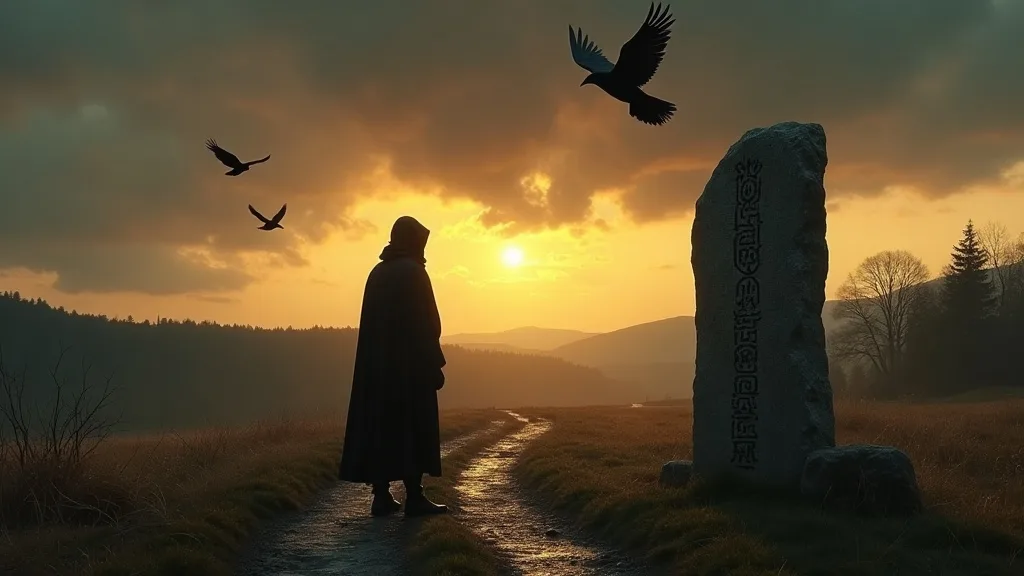
Woden: The Allfather of Anglo-Saxon Paganism
Woden ruled the Anglo-Saxon cosmos as god of war, wisdom, and the dead. Trace his origins, his sacrifices, and why his name still shapes the English week.
Contents
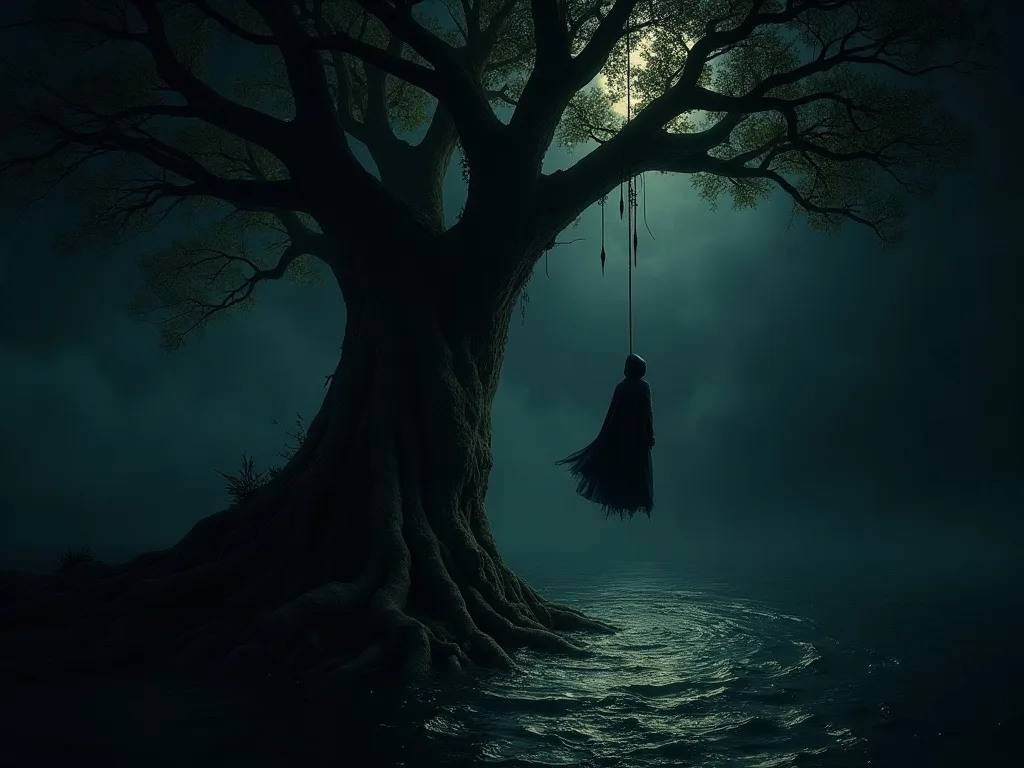
The man hanging from the tree does not scream. He hangs for nine nights, pierced by a spear, staring into the dark below him. No food. No water. Nobody comes to help him. He endures, because what waits on the other side of the pain is worth more than comfort: the runes, the secret script of the cosmos, the knowledge that governs fate itself.
That man is Woden, the Allfather of Anglo-Saxon paganism. He is not a god who sits above the world in safety. He pays for every piece of wisdom he carries, and the price is always steep.
The Anglo-Saxons who settled Britain from the fifth century onward brought Woden with them from the Germanic continental homeland. He was the king of their gods, the ancestor of their kings, and the guardian of the dead who fall in battle. Wednesday carries his name still, carved into the English language twelve centuries after the last public sacrifices were made in his honor.
Woden's Place in the Anglo-Saxon Cosmos
The Anglo-Saxons left no single scripture equivalent to the Norse Eddas. What survives comes in fragments: royal genealogies, healing charms, the poem Beowulf, runic inscriptions, and scattered mentions in the writings of Bede and other Christian scholars who recorded old beliefs even as they argued against them.
From these fragments, a picture assembles itself. Woden stood at the apex of the Anglo-Saxon pantheon, a figure the Germanic tribes called by the Latin name Mercurius when they needed a Roman equivalent (a habit documented by the Roman historian Tacitus in his Germania, written around 98 AD). This pairing was not arbitrary. Like Mercury, Woden moved between realms, carried souls, and held dominion over words and cunning.
The Old English sources place him alongside other gods: Thunor, the thunder god whose hammer protected ordinary folk; Tiw, the one-handed god of law and sky; and Frigg, the queen of the gods whose name survives in Friday. Woden towered above them all in prestige, though not always in affection. He was respected, perhaps feared, more than he was loved.
His sphere of influence spread wide. War and its dead belonged to him. Poetry and its inspiration belonged to him. Magic and its manipulation of fate belonged to him. Crossroads, travelers, and the wind itself carried his signature. He was, in a word the Anglo-Saxons would have understood immediately, a dryhten: a lord of his hall who demanded loyalty and rewarded it with power.
The Sacrifice That Bought All Knowledge
The hanging ordeal appears in Norse sources most explicitly, in the Hávamál ("Sayings of the High One"), a section of the Poetic Edda compiled in Iceland around the 13th century from much older oral traditions. Scholars including Hilda Ellis Davidson, in her 1964 study Gods and Myths of Northern Europe, have argued convincingly that the core myth predates the Norse-Anglo-Saxon split, making it shared cultural inheritance.
The relevant stanzas read plainly. Woden (Odin in Norse) hangs from Yggdrasil, the great world-tree, for nine nights. He hangs "given to Odin, myself to myself," pierced with a spear, denied any comfort from below. At the end of nine nights, screaming, he catches sight of the runes in the depths beneath him and seizes them. The knowledge floods in.
Runes in the early Germanic world were not just writing. They were forces. Each symbol carried a meaning that reached beyond the letter: cattle, aurochs, ice, the sun, death, a torch. The runic alphabet, known as the Futhark (named after its first six sounds), was a technology for shaping reality. To know runes was to hold a piece of the order of the world in your hand.
Woden's self-sacrifice to gain them established a principle the Anglo-Saxons understood deeply: real knowledge costs something real. A king who wanted insight fasted. A warrior who wanted protection inscribed runes on his blade. Nothing came free from Woden's domain.
The other sacrifice in the mythology is his eye. Woden gave one eye to drink from the well of Mimir (Old Norse: Mímisbrunnr), the well of memory and cosmic wisdom that sat beneath one of Yggdrasil's three roots. He arrives at the well. He asks to drink. Mimir tells him the price. Woden pulls out his own eye without hesitation and drops it in. He drinks. He walks back into the world seeing more clearly than before, with one eye, than he ever had with two.
These two acts - the hanging and the eye - are Woden's defining biography. They explain why he could be both a war god and a poet's god, both a death-lord and a wisdom-seeker. He had paid the price for every domain he occupied.
Woden as Ancestor of English Kings
One of the most concrete traces of Woden's presence in Anglo-Saxon culture is genealogical. Nearly every royal house of the Anglo-Saxon kingdoms traced its lineage directly back to him.
The Anglo-Saxon Chronicle, compiled from the late ninth century onward under Alfred the Great's direction, records these lineages matter-of-factly. The kings of Wessex, Mercia, Northumbria, and East Anglia all claimed Woden as founding ancestor, typically several generations back, often with a semi-historical figure named Woden son of Frealaf son of Frithuwulf appearing in the chain.
This was not mere mythology dressed up as history. It was a political technology. A king who descended from Woden carried divine sanction. His right to rule was not just hereditary but cosmological. He embodied the link between the living community and the founder of order itself.
The Venerable Bede, writing his Ecclesiastical History of the English People in 731 AD, recorded several of these genealogies even while working as a Christian monk. He did so because the social reality of Anglo-Saxon kingship required it. The genealogies were the constitution. To question them was to question the legitimacy of every royal hall in Britain.
Even after the conversion to Christianity, which accelerated dramatically in the seventh century, the genealogies survived. Scribes simply inserted biblical ancestors above Woden in the chain, connecting him (and thus the kings) backward to Adam. It was a remarkable piece of cultural stitching: the pagan Allfather absorbed into the Hebrew lineage of humanity.
The Wild Hunt and the God of the Dead
Woden's connection to the dead runs deeper than battlefield collection. Across Anglo-Saxon and later English folk belief, the figure who leads the Wild Hunt is recognizable as Woden under a thin disguise.
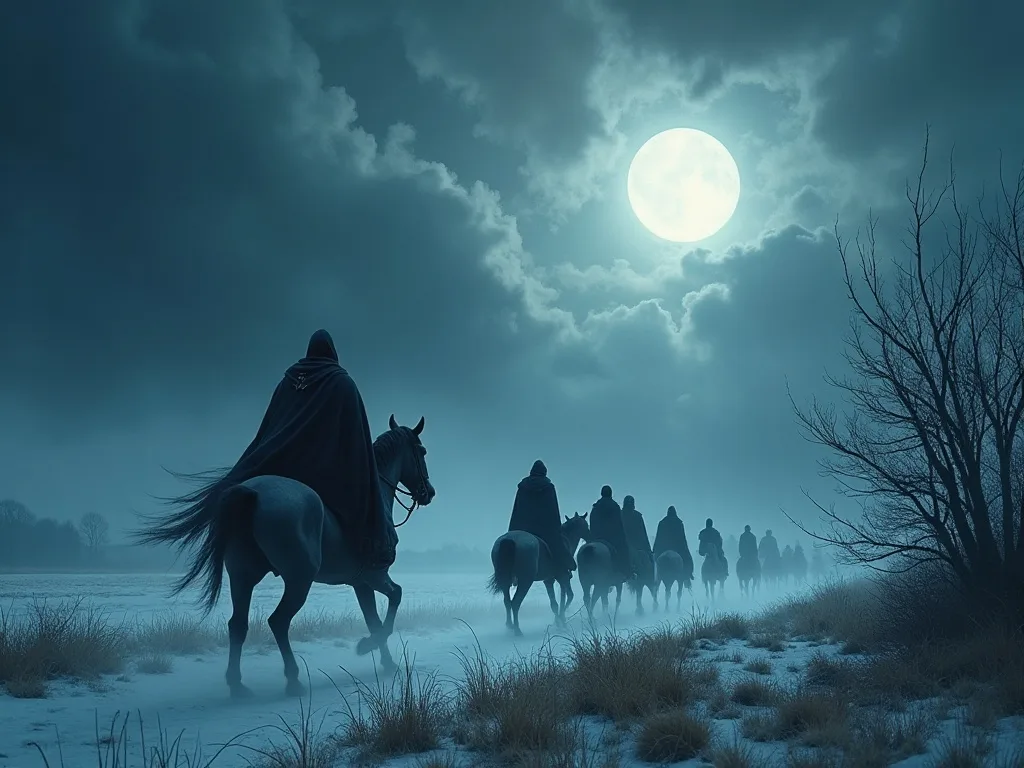
The Wild Hunt appears in the Anglo-Saxon Chronicle's entry for 1127, which describes a vision seen at Peterborough: a host of hunters, black and terrible, riding black horses and black goats, accompanied by hounds. The chronicle says twenty or thirty hunters were counted, blowing horns, riding through the night. Local monks were terrified.
The leader of that host goes unnamed in the chronicle. But the description matches centuries of folk memory about Woden riding across the sky with his retinue of the dead. He appears in this role as an old man: one eye, a wide-brimmed hat pulled low, a staff or spear in hand, a grey cloak. His two ravens, Huginn and Muninn ("Thought" and "Memory" in Old Norse), circle overhead.
Woden's hall in Norse tradition is Valhalla, the hall of the slain, where warriors killed in battle feast and fight every day until the final conflict of Ragnarök. Anglo-Saxon sources do not name the hall directly, but the Beowulf poem, composed between the 8th and 10th centuries, breathes with the understanding that the god of battle claims his own, and that a glorious death has a destination. The hall itself may be named differently, the theology may sit at a slightly different angle, but the Woden who receives the honored dead is recognizable throughout.
This function - psychopomp, collector of souls, lord of those gone before - gave Woden an intimacy with death that his peers in the pantheon did not share. Thunor protected the living. Woden waited for them at the end.
Woden in Anglo-Saxon Healing Charms
The oldest written texts that mention Woden by name in Old English are not heroic poems. They are medical charms.
The Nine Herbs Charm, preserved in a tenth-century manuscript now called the Lacnunga ("Remedies"), invokes Woden directly as the one who defeated the nine poisons that afflict humanity. The relevant passage, translated from Old English, reads: "A snake came crawling, it bit a man. Then Woden took nine glory-twigs, smote then the adder so that it flew in nine pieces." The charm then lists nine herbs - mugwort, plantain, lamb's cress, cock's-spur grass, chamomile, nettle, crab-apple, thyme, and fennel - each connected to Woden's act.
This charm places Woden not as a distant cosmic figure but as a practical healer, someone whose mythological act of defeating poison has a direct application to the body lying sick in a hut. The healer reciting the charm aligned themselves with Woden's power. The herbs they administered carried his authority.
The charm shows something important: the Anglo-Saxon conception of Woden was not monolithic. He was available in different registers. Kings needed him as ancestor. Warriors needed him as battle-lord. Poets needed him as inspiration. The sick needed him as the one who had already beaten death and poison and won.
The Name Wednesday and What It Reveals
The most durable evidence of Woden's centrality to Anglo-Saxon life is linguistic. Wednesday takes its name directly from him: Old English Wōdnesdæg, "Woden's day."
The day-name system the Anglo-Saxons used replaced Roman planetary days with Germanic divine equivalents. The Romans called the fourth day of the week dies Mercurii, Mercury's day. The Anglo-Saxons swapped Mercury for Woden, confirming the cultural identification Tacitus had noticed centuries earlier. The substitution worked because both gods shared the same profile: movement between worlds, mastery of words, governance of those in transit.
This substitution was a conscious act of cultural translation, not a mistake. When Germanic-speaking peoples encountered the Roman calendar, they found a way to make it their own. Woden stood where Mercury stood because his worshippers understood them to occupy the same cosmic function.
The other day-names follow the same logic. Tuesday is Tiw's day. Thursday is Thunor's day (Þūnresdæg). Friday is Frigg's day. The English week is, in one reading, a compressed Anglo-Saxon theology still operating inside every calendar, every appointment, every text message that mentions "see you Wednesday."
Woden After the Conversion: Survival and Transformation
The official Christianization of the Anglo-Saxon kingdoms began in earnest with Augustine of Canterbury's mission in 597 AD and moved rapidly through the seventh century. By 700 AD, most royal courts had converted. Public worship of Woden was condemned.
And yet Woden did not simply disappear.
He survived in the genealogies, as noted. He survived in place names: Wodnesbeorg ("Woden's barrow") in Wiltshire, Wednesbury in the West Midlands, Wodnesfeld in Staffordshire. He survived in the healing charms, where scribes copied him out in the same manuscripts that carried prayers to Christ, apparently seeing no contradiction they needed to resolve in the moment.
He survived most persistently in folk memory as the leader of the Wild Hunt, a figure who acquired new names over centuries (Herne the Hunter in Windsor Forest, Grim across various English place names, Old Nick in some regional traditions) while retaining the core profile: one-eyed, wide-hatted, moving through the night sky with a host of the dead.
J.R.R. Tolkien, who was himself an Anglo-Saxon scholar at Oxford, drew on this tradition deliberately when he created Gandalf. The grey wanderer with a staff, a wide-brimmed hat pulled over one eye, appearing unexpectedly at crossroads and doorways: Tolkien told correspondents explicitly that Gandalf drew on Odin the Wanderer, and through Odin, on Woden. The Allfather of Anglo-Saxon paganism reappeared in the twentieth century's most widely read fantasy novel, still recognizable to those who knew where to look.
Frequently Asked Questions About Woden
Frequently asked questions
Is Woden the same as Odin?
Yes and no. Both descend from the same Proto-Germanic deity, Wōðanaz, and share the same core mythology: the hanging sacrifice, the lost eye, the ravens, the role as king of gods. But Woden is the specifically Anglo-Saxon form of this god, shaped by centuries of English cultural context, while Odin is the Norse form developed in Scandinavia. The differences between them are real but subtle, like dialects of the same theological language. Scholars such as Hilda Ellis Davidson have traced the shared inheritance and the divergences in detail.
What primary sources mention Woden by name?
The most direct Anglo-Saxon mentions appear in the Nine Herbs Charm (Lacnunga manuscript, tenth century), royal genealogies in the Anglo-Saxon Chronicle and Bede's Ecclesiastical History (731 AD), and scattered glosses in Old English texts that equate him with Mercury. The Norse sources, principally the Poetic Edda and Prose Edda compiled in Iceland in the 13th century, provide the richest mythological detail, but these describe Odin rather than Woden specifically. The two traditions overlap significantly.
Why did Anglo-Saxon kings claim descent from Woden?
Claiming descent from Woden gave a king's authority a cosmological foundation, not merely a human one. It meant the king stood at the junction between the divine order and the living community. This was practical politics as much as theology: rivals could not easily contest a bloodline that ran back to the Allfather himself. The practice was widespread enough that the Anglo-Saxon Chronicle records Woden in the genealogies of Wessex, Mercia, Northumbria, and East Anglia, the four major Anglo-Saxon kingdoms.
What is the connection between Woden and the Wild Hunt?
Folk traditions across England and Germany associate the leader of the Wild Hunt, a nocturnal cavalcade of dead souls and spectral hounds, with Woden. The Anglo-Saxon Chronicle's entry for 1127 describes exactly such a vision near Peterborough. The hunt-leader matches Woden's physical profile: one-eyed, cloaked, moving through the winter sky. Over centuries the figure acquired regional names, but the underlying figure retained Woden's attributes. Scholars including Claude Lecouteux have mapped the survival of this tradition across medieval Europe.
How did the word Wednesday get Woden's name?
The Anglo-Saxons adapted the Roman seven-day week by replacing Roman planetary deities with Germanic divine equivalents. The Romans called the fourth weekday dies Mercurii (Mercury's day). Since Woden and Mercury shared the same divine portfolio in the interpretatio germanica, the Anglo-Saxons renamed it Wōdnesdæg, which evolved through Middle English into Wednesday. The pronunciation has drifted from the spelling, but the name itself has not changed in over a thousand years.
Did Woden worship survive the conversion to Christianity?
Public, formal worship ended with the conversion of Anglo-Saxon royal courts in the seventh century. But elements persisted in folk medicine (the Nine Herbs Charm), in place names (Wodnesbeorg, Wednesbury, Wodnesfeld), in the genealogical records that scribes continued copying, and in the Wild Hunt tradition that ran through medieval English folklore into the early modern period. Woden was never entirely erased; he was gradually layered over and reinterpreted.
Woden's Shadow in Modern Literature and Scholarship
The question scholars still argue about is how much of what survives in the Norse Eddas can be mapped cleanly onto Anglo-Saxon Woden. The two traditions diverged for several centuries before the Eddas were written down, and there is no guarantee that every detail of Odin's mythology was equally present in Anglo-Saxon worship.
Brian Branston's 1957 study The Lost Gods of England made an influential case that the Anglo-Saxon gods were richer and more structured than the surviving sources suggest, and that the Norse parallel is a genuine window into what has been lost. Rudolf Simek, in his Dictionary of Northern Mythology (1984, German original), takes a more cautious position, distinguishing carefully between attested Anglo-Saxon material and Norse inference.
Both positions are defensible. What is not in doubt is the central fact: Woden was the most important deity in the Anglo-Saxon religious imagination. He gave kings their right to rule, warriors their hope of a meaningful death, poets their voice, and healers their authority over poison. He marked the middle of the week with his name. He walked the night roads of English folk memory for centuries after the churches replaced his altars.
Tolkien noticed him in the wanderer at the door. Neil Gaiman placed him on American highways in American Gods (2001), driving a taxi, still moving between worlds, still collecting what the road offers. The instinct to keep recognizing him, in different clothes and different centuries, may itself be the most accurate testimony to what he was: a god defined not by a fixed location or a single function, but by movement, by the willingness to cross every boundary, by the conviction that no knowledge worth having comes without a cost.
He is still at the crossroads. He is still wearing the hat low over the empty socket. He is still waiting to see who has the nerve to ask him something.
Read the full book
Want the whole story?
The complete edition is an instant PDF download here, with a paperback on Amazon for selected titles.
Anglo-Saxon
The Anglo-Saxon Mythology Book: Woden, Thunor, Beowulf, and the Lost Gods of Pre-Christian England
The Sacred Stories Before Christianity Buried Them
The mythology of pre-Christian England: Woden's ravens, Thunor's thunder, Beowulf's monsters, and the Wyrd sisters who wove fate. Recovered from Beowulf, royal genealogies, and the grave goods.
More from Anglo-Saxon
All articles
Anglo-Saxon
Hengist and Horsa: Legendary Founders of Anglo-Saxon England
Two brothers from Germanic lands, Hengist and Horsa led the first English settlers across the North Sea. Their arrival around 449 CE marks the beginning of Anglo-Saxon England, though history and legend now blur beyond recognition.
Anglo-Saxon
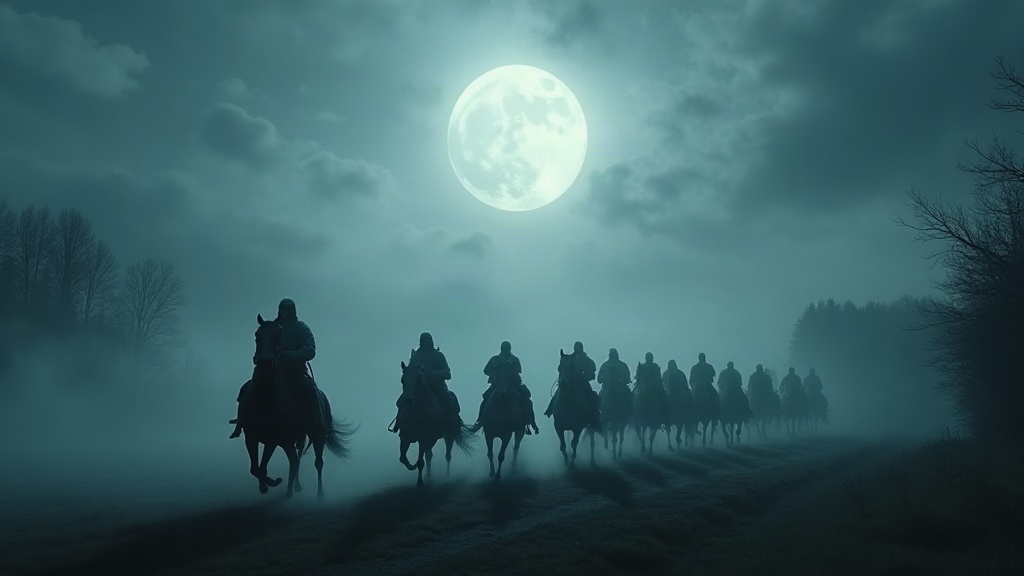
The Wild Hunt in Anglo-Saxon Belief: Spectral Riders and the Hunt for Souls
The Wild Hunt in Anglo-Saxon belief was a ghostly procession across the night sky, led by divine or demonic riders who hunted both the living and the dead. Discover how this ancient vision shaped English folklore for over a thousand years.
Anglo-Saxon
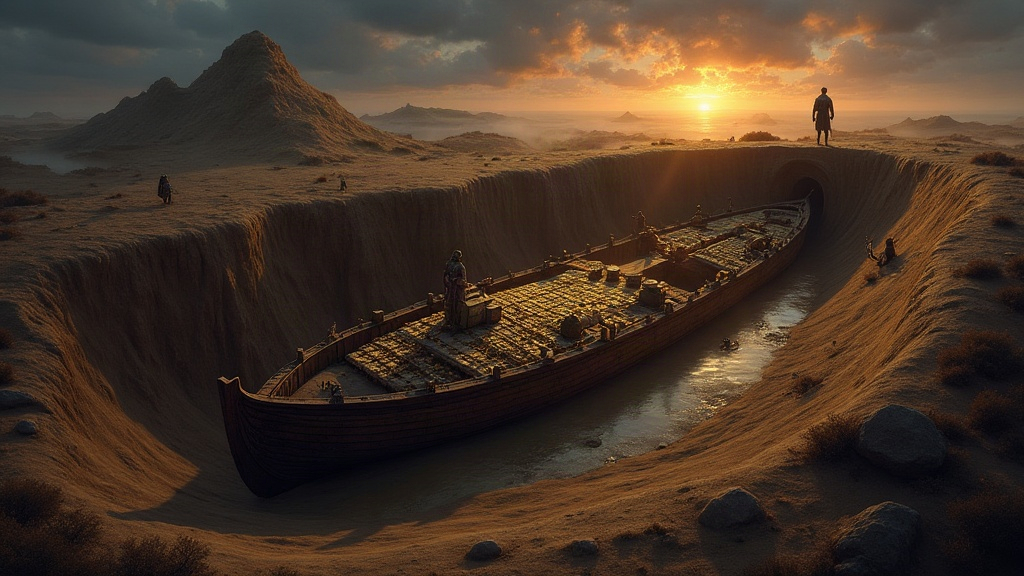
The Sutton Hoo Ship Burial: Archaeology and Myth
In 1939, archaeologists uncovered a 27-meter ship buried in Suffolk, England, holding treasures and weapons from the 6th century. The Sutton Hoo ship burial bridges Anglo-Saxon reality and the epic worlds of Beowulf, revealing how real kings were sent to their gods.
Anglo-Saxon
Eostre: Goddess of Spring and Dawn
Eostre is the Anglo-Saxon goddess of spring, dawn, and fertility, known through a single historical mention by the Venerable Bede. Discover how this shadowy deity shaped the season of renewal and inspired the modern holiday of Easter.