
Haruspicy: Etruscan Divination Through Liver Reading
Etruscan priests read the future in the lobes of a sheep's liver. Here is how haruspicy worked, what it meant, and why Rome could not rule without it.
Contents
A sheep lies still on the altar stone. The haruspex draws a bronze knife across its belly, reaches in, and lifts the liver clear of the body cavity. He holds it toward the light. Every fold, every discoloration, every lobe carries a message from the gods below. Within minutes, a war, a coronation, or a treaty will be decided on what he reads there.
This was not superstition at the margins of Etruscan life. Haruspicy, the Etruscan practice of divination through liver reading, sat at the center of state power for roughly a thousand years, from the early Iron Age cities of Etruria through the late Roman Republic. Generals, senators, and emperors refused to act without a haruspex present. The ritual crossed every political and cultural boundary the ancient Mediterranean knew.
What Haruspicy Meant Inside Etruscan Religion
The Etruscans called their body of sacred knowledge the Etrusca Disciplina, a set of texts and oral traditions governing divination, the interpretation of lightning, and the ritual founding of cities. Haruspicy occupied the most intimate corner of that system. Where lightning (fulgura) gave signs from the sky gods above, and augury read the flight of birds across the horizon, the liver held signs from the gods below: Tinia, the supreme sky deity, and Uni, his consort, communicated will through the organ that ancient Etruscans believed housed the soul.
The theological premise was precise. The liver of a sacrificed animal mirrored the cosmos. Its surface was a map. Each section corresponded to a god, a region of heaven, a quality of fortune. A blemished lobe where Nethuns, the Etruscan sea deity, was said to reside could signal trouble at sea or civic flood. A swollen, healthy protrusion in the zone of Tinia announced divine favor. Nothing was arbitrary. Everything was readable because everything was intentionally placed there by the gods at the moment of the animal's death.
This is different from believing the liver contains the future by accident. The Etruscans believed the gods actively shaped the organ in the instant of sacrifice to communicate a specific message. The haruspex was not guessing. He was reading a letter that the divine had already written.
The Piacenza Liver: A Bronze Manual of the Sky
No object explains haruspicy better than the Piacenza Liver, a bronze model discovered in 1877 near Piacenza in northern Italy. Roughly 12.6 centimeters long, cast sometime in the second or first century BCE, it reproduces the outer surface of a sheep's liver divided into sixteen named regions on the outer rim and a further series of inner zones. Each region carries an Etruscan divine name.
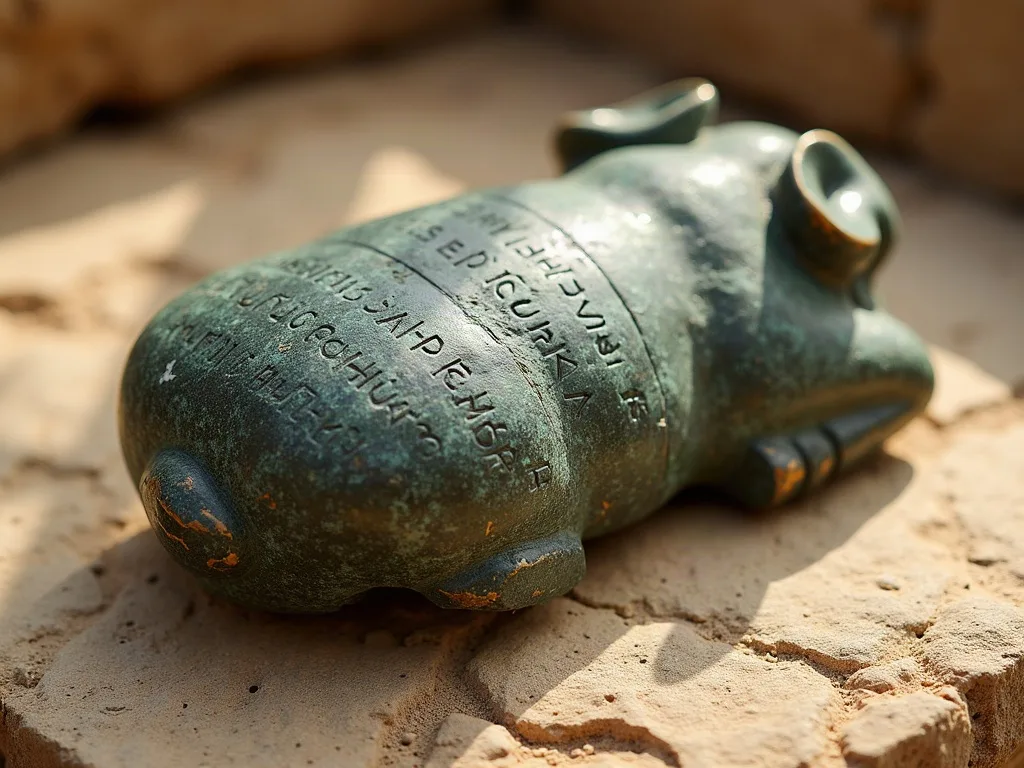
Reading clockwise from the top of the Piacenza Liver, the names include Tinia, Uni, Thalna, Nethuns, Usil (the sun deity), Tiur (the moon), Lethns, Cel (the earth goddess), Satres, and several others whose exact identities remain debated. The liver is not just a mnemonic tool. It is a working atlas, correlating the underside of heaven with the surface of a single organ. The outer rim likely represents the outer celestial regions; the inner zones map the subterranean and chthonic gods who were believed to exert pressure upward through the earth into living tissue.
Scholars including Jean MacIntosh Turfa and Adriano Maggiani have argued that the Piacenza model closely parallels Babylonian bārûtu texts, where clay liver models also divided the organ into divine sectors. The resemblance is close enough to suggest transmission through Levantine trade routes in the ninth and eighth centuries BCE, though Etruscans adapted the system substantially. Their version is denser, more cosmologically structured, and tied to a different theological pantheon entirely.
How the Ritual Unfolded: From Altar to Verdict
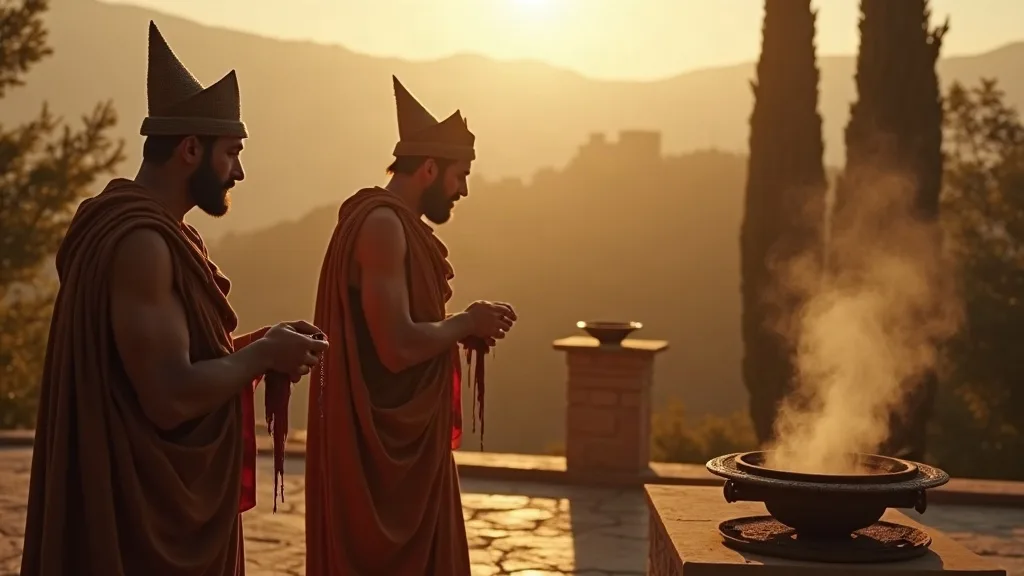
The ceremony began before dawn on days designated as propitious by the Etruscan calendar. The haruspex arrived at the altar wearing a distinctive conical hat and a toga pulled up over the head in the Etruscan fashion that Romans would later borrow for their own sacrificial rites. The animal, most often a sheep or an ox for major state occasions, was inspected alive. If it showed signs of distress before the knife fell, the ritual had to begin again.
After the killing blow, the haruspex opened the abdominal cavity with a sequence of cuts that kept the liver intact. Speed mattered; the organ had to be examined warm. He removed it carefully, placed it on a flat surface or held it in both hands, and oriented it so the convex side faced upward, the gallbladder at the top right. That orientation mapped the visible face toward the sky and the concave underside toward the earth, re-enacting the cosmic arrangement in miniature.
The examination moved through distinct stages:
- Color and texture: Pale, mottled, or shrunken tissue in any zone signaled weakness or hostility from the corresponding deity.
- The gallbladder (fel): Particularly important. A full, well-formed gallbladder was among the clearest indicators of divine favor. Julius Caesar's haruspices reportedly found a liver without a gallbladder on the morning of the Ides of March; Suetonius records the detail in The Twelve Caesars.
- The lobe structure: Abnormal growths, split lobes, or fused sections each carried specific meanings depending on which divine zone they fell in.
- Symmetry and proportion: A well-proportioned liver was a good liver. Asymmetry mapped onto imbalance in the cosmic or political order.
The verdict was delivered aloud to the magistrate or general commissioning the sacrifice. If the first animal produced an unfavorable liver, a second was sacrificed. Three consecutive unfavorable readings constituted an unambiguous divine veto. Roman histories record multiple occasions where planned military campaigns were halted at the altar because the haruspices could not obtain a favorable reading.
The Haruspex in Etruscan Society
The haruspex was not a wandering prophet or a folk healer. In Etruria, the office belonged to the aristocratic class. The Libri Haruspicini, the now-lost written corpus of liver interpretation transmitted across generations, were family property as much as civic institution. A Etruscan inscription from Tarquinia names haruspices as members of the zilath (senior magistrate) families. The skill passed from father to son through a formal apprenticeship that ancient sources describe as lasting years.
Tarquinia, the great northern Etruscan city, produced haruspices who achieved Roman fame. Roman literary tradition credits a semi-legendary figure named Tages, a boy who sprang from a plowed furrow near Tarquinia and immediately began dictating the Etrusca Disciplina to a haruspex named Tarchon, as the origin of all haruspical knowledge. Tages is described in Cicero's De Divinatione and in Ovid's Metamorphoses, always as a child-sage, childlike in body but ancient in wisdom. His dictation was written down and preserved as the canonical text.
This origin myth matters. It attributes the discipline not to human invention but to direct divine transmission from the earth itself. The ground spoke. A trained interpreter transcribed. This is exactly the epistemological claim that gave the haruspex his authority: he was not offering opinion, he was reading a language that the gods themselves had established.
Rome Inherits the Discipline
When Rome absorbed Etruscan political culture in the sixth and fifth centuries BCE, it absorbed the haruspices with it. The Roman senate formalized the relationship: the haruspices were summoned for any prodigy, any unusual occurrence that fell outside the augurs' jurisdiction. Earthquake, lightning strike on a temple, a talking cow, a rain of blood reported in the countryside - all required a haruspex's interpretation.
What makes Rome's adoption significant is the institutional form it took. The Ordo LX Haruspicum, the Order of Sixty Haruspices, was a state body funded by the senate. Its members came, by long tradition, from Etruria. Rome was, in effect, keeping a standing corps of foreign religious specialists on permanent retainer because no Roman institution could replicate their expertise.
Cicero's treatment in De Divinatione is the most nuanced primary account in Latin. He was personally skeptical about divination's epistemic validity, and he says so clearly. Yet he also records, with evident respect, that the haruspices of his day maintained an unbroken chain of interpretation stretching back generations. He distinguishes between the haruspical art as a system of observation and inference (which he finds admirable) and the theological claims underlying it (which he interrogates philosophically). That tension makes De Divinatione one of the most intellectually honest ancient texts on religious practice.
The discipline did not fade with Augustus. Haruspices appear in the historical record through the fourth century CE. The emperor Julian, who attempted to revive traditional Roman religion in the 360s CE, relied heavily on haruspices. One of the last documented Roman haruspical responses dates to 363 CE, less than thirty years before Theodosius I would ban pagan sacrifice entirely across the empire.
Comparative Echoes: Mesopotamia and the Global Practice of Omen Reading
Haruspicy as Etruscan divination does not exist in isolation. The practice belongs to a family of omen-reading traditions that spans the ancient world, and tracing the family resemblances clarifies what is distinctly Etruscan about the Italian version.
Etruscan Haruspicy
- Liver divided into sixteen or more divine zones on the outer rim
- Piacenza Bronze model used as a teaching tool
- Embedded in a full cosmological system (Etrusca Disciplina)
- Transmitted through Etruscan aristocratic lineages
- Tages myth gives the discipline a divine origin from within the earth
- Remained active well into the Roman imperial period
Babylonian Bārûtu
- Clay liver models divided into forty-plus named sectors
- Extensive cuneiform omen series (bārûtu) preserved on tablets
- Developed within Sumerian and Akkadian scribal traditions
- Transmitted through temple bārû (diviner) schools
- Traced to divine revelation from the god Shamash
- Declined with cuneiform script by the first century CE
The Hittites of Anatolia also practiced liver divination, as do indigenous traditions in parts of West Africa and Southeast Asia to this day, suggesting the practice may have independent origins in multiple regions rather than a single point of diffusion. What distinguishes the Etruscan tradition is the degree to which liver reading was integrated into a formal, written, cosmologically rigorous system. The Babylonian bārûtu corpus is larger in volume; the Etruscan is denser in theological argument.
Ancient Chinese oracle-bone divination, where heat-cracked turtle shells or ox shoulder blades were read for divine messages, represents a structurally parallel tradition that developed independently. The underlying intuition is the same: matter, when subjected to a threshold event (sacrificial death, fire), reveals the shape of divine intention. The medium differs; the logic rhymes.
The Body as a Cosmic Map: What Haruspicy Tells Us About Etruscan Theology
Underlying the entire practice is a set of theological commitments that the ritual makes visible. The Etruscans understood the body of a sacrificial animal as a microcosm. The macrocosm (the sky with its divine regions, the underworld with its chthonic forces) was reproduced in miniature inside every living creature. A sheep was a small cosmos. Its liver was a particularly sensitive registering surface because the liver, in ancient physiology, was considered the seat of life-blood and, by extension, of the soul's vital force.
This maps onto the broader Etruscan understanding of the divine order as interpenetrating rather than remote. The Etruscan gods did not live at a separate remove, issuing decrees from a distant Olympus. They pressed into the material world continuously. Vanth, the winged spirit who guided the dead, was present at every death. Charun, the hammer-wielding underworld figure, appeared at the threshold. Tinia's will moved through weather, through fire, and through the tissues of animals. The haruspex was not performing magic to force a divine response. He was reading a text that was always already there, written in flesh, waiting for a trained eye.
This is why the haruspex carried moral authority alongside technical expertise. He was not a technician. He was a reader of divine scripture. The distinction mattered enormously to the Etruscans, and it explains why even deeply skeptical Roman intellectuals like Cicero could not simply dismiss the haruspices as frauds. The intellectual structure they inhabited was coherent, consistent, and grounded in centuries of recorded observation.
Haruspicy After the Etruscans: Survival, Suppression, and Modern Study
The prohibition of pagan sacrifice by Theodosius I in 391-392 CE formally ended public haruspicy within the Roman empire. But the knowledge did not vanish instantly. Late antique texts continued to discuss haruspical doctrine in philosophical terms. The Saturnalia of Macrobius, written around 400 CE, treats liver divination as a legitimate subject of antiquarian inquiry. Augustine of Hippo, writing his City of God in the early fifth century, attacks haruspicy at length, which paradoxically preserves substantial information about how it worked, since he quotes and paraphrases Etruscan-derived sources to refute them.
The Piacenza Liver, rediscovered in 1877, opened the modern scholarly conversation. Giovanni Battista Pellegrini identified and published the first full reading of its inscriptions. Subsequent work by scholars including Ambros Josef Pfiffig, Raymond Bloch, and more recently Nancy Thomson de Grummond has refined the divine identifications considerably, though several zone names on the model remain contested. The liver is currently housed in the Museo Civico of Piacenza and remains the single most important object for understanding how haruspical cosmology was organized in practice.
Genetic and isotopic analysis of sacrificial animal remains at Etruscan sanctuaries is an emerging field. Zooarchaeological work at sites like Gravisca (the port sanctuary of Tarquinia) and Pyrgi is beginning to show patterns in which animals were selected for sacrifice, adding a material dimension to the textual record. The results suggest that the choice of sheep over cattle for liver inspection may have been partly a question of liver morphology: sheep livers, being smaller and more uniform, may have produced more legible specimens for detailed zone-by-zone reading.
Frequently Asked Questions About Haruspicy and Etruscan Divination
Frequently asked questions
What is a haruspex and what did they actually do?
A haruspex was a trained Etruscan religious specialist who interpreted the organs, particularly the liver, of sacrificed animals to determine divine will. After killing and opening the animal, the haruspex examined the liver's color, shape, lobe structure, and gallbladder condition, cross-referencing each feature against a memorized (and eventually written) map that assigned specific gods to specific zones of the organ. The verdict shaped military, political, and civic decisions at every level of Etruscan and later Roman society.
What is the Piacenza Liver and why does it matter?
The Piacenza Liver is a bronze sheep-liver model, approximately 12.6 centimeters long, found near Piacenza, Italy in 1877 and dated to the second or first century BCE. Its outer rim is divided into named sections corresponding to Etruscan deities. It is the most complete physical evidence we have for how haruspices mapped divine zones onto the organ. Without it, the internal organization of haruspical cosmology would be almost entirely speculative. It is housed in the Museo Civico of Piacenza.
Did the Romans really believe in haruspicy, or did they just go through the motions?
The Roman relationship with haruspicy was complex. Cicero, in De Divinatione, states personal skepticism about divination's predictive power while documenting that the institution commanded widespread public respect. Many Roman commanders clearly treated haruspical verdicts as binding constraints on action: Suetonius records that warnings were given to Julius Caesar before the Ides of March, and Livy documents multiple military campaigns halted after unfavorable liver readings. Whether individual Romans believed literally or treated the ritual as civic obligation varied; the institutional commitment was unambiguous.
How does Etruscan haruspicy compare to Babylonian liver divination?
Both traditions divided a model liver into named divine sectors and both used physical liver models as training aids. Babylonian bārûtu texts, preserved on cuneiform tablets, form a far larger written corpus. Etruscan haruspicy is more tightly integrated into a single cosmological system (the Etrusca Disciplina) and shows distinctive features such as the emphasis on the gallbladder and the sixteen-sector outer rim of the Piacenza model. The traditions likely share a common ancestor through Levantine or Anatolian transmission, though each developed independently for centuries.
When did haruspicy end, and did any of its knowledge survive?
Public haruspicy ended with Theodosius I's ban on pagan sacrifice in 391-392 CE. However, knowledge of the practice survived in late antique philosophical and antiquarian texts, most importantly Macrobius's Saturnalia and, indirectly, through Augustine's detailed refutations in City of God. The discovery of the Piacenza Liver in 1877 relaunched serious academic study, and haruspicy remains an active area of Etruscan scholarship, with ongoing debates about the identity of several divine names inscribed on the bronze model.
The Liver as a Mirror of Scholarly Debate
Two large questions remain unresolved in the study of haruspicy as Etruscan divination, and they are worth sitting with because they reveal how much the Etruscans still resist easy categorization.
The first is the question of textual transmission. The Libri Haruspicini, the Libri Fulgurales, and the Libri Rituales are all referenced in ancient sources as real written documents. None has survived. Everything modern scholarship knows about the Etrusca Disciplina comes through quotation, paraphrase, or inference from objects like the Piacenza Liver. This creates an irreducible gap. The haruspices' own internal argument, their reasoning about why the gods communicated through organs, their debates about edge cases and ambiguous readings, is simply gone. What survives is the outside view, filtered through Roman admirers and Christian critics who each had reasons to distort.
The second question is the degree to which Etruscan religious practice formed a genuinely unified system versus a regional family of practices that looked more coherent from the outside than from within. Recent work by de Grummond and Ingrid Edlund-Berry has emphasized local variation across Etruscan cities: what a haruspex in Caere did may have differed in significant ways from practice in Vulci or Veii. The divine names on the Piacenza Liver match those attested in inscriptions and tomb paintings, but the weightings assigned to different zones may have shifted by city, by period, by family tradition.
That interpretive openness is not a weakness in the evidence. It is an accurate reflection of a living religious practice that adapted across centuries and cultures while keeping its core logic intact. The haruspex reading a warm liver at dawn on the morning of a battle was doing something ancient and something local at the same time. The gesture connected him to Tages dictating from the furrow, to the Babylonian bārû pressing a clay model onto his writing tablet, to every human attempt to find, in the body of the world, a word from whatever is watching.
Read the full book
Want the whole story?
The complete edition is an instant PDF download here, with a paperback on Amazon for selected titles.
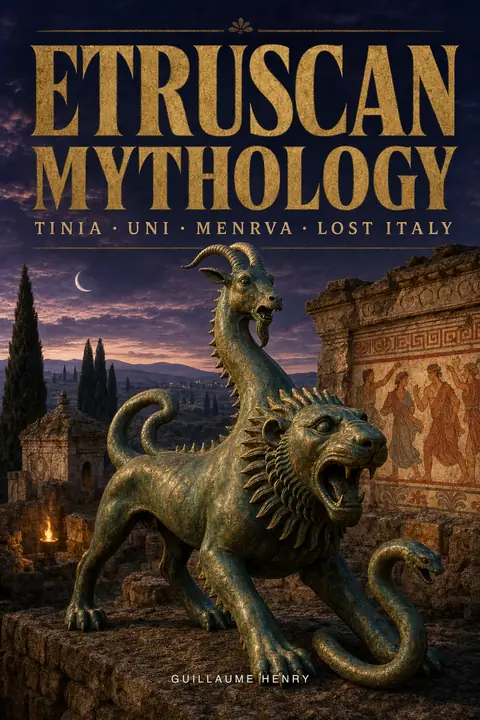
Etruscan
The Etruscan Mythology Book: Tinia, Uni, Menrva, and the Lost Religion of Italy
Tinia, Uni, Menrva, and Lost Italy
Before Rome, Italy belonged to the Etruscans: a people who read the future in lightning and livers, buried their dead in painted cities, and whose gods Rome quietly adopted. A mythology recovered from tombs, bronze mirrors, and the discipline of the haruspex.
More from Etruscan
All articles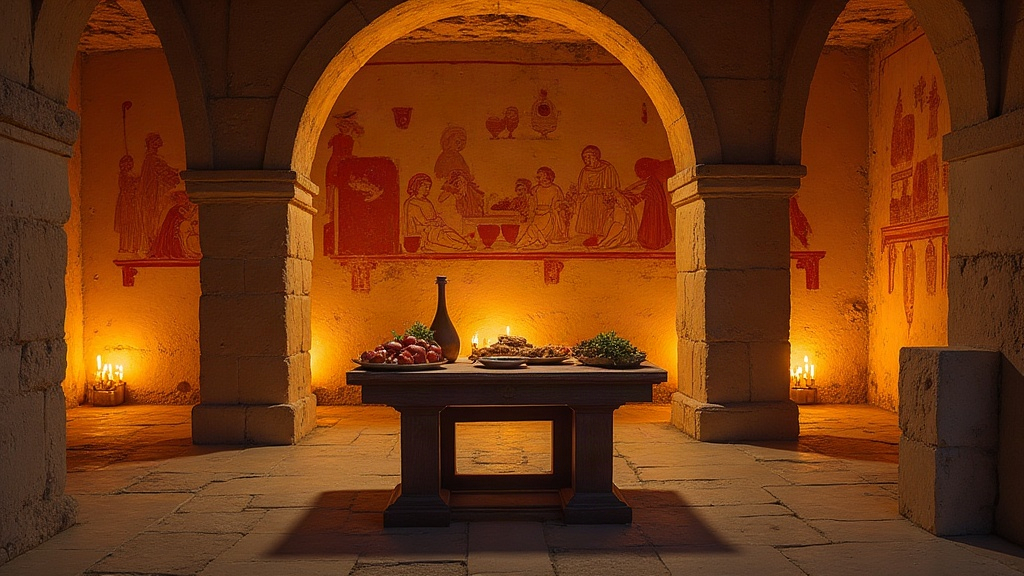
Etruscan
Etruscan Tomb Banquets: Feasting with the Dead
In Etruscan tombs, the dead reclined at eternal banquets. Through painted walls and grave goods, archaeologists recover a ritual that bound living and dead in a single meal. Discover how the Etruscans fed their ancestors and what it reveals about their afterlife beliefs.
Etruscan
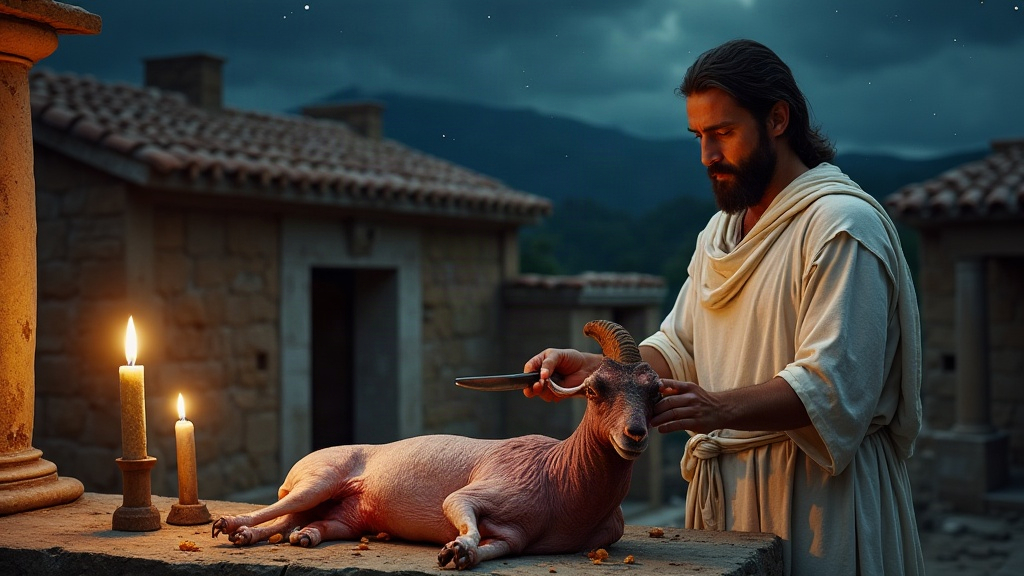
The Etruscan Disciplina: Sacred Books and Ritual Knowledge
The Etruscan Disciplina preserved the cosmos in ritual codes and sacred texts. Explore how haruspicy, augury, and divine protocol shaped an entire civilization and influenced Rome itself.
Etruscan
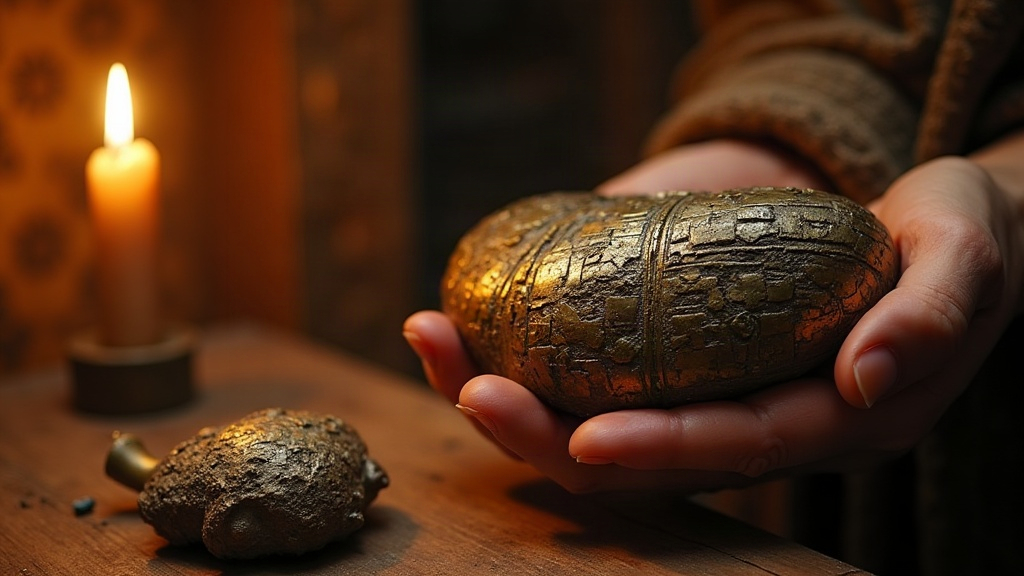
The Liver of Piacenza: Bronze Divination Model of the Etruscans
Discover how the Etruscan priests read fate itself: the Liver of Piacenza is a bronze model showing exactly where to look on a real liver for messages from the gods. It reveals the ancient art of haruspicy in bronze.

Etruscan
Tages: The Divine Child Prophet of Etruscan Divination
A child emerged from the earth to teach an Etruscan farmer the art of reading divine will. Tages, the Divine Child Prophet, became the source of all Etruscan divination knowledge, a figure so powerful that Roman priests carried his teachings for centuries.