
The Etruscan Disciplina: Sacred Books and Ritual Knowledge
The Etruscan Disciplina preserved the cosmos in ritual codes and sacred texts. Explore how haruspicy, augury, and divine protocol shaped an entire civilization and influenced Rome itself.
Contents
Hook
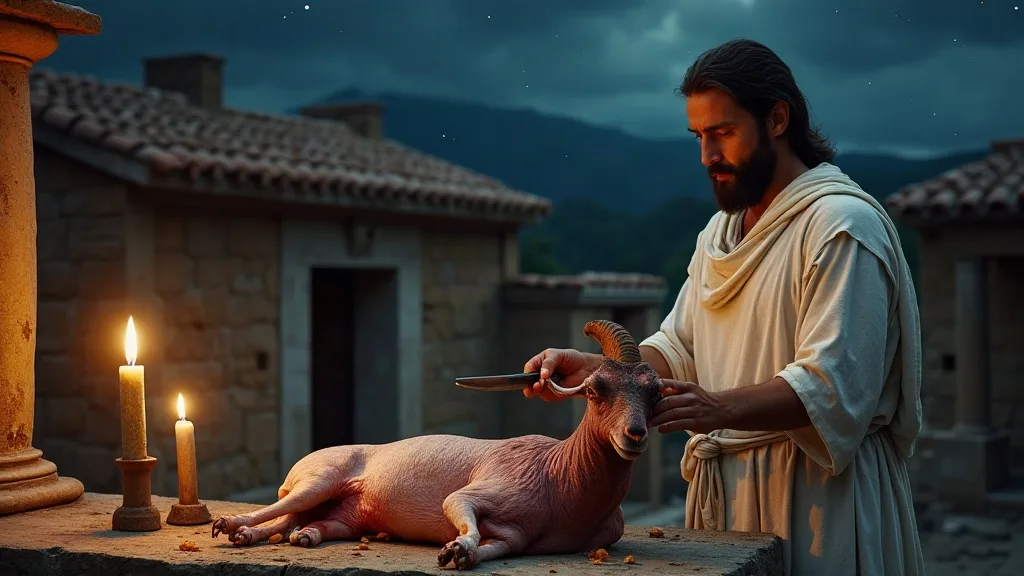
The liver speaks. A haruspex, the highest authority in Etruscan religious life, stands over a freshly killed ram. His trained eye reads the organ's color, texture, and grooves like a map. In the liver's markings, he discerns the will of the gods. This moment, repeated thousands of times across Etruscan city-states over five centuries, rested on one thing: knowledge. Not inspiration. Knowledge encoded in a vast system of religious law and practice called the Etruscan Disciplina.
The Etruscan Disciplina was not scripture in the Western sense. It was a living archive: a compendium of divination techniques, ritual protocols, calendar systems, and sacred law that governed how humans addressed the divine. The Etruscans, who dominated central Italy from roughly 900 to 100 BC, believed the gods had sent priests to them to teach this exact system. Every ceremony, every reading of an animal's entrails, every interpretation of lightning, flowed from texts so authoritative that even Rome, which conquered Etruria, adopted chunks of it wholesale.
Origins of the Disciplina: Divine Revelation and the Tages Legend
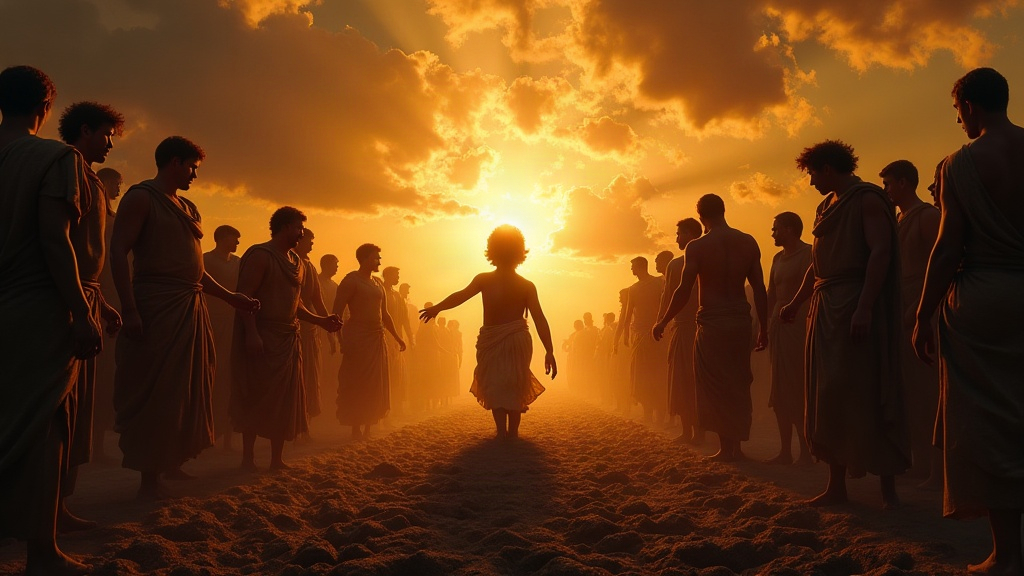
The Etruscans themselves traced the Disciplina to a miraculous origin. According to legend preserved by Livy and other Roman historians, a boy named Tages emerged from a plowed field near the city of Tarquinia. His appearance startled the farmer, but something stranger occurred: Tages spoke with the wisdom of an old man. He taught the assembled Etruscans the entire system of divining the gods' will. This revelation, the story goes, was written down by Tages himself or by a scribe named Bacchius, and became the foundation of Etruscan religious authority.
Modern scholars recognize this as a sacred origin myth, not a historical event. Yet the myth itself matters. It shows that Etruscans viewed the Disciplina as divinely transmitted, not invented. The gods had chosen to reveal their will through specific, teachable methods. This idea granted the priesthood enormous power: they alone held the keys to reading divine intent. A magistrate or general could not proceed without consulting them.
The name Tages appeared in Etruscan texts as Tage or Tages, and his legend circulated widely enough that Roman authors knew it centuries later. Cicero mentions Tages in his work on divination. The core narrative spread across the Mediterranean, absorbed into Neoplatonic philosophy in the later Roman world as proof that humans could receive direct divine instruction.
The Structure of Sacred Books: The Three Libri
The Disciplina, as far as we understand it from fragmentary evidence, organized itself into three major categories of sacred books. Roman sources refer to these as the Libri Haruspicini, the Libri Augurales, and the Libri Rituales (or sometimes the Libri Fulgurales).
The Libri Haruspicini contained all knowledge of haruspicy: the science of reading animal entrails, particularly the liver. The text would describe which parts of the liver corresponded to which gods. A bulge in one section meant Jupiter's favor. A dark spot in another signaled Venus's displeasure. The livers of different animals were read differently. The system was mechanical and precise, almost mathematical. A trained haruspex could spend years memorizing the patterns and their meanings. This wasn't guesswork; it was a codified technology.
The Libri Augurales governed bird augury. The flight of birds, their cries, the direction they moved, the regions of the sky from which they appeared, all carried meaning. The Etruscan priests divided the sky into sixteen sections, each with different significance. An eagle flying from the northern section had a different meaning than the same eagle flying from the east. Again, the texts provided precise correspondences. This system influenced later Roman augury so deeply that Roman augurs adopted Etruscan terminology and methods wholesale.
The Libri Rituales (or Libri Fulgurales) recorded the proper performance of rituals and the interpretation of lightning. How should a temple be inaugurated? What words must be spoken? How long should the ceremony take? Which direction should the priest face? What did it mean if lightning struck on the east side of a building versus the west? The lightning texts were particularly elaborate. The Etruscans believed lightning was divided into nine classes, and only lightning from specific regions of the sky, at specific times, carried divine messages. Thunder that came without lightning meant something different still.
Haruspicy: Reading the Divine Will in Organs
Haruspicy was the engine of Etruscan religious life, and it rested entirely on the Disciplina's codified knowledge. When a magistrate faced a decision, a general needed approval for battle, or a city confronted a crisis, the haruspex was consulted. The animal, usually a sheep or bull, was sacrificed. As it fell, the priest would move toward the still-warm body with a curved knife called a lituus. He would open the animal and extract the liver, the lungs, the heart.
The liver held the most significance. The Etruscan haruspex believed it was a miniature version of the cosmos, divided into regions corresponding to different deities. The liver of a healthy animal was glossy and reddish-brown, marked with natural grooves and a rounded head. The priest would examine these features against the patterns described in the Libri Haruspicini. A diseased liver, or one marked in an unusual way, was read as a sign from the gods. Sometimes the sign was positive; more often, an inauspicious liver meant the gods had not approved the proposed action. The magistrate would wait for a better time, an animal with better omens.
The Romans were so impressed by this system that they imported Etruscan haruspices into Rome itself. Livy records that when the Roman Senate faced uncertainty during wars or plagues, they would formally invite Etruscan haruspices to perform divination. By the 3rd century BC, haruspicy had become woven so deeply into Roman practice that it was indistinguishable from Roman religion itself.
Augury and the Inhabited Sky
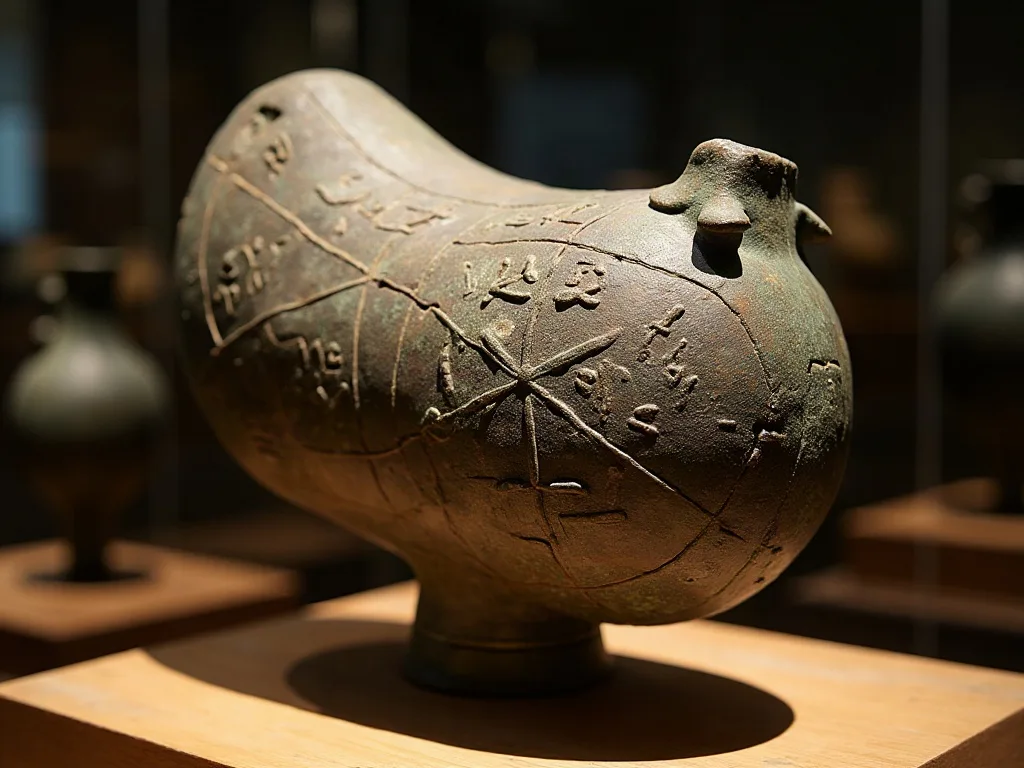
If haruspicy read the divine message in death, augury read it in the living sky. The Etruscan priest called an augur stood in an open space and observed. He watched for birds. He listened for thunder. He paid attention to the quality of light. Every phenomenon was data.
The Etruscan system divided the sky into sixteen sections, each ruled by a specific god. The four cardinal directions (north, south, east, west) were primary. But the Etruscans subdivided further. Northeast held different significance than north-northeast. A section might be ruled by Jupiter, another by Tinia (an Etruscan sky god), another by Lasa (a protective spirit). When a bird flew through a section, the augur interpreted its movement in the context of which god ruled that region.
The direction of flight mattered enormously. A bird flying toward the observer was a positive sign. A bird flying away could mean rejection. The type of bird mattered. Eagles and owls were particularly significant. So was the bird's cry. The sound of an owl's call at dusk meant something different from an owl's call at dawn. The Libri Augurales would specify each meaning in compressed, technical language that required years of training to master.
This system passed directly into Roman augury. Roman augurs adopted the Etruscan sky divisions and much of the Etruscan interpretive framework. Cicero himself served as an augur and studied these techniques. Even after Rome politically defeated Etruria, Roman elites kept Etruscan augurs on staff for major decisions. The system was simply too sophisticated to abandon.
The Ritual Calendar and Divine Time
The Disciplina also codified time itself. The Etruscans believed that the gods had structured the year according to a sacred pattern. The Libri Rituales specified when certain ceremonies must occur, which gods must be honored at which moments, and what would happen if the pattern was broken.
The Etruscan year was divided into twelve months, much like the Roman calendar. But the Etruscans attached different names and different religious duties to these months. Certain months called for certain rites. The Festival of Flowers (floralia) occurred at a specific moment, aligned with Lasa or Venus. The rituals of purification (lustration) had a particular season. If a city failed to perform a required ceremony at the correct time, the Etruscans believed the cosmos would fall out of balance.
This concern with sacred time was not unique to the Etruscans. But their systematization of it, encoded in written texts that could be consulted by priests across different cities, gave it particular force. A haruspex in Volterra and another in Chiusi could refer to the same Libri Rituales and know they were performing the same ceremony on the same day, in harmony with cities hundreds of miles away. This unified practice helped bind Etruscan civilization together, even when individual city-states remained politically independent.
Lightning and Divine Speech
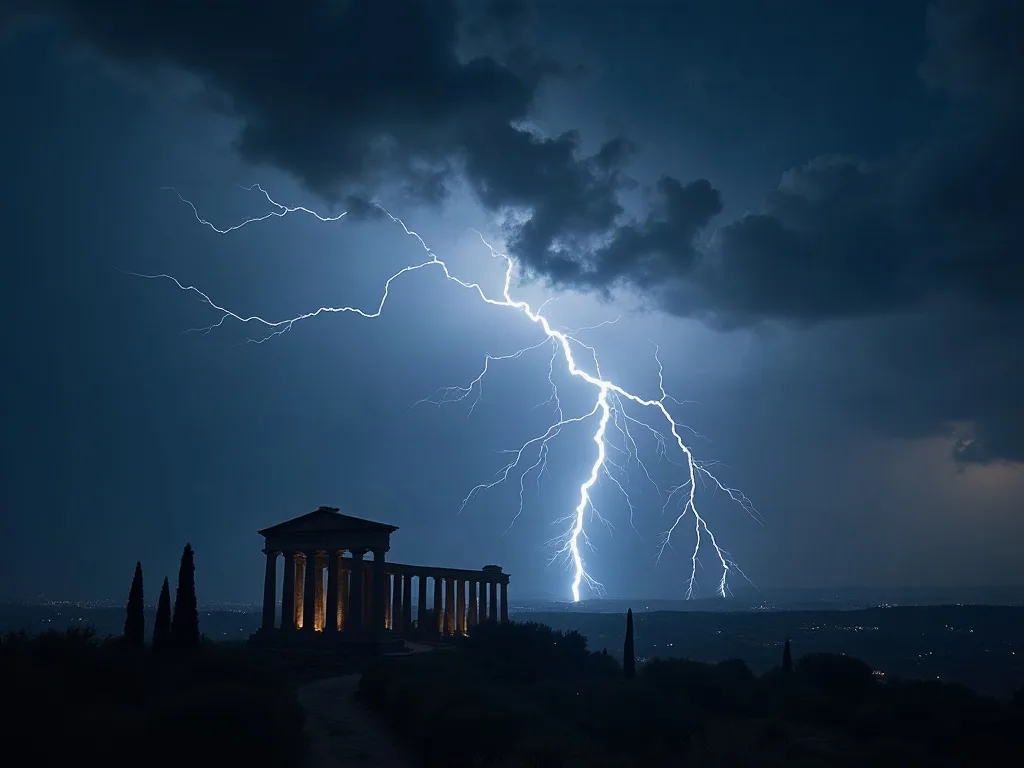
The Etruscan Disciplina gave special attention to lightning. The Etruscans saw lightning not as mere weather but as divine language. The gods hurled thunderbolts to communicate, and only trained priests could interpret their meaning.
The system was extraordinarily detailed. Lightning was divided into nine classes based on brightness, trajectory, and accompanying thunder. There were six regions of the sky from which lightning could come, each with different significance. Lightning from the north meant something different from lightning from the south. Morning lightning had a different meaning than evening lightning.
The fulguratores (lightning interpreters) memorized all these correspondences from texts that laid out the system with precision. A strike that fell to the left of an observer's position meant something different from a strike to the right. A lightning bolt that appeared alone had a different interpretation than one accompanied by multiple bolts. The timing mattered: how long after the lightning did the thunder come?
This elaborate system influenced Roman thought as well. Roman generals would sometimes postpone battles if the lightning omens seemed unfavorable. Cicero, in his philosophical writings, discussed the logic of Etruscan lightning interpretation, noting that it assumed a rational, communicative universe where the gods sent precise messages to those trained enough to read them.
The Priestly Hierarchy and Knowledge Transmission
The Disciplina could only function because the Etruscans had created a structured priesthood dedicated to its transmission. The highest rank was the haruspex, who specialized in entrail reading. Below them were the augurs, trained in bird observation and sky reading. Other priests handled specific rituals or temples.
Training was rigorous and long. A young man chosen for the priesthood would be apprenticed to a senior priest, often within his own family, since the priesthood was in part hereditary. The apprentice would memorize vast sections of the Libri Haruspicini, learning to recognize every marking, every color variation, every possible pattern in an animal's liver. He would stand in open fields for hours, learning to watch the sky the way a musician learns to hear intervals. He would practice the ritual words and gestures until they became automatic.
This system of training created a kind of technological conservatism. Because knowledge was passed mouth-to-mouth from master to apprentice, variations creep in over time. But the texts themselves, written in a compact, technical Etruscan language, served as the anchor. A priest could always return to the sacred books to verify a procedure or resolve a dispute about interpretation.
The Etruscans also exchanged priests among cities. A haruspex from Tarquinia might travel to Volterra to train local priests or to help resolve a particularly significant omen. This movement of specialists helped standardize practice across the Etruscan city-states and reinforced a sense of shared religious identity.
Transmission to Rome and the Later World
The Roman conquest of Etruria did not destroy the Disciplina. Instead, Rome absorbed it. As Roman power grew, Roman magistrates and generals increasingly consulted Etruscan haruspices. By the late Republic, Etruscan divination techniques had become so integrated into Roman religious practice that many Romans thought of them as ancient Roman traditions rather than Etruscan imports.
The Roman army, in particular, adopted haruspicy wholesale. Before major battles, the commanding general would have an animal sacrificed and its liver read. Victory or defeat could depend on whether the omens were favorable. Livy records numerous instances where Roman generals delayed campaigns or changed strategy based on unfavorable livers. This was not superstition in the Roman mind; it was military protocol, as essential as surveying terrain or checking supplies.
The Libri Augurales also passed into Roman hands. Roman augurs, the highest religious officials in the Republic, studied Etruscan texts and modeled their practice on Etruscan methods. Cicero, himself a Roman augur, refers to these sources explicitly in his writings on divination. The Roman state employed official haruspices, and families of Etruscan haruspices became wealthy and prestigious at Rome.
The system persisted even into the Imperial period. Augustus, the first emperor, was particularly committed to Etruscan religious practices. He reorganized the college of haruspices, strengthening their official position. Later emperors, including Claudius, showed deep interest in Etruscan lore. Claudius actually wrote a book on Etruscan history and religion, drawing on the very texts and traditions we are discussing.
After the rise of Christianity, the Disciplina gradually faded from active practice. Christian doctrine rejected divination as paganism. Yet the texts themselves were preserved, often in fragmentary form, in the writings of Roman authors who quoted them. We know about the Disciplina largely because Livy, Cicero, Pliny, and other Roman writers cited it, discussed it, and preserved accounts of its teachings. These quotations are our window into a system that was lost to direct observation when the last trained haruspices died and the old priesthoods disbanded.
The Disciplina and Modern Understanding
Scholars have long debated what the original Etruscan texts actually contained and how much was added or altered by Roman sources quoting them. We do not have any complete, unambiguous Etruscan sacred text that survives to the modern day. What we have are fragments: references in Roman literature, descriptions of procedures, mentions of specific interpretations.
This fragmentary nature means that reconstructing the Disciplina requires careful work. Scholars cross-reference Roman accounts, examine Etruscan inscriptions that mention religious practices, and study the archaeological record of temples and ritual sites. The picture that emerges is coherent but incomplete. We can see the outline; we cannot see every detail.
One major scholarly debate concerns the relationship between Etruscan and Roman divination practices. How much did the Romans borrow directly from the Etruscans, and how much did they adapt and transform? Most scholars agree that the core techniques, particularly haruspicy and bird augury, were genuinely Etruscan in origin. The Romans adopted them, then developed their own variations. But the fundamental framework, the codified system of interpretation, came from the Etruscans.
Another debate concerns the role of the written Disciplina versus oral tradition. The Etruscans clearly had written sacred texts. But how much of the system existed in writing, and how much was transmitted orally? It appears that the basic frameworks (the nine classes of lightning, the sixteen divisions of the sky, the regions of the liver) were written down. But much of the practical knowledge, the feel for reading a liver or watching birds, remained oral and embodied. A written text could tell you that an eagle flying from the north meant something specific. But it could not teach you how to become sensitive to the subtleties of what you were observing.
Frequently asked questions about the Etruscan Disciplina
Frequently asked questions
Did the Etruscans actually believe the Tages legend, or was it purely mythological?
The Etruscans treated the Tages story as sacred origin history, not as literal truth. It functioned similarly to how religions explain why their practices are authoritative. The story gave the Disciplina a divine pedigree, justifying the priesthood's power to interpret the will of the gods. Whether individual Etruscans believed Tages literally emerged from a field matters less than recognizing that the story served a crucial cultural function: it made the elaborate system of divination seem not invented but revealed.
How much of Roman religion was directly taken from the Etruscan Disciplina?
Haruspicy and bird augury were adopted wholesale. Roman magistrates and generals used Etruscan-style divination almost from the moment Rome began to expand into Etruscan territory. The Roman state formally recognized the college of haruspices and gave them official status. However, the Romans adapted these techniques to suit their own religious worldview. Roman gods had different names and attributes than Etruscan ones. So while the method of divination remained Etruscan, the content and interpretation shifted over time.
What was a haruspex trained to see in an animal's liver?
A haruspex examined the liver's color (healthy animals had specific coloration), its texture, its size, and its natural grooves and markings. The liver was mentally divided into regions, each associated with a particular deity or category of fate. A smooth, unblemished liver was generally favorable. A diseased or unusually marked liver was read as a warning or refusal from the gods. The haruspex needed to recognize hundreds of possible patterns and know their meanings from the Libri Haruspicini.
Why did the Etruscans believe lightning carried divine messages?
The Etruscans lived in a society where human and divine orders were seen as intimately connected. A lightning strike was dramatic, sudden, and beyond human control, making it an ideal medium for divine communication. The sky itself was understood as divided into regions ruled by specific gods. When lightning appeared, the priest did not interpret it as random natural phenomena but as a god hurling a deliberately aimed message. This worldview is common across ancient Mediterranean religions.
Are any original Etruscan Disciplina texts still in existence?
No complete Etruscan sacred texts survive intact. What remains are scattered Etruscan inscriptions mentioning religious practices, plus the accounts preserved in Roman literature where authors like Livy and Cicero quoted or paraphrased the Disciplina. Scholars piece together what they can from these sources, but the loss of the original Etruscan texts means our understanding will always remain partial and dependent on how Rome chose to transmit and interpret Etruscan knowledge.
The Disciplina as a Cosmic Manual
At its deepest level, the Etruscan Disciplina was a manual for maintaining cosmic order. The Etruscans believed the universe operated according to laws that could be learned and followed. The gods had established these laws and had revealed them to humans through the mouth of Tages. A priest who mastered the Disciplina was not performing magic or guessing at the future. He was reading the inherent logic of the cosmos. He was doing what the gods intended for humans to do: keeping themselves in harmony with the divine order by learning to listen, to observe, and to interpret.
This way of thinking had enormous influence on later Western culture. The idea that divine intent can be read in nature, that observation and rational interpretation can unlock hidden meanings, that a trained expert can stand between the human and divine worlds and translate between them, all of this entered Western thought partly through the Etruscan Disciplina's transmission to Rome and then to later European philosophy and theology.
The Etruscans themselves vanished as a distinct civilization by the 1st century BC, absorbed into Rome. Their language went silent. Their temples fell into disrepair. But the Disciplina's core insight persisted: that the sacred is not arbitrary, but structured; that it can be studied, taught, and transmitted; that knowledge, not intuition alone, unlocks the divine will. For this reason alone, the Etruscan Disciplina deserves to be remembered not as a curious artifact of the ancient world, but as a formative influence on how Western civilization learned to think about authority, knowledge, and the sacred.
Read the full book
Want the whole story?
The complete edition is an instant PDF download here, with a paperback on Amazon for selected titles.
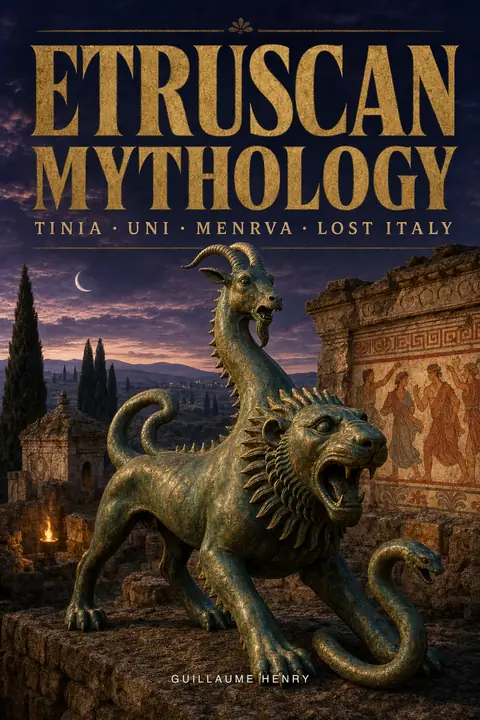
Etruscan
The Etruscan Mythology Book: Tinia, Uni, Menrva, and the Lost Religion of Italy
Tinia, Uni, Menrva, and Lost Italy
Before Rome, Italy belonged to the Etruscans: a people who read the future in lightning and livers, buried their dead in painted cities, and whose gods Rome quietly adopted. A mythology recovered from tombs, bronze mirrors, and the discipline of the haruspex.
More from Etruscan
All articles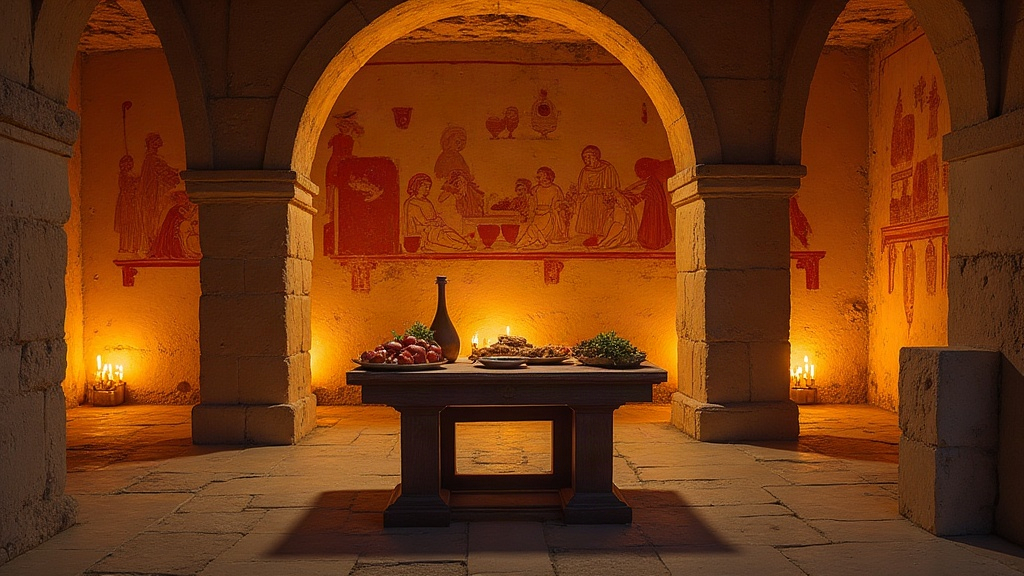
Etruscan
Etruscan Tomb Banquets: Feasting with the Dead
In Etruscan tombs, the dead reclined at eternal banquets. Through painted walls and grave goods, archaeologists recover a ritual that bound living and dead in a single meal. Discover how the Etruscans fed their ancestors and what it reveals about their afterlife beliefs.
Etruscan
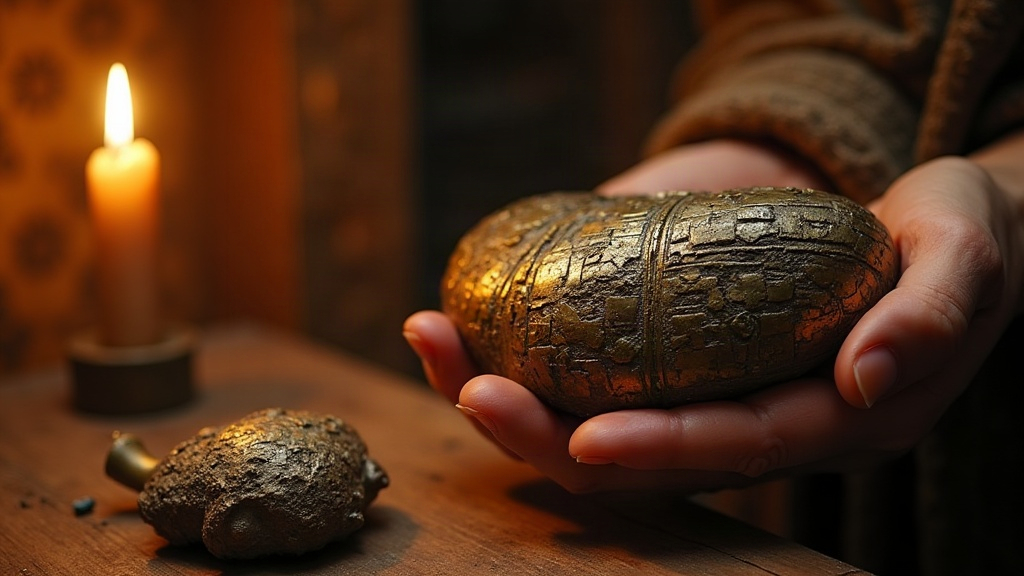
The Liver of Piacenza: Bronze Divination Model of the Etruscans
Discover how the Etruscan priests read fate itself: the Liver of Piacenza is a bronze model showing exactly where to look on a real liver for messages from the gods. It reveals the ancient art of haruspicy in bronze.
Etruscan
Tages: The Divine Child Prophet of Etruscan Divination
A child emerged from the earth to teach an Etruscan farmer the art of reading divine will. Tages, the Divine Child Prophet, became the source of all Etruscan divination knowledge, a figure so powerful that Roman priests carried his teachings for centuries.
Etruscan
Vanth: Etruscan Winged Death Goddess
Meet Vanth, the Etruscan winged death goddess who guarded the threshold between life and the underworld. Discover how this fierce divine figure shaped Etruscan beliefs about mortality, judgment, and the afterlife.