
Tages: The Divine Child Prophet of Etruscan Divination
A child emerged from the earth to teach an Etruscan farmer the art of reading divine will. Tages, the Divine Child Prophet, became the source of all Etruscan divination knowledge, a figure so powerful that Roman priests carried his teachings for centuries.
Contents
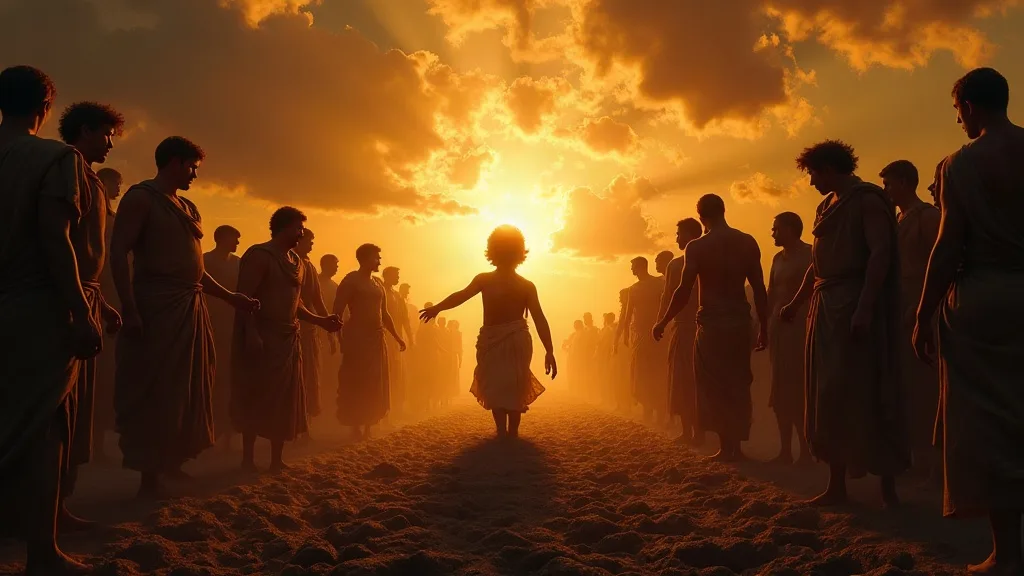
A plow cuts into the field. The earth trembles. From the turned soil rises a child, gleaming with light, speaking with perfect clarity. He is neither wholly mortal nor wholly divine. Around him, farmers drop to their knees. He begins to teach them the language of the gods.
This is not a tale of distant legend. For the Etruscan people, who dominated central Italy from the eighth century BC until Rome's rise, Tages: The Divine Child Prophet was a historical fact woven into the fabric of their religion. He taught them to read the flight of birds, to interpret the entrails of sacrificed animals, to understand lightning strikes as divine messages. Every diviner who would later guide Roman emperors traced his craft back to this impossible child who rose from an Etruscan field.
Yet today, Tages is nearly forgotten. His name survives only in fragments, preserved by Roman authors who recorded Etruscan practices but rarely bothered to explain them. To understand who he was, we must piece together the scattered sources and step into a world where the boundary between earth and heaven was paper-thin.
The Birth from Earth: Where Tages Came From
The story of Tages begins with a plow. The Roman historian Ovid, writing centuries after Etruscan civilization's height, recorded the tale as it had been passed down. A farmer named Tarchon (or sometimes unnamed) was working his fields when something impossible happened. The ground heaved. The soil split open. From the furrow rose a child with the wisdom of ages burning in his eyes.
Livy, Rome's greatest historian, gives us another version. The child emerged during a plowing expedition led by Tarchon, a legendary figure the Etruscans claimed as their civilization's founder. The workers stood frozen. The child, impossibly ancient despite his infant body, began to speak.
But who was this child, really? The Etruscans did not hesitate to answer: Tages was the grandson of Tinia, their chief god, and the reincarnation of a previous child prophet. His birth from the earth itself marked him as no ordinary messenger. He was not sent down from heaven like a Hebrew prophet, nor did he descend from Olympus like a Greek deity. Instead, he emerged from the fertile earth of Etruria itself, as if the land itself had chosen to speak through him. This detail matters. For a people dependent on agriculture, on reading signs in the natural world, having a prophet born from the soil meant that divination was not alien knowledge imposed from outside. It was inherent to the land, present in the very ground beneath their feet.
The ancient sources do not describe Tages' appearance in great detail. He was a child, radiant with authority. Some accounts suggest he was an old man in a child's body, a being of compressed ages. One thing was clear: he did not remain in the world for long.
The Teaching and the Libri Tagetici
Tages did not preach. He taught. And what he taught was haruspicy (the reading of animal entrails), augury (the interpretation of bird flight), lightning divination, and the broader system of reading divine messages that became central to Etruscan religion and later to Roman state religion.
The Etruscans recorded Tages' teachings in sacred texts called the Libri Tagetici, or Books of Tages. These were not philosophical treatises. They were manuals of practice. How to stand when reading the sky. How to divide a sacrificial victim. Which organs held the truest messages. What the flight pattern of an eagle meant. What the direction of lightning revealed about the gods' intentions.
Livy tells us that after Tages finished teaching, he vanished. He returned to the earth as suddenly as he had left it. The farmers were left with knowledge, but not with Tages himself.
The Libri Tagetici became the foundation of all Etruscan divination. They were not the product of human reasoning or accumulated observation, though they certainly reflected both. They were divine revelation, direct instruction from a god. This gave Etruscan divination an authority that no merely human practice could match. When an Etruscan haruspex read the liver of a sacrificed sheep, he was not exercising skill developed through experience. He was applying the sacred teachings of Tages, channeling knowledge given by one who had sat at the feet of Tinia himself.
We know the Libri Tagetici existed because Roman authors reference them centuries later. The Etruscans guarded these texts jealously. Rome, as it conquered Etruria and absorbed its religious practices, also absorbed access to these sacred books. When Roman emperors needed to know the will of the gods, they consulted priests trained in Tages' methods.
The Etruscan System of Divination: Reading the Divine Will
To grasp Tages' importance, we must understand what the Etruscans believed about divination. They did not see it as fortune-telling in the modern sense. Divination was theology in action. The gods were constantly communicating. Signs appeared in the flight of birds, in the pattern of lightning, in the organs of sacrificed animals. A trained diviner could read these messages the way a scholar reads a text.
The Etruscans divided divination into three main categories. Augury observed the flight of birds and the behavior of animals. Haruspicy focused on the entrails of sacrifice victims, particularly the liver. Lightning divination interpreted where and how lightning struck, what patterns it made, what it might mean.
Tages' teachings covered all three, but haruspicy became especially associated with his name. The liver, the Etruscans believed, was a mirror of the cosmic order. Its shape, its color, its texture, any unusual marking or defect (called a vitium) all conveyed information. A haruspex trained in Tages' methods could spend hours examining a sheep's liver, seeing in its form the intentions of the gods.
This was not superstition from the Etruscan perspective. It was science, a systematic method of inquiry into reality. It required training, memory, pattern recognition. It required respect. A haruspex who consulted the entrails carelessly, who rushed through the ritual, who failed to follow Tages' precise teachings, would receive corrupted messages.
Tages and the Transfer to Rome
By the fifth century BC, Rome was a rising power in the Italian peninsula. As it expanded militarily and culturally, it encountered Etruscan civilization in full bloom. The Romans were pragmatic. When they saw that the Etruscans' method of divination actually worked (or at least, appeared to give reliable guidance), they did not dismiss it as foreign superstition. They adopted it.
The haruspices became one of Rome's most important religious institutions. These were professional diviners, many of them Etruscan-born or trained by Etruscans, who guided decisions of state. Before a general led an army into battle, a haruspex examined the entrails of a victim. Before the Senate voted on a major law, the auspices were taken. Before an emperor made a crucial decision, he consulted the diviners.
All of this traced back to Tages. When a Roman general stood on the edge of a battlefield and a haruspex knelt beside him, inspecting a victim's liver, he was following instructions given thousands of years earlier by a child who rose from the earth.
What made Rome's adoption of Tages' teachings so complete was Rome's religious pragmatism. The Romans did not care that Tages was Etruscan or that he had allegedly spoken in a field centuries before Rome was founded. What mattered was that his methods worked, that they provided a system for reading the gods' will, that they could be taught and standardized. Rome took Etruscan divination, incorporated it into state religion, and for the next five hundred years, the Libri Tagetici guided some of history's most powerful decisions.
The Prophet and the Prodigies: Tages in Comparative Mythology
Was Tages unique? Not entirely. Across ancient cultures, the figure of the child prophet or the being born from unusual circumstances appears with surprising regularity. These figures share a pattern: they are not of ordinary birth, they possess knowledge beyond their age, they serve as conduits between the human and divine realms.
In Greek mythology, Tiresias emerged as a similar figure, though through a different mechanism. Tiresias was a blind prophet whose wisdom was prized above wealth, whose counsel shaped the fates of Thebes. Like Tages, he did not simply predict the future; he taught others to read the will of the gods. But where Tiresias gained his power through a curse (turned into a woman, then back into a man), Tages simply existed as inherent knowledge made flesh.
The Hindu tradition offers a closer parallel in Dattatreya, a guru-deity born as an avatar carrying cosmic knowledge. Dattatreya appears in the Puranas as a being who moves between worlds, teaching seekers the nature of reality. Like Tages, Dattatreya is associated with direct transmission of knowledge, instruction rather than prediction.
Even in Mesoamerican mythology, we find echoes: Quetzalcoatl as the feathered serpent god who taught the Toltec arts of civilization. These figures share a common structure: they arrive, they teach, they vanish or transform. They are not rulers but instructors, not warriors but guides.
What distinguishes Tages is the specificity of his teaching and the institutional permanence it created. Quetzalcoatl taught culture, civilization, the arts. Tiresias offered prophecy and counsel. But Tages taught a systematic method, a repeatable practice that could be standardized and transmitted. That is why he shaped not just a myth but a profession, not just a legend but an institution that outlasted the civilization that created him.
The Decline and the Rediscovery
Etruscan civilization fell to Rome gradually, over centuries. By the time of Christ, Etruria was no longer an independent power. Its cities were Roman. Its people were Roman citizens. Its language was dying, preserved only in religious contexts and in the minds of older priests.
Yet the Libri Tagetici did not disappear. They survived, passed hand to hand among the haruspices, consulted by emperors, studied by priests. When Augustus ruled Rome, he relied on Etruscan divination. The emperors Tiberius and Claudius both held Etruscan augury in high regard.
But as Christianity spread through the Roman Empire, divination by entrails came to be seen as pagan superstition. The haruspices were eventually forbidden by Christian emperors. The Libri Tagetici ceased to be living texts, consulted by functioning priests, and became antiquities, references in the writings of dead authors.
What we know of Tages today comes almost entirely from Roman and Greek writers who recorded Etruscan practices: Livy, Ovid, Cicero, and later commentators like the Neoplatonist Porphyry. None of these writers were Etruscan. None had direct access to Tages' teachings. They recorded what they had heard, what they remembered of a civilization that was already fading into history.
In the Renaissance, scholars became fascinated with the Etruscans. Tages appeared in Renaissance magic and occultism, invoked as a source of hidden knowledge. The Libri Tagetici became legendary texts, rumored to contain secrets of divination that moderns could barely glimpse. But this was mostly fantasy. The actual texts were lost. What remained was the name, the story, the echo.
Today, Tages is known primarily to classicists and students of Etruscan religion. He does not appear in general accounts of ancient mythology. Yet in his obscurity lies something worth noting: a prophet whose teachings shaped the decisions of one of history's greatest empires, whose methods were used to guide wars and emperors, has been almost entirely forgotten by the modern world that inherited Rome's legacy.
Tages in the Occult and Esoteric Tradition
After the fall of Rome and the Christianization of Europe, Tages did not vanish entirely. He reemerged, transformed, in the hidden corners of Western occultism.
Medieval and Renaissance scholars, fascinated by Neoplatonism and classical learning, preserved the stories of Tages in their texts. The mysterious child became a figure of esoteric wisdom, an example of divine knowledge transmitted directly to humankind. Occultists and magicians claimed to be rediscovering or reconstructing the Libri Tagetici. These reconstructions were largely imaginative, but they kept the name alive.
Marsilio Ficino, the fifteenth-century Florentine philosopher who translated Plato and worked to synthesize Christian theology with pagan wisdom, may have encountered Tages in his studies. Certainly, by Ficino's time, Tages was known to educated Europeans as a symbol of magical knowledge transmitted from the divine to the human realm.
This occult tradition was, in many ways, a misreading of what Tages actually represented. The historical Tages was not a magician or a revealer of hidden mysteries. He was a diviner, a priest, a teacher of a systematic religious practice. But the Renaissance hunger for lost knowledge transformed him into something more mythical, more mysterious. In a sense, it gave Tages a second life, thousands of years after his first civilization had fallen.
Frequently Asked Questions About Tages and Etruscan Divination
Frequently asked questions
Was Tages a real historical person or purely mythological?
Tages was almost certainly mythological in origin, though he may have been inspired by a real Etruscan religious figure or sage. The story of his emergence from the earth and his transmission of divine knowledge has the structure of sacred myth. However, the Libri Tagetici texts were real; the Etruscans genuinely possessed written collections of divination teachings attributed to Tages. These texts were consulted by Roman priests for centuries, making Tages' teachings historically consequential even if Tages himself was not a historical person.
What did haruspicy actually involve, and how did Tages teach it?
Haruspicy was the practice of examining the entrails, especially the liver, of sacrificed animals to discern the will of the gods. The Libri Tagetici outlined which features of organs mattered (color, shape, presence of abnormalities), what they signified, and the proper rituals to perform. A trained haruspex would spend considerable time examining a victim, applying the detailed knowledge preserved in Tages' teachings. It was treated as a rigorous discipline, not casual guessing.
Did the Romans change Tages' teachings, or did they use them as the Etruscans had?
The Romans adopted Etruscan divination methods wholesale, including the Libri Tagetici. They maintained the basic structure and methods but integrated them into Roman state religion and Roman decision-making processes. Roman haruspices followed the same teachings as Etruscan ones, though over time the practices may have drifted. The Romans also added their own augural traditions alongside Tages' haruspicy, creating a layered system of divination.
How did Tages' teachings survive the fall of Etruscan civilization?
The Libri Tagetici survived because Rome adopted them. Even after Etruscan independence ended, the texts remained in use, consulted by professional haruspices, and guarded by priesthoods. As long as Rome performed haruspicy (until Christian emperors banned it), Tages' teachings had institutional support. They survived as references in the writings of Roman and Greek authors, even after the texts themselves were lost.
Why is Tages almost unknown today compared to figures like Apollo or Zeus?
Tages was central to Etruscan religion but lacked the mythological appeal of major Olympian gods. He did not star in heroic tales, did not have spectacular adventures, did not inspire epic poems. His domain (divination methodology) is more technical than dramatic. Also, Etruscan civilization was absorbed by Rome; the Etruscans have no direct descendants with a continuous cultural memory of their gods. The knowledge Tages represented became institutionalized in Rome but lost its cultural narrative.
The Prophet Forgotten and the Lessons Enduring
Tages emerges from the earth, teaches, vanishes. For centuries, his methods guide empires. Then his name is forgotten, his texts are lost, and he becomes a footnote in histories of antiquity. Yet the pattern he established, the idea that the divine will could be read, interpreted, systematized, shaped Western culture for a thousand years.
Today, archaeologists and scholars of Etruscans continue to uncover details of how their divination actually worked. New interpretations of bronze livers (objects inscribed with labels, apparently used as training tools for haruspices) reveal the sophistication of Etruscan religious practice. Ancient texts that mention Tages are reexamined for what they can teach us about a vanished civilization.
Tages was never widely worshipped as a god, and we have no temples known to be dedicated to him. But he was something perhaps more powerful: the source of a method, a system of knowledge that thousands of professional practitioners relied upon. In a world where the divine was everywhere, readable in every flight of a bird and every shadow cast by lightning, Tages was the one who taught humans to read. That is how a child born from earth became immortal, not in myth but in practice.
Read the full book
Want the whole story?
The complete edition is an instant PDF download here, with a paperback on Amazon for selected titles.
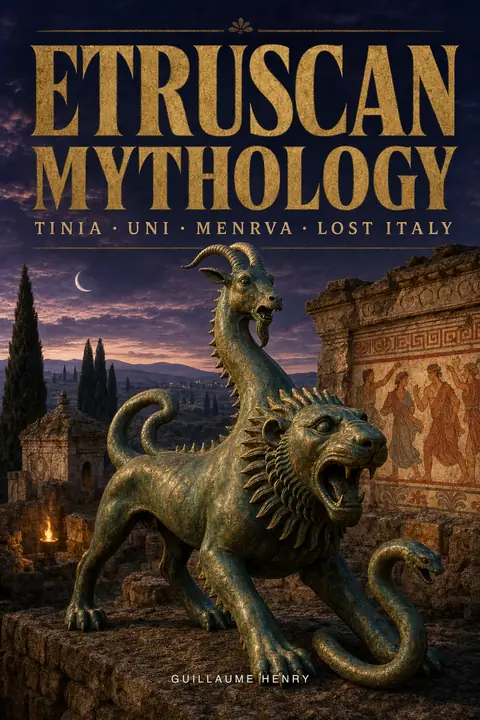
Etruscan
The Etruscan Mythology Book: Tinia, Uni, Menrva, and the Lost Religion of Italy
Tinia, Uni, Menrva, and Lost Italy
Before Rome, Italy belonged to the Etruscans: a people who read the future in lightning and livers, buried their dead in painted cities, and whose gods Rome quietly adopted. A mythology recovered from tombs, bronze mirrors, and the discipline of the haruspex.
More from Etruscan
All articles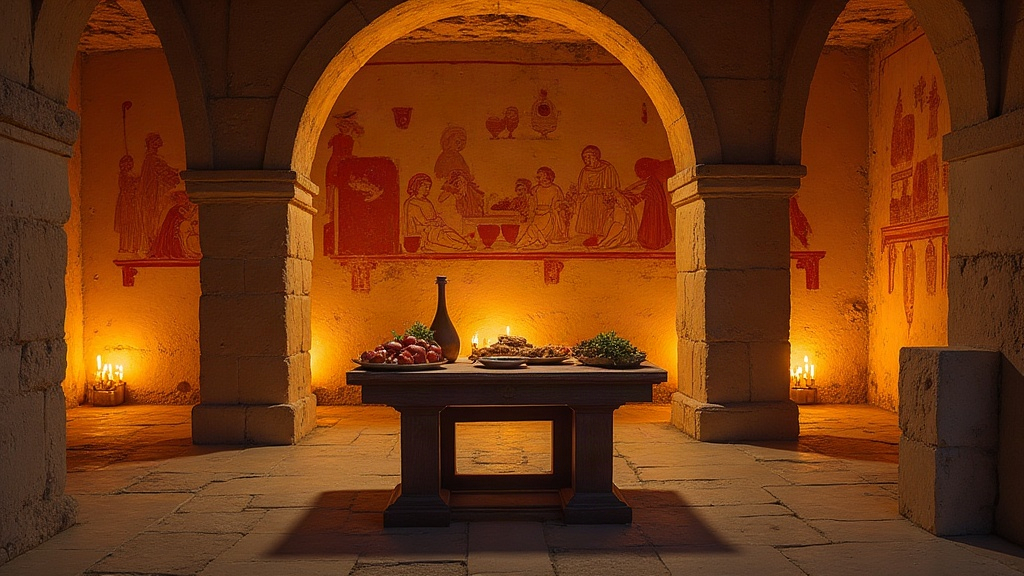
Etruscan
Etruscan Tomb Banquets: Feasting with the Dead
In Etruscan tombs, the dead reclined at eternal banquets. Through painted walls and grave goods, archaeologists recover a ritual that bound living and dead in a single meal. Discover how the Etruscans fed their ancestors and what it reveals about their afterlife beliefs.
Etruscan
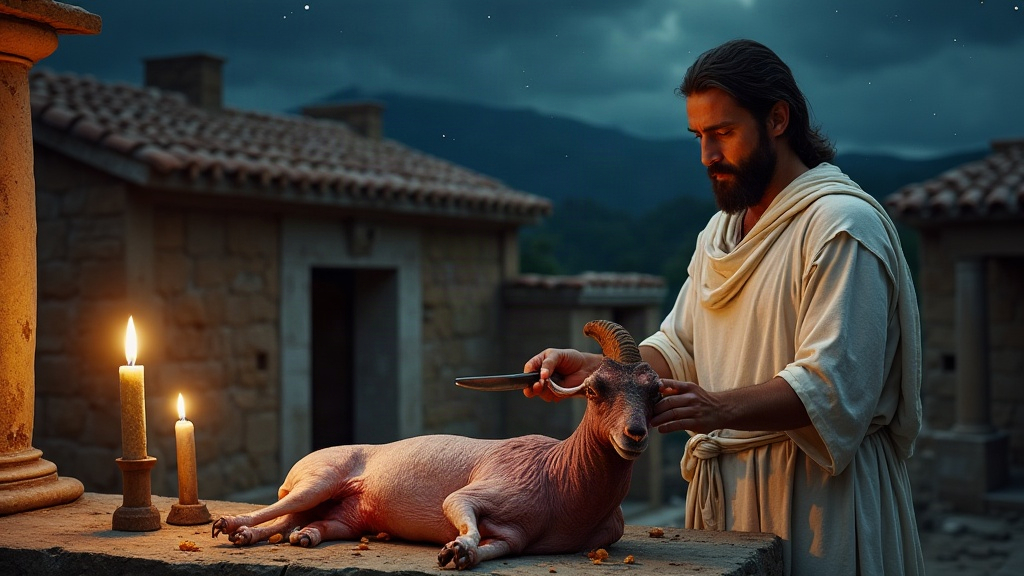
The Etruscan Disciplina: Sacred Books and Ritual Knowledge
The Etruscan Disciplina preserved the cosmos in ritual codes and sacred texts. Explore how haruspicy, augury, and divine protocol shaped an entire civilization and influenced Rome itself.
Etruscan
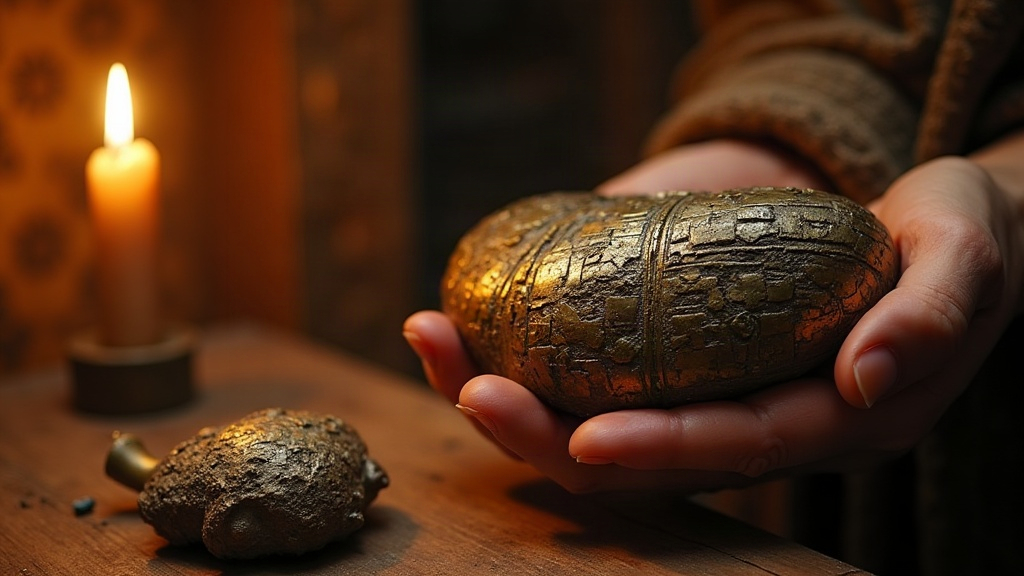
The Liver of Piacenza: Bronze Divination Model of the Etruscans
Discover how the Etruscan priests read fate itself: the Liver of Piacenza is a bronze model showing exactly where to look on a real liver for messages from the gods. It reveals the ancient art of haruspicy in bronze.
Etruscan
Vanth: Etruscan Winged Death Goddess
Meet Vanth, the Etruscan winged death goddess who guarded the threshold between life and the underworld. Discover how this fierce divine figure shaped Etruscan beliefs about mortality, judgment, and the afterlife.