

Mars: Roman God of War, Agriculture, and the Father of Rome
Mars was no mere god of bloodlust. The Roman war god fathered Romulus, blessed the harvest, and embodied the discipline that built an empire. Discover how Rome's greatest god shaped both sword and soil.
Contents
Mars thundered into Rome's foundation story not as a tyrant or a mindless killer, but as a father. He lay with the priestess Rhea Silvia in secret, and their union produced Romulus, the child who would build the eternal city. The Romans knew something the Greeks had missed: war itself could be sacred, disciplined, ordered. It could feed you. It could build civilizations.
The god of war was also, strangely, the god of agriculture. Roman farmers prayed to Mars before planting. Soldiers poured offerings of wine at his altars before marching. He was the force that carved order out of chaos, whether with a plow or a sword. Rome's greatest god was not a one-note deity; he was the sum of Roman ambition itself.
Who Was Mars in the Roman Pantheon?
Mars was the father of the Roman people, and Rome never let him forget it. Unlike Ares, the Greek god of war, whom Greek philosophers despised as a brute, Mars held a place of honor in Roman religion and politics. The god had no serious rivals in the Roman heart. Jupiter reigned as king, but Mars was Rome's protector, Rome's ancestor, Rome's genius.
The Romans traced their entire civilization to an act of divine favor. Mars chose a mortal priestess. That choice made Rome inevitable. Every time a Roman soldier buckled his armor, he was honoring his grandfather. Every harvest prayer was a family ritual. Mars was not separate from Rome; he was Rome's flesh and blood.
The god appeared in red: in the red plume of a centurion's helmet, in the rust color of old iron, in the sacred fires of March, his month. His animal was the horse and the wolf. The wolf was especially sacred, for it was a she-wolf, the Roman story goes, who nursed Romulus and his twin brother Remus in the wild after they were cast into the Tiber River. Mars's offspring had been abandoned by mortals. But Mars's other children, the beasts of the earth, saved them.
His temple in Rome stood in the Campus Martius, the Field of Mars, where the army trained and the people assembled. Soldiers made vows there before war. Young men became soldiers in his field. Generals laid down their military authority when they crossed the pomerium, the sacred boundary of the city, because Mars was the god of war and the wilderness, not of civic peace. To bring armed soldiers into the city proper was to risk Mars's fury.
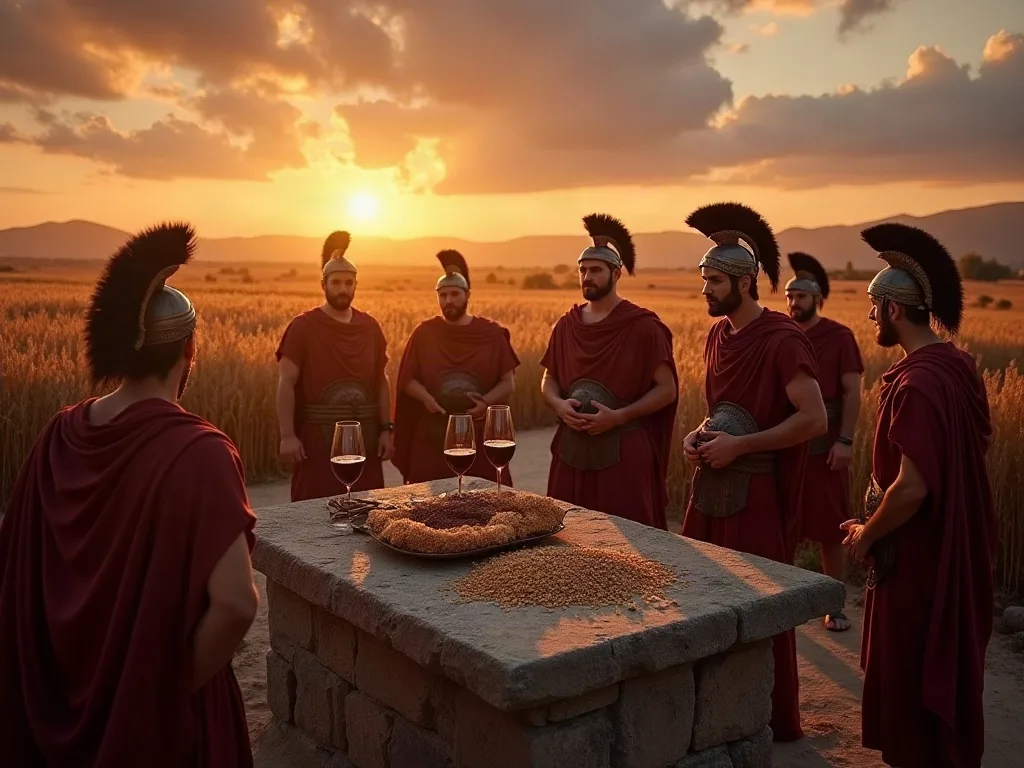
The Birth of Rome: Mars and Rhea Silvia
The story of Romulus's birth is the heart of Mars's significance in Roman culture. Rhea Silvia was a royal priestess, a Vestal Virgin, sworn to chastity. She had been forced into the priesthood by her uncle, who had seized her father's throne and wanted her out of the way. Trapped in the temple, she was utterly vulnerable.
One day as she went to fetch water, Mars came to her. The god appeared in the shrine of his temple, or sometimes in a sacred grove, and took her. Whether the Romans imagined this as rape or as a secret marriage was a matter of interpretation; the texts vary. What mattered was the result: Rhea Silvia became pregnant with twins.
When the usurper king discovered her condition, he ordered the newborns drowned in the Tiber River. But the river would not cooperate. The babies washed ashore in a sheltered spot, and a she-wolf found them. She nurtured them as if they were her own cubs. A shepherd named Faustulus discovered the twins later and raised them. The boys grew strong and fierce. They were Mars's sons, after all.
As adults, Romulus and his brother Remus learned their true parentage. They killed the usurper, restored their grandfather to the throne, and went off to found their own city. They built on the site where they had been saved, by the Tiber. But Remus mocked the walls Romulus was building, jumping over them in contempt. In a rage, Romulus killed his brother. The city that would become Rome was born in blood, in the shadow of Mars, with a god's own son playing both the victor and the victim.
Mars the Agricultural Deity
This is where Mars surprises modern readers. The Romans did not fence off their gods into single functions. Mars was not only the god of war; he was equally the protector of fields and livestock. In February and May, during planting and harvest seasons, farmers held festivals in his honor: the Lupercalia in February and the Floralia in spring. The name "Mars" may derive from Mavors or relate to Sanskrit mah, meaning "growth" or "increase." He was the force of increase itself.
Before soldiers marched, Roman commanders would consult the auspices, the signs given by birds and animals. But before farmers planted, they too offered prayers to Mars. The god who presided over war also blessed the granaries that fed the empire. A failed harvest was a failure of Mars. An abundant one was his gift. This was not unusual in ancient religions; Demeter, the Greek harvest goddess, had her own dark side, just as Mars had his productive one. But Rome integrated these aspects into a single powerful figure rather than splitting them across different deities.
The Lupercalia festival was especially tied to Mars's purifying function. Young men called Luperci, "the wolf men," would run through the streets of Rome wearing the skins of sacrificed animals, carrying whips made of goat hide. They would strike women they met, particularly women of childbearing age, believing that the touch of Mars's sacred whip would ensure fertility. It was wild, ritualistic, and deeply serious to the Romans. Mars was not being kind; he was restoring order to the world through sacred chaos.

The Cult of Mars: Priests, Rituals, and War
The Romans established an elaborate priesthood devoted to Mars. The Flamen Martialis, the priest of Mars, ranked among the most important religious officials in Rome. He could not attend the senate, could not leave Italy, and could not touch iron except for ritual purposes. His very restrictions showed how sacred and dangerous Mars's power was deemed.
Even more prominent were the Salii, the "jumping priests" or "dancers." They were 12 young men of noble birth who guarded the sacred shields of Mars, the Ancilia. According to tradition, the most important Ancile fell from heaven in the reign of the second king of Rome, Numa Pompilius. Numa, fearing that the shield would be stolen or lost, ordered 11 identical copies made so that no one could identify the true one. Every year at the beginning of March, the Salii would process through the city, singing ancient hymns, dancing, and leaping. The sound of the shields striking together was itself a form of prayer.
When Rome went to war, generals would perform elaborate rituals. They would approach Mars's temple and grasp the sacred spear, asking permission to take up arms. The spear itself was called a hasta, and it was treated as an extension of Mars himself. Soldiers carried pikes and javelins, yes, but the sacred spear of Mars in his temple was the true embodiment of divine authorization. Without that ritual contact, without that prayer, war was not legitimate. It was brigandage.
Before battle, generals would gather the troops and address them in the name of Mars. Soldiers would take oaths not just to their commander but to the god. The famous Roman discipline, the reason legions could achieve feats that seemed impossible against larger, wilder armies, came from this religious conviction. You were not fighting for a paycheck or even for your general. You were fighting for Mars. You were fighting for Rome. You were fighting for your place in a divine order.
Mars and the Triumph Ritual
The ultimate expression of Mars's power in Roman religion was the triumph. When a general returned home victorious, he was granted the rare honor of leading his entire army through the sacred boundary of the city and into Rome itself. Normally, a general had to lay down his military authority before crossing that boundary; armed soldiers were forbidden in the city proper. But a triumphant general, dressed in the regalia of Jupiter, rode in a chariot through the streets, his soldiers behind him.
The general would end the triumph at Mars's temple, outside the sacred boundary. There, the army would stand down. Weapons were laid aside. Mars released his grip on the soldiers, and they became civilians again. The ritual acknowledged that war was Mars's domain, not the city's. Rome had to maintain a boundary between the controlled chaos of Mars and the ordered peace of the city. Without that boundary, Rome would eat itself.
The triumph was also a moment of thanksgiving. Soldiers would parade in formation, singing bawdy songs that mocked their general and themselves. The priests would make offerings. War captives would be displayed, sometimes executed. The general would lead a select animal to Mars's altar and perform a sacrifice. The god had granted victory; the god was owed payment.
Mars and the Other Gods
Mars stood in a complex web of relationships with other gods. He was the son of Juno, the queen of heaven, and father of Romulus. He was allied with Minerva, the goddess of strategic warfare and wisdom, though Minerva represented the disciplined, intellectual side of war while Mars embodied its raw force. The two would sometimes clash in Roman myth; Mars might urge reckless violence while Minerva counseled prudence.
His most famous romantic entanglement was with Venus, the goddess of love. In Homer's Greek version of the myth (which the Romans adapted), Ares and Aphrodite are caught making love by Hephaestus, Aphrodite's husband, who traps them in an invisible net and exposes them to the ridicule of the other gods. The Romans told the same story, but with a crucial difference: they seemed less scandalized by it. Mars and Venus were partners in Roman imagination, just as war and love could coexist. Venus was the mother of Aeneas, the Trojan hero from whom the Julian family (including Julius Caesar and Augustus) claimed descent. So Mars and Venus together produced Rome's greatest bloodlines.
Mars in Roman Divination and Prophecy
The Romans relied heavily on auspices and augury to make decisions, and Mars was one of the most frequently consulted gods. A general would watch the flight of birds before battle. If the omens were unfavorable, Mars was said to be withholding his approval. An unfavorable omen could halt an entire military operation. This was not mere superstition; it was a way of building consensus and enforcing discipline. A general who ignored Mars's signs risked mutiny.
The Romans also observed the behavior of sacred chickens kept for divination. If the birds ate greedily, the omens were favorable; if they refused food, Mars was displeased. Before the Battle of Drepana in 249 BC, the consul Publius Claudius Pulcher asked to consult the auspices and was told the birds refused to eat. He famously declared, "If they won't eat, let them drink!" and threw the birds overboard into the sea. He then attacked anyway, ignoring Mars's warning. He lost catastrophically. The story was told for centuries as a lesson in what happens when you defy the god of war.
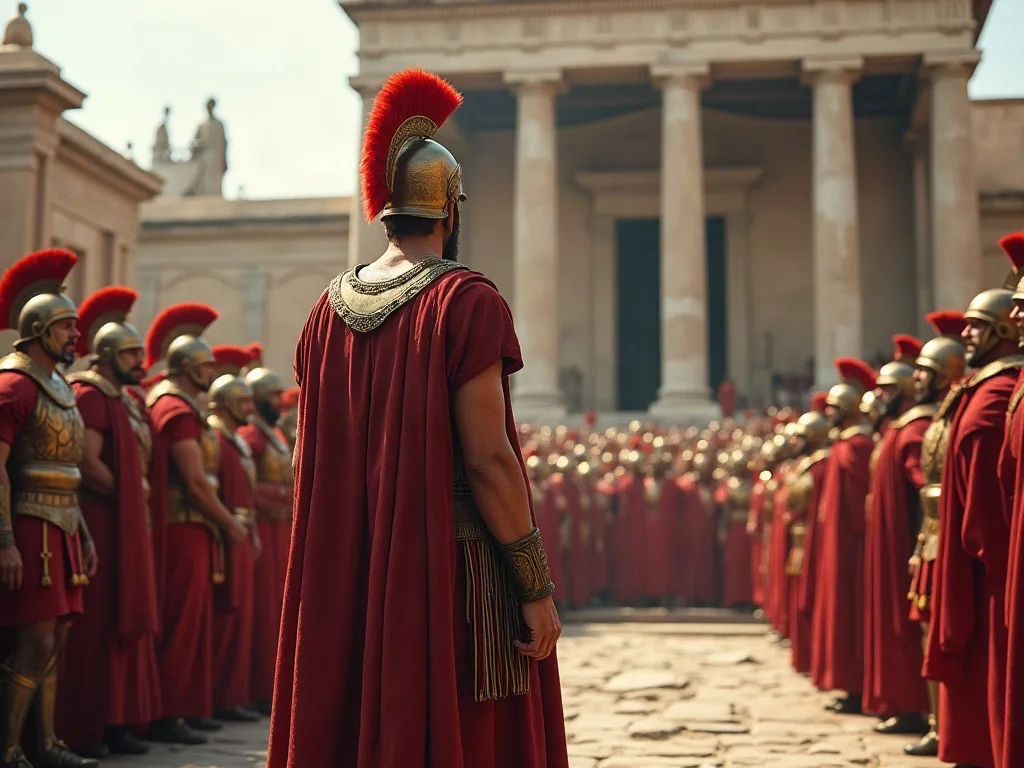
The Mars of Later Rome and the Empire
Under the emperors, Mars took on new resonance. Augustus, the first emperor, was extremely careful to emphasize his connections to Mars. He built the Altar of Peace, the Ara Pacis, partly in honor of Mars as a god of just war and ordered victory. Augustus's entire reign was justified as bringing an end to civil war, fulfilling Mars's desire for order. Even peace, the propaganda went, was Mars's gift.
Later emperors would claim descent from Mars through various genealogies, most claiming it via Venus and Aeneas. Vespasian, the conqueror of Judea, built temples to Mars. Military cohorts adopted Mars as their special patron; a cohort stationed in a particular region might make offerings to a local form of Mars, sometimes blending his identity with indigenous war gods in the provinces.
In the later empire, as Christianity spread, Mars gradually faded. There was no easy way to reframe him as a saint or merge him with Christian theology, unlike Jupiter, who could be reimagined as a distant, high god somewhat compatible with monotheism. Mars was too tied to pagan military culture. By the 4th and 5th centuries, his temples had fallen silent, and his priesthoods had disbanded. The Salii were gone. The sacred spears were lost.
Mars Across Cultures and Eras
The Romans were not the first people to have a god of war. Every culture that knew organized violence had one. But few cultures treated their war god with as much institutional respect as Rome did. The Greek Ares was brutal and stupid. The Norse Odin was cunning and magical. The Hindu Indra was a storm god first, a warrior second. Mars was something different: he was a god of order, discipline, and legitimate authority. He was the force that made the state possible.
This reflects something deep about Roman character. The Romans did not apologize for war, nor did they glorify it in an unthinking way. They saw it as a necessary expression of political will, something to be performed with ritual exactness and divine approval. To go to war without proper ritual, without consulting Mars's signs, was not just militarily risky; it was a religious crime. It was impiety.
Frequently Asked Questions about Mars, the Roman God of War
Frequently asked questions
Why was Mars also a god of agriculture if he was the god of war?
The Romans understood Mars as a god of growth and order in all forms. War was one expression of his power; agriculture was another. Both required discipline, timing, and divine favor. Plowing soil and plowing through enemies were parallel acts in the Roman imagination. The god who blessed the grain also blessed the soldier. This integration of seemingly opposite domains shows how sophisticated Roman theology was.
Did the Romans really believe Mars fathered Romulus?
Yes, the Romans treated the myth of Romulus and Remus and their divine parentage as their foundational history. Modern scholars debate whether this was literal belief or symbolic; it likely lay somewhere in between. What matters is that Romans consistently treated Mars as an ancestor, not just a distant deity. Prayer to Mars was also prayer to family. Every Roman citizen bore the blood of the god through Romulus.
How did Mars differ from the Greek god Ares?
Ares was chaotic, stupid, and disliked by other gods and mortals alike in Greek myth. Mars was ordered, wise, and central to Roman state power. The Greeks saw war as a necessary evil; the Romans saw it as a legitimate expression of divine will when performed correctly. Mars had a priesthood, elaborate rituals, and temples in every city. Ares had shrines, but not the same institutional weight. The difference reflects different political philosophies.
What happened to the cult of Mars after Rome fell?
As Christianity spread through the empire in the 4th and 5th centuries, pagan temples were closed and priesthoods disbanded. Mars, being purely pagan with no easy Christian equivalent, faded faster than gods like Jupiter or Neptune. His sacred sites became churches or fell into ruin. The Festival of Mars survived in some places as folklore, but organized worship ended. Some scholars suggest traces of Mars worship survived in European martial and agricultural traditions, but this is speculative.
Were the sacred shields of Mars (the Ancilia) real historical objects?
The Salii guarded shields called Ancilia for over a thousand years in Rome. Whether they were literally fallen from heaven is mythical, but the shields themselves were real, treated as sacred relics. Modern archaeology has not recovered any object confirmed as an Ancile, but ancient sources were consistent about their existence and importance. They were among the most sacred objects in Roman religion.
Mars in Modern Reception and Unresolved Questions
Mars has endured in Western consciousness in ways many Roman gods have not. The month of March and the planet Mars bear his name. He appears in art, literature, and science fiction as a symbol of military power, ambition, and conflict. But modern culture tends to resurrect the Greek Ares instead, the bloodthirsty brute, overlooking the Roman Mars entirely.
This is a loss. Mars teaches something important that Ares does not: that war, discipline, and ordered force are not inherently evil, but they require ritual containment. They require rules. They require priests. The triumph ritual, with its elaborate rules about who could carry weapons where, was a way of saying: we have war, but it has boundaries. Mars is not running wild; Mars is our ancestor and our servant.
One scholarly debate that remains unresolved is how much of Mars's agricultural function was genuinely ancient and how much was Roman reinterpretation of an older Italic deity. The name Mars may be pre-Latin, inherited from peoples who lived in Italy before Rome. Did those earlier peoples see Mars as a harvest god, or did Rome develop that aspect later? The Lupercalia festival, with its fertility elements, suggests deep roots, but scholars have not settled the question definitively. What is clear is that by historical times, Mars was fully integrated into the Roman religious and agricultural calendar.
Another unresolved question: to what degree did the Romans actually believe in the divinity of Mars and his parentage of Romulus, versus using the myth as political metaphor? Evidence suggests both were true, held simultaneously without tension. Modern minds often separate literal belief from symbolic meaning, but the Romans did not. Mars was real, Romulus was real, and the connection was real, all at the same time. Myth, history, and belief were woven together so thoroughly that untangling them may be impossible.
Free 25-page sample
Want the whole story?
Take the first 25 pages free. If it pulls you in, the full edition is yours as an instant PDF download, with a paperback on Amazon for selected titles.
Roman
The Roman Mythology Book: Jupiter, Mars, Venus, the Aeneid, and the Sacred Stories That Built an Empire
Jupiter, Mars, Venus, the Aeneid, and the Sacred Stories That Built an Empire
The complete guide to Roman mythology from Virgil's Aeneid to Ovid's Fasti. Every god, every founding myth, every Vestal rite.
More from Roman
All articles
Roman
Romulus and Remus: The Myth of Rome's Foundation
The twin sons of Mars raised by a she-wolf; a fratricide, a city, and an empire. How Rome's founding myth shaped the identity of Western civilization's greatest power.
Roman
Aeneas and the Founding of Rome: The Aeneid's Sacred Narrative
Virgil's Aeneas carries Troy's fate to Italy, writing Rome's origin in blood and duty. Discover how the Aeneid transformed a hero's journey into a nation's sacred story.

Roman
Venus: Goddess of Love and Ancestor of the Roman People
Venus was Rome's goddess of love, fertility, and military victory. But she was also the divine ancestor of the Roman people through her son Aeneas. Discover how this single goddess embodied Rome's most powerful myths about its own origins.

Roman
Juno: Queen of the Gods and Protector of Rome
Juno ruled the Roman pantheon as Jupiter's equal and Rome's divine guardian. Discover how this fierce goddess shaped the fate of an empire, from her role in the city's founding to her uncompromising protection of women and state.