
Aeneas and the Founding of Rome: The Aeneid's Sacred Narrative
Virgil's Aeneas carries Troy's fate to Italy, writing Rome's origin in blood and duty. Discover how the Aeneid transformed a hero's journey into a nation's sacred story.
Contents
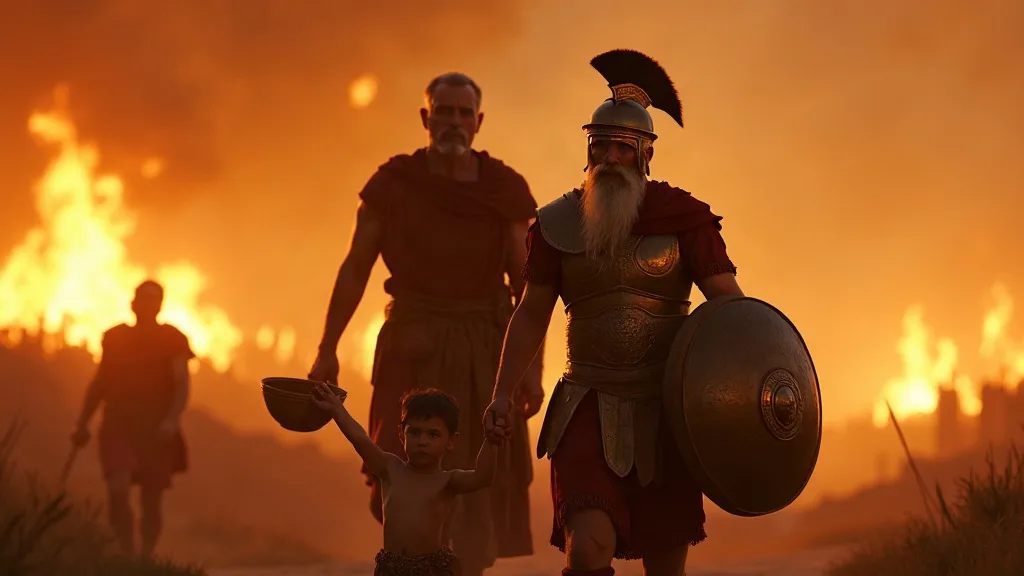
A man flees burning Troy with his elderly father on his shoulders and a small son by his hand. Behind him, the city collapses into flame. Ahead, he carries something heavier than his father's weight: the gods' demand that he build a new civilization on a distant shore. This is not a warrior's glory story. This is Aeneas, the Trojan hero of Virgil's Aeneid, and his journey becomes the founding of Rome itself.
Virgil, the greatest poet of ancient Rome, wrote the Aeneid around 29 BC, more than a thousand years after Troy's fall. He shaped his epic not just to tell a story, but to give Rome itself a sacred past. When readers opened his poem, they found themselves not in some distant mythical realm, but in the bloodline of their own empire. Aeneas was not invented by Virgil. The connection between Troy and Rome ran deep in Roman memory. But Virgil took that thread and wove it into the most consequential epic of the Western world.
Who Was Aeneas Before the Aeneid
Aeneas appears in Homer's Iliad, written eight centuries before Virgil. He is a Trojan prince, son of Aphrodite and the mortal Anchises. In Homer's account, he fights at Troy with valor but remains secondary to Achilles, Hector, and the greatest warriors. Homer tells us that Poseidon protects Aeneas from death in battle, whispering to him that his fate lies elsewhere. When Achilles chases him across the battlefield, the god himself lifts Aeneas to safety. Even then, Homer hints, Aeneas has a larger destiny.
Greek writers after Homer expanded his story. Some sources say Aeneas fled Troy before the city fell, angry at Priam's refusal to honor him fully. Others claimed he sailed west after the war ended. These fragments circulated through the Greek world for centuries. But the Romans took special interest. When they conquered Greece and absorbed Greek culture, they found in Aeneas something precious: a Trojan ancestor who proved Rome itself was not the upstart of the Mediterranean but the heir to Troy's ancient glory.
By the time Virgil wrote, the idea that Rome descended from Trojan survivors was already woven into Roman tradition. Augustus Caesar, Virgil's patron, claimed descent from Venus through Aeneas. The connection gave Rome both legitimacy and mythic weight. Virgil's task was to transform scattered legends into a unified, theologically coherent narrative that would rival Homer's Iliad and Odyssey combined.
The Journey: Twelve Books of Duty and Desire
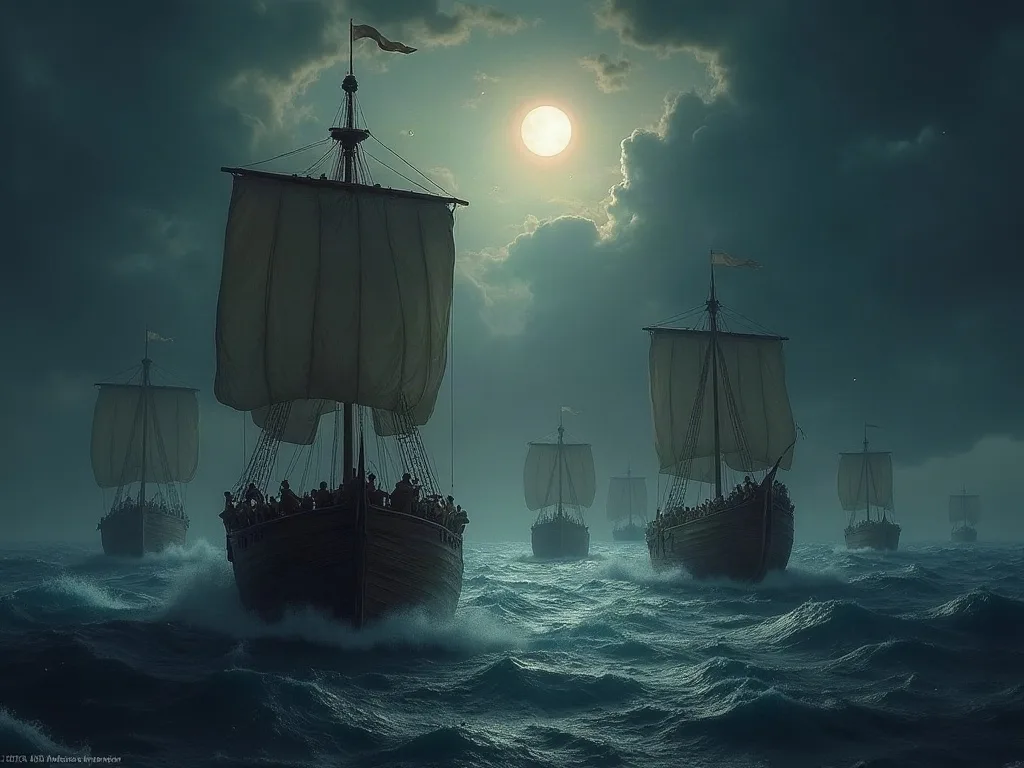
The Aeneid unfolds in two halves. The first six books follow Aeneas and his fleet as they escape Troy and sail toward Italy, much as Homer's Odyssey followed Odysseus homeward. The second six books chronicle his war in Italy and his struggle to establish Rome's foundations.
Aeneas leaves Troy not for conquest but for exile. When the city falls to the Greek wooden horse, he gathers survivors: his father Anchises, his young son Ascanius (also called Iulus), and a band of loyal Trojans. They flee with sacred objects from Troy's temples. The Penates, household gods of the Trojan royal line, travel with them. Aeneas does not choose this path. The gods demand it. His mother Aphrodite appears to him, and his father receives the command in a dream. Aeneas obeys not because he desires adventure, but because duty binds him.
The voyage mirrors the Odyssey's wanderings. Aeneas and his fleet are shipwrecked near Carthage, in North Africa. There they meet Dido, the Carthaginian queen, a widow building a new city. Dido and Aeneas fall in love. For the first time in the epic, Aeneas pauses. He forgets his divine mission. He builds a palace, shares feasts, and plans a life with Dido.
But the gods will not permit it. Mercury, messenger of the gods, appears to Aeneas in a dream and demands he abandon Dido and sail for Italy. The scene cuts to Aeneas's heart. He cannot speak the truth to Dido, cannot bear her face when he tells her he must leave. He simply goes in the night. Dido, betrayed and devastated, climbs a funeral pyre and kills herself, cursing Aeneas and his people. Her death echoes through Roman history: Carthage, Dido's city, will one day be Rome's greatest enemy. The founding of Rome, Virgil suggests, is born partly from abandonment and sorrow.
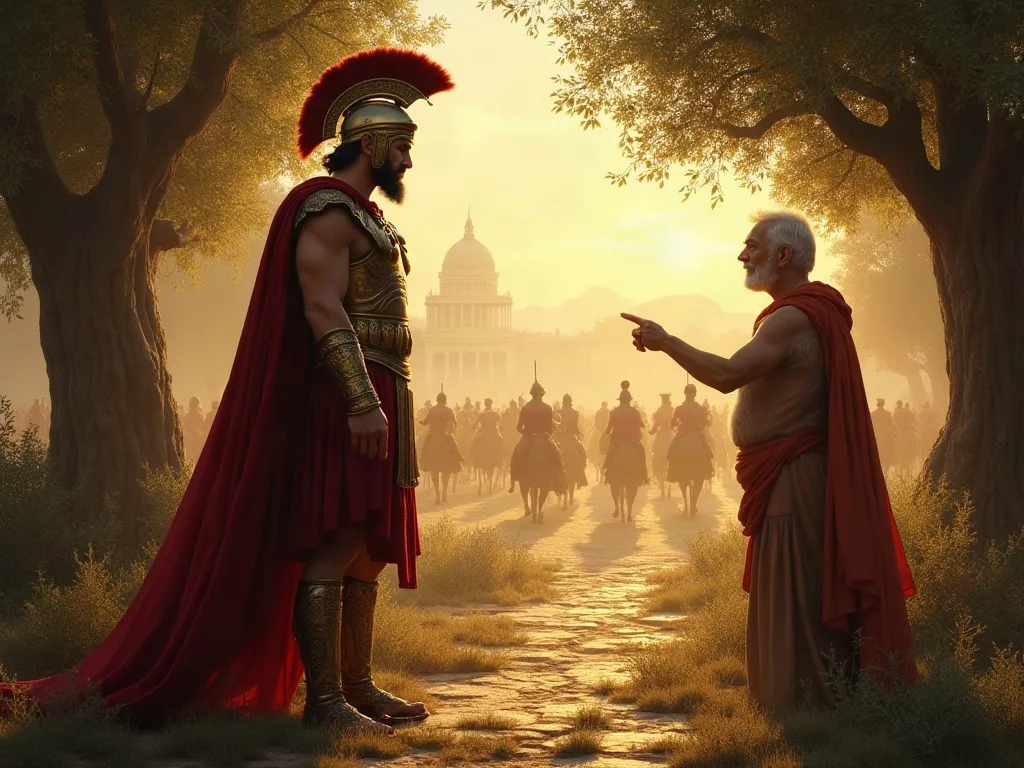
The fleet sails onward. Aeneas descends into the Underworld to meet the shade of his father Anchises. There, in a vision, Anchises shows Aeneas the future of Rome. He reveals the heroes who will descend from Aeneas, the kings who will rule, the great generals and emperors yet to come. He shows Augustus Caesar himself, who will bring peace after centuries of war. This is Virgil's greatest gift to Rome: not just an origin, but a purpose. Rome exists not by accident, but by divine will, to bring order to the world.
When Aeneas lands in Latium, the region where Rome will stand, he brings with him the burden of this foreknowledge. He knows what must be built. He knows the sacrifice it will cost.
The War for Italy and the Price of Empire
The second half of the Aeneid is bloodier, grittier, less romantic than the first. When Aeneas arrives in Latium, he is promised the hand of Lavinia, daughter of King Latinus, in marriage. But Lavinia is already betrothed to Turnus, a local warrior prince. Turnus refuses to yield. War erupts.
Turnus is not evil. He is noble, brave, and genuinely wronged by Aeneas's arrival. The Aeneid does not reduce him to a villain. Turnus fights for his homeland, his promised bride, his honor. When Aeneas defeats Turnus in final combat, it is not a moment of triumph but of tragedy. Aeneas slays him, but the victory tastes of loss. Rome is founded, but at the cost of a good man's life and a local kingdom's freedom.
This is Virgil's unflinching vision of empire: glory and sorrow are inseparable. Building a civilization requires sacrifice, displacement, and blood. The poem does not celebrate this. It acknowledges it.
The Aeneid in Roman Culture and Religion
For Romans, the Aeneid became something more than a poem. It was scripture. Schools required children to memorize passages. Soldiers carried it into battle. Emperors consulted it as an oracle, opening pages at random to divine meaning, much as people once read bird entrails.
Virgil elevated Aeneas into a national ancestor and a religious figure. By connecting Aeneas to Augustus Caesar, the poem suggested that Rome's current ruler was not just a political leader but the fulfillment of a thousand-year destiny. Augustus used the Aeneid deliberately. He had Virgil write it. He influenced its shape. The poem was propaganda, yes, but propaganda so artful and so true to Roman belief that it reshaped what Rome believed about itself.
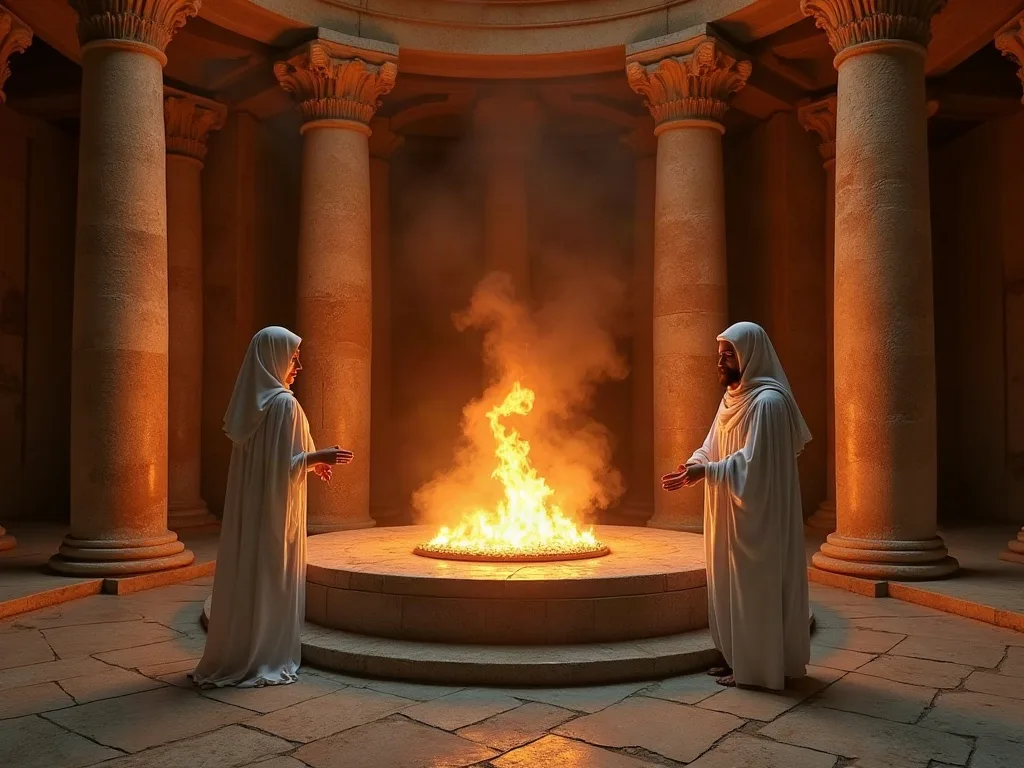
The Penates, the household gods Aeneas brought from Troy, became central to Roman religious life. Romans venerated them not as myth but as present reality. The sacred fire of Vesta, tended by Rome's most honored priestesses, was said to have come from Troy itself, carried by Aeneas. These gods and flames were not symbols. They were real presences in Rome's most sacred spaces.
Juno, the queen of the gods, plays a crucial role in the Aeneid. She despises the Trojans because she favored the Greeks in the Trojan War. Throughout the poem, she opposes Aeneas, stirring up storms, hardening hearts, prolonging his suffering. By the epic's end, she accepts Aeneas's destiny, but not before making his path as hard as stone. Romans understood this theology: the gods test mortals not out of cruelty, but to forge something worthy.
Duty Over Desire: Aeneas's Moral Core
What makes Aeneas a hero is not strength or cunning, though he possesses both. It is his willingness to sacrifice his own happiness for a greater good. He abandons Dido not because he stops loving her, but because his duty to build Rome is heavier than his desire for personal happiness. He goes to war not for glory but because the gods demand it and because his people need a home.
This is radically different from the Greek heroes Homer celebrated. Achilles fights for honor and undying fame. Odysseus fights to reclaim his wife and kingdom. But Aeneas fights for something abstract: the future of a people he will never fully know. He builds an empire and then fades from its history. His grandson Ascanius, also called Iulus, becomes the founder of Alba Longa, the city that precedes Rome by several generations. Rome itself arises only centuries after Aeneas's death. He will never see the city bear his name.
The Aeneid suggests that this is what greatness truly means: to labor for something beyond yourself, to endure loss, and to trust in a purpose larger than your own lifetime. This resonated with Roman values. Romans saw themselves as builders of empire, as people who worked for the state, as soldiers and statesmen who sacrificed personal desire for the collective good. Aeneas became the ideal Roman before Rome fully existed.
The Aeneid's Literary Genius and Influence
Virgil did not write the Aeneid quickly. He spent ten years on it, revising obsessively. Some sources say he was still making changes when he died in 19 BC. He wanted perfection because the stakes were so high. This poem carried Rome's self-understanding.
The Aeneid uses language with extraordinary precision. When Aeneas must leave Dido, Virgil writes not a dramatic scene of farewell but a gap: Aeneas goes at night, and we learn of Dido's death only later. The absence itself is the horror. The poem trusts the reader to feel the gravity of what is not shown.
Virgil also embedded prophecy throughout the epic. Characters speak with partial knowledge. Anchises reveals the future, but dimly. Juno fights against fate, but her efforts only delay the inevitable. This creates a constant tension: we know Rome will be founded, but we do not know the cost or the shape it will take. Suspense coexists with foreknowledge.
The poem's influence on Western literature is incalculable. Dante, writing nearly 1,500 years after Virgil, chose Virgil himself as his guide through the Underworld in the Divine Comedy. Dante understood that Virgil had shown Western civilization how to write an epic that merged history, mythology, theology, and human emotion. Every major Western epic after Virgil stands in his shadow.
The Aeneid also influenced how Rome understood its own history. Later Roman historians, writing the imperial narrative, drew on Virgil's framework. The connection between Aeneas, Ascanius, and the founding of Rome became fact in the Roman mind. That Aeneas likely never existed as a real historical person did not matter. He was real in Rome's consciousness, real in the rituals performed in his name, real in the values he embodied.
Competing Narratives: What Other Versions Say
Not all accounts of Rome's founding match Virgil's. The historian Livy, writing at nearly the same time, gives a more austere account. In Livy's narrative, Aeneas does arrive in Italy and establishes himself, but his son Ascanius, not Aeneas, founds the dynasty that leads to Rome. Lavinia bears Aeneas a son called Silvius, and from Silvius descends a line of kings called the Alban Kings. Only after thirteen generations does one of these kings, Numitor, father the twins Romulus and Remus, who actually found Rome.
This creates a gap in time. The Trojan War occurred, by most ancient reckonings, around 1200 BC. Rome's traditional founding date, celebrated as 753 BC, falls nearly 500 years later. How can Aeneas's direct descendants still be ruling so many generations on? Virgil's poem does not answer this directly. It assumes the reader accepts the genealogy as given.
Modern scholars debate whether any historical kernel of Troy's destruction and Trojan refugees reaching Italy exists. The ancient city of Troy was indeed destroyed multiple times. Around 1200 BC, Troy VIIa fell catastrophically, possibly in conflict. Some of this era's Mediterranean peoples did migrate after the Bronze Age collapse. It is plausible, though unproven, that some Trojan survivors settled in Italy and that this memory persisted in oral tradition.
But the precise lineage from Aeneas to Romulus is almost certainly invented or heavily mythologized. The Aeneid and other sources were written long after these supposed events, in an era when the distinction between history and legend was fluid. Romans needed an ancestor story, and they constructed one that honored both their Trojan past and the city's actual founding around 750 BC.
The Sacred Narrative's Purpose
Virgil's Aeneid was not meant to be literal history. It was meant to be true in a deeper sense. The poem answered Rome's deepest questions: Where do we come from? Why do we exist? What do the gods demand of us? What is the price of building a civilization?
The answers Virgil gave shaped Roman identity for centuries. Romans understood themselves as the heirs of Troy, as a people chosen by the gods to bring order to the world, as inheritors of a sacred flame brought from the East. When they conquered territories, they saw themselves not as invaders but as instruments of destiny. When they absorbed Greek culture, they did so as the rightful heirs, not imitators. Aeneas made all of this coherent.
The poem also offered a philosophy of duty. Aeneas does not question his orders. He leaves Dido, he accepts hardship, he builds a city he will not live to see. This was the ideal Roman virtue: pietas, a word that means duty, loyalty, and devotion to something larger than the self. For Romans, Aeneas embodied pietas perfectly. He was the ancestor they wanted to be.
Aeneas in Art, Literature, and Later Culture
After Virgil, Aeneas became a touchstone for writers exploring power, destiny, and sacrifice. Medieval authors, working in a Christian context, sometimes recast Aeneas as a figure prefiguring Christian virtue. His abandonment of Dido seemed like a renunciation of worldly pleasure for higher purpose. His descent into the Underworld paralleled Christ's harrowing of Hell. These interpretations were anachronistic, but they show how deeply Aeneas's story embedded itself in Western consciousness.
Visual artists painted Aeneas fleeing Troy, Aeneas with Dido, Aeneas and his father Anchises. These scenes appeared in frescoes, on coins, in manuscripts. The image of Aeneas carrying his father became iconic: an old man on the shoulders of a younger one, a symbol of continuity, of the past carried forward into the future.
In later literature, Aeneas appears as a character, not just a legend. In Dante's Divine Comedy, he is praised as a righteous pagan who, though he lived before Christ, acted according to virtue. Shakespeare references him. Dido's story, extracted from Virgil and dramatized by later playwrights, became a tragedy in its own right: the story of a woman abandoned for empire. In Christopher Marlowe's play Dido, Queen of Carthage, written in the 1590s, Dido becomes the emotional center, and Aeneas's departure is reframed as callous betrayal.
This fragmentation of Virgil's narrative is itself telling. The Aeneid holds both truths at once: Aeneas must leave Dido, and his leaving is a tragedy. Rome must be founded, and the cost is heartbreaking. Later writers often could not hold both truths together. They made Dido the victim or Aeneas the hero, losing Virgil's tragic depth.
Frequently asked questions about Aeneas and the founding of Rome
Frequently asked questions
Did Aeneas really exist, and did he actually found Rome?
Aeneas is almost certainly a legendary figure rather than a historical person. The connection between Troy and Rome is a myth, though possibly based on distant memories of Bronze Age migrations and the fall of Troy around 1200 BC. Rome itself was founded around 753 BC, nearly 500 years after Troy's destruction, making a direct genealogy implausible. However, Romans believed Aeneas was real and shaped their identity around this story. Virgil transformed this belief into the Aeneid, making Aeneas's journey the sacred narrative through which Rome understood itself.
Why did Virgil write the Aeneid, and who commissioned it?
Augustus Caesar, Rome's first emperor, wanted a national epic to rival Homer's works and to give Rome a mythic past that justified its empire. Virgil accepted the commission and spent ten years writing the Aeneid. The poem is both literature and propaganda: it celebrates Rome, affirms Augustus's right to rule as the fulfillment of Aeneas's destiny, and embeds Roman values into a mythic narrative. Yet it is also genuinely great art, which is why it endures beyond its original political purpose.
What happened to Aeneas after he founded Rome?
In Virgil's Aeneid, the poem ends with Aeneas's victory over Turnus, implying that Rome's foundations are laid. Later sources vary on what happened next. Some say Aeneas ruled for a time and then disappeared mysteriously, perhaps taken by his mother Aphrodite to the gods. Others say he lived on and his son Ascanius (or Iulus) succeeded him, founding the dynasty that ruled until Rome's actual founding by Romulus and Remus. The ambiguity was intentional: Aeneas's story is about the journey and the founding, not about dynastic rule.
How did Dido's death fit into Rome's history?
Dido is a mythological figure, not a historical person. Carthage, the city she ruled in legend, was a real historical power that became Rome's greatest enemy centuries later. Virgil's choice to have Aeneas abandon Dido and have her curse his people is calculated: it foreshadows the Punic Wars between Rome and Carthage, which happened over 200 years after Rome's founding. By embedding this conflict into the founding narrative, Virgil suggested that Rome's wars with Carthage were not accidents but part of the gods' plan, written into the moment of Rome's origin.
What does pietas mean, and why is it central to Aeneas's character?
Pietas is Latin for duty, loyalty, and religious devotion. It means acting for something larger than yourself, honoring obligations to family, state, and gods. Aeneas embodies pietas by abandoning his desire for Dido to fulfill his duty to his people, by carrying his father to safety, by protecting his son Ascanius, and by obeying the gods' commands even when they cause him suffering. For Romans, pietas was the highest virtue, more important than glory or wealth. Aeneas became the ideal Roman because he never wavers in his duty, even when it breaks his heart.
How do we know about Aeneas today, and what sources should I read?
The primary source is Virgil's Aeneid, written in Latin in the late 1st century BC. It is available in many English translations. For historical context, the Roman historian Livy provides an alternative account of Rome's founding in his History of Rome. Ovid's Metamorphoses also includes Aeneas episodes. For scholarly perspective, works on Roman mythology and the Aeneid's cultural influence are abundant. Virgil's poem remains the most authoritative and influential source on Aeneas, and reading it directly is the best way to understand why Romans saw him as their ancestor.
Aeneas's Shadow in Rome's Self-Understanding
The story of Aeneas and the founding of Rome did not end with Virgil. It became embedded in Roman law, religion, and politics for centuries. When emperors made decisions, they invoked Aeneas's example of duty and sacrifice. When Rome expanded, it did so under the assumption that it was fulfilling Aeneas's divine destiny. The Penates, the gods Aeneas carried from Troy, were venerated in every Roman home. The sacred flame of Vesta, supposedly brought from Troy by Aeneas, burned continuously in Rome's holiest temple.
The genius of Virgil's achievement is that he created a narrative that worked on multiple levels simultaneously. For the learned reader, it was a sophisticated epic poem full of allusion, philosophical depth, and literary craftsmanship. For the ordinary Roman, it was a story of ancestors and gods, of sacrifice and duty, of why Rome existed and what it was meant to become. For Augustus, it was propaganda of the highest order, legitimizing his rule by tying him to a divine genealogy stretching back to Troy itself.
What makes the Aeneid enduring is that it does not simplify the story into triumph. Aeneas wins, but his victories cost lives. He finds love with Dido, but he must abandon her. He escapes Troy, but he never finds true rest until he establishes a new city in a foreign land. Rome will be founded, but only through war and displacement. The poem acknowledges that building civilization requires sacrifice, that the gods' will often conflicts with human happiness, and that greatness demands a price.
This is why readers have returned to the Aeneid for nearly 2,000 years. It is not just a poem about Rome's origin. It is a meditation on duty, destiny, loss, and the burden of building something that will outlast you. Aeneas carries that burden with quiet dignity, and in doing so, he became the ancestor Rome needed: not a conqueror seeking glory, but a reluctant instrument of divine will, bound by duty to a future he would never see.
Free 25-page sample
Want the whole story?
Take the first 25 pages free. If it pulls you in, the full edition is yours as an instant PDF download, with a paperback on Amazon for selected titles.
Roman
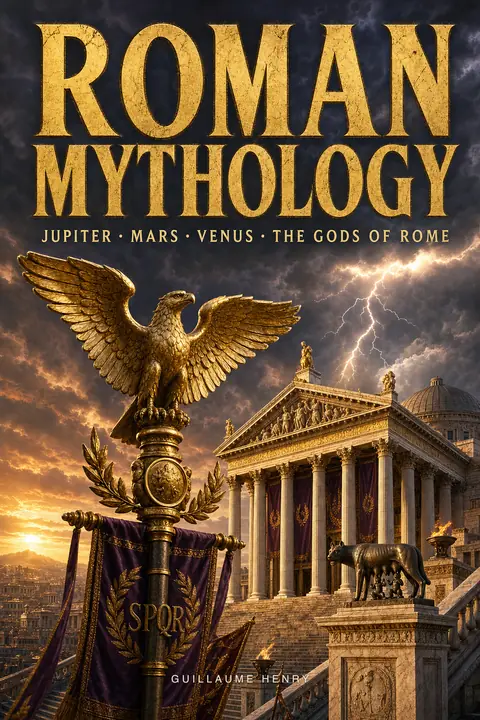
The Roman Mythology Book: Jupiter, Mars, Venus, the Aeneid, and the Sacred Stories That Built an Empire
Jupiter, Mars, Venus, the Aeneid, and the Sacred Stories That Built an Empire
The complete guide to Roman mythology from Virgil's Aeneid to Ovid's Fasti. Every god, every founding myth, every Vestal rite.
More from Roman
All articles
Roman
Romulus and Remus: The Myth of Rome's Foundation
The twin sons of Mars raised by a she-wolf; a fratricide, a city, and an empire. How Rome's founding myth shaped the identity of Western civilization's greatest power.

Roman
Venus: Goddess of Love and Ancestor of the Roman People
Venus was Rome's goddess of love, fertility, and military victory. But she was also the divine ancestor of the Roman people through her son Aeneas. Discover how this single goddess embodied Rome's most powerful myths about its own origins.
Roman
Mars: Roman God of War, Agriculture, and the Father of Rome
Mars was no mere god of bloodlust. The Roman war god fathered Romulus, blessed the harvest, and embodied the discipline that built an empire. Discover how Rome's greatest god shaped both sword and soil.

Roman
Juno: Queen of the Gods and Protector of Rome
Juno ruled the Roman pantheon as Jupiter's equal and Rome's divine guardian. Discover how this fierce goddess shaped the fate of an empire, from her role in the city's founding to her uncompromising protection of women and state.