
Domovoi: The House Spirit That Guarded Every Slavic Home
The domovoi was the unseen guardian at the heart of every Slavic household, blessing loyal families and punishing the careless. Learn who he was, what he wanted, and why he still haunts Slavic folklore.
Contents
The fire in the hearth died down to embers. The family slept. And yet, just beneath the floorboards or curled behind the warm stones of the oven, something breathed. Something watched. Not a ghost, not a demon. The domovoi house spirit was the oldest resident of any Slavic home, and he predated every family that ever moved in.
He braided horses' manes in the night. He warned of disaster by moaning. He pressed down on sleeping people with invisible hands, and if you caught him at it, you could ask whether the weight felt warm or cold. Warm meant good fortune. Cold meant grief was coming. For hundreds of years across Russia, Ukraine, Belarus, Poland, and the wider Slavic world, the domovoi was not a superstition politely tolerated. He was a fact of domestic life, as real as the threshold under your feet.
Who the Domovoi Was: Origins and Identity
The word domovoi (Russian: домовой) comes directly from dom, meaning "house." His Ukrainian equivalent is the domovyk, and related figures appear across the Slavic world under names like skrzat in Polish tradition or dvorovoi for the yard spirit, a close cousin.
Scholars of Slavic religion trace the domovoi house spirit to a practice far older than the conversion of the Slavic peoples to Christianity, which began in earnest in the ninth and tenth centuries. The Russian ethnographer and folklorist Dmitry Zelenin, writing in the early twentieth century, argued that ancestor veneration formed the deepest root of Slavic household religion. The domovoi was the ded, the "grandfather," the spirit of the male ancestor who first built or claimed the home. His authority over the house was not symbolic. It was felt every night.
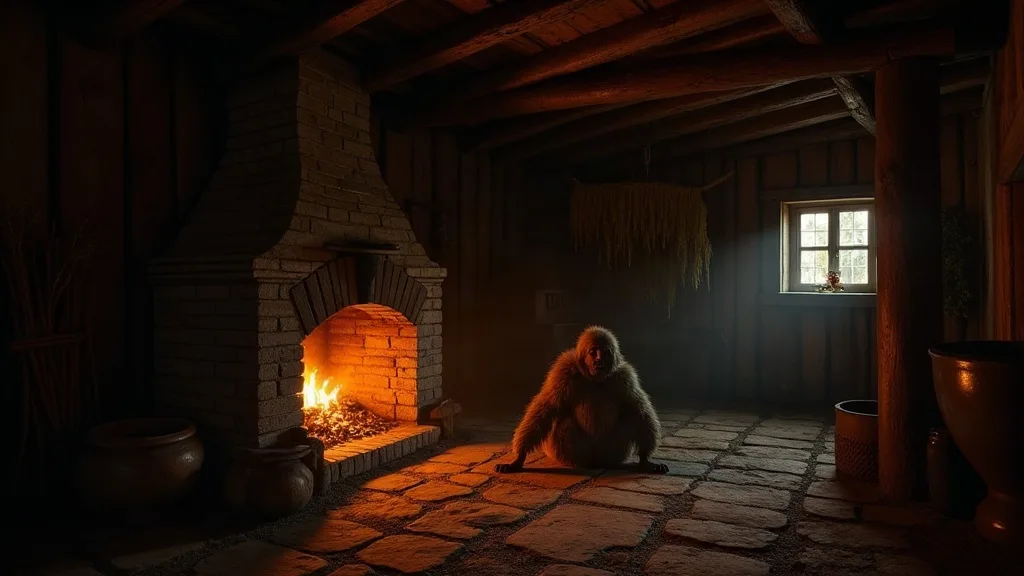
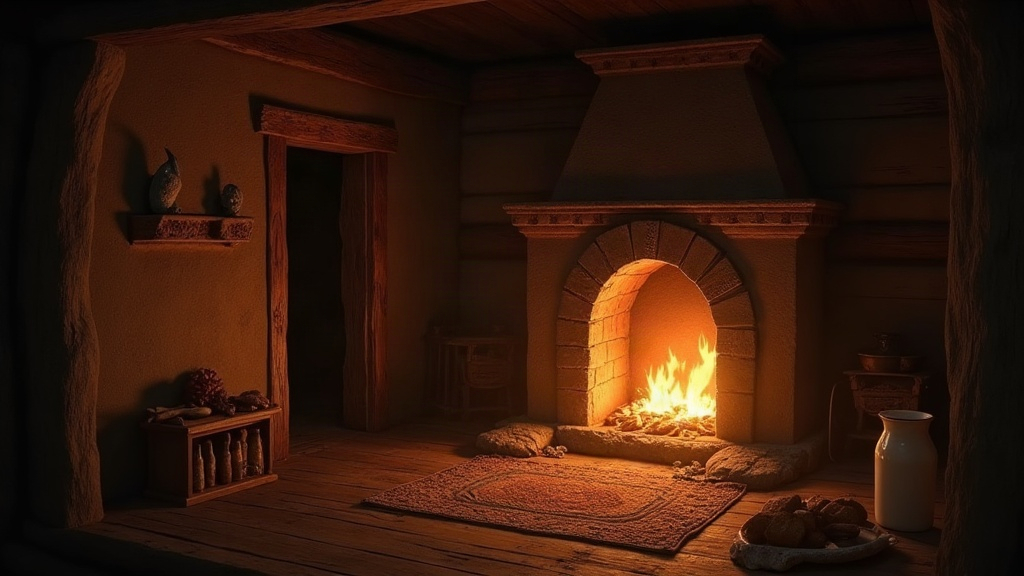
He appeared in different forms depending on the region. Some traditions described him as a small, hairy old man, his face either obscured by fur or bearing an uncanny resemblance to the family patriarch. Others said he had no distinct face at all. In some Ukrainian accounts, the domovyk looked like a wisp of shadow that moved against the firelight. In many Russian traditions, he lived specifically behind the pechka, the large clay and brick oven that dominated every peasant home, providing both heat and cooking in one structure. The oven was the thermal and spiritual center of the house. Naturally, the domovoi lived there.
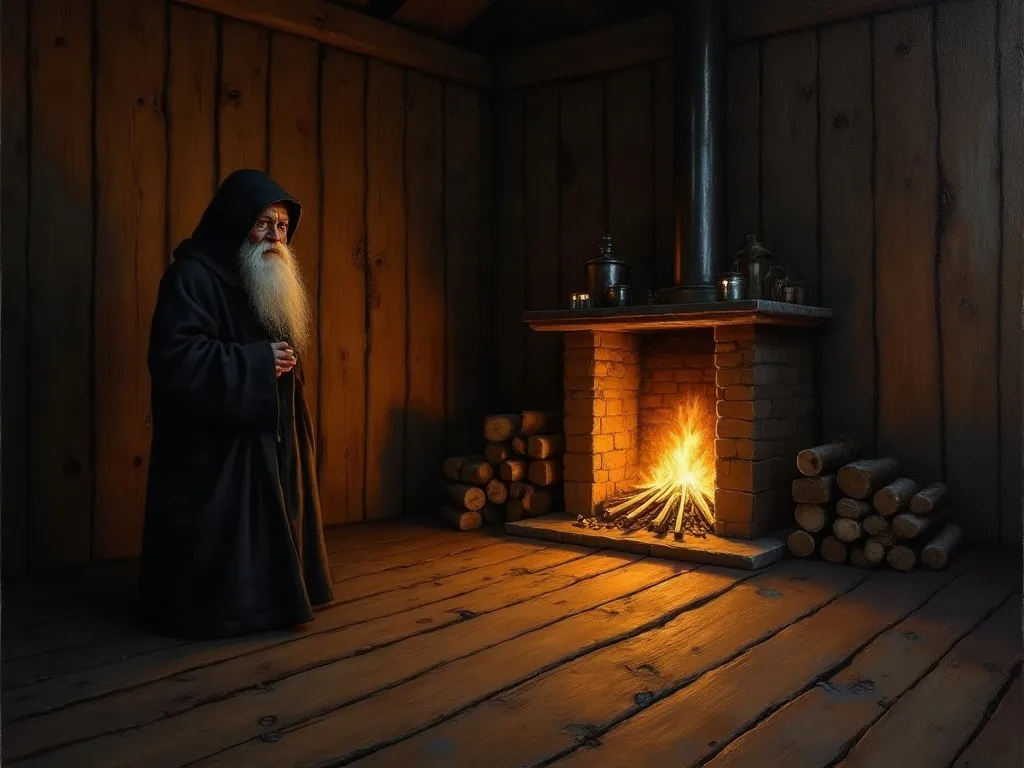
What set him apart from other spirits of Slavic belief was his fundamentally domestic nature. He was not a forest creature, not a water spirit, not a sky deity. He belonged entirely to the built human world, to walls and thresholds and hearths. The ethnographic collections of Alexander Afanasyev, whose mid-nineteenth century work on Slavic folklore remains a landmark source, record dozens of regional variations. Yet the core identity stays consistent: a bound spirit, protective when respected, dangerous when ignored.
What the Domovoi Did: Protection and Warning
A well-treated domovoi was an asset no family could afford to lose. He watched over the livestock in the barn (his territory sometimes extended to the stable, where the dvorovoi or khlievnik, the barn spirit, operated as a near-relative). He kept pests away. He warned sleeping residents of fire by tugging their hair or pressing on their chest. He could predict deaths by weeping in the night, and announce weddings by laughing.
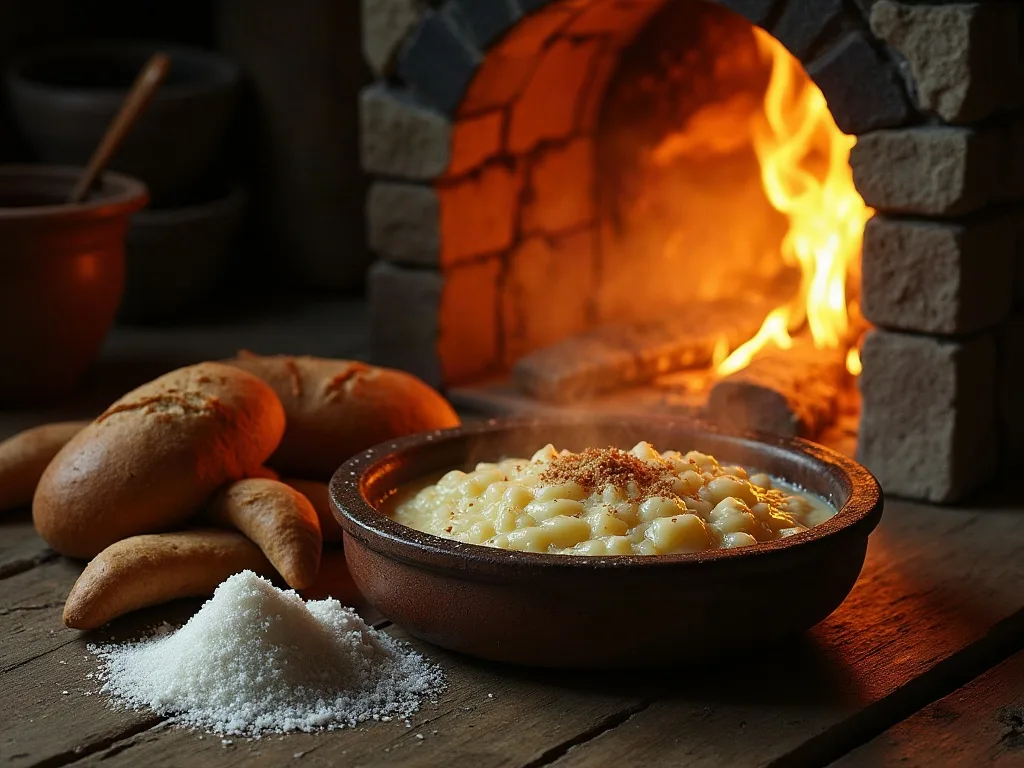
His relationship with the family was intimate and reciprocal. The household owed him food, warmth, and respect. He expected a small portion of the evening meal, often left near the oven or under the threshold. Bread, salt, and porridge appear consistently in recorded offerings. In some traditions from the Vologda region of northern Russia, families left the first spoonful of every new pot of food for the domovoi, a gesture so normalized it passed from religion into habit across generations.
Domovoi (Honored)
- Guards livestock from illness and injury
- Braids horses' manes as a sign of favor
- Warns of fires, deaths, and disasters through physical signals
- Keeps household harmony, reduces accidents
- Accompanies the family loyally when they move homes
Domovoi (Neglected)
- Tangles horses' manes and exhausts animals overnight
- Pinches sleeping family members, leaving bruises
- Hides objects, creates unexplained noise
- Spreads unease and a feeling of being watched
- May refuse to move with the family, attaching to the old house
When a domovoi turned hostile, the household felt it physically. People woke with unexplained bruises. Milk soured overnight. Tools vanished. Livestock wasted for no medical reason. Folk remedies were immediate and practical: a new offering, an apology spoken aloud at the threshold, a sprig of certain herbs placed near the oven. The domovoi house spirit did not require elaborate ritual. He required acknowledgment.
How to Recognize Him and the Rules of the House
Seeing the domovoi directly was rare and generally considered an omen rather than a gift. Most people knew him through his effects. But the traditions around recognition are specific enough to suggest that people genuinely tried.
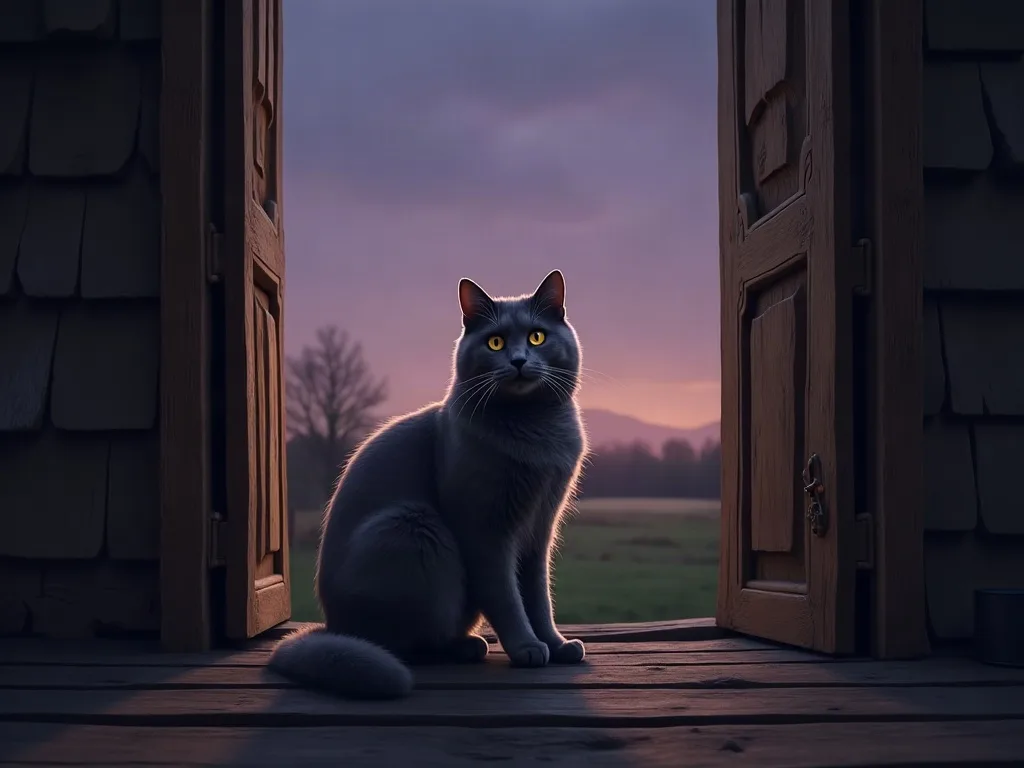
In a number of Russian accounts gathered by the nineteenth-century ethnographer Ivan Sakharov, witnesses described the domovoi as visible only at certain liminal moments: at midnight on specific feast days, or in the brief interval between sleep and waking. He could take the form of a cat (usually black or gray), a small dog, or a snake moving along the floor. The snake form connects him to a much older stratum of Slavic belief, a time before Christianity reshaped the spirit world, when house snakes were kept deliberately in some households and fed milk. Killing the house snake was considered calamitous.
The rules the domovoi enforced were essentially the rules of orderly domestic life, but framed through his preferences. He disliked:
- Whistling indoors (said to drive him away permanently in some regional accounts)
- Placing shoes on the table
- Leaving the threshold unswept
- Quarreling, especially with ugly words
- Bringing objects associated with the dead into the house without proper ritual cleansing
He had strong preferences about the family's morality. In some traditions, a domovoi would not stay in a house where domestic peace had completely broken down. He was described as sensing the emotional state of the home as precisely as a person would. Several Ukrainian folk accounts describe the domovoi weeping audibly when a marriage was failing, not as a curse but as grief.
Moving House: The Most Dangerous Ritual
When a Slavic family moved to a new home, the question of the domovoi was urgent. Leaving him behind was not an option anyone wanted. A house abandoned by its domovoi became pustoi, "empty," in a spiritual sense, no matter how many people lived in it.
The ritual for moving the domovoi was specific. In accounts from across central Russia, the head of the household (always the senior woman or man, depending on the region) would go to the old hearth on the final evening, bow, and speak an invitation: asking the domovoi to come with the family to the new home. Sometimes a burning coal from the old hearth was carried physically to the new one, the domovoi understood to travel inside the flame. In other versions, a piece of bread taken from the old kitchen was placed at the new threshold as an invitation.
The first night in a new home was particularly delicate. Offerings were left immediately. The family slept carefully. If the domovoi had followed, signs of his presence would come within days: the warm-weight on the chest, the sound of quiet movement before dawn, the cat behaving strangely near the oven.
This belief in the movable ancestor-spirit created a continuous ritual obligation across generations. The domovoi house spirit was not inherited once. He had to be maintained, invited, and respected by every generation that occupied the house.
The Domovoi and Christianity: Coexistence and Tension
When Byzantine Christianity arrived among the Slavic peoples in the late ninth century, it did not immediately erase older belief structures. The domovoi is a clear example. He survived the Christianization of Russia, Ukraine, Poland, and Serbia not by disappearing but by shifting slightly in how people described him.
Orthodox clergy periodically condemned the practice of leaving food for household spirits. The twelfth-century text known as the Slovo o polku Igoreve ("The Tale of Igor's Campaign"), one of the most important pieces of early Slavic literature, already reflects a world where pre-Christian belief and Christian practice coexisted uneasily. By the seventeenth and eighteenth centuries, the domovoi had been reframed in some religious contexts as a demon, a corrupted spirit unworthy of veneration.
Peasant practice ignored this framing almost entirely.
What happened instead was a quiet negotiation. The domovoi's feast-day offerings were sometimes shifted to coincide with Christian calendar events. Prayers to saints were added around the threshold without removing the bread under it. In some Belarusian traditions, the domovoi was described as a spirit whom God had not destroyed, but had also not brought to paradise, a liminal being permitted to exist in service to human households.
This made theological sense to ordinary people. It also kept the domovoi alive in living practice through centuries when many other Slavic spirits faded to literary memory. The Slavic underworld deity Veles, who governed cattle, wealth, and the dead, shared conceptual territory with the domovoi. Both were connected to ancestors, livestock, and the boundary between the living world and what lay beyond it.
Regional Variations: One Spirit, Many Faces
The domovoi was not a single uniform creature across the Slavic world. He fractured into regional variants with distinct personalities and habitats.
In northern Russia, the domovoi shared duties with the dvorovoi (yard spirit) and the ovinnik (threshing-barn spirit). These were understood as separate beings with different temperaments. The ovinnik was considered more volatile and dangerous than the domovoi, capable of setting fires if angered. The dvorovoi governed the space between house and fields.
In Poland, the skrzat or kłobuk functioned similarly but carried additional associations with luck and hidden treasure, sometimes arriving in the form of a fiery streak crossing the night sky. In some traditions he was explicitly attached to a single person rather than a house, following them from home to home.
Serbian and Croatian traditions describe the domaći, a house spirit with overlapping functions, though the theological framing shifted more completely toward Christian categories of angel and demon in these southern Slavic regions.
In Ukraine, the domovyk maintained particularly strong associations with the threshold, the physical boundary between inside and outside. Offerings left at the threshold fed him directly. Disrespecting the threshold, stepping on it rather than over it, leaving it dirty, was considered an insult to the domovyk specifically.
The shared thread across all these variants is the connection to a specific physical space and the moral-social order maintained within it. The domovoi house spirit, in all his regional forms, was a mirror. A household's relationship with him reflected the health, morality, and cohesion of the family itself.
The Domovoi in Modern Slavic Culture
He did not stay in the nineteenth century. The domovoi survived into the Soviet era as a figure of folklore, sanitized but persistent. Russian children's books of the 1970s and 1980s featured him as a small fuzzy creature, mischievous but benign, the original household brownie. The character Kuzia from the 1984 Soviet animated series Domovoi Kuzia ("The House Spirit Kuzia") became one of the most recognized animated figures of late Soviet childhood, a domovoi who accidentally ended up living with a modern city family and had to adapt.
Contemporary Russian and Ukrainian authors have returned to the domovoi with more complexity. Writers in the urban fantasy genre, both in Russia and among diaspora communities, position him as a spirit struggling to survive in apartment blocks and concrete cities where hearths no longer exist. The question of where a domovoi lives when there is no oven became a genuinely interesting narrative problem.
Neopagan and Rodnovery movements (modern reconstructions of pre-Christian Slavic religion, active particularly in Russia, Poland, and Ukraine since the 1990s) have revived household spirit veneration as a formal practice. Offerings to the domovoi are prepared deliberately, with reference to ethnographic sources. For these practitioners, the rituals recorded by Zelenin and Afanasyev are not museum pieces but living instructions.
The Slavic mythological tradition as a whole has seen a significant revival of scholarly and popular interest in the twenty-first century, driven partly by gaming (the Witcher franchise drew heavily on Polish and broader Slavic folklore, including household spirits), and partly by a broader cultural reassessment of pre-Christian European traditions. The domovoi arrived in that conversation not as a monster but as something more interesting: a spirit who asked for decency, kept the fire going, and wept when the family broke apart.
Frequently Asked Questions About the Domovoi House Spirit
Frequently asked questions
What is the domovoi and where does the belief come from?
The domovoi is a household spirit from Slavic folklore, understood as the ancestral guardian of a specific home. The belief is rooted in ancestor veneration practices that predate Slavic Christianization in the ninth and tenth centuries. Ethnographers like Dmitry Zelenin and Alexander Afanasyev documented the tradition extensively in the nineteenth and early twentieth centuries, finding consistent versions of the belief across Russia, Ukraine, Belarus, and Poland.
Is the domovoi dangerous?
He can be. A domovoi who receives proper respect and offerings is protective: he guards livestock, warns of fire, and keeps the household in order. One who is neglected or insulted turns disruptive. Recorded accounts describe pinching, hair-pulling during sleep, souring of milk, and exhaustion of animals. He is not malicious by nature, but he is not patient either.
How do you make an offering to the domovoi?
Folk tradition across Russia and Ukraine describes leaving bread, salt, and porridge near the oven, under the threshold, or in a corner of the kitchen on ordinary evenings. The first serving of a new pot of food was sometimes reserved for him. The offering did not require elaborate ceremony: acknowledgment and sincerity mattered more than formal ritual.
Is the domovoi the same as a brownie or a house elf?
He belongs to the same broad category of European domestic spirits that includes the Scottish brownie, the Scandinavian nisse, and the German Kobold. All are bound to a home, expect small offerings, and punish neglect. The domovoi's specific character, his connection to the ancestral dead, his oven-habitat, and his role as moral mirror for the household, is distinctly Slavic and developed independently within Slavic religious culture.
What happened to the domovoi when families moved to Soviet-era apartments?
This became both a genuine folk question and a literary one. With no hearth or oven, the domovoi's traditional habitat disappeared. Some traditions adapted: the spirit was said to inhabit the space behind the refrigerator, or near the boiler. In popular culture, especially the 1984 animated series Domovoi Kuzia, this displacement became comedy. In contemporary urban fantasy writing, it became tragedy or horror.
How does the domovoi relate to Slavic beliefs about the dead?
Deeply. The domovoi was widely understood as the spirit of the household's first male ancestor, the man who built or first claimed the home. This connected him to Slavic ancestor veneration, which treated the dead as ongoing presences with real power over the living. The deity Veles, god of the underworld and cattle, presided over this broader world of the dead, and the domovoi occupied the domestic edge of that world, the point where ancestral power touched daily life.
The Domovoi as a Window Into Slavic Moral Cosmology
Strip away the specific rituals and the regional variations, and the domovoi reveals something central about how pre-Christian Slavic cultures organized meaning. The household was not just a physical shelter. It was a moral space. A cosmological one. The hearth at its center was not only a cooking fire but a point of contact between the living and the dead, between the present family and every generation that had warmed itself at the same spot.
The domovoi house spirit enforced this understanding not through doctrine but through daily pressure. His presence made domestic order a spiritual obligation. Keeping the threshold clean was not merely tidiness. Leaving food near the oven was not merely custom. These acts maintained a relationship with the ancestral past, acknowledged that the house belonged to something larger than the people currently living in it.
This is why the domovoi never quite disappeared. Modern families in Russia, Ukraine, and the diaspora communities scattered across Europe and North America still report the feeling: the sense of something watching from the corner of a dark kitchen. Something that notices whether the house is cared for. Something old, patient, and not entirely gone.
He does not need the hearth. He needs the home to mean something. As long as it does, the domovoi stays.
Read the full book
Want the whole story?
The complete edition is an instant PDF download here, with a paperback on Amazon for selected titles.
Slavic
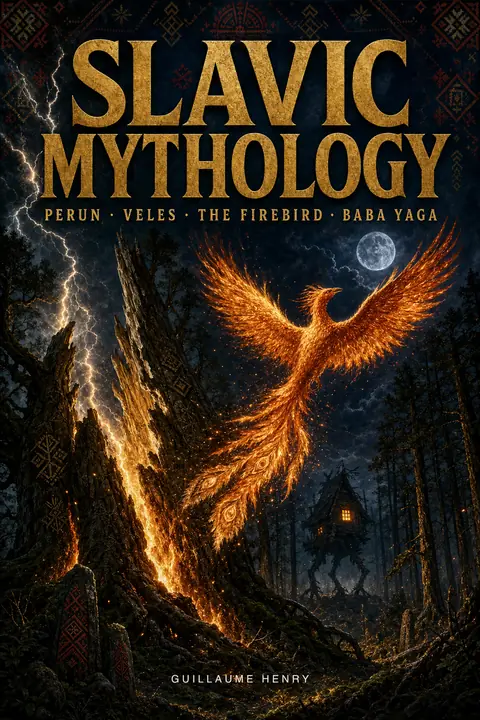
The Slavic Mythology Book: Perun, Veles, Mokosh, and the Sacred Stories of Pre-Christian Russia and the Balkans
Thunder Gods, Serpent Lords, and the Witch in the Chicken-Leg Hut
The mythology of the Slavs before Cyril and Methodius: Perun's thunder against Veles' serpent coils, Mokosh's weaving, Baba Yaga's mortar flight, and the four-faced idols that stood in sacred groves.
More from Slavic
All articles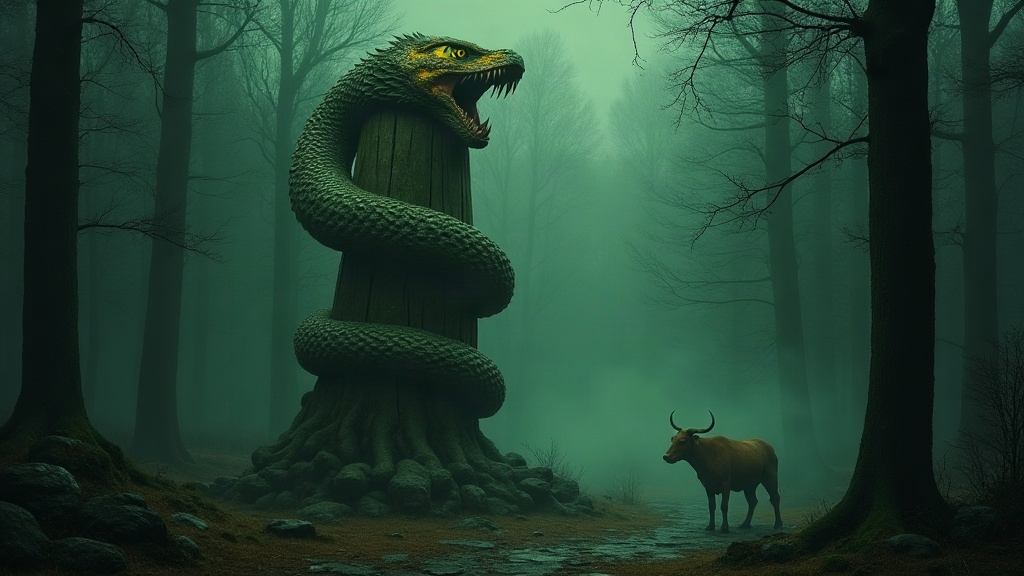
Slavic
Veles: Slavic God of the Underworld and Cattle
Veles rules wealth, the underworld, and herds in Slavic tradition. A shapeshifter and keeper of secrets, he stands at the boundary between the living world and the realm below. Discover the god who defied easy categories.
Slavic
Rod and the Rozhanitsy: Slavic Deities of Fate and Fertility
Rod weaves the threads of destiny while the Rozhanitsy nurture life itself. Discover how these ancient Slavic deities embodied the hidden forces that shaped families, harvests, and the very fabric of fate.

Slavic
The Cosmic Battle of Perun and Veles: Thunder, Chaos, and the Slavic Cosmos
In the Slavic cosmos, thunder god Perun and serpent deity Veles clash eternally: a primal battle between order and chaos, sky and underworld, that sustains the world itself. Discover the myths, the gods, and what scholars have found in the ruins of this ancient tradition.

Slavic
Domovoi: The Slavic Household Spirit
Meet the Domovoi, the ancient Slavic guardian spirit who dwells behind the stove and watches over a family's fortune. Learn how peasants and nobles alike honored this invisible master of the home, and why his blessing or curse could mean survival or ruin.