
Rod and the Rozhanitsy: Slavic Deities of Fate and Fertility
Rod weaves the threads of destiny while the Rozhanitsy nurture life itself. Discover how these ancient Slavic deities embodied the hidden forces that shaped families, harvests, and the very fabric of fate.
Contents
In a Slavic home, two presences hover near the threshold, invisible but felt. One is Rod, the keeper of lineage and destiny, present at every birth, every significant crossing. The other is the Rozhanitsy: divine midwives who attend to childbirth and abundance. Together, they form the backbone of Slavic belief about how life begins, how fate is woven, and what binds a family to the soil and to each other.
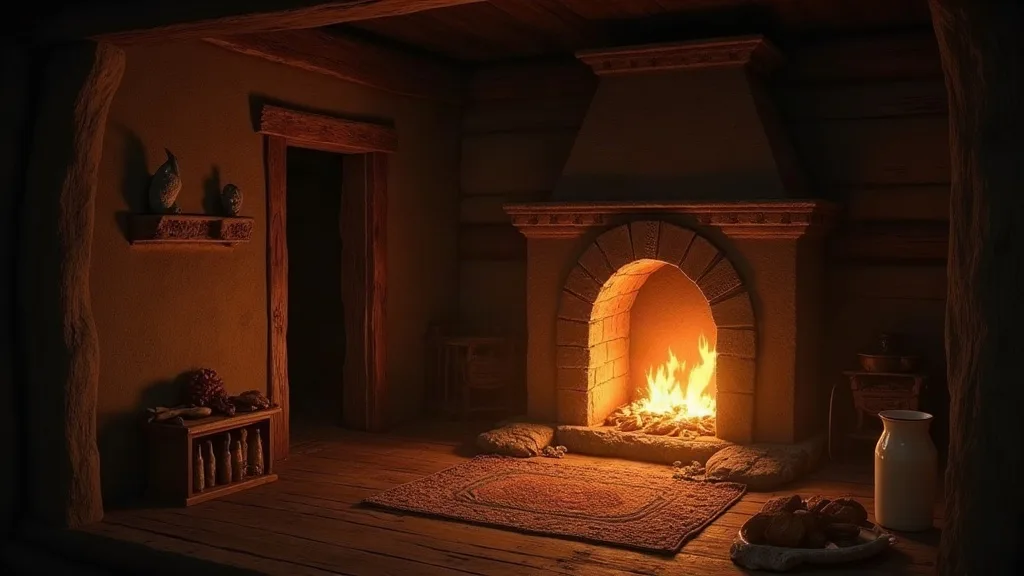
Unlike the more visible storm gods or forest spirits, Rod and the Rozhanitsy operated in the intimate space between the human and the divine. They were not worshipped in grand temples or invoked in public ritual, but rather honored in the home, at the hearth, and in the quiet moments when a child entered the world. Yet their influence shaped everything. To understand Slavic cosmology is to begin with them.
Who Was Rod: The Weaver of Fate
Rod was the father of all, the source from which all things emanate. His name comes from the same root as the word for kin (rod = family, lineage), suggesting that his power lay not in dominion over a specific force of nature but over the continuity of generation itself. He was present in the concept of rozhdenie, birth, and in rod'ba, kinship. Some scholars argue Rod was the supreme figure in the pre-Christian Slavic pantheon, though the textual record is thin.
The Primary Chronicle, compiled by Christian monks around 1113 CE, mentions Rod only briefly alongside the Rozhanitsy, noting that some Slavs honored them "like gods." What we know comes from fragmentary church records, folk customs, and the comparative study of Indo-European mythology. The image that emerges is of a god who sat at the root of the family tree, whose will determined whether a child would be born, who that child would become, and how the generations would unfold.
Rod was not merciful or cruel. He was impersonal in the way that fate is impersonal. His presence was most felt in moments of transition: pregnancy, childbirth, the naming of a child, the marking of a youth into adulthood. Pagan Slavic families kept a small figurine or altar to Rod near the hearth or the birthing room. Some traditions described him as the progenitor of the entire divine realm, the one from whom the other gods descended.
The Rozhanitsy: Midwives of Life and Abundance
If Rod was the weaver of destiny, the Rozhanitsy were the ones who brought that destiny into the material world. The word rozhanitsa derives from rozhat', to give birth, and these figures existed primarily as a pair. Some texts name them Reia and Dlia, though other regional variations exist. They were not distant cosmic forces but intimate helpers at the moment of birth.
In ritual and domestic practice, the Rozhanitsy occupied the space between the divine and the human body. When a Slavic woman went into labor, prayers and offerings were made to them. The Rozhanitsy would guide the child through the threshold, protect both mother and infant from harm, and determine the life force, health, and luck that the newborn would carry forward. They were goddesses of abundance, fertility, and the life-giving flow from one generation to the next.
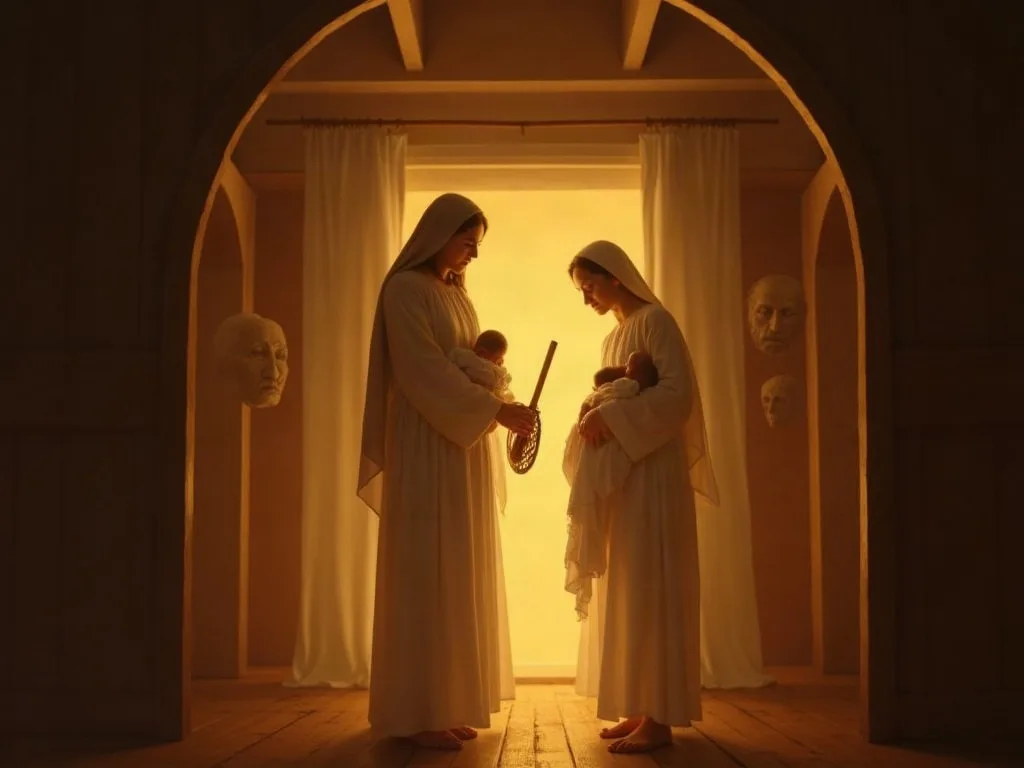
The Rozhanitsy were often depicted as young women, radiant and fertile. Some accounts describe them as attending Rod himself, as his companions or daughters. Others present them as independent divine agents, existing in a category of their own. What unites all accounts is their role as mediators at the moment of birth and their connection to abundance: fertile fields, full breasts, children in the home. A family that honored the Rozhanitsy could expect a household full of life and prosperity.
Unlike male gods who demanded weapons, hunting prowess, or military glory, the Rozhanitsy asked for hospitality and remembrance. Pregnant women would leave offerings of bread, eggs, and milk. After birth, a family might place food and honey near the hearth as a continued gift. The Rozhanitsy did not need grand temples; they needed to feel present, acknowledged, cared for in the small daily rituals of the home.
Rod and the Rozhanitsy in Slavic Cosmology
Rod was more than just a fertility god or fate-keeper. He represented the principle of continuity itself. In some accounts, Rod was the father of all the gods; in others, he was the source from which the entire cosmos emerged. The Rozhanitsy, by contrast, were the executors of his will, the hands that shaped individual lives.

Together, Rod and the Rozhanitsy formed a system: destiny meets birth, fate meets flesh. When a child was born, Rod had already determined the essential contours of that life. The Rozhanitsy brought that life into being and endowed it with health, luck, and the capacity to thrive. The family's role was to honor both forces and to trust in their benevolence.
This cosmology appears in surviving folk customs and beliefs. Among some Russian and Ukrainian groups, it was customary to lay out a small meal for Rod and the Rozhanitsy after a birth, leaving the food untouched for a time as an offering. The hearth of the home was their sacred space. Some accounts describe the Rozhanitsy as returning to visit the household on the third day after birth, again on the seventh and fortieth, checking on the child's progress and determining its fate at each milestone.
The connection between Rod, the Rozhanitsy, and the concept of dolya, or personal fate/luck, was intimate. Each person possessed a dolya, a portion of luck or destiny allotted at birth. The Rozhanitsy shaped this. If a family prospered, it was because the Rozhanitsy had been generous with dolya. If a child fell ill or died, it was because the Rozhanitsy had withheld it, or because the family had neglected to honor them.
Historical Worship and Domestic Practice
The historical record on Rod and the Rozhanitsy is scarce because Christian authorities suppressed and recorded pagan practices primarily when they deemed them dangerous. What survives comes from folk traditions, later folk tales, and passing references in chronicles.
The Primary Chronicle, written by Christian monks, mentions that some Slavs honored Rod and the Rozhanitsy as gods. This brief reference is priceless to scholars, as it confirms they were part of organized belief, not random superstition. After Christianization (which began in the 10th century CE with Prince Vladimir of Kyiv), pagan shrines were destroyed and the open worship of Rod and the Rozhanitsy became illegal.
Yet the customs persisted, often hidden within the fabric of village life. Women continued to leave offerings at the hearth. Pregnant women still whispered prayers to the Rozhanitsy. The figure of Rod remained present in folk belief, transmuted into household spirits or merging with saints' cults. In some regions, the Rozhanitsy were reinterpreted as saints or divine helpers, allowing the old practice to survive under a Christian veneer.
Archaeological evidence is minimal. No temples to Rod have been conclusively identified, though some scholars argue that certain pre-Christian sacred sites may have included altars to him. The absence of large-scale temple complexes suggests that Rod and the Rozhanitsy were always gods of the household, not of the state cult. Their worship was decentralized, intimate, and resistant to official documentation.
Rod and the Rozhanitsy in Comparative Indo-European Context
Rod shares structural parallels with other Indo-European fate deities. The Norse Norns (Urd, Verdandi, Skuld) weave the threads of destiny at the base of Yggdrasil, much as Rod determines the patterns of life. The Greek Moirai (Clotho, Lachesis, Atropos) spin, measure, and cut the thread of human fate. The Hindu Rta, the cosmic order, governs the unfolding of destiny for all beings.
What distinguishes Rod is his association with lineage and generation. While the Norns or Moirai operate on a cosmic scale, Rod is fundamentally domestic. His concern is with the continuity of families, the preservation of kinship bonds, and the transmission of life from one generation to the next. In this sense, he resembles the Roman Lares, household spirits who protected the family and maintained its wellbeing.
The Rozhanitsy parallel the Norse Disir, divine women associated with fertility, childbirth, and ancestral blessing. Both the Disir and the Rozhanitsy are typically represented as pairs or small groups. Both are honored in the home. Both mediate between the living and the powers that govern life and death. The Rozhanitsy, however, are more specifically associated with the moment of childbirth itself, whereas the Disir encompass a broader category of ancestral and fertility magic.
Rod (Slavic)
Rod: keeper of lineage, progenitor of gods, determines the essential nature of each individual life. Present at birth but weaves destiny for entire families and generations.
Norns (Norse)
Norns: weavers of universal fate at the base of the World Tree. Shape destiny for all beings, gods included, with impersonal cosmic inevitability.
The Decline and Persistence of Rod and the Rozhanitsy
Christianization struck a direct blow at the worship of Rod and the Rozhanitsy. The church taught that God alone determines fate, that childbirth is governed by divine will (or by the Virgin Mary and saints), and that the household's wellbeing depends on Christian prayer and sacrament, not on pagan offerings.
Yet the customs did not vanish. In rural areas, the Rozhanitsy persisted in folk memory as protective spirits or healing women. Some traditions absorbed them into the cult of saints, particularly saints associated with childbirth and fertility. The feast day of a saint like Saint Catherine might inherit rituals originally performed for the Rozhanitsy. Rod faded more completely from memory, though echoes of his role in determining lineage and kinship appear in later folk beliefs about ancestor spirits and household protectors.
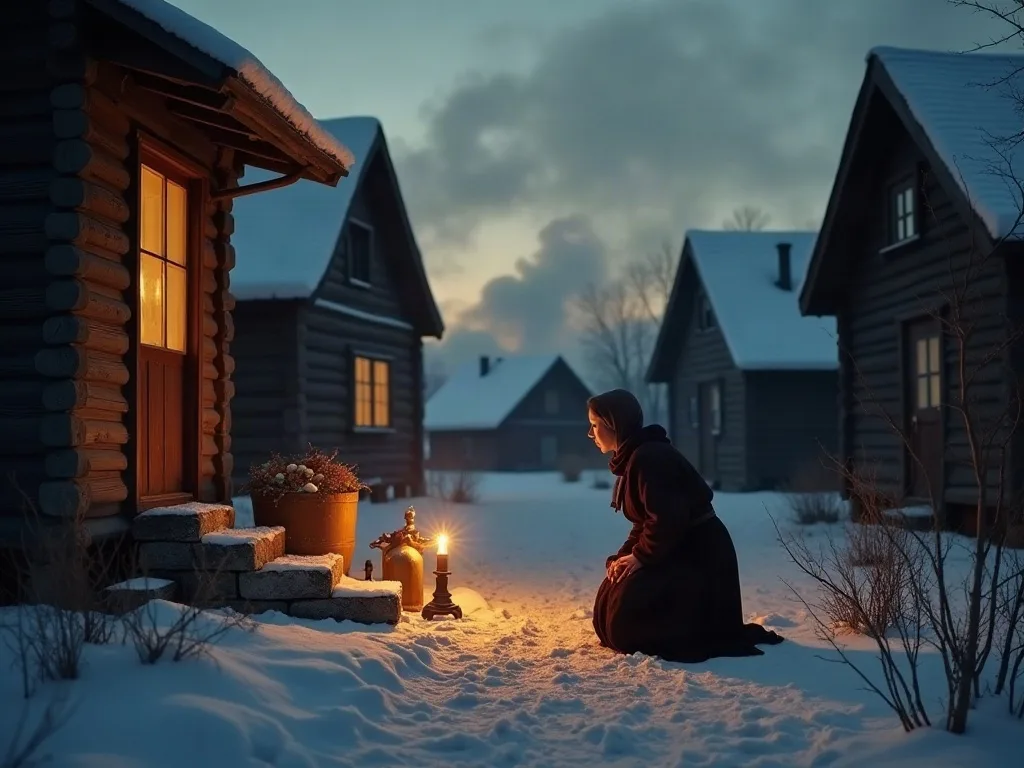
The survival of these cults in Christianized form reveals something important about folk religion: the layers do not replace one another cleanly. Instead, they interpenetrate. A village woman in 16th-century Russia might light a candle to Saint Nicholas while leaving bread at the hearth for the Rozhanitsy, understanding both as forms of protection for her household. The official theology condemned this syncretism, but it persisted because it answered real needs.
Modern scholarship has recovered Rod and the Rozhanitsy from near-total obscurity. Scholars like Boris Rybakov and other historians of Slavic religion have reconstructed their roles from fragmentary sources and folk parallels. Contemporary Slavic pagan movements have also revived interest in Rod and the Rozhanitsy as part of a broader reconstruction of pre-Christian belief. These modern revivals are themselves part of the mythology's living history, showing how ancient figures can be reworked by each generation.
Rod and the Rozhanitsy in Modern Reinterpretation
In the late 20th and early 21st centuries, as interest in pre-Christian Slavic religion grew, Rod and the Rozhanitsy have been reimagined and elevated within contemporary Slavic pagan movements. Groups practicing Slavic Rodnoveria (Slavic native faith) often center Rod as a supreme or high god, sometimes even monotheistic in a reinterpreted way, with other gods as his emanations.
This modern elevation represents a genuine shift in emphasis. Historical evidence suggests Rod was important but perhaps not unique in pre-Christian Slavic theology. Modern practitioners, however, have seized on his role as the progenitor and keeper of fate to construct a coherent theological system. The Rozhanitsy are honored as essential to this system, ensuring that the emphasis on fate does not eclipse the equally vital force of fertility and life-giving.
These contemporary revivals are not purely reconstructionist: they blend textual fragments, comparative mythology, archaeological inference, and creative interpretation. Yet they perform a valuable function. By centering figures like Rod and the Rozhanitsy, modern practitioners raise questions about how Christianization erased vast swaths of Slavic religious life and remind readers that European paganism was diverse, philosophical, and deeply connected to the household and the land.
Frequently asked questions about Rod and the Rozhanitsy
Frequently asked questions
Was Rod a supreme god in pre-Christian Slavic religion?
Rod was certainly important and in some accounts appears as a progenitor or high god, but the surviving evidence does not conclusively establish him as supreme across all Slavic groups. Different regions and periods may have emphasized different deities. What is clear is that Rod held a unique position as the keeper of lineage and the weaver of individual fate.
How did Christian authorities deal with the worship of Rod and the Rozhanitsy?
The church actively suppressed their public worship, destroying shrines and forbidding rituals. However, the cults survived in private, domestic settings. The Rozhanitsy were sometimes absorbed into the veneration of Christian saints associated with childbirth, allowing the old practices to continue under new names. Rod faded more completely from recorded history but left traces in folk beliefs about household spirits and ancestral protection.
What was the role of the Rozhanitsy in childbirth?
The Rozhanitsy were believed to preside over the moment of birth itself. They guided the child into the world, determined its basic health and life force, and shaped its personal dolya, or fate-luck. Pregnant women and their families made offerings to appease and honor the Rozhanitsy, hoping for a safe delivery and a healthy child. The Rozhanitsy were visited the household on the third, seventh, and fortieth days after birth, checking the child's progress.
How do modern Slavic pagan movements interpret Rod and the Rozhanitsy?
Contemporary Slavic Rodnoveria practitioners often center Rod as a supreme or even monotheistic god, with other deities as his emanations. This represents a reinterpretation of historical sources to create a coherent theology. The Rozhanitsy are honored as essential to this system, ensuring the balance between fate and life-giving fertility. These modern revivals blend historical fragments with creative theological work.
Are there surviving rituals or folk practices connected to Rod and the Rozhanitsy?
In some rural areas of Eastern Europe, particularly Russia and Ukraine, folk customs related to childbirth and household protection have been traced back to pre-Christian worship of Rod and the Rozhanitsy. Leaving offerings of bread and milk at the hearth, prayers during pregnancy, and rituals marking the first days of an infant's life may preserve echoes of these ancient practices, though the pagan meanings have often been Christianized or forgotten.
The Quiet Gods Who Shape Generations
Rod and the Rozhanitsy remind us that not all gods are loud. Some work in silence, in the threshold between non-being and birth, in the small fires of the household. Their absence from monumental temples and public records does not diminish their power; it only reflects their domain, which was always the intimate, the domestic, the continuous flow of life from parent to child.
The survival of their cults, in fragmented and transformed shape, testifies to the depth of their role in Slavic consciousness. Even after Christianity promised salvation through prayer and sacrament, families continued to leave bread at the hearth. Even after the official gods were replaced, the need to honor the forces that govern birth and lineage persisted. In this persistence lies a truth that history often overlooks: the gods of the home are always harder to kill than the gods of the state, and the powers that govern life itself do not easily surrender their hold on human imagination.
Read the full book
Want the whole story?
The complete edition is an instant PDF download here, with a paperback on Amazon for selected titles.
Slavic
The Slavic Mythology Book: Perun, Veles, Mokosh, and the Sacred Stories of Pre-Christian Russia and the Balkans
Thunder Gods, Serpent Lords, and the Witch in the Chicken-Leg Hut
The mythology of the Slavs before Cyril and Methodius: Perun's thunder against Veles' serpent coils, Mokosh's weaving, Baba Yaga's mortar flight, and the four-faced idols that stood in sacred groves.
More from Slavic
All articles
Slavic
Veles: Slavic God of the Underworld and Cattle
Veles rules wealth, the underworld, and herds in Slavic tradition. A shapeshifter and keeper of secrets, he stands at the boundary between the living world and the realm below. Discover the god who defied easy categories.

Slavic
The Cosmic Battle of Perun and Veles: Thunder, Chaos, and the Slavic Cosmos
In the Slavic cosmos, thunder god Perun and serpent deity Veles clash eternally: a primal battle between order and chaos, sky and underworld, that sustains the world itself. Discover the myths, the gods, and what scholars have found in the ruins of this ancient tradition.

Slavic
Domovoi: The Slavic Household Spirit
Meet the Domovoi, the ancient Slavic guardian spirit who dwells behind the stove and watches over a family's fortune. Learn how peasants and nobles alike honored this invisible master of the home, and why his blessing or curse could mean survival or ruin.
Slavic
The World Tree in Slavic Cosmology: Structure, Symbols, and Sacred Ritual
The World Tree anchors Slavic belief from the pre-Christian era through living folk practice, connecting sky, earth, and underworld. Discover how this sacred axis shaped Slavic ritual, settlement, and the seasons.