

Domovoi: The Slavic Household Spirit
Meet the Domovoi, the ancient Slavic guardian spirit who dwells behind the stove and watches over a family's fortune. Learn how peasants and nobles alike honored this invisible master of the home, and why his blessing or curse could mean survival or ruin.
Contents
A man in his dark cottage hears footsteps across the floorboards. His wife stirs. The livestock outside shifts nervously. No one is there. In the morning, the cows have been groomed until their coats shine. The cheese in the cellar is untouched. The grain bins are neat. He leaves a saucer of milk by the stove, whispers gratitude, and continues his work.
This is the world of the Domovoi, the most intimate and powerful spirit in Slavic mythology. Not a god who demands temples, not a demon who howls in the woods, but a creature bound to one house, one family, across generations. He is invisible, temperamental, and essential. Cross him and milk curdles, horses sicken, children cry all night. Honor him and prosperity flows like water. For centuries, peasants and nobles across Russia, Ukraine, Belarus, and Poland lived in genuine negotiation with this spirit, leaving him gifts, learning his moods, knowing him as well as any family member.
The Domovoi represents something rare in European folklore: a spirit of the home who belongs entirely to the house itself, not borrowed from a saint or a god. He predates Christianity in the Slavic lands. When the priests came, the people kept him anyway, perhaps renaming him, but keeping the relationship intact. This persistence through centuries of religious change tells us something profound about what the Domovoi meant to the people who lived with him.
Origins and Names Across the Slavic Lands
The word domovoi comes from dom, the Slavic root for "house". The spirit's name changes as you cross the old borders: Russians call him Domovoi, Ukrainians the Domovyk, Belarusians the Domovoi, Poles sometimes the Domowik. The Germans who lived alongside Slavs knew him as the Kobold, a figure that merged local Slavic belief with Germanic tradition. What matters is the consistency beneath the names: everywhere, this is a spirit bound to the hearth, the stove, the house itself.
Scholars debate whether the Domovoi is a remnant of ancestor veneration from pre-Christian times. The 19th-century folklorist Alexander Afanasyev, who collected thousands of Slavic tales, argued that the Domovoi represents the spirit of the house's founder or the oldest male ancestor, still protective, still invested in the family's welfare. Other researchers, like Vladimir Propp, suggested the Domovoi emerged from a broader class of household spirits common across Indo-European cultures, spirits tied to land and dwelling rather than to individual lineage. The truth likely weaves both threads together: the Domovoi inherited qualities of ancestor veneration but became something larger, a permanent resident with agency and personality beyond any single dead person.
One of the oldest written references to the Domovoi appears in the Russian church texts of the 11th century, where priests condemned belief in household spirits as pagan superstition. The Council of 1103 explicitly banned offerings to domovye (plural of domovoi). This very ban confirms that the spirit was deeply entrenched in daily life, widespread enough to threaten the Church's authority. The Church's condemnation never worked. Centuries later, in the 17th and 18th centuries, travelers and ethnographers visiting Russia noted that rural families still left food and drink for the Domovoi, still spoke to him, still believed his mood governed household fortune.
The Appearance and Character of the Domovoi
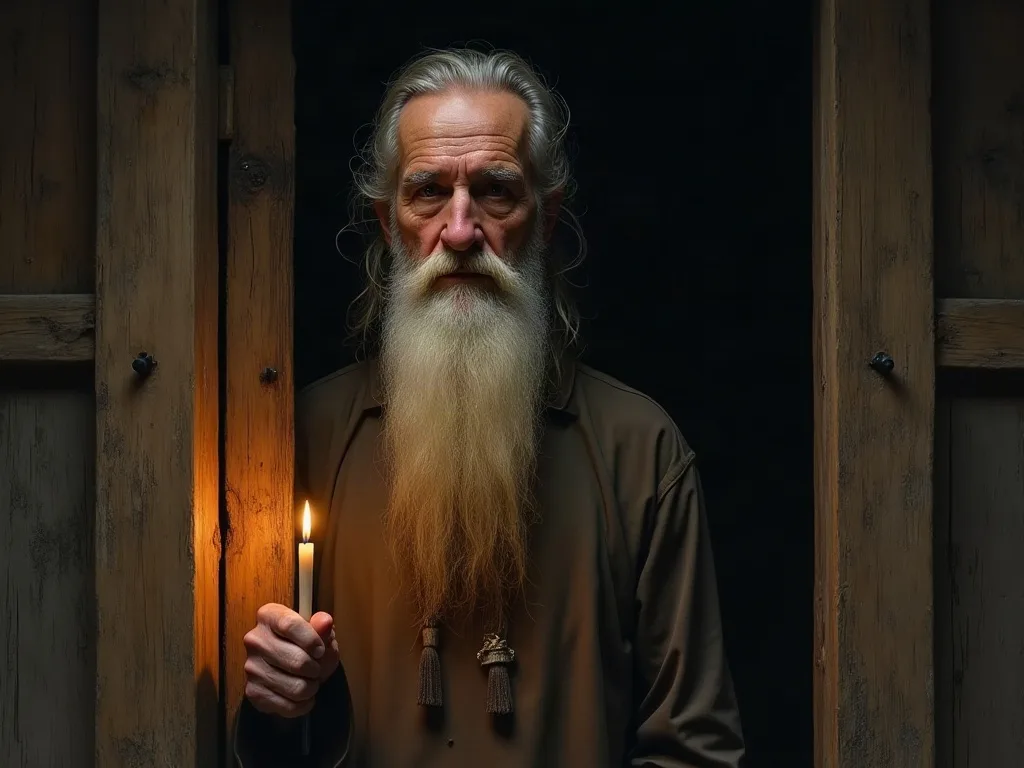
Few people saw the Domovoi. Those who did described an old man, sometimes with a long beard, dressed in peasant clothes or the clothes of the house's master. Some accounts say he was the exact height of the master. Others claim he could change size, or shift between forms. A woman might glimpse him as she bent to tend the fire at dawn. A child might see a small, hunched figure disappear into shadow. A youth working late might sense something warm and near, neither fully present nor wholly absent.
The Domovoi was most active at night. Between dusk and dawn, he moved through the house, checking on livestock, examining stored food, grooming animals in the stable, rocking cradles. Families learned to read his moods through small signs. If a horse was braided in its mane, the Domovoi was content, a blessing on the household. If milk soured without reason, or if livestock became ill, or if tools went missing, the master had angered the spirit somehow. A broken promise, disrespect toward the house, cruelty to animals, or lax standards in the home could all trigger the Domovoi's displeasure.
The Domovoi was neither wholly good nor wholly evil. He was just. If treated well, he was fiercely loyal, almost familial. If insulted, he could become a tormentor. Tales describe Domovoi spirits that pulled hair during sleep, made the family's dogs bark at nothing, moved objects deliberately, or caused such noise and chaos that the family abandoned the house. Yet even in his anger, the Domovoi rarely crossed into true malice; he punished for a reason, and that reason was always legible to those who understood the rules.
The rules were unwritten but universally known across Slavic households. Never insult the Domovoi. Never waste food. Keep the house clean. Treat animals with respect. Keep the hearth fire alive and well. Speak to the Domovoi with courtesy. Leave a small gift on certain nights. These rules created a kind of covenant, a relationship that balanced the family's obligation with the spirit's protection.
The Domovoi's Domain and Power
The Domovoi's territory was specific: the house, the immediate courtyard, the stable, the storage areas. He did not rule the fields beyond the fence or the deep forest. Other spirits governed those realms. The Domovoi's power was domestic and intimate. He guarded against thieves and wandering spirits. He protected the stored grain from spoilage and vermin. He kept the livestock healthy and calm. He influenced the prosperity of the household in small, daily ways that, compounded across seasons, determined whether a family thrived or barely survived.
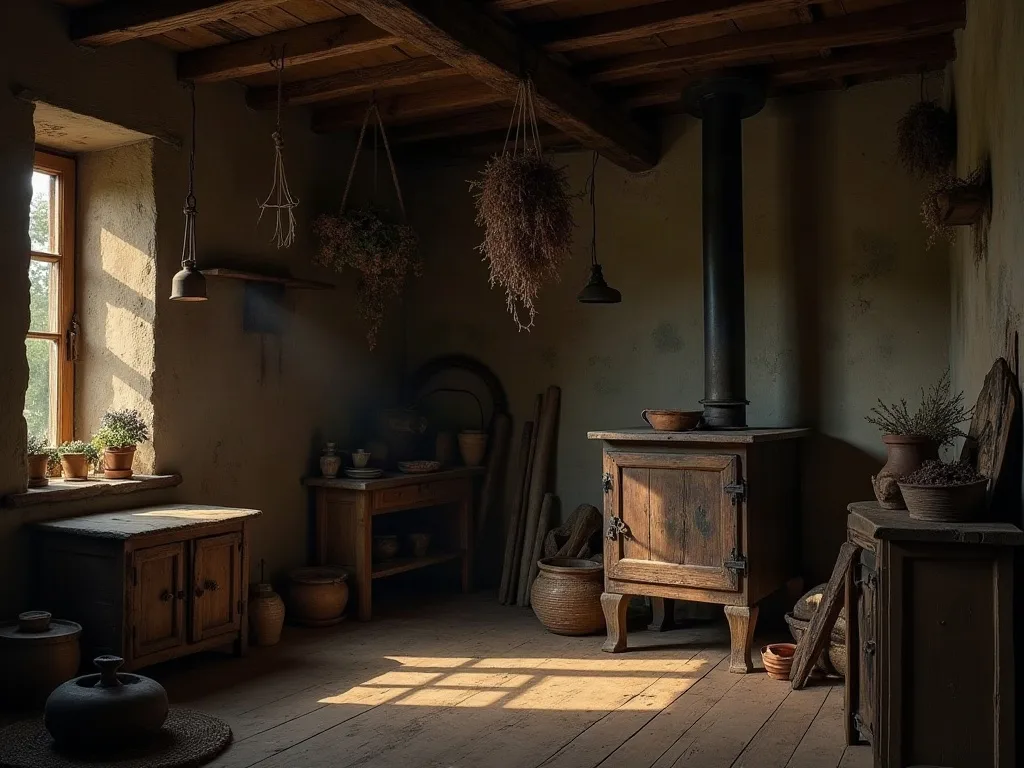
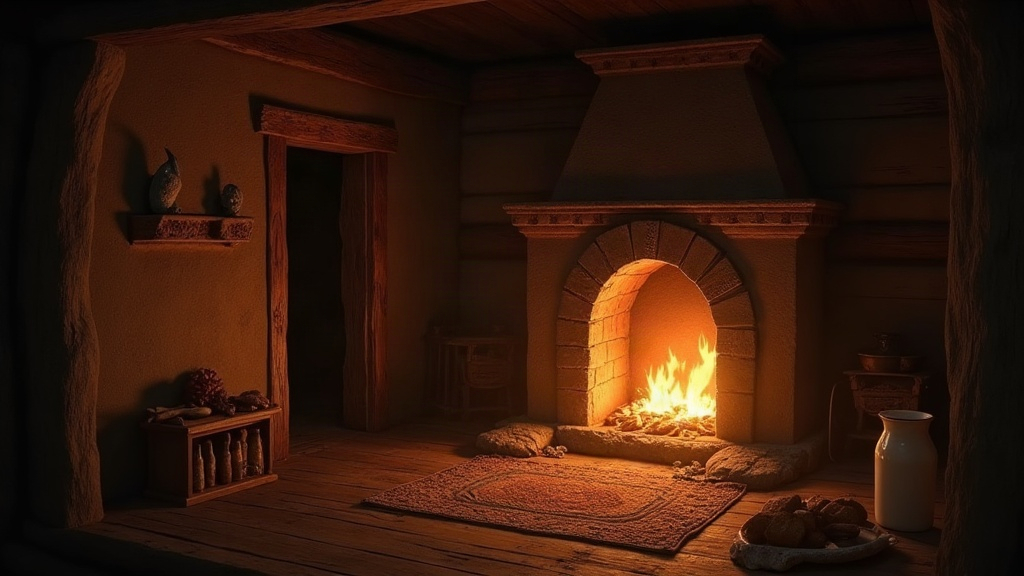
The Domovoi had a particular bond with the hearth, the stove. In Slavic houses, the brick or clay stove was not merely a heating source; it was the center of gravity of the home. In some regions, the stove occupied nearly a quarter of the cottage's interior. Food was cooked on it, heat radiated from it, and crucially, it never went completely cold. A family might bank the fire with ash, keeping embers alive through the night, ensuring that the next morning brought not new fire but a rekindling of the same flame. The stove was the house's heart, and the Domovoi lived in its warmth, in the shadows beside it, in the space behind it.
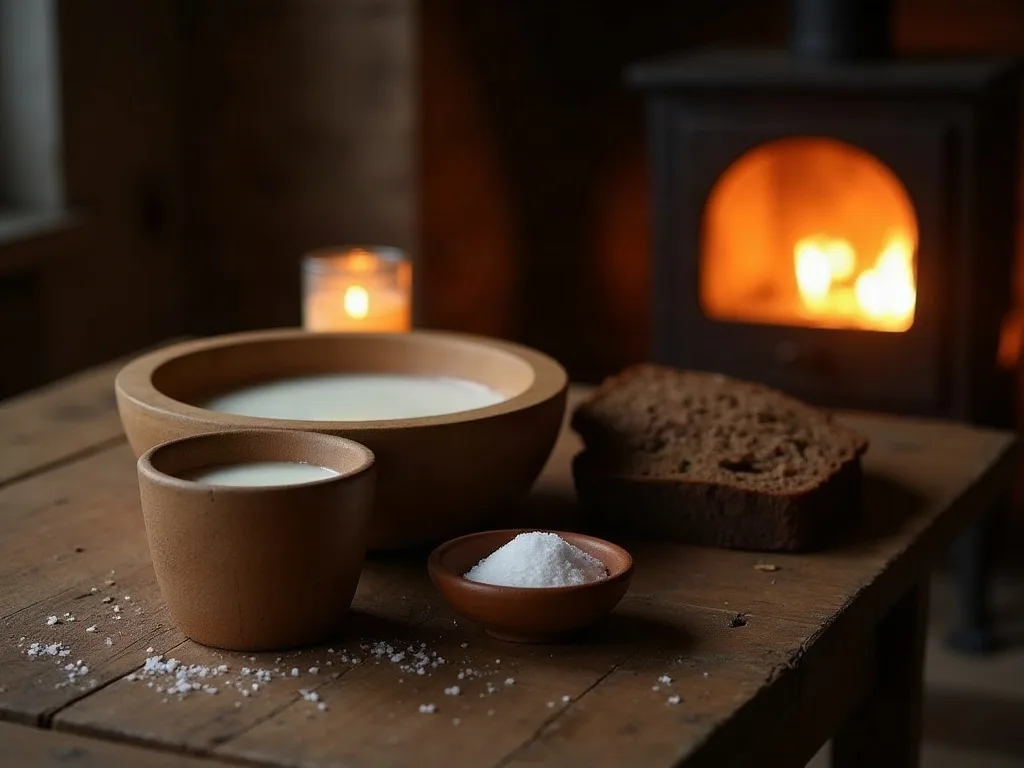
Offerings to the Domovoi were practical and specific. A saucer of milk, left by the stove before bed, was the most common gift. Some families left bread, a piece of meat, or cheese. In some regions, at Christmas or on the family's patron saint's day, a more elaborate offering was prepared. The point was not sacrifice in the religious sense, but acknowledgment, a small reciprocal gesture that kept the relationship alive. The family ate well; the Domovoi received a taste. The household was clean and orderly; the Domovoi's environment was maintained with care.
When a family moved house, the question arose: would the Domovoi follow? The answer was no. The spirit belonged to the house, not the family. If a family wished for the Domovoi's protection in a new home, they had to win his trust anew. Some traditions suggested that a family could invite the Domovoi to follow by saying farewell at the old stove, thanking him, and formally inviting him to the new house. Whether the Domovoi truly came depended, in the folklore's logic, on whether he chose to. A family that treated the old house well, that left it clean and blessed, had a better chance of the new Domovoi's goodwill.
Rituals, Offerings, and the Domovoi's Calendar
Daily life with the Domovoi was governed by small rituals. A farmer might pause at the stove each morning, whisper thanks for the night's safety, and pour out a cup of milk or mead. Children learned early not to waste bread; to do so was to disrespect the Domovoi and invite hunger. A woman cleaning the house would pay particular attention to the area around the stove, keeping it spotless, arranging things in proper order, understanding that this was the Domovoi's personal space.
The agricultural calendar created peak moments for Domovoi offerings. At spring planting time, families made special gifts, asking for protection for the seeds and for healthy growth. In autumn, after the harvest, thanksgiving offerings were more elaborate. Midsummer and midwinter, the turning points of the year, were times of heightened attention to the Domovoi. On Christmas, in particular, families across the Russian lands made careful offerings, acknowledging both the Christian feast and the older household traditions that coexisted with it without contradiction.
Some families developed individual customs. A household might leave a special meal on a particular night each week. A mother might sing a quiet song to the Domovoi when her children were sick, asking for his gentle presence and protection through the illness. A master craftsman might ask the Domovoi's blessing before beginning a difficult task. These were not formal prayers but conversations, the voice of the house speaking to its own spirit.
The relationship could also involve negotiation when things went wrong. If livestock sickened, a family might leave an especially generous offering and speak directly to the Domovoi, asking what had offended him. Had the stove been neglected? Had the children been too loud and rude? Had the master broken a promise? The family would correct the failing and hope that the Domovoi, satisfied, would restore health and order. This was not prayer in the Christian sense but a kind of diplomatic conversation, the family trying to read the Domovoi's expectations and correct course.
One notable practice involved the "deal" with a new Domovoi when moving to a house. A family might leave a generous offering in the old house's stove (a farewell gift to the departed spirit) and then, in the new house, approach the stove and leave bread, salt, and kindly words, formally introducing themselves and asking for the local Domovoi's blessing. If the first weeks brought good fortune, the family knew the Domovoi had accepted them. If accidents, sickness, or loss occurred, the family knew they had work to do, more respect to show, or a failing to correct.
The Domovoi and Christianity
When Christianity arrived in the Slavic lands in the 10th and 11th centuries, it faced not an absence of belief but a dense, functional spirituality already woven into daily life. The Church condemned the Domovoi as a demon, a remnant of paganism, a thing to be exorcised and forgotten. Yet the Domovoi persisted.
The reason is simple: the Domovoi worked. He did not contradict Christian belief in a material way. A family could attend church on Sunday and maintain the Domovoi's shrine by the stove on weekday mornings. The two coexisted because they operated in different registers. The Church promised salvation of the soul. The Domovoi promised a healthy harvest, protection against thieves, and prosperity this winter. The family needed both.
Over centuries, a kind of syncretism emerged, particularly in rural areas. The Domovoi was sometimes understood as a saint's blessing, or as the protective power of the household icon in the corner near the stove. The Church's saints, who were understood as interceding on behalf of families, took on some of the Domovoi's protective functions. Yet the Domovoi himself never fully disappeared. Ethnographers documenting Slavic rural life in the 19th and 20th centuries found families still leaving offerings, still speaking of the Domovoi's moods, still living as though he were present.
This coexistence represents one of the more complex negotiations between Christianity and older indigenous belief in European history. The Domovoi never became a saint and was never formally blessed by the Church. Yet he also never fully vanished, because the family's relationship to him was too intimate and too practically useful to dissolve.
Regional Variations and Kin Spirits
While the Domovoi is the most famous household spirit in Slavic tradition, he exists within a broader ecosystem of domestic and land spirits, each with specific domains and personalities.
The Kikimora is often described as the Domovoi's wife or female counterpart. She is mischievous, sometimes malevolent, and associated with darkness, shadows, and nighttime chaos. Where the Domovoi is straightforward and just, the Kikimora is unpredictable. She might braid a woman's hair into knots while she sleeps, or steal items, or plague a house with noise and disorder. Some families feared her more than they respected her. Unlike the Domovoi, who can be negotiated with, the Kikimora is harder to read and less amenable to simple offerings.
The Leshy, or forest spirit, is the Domovoi's opposite in realm. He rules the wild places beyond the fence, the deep woods where the family ventures to hunt or gather firewood. Where the Domovoi is orderly and domestic, the Leshy is chaotic and wild. The farmer must show respect to the Leshy when crossing into his territory, just as he must respect the Domovoi at home. The border between their realms is crucial; cross it wrongly, and you face the consequences.
The Rusalka, or water spirit, governs rivers, lakes, and springs. In some traditions, she is beautiful and seductive; in others, dangerous and malicious. The Domovoi's control stops at the well. Beyond it lies the Rusalka's domain. A family that respected both spirits understood that each had its place and power.
These spirits, taken together, map a Slavic understanding of the world as animate, as populated by intelligences tied to specific places and domains. The Domovoi is the most important because he is the closest, the most personal, the one who dwells in the space where the family actually lives. But he is not alone. The entire landscape, from the stove to the forest to the water, is inhabited and must be acknowledged.
The Domovoi in Folklore and Tales
The folklore surrounding the Domovoi is vast and varied, collected across Russia, Ukraine, and Poland. Some tales are cautionary, illustrating what happens when a family fails to honor the spirit. Others are affectionate, portraying the Domovoi as a gruff but loving protector who punishes the lazy and rewards the industrious.
One widespread tale describes a master carpenter who moved into an old house and, through arrogance or ignorance, failed to leave an offering for the Domovoi. The first night, his tools went missing. The second night, his animals panicked. By the third night, the Domovoi made such noise that the man could not sleep. Finally, the carpenter understood his error. He left a generous offering, apologized with genuine humility, and promised to honor the spirit henceforth. The Domovoi, satisfied, returned the tools and restored order. The carpenter prospered.
Another tale tells of a merchant's household where the servants were cruel to the livestock. The Domovoi, angered, began to spoil food and cause livestock to sicken. The merchant, consulted, realized his servants had betrayed the house's values. He dismissed them and taught the new servants the proper respect for animals and order. The Domovoi, seeing the household reformed, returned his blessing.
A darker tale describes a house where a murder had been committed. The Domovoi, disturbed by the crime, abandoned the house entirely. The family knew he was gone because milk would no longer keep, tools rusted overnight, and a general decay set in. No amount of offering could bring him back. The house was haunted not by the Domovoi but by the memory of the crime, and the family eventually fled.
These tales served a practical purpose in Slavic society. They encoded moral values: respect for animals, honesty, keeping the house clean, honoring the sacred spaces within it. They explained misfortune not as random but as consequence. They sustained the Domovoi's reality not as superstition but as the natural order of a world where every place had a spirit and every spirit had legitimate expectations.
Scholarly Interpretations and Debates
Modern scholars approach the Domovoi from multiple angles. Some emphasize his function as a repository of ancestral memory, a figure through which dead relatives remained present and protective. Others see him primarily as a nature spirit, one among many that populate the Slavic landscape. Still others interpret him as a psychological projection, a way that pre-industrial families externalized and made visible the management of household order and morality.
The historian Valery Petrukhin has argued that the Domovoi represents a specifically Slavic adaptation of the broader Indo-European tradition of household spirits, shaped by the particular conditions of forest settlement and subsistence agriculture. The spirit's intimacy with livestock and grain storage, his careful orderliness, and his responsiveness to moral failure all reflect the realities of survival in the Russian north.
The folklorist Dmitri Zelenin, who conducted fieldwork in rural Russia in the early 20th century, documented that belief in the Domovoi was not confined to illiterate peasants. Educated landowners, merchants, and even some clergy acknowledged the spirit's reality and left him offerings. This widespread, cross-class belief suggests that the Domovoi represented something deeper than mere superstition; he embodied the household itself, its continuity, its prosperity, and its moral order.
The question of whether the Domovoi is a survival from pre-Christian Slavic religion or a creation of later syncretic blending remains open. The evidence supports some of both: the Domovoi's antiquity as a concept seems clear, but his specific characteristics as documented in historical records may reflect layers of Christian influence and regional development. What is certain is that for centuries, Slavic families understood the Domovoi as real, acted as though he existed, and organized their behavior around his presumed expectations.
The Domovoi in Modern Culture and Memory
In the Soviet era, the Domovoi became a relic of "bourgeois superstition" and peasant backwardness that modernization would sweep away. Yet the spirit survived in children's stories, in quiet household practices in villages, and in the collective memory of Slavic peoples. The composer Nikolai Rimsky-Korsakov incorporated Domovoi imagery into his operas. Russian writers from Nikolai Gogol onward touched on household spirits and the supernatural life within the home.
In contemporary Russia and other Slavic countries, the Domovoi has experienced a revival of interest. Books on Slavic paganism and pre-Christian belief have become popular. Urban young people curious about their heritage seek out stories of the Domovoi. Neopagan movements dedicated to reconstructing Slavic religion place the Domovoi at the center of household practice. While modern practitioners' relationships with the spirit differ from those of their ancestors, the fundamental idea remains: the Domovoi is a presence to be acknowledged, respected, and negotiated with.
Video games and fantasy literature have also adopted the Domovoi. The character appears in contemporary Slavic and Eastern European fantasy as a protective household spirit, sometimes helpful, sometimes mischievous, but always a marker of Slavic cultural identity. He represents continuity with the past and a connection to a way of knowing the world that modernity has not fully erased.
Frequently asked questions about the Domovoi
Frequently asked questions
Was the Domovoi worshipped as a god?
No. The Domovoi was not a god in the sense of a deity receiving formal prayers or temple worship. He was a household spirit, acknowledged and negotiated with through small daily rituals and offerings. His realm was the home, not the cosmos. The relationship between a family and the Domovoi was more intimate and practical than formal religion; it resembled the management of a powerful, temperamental household member who could not be commanded but only respected.
Could the Domovoi harm a family that treated him well?
In the folklore, no. The Domovoi's anger and punishment were always portrayed as responses to specific failures: waste, disrespect, cruelty to animals, broken promises, or neglect of the house. A family that honored the spirit, kept a clean and orderly home, and spoke to the Domovoi with courtesy had nothing to fear. His justice was tied to the family's behavior, not to his whim.
Did educated and noble families also believe in the Domovoi?
Yes. Ethnographic records from the 18th and 19th centuries document that landowners, merchants, and literate families in Russia and elsewhere left offerings for the Domovoi and spoke of him as a real presence. Belief in the Domovoi crossed social classes. It persisted even among families who attended church regularly and held Christian beliefs, suggesting that the Domovoi occupied a space in consciousness distinct from formal religion.
Did the Church ever acknowledge the Domovoi as legitimate?
No. The Church consistently condemned belief in the Domovoi as superstition and paganism. However, in practice, the Church could not fully suppress the belief, particularly in rural areas. Some families and clergy negotiated a kind of coexistence, where the Domovoi was viewed as part of the household's spiritual ecology without direct church sanction. This pragmatic tolerance allowed the Domovoi to survive centuries of Christian dominance.
Where did the Domovoi come from originally?
Scholars debate whether the Domovoi is a survival from pre-Christian Slavic ancestor veneration or a later creation shaped by Christian syncretism. The evidence suggests the concept is ancient, but its specific characteristics as documented in historical records may reflect layers of development. What is clear is that the Domovoi was deeply embedded in Slavic household practice by the medieval period and remained a living belief for centuries afterward.
What happened to the Domovoi belief in modern times?
Industrialization and urbanization eroded daily belief in the Domovoi, particularly in cities. However, the spirit has never entirely disappeared. Rural areas maintained folklore and practice longer. In recent decades, a revival of interest in Slavic paganism and indigenous traditions has brought the Domovoi back into contemporary consciousness, particularly through literature, neopagan communities, and cultural heritage projects.
The Domovoi's Enduring Mystery
The Domovoi ultimately represents something that industrial modernity struggled to accept: the idea that a place itself can be alive, that order and prosperity are not merely matters of labor and good luck but of relationship with an intelligence bound to the home. For a Slavic family, the Domovoi was not a metaphor for order or conscience. He was a presence, invisible but real, who watched, judged, and acted.
What made the Domovoi so resilient across centuries of religious and political change was his practicality. He did not demand exclusive belief. He did not contradict the Christian God. He simply existed in the space between the sacred and the mundane, in the territory of daily survival where families lived most of their lives. A Christian could pray to the Virgin Mary and still leave milk by the stove. The two acts did not cancel each other out; they addressed different registers of human need.
The Domovoi also speaks to a way of knowing the world that modern science has not entirely replaced. A family living close to the land, dependent on livestock and harvest, understood their survival as tied to forces beyond their control. To name those forces, to give them character and expectation, was not ignorance. It was a sophisticated way of encoding moral lessons (treat animals well, keep the house clean, honor your obligations) and of acknowledging the autonomy of the spaces and creatures you depended on. The Domovoi insisted that you could not simply dominate your environment; you had to negotiate with it.
In contemporary Slavic consciousness, the Domovoi persists as a symbol. He represents connection to the land, to the ancestors, to the pre-Christian past, and to a form of knowing that modernity has not fully displaced. Whether one encounters him in a folklore text, in a neopagan practice, or simply in the memory of a grandmother's quiet words by the stove, the Domovoi remains a figure of genuine cultural significance. He is the guardian who never left, the spirit who remembers what the house was and what it can become, the keeper of the threshold between the family's order and the world's chaos.
Read the full book
Want the whole story?
The complete edition is an instant PDF download here, with a paperback on Amazon for selected titles.
Slavic
The Slavic Mythology Book: Perun, Veles, Mokosh, and the Sacred Stories of Pre-Christian Russia and the Balkans
Thunder Gods, Serpent Lords, and the Witch in the Chicken-Leg Hut
The mythology of the Slavs before Cyril and Methodius: Perun's thunder against Veles' serpent coils, Mokosh's weaving, Baba Yaga's mortar flight, and the four-faced idols that stood in sacred groves.
More from Slavic
All articles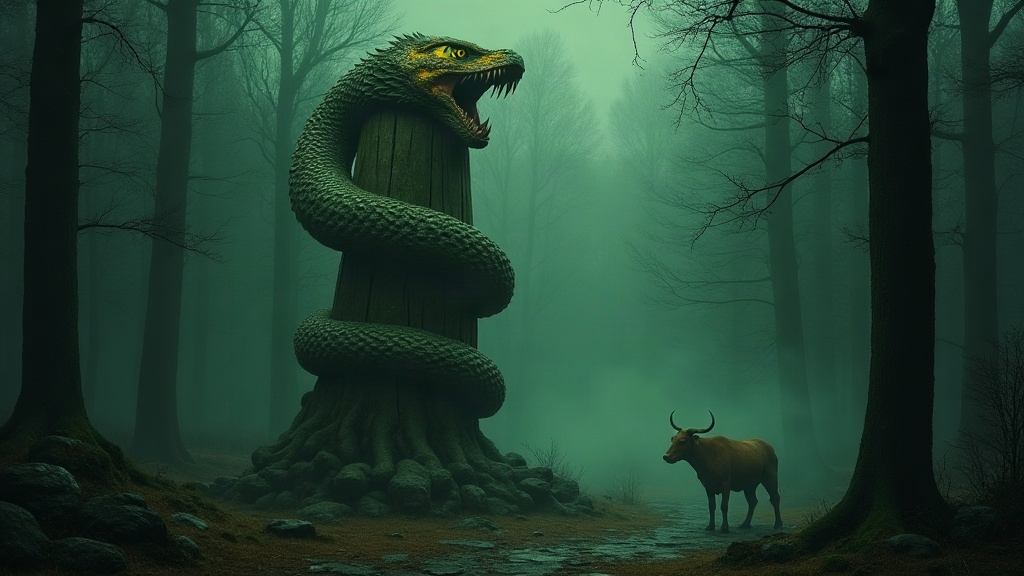
Slavic
Veles: Slavic God of the Underworld and Cattle
Veles rules wealth, the underworld, and herds in Slavic tradition. A shapeshifter and keeper of secrets, he stands at the boundary between the living world and the realm below. Discover the god who defied easy categories.
Slavic
Rod and the Rozhanitsy: Slavic Deities of Fate and Fertility
Rod weaves the threads of destiny while the Rozhanitsy nurture life itself. Discover how these ancient Slavic deities embodied the hidden forces that shaped families, harvests, and the very fabric of fate.

Slavic
The Cosmic Battle of Perun and Veles: Thunder, Chaos, and the Slavic Cosmos
In the Slavic cosmos, thunder god Perun and serpent deity Veles clash eternally: a primal battle between order and chaos, sky and underworld, that sustains the world itself. Discover the myths, the gods, and what scholars have found in the ruins of this ancient tradition.
Slavic
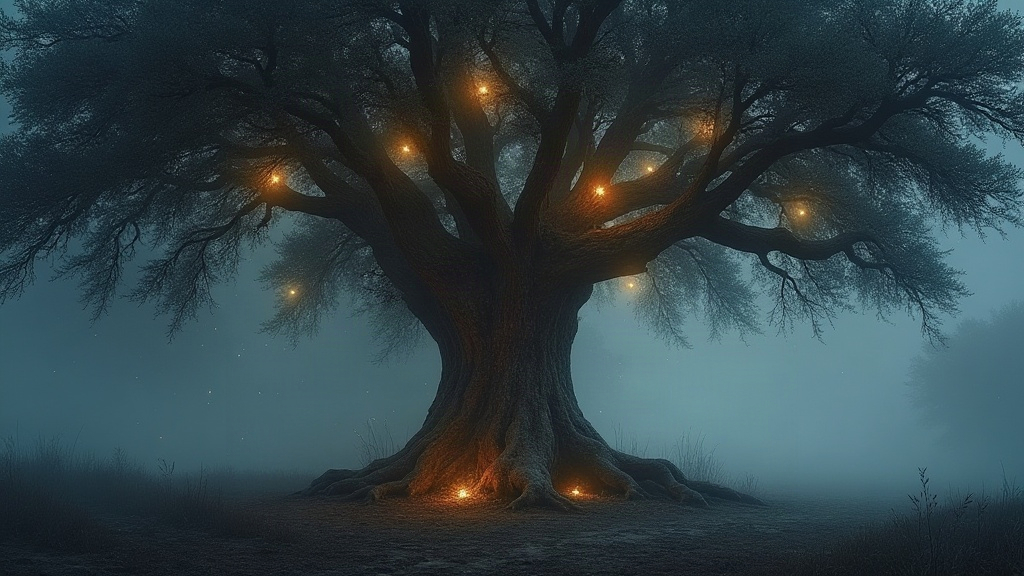
The World Tree in Slavic Cosmology: Structure, Symbols, and Sacred Ritual
The World Tree anchors Slavic belief from the pre-Christian era through living folk practice, connecting sky, earth, and underworld. Discover how this sacred axis shaped Slavic ritual, settlement, and the seasons.