
The Dreamtime: Creation and Eternal Present in Aboriginal Belief
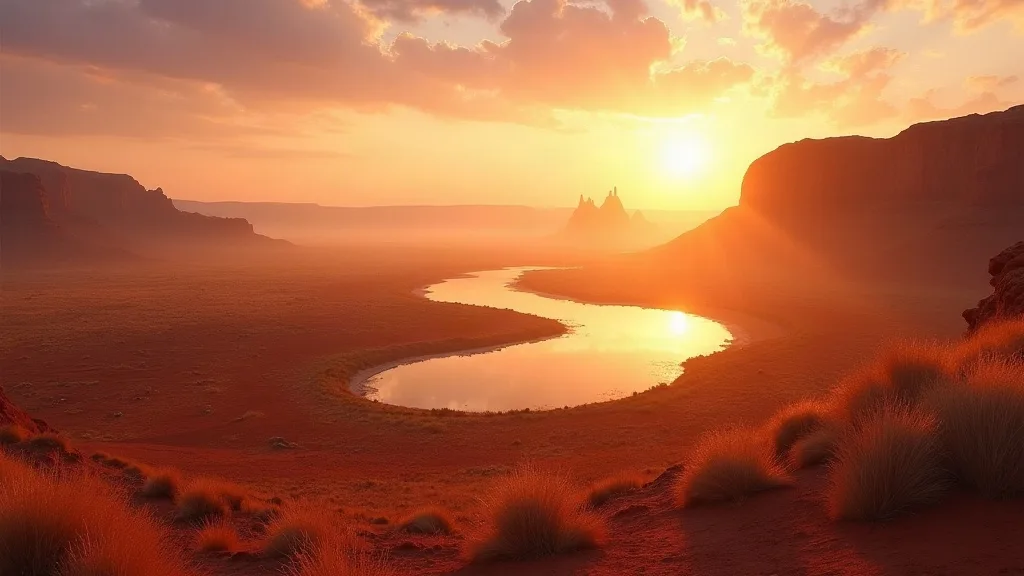
The Dreamtime is the Aboriginal foundation of existence: the era when ancestral beings shaped the land, set down the laws of kinship and ritual, and wove themselves into every rock, waterhole, and song. It is neither ancient history nor myth alone, but an ongoing reality that Aboriginal peoples access through ceremony, song, and country.
Contents
In the red earth of Australia, beneath the stars that still bear the songs of creation, the Dreamtime is not a story you finish. It is a presence that does not fade. When an Aboriginal elder traces a finger across ochred sand and speaks of the Dreaming, they are speaking of the moment the world took shape, the ancestors who became the land itself, and the law that still governs every kinship, every ceremony, every sacred site. The Dreamtime is the foundation upon which all Aboriginal cultures rest: not mythology, but ontology; not the past, but a reality that coexists with the present and stretches into the future.
For tens of thousands of years, Aboriginal peoples have maintained this cosmology across the Australian continent. The knowledge is carried in song, in dance, in the intricate designs painted on bark and body, in the journeys taken across country, and in the stories that bind people to place. To understand the Dreamtime is to grasp how Aboriginal cultures encode creation, law, identity, and obligation into a single, living framework.
The Ancestral Beings and the Shaping of Country
During the Dreamtime, enormous ancestral beings emerged from the earth or descended from the sky. These were not gods in the sense of distant, all-powerful rulers. They were living forces, each carrying specific knowledge and power. The Yolngu people of northeast Arnhem Land speak of Barama and other ancestral beings who traveled across the land, leaving tracks that became rivers and paths. The Martu people of Western Australia invoke the Ngaa (the Rainbow Serpent in some traditions, though this single name obscures the diversity of water-serpent beings across different countries), a creator whose body shaped valleys and whose song still flows through water sources.
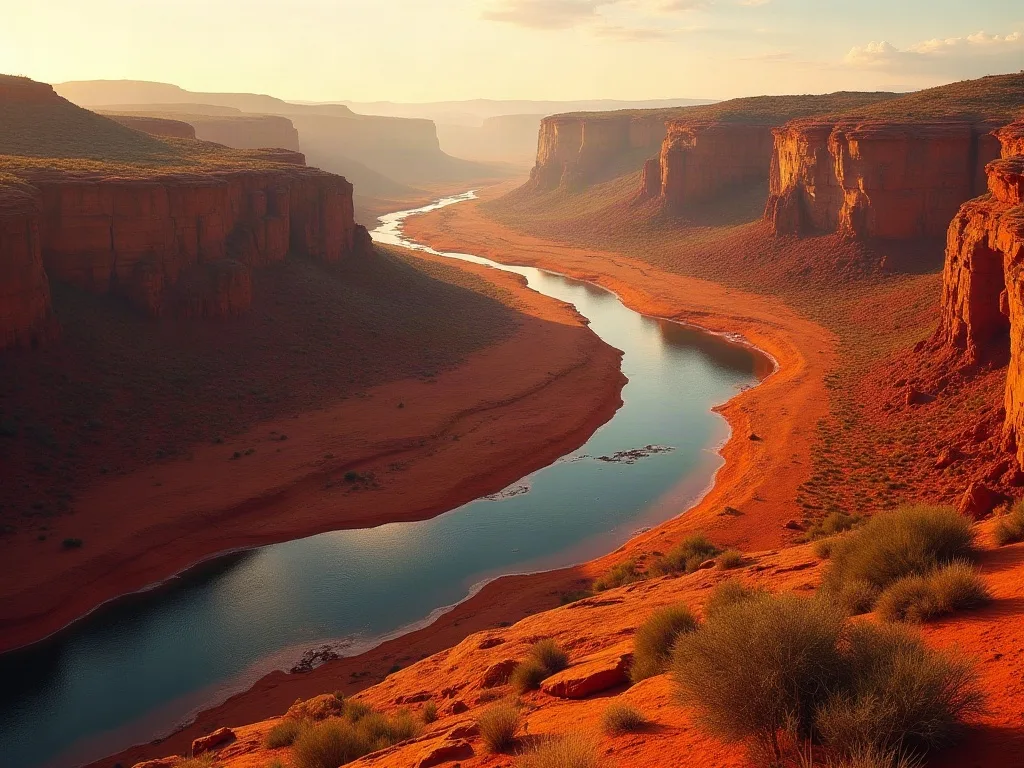
Each ancestral being had a distinct character and domain. Some were hunters; some were gatherers. Some shaped the sky; others laid down the rules of marriage and obligation. The Dreaming track of a being is literally a journey across country: as the ancestor moved, their footfalls became mountains, their body twisted into rock formations, their breath filled water holes. This is not metaphor for Aboriginal peoples. A rock outcrop is not merely named after an ancestor; it is the ancestor, in physical form, holding their power.
In some accounts, the ancestral beings eventually returned to the earth or transformed into natural features. The Rainbow Serpent, known by different names in different regions (Bangadjamili, Yurlunggur, Wonambi), settled into deep water holes, where it remains a living presence, associated with rain, fertility, and danger. Other beings became celestial: the star Sirius is understood by many groups as an ancestral Dreaming being, still active, still connected to law and ceremony on earth.
The diversity of ancestral beings across the continent reflects the incredible variety of Aboriginal cultures. There is no single "Aboriginal cosmology," but rather hundreds of interconnected regional cosmologies, each tied to specific country and expressed in specific languages. A Dreamtime being important to the Warlpiri people of central Australia may be entirely unknown to coastal peoples, not because one version is "right," but because each country has its own ancestors and its own law.
Creation as Continuous Emergence
The Western understanding of creation often assumes a moment of origin followed by a static world. The Dreamtime resists this framework. Creation is not a finished event but an ongoing process.
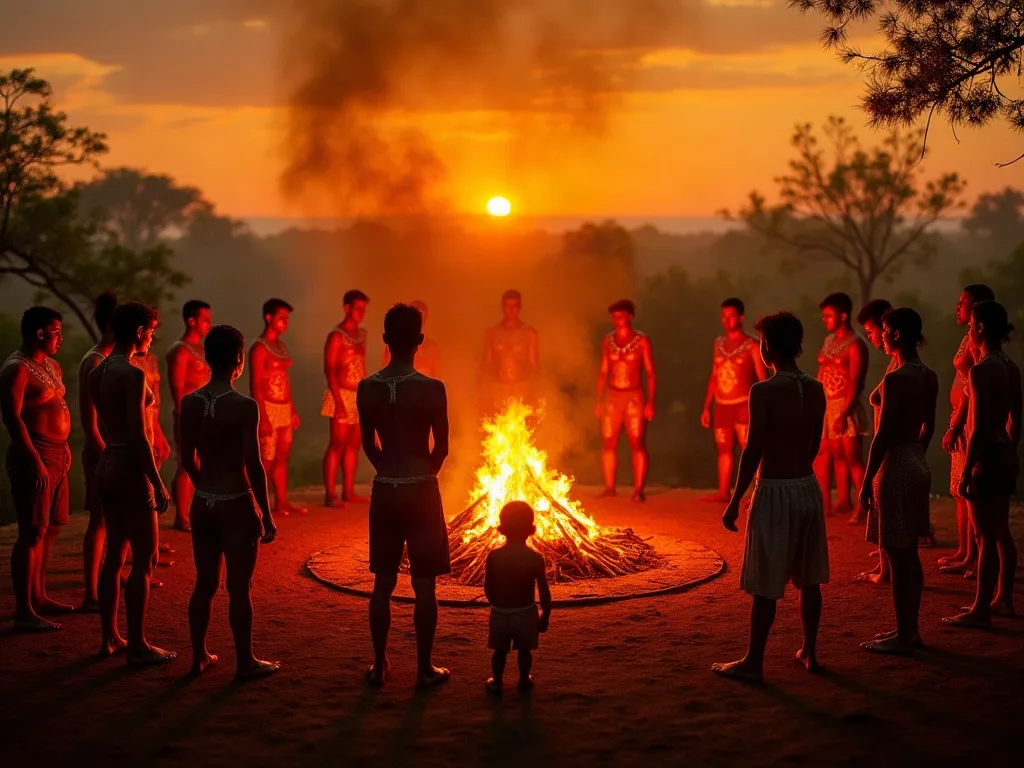
The ancestral beings did not create and then depart. They are present in the land itself. Their power, their knowledge, their essence reside in specific places: a song line, a sacred site, a body of water. When an Aboriginal person performs a ceremony in the correct way, at the correct place, at the correct time, they are not merely remembering the Dreamtime. They are re-enacting it, renewing it, maintaining the connection between the ancestral realm and the present moment. The ceremony keeps the law alive. It keeps the country healthy. It keeps the people in proper relation with their ancestors and with each other.
This is why the Dreamtime is not confined to the mythological past. It is contemporary. It is eternal in the sense that it persists across time, accessible and active. An Aboriginal person speaking today of the Dreaming is not narrating ancient history; they are describing a reality that touches the present moment. The Dreamtime is the source of law, and law is lived now.
Many Aboriginal groups express this through the concept of the songline or Dreaming track: a vast network of paths crisscrossing Australia, each associated with an ancestral being's journey, each marked by specific songs, dances, paintings, and ceremonies. The songlines are mnemonic devices, but they are also maps of country, genealogies of kinship, and practical guides to resources. Walking a songline is walking in the footsteps of an ancestor, activating their power, maintaining their story.
Anthropologist Bruce Chatwin's The Songlines (1987) brought Western attention to this system, though his interpretation emphasized the songlines as abstract routes and sometimes romanticized Aboriginal cultures. More recent scholarship by Aboriginal scholars themselves, including research compiled by the Australian Institute of Aboriginal and Torres Strait Islander Studies (AIATSIS), emphasizes that songlines are living knowledge systems, not museum pieces.
The Law and Kinship Structures
The Dreamtime is not a story of individual gods performing cosmic deeds. It is, fundamentally, a story of law.
The ancestral beings established the law during the Dreamtime: who could marry whom, what obligations bind people to their country, what ceremonies must be performed and when, what animals or plants could be hunted, what was forbidden. This law, called dreaming or law in many Aboriginal languages, is absolute and eternal. It is not written in a text; it is inscribed in country, song, and ceremony.
Kinship is central to this law. The Dreamtime ancestors established kinship categories that determine who can marry, who must care for whom, what rights and responsibilities each person carries. These are not arbitrary social rules but cosmic orderings established by the ancestral beings themselves. To violate kinship law is to place oneself outside the proper order of the Dreaming, to risk sickness, conflict, or worse.
The Yolngu people of Arnhem Land, for example, organize their society into two major moieties (halves): Dhuwa and Yirriya. Every person belongs to one or the other, determined by their country and their mother's affiliation. This division is not merely social; it is cosmic, rooted in the Dreaming. The Dhuwa and Yirriya represent different aspects of creation and are associated with different ancestors, different lands, different ceremonies.
Similarly, many Aboriginal cultures recognize multiple skin groups or subsections that determine marriage, kinship obligations, and ritual roles. These structures are elaborately related to the landscape, to ancestral beings, to specific natural species, and to the seasons. They represent a sophisticated encoding of ecological knowledge, social cohesion, and cosmic order into a single system.
Sacred Sites and the Living Landscape
Every significant natural feature in Australia is associated with a Dreaming being or event. A rock formation is not merely a geological feature; it is the body of an ancestor. A waterhole is not merely a resource; it is a site where an ancestor rested, where their power still concentrates, and where ceremony must sometimes be performed to maintain its vitality.
These sacred sites are not optional additions to the landscape. They are the reason the landscape exists in its current form. Walking through Aboriginal country, one is walking through a text written by the ancestral beings themselves. The land reads to those who know the language.
This creates a profound relationship between Aboriginal peoples and their country. A person is not merely from a particular country; they are of that country. They are born from the country. Their spirit is connected to a particular site, a particular ancestor. When asked where they come from, an Aboriginal person may describe their country in terms of its Dreaming sites, its songs, its law.
The loss or desecration of sacred sites is not merely an archaeological or cultural tragedy. It is understood as a severing of the connection between a people and their ancestor, a breaking of the law, a rupture in the fabric of existence itself. This understanding drove Aboriginal resistance to colonization and continues to drive contemporary Aboriginal activism around land rights and the protection of sacred sites.
The Diversity of Dreamtime Stories
While the framework of the Dreamtime is nearly universal across Aboriginal cultures, the specific stories, the specific ancestral beings, and the specific laws vary enormously.
The Dreamtime in the Kimberly region of Western Australia, known through the work of Aboriginal artists and researchers like Jimmy Pike and others, features powerful ancestral beings like Ngarranggarni, the ancestral creator being. The Dreaming tracks of this region crisscross some of the most remote and spectacular country in Australia, with sacred sites marked by waterfalls, gorges, and rock formations.
In Central Australia, the Warlpiri, Aranda, and other desert peoples speak of the Dreaming with its own particular beings and law. The Tjurunga (also spelled Churinga), a sacred object made of wood or stone, carries the design and law of a particular Dreaming site. These objects are not art; they are repositories of law and identity. Only initiated men of the appropriate kinship group may see or touch a tjurunga. The knowledge they contain is restricted, passed down through ceremony, and accessed only by those who have been prepared.
In Arnhem Land, especially among the Yolngu peoples, the Dreaming is expressed in bark painting, body design, and the ceremonial life centered on the Maradjuma or Marakudj (the initiation ceremony that marks the passage from boyhood to manhood and involves the transmission of Dreaming knowledge). The designs on bark paintings are not merely decorative; they are narrative and legal documents, encoding stories, songlines, and ceremony in visual form.
In Tiwi culture, from the islands north of Darwin, the Dreamtime is expressed particularly through the Pukumani ceremony, an elaborate mortuary ritual that honors the recently deceased and reaffirms kinship and law. The ceremony, involving painted designs, songs, and dances, is a direct reenactment of Dreaming events.
On the south coast, among peoples like the Kulin nations of Victoria, the Dreamtime (often called the Dreaming or Law in these languages) is expressed through distinct Dreaming beings and songlines, many now being revived and documented by community-led research initiatives.
The profound diversity of these traditions underlines a crucial point: the Dreamtime is not a single unified mythology but a framework shared across hundreds of distinct Aboriginal nations, each with their own languages, territories, and stories. Treating Aboriginal mythology as monolithic is a form of erasure. Each nation's Dreaming is particular and complete.
Women, Men, and Knowledge
The Dreamtime and the law it establishes are gender-differentiated. This is not about male dominance in the simple Western sense, but about distinct knowledge domains, distinct ceremonies, and distinct powers associated with women and men.
Many Aboriginal cultures recognize women's Dreaming as equally powerful and equally sacred as men's Dreaming. Women hold knowledge of certain sacred sites, certain ceremonies, and certain ancestral beings that men do not access. The great Mother ancestors, beings associated with fertility, with the creation of life, with certain food sources, are often known more intimately by women and transmitted through women's ceremonies.
The Rainbow Serpent, in many representations, is female or ambiguous in gender. She is associated with water, with fertility, with the power to sustain life and also to destroy it. Women's knowledge of this being, of her sites and ceremonies, may be entirely separate from men's knowledge.
Initiation ceremonies, which are crucial moments in the transmission of Dreaming knowledge, are typically gender-segregated. Young people enter initiation at specific ages and are taught the secrets of their country's Dreaming, the law that governs their kinship, and the ceremonies they must maintain. The ceremony itself, guided by elders of the same gender, is a reenactment of Dreaming events and a transformation of the initiate into a full member of their society, responsible for maintaining the law.
The Dreamtime and Time
One of the most profound aspects of the Dreamtime is its relationship to time. The Western concept of time as a line from past through present to future does not fully capture the Aboriginal understanding.
The Dreamtime can be spoken of in past tense ("the ancestral beings created the land") but also in present tense ("the ancestral beings are in the land") and even future tense ("the ancestral beings will guide us"). The tense shifts are not inconsistencies but reflect a reality in which the Dreamtime is not confined to a single temporal moment.
Some scholars and Aboriginal writers have described the Dreamtime as "eternal present" or "eternal Dreaming," emphasizing that it is not a period that ended but a continuous state of being. The Dreaming is the condition of existence itself. To be alive is to be in relation to the Dreaming.
The anthropologist W.E.H. Stanner wrote of the Dreaming as "a complex of meanings" rather than a simple past. This phrasing, while not originating from Aboriginal peoples themselves, captures something crucial: the Dreamtime is not a myth to be decoded into literal historical events. It is a framework of meaning that encompasses creation, law, sacred geography, kinship, and the ongoing relationship between people and country.
The Dreamtime in Artistic Expression
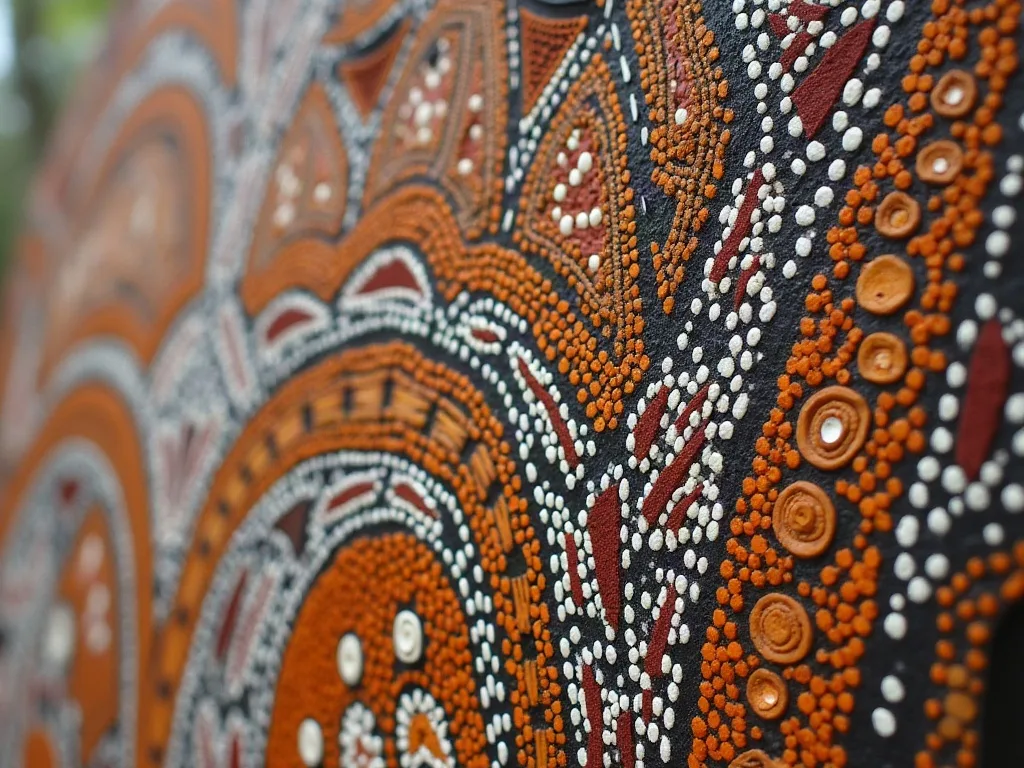
The Dreamtime is expressed not only in song and ceremony but in visual art. Aboriginal painting, particularly the desert painting traditions that emerged in the 1970s and have since become recognized worldwide, is fundamentally an expression of Dreaming stories.
The painted works are not merely illustrations of mythological narratives. They are serious legal and ceremonial documents. A painting of a Dreaming site encodes the songline, the law, the kinship obligations associated with that site. The designs, the colors, the symbols are learned knowledge, transmitted through family and through initiation. The right to paint a particular Dreaming is not universal; it belongs to people of the appropriate country and the appropriate kinship.
Artists like Rover Thomas, Rover Thomas Tjapaltjarri, Dorothy Napurrurla, and Emily Kame Kngwarreye translated the visual language of the Dreaming into forms that could be displayed in galleries and museums. Their work became globally recognized not as exotic craft but as contemporary art of genuine power. Yet the paintings remained rooted in Dreaming knowledge, in country, in the artist's obligation to paint their Dreaming truthfully.
Bark painting from Arnhem Land, including works by artists like Mawalan Marika and his descendants, similarly encodes Dreaming narrative in visual form. The design is not decoration; it is language.
Scholarly Debates and Western Interpretation
The study of the Dreamtime by Western scholars has a complicated history. Early anthropologists, working without deep knowledge of Aboriginal languages or sufficient time in country, often reduced the Dreaming to myth, treating it as a primitive religious framework to be explained or explained away.
The Australian anthropologist A.P. Elkin's The Australian Aboriginals (1938) provided a more respectful account but still viewed the Dreaming through a Western lens. Stanner's essays on Aboriginal religion, particularly his 1965 essay "Religion and the Man in Aboriginal Australia," marked a significant shift toward understanding the Dreamtime as a serious religious and philosophical system.
In recent decades, Aboriginal scholars themselves have become the primary authorities on their own Dreaming. Work by scholars like Deborah Bird Rose, Marcia Langton, Melissa Lucashenko, and others has emphasized that the Dreamtime cannot be fully understood by outsiders and that Aboriginal knowledge systems are sophisticated, internally coherent, and developed over tens of thousands of years.
There remains scholarly debate about specific questions: How much have Aboriginal narratives been altered by colonization and the disruption of transmission? How should non-Aboriginal scholars engage with sacred knowledge that is restricted by law? How can the Dreaming be documented and preserved without breaching cultural protocols? These debates are ongoing, respectful, and productive.
One common misconception, now largely corrected in scholarship, is that the Dreaming is uniform across Australia or that it can be adequately explained through a single set of metaphors. The reality is far richer and more complex.
The Dreamtime in Modernity and Resistance
Colonization was, in many respects, an assault on the Dreamtime. The disruption of Aboriginal connection to country, the prohibition of ceremonies, the forced removal of children (the policies that created the "Stolen Generations"), and the dispossession of sacred sites all represented an attempt to sever the relationship between Aboriginal peoples and their Dreaming.
Yet the Dreaming has proven resilient. In the second half of the twentieth century, as Aboriginal peoples fought for land rights and self-determination, the Dreaming and connection to country became central to political and cultural assertion. The successful Aboriginal land rights campaign in Australia, particularly the Mabo decision (1992), which recognized native title, was argued partly on the grounds that Aboriginal peoples maintained an unbroken spiritual and legal connection to country through the Dreaming.
Contemporary Aboriginal activists, artists, and communities continue to express and revitalize Dreaming knowledge. The recovery of suppressed songlines, the documentation of sacred sites, the teaching of Dreaming knowledge to young people, and the assertion of Aboriginal sovereignty and rights to country are all understood as aspects of maintaining the Dreaming and the law.
The Dreamtime is not a relic of the past to be preserved in museums. It is a living cosmology, actively maintained and continually expressed in the present. To understand contemporary Aboriginal cultures is to grasp that the Dreamtime remains, for Aboriginal peoples, the foundation of all meaning, all law, and all connection to country.
Frequently asked questions about the Dreamtime
Frequently asked questions
Is the Dreamtime the same across all Aboriginal groups?
No. The Dreamtime is a shared framework across Aboriginal cultures, but each of the hundreds of Aboriginal nations has its own distinct Dreaming stories, ancestral beings, sacred sites, and law. A Dreaming story sacred to the Warlpiri people of central Australia is entirely different from a Dreaming story sacred to the Yolngu people of Arnhem Land. Treating all Aboriginal mythology as uniform is a form of erasure.
Did the Dreamtime actually happen? Is it history or mythology?
The Dreamtime is not history in the Western sense, but it is not mythology in the sense of fiction either. It is a framework of meaning that describes creation, establishes law, and encodes geographical knowledge. For Aboriginal peoples, the Dreaming is real: the ancestral beings are present in the land, the law is absolute and binding, and the Dreaming is accessible through ceremony and song. The Western distinction between literal history and story does not capture what the Dreamtime is.
Can non-Aboriginal people learn about the Dreamtime?
Yes, but with important caveats. Much Dreaming knowledge is restricted and can only be accessed by people of the appropriate kinship group, gender, and initiation status. Some Dreaming stories have been shared publicly by Aboriginal communities and artists; others remain secret. Non-Aboriginal people can learn about the Dreamtime framework and about publicly shared stories, but they should always approach with respect, acknowledge their outsider status, and defer to Aboriginal authorities.
How is the Dreamtime transmitted if it is not written down?
The Dreamtime is transmitted through song, dance, ceremony, visual art, and oral narrative. Songs (songlines) encode stories and geographical knowledge. Dances reenact Dreaming events. Ceremonies, particularly initiation ceremonies, transmit Dreaming knowledge from elders to younger people. Visual designs on paintings, bark, and bodies carry narrative and legal information. This is not informal or unreliable transmission; it is a sophisticated system that has maintained consistent knowledge across tens of thousands of years.
What is the Rainbow Serpent, and how does it relate to the Dreamtime?
The Rainbow Serpent (known by different names in different regions: Bangadjamili, Yurlunggur, Wonambi, Ngarranggarni) is one of the most widespread ancestral beings across Aboriginal Australia. It is associated with water, fertility, danger, and the power to sustain and destroy life. The Rainbow Serpent is understood as a Dreaming being, present in deep water holes, still active, still connected to law and ceremony. It is not a god in the sense of a creator deity, but a powerful ancestral force.
The Dreamtime as Living Cosmology
The Dreamtime resists easy categorization. It is mythology and religion, but also history and law. It is creation story and map of country. It is accessible through song and ceremony but also contains secrets that only initiates can know. It is ancient beyond measure, yet it is present now, in the land, in the law, in the obligation of Aboriginal peoples to maintain the Dreaming for future generations.
To stand on Aboriginal country and to understand that every rock, every waterhole, every curve of the land speaks of an ancestral being, to grasp that the Dreaming is not a story about the past but a living reality shaping the present: this is to step into a radically different understanding of creation, of time, of the relationship between people and place. The Dreamtime is not something that Aboriginal peoples possess. They are possessed by it. They are of the Dreaming, as the land is of the Dreaming. This is the foundation of Aboriginal cultures and the source of their extraordinary resilience across tens of thousands of years.
Read the full book
Want the whole story?
The complete edition is an instant PDF download here, with a paperback on Amazon for selected titles.
Australian Aboriginal
The Aboriginal Mythology Book: The Rainbow Serpent, Wandjina, Baiame, and the Dreamtime Stories of the World's Oldest Tradition
60,000 Years of Unbroken Ancestral Memory
The world's oldest continuous mythology. From the Rainbow Serpent to the Wandjina cloud spirits, explore the Dreamtime stories that have mapped Australia for 60,000 years.
More from Australian Aboriginal
All articles
Australian Aboriginal
Namarrgon: The Lightning Man of Arnhem Land
Namarrgon is the terrifying sky god of the Yolngu people who creates lightning and controls the monsoon storms that shape life across Arnhem Land. His thunderous presence reveals how Aboriginal cultures read the sky as a living, ancestral force.
Australian Aboriginal
The Seven Sisters: Celestial Pursuit and Pleiades Myth in Aboriginal Australia
Seven sisters flee across the sky in Australian Aboriginal mythology, hunted by a man who will never catch them. This eternal chase, traced in the Pleiades star cluster, reveals how Aboriginal peoples read the cosmos as a living story of desire, escape, and sacred boundaries.
Australian Aboriginal
Yara-ma-yha-who: The Bloodsucking Tree Dweller of Australian Aboriginal Myth
Meet the Yara-ma-yha-who, a small but lethal tree-dwelling creature from Rainrainforest Aboriginal lore that hunts humans by bloodsucking and regurgitation. Discover what this creature reveals about danger, transformation, and survival in the deep Australian bush.

Australian Aboriginal
Wandjina: Cloud and Rain Spirits of the Kimberley
The Wandjina are powerful cloud and rain spirits central to Kimberley Aboriginal culture, shaped in rock art and songlines for thousands of years. Discover their role in creation, their visual grammar, and why their caves remain sacred today.