
Namarrgon: The Lightning Man of Arnhem Land
Namarrgon is the terrifying sky god of the Yolngu people who creates lightning and controls the monsoon storms that shape life across Arnhem Land. His thunderous presence reveals how Aboriginal cultures read the sky as a living, ancestral force.
Contents
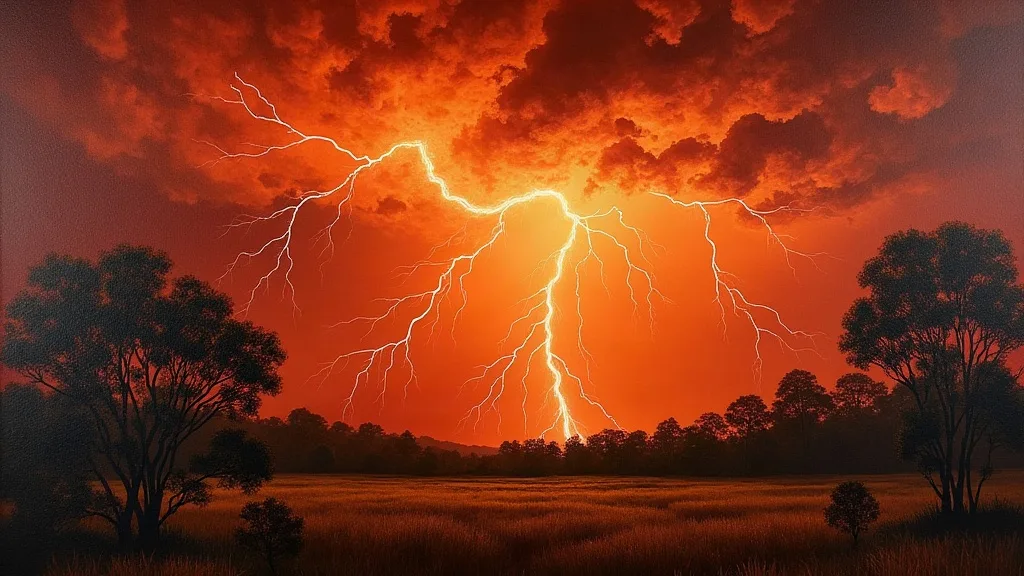
In the season when the sky turns dangerous, the Yolngu people of Arnhem Land hear Namarrgon moving overhead. His footsteps are thunder. His axes swing through clouds as blades of lightning. The rain that follows is his breath. When the monsoon builds in the sky, it is because Namarrgon: The Lightning Man of Arnhem Land walks the pathways between worlds, and the earth below trembles at his passage.
Namarrgon is not a god of comfort or mercy. He is raw power made visible: the moment when sky cracks open and energy floods down to burn the land. For the Yolngu, who live in one of Australia's most storm-intense regions, Namarrgon is not a distant deity. He is the force that arrives each monsoon season, reshaping the landscape, carrying danger and fertility in the same breath. To understand him is to understand how Aboriginal peoples of northeast Australia read the violence of weather as sacred presence.
The Warrior in the Sky
Namarrgon appears in the stories of the Yolngu as a figure of barely contained rage. He is depicted as a humanoid being with axes attached to his body, most notably at his knees and elbows. These are not tools he picks up or puts down. They are part of his flesh. When Namarrgon moves, he cuts the air itself. Lightning is the visible trail of his axes' passage through clouds.
The Yolngu speak of him as wearing a kind of headdress or crown, often described as a distinctive shape that marks him in the sky. Some accounts say his body itself glows or radiates light. Others describe him as riding or commanding the great storm clouds that roll across the Arafura Sea during the monsoon months. His presence is felt before it is fully seen: the pressure drop in the air, the sudden darkening of the sky, the electric charge that makes the hair on skin stand erect.
What sets Namarrgon apart from thunder gods in other traditions is his relationship to the land itself. He does not rule the sky from a distant throne. He is constantly moving, constantly working. He is restless. The monsoon season lasts months because Namarrgon walks back and forth across Arnhem Land, never settling, his axes continually striking. The Yolngu understood that the lightning they saw was not random discharge but the deliberate action of this being going about his work in the sky.
The Monsoon as Sacred Cycle
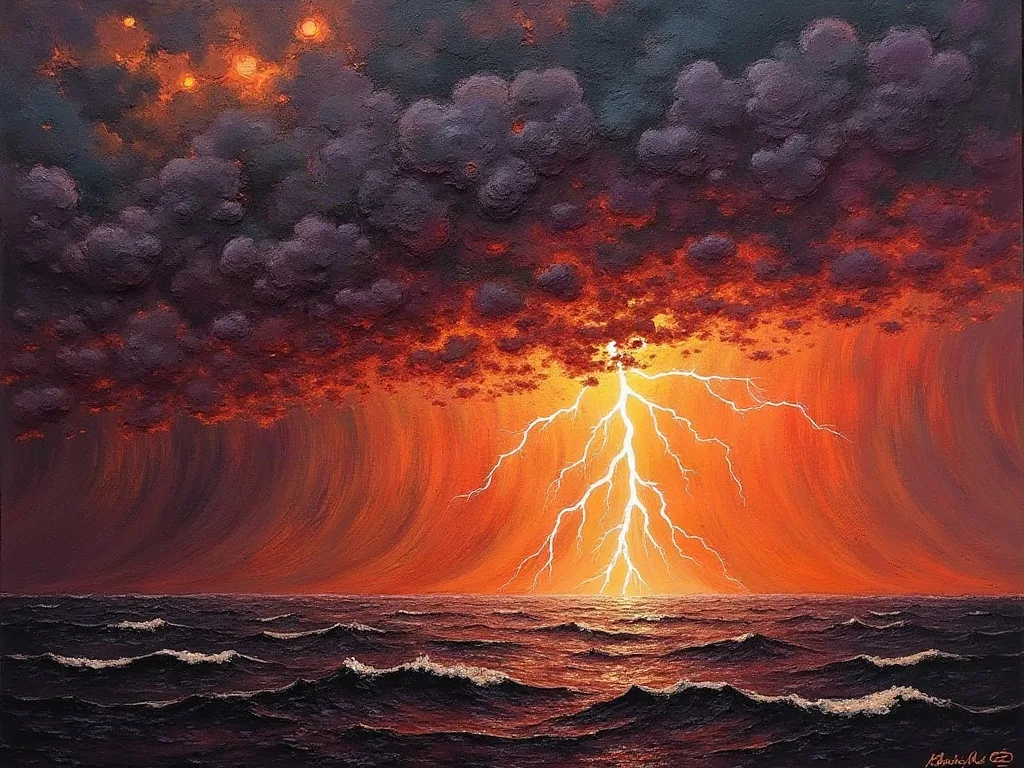
In Arnhem Land, the monsoon is not a backdrop to human life. It is the dominant force that shapes every survival decision. The season brings torrential rain, fierce wind, and lightning storms that strike with terrifying frequency. For much of the year, the landscape is dry. Water becomes precious. Then Namarrgon arrives, and the entire world transforms.
The Yolngu calendar divides the year into seasons marked by subtle shifts in wind, rain, and the behavior of animals and plants. Namarrgon's presence corresponds to what is often called the monsoon season, though his influence extends across multiple traditional seasons. He is not merely present during storms. He is the architect of the entire wet season cycle. The buildup of moisture in the air, the greening of the land, the rush of water through creeks and rivers, the arrival of certain fish and birds, the flowering of specific plants, the suitability of ground for hunting certain game, the danger of crocodiles moving into flooded areas, the risk to people traveling across country, the opportunities for gathering and ceremony. All of this flows from Namarrgon's movements.
The power of Namarrgon is not abstract punishment. It is functional. The lightning that strikes also begins fires that clear old vegetation and prepare land for new growth. The massive rains that endanger travelers also fill waterholes and bring fertility to the country. The danger he carries is inseparable from the nourishment he provides. A person who learns the stories of Namarrgon learns not to fear the monsoon stupidly but to understand its patterns, to read the signs he sends, to know when to remain in shelter and when the danger has passed enough to venture out.
Sacred Stories and the Ancestral Dimension
In Aboriginal cosmology, the being we call Namarrgon is understood as an ancestral presence that has existed since the Dreamtime, or Djang'kawu, when the great power-beings moved across the land singing and creating. He is not a historical figure. He exists in a continuous present. Every monsoon, Namarrgon repeats the same journeys, the same acts, the same cycles that he has always performed. The Yolngu do not pray to Namarrgon to make rain or lightning happen. They recognize his presence in the weather itself.
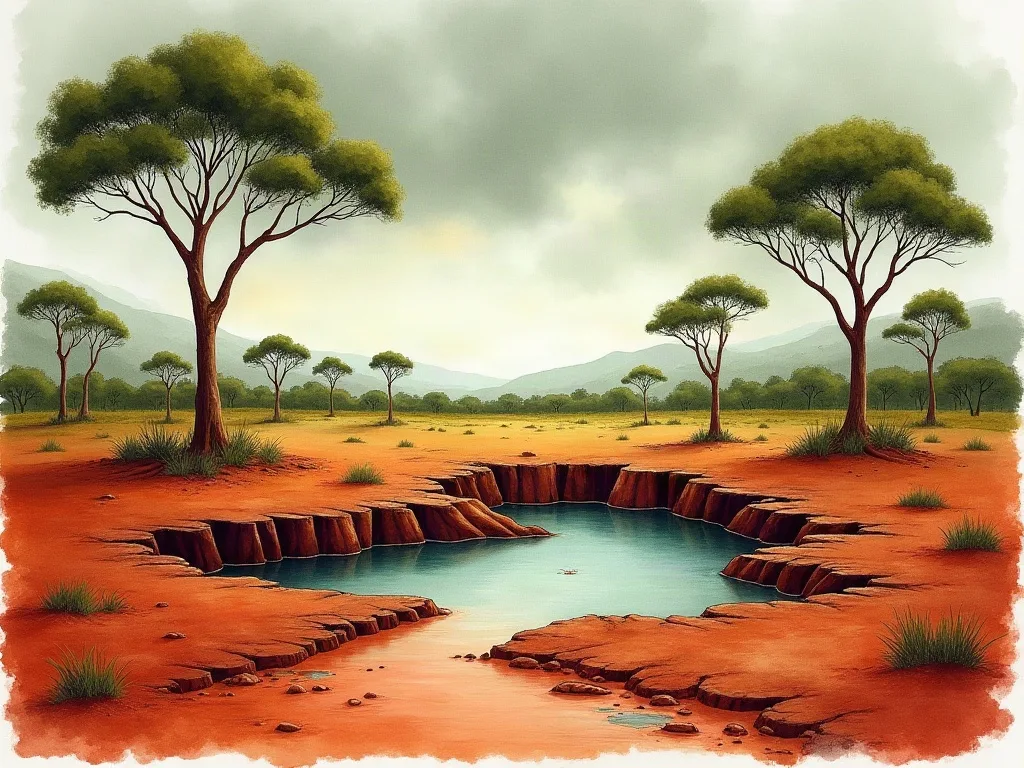
The stories associated with Namarrgon are tied to specific geographic locations across Arnhem Land. Certain ridges are said to be the pathways he walks. Certain rock formations mark places where he has struck. Certain waterholes or freshwater sources are understood to be the result of his lightning strikes and the erosion they cause. The entire landscape is a text written by ancestral beings like Namarrgon over tens of thousands of years. Reading the country means recognizing Namarrgon's signature in its contours.
Different Yolngu clans have distinct relationships to Namarrgon. Some clans have Namarrgon as a major figure in their songlines, or Dhimurru, the great narrative cycles that encode law, territory, and spiritual knowledge. Others have secondary connections. The specificity matters. A person's identity is bound up with which ancestral beings are most significant to their clan, their country, their inheritance. Namarrgon may be central to one family's songline and peripheral to another's, yet both groups live under the same sky and experience the same monsoons.
Namarrgon and the Wandjina Figures
In parts of the Aboriginal cultures of northern Australia, there is a related but distinct tradition of sky beings sometimes called Wandjina. These are depicted in rock paintings with distinctive features: large round heads, prominent eyes, and a vertical line for a mouth. Some scholars have attempted to link Wandjina to Namarrgon, arguing for a unified Aboriginal sky-god concept across the region. The relationship is subtle and contested.
The clearest overlap is that both Wandjina and Namarrgon are associated with rain, storms, and the power of weather. Both are ancestral beings rather than gods in the monotheistic sense. Both are understood to move through the country and leave traces in the landscape. However, Wandjina are generally understood as benevolent creator-beings associated with the general fertility and maintenance of the land, while Namarrgon carries a distinctly aggressive, dangerous character. Wandjina appear in the rock art of the Kimberley region to the west of Arnhem Land. Namarrgon is most strongly associated with the Yolngu and their neighbors.
Rather than declaring one "the same as" the other, it is more accurate to say that across Aboriginal Australia, the sky itself is understood as a realm of powerful ancestral presence, and different peoples in different countries have their own ways of naming and relating to that presence. Namarrgon is the Yolngu term and story. The concept he embodies, the active force in the sky that shapes weather and fertility, has echoes across the continent.
The Axes and the Weapons of Power
In many traditions, weapons are symbols of divine authority. Thor swings Mjolnir, the hammer. Indra wields the Vajra. The axes attached to Namarrgon's body serve a similar function, but their meaning is specific to his role. These are not weapons of war or conquest. They are tools of creation and maintenance.
The lightning that results from Namarrgon's axe-strikes is not a side effect but the primary expression of his power. The striking motion is the whole point. It is his fundamental action, repeated across the monsoon season. The Yolngu word for lightning is often connected to the idea of splitting or striking. When a tree is struck by lightning, the Yolngu see the direct result of Namarrgon's passage. The burn mark is his signature.
What is striking about the axe-image is its embodied nature. Namarrgon does not summon lightning from a distance. The axes are part of his body. When he moves, they move. He cannot separate himself from his function. He is the lightning. There is no gap between his will and the manifestation of power. This reflects a broader Aboriginal understanding that persons, landscapes, and ancestral forces are not neatly separated. The being and the action are one.
Namarrgon in Material Culture and Art
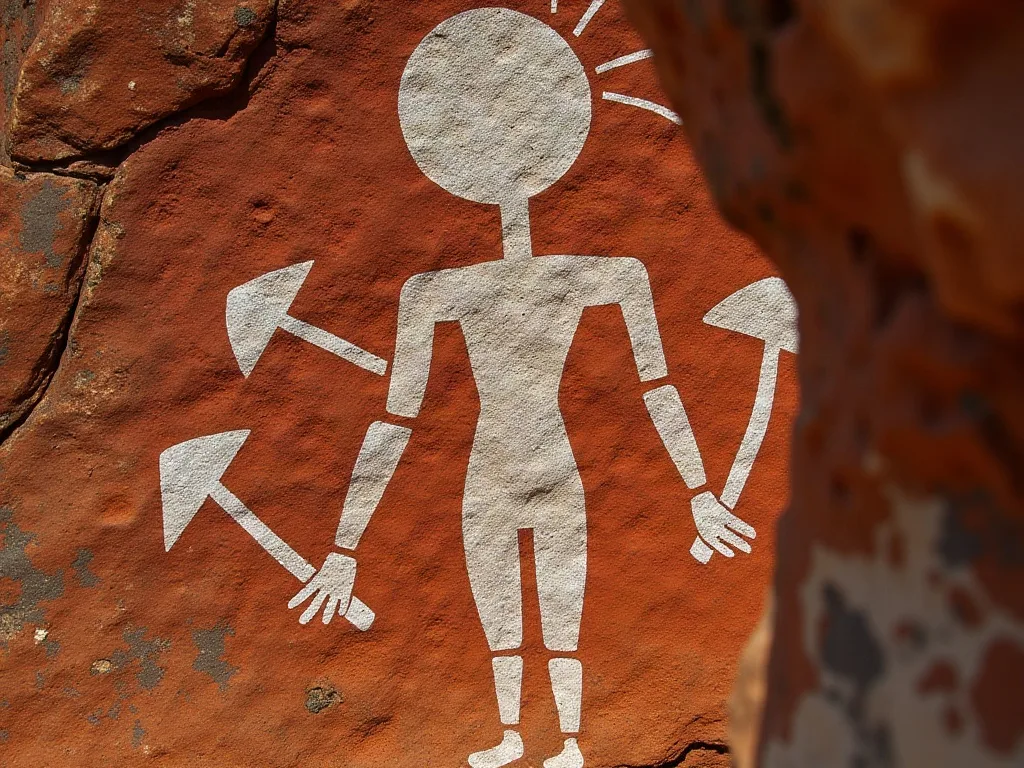
The Yolngu people have preserved knowledge of Namarrgon through rock paintings, body painting designs, and oral transmission. In the rock art of Arnhem Land, particularly in the northeast region, representations consistent with Namarrgon appear in the distinctive X-ray style that shows both the outline of a figure and its internal detail. The figure is often depicted with the characteristic axes and sometimes with the headdress or crown.
Body painting for ceremonial purposes includes designs associated with Namarrgon and his country. The patterns are not arbitrary decoration. Each design carries meaning: it marks connection to specific land, to specific law, to specific ancestral power. A person painted with Namarrgon designs during a ceremony is not merely wearing an image. They are inviting his presence, identifying themselves with his territory and his power, entering a form of relationship with his ancestral force.
The designs are taught from elder to younger generation within families and clans. They are not written down in any colonial sense. They are embodied knowledge, held in memory and practice. When a young person learns the Namarrgon designs and their stories, they are becoming initiated into specific dimensions of their people's law and country. The visual tradition and the oral tradition cannot be separated. To see the painting is to know that the story is about to be told, or is being told through the painting itself.
Namarrgon and the Seasons of the Body
A significant aspect of Namarrgon's role, less often emphasized in non-Aboriginal accounts, is his connection to human fertility and bodily change. In some Yolngu contexts, the power of Namarrgon during the monsoon is linked to the revitalization of the land and, metaphorically or directly, to human generative power. The drenching rains and the fertility they bring are not metaphors only. They are understood as part of the same cosmological current that allows human bodies to grow strong and reproduce.
The monsoon season is also a time of heightened ceremonial activity for some groups, as the abundance of water and plant life supports larger gatherings and more elaborate feasts. Namarrgon's power, terrifying as it is, creates the conditions for these social and spiritual intensifications. Fear of Namarrgon and gratitude for his provision are not contradictory. They are aspects of the same respectful recognition of his power.
There are also teachings, preserved in oral tradition and in some cases documented by anthropologists who have worked with Yolngu authorities, that connect the monsoon's electrical activity to the spiritual vitality of the country itself. A season with more lightning is not just more dangerous. It is understood as a sign of Namarrgon's strength and, correlatively, of the strength of the law and the ancestral power of the land itself.
Namarrgon in Modern Contexts
The Yolngu people and other Aboriginal groups in Arnhem Land continue to maintain knowledge of Namarrgon through the 21st century. The monsoon still arrives each year. The lightning still strikes. The stories remain vital because the environmental reality they describe is ongoing. There is no sense in which Namarrgon has become a historical relic or a museum piece.
At the same time, the context of Aboriginal knowledge transmission has been deeply disrupted by colonization and its ongoing effects. The interruption of traditional practice, the removal of children from families, the disruption of ceremonial life, the enforced assimilation policies, the underfunding and marginalization of Aboriginal education and cultural maintenance, the environmental changes brought by industrial development and climate shift. All of this has placed pressure on the continuity of knowledge.
Yet the transmission continues. Yolngu artists and knowledge-keepers have chosen to share aspects of their traditions with non-Aboriginal audiences through various media. Some rock art sites in Arnhem Land are now protected and accessible to visitors under Yolngu authority. Some stories have been recorded and archived, though often with specific permissions about how and by whom they can be shared. The approach is careful: not all knowledge is intended for public circulation, and the Yolngu have maintained control over what aspects of their traditions are presented to outsiders.
Namarrgon's image appears in contemporary Aboriginal art, in installations and exhibitions that engage with traditional forms while using modern materials. The recognition of Aboriginal intellectual property and the right to economic benefit from cultural knowledge is an ongoing struggle. But the fact that knowledge of Namarrgon is being actively maintained, taught to new generations within Yolngu families and communities, and selectively shared in public contexts, suggests that this ancestral figure is not becoming extinct but rather adapting to new circumstances while maintaining continuity with ancient practice.
Namarrgon and Indigenous Cosmology Beyond Australia
The figure of Namarrgon offers valuable perspective for anyone seeking to understand how human societies across the globe understand the sky and the weather. The tendency in Western thought is to separate the physical phenomena (atmospheric pressure, electrical discharge, precipitation) from the narrative dimension (the god, the story, the meaning). Aboriginal cosmology, as expressed in the Namarrgon tradition, holds these together.
This is not mysticism or failure to understand science. It is a different epistemology, a different way of knowing that does not require splitting the world into physical fact and cultural interpretation. The lightning is real. The strike is real. The danger is real. The fertility is real. The ancestral presence is also real, as understood in the Yolngu framework. These are not competing claims but interlocking dimensions of a single reality.
Other indigenous traditions have similar approaches. The Inca understood the weather as the action of specific divine beings. The Shoshone peoples of North America had powerful narratives about thunder and rain that encoded both meteorological knowledge and spiritual understanding. The Aboriginal traditions of Australia are distinctive in their depth and continuity, but the underlying approach, the refusal to split meaning from matter, appears across many indigenous cosmologies.
Frequently asked questions about Namarrgon, the Lightning Man of Arnhem Land?
Frequently asked questions
Is Namarrgon worshipped in the same way as gods in Western religions?
Namarrgon is not the object of prayer or petition in the Western sense. The Yolngu do not ask Namarrgon to make it rain or to stop a storm. Rather, they recognize his presence in the weather itself and adjust their actions accordingly. The relationship is one of respectful recognition and careful observation of his patterns, encoded in stories, songs, and ceremonial practices. Worship here means living in accordance with law, not appeasing a deity.
How do the Yolngu people distinguish Namarrgon from natural weather phenomena?
The distinction is not absolute. For the Yolngu, Namarrgon is the lightning and thunder, not a separate being causing them from somewhere else. When people say "Namarrgon is moving," they are describing what we would call the monsoon system, but they are doing so in a language that recognizes the power as intentional and ancestral. The two frameworks, Aboriginal and Western scientific, can coexist in Yolngu understanding without contradiction.
Are there other Aboriginal sky beings similar to Namarrgon?
Yes. Across Aboriginal Australia, the sky is understood as a realm of powerful ancestral presence. Different peoples in different regions have their own figures and stories. The Wandjina of the Kimberley region to the west, for instance, are also associated with storms and rain. However, each figure is specific to the country and the people associated with that land. There is no single "Australian Aboriginal sky god"; rather, many different peoples with their own distinct ancestral beings and relationships to the sky.
What sources document Namarrgon's stories?
Namarrgon is preserved primarily through oral transmission within Yolngu communities and through rock art in Arnhem Land. Some knowledge has been documented by anthropologists and linguists who have worked with Yolngu permission, though not all knowledge is intended for public circulation. The Yolngu have maintained careful control over what aspects of their traditions are shared with non-Aboriginal audiences, which is both an assertion of intellectual property rights and a recognition that some knowledge carries spiritual responsibility.
Does Namarrgon have a direct equivalent in other world mythologies?
Namarrgon shares functional parallels with thunder gods like Thor in Norse tradition or Indra in Hindu tradition. All are associated with storms, lightning, and sky power. However, Namarrgon's specific form, his role in the Yolngu cosmology, his continuous action during the monsoon season, and his deep integration with the land of Arnhem Land make him culturally distinct. The comparison illuminates, but Namarrgon remains singular to his own tradition.
Is Namarrgon still relevant to contemporary Yolngu people?
Absolutely. The monsoon still arrives each year. The lightning still strikes. The stories remain taught within families and communities, and some are shared in public contexts like rock art sites and contemporary art exhibitions. Namarrgon is not a historical relic but an active presence in Yolngu cosmology and in the lived experience of people living in Arnhem Land. Knowledge transmission continues despite the challenges of colonization and cultural disruption.
Namarrgon's Landscape: Reading Country Through Ancestral Eyes
To understand Namarrgon fully is to step outside the idea that mythology is separate from geography. In Aboriginal cosmology, the two are one. Namarrgon is not a being who exists in myth and also in the sky. Namarrgon is known through the country itself. The places where lightning has struck repeatedly are Namarrgon's sites. The waterholes that have been carved by his strikes are his gifts. The specific ridges and valleys, the shapes of trees, the colors of soil, the behaviors of animals, the flowering times of plants. All of these carry Namarrgon's signature.
A Yolngu person walking through country knows Namarrgon intimately through this landscape reading. To be initiated into such knowledge is to understand oneself as part of a vast network of connection. The monsoon is not something that happens to the country. It is Namarrgon moving through his ancestral terrain. The person standing in the storm is not separate from that event but participating in it. The body feels the electrical charge. The skin knows Namarrgon.
This understanding challenges the Western assumption that myth is imaginative and landscape is literal, or that culture is added on top of nature. For the Yolngu, these are aspects of a single reality. The axes of Namarrgon are not metaphorical. They are real and visible every monsoon season. The law he embodies is not symbolic. It governs how people move through country, when they can travel safely, where they can gather food, how they understand their relationship to the land and to other people. Namarrgon, approached on his own terms, is a figure who dissolves the false boundary between spirit and matter, between story and fact, between meaning and the world.
Read the full book
Want the whole story?
The complete edition is an instant PDF download here, with a paperback on Amazon for selected titles.
Australian Aboriginal
The Aboriginal Mythology Book: The Rainbow Serpent, Wandjina, Baiame, and the Dreamtime Stories of the World's Oldest Tradition
60,000 Years of Unbroken Ancestral Memory
The world's oldest continuous mythology. From the Rainbow Serpent to the Wandjina cloud spirits, explore the Dreamtime stories that have mapped Australia for 60,000 years.
More from Australian Aboriginal
All articles
Australian Aboriginal
The Dreamtime: Creation and Eternal Present in Aboriginal Belief
The Dreamtime is the Aboriginal foundation of existence: the era when ancestral beings shaped the land, set down the laws of kinship and ritual, and wove themselves into every rock, waterhole, and song. It is neither ancient history nor myth alone, but an ongoing reality that Aboriginal peoples access through ceremony, song, and country.

Australian Aboriginal
The Seven Sisters: Celestial Pursuit and Pleiades Myth in Aboriginal Australia
Seven sisters flee across the sky in Australian Aboriginal mythology, hunted by a man who will never catch them. This eternal chase, traced in the Pleiades star cluster, reveals how Aboriginal peoples read the cosmos as a living story of desire, escape, and sacred boundaries.
Australian Aboriginal
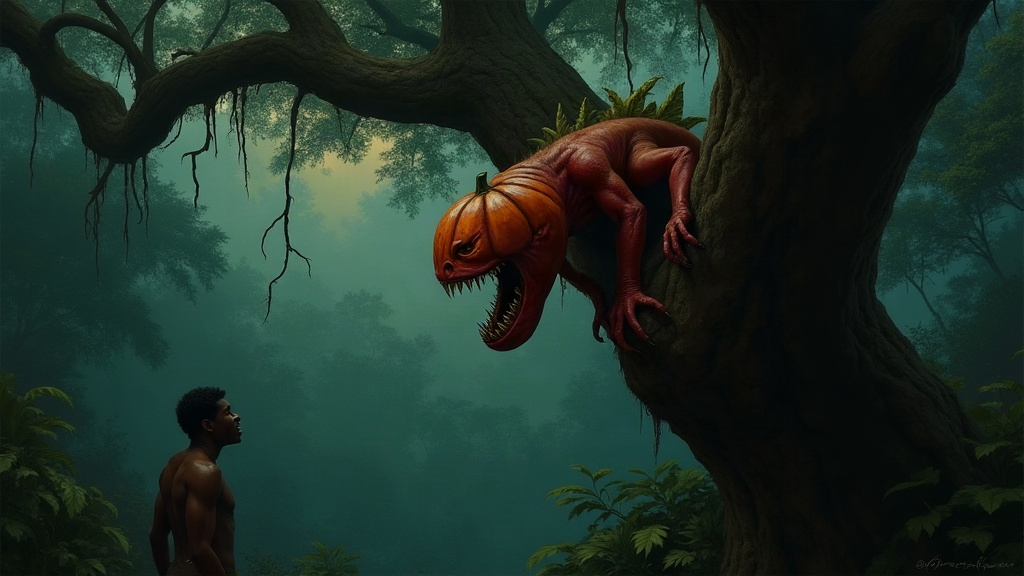
Yara-ma-yha-who: The Bloodsucking Tree Dweller of Australian Aboriginal Myth
Meet the Yara-ma-yha-who, a small but lethal tree-dwelling creature from Rainrainforest Aboriginal lore that hunts humans by bloodsucking and regurgitation. Discover what this creature reveals about danger, transformation, and survival in the deep Australian bush.

Australian Aboriginal
Wandjina: Cloud and Rain Spirits of the Kimberley
The Wandjina are powerful cloud and rain spirits central to Kimberley Aboriginal culture, shaped in rock art and songlines for thousands of years. Discover their role in creation, their visual grammar, and why their caves remain sacred today.