
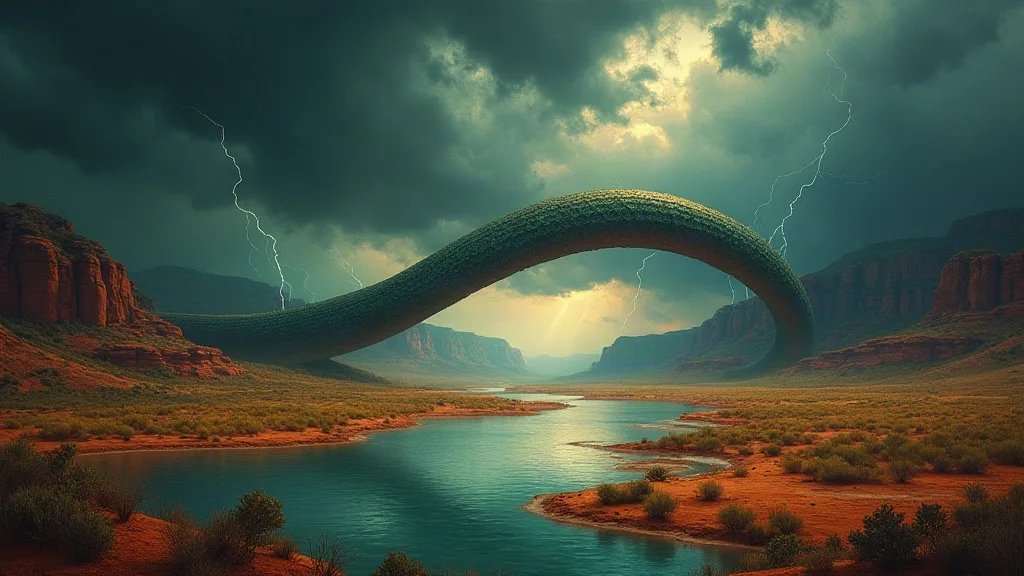
The Rainbow Serpent: Creator and Destroyer
The Rainbow Serpent shaped the land, swallowed the living, and brought the rains. Explore the oldest continuous mythological tradition on Earth and the cosmic serpent at its heart.
Contents
The ground shakes. Water rises from a dry riverbed with no warning. The sky breaks open in colour. For thousands of generations, people across the Australian continent have read those signs the same way: the Rainbow Serpent is moving.
This is not a single, fixed deity with one name and one story. It is something older and stranger than that. Across hundreds of Aboriginal language groups, a great serpentine being slides through creation stories, flood narratives, initiation rites, and rock paintings so ancient that some may predate the last Ice Age. The creature creates mountains by sleeping. It swallows men whole and vomits them out reborn. It sends the rains that grow the yams and fills the rivers that feed the fish. Then, when laws are broken, it kills without mercy.
To call the Rainbow Serpent merely a god of water would be like calling fire merely hot. The being is the principle of fertility, transformation, law, and annihilation gathered into one vast, shimmering body.
A Creature Without a Single Name
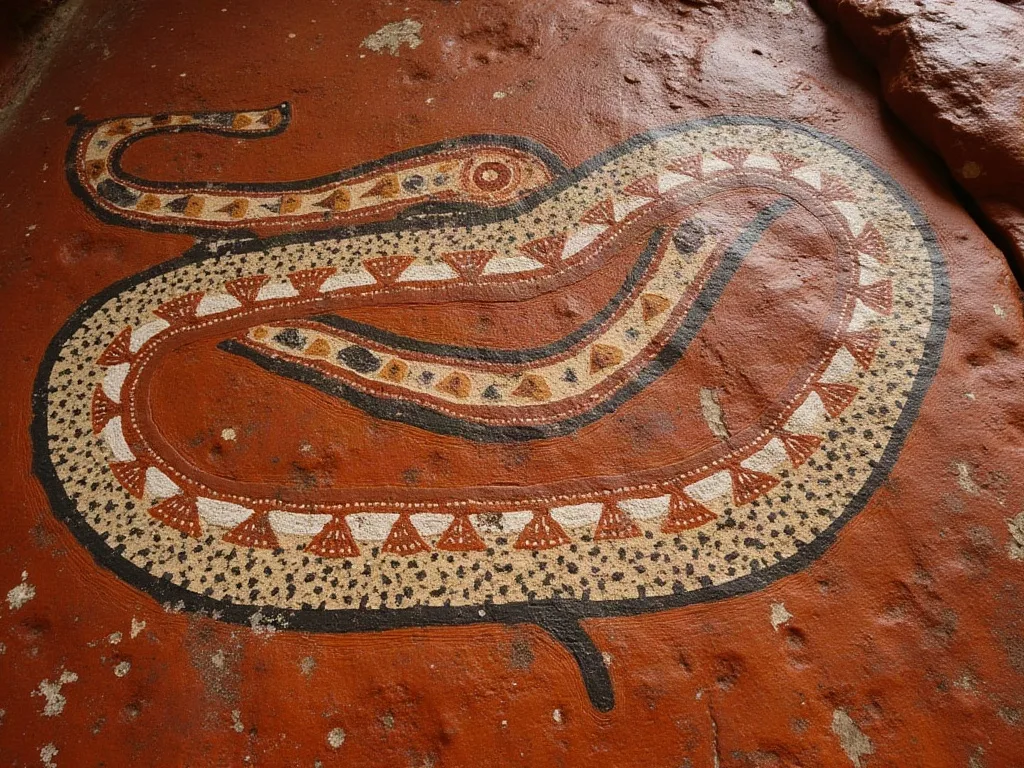
The first thing to understand about the Rainbow Serpent is that no single word names it across the continent. Each language group carries its own term: Ngalyod in the Kunwinjku language of Arnhem Land, Yurlunggur among the Yolngu people of northeastern Arnhem Land, Wanambi in several Western Desert traditions, Borlung in parts of the Northern Territory, and Waugal in the Noongar country of southwestern Western Australia. The names shift, the dialects multiply, but the creature's essential character persists with remarkable consistency across roughly 3 million square kilometres.
Scholars working in comparative mythology, including W.E.H. Stanner whose landmark essays on Aboriginal religion were collected in his 1979 work "White Man Got No Dreaming," noted that this consistency across unconnected language groups is itself extraordinary evidence of deep antiquity. Ideas this consistent, spread this far without modern communication, were either shared before the continent's language groups diverged or proved so convincingly true to local experience that every group arrived at them independently.
The serpent is always enormous. Always associated with water: waterholes, rivers, monsoon rains, the rainbow arching between storm clouds and wet ground. Always capable of both giving life and ending it. Always connected to what Aboriginal Australians call the Dreaming, the Dreaming being the foundational creative era when ancestral beings moved across a formless land and sang, fought, loved, and died their way into the features of the world we see today.
How the Rainbow Serpent Shaped the Land
The Dreaming is not mythology in the sense of ancient fiction. For Aboriginal peoples, it is an ongoing reality, a dimension that underlies the visible world and continues to operate. The Rainbow Serpent did not merely create the land in some forgotten past. It still inhabits deep waterholes. It still stirs during the monsoon. The causal chain between ancestor and world remains live.
The mechanics of creation in these stories are physical and visceral. Among the Kunwinjku people of Arnhem Land, Ngalyod moved across the land before the landscape had settled into its present form. Its body pressed ridges into the earth. Where it rested, waterholes formed. Where it surfaced and arched, the shape of the rainbow appeared as a sign of its presence. The Kimberley and Arnhem Land escarpments, the gorges that cut through red rock, the floodplains that fill each wet season: these are its tracks.
Among the Yolngu, the serpent Yurlunggur is closely tied to the story of the Wawalag Sisters, two ancestral women who walked across the land before the world was fully formed, naming creatures and plants and establishing the rules that govern human society. When they camped beside a waterhole in Arnhem Land, Yurlunggur sensed them, rose from the deep water, and swallowed them whole. The earth shook. The rains came. After a time, the serpent vomited the sisters back up, and through that act of swallowing and rebirth, the first initiation ceremony was made real. Every initiation conducted by Yolngu men since then reenacts that event. The serpent's belly is transformation's chamber.
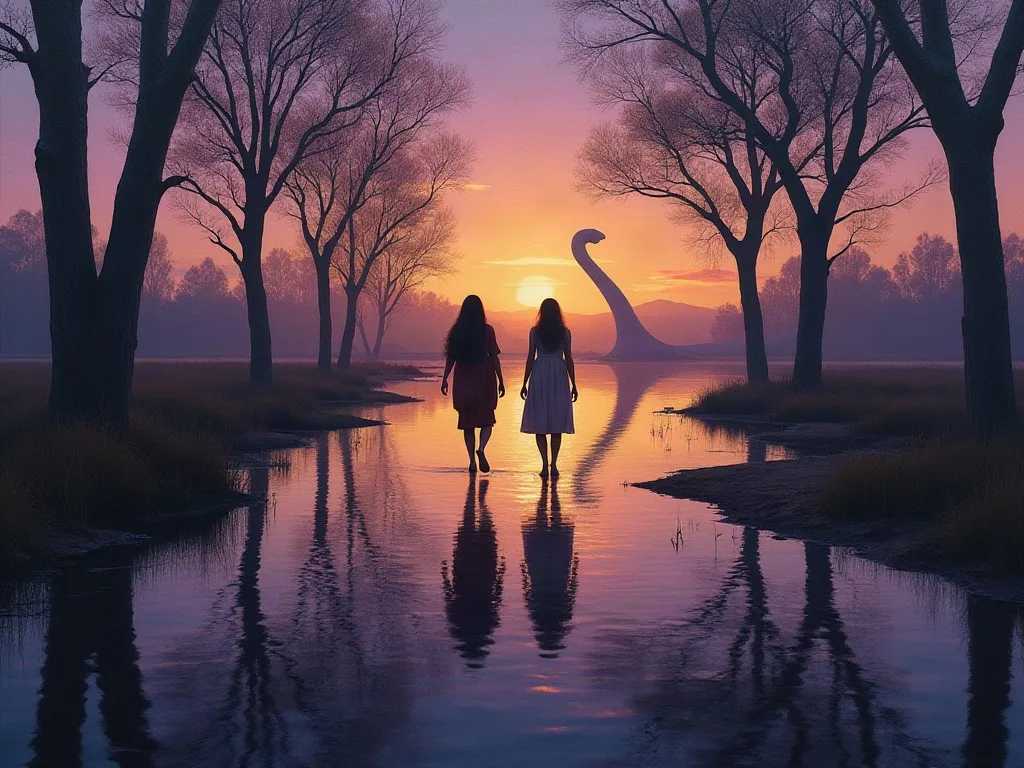
This story carries its weight efficiently. The serpent does not swallow out of simple hunger. The swallowing is cosmological: it brings the wet season, it marks the transition from child to adult, it draws the line between the uninitiated and the knowing. Anthropologist W. Lloyd Warner documented the Wawalag-Yurlunggur cycle in his 1937 study "A Black Civilization," one of the first detailed accounts of Yolngu religious life, and he found the serpent narrative embedded in every major ceremony he recorded.
The Colour of the Sky After Rain
Why a rainbow? The connection between a serpent and the arc of colour that appears after storms is not arbitrary, and it runs through multiple cultures worldwide, from West African Vodun traditions featuring Ayida-Weddo to South American indigenous traditions and Hindu cosmology's great serpents. But in Aboriginal Australia, the logic is ecological and immediate.
In tropical northern Australia, the end of the dry season is announced by electrical storms and the first monsoon rains. After those storms, waterholes refill. Waterfowl return. Fish breed. The red dust settles and green shoots appear. The rainbow is the visible signature of that transition, the bridge between drought and abundance. Placing a serpent at the origin of the rainbow makes it the body of the transition itself, not a symbol of it but the actual agent.
The colour is significant too. Rock paintings of the Rainbow Serpent in Arnhem Land frequently show it in multiple bright pigments: red ochre, white clay, yellow and black. The banded body mirrors the banded sky. Some paintings show fish, turtles, and human figures inside the serpent's body, swallowed creatures that represent the monsoon's gathering of life into its cycle before releasing it again.
Linguist and anthropologist L.R. Hiatt, writing in the 1970s and 1980s, observed that the Rainbow Serpent in many traditions also presides over human blood, particularly the blood associated with birth and menstruation. The wet season brings life; blood brings life; the serpent presides over both. The symbolic logic is tight and consistent.
Laws, Taboos, and the Cost of Transgression
The Rainbow Serpent is not only generous. It is the keeper of law, and it punishes violation with a ferocity that matches its creative power.
Across traditions from Cape York in Queensland to the Pilbara in Western Australia, stories warn of what happens when the serpent's rules are broken. Approaching a sacred waterhole without permission. Eating the wrong food during the wrong season. Violating the terms of initiation. The punishment is rarely symbolic. The serpent rises, the water surges, the transgressor is drowned, swallowed, or dismembered. Sometimes an entire group is destroyed because one person broke the law.
This punitive aspect is not incidental. It is central to the serpent's function as a cosmic authority. Anthropologist Deborah Bird Rose, in her 1992 work "Dingo Makes Us Human," documents how Aboriginal communities in the Victoria River District speak of the Rainbow Serpent and country as interchangeable moral forces. To harm the land is to provoke the serpent. To disrespect the water is to invite flood. The ecology and the ethics are one system.
Among the Warlpiri people of the Northern Territory, the equivalent serpent figure, connected to the Jukurrpa (the Warlpiri word for Dreaming), governs access to specific territories. Certain sites near waterholes are men's sites, certain areas are women's sites, certain areas are forbidden to all. The serpent's presence at those sites is what makes them forbidden, not just a social rule but a physical danger.
Rock Art and the Oldest Religious Iconography on Earth
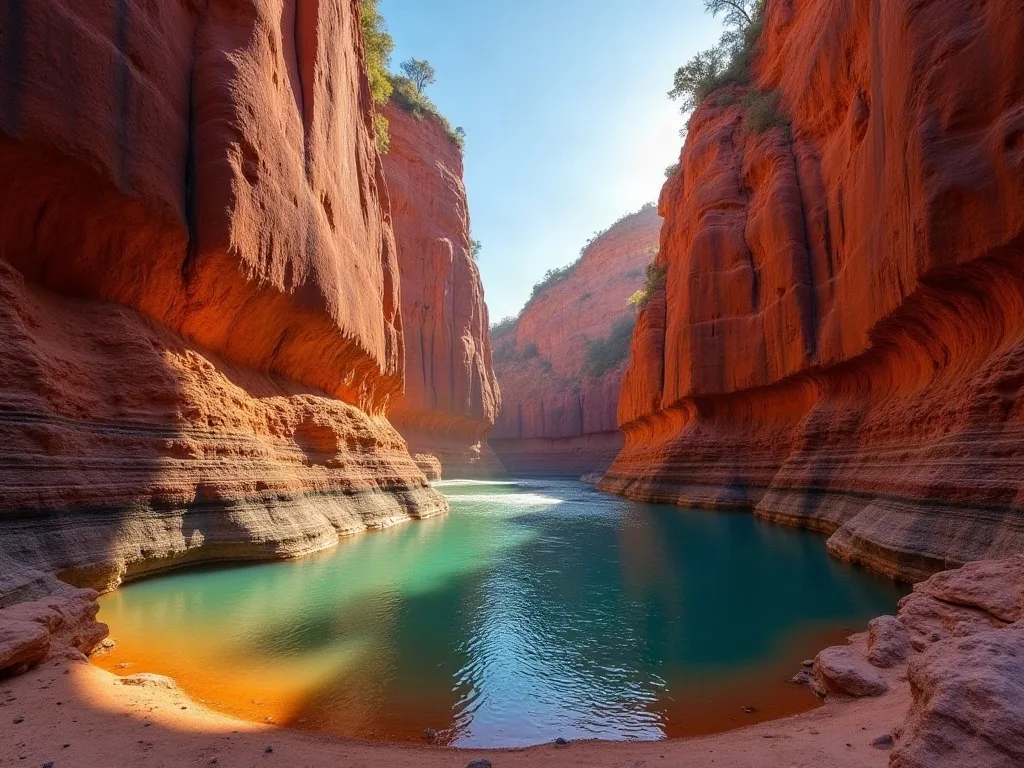
The painted record of the Rainbow Serpent stretches back further than any written mythology. In the Kimberley, a style of rock art known as the Gwion Gwion (also called Bradshaw) figures predates the Rainbow Serpent paintings of that region, but serpentine figures begin appearing in the art record at a point scholars estimate between 6,000 and 10,000 years before the present. At several Arnhem Land sites, painted serpents with human figures inside their bodies have been documented by archaeologists including George Chaloupka, whose lifetime of fieldwork produced the definitive survey of Arnhem Land rock art published in 1993.
These are not static images. Many rock art sites are not museums but active ceremonial locations. Paintings are refreshed, repainted, sometimes layered over older images as part of ongoing ritual practice. The serpent is not a relic painted once and left. It is continuously renewed, which reflects the Dreaming's own logic: the ancestral events are not in the past. They are present and must be maintained.
In the Quinkan rock art of the Laura region in Queensland, the Rainbow Serpent appears alongside other creator beings, its body arched and patterned, often entering or emerging from waterholes or rock crevices. These sites, managed today by the Ang-Gnarra Aboriginal Corporation, draw researchers from archaeology, art history, and religious studies because the visual record there spans many thousands of years of continuous tradition.
The Serpent Across the Continent: Regional Variations
The consistency of the Rainbow Serpent tradition is remarkable, but so are the regional differences, and those differences illuminate how living the tradition is.
In the Western Desert, the serpent is often smaller in narrative prominence but no less dangerous. Waterhole stories emphasise its unpredictability. It may be benign for generations, then strike without apparent cause. Western Desert communities speak of the need to "speak politely" near certain waterholes, to announce oneself aloud so the serpent knows a human approaches.
In southeastern Australia, before colonisation dramatically disrupted the ceremonial life of the Wiradjuri, Kamilaroi, and neighbouring peoples, the Rainbow Serpent appeared in initiation ceremonies under names like Mindi or Kurria. Accounts collected by nineteenth-century ethnographers including A.W. Howitt, published in his 1904 survey "The Native Tribes of South-East Australia," describe the serpent as the ultimate source of the magical power called miwi or birraark, the power that healers and ceremonial leaders carry.
In the Pilbara and Kimberley of Western Australia, the serpent is inseparable from the wet season, and stories about it are particularly vivid regarding the destruction it brings when angered. Pastoral expansion in the nineteenth and twentieth centuries destroyed many ceremony sites, but oral traditions and sacred objects preserved in community collections carry the serpent's narratives forward.
The Rainbow Serpent in Ceremony and Initiation
The Rainbow Serpent is not only a figure in stories. It is a participant in ceremony.
Among the Yolngu, the large sacred drone-pipe instrument known as the yidaki (commonly called the didgeridoo outside Aboriginal communities) produces a sound explicitly described as the voice of the serpent. When yidaki players perform during ceremony, they give the serpent a voice in the human world. The sound calls the Dreaming into the present moment.
Initiation ceremonies across many traditions involve the novice symbolically dying and being reborn. The swallowing and vomiting of the Wawalag Sisters by Yurlunggur is the archetype. In ceremony, the initiated men collectively become the serpent. The initiate is swallowed by that collective body, transformed in the darkness, and returned to the community as a new person. The serpent's body is the mechanism of transformation.
Body painting, sand sculpture, and ground designs used during ceremonies frequently reproduce the serpent's form: the banded or dotted body, the arc, the open mouth. These designs are themselves forms of sacred knowledge, belonging to specific clans and passed through strict lines of transmission. The Rainbow Serpent's image is not decoration. It is a carrier of authority.
What Colonialism Did to the Serpent's World
British colonisation, which accelerated from 1788 onward, attacked the Rainbow Serpent's domain directly: it drained wetlands, dammed rivers, poisoned waterholes with stock contamination, and outlawed the ceremonies that maintained the serpent's law. Missionaries in the nineteenth and early twentieth centuries explicitly targeted serpent stories as demonic, pressuring communities to abandon them.
The results were catastrophic for living traditions in many parts of the continent. But the serpent did not disappear. In regions where ceremonies were able to continue, particularly in Arnhem Land and the Kimberley where missionary and colonial reach was slower and less total, the tradition survived intact. The Yolngu people of Arnhem Land maintained their ceremonial life through decades of pressure, and today Yolngu knowledge holders continue to teach Yurlunggur's stories in ceremony and through cross-cultural programs.
The Australian Land Rights movement, which produced the Aboriginal Land Rights (Northern Territory) Act of 1976, was not only a legal victory. It was partly a restoration of the Rainbow Serpent's territorial authority: the waterholes, the sacred sites, the country that the serpent made and governs returned to the custodianship of the people who carry the serpent's law.
The Rainbow Serpent and Water in the Age of Climate Change
Country is not static, and neither is the Rainbow Serpent's relevance. As Australian climate patterns shift, bringing longer dry seasons, more violent floods, and drought cycles of increasing severity across the continent, Aboriginal voices pointing to the Rainbow Serpent's law carry a specific weight.
Aboriginal land management practices, including controlled burning, are now recognised by ecologists and government bodies as sophisticated systems developed over millennia to maintain the balance the Rainbow Serpent's law demands. The serpent's role as both giver of water and punisher of those who abuse the land reads differently in a context where land abuse has produced measurable ecological crisis.
Community groups in Arnhem Land and the Kimberley have been particularly vocal in connecting the serpent's teachings to contemporary conservation arguments. The Mirrar people's long campaign against uranium mining at Jabiluka, a site inside what is now Kakadu National Park, explicitly invoked the Rainbow Serpent's presence at the waterholes threatened by the mine. The campaign succeeded in 1999, when the mining company suspended the project.
Frequently Asked Questions About the Rainbow Serpent
Frequently asked questions
Is the Rainbow Serpent the same being across all Aboriginal cultures?
Not exactly. The Rainbow Serpent is a widespread mythological pattern rather than a single, uniform deity. Hundreds of Aboriginal language groups have their own name, character, and stories for the serpentine creator being associated with water and the Dreaming. The names include Ngalyod, Yurlunggur, Waugal, and Wanambi, among many others. The shared features, enormous size, connection to water and rain, creative and destructive power, and role in initiation, are consistent enough that scholars treat them as related expressions of one deep tradition, but each group's version belongs to that group and carries its own specific ceremonial knowledge.
How old is the Rainbow Serpent tradition?
The visual record in rock art goes back at least 6,000 years based on current archaeological dating, with some researchers arguing for an earlier origin connected to the first human settlement of Australia roughly 50,000 to 65,000 years ago. Archaeologist Robert Layton and others have noted that serpentine forms appear very early in Australian rock art sequences. The oral traditions themselves cannot be carbon-dated, but their distribution across geographically isolated groups with distinct languages suggests extreme antiquity. The Rainbow Serpent may represent one of the oldest continuously practised religious traditions in human history.
Why is the Rainbow Serpent connected to the rainbow?
In tropical and subtropical Australia, the rainbow appears directly after monsoon rains, which refill waterholes, flood rivers, and trigger the growth cycles on which communities depend. The rainbow is the visible mark of the transition between drought and abundance. The serpent, which lives in waterholes and causes those waterholes to overflow, is understood as the being that arches through the sky as a rainbow when it travels between water sources. The connection is ecological first: the creature that brings water leaves a visible trace in the sky when it moves.
What are the primary sources for Rainbow Serpent mythology?
Because Aboriginal Australian traditions are primarily oral and ceremonial, the "primary sources" are a combination of rock art, recorded ceremonies, and ethnographic accounts. Key scholarly works include W. Lloyd Warner's "A Black Civilization" (1937) on Yolngu traditions, Deborah Bird Rose's "Dingo Makes Us Human" (1992), W.E.H. Stanner's essays collected in "White Man Got No Dreaming" (1979), A.W. Howitt's "The Native Tribes of South-East Australia" (1904), and George Chaloupka's documentation of Arnhem Land rock art. Community-produced educational materials from groups including the Buku-Larrnggay Mulka Centre in Yirrkala are also authoritative sources produced by knowledge holders themselves.
Can non-Aboriginal people learn about Rainbow Serpent stories?
Many aspects of Rainbow Serpent mythology have been shared openly by Aboriginal knowledge holders through community-approved channels, particularly stories that appear in public ceremony, published literature, and art. Some knowledge, especially the most sacred ceremonial content, is restricted to initiated members of specific groups and is not shared publicly. This distinction between public and restricted knowledge is itself part of the Rainbow Serpent's law: information belongs to its custodians, not to the curious outsider. Non-Aboriginal readers can engage meaningfully with the tradition through works produced in collaboration with Aboriginal communities and through the communities' own contemporary cultural institutions.
The Serpent That Still Moves
The Rainbow Serpent does not belong to the past. That is the single fact that separates it from most of the mythological figures studied on this site. Yurlunggur is not a god who died when the last Yolngu elder stopped believing. Ngalyod is not a folk memory. These beings are present, active in the waterholes of Arnhem Land, visible in every monsoon season, heard in the sound of the yidaki, and reaffirmed in ceremony each year.
The scholarly debate that continues around the Rainbow Serpent is not whether it was real to its believers, the condescending question that haunted nineteenth-century anthropology, but rather what its extraordinary consistency across the continent tells us about the cognitive and cultural capacities of early modern humans. When researchers like Iain Davidson and others working in Australian prehistoric cognition examine the rock art record, they find evidence not of primitive groping toward meaning but of sophisticated, layered symbolic systems operating at full complexity from very early in human presence on the continent.
The Rainbow Serpent, creator and destroyer, swallower and transformer, painter of gorges and caller of rains, sits at the centre of that evidence. It is the oldest argument available to us that humans have always needed a being large enough to contain both the gift of life and the certainty of its end, both the colour after a storm and the flood that preceded it. Every tradition on Earth has reached for something like that. Australia reached first, and the serpent it found is still there.
Explore Australian Aboriginal mythology to trace the Dreaming traditions that give the Rainbow Serpent its full context, from the songlines that cross the continent to the ancestor figures who shaped every river and rock formation still visible today.
Read the full book
Want the whole story?
The complete edition is an instant PDF download here, with a paperback on Amazon for selected titles.
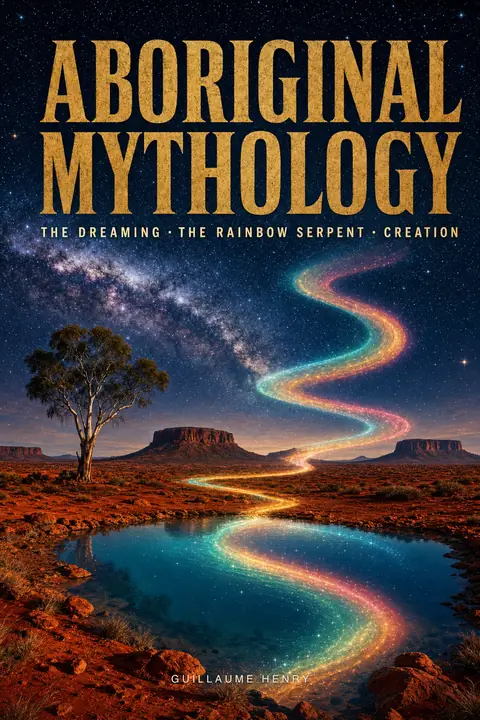
Australian Aboriginal
The Aboriginal Mythology Book: The Rainbow Serpent, Wandjina, Baiame, and the Dreamtime Stories of the World's Oldest Tradition
60,000 Years of Unbroken Ancestral Memory
The world's oldest continuous mythology. From the Rainbow Serpent to the Wandjina cloud spirits, explore the Dreamtime stories that have mapped Australia for 60,000 years.
More from Australian Aboriginal
All articles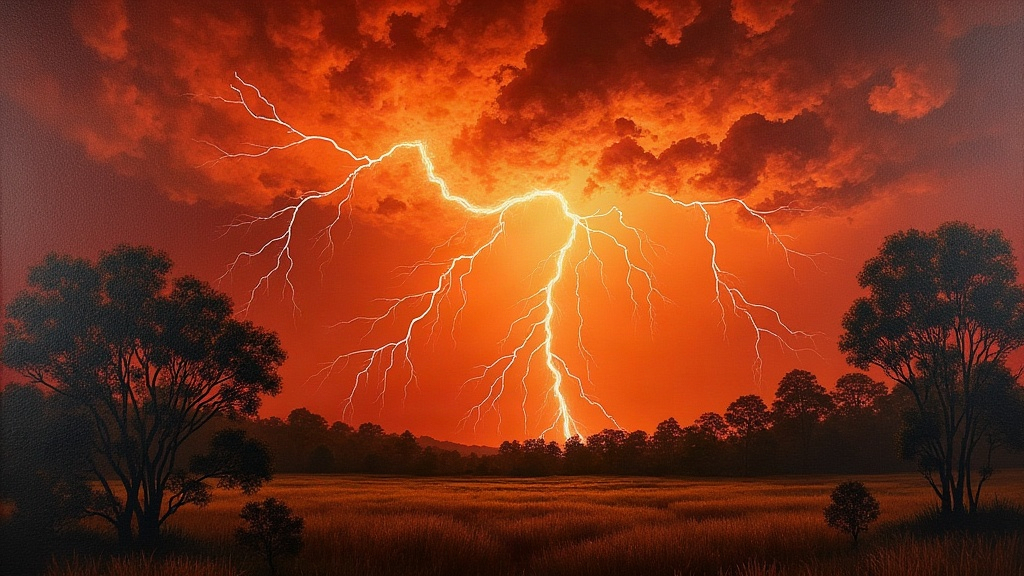
Australian Aboriginal
Namarrgon: The Lightning Man of Arnhem Land
Namarrgon is the terrifying sky god of the Yolngu people who creates lightning and controls the monsoon storms that shape life across Arnhem Land. His thunderous presence reveals how Aboriginal cultures read the sky as a living, ancestral force.
Australian Aboriginal
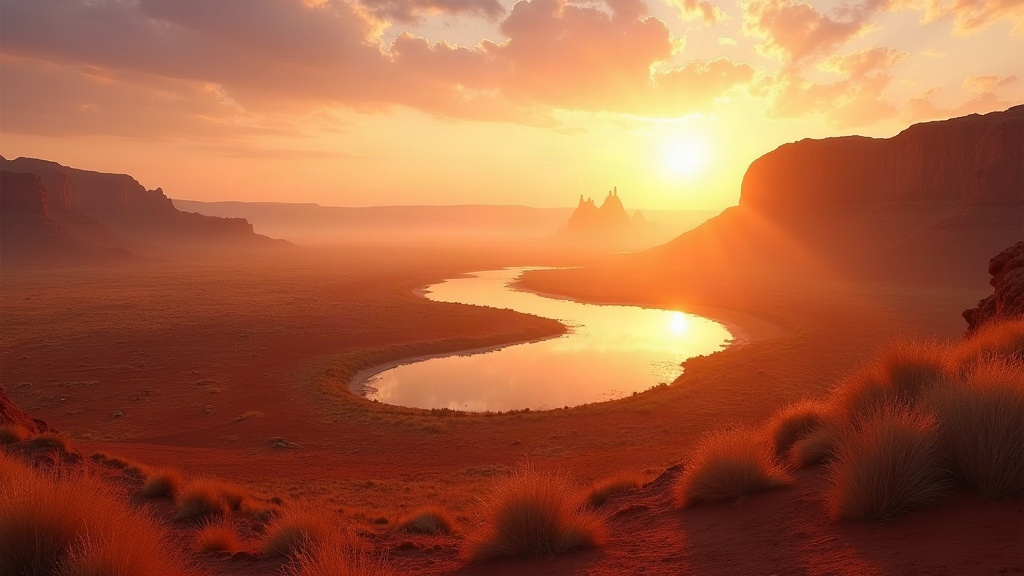
The Dreamtime: Creation and Eternal Present in Aboriginal Belief
The Dreamtime is the Aboriginal foundation of existence: the era when ancestral beings shaped the land, set down the laws of kinship and ritual, and wove themselves into every rock, waterhole, and song. It is neither ancient history nor myth alone, but an ongoing reality that Aboriginal peoples access through ceremony, song, and country.
Australian Aboriginal
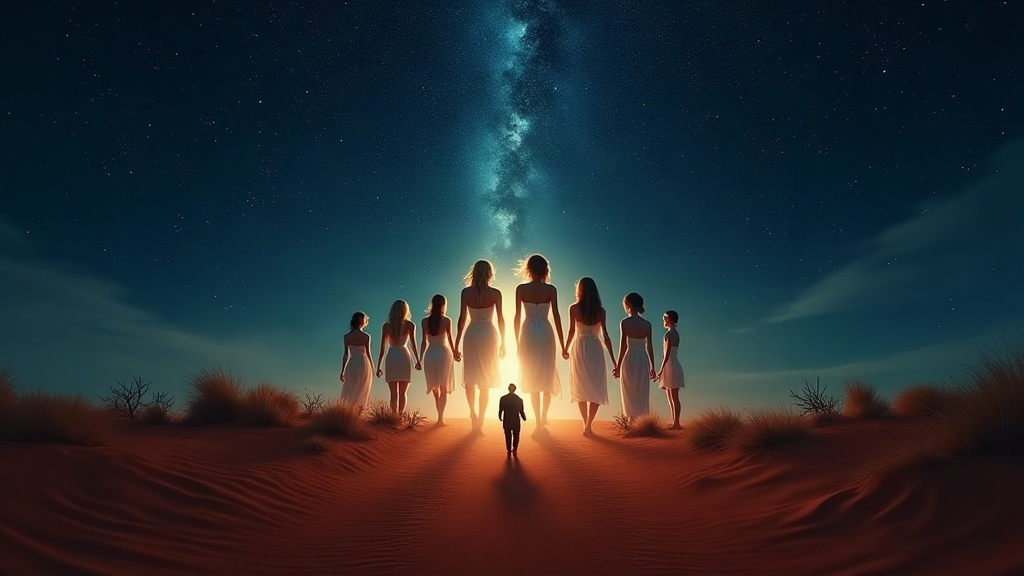
The Seven Sisters: Celestial Pursuit and Pleiades Myth in Aboriginal Australia
Seven sisters flee across the sky in Australian Aboriginal mythology, hunted by a man who will never catch them. This eternal chase, traced in the Pleiades star cluster, reveals how Aboriginal peoples read the cosmos as a living story of desire, escape, and sacred boundaries.
Australian Aboriginal
Yara-ma-yha-who: The Bloodsucking Tree Dweller of Australian Aboriginal Myth
Meet the Yara-ma-yha-who, a small but lethal tree-dwelling creature from Rainrainforest Aboriginal lore that hunts humans by bloodsucking and regurgitation. Discover what this creature reveals about danger, transformation, and survival in the deep Australian bush.