
Tapu and Noa: Sacred Restriction and Freedom in Māori Worldview
Tapu and Noa are the twin forces that shaped Māori life: one sacred, restricted, potent; the other free, ordinary, unrestricted. Learn how these concepts governed everything from food and ritual to social order and spiritual safety.
Contents
When a Māori chief sat down to eat, no one else could stand above him. When a woman entered a fishing ground where men had recently worked, the catch would spoil. When a person touched a corpse, they needed a tohunga (expert practitioner) to perform a ritual before they could rejoin their whānau (extended family). These weren't superstitions. They were the visible edges of tapu and noa: sacred restriction and freedom, the two fundamental principles that organized Māori society, spirituality, and material life.
Tapu and noa are not opposites in the Western sense of good and evil. They are complementary forces that worked together like a hinge. Tapu marked things as potent, restricted, sacred, dangerous if mishandled. Noa meant free, unrestricted, ordinary, safe to approach. Every person, place, object, and activity in the Māori world had a tapu or noa status. Understanding these concepts is the key to understanding how Māori people lived, thought, and maintained spiritual balance.
This distinction shaped survival. It shaped hierarchy. It shaped the relationship between the physical and spiritual worlds. And it shaped how Māori society recovered when things went wrong.
The Nature of Tapu: Sacred Potency and Danger
Tapu is often translated as "sacred" or "forbidden," but both words miss the full weight. Tapu meant power. Mana (spiritual authority and prestige) flowed through tapu. A chief possessed tapu because he was descended from the gods. Food offered to the gods became tapu. A person in mourning entered a tapu state. A burial ground was tapu. A new canoe, before it touched water, was tapu.
What tied all these states together was restriction and power. Tapu things could harm you if you approached them without proper preparation or knowledge. The harm wasn't punishment; it was more like touching a live electrical wire. The power itself was neutral. But crossing a tapu boundary without respect or care brought spiritual danger called mate (sickness or death). You could become sick. Your whānau could suffer. A fishing expedition could fail. Crops could wither.
A person who was tapu was dangerous to others. If a chief was tapu and a commoner's shadow fell on his food, the chief could become ill. This wasn't magic thinking. It reflected the Māori understanding that tapu represented a concentration of mana that needed careful handling. The boundary between tapu states and ordinary spaces was real and had to be maintained.
Tapu belonged to certain people by birth. The rangatira (paramount chief) was born tapu. High-ranking women, particularly those of chiefly descent, carried tapu in their persons. Priests and tohunga (experts in various crafts) accumulated tapu through knowledge and spiritual practice. But tapu also attached to situations and transitions. Death created tapu. Childbirth created tapu. Menstruation made women tapu in certain contexts (not because of shame, but because the body was in a powerful transitional state). A warrior returning from battle was tapu until rituals cleansed him.
The tapu that attached to a person or place could be temporary or permanent. A body was tapu for specific periods after death. Food could be made tapu through an offering and then returned to noa (unrestricted) through ritual consumption. A warrior's tapu lifted once he had been ceremonially washed and blessed. But the tapu of a chief never fully lifted; it remained part of who he was.
Tapu
Restricted; potent; dangerous if mishandled; charged with mana; requires knowledge to navigate; attached to chiefs, priests, sacred places, the dead, people in transition, offerings to gods.
Noa
Unrestricted; ordinary; safe to approach; free of spiritual charge; anyone can access; attached to everyday activities, common people, ordinary places, finished rituals, cleansed people.
Noa: The Unrestricted and Everyday
Noa is harder for Western readers to grasp because we don't have an exact equivalent. It's not simply "profane" (which carries a pejorative weight). Noa meant free, ordinary, unrestricted, available. A noa person could move through most spaces without causing spiritual harm. A noa place could be approached by anyone. Noa food could be eaten without ritual. Noa work could be done during any time of day or season.
For most Māori people, most of the time, life was noa. The commoner who fished in the river, the child who played in the village, the woman grinding kumara (sweet potato) for the evening meal, they moved through noa space. They could speak freely, eat with their hands, work without ceremonial preparation. Noa was the ground of ordinary life.
But noa was not inferior to tapu. It was necessary. A warrior who remained tapu forever would be too spiritually charged to work, eat, or sleep comfortably. A fishing ground that was permanently tapu would never feed the village. Food had to move from tapu (the offering made to the gods) through ritual to noa (safe to eat). People had to move from tapu states (after death, after battle) back to noa so they could live in community.
Noa was the result of cleansing rituals. The tohunga who performed these rituals was performing a profound service: moving a person or object from a dangerous, charged state back into the stream of ordinary life. A widow who had been tapu after her husband's death could be made noa through ritual and return to normal social participation. A canoe that had been tapu during its building could be made noa through ceremony and put to use.
The movement from tapu to noa was not automatic. It required action, knowledge, and often the intervention of someone trained in ritual. This is why tohunga were essential to Māori society. They held the knowledge that allowed the community to navigate between these two states safely.
How Tapu Structured Māori Life
Tapu was not abstract. It shaped daily decisions. It governed who could eat with whom, who could touch what, where people could go, what work could be done on which days.
Food and the Dining System
The rules around food and eating reveal how thoroughly tapu permeated Māori life. A chief was so tapu that his food had to be handled specially. No one could stand above him while he ate. His refuse had to be disposed of carefully. If a commoner ate from the same bowl before the chief, or if a woman touched his food before it reached him, the chief could become ill.
This sounds like arbitrary hierarchy, but it reflects a genuine spiritual principle. The chief carried so much mana that he needed protection from the mana of others, particularly women, whose mana worked differently. Food was a vector for mana transfer. Eating together created spiritual connection. So dining rules encoded spiritual boundaries.
Cooking fires themselves were often tapu. A woman who had recently given birth could not cook for others; her postpartum state made her tapu in ways that could contaminate food. Certain foods were tapu on certain days. Fish could be tapu during spawning season. When fish were in a tapu state, taking them would not only fail (they wouldn't be caught) but would bring misfortune.
Space and Movement
The Māori landscape was mapped in tapu and noa. A burial ground was tapu; you didn't build a house or grow crops there. A place where a chief had died remained tapu. A river where a taniwha (water spirit) lived was tapu; you approached it with caution and respect. A marae (communal courtyard) had tapu boundaries; certain spaces within it were restricted to certain people.
But within these restrictions, noa areas existed where ordinary activity could proceed. A fishing stream that was tapu upstream (near a burial ground) could be noa downstream. A forest that was tapu for harvesting during certain seasons was noa at other times. The village itself was organized so that commoners had noa spaces where they could move freely and tapu spaces they avoided.
This created efficiency. People knew where they could go, what they could do, and where they needed to show caution. Children learned these boundaries early. When a stranger arrived at a village, the first question was about their tapu status. Were they from a high-ranking family? Had they recently touched a corpse? This determined where they could sit, what they could eat, who they could speak with.
Gender and Tapu
The relationship between women and tapu was complex and has been often misunderstood through a Western feminist lens. Women of high rank were intensely tapu. Their mana was strong and required careful handling. A high-ranking woman's presence could affect fishing, hunting, or crop success. When she walked through a village, people moved aside not out of oppression but out of respect for her spiritual power.
At the same time, women's bodily processes, menstruation, childbirth, lactation, created tapu states. During menstruation, a woman was considered especially potent and spiritually dangerous, particularly to male activities like hunting and fishing. She would seclude herself in a whare (small house) away from the main settlement. This sounds restrictive to modern ears, but Māori women understood it differently: menstruation was a powerful state, a time when a woman's mana was concentrated. The seclusion was a way of protecting others from that power and protecting herself from the mana of men.
High-ranking women held significant ritual authority. They could be priestesses. They could speak at important gatherings. They could hold land and pass it to their children. Their tapu was not a cage; it was a source of power and authority within Māori society.
Work and Seasons
Tapu governed when work could be done. Certain days were tapu for fishing. Certain seasons were tapu for harvesting particular plants. A tohunga could declare that conditions were unfavorable; work would pause. This wasn't superstition. It was a way of encoding ecological knowledge. If fishing was poor, a tapu period allowed stocks to recover. If kumara was being harvested at the wrong time, a tapu declaration prevented waste.
Death and mourning brought tapu that halted all work. For a set period after someone died, the village entered a tapu state. No normal activities took place. Food for the mourning family was prepared elsewhere. The village focused on ritual and grieving. Only when the tapu was lifted through proper ceremonies could work resume.
The Role of Tohunga: Masters of Tapu and Noa
A tohunga was not simply a priest or expert. The word meant a person of skill in a particular domain. There were tohunga whakairo (carving experts), tohunga tā moko (tattoo experts), tohunga kōkiri (war leaders), tohunga rongoā (healers). But the most essential were the tohunga ā-kōrero (ritual specialists) and tohunga tūpuranga (those trained in the esoteric knowledge of tapu and noa).

These specialists held the knowledge that allowed communities to navigate between tapu and noa. When someone had touched a corpse, they went to the tohunga for cleansing ritual. When a new marae or meeting house was built, the tohunga performed the ceremonies that moved it from tapu (the raw, newly carved space) to noa (ready for community use). When a child was born, the tohunga performed rituals that gradually moved the mother and child from the intense tapu of childbirth into the ordinary world.
The tohunga also held the calendar of tapu. They knew which days favored which activities, which lunar phases made fishing promising, which times were dangerous. They carried this knowledge orally, passing it to apprentices through years of training. A good tohunga could read the signs: the behavior of birds, the state of the weather, the patterns of the moon. These observations were encoded in say ings and stories that young tohunga memorized.
The tohunga's power came from their knowledge and their own tapu status. They had to be meticulously careful in their own behavior because any breach would undermine their spiritual authority. They fasted before major rituals. They avoided certain foods. They bathed in sacred rivers. They lived as exemplars of tapu discipline.
Tapu and Noa in Conflict and Resolution
When tapu boundaries were crossed, the consequences could be severe. A commoner who ate from a chief's leftovers without permission could sicken or die. A man who fished during a tapu period might find his catch rotting or suffer illness. A woman who touched a warrior before he had been cleansed could cause the entire war party to fail.
But the Māori system had built-in mechanisms for addressing tapu breaches. If someone had unknowingly crossed a boundary, a tohunga could perform remedial rituals. If the breach was intentional and serious, the person might be ostracized or required to make formal reparation. In some cases, a person who had committed a grave tapu violation might seek refuge at a neutral area or flee to another iwi (tribe).
The concept of utu (reciprocal obligation and balance) also applied to tapu violations. If you broke someone's tapu, you owed them compensation. This created a system where people were invested in respecting boundaries, not out of fear alone, but out of understanding that violation created debt.
Occasionally, a person could be declared permanently noa, severed from their family and community. This was a profound punishment, reserved for the most serious offenses. Without community, without whānau, without land rights, a noa person was essentially exiled. The permanence of this state shows how fundamental tapu identity was to belonging.
Tapu and Noa in Creation and Cosmology
The origins of tapu and noa lie in the cosmogony itself. In Māori creation narratives, the primal void is called te kore. From te kore emerges potential, te pō (the night, the unknown). From te pō emerges te āo (the world, the light, the known). This movement from potential to manifestation is reflected in the movement from tapu to noa.
In some accounts, Tāne, god of the forest and the sky, brought light and order into the world by separating Rangi (sky father) and Papa (earth mother). This separation created the visible, known world, a fundamentally noa space. But within this noa world, tapu places and people emerged. Sacred groves where Tāne's mana dwelled were tapu. Chiefs descended from the gods carried tapu. Rituals that re-enacted creation or honored the gods were tapu.
The seasonal cycle also reflected tapu and noa. The Māori calendar recognized periods of intense spiritual activity (tapu seasons) and periods of ordinary work (noa seasons). The beginning of the year was tapu; ritual preceded planting. Once crops were in the ground, the season moved to relative noa, where work proceeded. Harvest time was tapu again; first fruits were offered to the gods before the main crop could be gathered.
Tapu and Noa After European Contact
When Europeans arrived in New Zealand, they brought no understanding of tapu and noa. Early missionaries and settlers dismissed these concepts as superstition. They encouraged Māori to abandon tapu observances. Eating fish during tapu seasons didn't harm anyone, the Europeans said. Touching a corpse before a body was fully prepared didn't cause spiritual danger. Seclusion during menstruation was oppressive and should stop.
As Māori adopted Christianity, many explicitly abandoned tapu and noa practice. But the concepts never truly disappeared. They remained embedded in Māori thinking, Māori law, Māori kinship practice. Tapu language persisted: when someone said a place was "tapu," they meant it was sacred and should be respected, even if they no longer believed in spiritual danger.
In modern New Zealand, tapu and noa have reemerged as central to Māori cultural recovery. The Māori Land Court recognizes tapu sites and protects them. Environmental law incorporates concepts of tapu and noa, certain rivers are recognized as tapu, certain mountains are protected. Schools teach tapu and noa to Māori and non-Māori children as foundational to understanding Māori society and values.
Modern Māori continue to practice tapu observance in various forms. After a death, the whānau may maintain a tapu state during a mourning period. Before major ceremonies, tohunga may declare a space tapu and require special preparation. Women still sometimes observe seclusion during menstruation as a way of honoring their own power. Tapu and noa remain a lived system, not merely a historical artifact.
Contemporary Scholarship and Debate
Māori scholars and anthropologists continue to refine understanding of tapu and noa. Some argue that the term "sacred" fundamentally distorts tapu by importing Christian theological baggage. Tapu is not about sin or holiness; it is about potency and danger in a specifically Māori spiritual framework. Others emphasize that tapu and noa reflect ecological knowledge: they encoded sustainable practices and resource management.
There is ongoing discussion about how tapu functioned in relation to gender. Some Western scholars argued that women's tapu during menstruation was oppressive and kept women subordinate. Māori feminist scholars counter that this imposes Western categories of oppression onto a system where women's bodily power was recognized and managed through seclusion, not denied. These debates remain vital to how tapu and noa are understood in contemporary Māori scholarship.
Another area of scholarly attention is how tapu and noa continue to shape Māori experience of land, law, and governance. If a place is declared tapu because it is sacred to a particular iwi, what legal protections follow? How do tapu claims interact with property law, environmental law, and state authority? These questions are reshaping New Zealand law and Māori-Crown relations.
Frequently asked questions about tapu and noa in Māori culture
Frequently asked questions
What is the difference between tapu and taonga?
Tapu and taonga are related but distinct. Tapu means sacred, restricted, potent. A taonga is a treasure or valued possession, often something tapu, but the terms are not synonymous. A taonga can be a valued object (a piece of greenstone, a canoe, a cloak) that may or may not carry tapu. Some taonga are tapu; others are simply precious and irreplaceable within whānau or iwi memory.
Could a person lose their tapu status?
Yes, through ritual. A person born with tapu (a chief, a high-ranking woman) retained it throughout life, but it could be temporarily increased or decreased through ceremony and life circumstances. A commoner could gain tapu through achievement, knowledge, or priesthood training. Death temporarily increased tapu; ritual cleansing moved you from tapu back to noa. Deliberate violation of sacred obligations could result in permanent noa status, the ultimate form of social exile.
Did all iwi practice tapu and noa identically?
The basic framework was universal across Māori culture, but specific rules varied by iwi and region. What was tapu in one iwi might be managed differently in another. Coastal iwi had tapu rules for fishing that reflected their environment; inland iwi had different practices. High-ranking rangatira held similar tapu status everywhere, but the specific rituals and restrictions attached to menstruation, death, and food varied. Tohunga maintained these local traditions and taught them to their communities.
How did tapu and noa survive the suppression of Māori culture?
Even when Māori converted to Christianity and Europeans dismissed tapu as superstition, the concepts persisted in language, kinship practice, and land relationships. Māori continued to refer to places and practices as tapu even when they no longer explained it through traditional spiritual beliefs. The language embedded the practice. From the 1970s onward, as Māori cultural revival accelerated, tapu and noa returned to explicit practice and teaching. Today they are recognized in law, in environmental policy, and in Māori education.
Is tapu the same as the Polynesian concept of tabu or tapu in other Pacific cultures?
Related but not identical. The word itself spread across the Pacific, tabu in Samoa and Tonga, tapu in Tahiti, kapu in Hawaiki. All refer to sacred restriction and potency. But each culture developed its own specific rules and theological frameworks. Hawaiian kapu, for example, had distinct gender rules around food; Tongan and Samoan tabu/tapu had different cosmological foundations. Māori tapu is best understood within the Māori spiritual worldview, though comparison with other Polynesian systems illuminates broader Pacific principles.
Tapu and Noa as Living Philosophy
Tapu and noa were not rules written in stone. They were living principles that Māori communities negotiated, adapted, and taught across generations. They reflected a worldview in which the spiritual and material were inseparable, in which power and danger required respect and careful management, and in which community relied on shared understanding of invisible but real boundaries.
A modern Māori child learning about tapu and noa learns more than historical practice. She learns that power is real, that boundaries matter, that some things require special care. She learns that freedom (noa) is not the natural state; it is earned through proper behavior and ritual. She learns that the community's survival depends on people respecting each other's mana and maintaining the invisible agreements that hold society together.
In an era when Western thought has largely abandoned the language of the sacred, tapu and noa offer an alternative framework. They suggest that some places should be restricted, some knowledge should be guarded, some transitions should be marked with ceremony. They propose that ordinary life (noa) depends on sacred boundaries (tapu) remaining intact. Whether or not a person believes in spiritual danger, the wisdom embedded in these concepts continues to offer guidance: know where you stand, respect what you don't fully understand, and recognize that freedom itself depends on sacred limits.
Read the full book
Want the whole story?
The complete edition is an instant PDF download here, with a paperback on Amazon for selected titles.
Maori
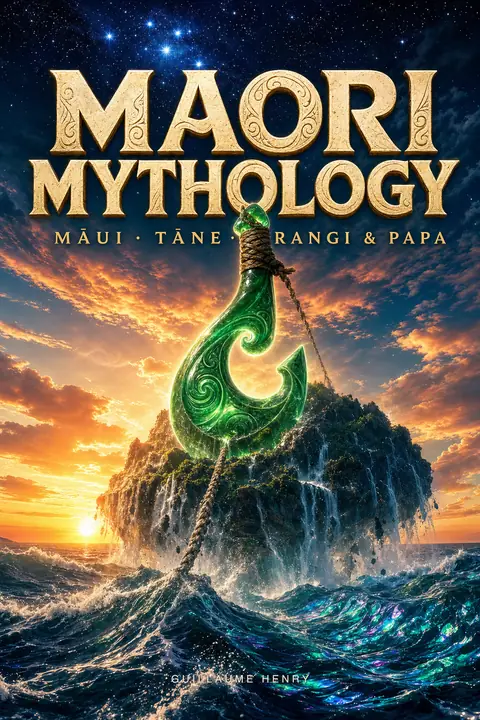
The Maori Mythology Book: Māui, Tāne, and the Gods of Aotearoa
Māui, Tāne, and Rangi and Papa
The mythology of New Zealand’s first people: the sky-father and earth-mother locked in an embrace, the children who forced them apart to let in the light, and Māui the trickster who fished up islands, snared the sun, and died trying to defeat death itself.
More from Maori
All articles
Maori
The Marae: Sacred Meeting Ground in Maori Culture
The marae stands at the heart of Maori identity: a sacred communal space where land, genealogy, and spiritual power converge. Discover how this open courtyard became the foundation of Maori society, ceremony, and connection to place.
Maori
Tiki: The First Man and Ancestral Symbol in Maori Mythology
In Maori creation myth, Tiki was the first human, carved from earth by Tane Mahuta, the god of forests. This symbol represents the bridge between the divine and human worlds, still vital in Maori art and culture today.

Maori
The Taniwha: Supernatural Guardians of Waterways in Maori Mythology
The taniwha are powerful supernatural beings in Maori mythology that guard rivers, lakes, and caves. These shape-shifting creatures demand respect and have shaped Maori settlement patterns for centuries.

Maori
Whiro: God of Darkness and Evil in Māori Mythology
Whiro stands as the Māori god of darkness, chaos, and evil, a primal force of destruction born from the separation of sky and earth. Discover how this ancient deity shaped Polynesian cosmology and what his eternal struggle with light reveals about Māori understanding of creation.