
Tiki: The First Man and Ancestral Symbol in Maori Mythology
In Maori creation myth, Tiki was the first human, carved from earth by Tane Mahuta, the god of forests. This symbol represents the bridge between the divine and human worlds, still vital in Maori art and culture today.
Contents
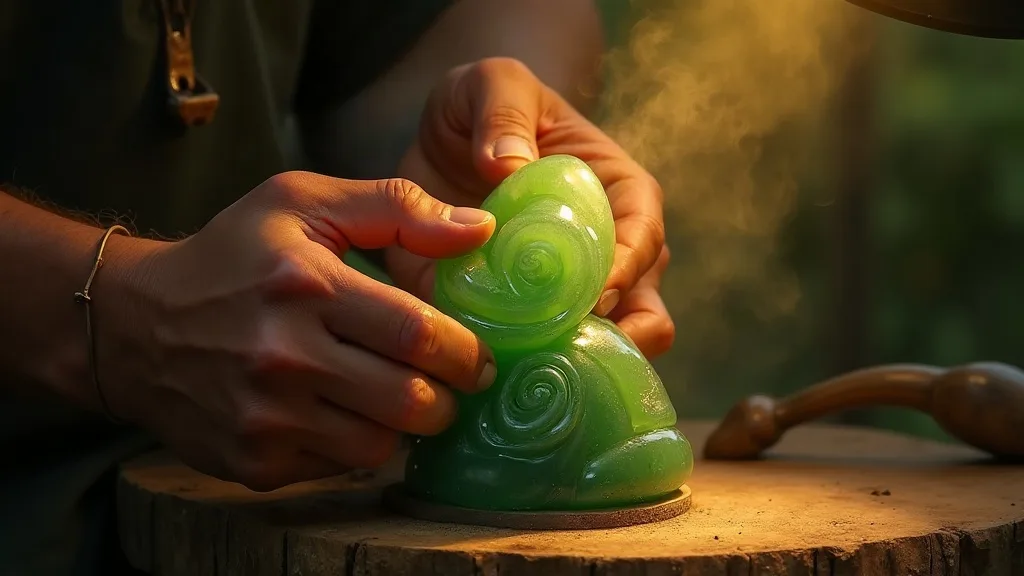
In the beginning, when sky and earth still lay pressed together in darkness, Tane Mahuta reached down and shaped the first human from red earth. That figure was Tiki: not just a person, but the prototype of all humanity, the living proof that gods could create in their own image. For the Maori people of Aotearoa (New Zealand), Tiki became far more than a name in an old story. It became a symbol carved into bone and jade, worn against the chest, painted on meeting houses, and whispered in genealogies. To understand Tiki is to understand how the Maori world links the sacred to the everyday.
The Tiki symbol carries multiple meanings at once: the first ancestor, the bridge between gods and humans, a protective charm, a mark of identity. It sits at the heart of Maori visual culture and spiritual practice in a way few other mythological figures do. This is not a distant legend but a living presence in Maori life, in galleries, in homes, in the very bones of the culture itself.
The Creation of Tiki: When Sky Father and Earth Mother Gave Birth to Humanity
The creation narrative that brought Tiki into being begins long before any human walked Aotearoa. In the beginning, Rangi (the Sky Father) and Papa (the Earth Mother) were locked in an endless embrace, their bodies so tightly bound that no light could pass between them. The children born into this darkness grew restless. They plotted to separate their parents so the world could exist.
Tane Mahuta, god of forests, trees, and all growing things, was the one who succeeded. He braced his back against Papa, pushed his feet upward against Rangi, and slowly, with tremendous effort, forced the sky away from the earth. Light flooded in. The world became possible.
But a world needed inhabitants. Tane looked down at the earth his parents had separated and saw red earth at a place called Kurawaka. The soil was alive with potential. Without consulting the other gods, Tane shaped that earth into human form. He worked the clay with his hands, molding a figure in the image of himself. Some versions say he created a female form first (sometimes called Hine-ahu-one, the maiden of the earth), and from her came the first woman. Others say Tiki himself was the first creation, the prototype from which all humans descended.
When Tane breathed life into the earth-formed figure, Tiki opened his eyes. The first human stood upon the newborn world. Some accounts say Tiki did not begin as an adult but was taught by Tane, learning language, knowledge, and the ways of living. Other traditions hold that Tiki was fully formed and conscious from the moment of his creation, inheriting divine wisdom directly.
The significance of Tiki's creation lies not just in the fact of his existence but in how he was made. Unlike creation myths where humans are fashioned from clay as an afterthought, Tiki was deliberately shaped by a supreme god using his own form as the template. This made Tiki sacred by nature. He was never meant to be purely earthly; something divine ran through his very substance.
The Genealogies: How Tiki Became Ancestor to All Maori
After his creation, Tiki became the ancestor from whom all human genealogies descend. The Maori concept of whakapapa (genealogy) is not merely a record of family lines but a sacred narrative that connects each person to the gods, to the land, and to the cosmic order. Every whakapapa traces back eventually to Tiki.
In some genealogies, Tiki had a son named Hine-ahuone (daughter of earth). In others, he had a daughter with that same name. The union produced the next generation of humans. Each subsequent generation added more layers to the whakapapa, extending from the gods downward through Tiki to the present day. When a Maori recites their whakapapa, they are reciting the unbroken chain of being that stretches from the moment Tane Mahuta shaped red earth all the way to themselves standing in the present.
This genealogical connection made Tiki more than a mythological figure. He was a living ancestor in the spiritual sense. The Maori do not view their ancestors as dead; they are present, watching, guiding, requiring respect. By extension, Tiki was the ultimate ancestor, the root from which the entire Maori people grew. Honoring Tiki meant honoring the foundation of your own being.
Different iwi (tribes) would sometimes emphasize different elements of the Tiki story based on their own histories and locations. Coastal iwi might emphasize connections to Tangaroa (god of the sea) in their whakapapa. Forest iwi would draw out the relationship with Tane Mahuta. But the figure of Tiki remained constant across these variations, the unchanging ancestor at the root of all difference.
Tiki as Symbol: From Sacred to Portable
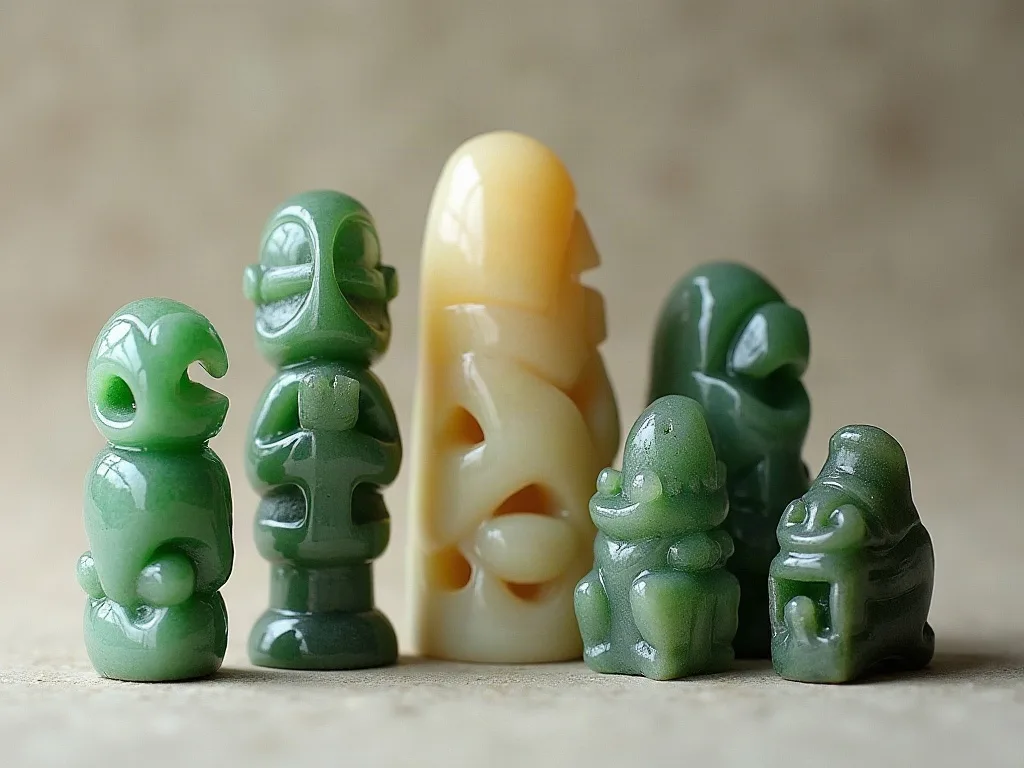
Over centuries, the story of Tiki transformed into something portable, wearable, and visually potent. The tiki (lowercase, as craftspeople use the word) became a carved or molded representation of the first human: a squat figure with a bulbous head, often with exaggerated eyes, mouth open or stern, hands on the belly, legs short and thick. The specific features vary depending on the carver's iwi and artistic tradition, but the core form remained recognizable.
Tiki carvings were made from several materials, each carrying its own spiritual weight:
- Bone (iwi): easy to carve, portable, intimately connected to ancestors (since bone endures when flesh decays)
- Jade (pounamu or greenstone): the most precious material in Maori culture, reserved for items of immense mana (spiritual authority and prestige)
- Wood (rakau): used for larger tiki, especially those set into meeting houses and community spaces
- Stone: durable, monumental tiki that served as territorial markers
A person might wear a tiki pendant carved from bone or jade at the neck, suspended on a cord made from plant fiber or leather. This was not mere decoration. Wearing a tiki was a statement of identity, a request for the protection of the first ancestor, a physical reminder of the sacred genealogy running through your body.
The carving process itself was sacred. A tohunga whakairo (master carver) did not simply shape material; he was considered to be calling the ancestor spirit into the form. Tools, prayers, timing, and the carver's own mana all affected whether the finished tiki would be powerful. A poorly made tiki might be inert. A tiki made with intention and skill by a master could carry real spiritual force.
The Tiki Symbol in Maori Art and Meeting Houses
Larger tiki carvings held a central place in Maori visual art, especially in the design of meeting houses (wharenui) and other communal spaces. The exterior of a meeting house was often guarded by imposing tiki figures, sometimes part of larger architectural compositions. These sentinel figures were not merely decorative. They marked the boundary between the sacred interior space and the outside world. To enter a meeting house was to pass under the protection and watchfulness of Tiki and the ancestors he represented.
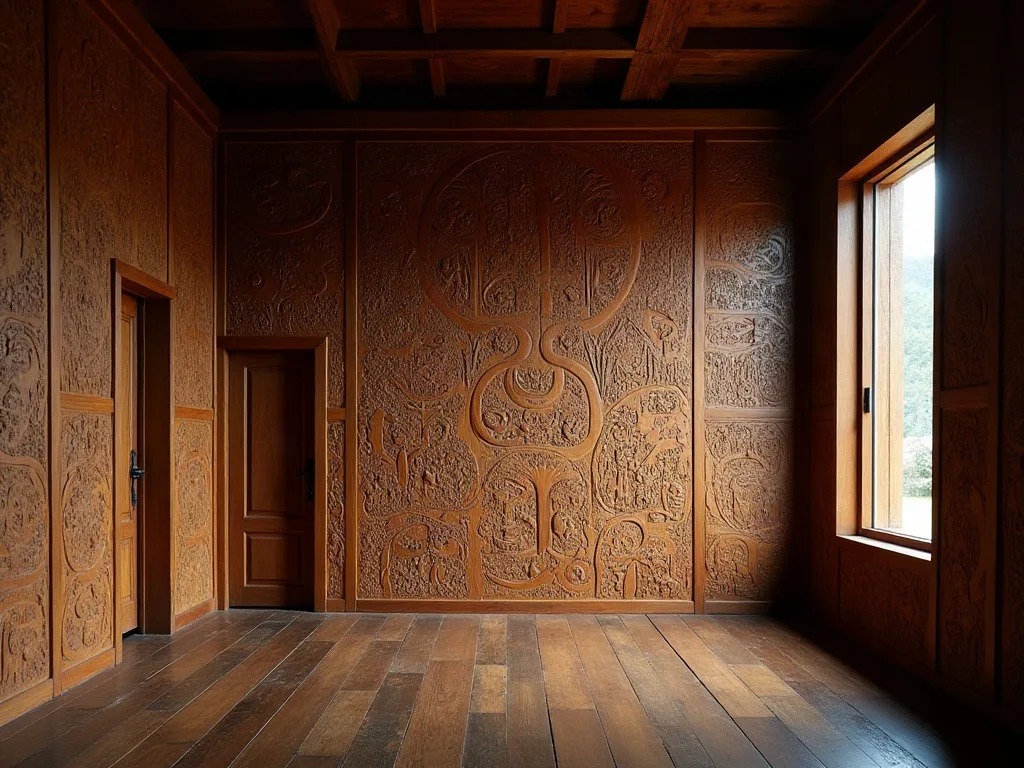
Inside a meeting house, the carved walls, rafters, and panels told stories through visual language. Tiki figures appeared alongside other ancestors, gods, and symbols, all woven together in a narrative of the iwi's history and their spiritual relationship to the cosmos. The style of the tiki carving, the patterns surrounding it, the materials used, all communicated specific tribal affiliations and regional artistic traditions.
The Maori carving tradition uses a highly sophisticated visual language based on curved lines, spirals (which represent the unfolding of knowledge and life), and human and animal forms interlocked in complex compositions. Within this language, Tiki occupies a special place as the fundamental human form from which other figures emerge. A skilled viewer could read the genealogy and spiritual history of a iwi simply by understanding how the master carver had positioned and carved the tiki figures.
By the 19th and 20th centuries, tiki imagery had become one of the most recognizable symbols of Maori identity, both within Aotearoa and internationally. Colonial artists, traders, and tourists encountered tiki carvings and brought knowledge of them back to Europe. But in many cases, the deeper meaning was lost in translation. Western observers saw the tiki as exotic art, a quaint relic, perhaps a good luck charm. Few understood that they were looking at a cosmological principle made visible: the first human, the ancestor, the proof that gods and mortals belonged to the same family.
Tiki and Mana: Spiritual Authority and Protective Power
In Maori thought, mana is the spiritual authority, power, and prestige that flows through all things. It is not static; it can be earned, inherited, lost, or transferred. A person with great mana could influence events and people around them. A place could have mana. An object could hold mana.
Tiki carried inherent mana by virtue of his creation. Because he was shaped by Tane Mahuta in the god's own image, Tiki possessed divine mana from his inception. This mana then flowed downward through all his descendants. Every Maori person carried within their whakapapa a portion of the mana that originated with Tiki.
A tiki pendant carved from pounamu (jade) would be understood to hold mana in multiple ways:
- The jade itself was prized as a material imbued with spiritual power
- The form of the ancestor Tiki called down the protective presence of that first human
- The act of carving, performed by a master craftsman with proper knowledge and spiritual preparation, introduced the carver's own mana into the work
- The object became a tapu (sacred, restricted) item that required respectful handling
Wearing or displaying a tiki was thus a form of spiritual technology. It was not superstition in the Western sense (a mere hope) but a practice rooted in the Maori understanding of how mana moves through relationships, objects, and genealogies. The tiki was a physical anchor that held you connected to your ancestor, to your iwi, to the gods themselves.
Tiki in Modern Maori Culture and Beyond
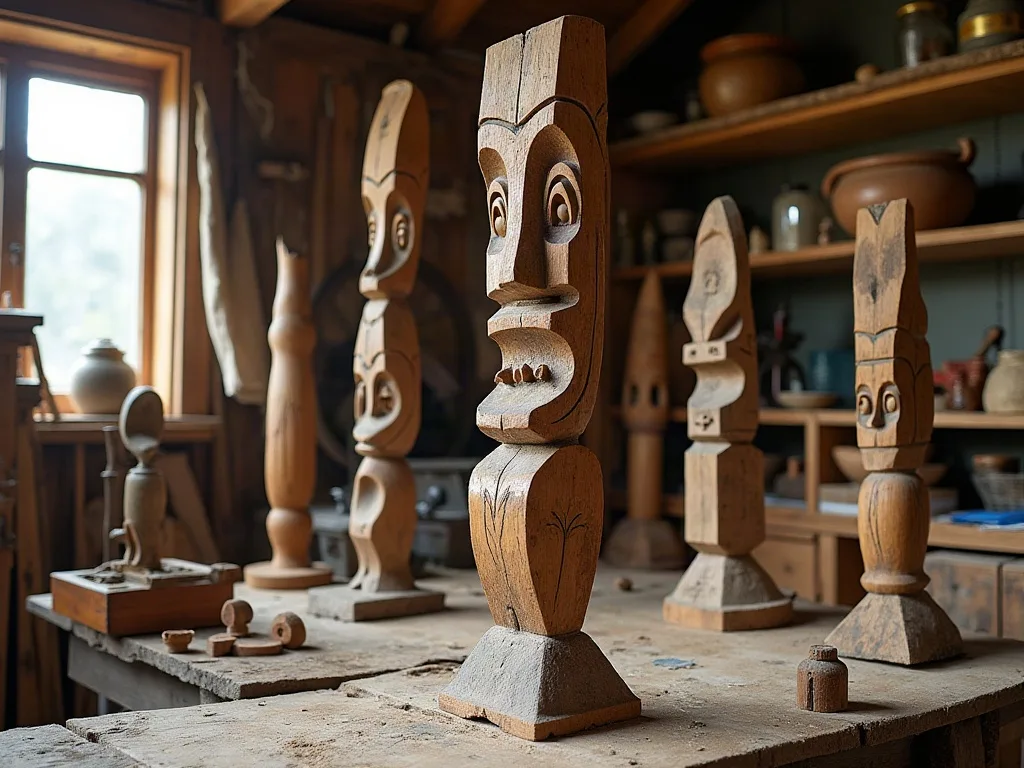
Today, Tiki remains a living symbol in contemporary Maori culture. Maori artists continue to create tiki carvings, often innovating within traditional forms to reflect modern concerns and aesthetics. These are not merely historical reproductions but active conversations with the past, using the ancestor Tiki as a vehicle to express identity, resistance, healing, and connection.
Tiki imagery appears in:
- Contemporary Maori visual art and sculpture
- Tattoo designs (ta moko and other forms)
- Jewelry, both traditional and modern
- Street art and murals
- Digital and multimedia work by Maori creators
International tourism and commercialization have also shaped how tiki is perceived outside Aotearoa. In many parts of the world, "tiki" has become a loosely associated with Polynesian exoticism, applied to everything from tiki bars to inflatable decorations. This commercialization has sometimes obscured the deeper meanings Maori associate with the symbol. Yet it has also spread knowledge of Tiki globally.
Maori cultural leaders, artists, and educators have consistently worked to reclaim and reframe the tiki symbol, insisting on its true significance. Museums in Aotearoa and internationally have repatriated or recontextualized tiki carvings, returning them to Maori communities or displaying them with education that reflects Maori voices. Organizations dedicated to preserving Maori language, art, and knowledge have made the story of Tiki and his place in creation central to their work.
The ongoing presence of tiki in Maori cultural production demonstrates that this is not a dead myth but a living one. Each new carving, each new artwork that invokes Tiki, is a renewal of the connection between the living and the ancestor, between the human and the divine.
Comparisons Across Oceanic Traditions
The figure of Tiki as the first human carved from earth appears with variations across Polynesian and broader Oceanic mythologies. In Hawaiian tradition, Kii (sometimes spelled Ki'i) is a similar figure: the first man, the progenitor of humanity. In Samoan mythology, the first humans emerged through different means, but the concept of a sacred ancestor who bridges the divine and mortal worlds remains central.
These variations suggest either a common ancestral tradition (as these island cultures shared roots and ongoing contact) or parallel responses to similar mythological questions: How did humans come into being? Who is the ancestor to whom all lineages return? How do we maintain connection to the sacred through genealogy?
What distinguishes the Maori Tiki story is its integration into a comprehensive genealogical system (whakapapa) and its transformation into a visual symbol of such sophistication and ubiquity. The tiki figure became not just a character in a creation myth but a primary vehicle through which Maori visual culture, spiritual practice, and identity could be expressed and transmitted.
Unresolved Questions and Scholarly Debate
Maori scholars and historians continue to investigate the origins and evolution of the Tiki concept. Some questions remain open:
Did the tiki carving tradition precede the development of Maori written and oral accounts of Tiki creation? Or did the mythological narrative generate the visual symbol? The answer likely involves complex feedback between myth and art over centuries, but the precise chronology is difficult to establish.
How much of the current Tiki narrative was shaped by encounter with European cultures? Colonial contact transformed Maori society in profound ways, including how oral traditions were recorded and interpreted. Some scholars ask whether certain elements of the Tiki story as now told were influenced by Christian creation narratives or European philosophical frameworks. Others argue that the core story shows remarkable consistency across iwi accounts predating European contact.
What was the role of women in relation to Tiki? Different genealogies describe different female ancestors and partners. Some accounts suggest that Hine-ahuone (daughter of earth, sometimes also called Hine-ahu-one) was created alongside or even before Tiki. Others position her as his daughter or partner. The relationship between Tiki and female ancestors is an area where contemporary Maori scholarship is deepening understanding.
These debates are not about whether Tiki is "real" in a literal historical sense. Rather, they acknowledge that mythology changes as it is told, and that understanding those changes tells us something true about how cultures adapt and survive.
Frequently asked questions about Tiki and Maori creation mythology
Frequently asked questions
Was Tiki a real historical person or purely mythological?
Tiki is presented in Maori mythology as the first human, but the question of historical reality is framed differently in Maori epistemology than in Western traditions. Maori genealogies (whakapapa) treat Tiki as a real ancestor, not in the sense of a person whose skeleton can be excavated, but as a living spiritual presence and the mythic prototype from which all humans descended. For Maori people, the distinction between "mythological" and "real" is less absolute. Tiki is real in his effects: he shaped genealogies, inspired carvings, and continues to be honored in spiritual practice.
Why is Tiki carved with such an exaggerated appearance?
The distinctive bulbous head, prominent eyes, and open or stern mouth of a tiki carving are not meant to be realistic portraiture. Instead, they represent spiritual power and presence. The exaggeration makes the tiki visually striking and memorable, forcing the viewer to pay attention. The specific features also vary by regional carving traditions and can communicate tribal affiliation or specific spiritual qualities. A master carver was not trying to show what Tiki looked like, but rather to embody the ancestor's mana in physical form.
Can anyone wear a tiki pendant, or is it reserved for Maori people?
Tiki pendants were traditionally carved and worn within Maori communities, and the practice continues today. As with other sacred symbols, respectful use by people outside the culture is debated. Some Maori artists and educators welcome broader appreciation of tiki symbolism and create pieces for non-Maori customers with the hope that understanding will follow. Others emphasize that the deepest meanings of tiki are rooted in Maori genealogy and spiritual frameworks that belong to the iwi. The most respectful approach is to learn the story and significance of Tiki before deciding to wear or display the symbol, and to source tiki from carvers who can speak authentically to their meaning.
How does the tiki symbol relate to other Polynesian gods and ancestors?
Tiki holds a unique place in Maori cosmology as the first human, but other gods like Tane Mahuta (who created Tiki), Rangi (sky father), and Papa (earth mother) are equally vital. In broader Polynesian traditions, similar figures appear under different names (Kii in Hawaiian tradition, for example). Tiki is distinct because of how thoroughly he was integrated into the genealogical and artistic traditions of Maori culture, becoming not just a name but a visual icon and a spiritual practice.
What is the difference between a sacred tiki carving and a commercial tiki sold to tourists?
A tiki carving made by a Maori master carver following traditional practices, with intention and proper spiritual preparation, is understood to hold mana and spiritual power. It is a tapu (sacred) object that connects the wearer or viewer to the ancestor and to genealogical knowledge. Mass-produced tikis sold as souvenirs may replicate the visual form but lack the spiritual foundation and cultural knowledge embedded in a traditionally made carving. This is not about magical thinking; it is about the difference between an object made with understanding and care versus one made primarily for profit. Supporting Maori carvers directly means supporting the preservation of living cultural practice.
The Enduring Presence of the First Ancestor
Tiki stands at the threshold between creation and human history, between the gods and their earthly children. The fact that this ancient ancestor remains so vivid in Maori visual culture, so actively carved and worn and painted, suggests something profound about how Maori civilization has held onto its spiritual foundations even through centuries of colonial pressure and cultural disruption.
The image of Tane Mahuta shaping red earth into human form, breathing life into the first man, still carries power. It speaks to a vision of humanity that is fundamentally sacred, fundamentally connected to the land and the gods. When a Maori carver today picks up jade or bone and begins to shape a tiki, she is not making a relic or a museum piece. She is performing an act of continuation, keeping alive the presence of the ancestor who is both ancient and eternally present. Through that carving, through the wearing and honoring of tiki, the genealogy holds. The ancestor remains awake.
Read the full book
Want the whole story?
The complete edition is an instant PDF download here, with a paperback on Amazon for selected titles.
Maori
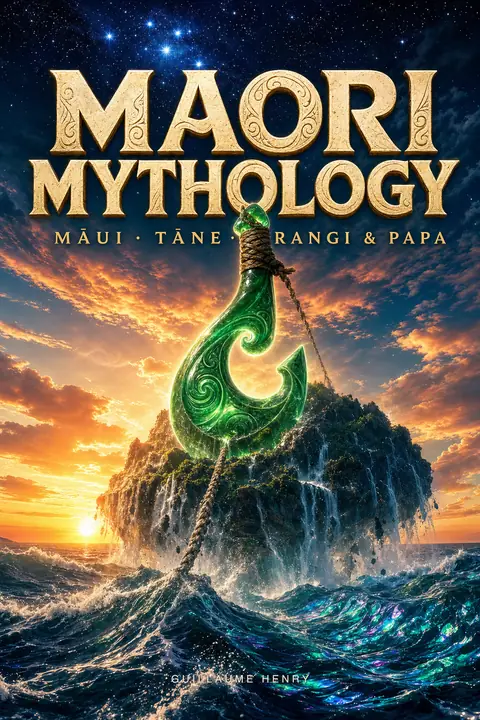
The Maori Mythology Book: Māui, Tāne, and the Gods of Aotearoa
Māui, Tāne, and Rangi and Papa
The mythology of New Zealand’s first people: the sky-father and earth-mother locked in an embrace, the children who forced them apart to let in the light, and Māui the trickster who fished up islands, snared the sun, and died trying to defeat death itself.
More from Maori
All articles
Maori
The Marae: Sacred Meeting Ground in Maori Culture
The marae stands at the heart of Maori identity: a sacred communal space where land, genealogy, and spiritual power converge. Discover how this open courtyard became the foundation of Maori society, ceremony, and connection to place.

Maori
The Taniwha: Supernatural Guardians of Waterways in Maori Mythology
The taniwha are powerful supernatural beings in Maori mythology that guard rivers, lakes, and caves. These shape-shifting creatures demand respect and have shaped Maori settlement patterns for centuries.
Maori
Tapu and Noa: Sacred Restriction and Freedom in Māori Worldview
Tapu and Noa are the twin forces that shaped Māori life: one sacred, restricted, potent; the other free, ordinary, unrestricted. Learn how these concepts governed everything from food and ritual to social order and spiritual safety.

Maori
Whiro: God of Darkness and Evil in Māori Mythology
Whiro stands as the Māori god of darkness, chaos, and evil, a primal force of destruction born from the separation of sky and earth. Discover how this ancient deity shaped Polynesian cosmology and what his eternal struggle with light reveals about Māori understanding of creation.