
The Marae: Sacred Meeting Ground in Maori Culture
The marae stands at the heart of Maori identity: a sacred communal space where land, genealogy, and spiritual power converge. Discover how this open courtyard became the foundation of Maori society, ceremony, and connection to place.
Contents
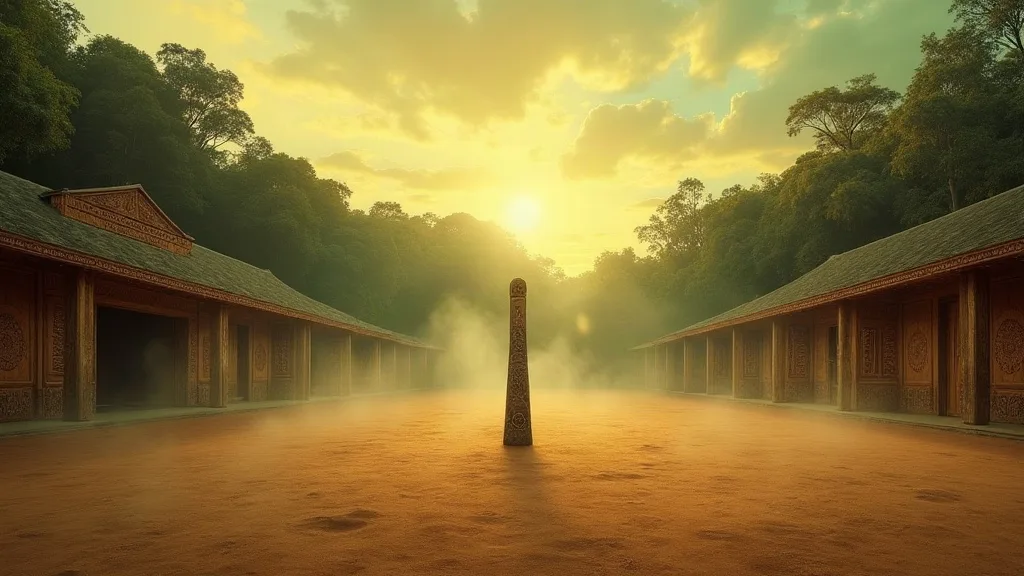
The sun rises over a bare earthen courtyard. No walls, no shelter, just open sky and the living presence of ancestors. This is the marae, the beating heart of Maori community life for over a thousand years. It is not simply a physical place; it is a repository of whakapapa (genealogy), a gathering site for ritual and politics, and a living expression of connection to the land itself.
The word marae carries multiple layers of meaning. In its most literal sense, it refers to the central courtyard of a Maori settlement. But the term also encompasses the entire complex of ceremonial buildings, the land that surrounds it, and the spiritual authority that radiates outward. When a Maori person says "I come from that marae," they are naming not just a location but a genealogical anchor, a web of kinship ties, and a territory defined by inheritance and mana (spiritual authority and prestige).
Origins and Spiritual Geography
The marae in its present form emerged as Maori culture crystallized across Aotearoa (New Zealand) in the centuries following human settlement around 1300 CE. Early Polynesesian voyagers had brought with them a deep understanding of communal gathering spaces; the marae represents a distinctly Maori adaptation of that heritage, shaped by the landscape, resources, and spiritual beliefs of the islands.
The concept rests on a foundation older than the marae itself: the Maori understanding that land is not dead property but a living, sentient force. Each marae sits upon tupuna whenua (ancestral land). The ground beneath it carries mana, the spiritual essence passed down through generations. Maori cosmology, rooted in creation stories found in the Mahuika narratives and other oral traditions, teaches that the earth itself is descended from Papatuanuku, the Earth Mother. To stand on a marae is to stand on the body of an ancestor.
The layout of a traditional marae reflects this spiritual logic. The courtyard opens to the east, toward the rising sun and the direction of origin and life. The wharenui (great house) faces the courtyard, its carved ridge pole depicting the genealogy of the iwi (tribe) that built it. Directly in front of the wharenui, centered on the marae itself, stands the tupu (a space of pure spiritual power). This open ground is considered tapu (sacred, restricted, dangerous if violated). Only the most senior members of the community may tread upon it during certain ceremonies.
The Architecture of Authority
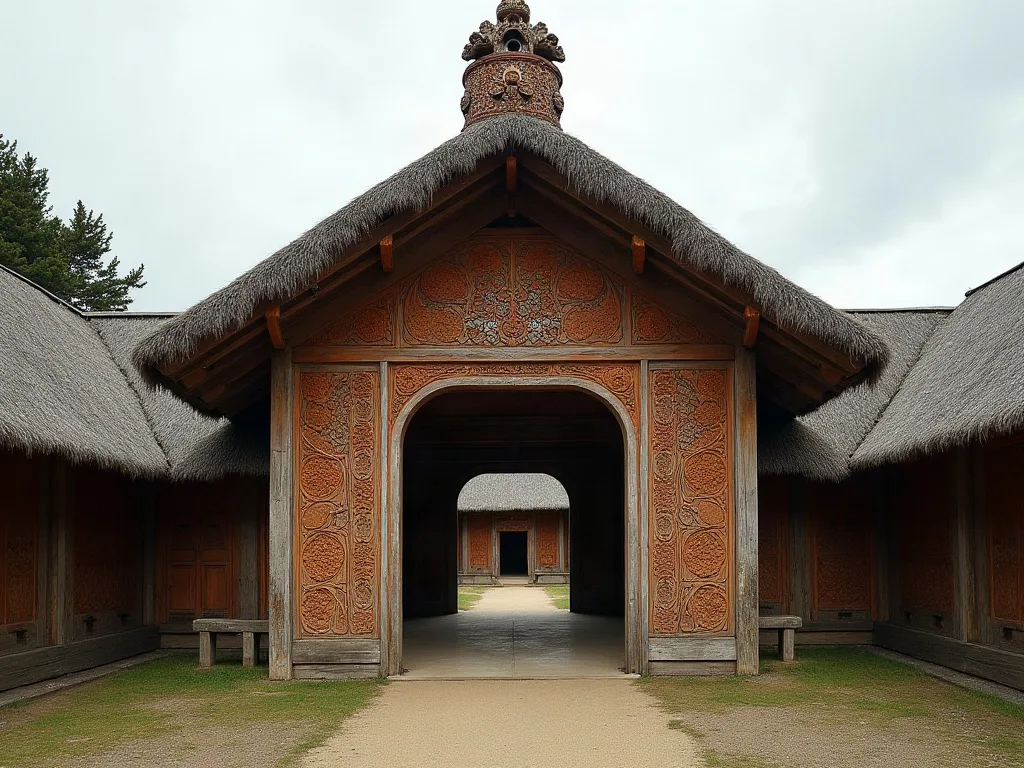
A fully formed marae complex includes several distinct structures, each with ceremonial purpose. The wharenui (meeting house) is the most visible and spiritually potent. These buildings are masterpieces of Maori carving. Every post, every rafter, every painted panel tells a genealogical story. The tekoteko (carved figure) that crowns the roof embodies the founding ancestor of the iwi. To enter a wharenui is to enter the body of that ancestor, symbolically and spiritually.
The wharekai (dining hall) sits nearby, essential for the practical work of feeding gatherings. Food prepared and eaten together on the marae has ritual significance; sharing kai (food) with visitors bonds communities and affirms manaakitanga (hospitality and reciprocal care). Adjacent to the wharekai stands the waharoa (gateway), often elaborately carved, which marks the boundary between the outer world and the tapu space of the marae itself.
Some marae also contain a wharepaku (toilet house) and storage structures. But these are subordinate to the central arrangement: the marae courtyard as the stage, the wharenui as the ancestor, and the gathered iwi as the community that animates both.
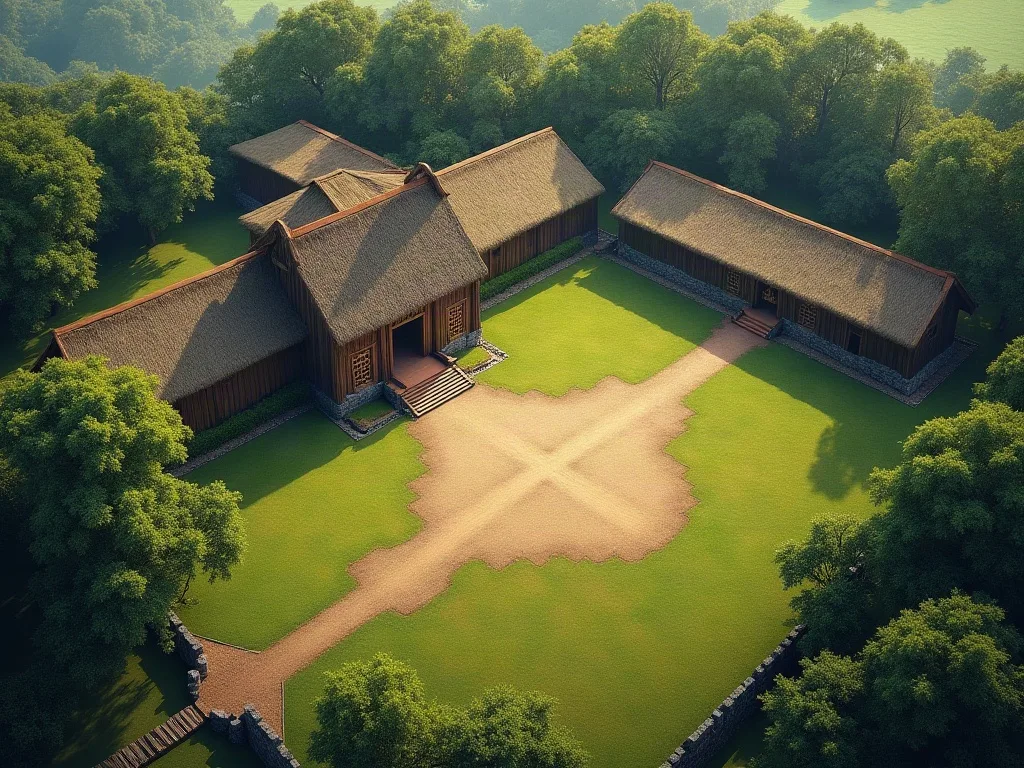
The placement of a marae within the landscape carries intentional meaning. Many are sited near water (a river, a coast, or a spring), recognizing the life-giving presence of wai (water) and the spiritual connection between people and the flowing world. Others are oriented toward prominent peaks or geographic features tied to tribal origin stories. The position of a marae on the land is never arbitrary; it is a spatial text written in genealogy and geography.
Ceremony and Manaakitanga
The marae functions as the primary stage for Maori ceremonial life. When an iwi gathers on the marae, they gather on the most sacred and most public ground they possess. Tangihanga (funeral rites), welcome ceremonies, hui (formal meetings), and rites of passage all unfold on this courtyard.
The pōwhiri (formal welcome ceremony) is central to marae protocol. When visitors arrive, the tangata whenua (people of the land, the hosts) and the manuhiri (guests) enact a ritually charged encounter on the marae itself. The tangata whenua perform a waiata (song) or karakia (invocation), often asserting genealogy and territorial authority. The manuhiri respond, speaking their own genealogy. This verbal and embodied exchange is not mere courtesy; it is a reaffirmation of boundaries, relationships, and mana. Only after this ceremonial passage can the guests safely enter the wharenui.
Tangihanga, the funeral rite, represents the most spiritually intense use of the marae. The deceased lies in state inside or near the wharenui, and the iwi gathers to mourn across multiple days. Waiata, speeches, and silence punctuate the gathering. The body is never left alone; this vigil ensures the deceased's spirit finds safe passage and does not become a restless wairua (ghost). The marae becomes a threshold between the living world and the realm of the ancestors.
Manaakitanga (hospitality) is the ethical framework that governs marae gatherings. Visitors are fed, housed, and treated with respect regardless of social rank or prior relationship. This is not charity but rather a demonstration of the community's mana and strength. By caring for the manuhiri, the tangata whenua affirm their connection to the land and their readiness to meet obligations of kinship and reciprocity. The marae, in this sense, is a stage for displaying the health and generosity of an iwi.
Genealogy and Territorial Identity
To understand the marae is to understand that Maori identity flows from both descent (genealogy) and land (territory). The marae makes this dual inheritance visible and tangible.
Every wharenui is carved and named to commemorate the founding ancestor of the iwi. The carved panels inside often depict successive generations of ancestors, painted in ochre and white, their relationships and achievements recorded in wood and pigment. When a child is born on a marae, they inherit not only the genealogy depicted on those panels but also a right to the land itself. This is whakapapa: not mere ancestry but a living, spatial belonging.
The tapu nature of the marae courtyard reinforces this genealogical claim. The tupu, the central space, is so intensely sacred that only senior elders and priests may enter it during ceremonies. This hierarchy ensures that decisions and blessings emanate from the ancestors; leadership flows downward from the genealogical source. A tangata (person) who does not know their whakapapa is said to be "without roots," unable to claim a marae as their own. Conversely, to be recognized on a marae is to be genealogically and territorially anchored.
European Manor House
Maori Marae
The Marae Under Colonial Pressure
The arrival of European settlers in the late 18th century subjected Maori marae to severe pressures. Land confiscation laws broke the genealogical link between iwi and territory. Marae were sometimes destroyed, their sacred carvings removed to museums, their communities dispersed. Despite this, the marae survived and continues to survive as a site of active Maori identity and sovereignty.
In the late 20th century, marae experienced a cultural revival. Restoration projects repaired damaged wharenui. New marae were established by diaspora Maori communities living in cities, ensuring that even urban iwi could maintain connection to whakapapa and community ritual. Today, the marae remains the primary institution through which Maori individuals anchor themselves to genealogy, territory, and collective obligation.
The marae has also become a space where Maori reclaim and assert rights to land and self-determination. Treaty settlements and ongoing land rights movements increasingly recognize the marae as the legal and spiritual center of iwi authority. In this way, the marae is not a relic; it is an active political and spiritual site in contemporary Aotearoa.
The Marae in Everyday and Festival Life
For most Maori, the marae is a place visited regularly for small gatherings, family events, and routine community business. Children attend marae-based schools. Elders meet to discuss land management, educational curricula, and health initiatives. The marae is a space of continuity and decision-making in ordinary time.
But the marae also bursts into heightened ceremonial intensity at certain moments. Tangi (funeral gatherings) can draw hundreds of people over multiple days. Waitangi Day (February 6) brings Maori from across the nation to significant marae to commemorate the Treaty of Waitangi (1840) and to voice political demands. At Matariki time (the Maori New Year, marked by the rise of a star cluster), many marae host hui (gatherings) to celebrate seasonal renewal and to reflect on community achievements and challenges.
The Sacred Courtyard and Contemporary Meaning
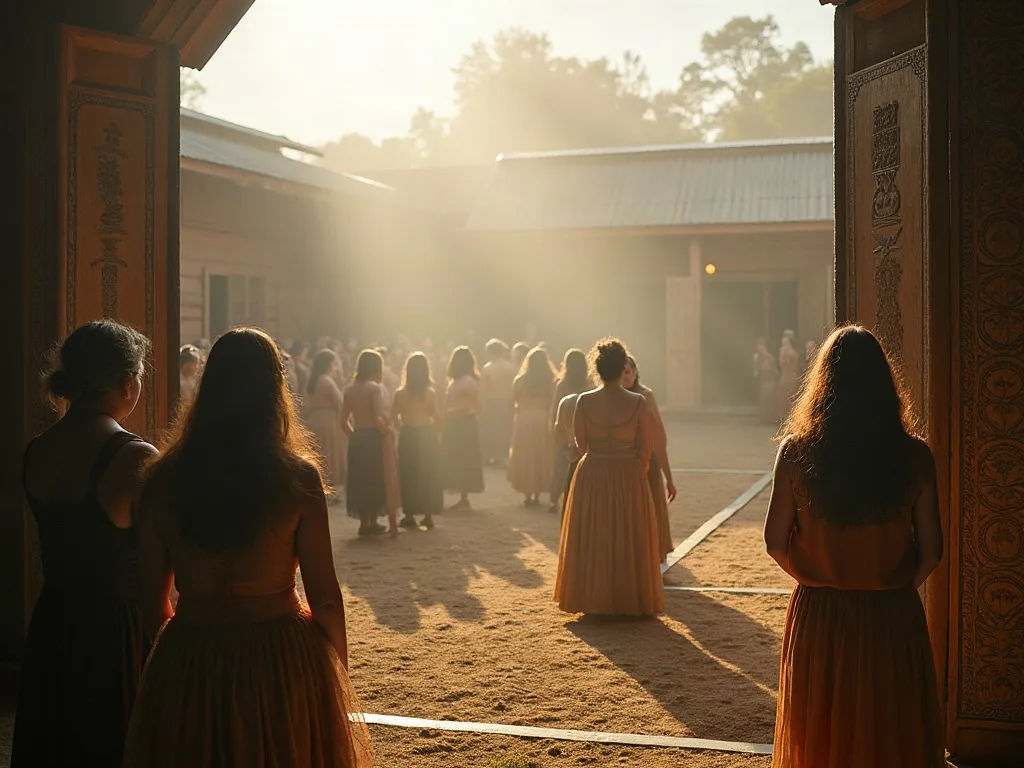
The marae today represents something that colonialism and modernity have not erased: the possibility of gathering on sacred ground, of speaking genealogy into the present moment, of asserting that some places are not for sale or development but are inalienable repositories of collective identity. This is why new marae continue to be built, even in urban centers far from ancestral territories. Each new wharenui carved, each new marae courtyard cleared and blessed, is an assertion that Maori identity, genealogy, and spiritual authority remain alive and active.
The marae challenges the Western legal and economic understanding of property. In Western law, land is a commodity, transferable and divisible. In Maori understanding, land is genealogy made visible; it cannot be truly owned, only temporarily tended by the current generation on behalf of ancestors and descendants. The marae embodies this alternative understanding of place and belonging. It stands as proof that other ways of organizing space, ritual, and community are not merely historical curiosities but living possibilities.
Frequently asked questions about the marae in Maori culture?
Frequently asked questions
What does the word marae actually mean?
Marae refers to the sacred courtyard and the entire ceremonial complex associated with it, but it also carries metaphorical weight: it is a space of genealogy, territory, and mana (spiritual authority). When Maori speak of "their marae," they claim not just a physical location but a genealogical and territorial identity rooted in the land itself.
Why is the marae courtyard considered tapu (sacred)?
In Maori cosmology, the land is descended from Papatuanuku, the Earth Mother, and every marae sits on tupuna whenua (ancestral land) infused with mana. The courtyard, especially the central tupu space, is so spiritually potent that it is restricted to senior elders and priests during ceremonies. Breaking tapu protocols is a serious spiritual and social breach.
What is the purpose of the wharenui (meeting house)?
The wharenui is both a practical gathering space and a spiritual representation of the founding ancestor of the iwi. Its carved panels and ridge pole (topped with a tekoteko) depict genealogy. To enter the wharenui is symbolically to enter the body of that ancestor, making it the most sacred structure on the marae complex.
How does the pōwhiri (welcome ceremony) work?
When visitors arrive, the tangata whenua (hosts) and manuhiri (guests) enact a formal ritual encounter on the marae. The hosts perform a waiata (song) or karakia (invocation) asserting genealogy and territorial authority. The guests respond with their own genealogical claim. This exchange is a reaffirmation of boundaries, relationships, and mana before guests may enter the wharenui.
How did colonialism affect the marae?
European land confiscation laws severed the genealogical link between many iwi and their territory, and some marae were destroyed or desecrated. However, the marae survived and experienced a cultural revival in the late 20th century. Today, marae continue to be restored and built anew as sites of Maori identity and sovereignty assertion.
Can anyone visit a marae?
Yes, visitors are generally welcomed through proper protocols. The pōwhiri (formal welcome) is essential. Visitors should remove their shoes, wait to be formally invited into the wharenui, and follow the manaakitanga (hospitality) protocols of the community. Disrespecting these boundaries is a breach of tapu and of social obligation.
The Marae as a Living Question About Place and Belonging
The marae raises a question that modernity often dodges: what does it mean for a place to belong to people, and for people to belong to a place? In Western thought, land is a resource or a commodity, valued primarily for its economic use. In Maori understanding, land is genealogy, memory, and ancestral presence made tangible. The marae is the physical proof that this alternative understanding persists.
Contemporary anthropologists and historians studying the marae often point to its resilience as evidence that colonialism, while destructive, did not complete its project of erasure. The marae continues to function as the primary institution through which Maori individuals assert genealogy, claim territory, and enact community obligation. In this sense, the marae is not frozen in the past but actively engaged in defining Maori futurity.
The marae also offers a model for other indigenous communities and for anyone seeking an alternative to the alienation of modern urban life. It demonstrates that gathering space, genealogy, and spiritual meaning can be deliberately maintained and renewed. Each new marae built, each tangihanga observed, each pōwhiri enacted, strengthens the living threads that connect past to present and present to future. The courtyard remains what it has always been: a threshold where the ancestors are present and where the community gathers to speak its name into the world.
Read the full book
Want the whole story?
The complete edition is an instant PDF download here, with a paperback on Amazon for selected titles.
Maori
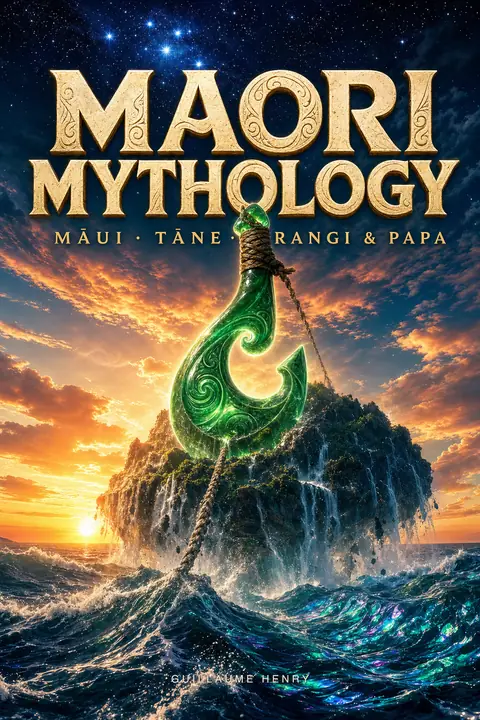
The Maori Mythology Book: Māui, Tāne, and the Gods of Aotearoa
Māui, Tāne, and Rangi and Papa
The mythology of New Zealand’s first people: the sky-father and earth-mother locked in an embrace, the children who forced them apart to let in the light, and Māui the trickster who fished up islands, snared the sun, and died trying to defeat death itself.
More from Maori
All articles
Maori
Tiki: The First Man and Ancestral Symbol in Maori Mythology
In Maori creation myth, Tiki was the first human, carved from earth by Tane Mahuta, the god of forests. This symbol represents the bridge between the divine and human worlds, still vital in Maori art and culture today.

Maori
The Taniwha: Supernatural Guardians of Waterways in Maori Mythology
The taniwha are powerful supernatural beings in Maori mythology that guard rivers, lakes, and caves. These shape-shifting creatures demand respect and have shaped Maori settlement patterns for centuries.
Maori
Tapu and Noa: Sacred Restriction and Freedom in Māori Worldview
Tapu and Noa are the twin forces that shaped Māori life: one sacred, restricted, potent; the other free, ordinary, unrestricted. Learn how these concepts governed everything from food and ritual to social order and spiritual safety.

Maori
Whiro: God of Darkness and Evil in Māori Mythology
Whiro stands as the Māori god of darkness, chaos, and evil, a primal force of destruction born from the separation of sky and earth. Discover how this ancient deity shaped Polynesian cosmology and what his eternal struggle with light reveals about Māori understanding of creation.