

Whiro: God of Darkness and Evil in Māori Mythology
Whiro stands as the Māori god of darkness, chaos, and evil, a primal force of destruction born from the separation of sky and earth. Discover how this ancient deity shaped Polynesian cosmology and what his eternal struggle with light reveals about Māori understanding of creation.
Contents
In the beginning, Māori creation mythology tells us, there was Te Pō, the primordial darkness. From this void emerged Whiro, a god of profound and ancient evil whose very existence embodies chaos, death, and the destructive forces that oppose all creation. Unlike villains in Western stories, Whiro is not simply "bad." He is a necessary opposite, a cosmic counterbalance to light and order. To understand Māori cosmology, you must understand him.
The struggle between Whiro and the forces of creation is written into the fabric of the universe itself. It is not a battle that will be won or lost. It simply continues, eternally, woven through every night and every shadow. This is the vision that shaped Māori spirituality for centuries, and it remains central to Polynesian thought today.
The Origins of Whiro in the Creation Account
Whiro emerges at the very moment of creation, born from the original darkness itself. The Māori cosmological narrative, preserved in oral traditions and later recorded by Pākehā (European) scholars, describes the universe beginning in complete darkness. From this primordial state, Rangi (Sky Father) and Papa (Earth Mother) came into being, locked together in an embrace so close that their children could not move or grow.
The children of Rangi and Papa, gods of wind, sea, forest, and food, pressed upward, desperate for light and space. The youngest son, Tāne, god of the forest and light, pushed with such force that he separated his parents. In that moment of violent rupture, light flooded into existence. But light alone did not come. Whiro emerged from the breaking darkness, furious at the separation, born to resist everything Tāne had created.

This is not incidental. According to Māori cosmological texts recorded by scholars like Elsdon Best and Peter Buck, Whiro was not added later as a punishment or an afterthought. He existed in Te Pō, the realm of darkness, from the beginning. When Tāne tore apart his parents to create the world of light, Te Ao Mārama, Whiro found himself exiled to the underworld, forced to dwell in the spaces between night and day, in sickness, in death, in all the places light cannot reach.
The Māori cosmos recognizes that creation requires both separation and opposition. Without Whiro's resistance, without the eternal pressure of darkness, light would have no meaning. This philosophical understanding permeates Māori spirituality. The universe is not a battle between good and evil where one side will win. It is an eternal tension that defines existence itself.
The Realm of Whiro: Te Pō and the Underworld
Whiro rules over Te Pō, a vast, complex realm that is far more than simply "the underworld." In Māori cosmology, Te Pō has many layers, many names, and many purposes. It is the place of darkness, yes, but also the place of potential, the source from which all life emerges. Whiro, however, rules over the darker aspects of this realm, the prison-house of spirits, the realm of decay, disease, and death.
The Māori tradition describes multiple levels to Te Pō. The first, nearest to the world of living light, is where the spirits of the recently dead linger. As one descends deeper into Whiro's domain, the realms become progressively darker, colder, and more hostile. The deepest levels are places of eternal isolation, where spirits suffer the consequences of their actions or their misdeeds during life.
Crucially, Whiro does not control all of Te Pō. He shares dominion with other forces. Hine-nui-te-pō, the great woman of the night and keeper of human mortality, presides over the realm where spirits eventually rest after their journey. But Whiro controls the chaos within that darkness, the suffering, the disease, and the malevolent spirits that roam the spaces between the living and the dead.
The Māori belief was deeply practical. Illness, misfortune, and death were often attributed to Whiro's influence or to his servants, malevolent spirits and demons that he sent into the world of the living. A sickness that could not be cured by traditional remedies might be blamed on Whiro-caused possession or curse. This was not primitive superstition; it was a sophisticated system of understanding suffering within a spiritual framework.
Whiro's Nature: Chaos, Rage, and Primal Opposition
The character of Whiro in Māori myth is profoundly different from the personified evil of Christian or Islamic tradition. Whiro is not a rebel against cosmic order; he is the embodiment of the chaos that preceded order. He rages not out of jealousy or pride, but from his fundamental nature. He cannot be negotiated with. He cannot be redeemed. He can only be opposed, contained, and balanced.
Māori texts describe Whiro as restless, eternally seeking to corrupt, to darken, and to drag the world back into primordial chaos. Yet he is also trapped. The separation of Rangi and Papa created a barrier. Whiro cannot simply flood the world with darkness. He must work through lesser agents, disease-spirits, malevolent creatures, and the spiritual weaknesses of humans themselves.

One of the most striking aspects of Whiro's mythology is how he interacts with Tāne. These two gods are cosmic opposites. Tāne created light, ordered the world, established the forest and its abundance, and separated the sky from the earth. Everything Tāne did was an act of creation and ordering. Whiro opposes this at every turn. Where Tāne brought forth life, Whiro brings decay. Where Tāne established bonds and relationships between the gods and humanity, Whiro severs them through misfortune and death.
Yet they are not combatants in the traditional sense. They do not meet in direct battle. Instead, their opposition is fundamental. Every act of creation by the gods includes an implicit struggle against Whiro's tendency toward dissolution. Every human life, in Māori understanding, was lived in this tension between light and darkness, between the creative forces represented by Tāne and the destructive forces embodied by Whiro.
The Children and Servants of Whiro
Whiro is not alone in his dominion of darkness. He has children and servants, spirits and demons who enact his will in both the spiritual and physical worlds. These beings are collectively understood as servants of te kino, the badness or evil that Whiro represents.
The most significant offspring of Whiro mentioned in Māori tradition are the various atua, or spirits, that serve him. These include disease-spirits, death-spirits, and malevolent entities that could enter a person's body and cause illness or madness. The concept of spiritual possession in Māori culture was deeply tied to Whiro's influence. When someone fell ill with a wasting disease or behavior became erratic and dangerous, it was often understood as Whiro's servant having entered that person's wairua, or spirit.
The makutu, or curse, was one of the most feared weapons believed to be wielded by Whiro's followers. A makutu was not simply a wish for harm; it was an act of spiritual coercion, often requiring the assistance of practitioners who had knowledge of the darker arts. The makutu could cause slow death, madness, infertility, or endless bad fortune. Its power lay in the spiritual world, in Whiro's domain, and only spiritual countermeasures could undo it.
Whiro and the Afterlife Journey
The mythology of Whiro is inseparable from the Māori understanding of death and the afterlife. When a Māori person died, their journey was understood to lead them into Te Pō, the realm of darkness where Whiro held sway. This was not necessarily punishment; it was the natural path of the dead.
However, the journey itself was fraught with peril. Spirits of the deceased had to navigate multiple spiritual levels, often encountering hostile forces and malevolent entities sent by Whiro. The purpose of funeral rites and the maintenance of tapu (spiritual prohibition) around the deceased was partly to protect the spirit on this dangerous journey.
Ultimately, if the spirit navigated successfully and maintained proper connections to living relatives through ritual, it would eventually reach a place of rest and peace, often under the guardianship of Hine-nui-te-pō. But Whiro's realm existed throughout this journey as a constant danger, a space where the spirit could become trapped if it lacked proper spiritual protection or if its life had been marked by transgression.
The living had responsibility in this journey. Through proper burial practices, through the recitation of genealogies (whakapapa) that connected the deceased to ancestors, and through ongoing ritual acknowledgment, living relatives could assist the spirit in its passage. Neglect of these duties left the spirit vulnerable to Whiro's influence.
Whiro in Māori Spiritual Practice and Tapu
The influence of Whiro was ever-present in traditional Māori spiritual life, and his power was managed through an elaborate system of tapu (spiritual prohibition and sacredness). Tapu was not primarily about morality; it was about managing spiritual danger. Certain objects, certain people, and certain places were tapu, spiritually dangerous or sacred, because they were believed to be accessible to Whiro's influence or subject to his power.
A person in mourning was tapu, for instance, because their grief and loss left them spiritually vulnerable. A person who had suffered a severe injury or illness was tapu because they had been touched by forces associated with Whiro. Death itself was deeply tapu. The removal of tapu from a place or person required ritual action, often the work of a tohunga, a specialist in spiritual knowledge.
The whakatipuranga (the system of spiritual teaching and instruction) that Māori parents gave their children included careful instruction about the dangers Whiro represented. Children were taught to respect the darkness, to avoid certain forests at night, to maintain the proper spiritual protocols, and to understand that their survival and well-being depended not on the absence of Whiro, but on the proper balance between the forces he represented and the forces of light and creation.
One of the most important principles in Māori spirituality was ka mate, ka ora, meaning "there is death and there is life." This phrase encapsulates the understanding that death and life are not opposites that will resolve into one or the other. They coexist. Whiro and Tāne coexist. The balance between them is the condition of existence. To deny Whiro is to deny part of reality itself.
The Comparative Echoes: Whiro Across Polynesia
Whiro is not unique to Māori mythology. Across Polynesia, variants of this god appear, revealing deep cultural connections among island peoples who diverged thousands of years ago. In Hawaiian tradition, Kanaloa bears some similarities, though he is more closely associated with the ocean and is more ambiguous in his nature than the purely oppositional Whiro. In Samoan myth, the figure of Whiro appears as a god of blindness and darkness, a being whose influence must be guarded against through proper ritual and knowledge.
The consistency of this figure across vast ocean distances suggests something profound about how human cultures encounter and conceptualize the forces of darkness and decay. Every culture must make sense of death, disease, and suffering. The Polynesian solution, to personify these forces as a cosmic god who represents eternal opposition to creation, is not primitive. It is a sophisticated philosophical position that acknowledges the necessity of entropy while maintaining human agency and responsibility.
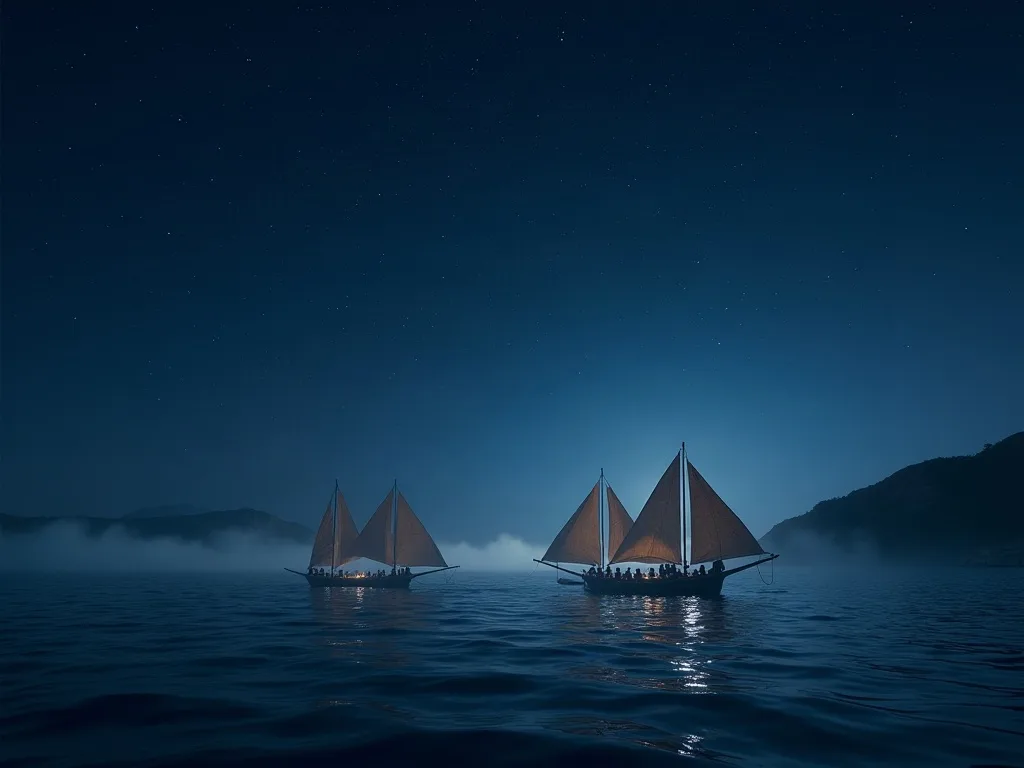
The Polynesians who settled isolated islands, who survived storms and famines and diseases that decimated populations, developed spiritual systems that did not promise the elimination of suffering. Instead, they offered understanding: the knowledge that suffering comes from a real power in the universe, and that one's duty was to navigate that power through knowledge, ritual, and community, not to destroy it.
Whiro in Modern Māori Culture and Thought
In contemporary Māori culture, the mythology of Whiro remains alive, though its expression has evolved. While few Māori today understand Whiro through a literal supernatural lens, the figure persists as a metaphor for the destructive forces within society and the human psyche. Gang culture, addiction, and violence are sometimes described in Māori social commentary using language that echoes Whiro, forces that pull people from light into darkness, that dissolve community bonds, that bring spiritual death.
The resurgence of Māori language and cultural practice in recent decades has brought renewed engagement with traditional mythology. Scholars like Catherine Love and Hirini Moko Mead have worked to recover and contextualize Māori cosmological traditions, presenting them not as quaint folklore but as complex philosophical systems worthy of serious study. Whiro figures in these discussions as a crucial concept: the principle that order is never absolute, that chaos presses eternally at the boundaries of creation, and that the human role is to maintain the balance, not to imagine a world without opposition or darkness.
In Māori art and performance, Whiro imagery appears in contemporary work, in carving, in theater, in literature. Modern Māori writers have drawn on Whiro mythology to explore themes of internal conflict, of the coexistence of opposing forces within a single person or community. This is not a return to ancient practice so much as a living tradition that borrows from its past to speak to present concerns.
Sacred Prohibitions and the Management of Whiro's Power
Traditional Māori society developed intricate protocols for managing the threat that Whiro and his agents represented. These were not based on avoiding evil through moral choice, but on managing spiritual danger through knowledge and correct action.
Makutu mate, a form of sorcery believed to cause death, operated on the understanding that certain individuals possessed knowledge of how to channel Whiro's power. The counterforce was karakia, incantations and prayers that invoked protective powers and reestablished proper spiritual boundaries. A tohunga whakairo (carving specialist) would protect their work with karakia to guard against malevolent spiritual influence. A tohunga whakatau (a healer or spiritual restorer) would use similar means to cure illness attributed to Whiro's servants.
The concept of whanaungatanga, the establishment and maintenance of kinship bonds, was partly understood as protection against Whiro. A person embedded in a strong web of family relationships, recognized genealogically and socially, was protected from being completely claimed by the forces of darkness. Isolation and the severing of genealogical connection were understood as spiritual danger. This explains why many Māori traditions emphasize genealogy so heavily, it is not merely record-keeping; it is spiritual anchoring.
Frequently asked questions about Whiro, god of darkness
Frequently asked questions
Is Whiro simply the Māori equivalent of Satan?
No. While Whiro is a destructive and oppositional force, he is not a fallen being who rebelled against cosmic order. He existed from the beginning in the primordial darkness. He represents a natural force of entropy and opposition, not moral rebellion. The Māori worldview does not place good and evil in opposition the way Abrahamic religions do; instead, it sees light and darkness as eternal complements.
Do modern Māori still believe Whiro is real?
Belief varies widely. Some Māori maintain spiritual practices rooted in traditional understanding, where Whiro represents genuine spiritual forces. Others engage with Whiro mythology as a philosophical system or cultural heritage without literal supernatural belief. Contemporary Māori culture uses Whiro as a metaphor for destructive forces while respecting the mythology's philosophical depth.
How did Whiro interact with the other Māori gods?
Whiro exists in opposition to the creative gods, particularly Tāne. He does not directly battle them, but constantly works to undo their creations. While Tāne separated light from darkness and created order, Whiro represents the tendency toward dissolution and chaos. Other gods like Rongo (god of cultivated food) and Tāwhirimātea (god of weather) exist in their own relationships to creation and destruction.
What sources preserve Whiro mythology today?
Most recorded versions come from oral traditions documented by early European scholars like Elsdon Best, Peter Buck, and Grey Littler (through his Polynesian Mythology), and from later Māori scholars. Contemporary Māori language sources, academic work by Māori researchers, and living cultural practitioners provide the most authentic representations today.
Does Whiro mythology appear in other Polynesian cultures?
Yes. Variants appear across Polynesia, including in Hawaiian, Samoan, and other island traditions, though with different names and somewhat different characteristics. These similarities suggest ancient shared origins from ancestral Polynesian culture that spread across the Pacific.
Whiro's Legacy in Cosmological Thought
The enduring power of Whiro in Māori thought lies in what he represents: not a problem to be solved, but a principle to be understood and balanced. In an age when Western philosophy often imagines utopias free of suffering and disorder, the Māori embrace of Whiro as eternal, as the necessary shadow that gives meaning to light, offers a different wisdom.
Whiro reminds us that creation is not an act of triumph over chaos; it is the establishment of temporary order within chaos. The universe we inhabit is not perfect. It contains suffering, decay, disease, and death. Rather than deny these realities or project them onto a fallen being who failed to obey divine law, Māori cosmology asks us to understand them as fundamental features of existence. They cannot be eliminated. They can only be navigated, respected, and kept in balance.
In this way, Whiro is not a god to worship, but a principle to acknowledge. He is the teacher that teaches us acceptance of what cannot be changed, and clarity about what must be maintained through constant effort. Every dawn is a small victory of light. Every night acknowledges the eternal presence of darkness. And between them, in that balance, lies everything worth living for.
Read the full book
Want the whole story?
The complete edition is an instant PDF download here, with a paperback on Amazon for selected titles.
Maori
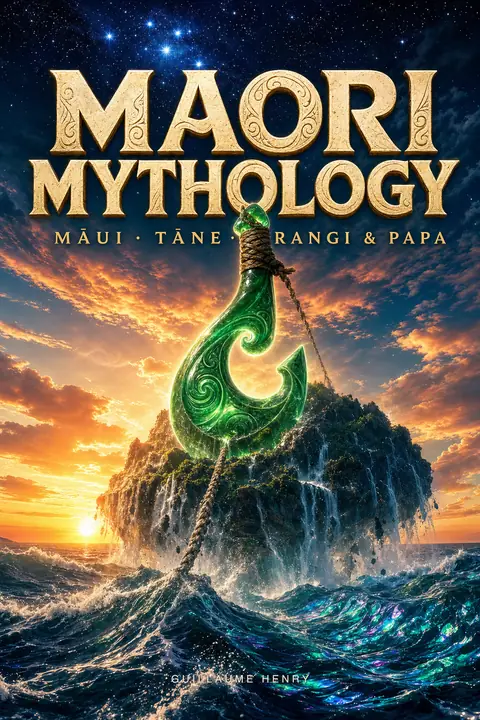
The Maori Mythology Book: Māui, Tāne, and the Gods of Aotearoa
Māui, Tāne, and Rangi and Papa
The mythology of New Zealand’s first people: the sky-father and earth-mother locked in an embrace, the children who forced them apart to let in the light, and Māui the trickster who fished up islands, snared the sun, and died trying to defeat death itself.
More from Maori
All articles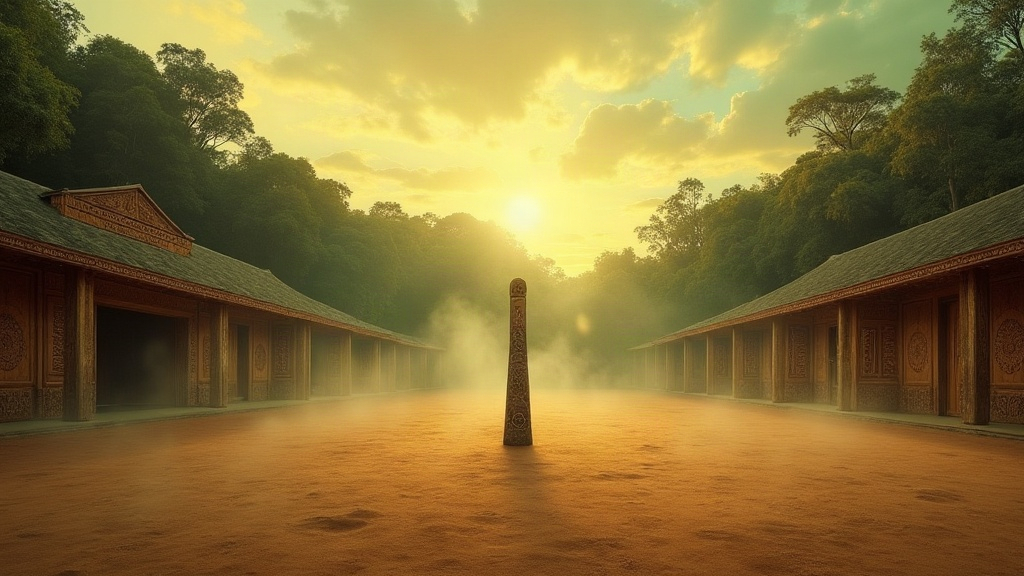
Maori
The Marae: Sacred Meeting Ground in Maori Culture
The marae stands at the heart of Maori identity: a sacred communal space where land, genealogy, and spiritual power converge. Discover how this open courtyard became the foundation of Maori society, ceremony, and connection to place.
Maori
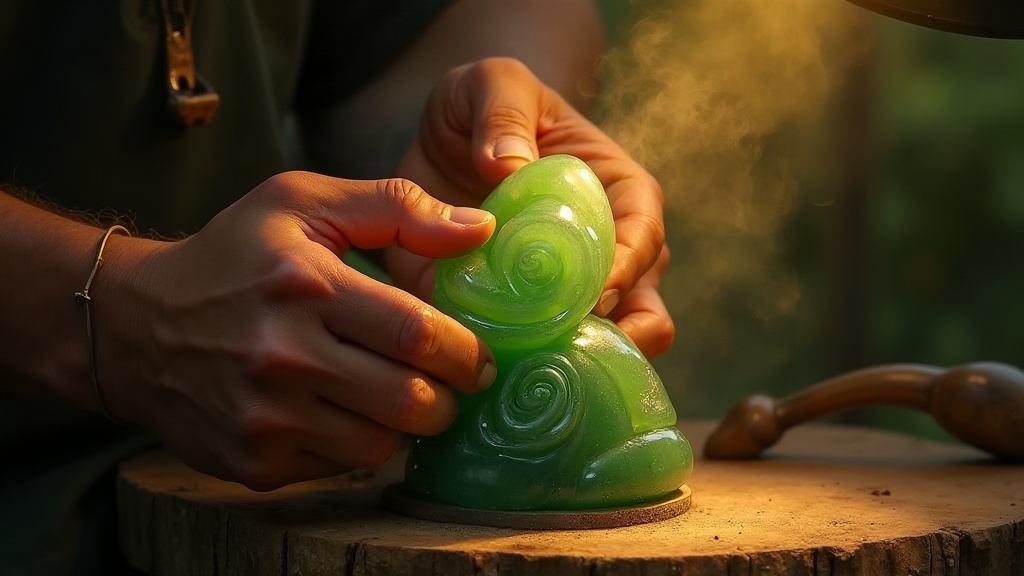
Tiki: The First Man and Ancestral Symbol in Maori Mythology
In Maori creation myth, Tiki was the first human, carved from earth by Tane Mahuta, the god of forests. This symbol represents the bridge between the divine and human worlds, still vital in Maori art and culture today.

Maori
The Taniwha: Supernatural Guardians of Waterways in Maori Mythology
The taniwha are powerful supernatural beings in Maori mythology that guard rivers, lakes, and caves. These shape-shifting creatures demand respect and have shaped Maori settlement patterns for centuries.
Maori
Tapu and Noa: Sacred Restriction and Freedom in Māori Worldview
Tapu and Noa are the twin forces that shaped Māori life: one sacred, restricted, potent; the other free, ordinary, unrestricted. Learn how these concepts governed everything from food and ritual to social order and spiritual safety.