
Maui: The Trickster Hero Who Shaped the World
Meet Maui, the shape-shifting demigod who fished up islands from the ocean, slowed the sun, and stole fire for humanity. Born from magic and mischief, Maui stands as Polynesia's greatest trickster hero, clever, reckless, and forever reshaping the world around him.
Contents
A woman wraps her newborn in locks of hair and throws him into the sea. He should drown. He doesn't. Instead, the infant drifts through dark water until kelp catches him and the ocean gods transform his hair-wrappings into skin. This is how Maui enters the world across Polynesian mythology, not born, but rescued, not human, but divine. No hero in the Pacific tells his story the same way twice. Yet everywhere from Hawaii to New Zealand, from Samoa to the Society Islands, Maui is the one who fished islands from the ocean floor, who held back the sun with ropes, who outsmarted immortals and failed spectacularly when pride overtook him.
The Maui mythology spans thousands of miles and hundreds of years of oral transmission. Each island culture, Maori, Hawaiian, Samoan, Tahitian, owns him and tells him differently. Yet the core truth holds everywhere: Maui is the culture-hero, the one who uses cunning over strength, who breaks the old world so a new one can exist. He is not a god demanding worship. He is everyman's clever cousin who nearly got everyone killed, and somehow made the world better for it.
The Birth That Should Have Ended in Darkness
Maui's mother is Taranga (also known as Hina in some traditions), a woman of divine descent who conceives a child with a god or demigod lover, depending on which island tells the tale. When she becomes pregnant, shame or circumstance compels her to hide the birth. She wraps the newborn in her hair, in some versions, in a bundle of seaweed, and hurls him into the sea, believing him cursed or illegitimate. The infant should sink to the ocean floor and die.
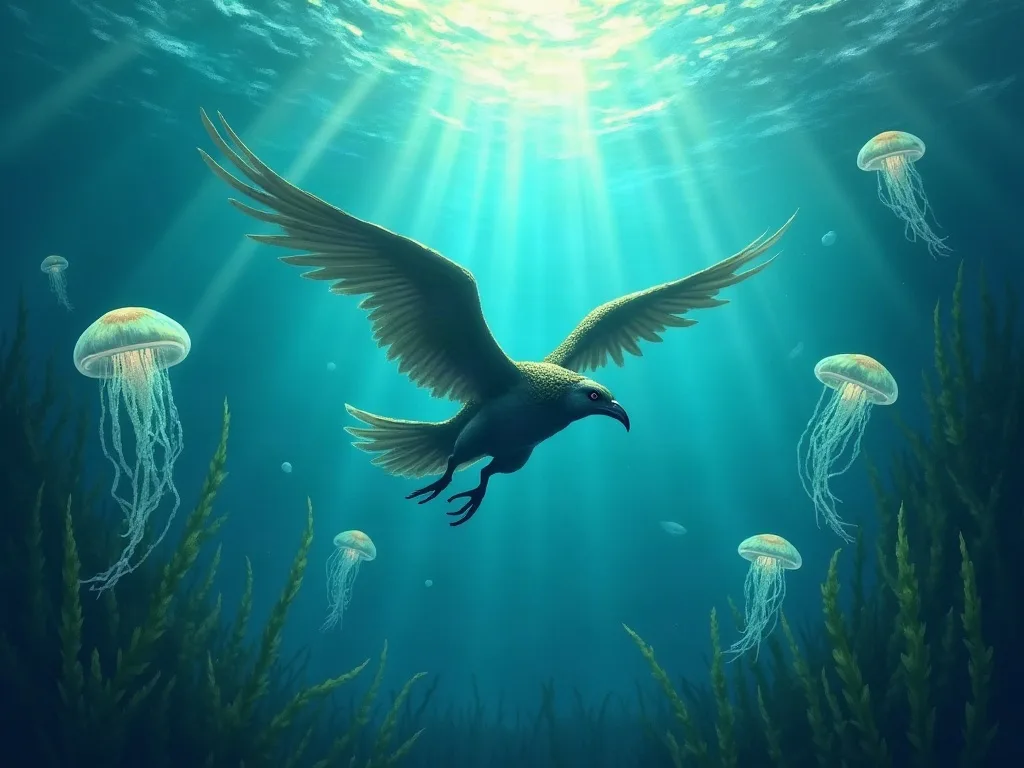
Instead, the gods of the ocean step in. In the Maori tradition recorded in the Kumulipo (a genealogical chant of creation) and the oral accounts preserved through centuries of storytelling, the sea spirits catch the child. Some versions say the jellyfish or the seagrass (kurakura) cradles him. Others claim Taranga's hair itself turns into protective kelp. He drifts, semi-conscious, half-mortal, half-divine, until he washes ashore on a sacred coast. There, the sun god Tama-nui-te-ra or other divine forces breathe warmth into him, and he gasps alive.
This origin sets the tone for everything to come. Maui is born through abandonment and rescue, born between worlds (ocean and land, mortal and divine), born through what should be an ending but becomes a beginning. He carries that paradox his entire life.
Finding Family and Claiming a Name
Maui grows up alone or among strangers, depending on the version. Some accounts place him in the care of sea sprites or minor gods. Others say he lived in reeds by a riverside, watching the world pass, never quite belonging. When he finally ventures inland or finds his way to his mother's new home, Taranga has married and had other children. She does not recognize her lost son immediately.
In the Maori accounts, Maui arrives at his family's home as night falls. His mother and brothers are preparing for sleep. He hides among them, and in the darkness, when Taranga performs a ritual or magical act (often a shape-shifting transformation), Maui clings to her and is carried into the spirit realm. When she returns at dawn, he is there. She recognizes him by some sign, his likeness to his father, his courage, or simply his refusal to vanish. She names him Maui, and in some versions adds suffixes: Maui-tikitiki (Maui the small one), Maui-te-ranga (Maui the brave).
His siblings, however, resent him. They see him as a stranger, a interloper. Maui responds not with hurt but with cunning and wit. He wins them over through daring, through his ability to do what they cannot. Within seasons, the strange boy becomes the leader of his own crew, not through inheritance, but through sheer cleverness and nerve.
The Fishing of the Islands
The most iconic act of Maui the culture-hero is the fishing of islands from the ocean. In every Polynesian tradition, the ocean is not a barrier but a living being, Tangaroa, the god of the sea, watches over it and all it contains. The islands themselves rest on the seafloor, waiting.
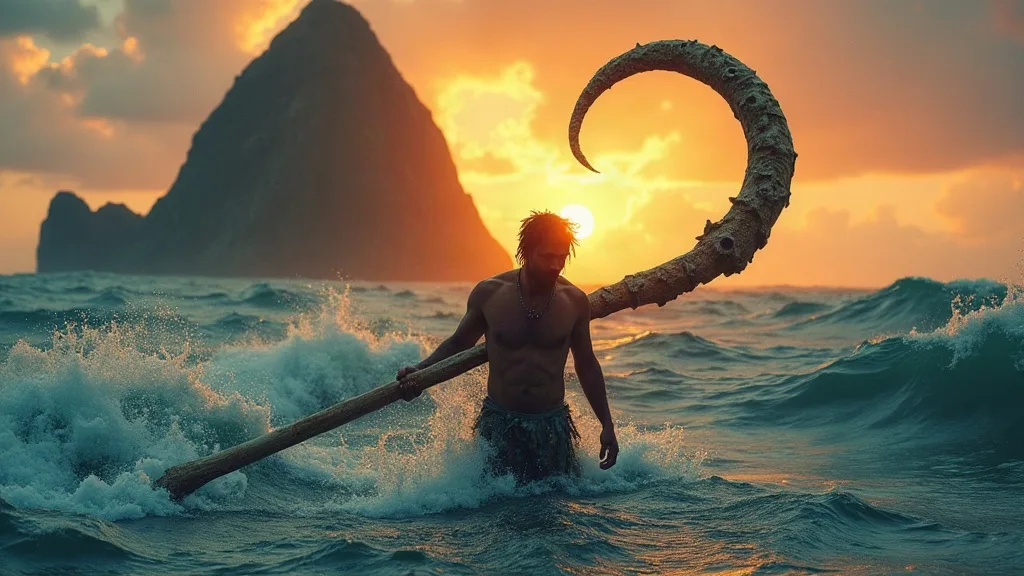
Maui and his brothers (or, in some versions, he acts alone) prepare a hook. This is no ordinary fishing hook. Maui carves it from the jawbone of an ancestor, or (in Hawaiian versions) from the bone of his grandmother. He lashes it with rope made from his own hair, braids it with magic words. The bait is equally sacred and strange: in some tales, it is a piece of his own flesh; in others, a sacred pigeon or a magic weed.
The brothers paddle far out to sea, beyond the reef, beyond known waters. Maui baits the hook and casts it deep. For a time, nothing. Then: a tug. Something enormous strikes. The brothers panic and want to paddle back. But Maui chants an incantation. His words hold the line. The ocean strains. The seafloor groans.
Slowly, impossibly, an island rises. A mountain breaks the surface. Soil, trees, and rock emerge from the depths. In some versions, Maui catches multiple islands in a single expedition, he fishes up the Hawaiian chain, or the New Zealand landmass, or the Samoan islands, depending on which culture speaks. In other tellings, each island is a separate catch.
But Maui's brothers cannot resist what they see. They want to claim the islands immediately, to explore and divide them. Maui urges patience: they must perform the proper rituals; they must make offerings to Tangaroa. But his brothers ignore him. They leap ashore, and in that instant of broken protocol, the islands fragment. What could have been unified land splits into the archipelago we know today. In some versions, the fish-islands keep sinking and rising, still alive, still struggling.
This story tells the Polynesian experience in one myth: the ocean is not empty but fertile with possibility. The islands are not eternal but catch-able, dividable, and fragile. And Maui, the clever one, can achieve what seems impossible, but only if those around him obey, and only if the proper respect is paid.
Slowing the Sun and Stealing Fire
Maui does not stay content with islands. Humans suffer under the sun's indifference. The day is too short for fishing, for work, for living fully. The sun, Ra in some traditions, speeds across the sky without pity.
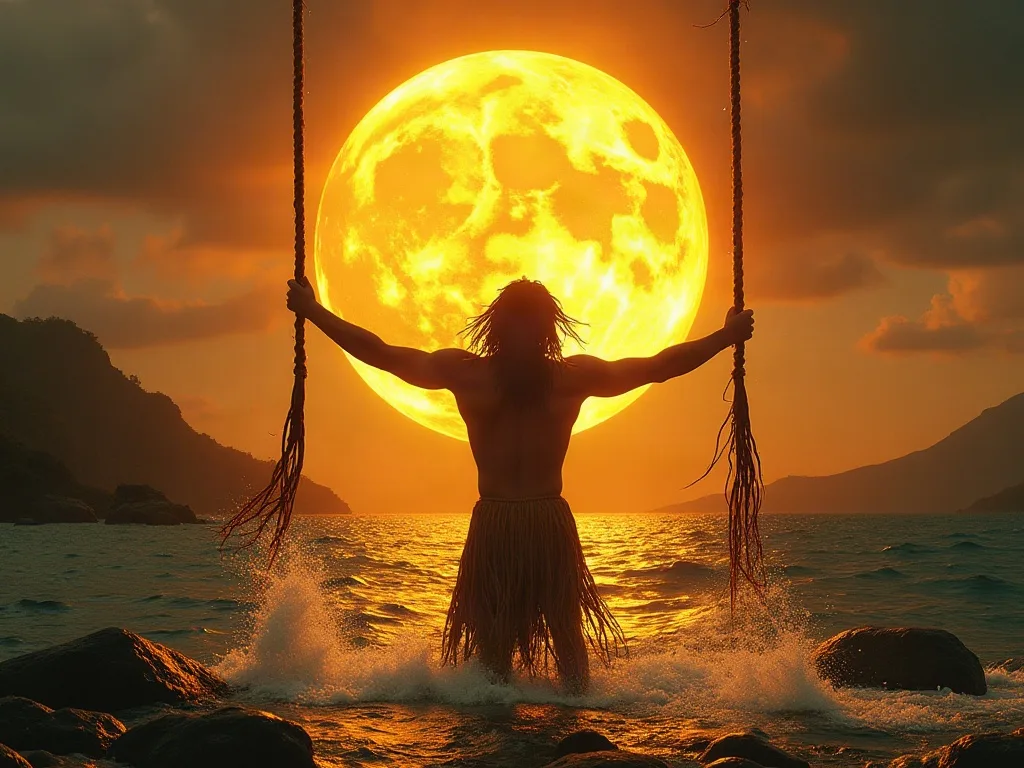
Maui decides to slow it. He gathers cordage, in the Maori accounts, often from the inner bark of trees, twisted into rope. With his brothers, he sets a snare across the path where the sun travels. At dawn, as Ra (or Tama-nui-te-ra) attempts to rise, the rope catches. The sun struggles. Maui and his brothers beat it with mere clubs or with branches to force it to submission. The sun, weakened or simply obliging the clever hero, agrees to move more slowly across the sky. From that day forward, humans have more daylight, more time to hunt, to fish, to build.
In some islands, the same hero steals fire. Maori traditions speak of Maui seeking te ahi, fire, which humans lack. The Maui mythology in different regions places fire in different locations: with Mahuika, a fire goddess; underground; in the realm of the ancestors. Maui uses trickery to obtain it. He might trick the goddess into revealing where fire sleeps, or he might retrieve it from the underworld, carrying it as a glowing ember, racing against darkness or demons.
In Hawaiian versions, Maui retrieves fire from the underworld volcano goddess. In Samoan accounts, the story shifts slightly in detail but retains its structure: Maui the trickster solves an impossible human problem through intelligence and audacity.
The Failure at the Gates of Death
Not every tale of Maui ends in triumph. The most somber story, found in Maori, Hawaiian, Samoan, and Tahitian traditions, tells of his attempt to achieve the impossible: immortality for all humans.
Maui observes that humans die. His sister Hina (Hinauri in some versions) mourns endlessly for those lost. Maui decides he will enter the body of Hine-nui-te-po, the goddess of death (also called Hine-te-po or Hine-raupo), and emerge from her other side, taking death with him. In doing so, all humans born after will be immortal.
He gathers his brothers to keep watch. He explains the plan: he will enter Hine-nui-te-po's mouth as she sleeps, pass through her body, and emerge from the other end. The brothers must stay silent. If they laugh, if they break concentration, the plan fails.
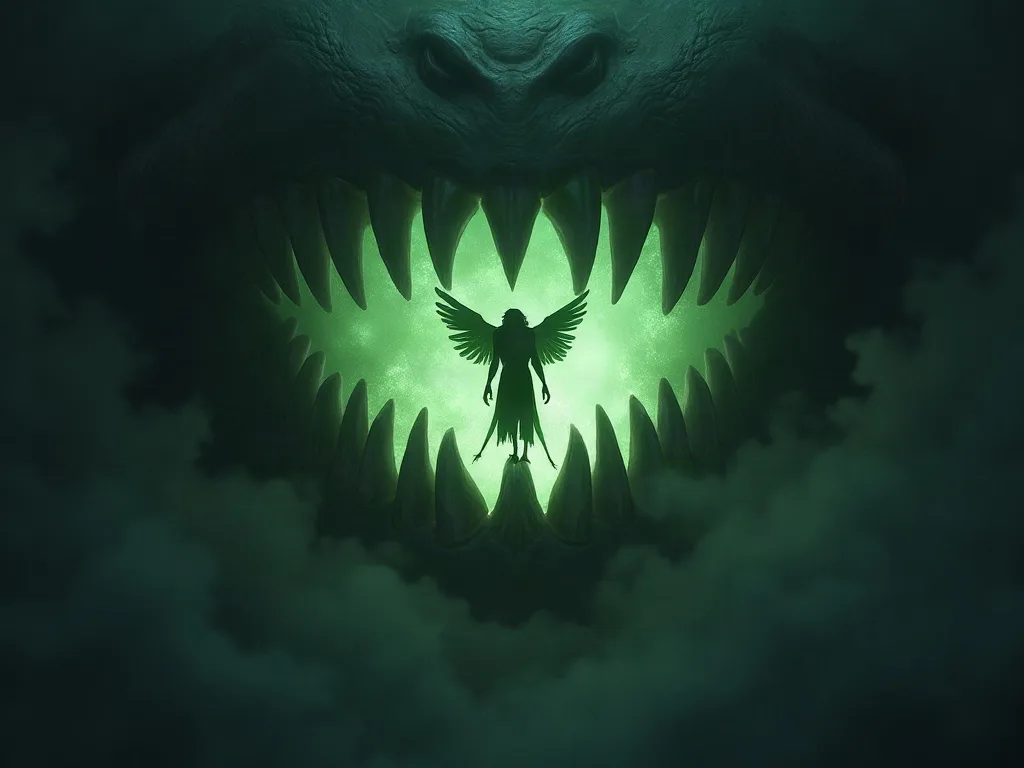
Maui, now in bird form (often a fantail or sparrow), approaches the sleeping goddess. Her body is immense, her teeth like jade, her skin radiating cold. He begins to crawl inside. He is midway through when one of his brothers, usually the youngest, overwhelmed by the absurdity and horror of the moment, laughs. The goddess wakes. She clamps down. Maui, caught halfway through transformation, dies inside her. In some versions, he is crushed. In others, he is burned. In all versions, the attempt fails.
This tale carries weight that the island-fishing does not. It is a reminder that cleverness has limits, that immortality belongs to gods alone, and that the price of reaching for the impossible is death. Maui's failure to cheat death becomes the reason humans remain mortal, a tragic origin story embedded in a hero's biography.
Maui Across the Pacific: Variations and Unity
The Maui mythology exists in at least seven major Polynesian traditions, and each culture's version is distinct enough to reveal how oral transmission works across an ocean. In Hawaii, Maui is primarily a fisherman-hero; the sun-slowing and fire-theft are less central. In Samoa, Maui is more often a trickster dealing with gods and monsters. In Tahitian and Society Island traditions, Maui operates in a landscape of Atea and Papa (Sky and Earth), aligning him with creation cosmology.
Yet the core remains: a clever, physically small but mentally enormous figure who operates outside normal rules. A hero born not of kings but of accident and grace. A demigod who reshapes the world not through warfare but through cunning, wit, and an almost reckless willingness to face any god or danger.
The Maori whare wananga (learning houses) preserved detailed genealogies placing Maui within the broader pantheon. He belongs to the generation after the primary gods settled the world, but before humans dominated the earth. In New Zealand specifically, Maui traditions interweave with the arrival of the Polynesian voyagers; Maui's fishing of islands becomes a metaphor for the settling of Aotearoa (the Maori name for New Zealand).
The Trickster in Maui: Humor, Boundary-Breaking, and Chaos
Maui belongs to the archetype of the trickster, yet he is no mere prankster. The trickster hero operates at the edge of order and chaos. He breaks rules not from malice but from the need to create something new. He exposes the flaws in how gods and humans organize the world.
In Maori and Pacific traditions, Maui's trickery is often sexual or shameful. He seduces goddesses, outsmarts his brothers through misdirection, humiliates opponents through wit rather than combat. He is irreverent toward authority. He often succeeds not because he is right but because others underestimate him, because his targets are arrogant, because he operates in the gap between what rules allow and what reality permits.
This irreverence is not malice. It is the irreverence of youth, of the underdog, of the one born outside normal kinship structures. Maui earns his place not through inheritance but through refusing to accept that anything, gods, the sun, death itself, is truly beyond reach. He fails often. He is crude. He infuriates those around him. But he also reshapes the world in ways that benefit humanity.
In Polynesian cultures, the trickster hero represents a necessary force: the breaking of old patterns so new growth can happen. He is celebrated not because every plan works but because he tries.
Maui's Echo in Colonial and Modern Maori Culture
When British colonization reached New Zealand in the 19th century, and the Maori faced displacement and cultural erasure, Maui did not vanish. Instead, he transformed. Maori intellectuals, writers, and activists began to reframe Maui as a symbol of resilience: the small one who outsmarts the powerful, the hero born against the odds, the one who never accepts that something is finished or lost.
In 20th-century Maori literature and in contemporary New Zealand culture, Maui appears in poems, plays, and novels as a figure of hope and defiance. The 2016 Disney animated film Moana, while taking creative liberties with Polynesian mythology, brought Maui to a global audience as a demigod who must learn humility after a fall from glory. That narrative, failure leading to transformation, resonates with how modern Polynesian and Maori communities have reclaimed their stories.
Modern Maori artists and writers have reinvented Maui for their own time, refusing to let colonization define the story's meaning. He remains what he always was: the one who acts, who tests boundaries, who remakes the world through audacity and wit.
Frequently asked questions about Maui and the Maui mythology
Frequently asked questions
Is Maui a god or a demigod?
Maui is most often described as a demigod or a person of divine descent. He is born to a mortal woman (Taranga) and a divine father, giving him access to magic and immortal strength, but he remains vulnerable to death and bound to the mortal world in ways true gods are not. This half-and-half nature is central to his role as a culture-hero: he can bridge the human and divine realms.
Why do different islands tell Maui's story differently?
Maori, Hawaiian, Samoan, and Tahitian traditions all inherited Maui myths from their common Polynesian ancestors who voyaged across the Pacific centuries ago. As voyagers settled different islands, the stories adapted to local geographies, local gods, and local meanings. Each culture wove Maui into their own cosmology, so the details shift, but the core character and his major deeds remain recognizable across thousands of miles.
What does Maui's death in the womb of Hine-nui-te-po mean?
That story carries the weight of tragedy: Maui attempted to end death itself by passing through the goddess of death and emerging reborn. His failure means humans remain mortal. Many scholars see it as a mythic explanation for human mortality, but it also speaks to the limits of cleverness, no amount of wit can overcome every obstacle. It is the one story where Maui's cunning fails completely, and it costs him his life.
How is Maui used in modern Maori culture and identity?
Maui became a powerful symbol during the Maori cultural revival of the 20th century and continues to represent resilience, wit, and the refusal to accept that the powerful always win. He appears in contemporary Maori literature, art, and activism as a figure of hope. The Disney film Moana introduced him to a global audience, though with significant creative changes from traditional accounts.
Did Maui actually fish up the islands?
No, this is a mythological narrative, not a literal history. However, scholars suggest the myth may encode real knowledge about volcanic island formation and Polynesian seafaring. The story explains how Polynesians understand their islands' origins and their own relationship to the ocean and its divine forces. The "truth" of the myth is philosophical and cultural, not geographical.
The Unfinished Hero and the Remade World
Maui stands alone in world mythology as a hero defined not by defeating an ultimate enemy but by continually pushing boundaries. He does not save a kingdom from invasion or win a cosmological war. He slows the sun, fishes islands, steals fire, and dies reaching for immortality. None of these acts solves a problem cleanly. All of them change the shape of what is possible.
This is why Maui matters. In cultures that had to navigate and settle an ocean vaster than any sea known to Europe until recently, a hero who remakes the world through cleverness and risk, who fails grandly, who tries anyway, speaks to how humans actually engage with their environment. Not through conquest, but through negotiation, wit, and the willingness to test every limit.
The myths do not end with Maui's death. Different cultures keep him alive in their stories differently. In some Polynesian traditions, he returns or is reborn. In Maori culture, he becomes an ancestor whose mana (spiritual power and prestige) flows into the genealogies of the people. He is not a god demanding temples or priests, but a figure every clever person recognizes as kin.
When the voyagers began to cross the Pacific again in the modern era, reviving ancient wayfinding techniques and building double-hulled canoes, many named their vessels after Maui. The explorer and navigator named the demigod as a spiritual predecessor: the one who had already tested these waters, caught these islands, refused to be bound by what others said was impossible.
Read the full book
Want the whole story?
The complete edition is an instant PDF download here, with a paperback on Amazon for selected titles.
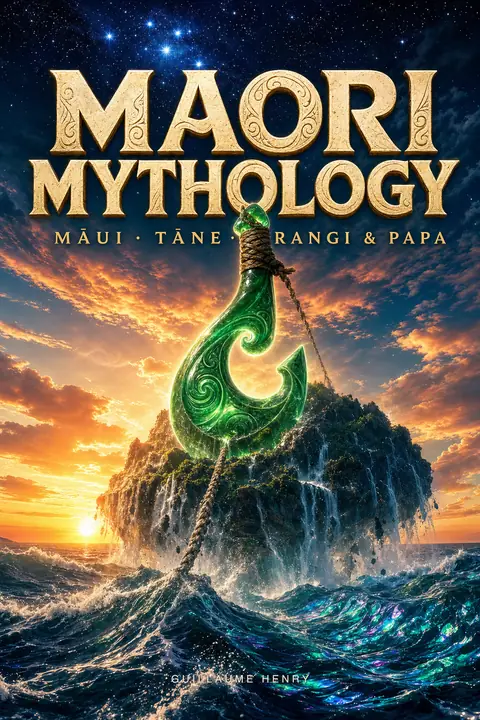
Maori
The Maori Mythology Book: Māui, Tāne, and the Gods of Aotearoa
Māui, Tāne, and Rangi and Papa
The mythology of New Zealand’s first people: the sky-father and earth-mother locked in an embrace, the children who forced them apart to let in the light, and Māui the trickster who fished up islands, snared the sun, and died trying to defeat death itself.
More from Maori
All articles
Maori
The Marae: Sacred Meeting Ground in Maori Culture
The marae stands at the heart of Maori identity: a sacred communal space where land, genealogy, and spiritual power converge. Discover how this open courtyard became the foundation of Maori society, ceremony, and connection to place.
Maori
Tiki: The First Man and Ancestral Symbol in Maori Mythology
In Maori creation myth, Tiki was the first human, carved from earth by Tane Mahuta, the god of forests. This symbol represents the bridge between the divine and human worlds, still vital in Maori art and culture today.

Maori
The Taniwha: Supernatural Guardians of Waterways in Maori Mythology
The taniwha are powerful supernatural beings in Maori mythology that guard rivers, lakes, and caves. These shape-shifting creatures demand respect and have shaped Maori settlement patterns for centuries.
Maori
Tapu and Noa: Sacred Restriction and Freedom in Māori Worldview
Tapu and Noa are the twin forces that shaped Māori life: one sacred, restricted, potent; the other free, ordinary, unrestricted. Learn how these concepts governed everything from food and ritual to social order and spiritual safety.