
Tāne: God of Forests, Birds, and Creation in Polynesian Mythology
Tāne stands among Polynesia's most vital deities, separating sky from earth and populating the world with forests, birds, and human life. Discover how this divine carpenter shaped creation itself in Māori, Hawaiian, and Tahitian traditions.
Contents
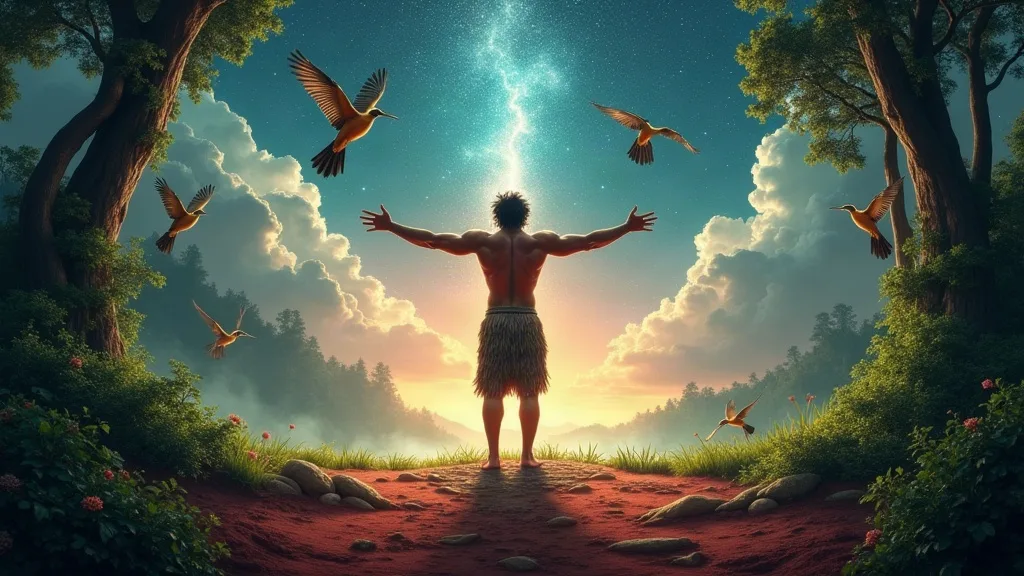
In the beginning, there was darkness. The sky and earth lay pressed together so tightly that nothing could grow, nothing could move, nothing could be born. Then Tāne, one of the great gods, took action. He braced himself against the earth and pushed the sky upward with such force that light broke through. Forests rushed into being. Birds filled the air. Humans walked upon the land. This single act of separation, the moment Tāne thrust sky and earth apart, reshaped the entire cosmos and made all life as Polynesians knew it possible.
Tāne: God of Forests, Birds, and Creation appears across Polynesian cultures under slightly different names and attributes, yet the core identity remains constant: he is the divine force of growth, procreation, and the intricate web of the natural world. Among the Māori of Aotearoa (New Zealand), he is Tāne Mahuta, "Tāne of the Forest." In Hawaii, he becomes Kāne, the male generative principle. In Tahiti and the broader eastern Polynesian sphere, he retains his name Tāne but shifts emphasis between forest mastery and creation itself. Across all traditions, he represents order emerging from chaos, life emerging from emptiness, and the sacred responsibility of a creator to nurture what has been made.
Tāne's Place Among the Primordial Gods
The Polynesian cosmogony, preserved in genealogies called whakapapa (Māori) or mo'okū'auhau (Hawaiian), describes a hierarchy of divine beings. At the foundation come the abstract forces: Io (the supreme consciousness in some traditions), Te Pō (the void, darkness), and Te Ao Mārama (the world of light). From these emerge the children of Rangi (Sky Father) and Papa (Earth Mother). In Māori tradition, the union of Rangi and Papa produced six or more primary atua (gods/supernatural beings): Tāne, Tāwhirimātea (god of storms and wind), Tangaroa (god of the sea), Haumia-tiketike (god of wild plants), Rongomatāne (god of cultivated crops), and sometimes Tūmatauenga (god of humans and war).
The Māori elder and scholar Āpiha Te Kawau, recorded in the 19th century, spoke of Tāne as te tama matua o ngā atua, the firstborn or preeminent son among the gods. This status reflects not chronological priority but spiritual significance: Tāne's dominion covers the living world that mortals inhabit. His siblings rule ocean depths, storm fury, and harvest abundance, but Tāne rules the breathing, growing realm above ground, the forest canopy where life is most visible, most tactile, most sacred.

The Separation of Sky and Earth
The Māori creation chant, the Kumulipo (Hawaiian equivalent) and various karakia (incantations) preserved in whānau knowledge record this moment in verse. The separation is not violent so much as purposeful. In some accounts, Tāne separates Rangi and Papa by wedging his shoulders between them and pushing upward. In others, he uses a sacred object: a pouwhenua (pole) or a celestial vine. The result is always the same: light floods the cosmos for the first time. Te Ao Mārama, the world of light, becomes accessible to beings who had been suffocating in Te Pō.
This act comes after debate among the gods. The Māori narratives tell that Tāwhirimātea, god of wind and storm, opposed the separation. He feared the loss of his parents' embrace and later became estranged from his brothers, hurling tempests from the sky in perpetual revenge. This mythological detail captures a real tension in Polynesian experience: the gratitude for light and growth balanced against the danger of storms and chaos that still assail humanity. Tāne's act brings benefit, but it fractures the divine family and introduces an eternal conflict into creation.
Once Rangi and Papa are separated, Tāne's work becomes more intricate. He must populate the now-visible world.
Creating the Living World: Forests, Birds, and the Green Realm
With the sky held aloft, Tāne begins to fashion creation in earnest. He ascends into the sky realms, into Tāwhiti, the realm of the distant gods, and gathers materials. He collects seeds, plants, and the essence of growth. He gathers birds. In some traditions, he flies upward himself, transformed into a bird, and descends with his feathered kin. In others, he commands them to appear from the soil he has prepared.
The Māori whare wānanga (schools of learning) taught that Tāne was responsible for the great kauri and rimu forests that grew across Aotearoa. The association was so strong that a grove of ancient trees could be called ngā rākau a Tāne, "the trees of Tāne." Foresters and timber workers invoked his name with respect, understanding that the forest was not mere resource but a living temple. The whakataukī (proverbs) preserved this: "Kia whakatōmuri he harikoa, kia whakatīmata he kaupapa hou" (Let go of yesterday, embrace the new day), spoken alongside recognition that Tāne's world renews itself endlessly.
The birds hold particular significance. In Hawaiian and Māori thought alike, birds were divine messengers and embodiments of spiritual freedom. The 'apapane and 'amakihi of Hawaiian forests, the tui, bellbird, and fantail of Aotearoa forests, were all understood to be under Tāne's protection and governance. To harm a bird needlessly was to disrespect Tāne himself. Hunters and gatherers practiced kaitiakitanga (guardianship), taking only what was needed, because they understood themselves to be guests in Tāne's domain, permitted to harvest but obliged to sustain.
Tāne and Human Creation: The Gift of Life
One of the most potent stories in Polynesian tradition concerns Tāne's role in human creation. This narrative exists in multiple versions, each carrying distinct cultural weight.
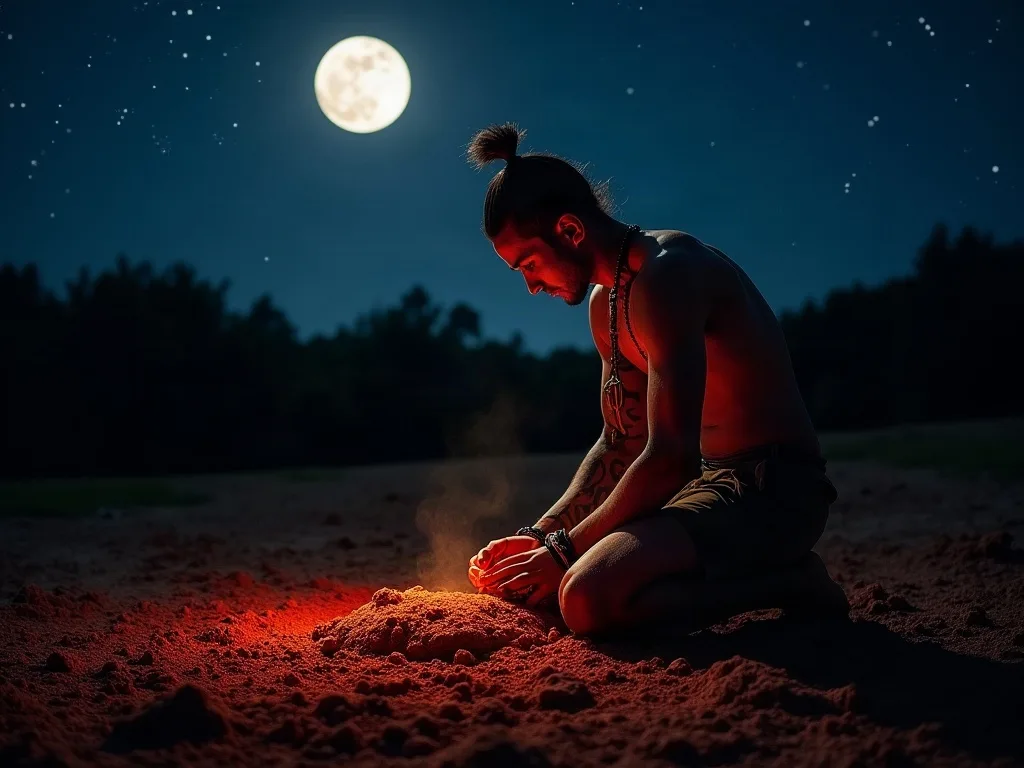
In the Māori whakapapa, Tāne descends from the sky and fashions the first woman from the red earth (te One). In the most widespread account, he shapes her body carefully and breathes life into her with his own breath, an act of profound intimacy and sacred responsibility. She is named Hineahuone, "the maiden of the earth." Tāne then takes her as his partner (the dynamics of this union have provoked considerable cultural conversation in modern times, but the traditional narrative frames it as the initiation of humanity itself).
From their union, their descendant is Hinematauira, who becomes the mother of the human race. Yet the story contains a shadow. In some versions, Hinematauira discovers that her partner is her own father, Tāne, and in horror and shame, she flees to the underworld, to Te Pō, where she becomes Hinemōa, goddess of death. She declares that all humans will eventually follow her into darkness. This tragic turn in the narrative reflects a deep Polynesian understanding: creation brings life, but creation also births death. Tāne's generative power is inseparable from mortality.
In Hawaiian tradition, the creation story centers less on a singular human-from-earth moment and more on the cyclical emergence of humans from the divine creative flow. Kāne works alongside Kanaloa (god of the sea) to populate the islands with plants, animals, and people. The Kumuhipo chant begins in primordial darkness and traces an unbroken genealogy from animals through humans to the legendary chiefs, suggesting that all life shares divine ancestry and that Kāne's role is less about sudden creation than about facilitating continuous emergence.
Tāne's Divine Attributes and Sacred Names
Across Polynesian traditions, Tāne is invoked by multiple names and titles, each highlighting a different aspect of his nature.
Tāne Mahuta (Māori) literally means "Tāne of the forest" or "Tāne the parent." The word mahuta carries connotations of expansion, parenthood, and the nurturing abundance that characterizes a mature forest. In formal karakia, he is called Te Atua Whakatupu, "the god of procreation," and Te Atua Manomano, "the god of abundance." His sacred color in Māori lore is white (mā), symbolizing purity and clarity of purpose. His day of the week, in the Māori lunar calendar, is Monday, when the new moon emerges and new growth traditionally began.
Kāne (Hawaiian) carries additional layers. In Hawaiian cosmology, Kāne represents the male generative principle, the spark of creation and masculine vitality. His name is etymologically connected to concepts of growth, straightness, and power. He is Kāne-uli (dark Kāne), Kāne-lani (heavenly Kāne), and Kāne-loa (Kāne of the long lineage). Hawaiian chants describe him as standing at the first dawn, creating the very light itself.
In Tahitian and broader eastern Polynesian traditions, Tāne often appears alongside Tane-hoa, a companion form, and is sometimes conflated with Tāne-nui, "great Tāne," emphasizing his cosmic scope. The suffix -nui (great, vast) appears in other traditions as well, marking his supreme importance.
These names and titles are not arbitrary variations. In Polynesian thought, a name encapsulates essence. To invoke Tāne by the correct name in the correct context, with proper manaakitanga (respect) and whakapapa (genealogical grounding), was to align oneself with his power and request his favor in endeavors related to growth, fertility, hunting, fishing, and the tending of land.
Tāne in Ritual, Cosmology, and Daily Life
The sacred significance of Tāne extended from myth into the practical and spiritual life of Polynesian communities. Foresters seeking to fell a tree performed karakia to Tāne, asking permission and promising to use the wood respectfully. Fishermen who caught birds (and in some island traditions, seabirds were a valued food source) acknowledged Tāne's domain. Gardeners preparing land for planting whispered his name over the soil.
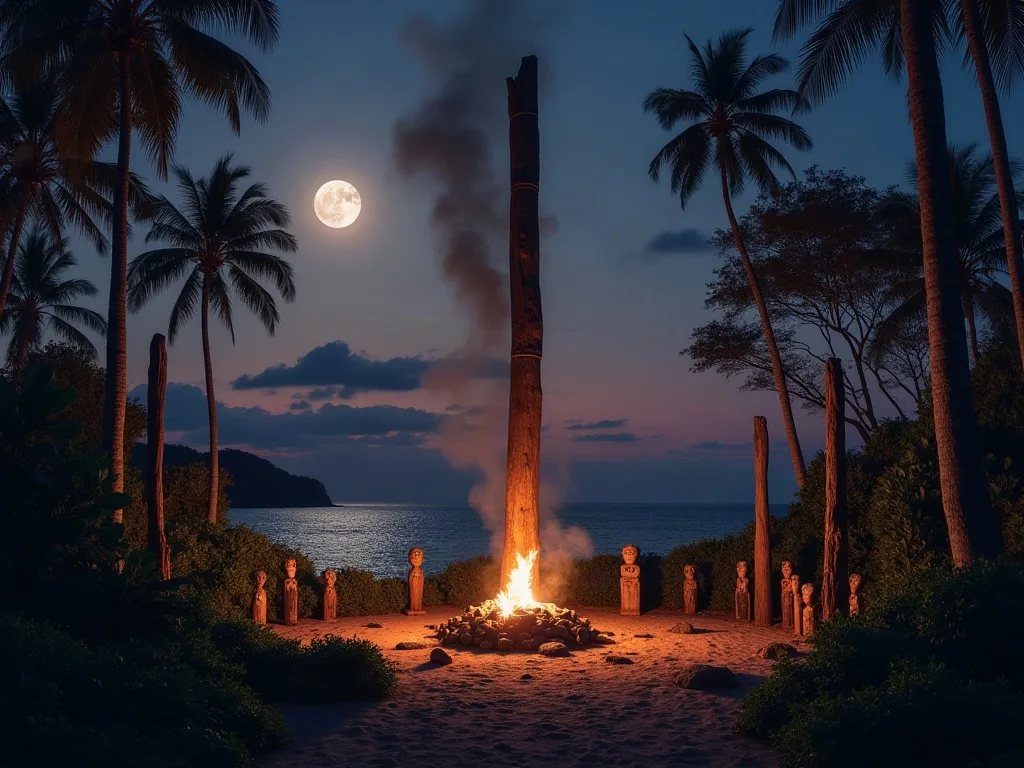
The marae (Polynesian sacred enclosure), in Tahitian and eastern Polynesian contexts, often featured a tall central post called the 'aha, which connected the terrestrial realm to the celestial. This post was understood as a kind of tino, an axis connecting to Tāne's realm above. Rituals of growth and fertility, particularly those marking the Polynesian new year (the beginning of the growing season), invoked Tāne's blessings.
In the whare tangata (house of men) traditions of Aotearoa, young men underwent initiation rites that invoked Tāne. The logic was that Tāne, having created the first human form, was the spiritual father and model for male identity, responsibility, and the generative role men were expected to fulfill in society. Similarly, in Hawaiian hula tradition, some movements and chants were dedicated to Kāne, honoring the creative force he embodied.
The tapu (taboo) system also reflected Tāne's domains. Certain forests were tapu to Tāne, off-limits to humans except in ceremonial contexts, because they were understood as his sacred groves where his mana (spiritual power and prestige) was concentrated. To violate such a tapu was not merely illegal or unwise; it was spiritually dangerous, risking the anger of the god and the fracturing of the relationship between human community and divine order.
Tāne and Cosmological Hierarchy
In the broader cosmological framework of Polynesian theology, Tāne occupies a specific and essential rank. He is not the supreme creator in most traditions (that role, when named explicitly, falls to Io, the supreme principle, or remains unnamed and abstract). Yet he is the most active, the most visible, the most engaged with the material world that humans inhabit.
This creates an interesting theological balance. Io or the primordial forces are remote, abstract, beyond human apprehension. The atua (gods) like Tāne are intermediary: powerful, knowable through their effects, engaged with human life, but still fundamentally superhuman. Below them stand the tupuna (ancestors), who hold their own mana and influence, but whose power is more localized and personal. Humans stand at the bottom of this hierarchy, but are not isolated: they are connected by whakapapa to the gods above them and the ancestors around them. Tāne's constant presence in the natural world, in every tree, every bird, every growing thing, meant that he was simultaneously the most distant and the most intimate of the gods.
Cross-Cultural Resonances: Tāne in the Broader Polynesian World
The Polynesian diaspora across the vast Pacific created a remarkable cultural continuity with significant local variations. Tāne's story follows this pattern precisely. The Samoa know a figure Tangora or Tangora-tūtūtonga, a trickster creator with some attributes similar to Tāne but with distinct personality. In Tonga, Hikuleo and Maui (the great demigod present across Polynesia) overshadow the atua in many narratives, yet Tāne's equivalent still appears in the genealogies. The further east one travels, to the Marquesas, to Easter Island (Rapa Nui), to Hawaii, to Aotearoa, the more consistent the Tāne/Kāne figure becomes, suggesting both a common origin and a sustained cultural memory across centuries of seafaring and settlement.
One striking parallel exists between Tāne and figures in other world mythologies. The Greek god Demeter, though gendered female, shares Tāne's dominion over agriculture and the fertility of the earth. Odin in Norse mythology, despite his warrior aspect, also engineered the cosmos into order and separated primordial forces. Even Brahma, the Hindu creator god, occupies a similar role: active, creative, responsible for populating the world, yet not supreme in the ultimate cosmological hierarchy. These parallels suggest deep patterns in how human cultures imagine creation and the creator's role.
The Silence and Reemergence: Tāne in Historical Context
The arrival of European contact and Christian missionary activity across Polynesia dramatically altered the relationship between Polynesian peoples and their traditional gods. The deliberate suppression of atua worship, combined with the loss of fluent speakers of the genealogies and ritual language, meant that much knowledge of Tāne and his siblings entered a period of dormancy in many communities. The great marae were abandoned or repurposed. The sacred forests were logged. The karakia fell silent in many contexts.
Yet the 20th and 21st centuries have witnessed a powerful resurgence of interest in and practice of Polynesian traditions. In Aotearoa, the Māori cultural renaissance (Te Ao Māori) has included a renewed reverence for Tāne. Foresters invoke his name again. Environmental movements invoke his guardianship of the forest as a moral and spiritual foundation for conservation. In Hawaii, the Hawaiian Renaissance of the 1970s onward reclaimed the hula, the chants, and the spiritual landscape, restoring Kāne to his place of honor. Scholars, kaitiaki (guardians), and cultural practitioners have worked to reconstruct and preserve the full complexity of Tāne's mythology, drawing on written records from the 19th century while also honoring oral knowledge that persisted within families and communities.
This reemergence is not a mere recovery of the past. It is a creative and dynamic engagement with Tāne as a living force relevant to contemporary questions of land stewardship, environmental justice, identity, and spiritual meaning. When Māori environmental activists speak of kaitiakitanga, they are invoking Tāne's original charge to humanity: to be guardians, not masters, of the natural world. When Hawaiian hālau (hula schools) teach chants to Kāne, they are not merely preserving ancient words; they are participating in a continuous tradition of connection to the divine creative force that brought the islands themselves into being.
Frequently asked questions about Tāne: God of Forests, Birds, and Creation
Frequently asked questions
Is Tāne the same as Kāne in Hawaiian tradition?
Essentially yes, with regional variations. Both represent the male creative principle and dominion over forests and growth. The core mythology and cosmic function are nearly identical across Māori, Hawaiian, and eastern Polynesian traditions, though Hawaiian sources sometimes emphasize Kāne's role in creating light and standing at the first dawn, while Māori sources foreground his work separating sky and earth. The names derive from a common Polynesian root, and the differences reflect local cultural emphasis rather than fundamental theological contradiction.
Did Tāne have enemies or rivals among the other Polynesian gods?
His primary rival was Tāwhirimātea, god of storm and wind, who opposed the separation of sky and earth and spent eternity seeking revenge against his brothers through destructive weather. Tangaroa, god of the sea, also had a complicated relationship with Tāne: the forest and the ocean represent different domains, and in some accounts, their boundaries were contested. These mythological tensions reflect real environmental relationships, storms damage forests, the sea erodes the land, encoded in divine narrative.
Why is Tāne associated with birds specifically?
In Polynesian cosmology, birds embodied freedom, divine connection, and movement between realms. Birds could fly into the sky where the gods dwelt. They were messengers and scouts. Since Tāne's dominion was the living, breathing natural world, birds, as the most visible representatives of life in the forest canopy, became especially sacred to him. Harming a bird needlessly was understood as disrespecting Tāne and risking his wrath.
What primary sources tell Tāne's story?
Māori knowledge comes primarily from oral traditions preserved by whare wānanga (schools of learning) and recorded by European ethnographers in the 19th and early 20th centuries, particularly by scholars like George Grey, who collected Māori texts in the 1850s. Hawaiian sources include the Kumuhipo chant and Hawaiian genealogical texts. Eastern Polynesian traditions are preserved in chants and narratives recorded by missionary and anthropological sources. Modern Polynesian scholars and cultural practitioners continue to work with both written records and living oral traditions to deepen understanding.
Does Tāne appear in modern Polynesian spiritual practice?
Yes, significantly. In contemporary Māori and Hawaiian communities, invocations to Tāne accompany land-related work, environmental activism, cultural learning, and spiritual ritual. The reemergence of traditional practices has included renewed engagement with Tāne as a source of guidance on sustainability and kaitiakitanga (guardianship). He is referenced in hula, in forest management discussions, and in educational contexts where Polynesian cosmology is taught to younger generations.
Tāne's Ongoing Presence: From Myth to Environmental Ethics
The figure of Tāne as creator and custodian has not faded into archaeological interest alone. Instead, his mythology has become a living framework for ethical engagement with the land and natural world. When modern Māori foresters work to restore native bush, they do so explicitly under Tāne's protection. When Hawaiian communities protect endangered native birds and plants, they invoke Kāne's authority and their duty as kahu (guardians) of his creation. When Polynesian scholars teach the whakapapa, they are not treating ancient words as museum specimens; they are maintaining the genealogical connection between human and divine, between present and origin.
This transformation of myth into living ethical practice represents one of the most important dimensions of mythological continuity. Tāne is not relegated to the past because the questions he embodies, how humans should relate to nature, what it means to create responsibly, how we maintain balance between our needs and the flourishing of other living things, remain urgent and unresolved. In this sense, Tāne stands perpetually at the moment of creation, still pushing the sky upward, still breathing life into the soil, still calling to the birds in the forest canopy.
His story reminds us that creation is not a single historical event but an ongoing responsibility. To live within Tāne's world is to acknowledge ourselves as guests, as servants of growth rather than masters of exploitation. In an era of ecological crisis, this ancient Polynesian vision has acquired unexpected relevance. The god of forests and birds speaks to us still.
Read the full book
Want the whole story?
The complete edition is an instant PDF download here, with a paperback on Amazon for selected titles.
Polynesian
The Polynesian Mythology Book: Maui, Pele, Tangaroa, and the Sacred Stories of the Navigator Cultures
From Hawaii to New Zealand: The Gods Who Shaped the Pacific
The trickster Maui who fished up islands, Pele's volcanic fury, Tangaroa's ocean realm, and the separation of sky and earth. The mythology that sailed 10 million square miles of Pacific.
More from Polynesian
All articles
Polynesian
Tangaroa: God of the Sea and Ocean Depths
Tangaroa rules the ocean across Polynesia, commanding fish, tides, and the boundary between human and divine realms. Discover how this primordial god shaped creation and why fishermen still honor him today.

Polynesian
Māui: The Trickster Hero Who Fished Up Islands
The demi-god Māui outwits gods and giants to reshape the Pacific. Discover how this Polynesian trickster hero slowed the sun, pulled islands from the sea, and became the ancestor of human achievement across the islands.
Polynesian
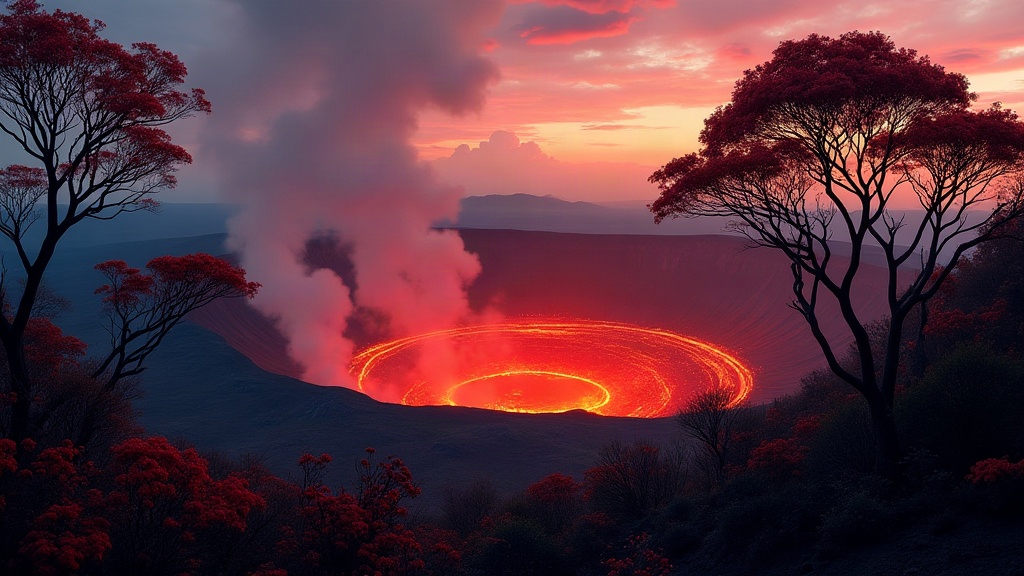
Pele: Hawaiian Goddess of Volcanoes and Fire
Pele is the fierce Hawaiian goddess who creates and destroys islands through volcanic fire. Learn how this shape-shifting deity shaped Hawaiian cosmology, sacred landscape, and cultural identity from ancient times to today.
Polynesian
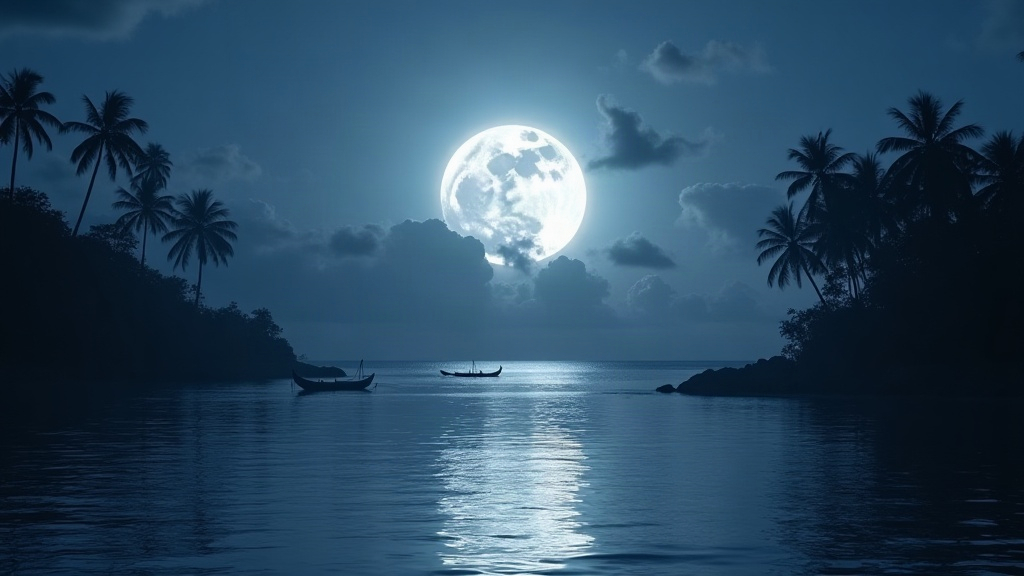
Hina: The Moon Goddess Across Polynesian Cultures
Hina appears across the Pacific as the moon's keeper and shaper of tides. From Hawaii to Tahiti to Samoa, she embodies cycles, creation, and the feminine sacred. Discover why this goddess matters to modern Polynesian identity.