
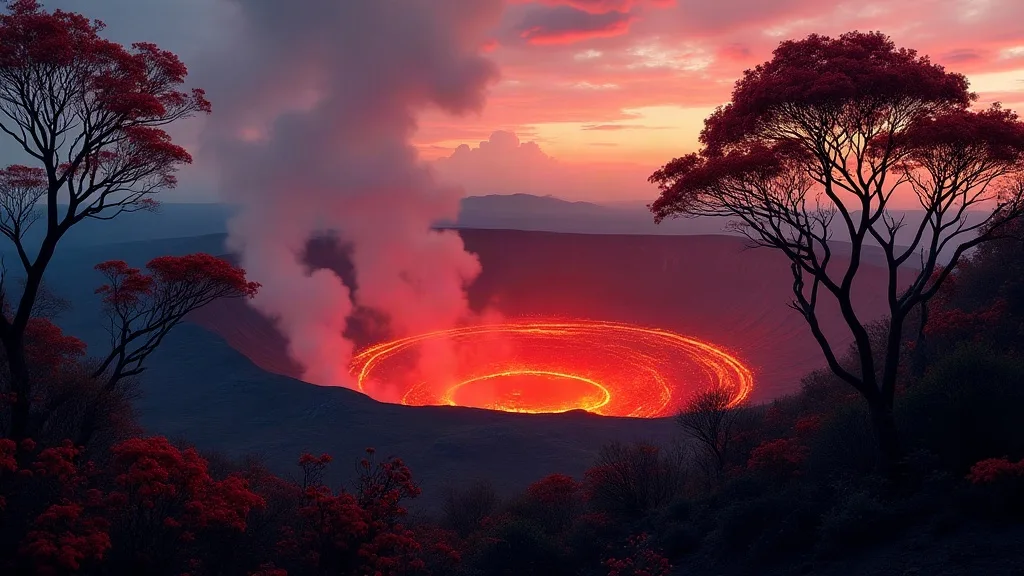
Pele: Hawaiian Goddess of Volcanoes and Fire
Pele is the fierce Hawaiian goddess who creates and destroys islands through volcanic fire. Learn how this shape-shifting deity shaped Hawaiian cosmology, sacred landscape, and cultural identity from ancient times to today.
Contents
In the beginning, Pele was born from the mouth of a fire-breathing volcano. She arrived in Hawaii riding waves of lava, her footprints still scorching the earth. When islanders feel the ground tremble beneath them, when ash falls like snow on the slopes of Kilauea, when lava flows toward their homes: they know Pele, the Hawaiian goddess of fire and volcanoes, is speaking.
Unlike many deities who rule from static palaces, Pele is restless, embodied, alive. She is the volcano itself. She dances in the molten core, shapes the islands with her hands, and judges mortals by their respect for the land. Her story sits at the heart of Hawaiian spirituality, woven through generations of kapu (sacred law), place names, and the lived experience of living on an active volcanic archipelago.
This is a myth rooted not in ancient abstraction but in the red earth beneath Hawaiian feet.
Origins: Birth from the Sacred Volcano
The story of Pele's birth comes down through Hawaiian oral tradition, preserved in mele (chants) and mo'olelo (stories) passed mouth to mouth for centuries. In the Hawaiian cosmology, Pele is one child of Haumea, a primordial mother goddess associated with fertility and the earth. Her father is Kane-hoa-lani, a god of the sky and winds. Some versions name Ku as her father instead, tying her to the divine force of growth and structure.
What makes Pele's birth unique is where she was conceived: in the sacred volcanic lands of the ancient world. Hawaiian genealogies, called whakapapa in the broader Polynesian context, trace her lineage through multiple islands. In some tellings, she was born in a distant land (sometimes identified as a mythic place called Kahiki, the older Hawaiian word for Tahiti and the ancient homeland), and her mother Haumea sent her eastward to find a new home.
Pele had many siblings, each linked to natural forces. Namaka was her sister, goddess of the ocean and the clouds. This sibling pairing matters: fire and water, creator and restrainer, are locked in an eternal relationship that plays out across Hawaiian geography. Other brothers included Kane (light and fresh water), Kanaloa (the ocean depths), and Maui, the famous trickster demigod who pulled islands from the sea.
Her journey to Hawaii was not a simple voyage. In the mele and oral accounts, she traveled across the ocean riding in a double canoe, or in some versions, swimming through waves as pure energy. She searched for a place where she could build her fires undisturbed, where her magic would not be extinguished by the waters of her rival sister Namaka. Each Hawaiian island, in this mythic geography, represents a stop on her journey. She tried to settle on Kauai, on Oahu, on Molokai, but each time Namaka found her and forced her to flee eastward. The battles between the two sisters literally carved the landscape: the windward cliffs, the eroded valleys, the geological layering of the islands.
Finally, she reached the Big Island of Hawaii, where she descended into Kilauea and made her home. There, on the plateau of Halemaumau, in the crater where molten rock still glows at night, she found sanctuary. She was not fleeing anymore. She was home.
The Shape-Shifter: Pele's Many Forms
Pele is not static. She moves between bodies, ages, appearances, and moods like a flame changes color depending on what it consumes. In this lies her power and her danger.
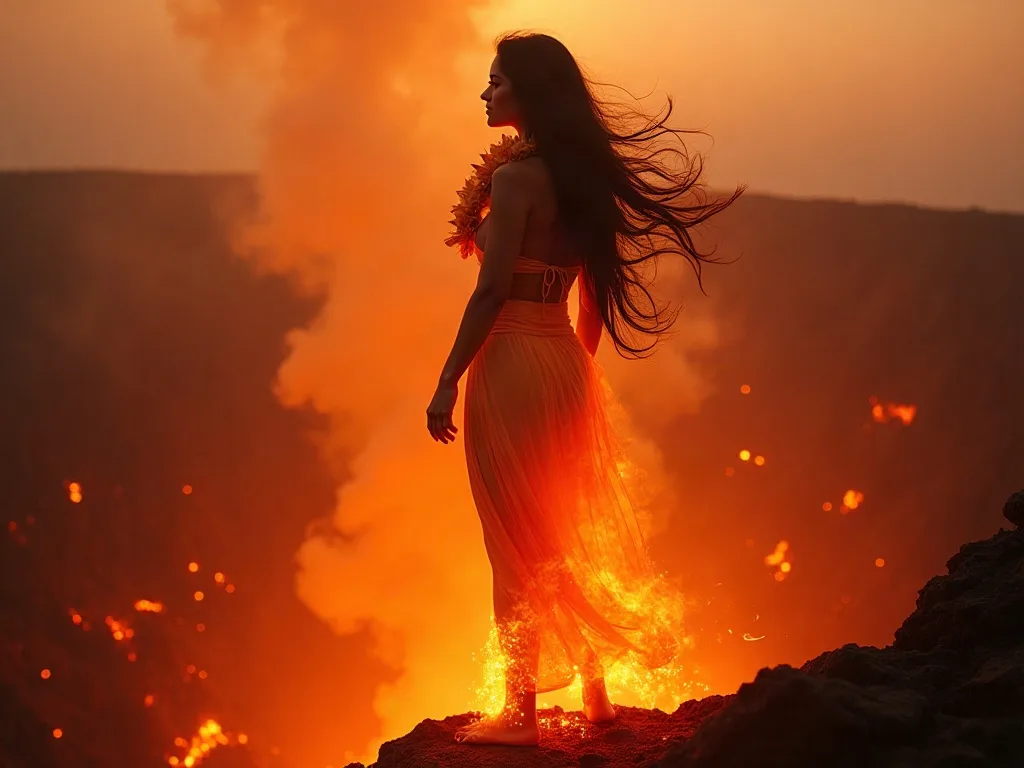
Sometimes she appears as an old woman, bent and weathered, dressed in tattered holoku (Hawaiian dress). She walks the rim of the crater at Halemaumau or stands on the edges of active lava flows. Islanders who encounter her in this form report that she asks for water, for a cigarette, for shelter. Those who help her are blessed; those who turn her away face the goddess's wrath. There are documented accounts, passed down through families for generations, of tourists and locals who met an elderly Hawaiian woman on the Chain of Craters Road near Kilauea, only to have her vanish moments later. These are not mere folk tales: they are part of living Hawaiian culture, taken seriously by people whose families have lived on active volcanoes for centuries.
In her youth, Pele is breathtakingly beautiful. She appears as a young woman with long dark hair, adorable and alluring, sometimes riding a white dog. She wears lei niho palaoa (ornaments of whale tooth and braided hair) and moves through the islands seducing warriors and chiefs. Her romantic entanglements are legendary: she was married to Lohiau, a handsome chief of Kauai, and her passion for him burned as fiercely as her volcanic fires. When Lohiau died, her grief turned the ground into lava. Some tales say she traveled to the underworld to retrieve him, battling death itself.
She can also appear as a white dog, a hog, a column of smoke, or pure flame. She rides in a ghostly canoe made of clouds. She becomes the very phenomenon she controls: appearing as the glow on the horizon, as ash falling from the sky, as the trembling earth itself. In Hawaiian spiritual practice, this capacity to shift and multiply is not trickery but the essential nature of akua, the sacred power that animates all things. Pele is not contained by any single body.
The Fire Goddess at Work: Volcano, Destruction, and Creation
Pele is not a goddess who watches from a distance. She is the force that remakes the world in real time, and every person living on the Hawaiian Islands knows it.
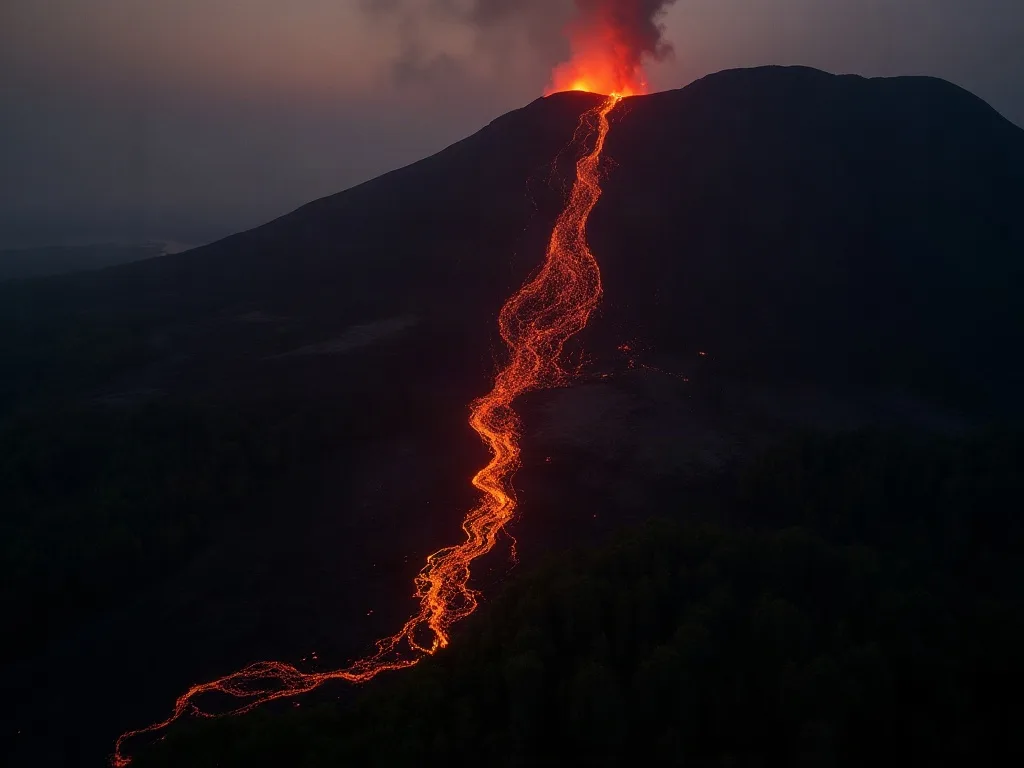
When she is angry, the ground shakes. Earthquakes rumble before eruptions, and in Hawaiian understanding, these are Pele stamping her feet, asserting her presence, preparing to act. When she dances her sacred hula, the earth convulses. When she laughs, cinders fall. When she weeps, the lava flows cool enough to walk on.
Her eruptions have shaped the entire geography of Hawaii. The Big Island of Hawaii is the youngest major island in the chain, and it is still growing. Kilauea, where Pele makes her primary home, is one of the world's most active volcanoes. From 1983 to 2018, it erupted almost continuously. In Hawaiian understanding, this is not random geology: it is Pele at work, building, reshaping, asserting her dominion. When lava flows toward a town, people do not always flee in panic; some leave offerings, speak to the goddess, negotiate. They understand they are living in her space.
But Pele is not simply destructive. She is also the creator. The lava that flows from Kilauea cools into new land. The Big Island has grown significantly through volcanic action, especially in the 20th and 21st centuries. When lava reaches the ocean, it hisses and steams and forms new black sand beaches and new rock. Pele destroys homes, forests, and fields, yes; but she also generates new earth, new possibility, new land for future generations. In Hawaiian cosmology, creation and destruction are not opposites. They are one cycle, and Pele is the force that turns that wheel.
This understanding shapes how Hawaiians relate to the volcanoes. There is risk, yes, but also reverence and, sometimes, a kind of acceptance that this is the price and the gift of living in the aina (the land) that Pele inhabits. The kapu, the sacred laws around Kilauea, were not arbitrary: they were practical wisdom about how to live safely and respectfully in a landscape ruled by fire.
The Crater Sanctuary: Halemaumau and Sacred Geography
The heart of Pele's domain is Halemaumau, the crater summit of Kilauea. Hale means house; maumau refers to the Mauna Ulu cinder cone, though the term has been applied to the entire crater complex. This is her palace. This is where she dwells.
The crater itself is geologically spectacular: a vast caldera, sometimes glowing red at night, releasing volcanic gases that Hawaiians recognize as her breath. When the crater lake appeared in recent years (a rare phenomenon, as the crater is usually too hot for water to persist), Hawaiians marked it as a sign of Pele's changing moods or the influence of other forces.
Around Halemaumau, the sacred landscape radiates outward. The Thurston Lava Tube (Nahuahu in Hawaiian) is believed to be one of Pele's passages through the earth. The ohia forests that cling to the volcanic rock are sacred to her, and the ohia lehua trees with their crimson blossoms are sometimes said to be manifestations of her fire or her beloved. The black sand beaches around the islands, formed from lava that met the sea, are places where her energy is palpable.
Historically, the crater rim was kapu (forbidden) to most people. Only certain chiefs and kahuna (priests and experts) could approach Halemaumau without risking Pele's anger. Commoners who ventured into the sacred zone without permission faced punishment. This was not arbitrary authority: it was a system of environmental protection and spiritual discipline.
Modern Hawaii has opened these areas to tourism, and many visitors now hike to the crater rim, take photographs, and in some cases, commit acts of disrespect that Hawaiian practitioners consider serious violations. Collecting volcanic rocks, defacing the landscape, or leaving offerings that are not traditionally appropriate is believed to anger Pele and bring haumia (misfortune) to the offender. The U.S. National Park Service that manages Hawaii Volcanoes National Park now acknowledges these concerns and works with Hawaiian cultural practitioners to balance access with respect.
The Sacred Stories: Pele and Her Rivals
Pele's story is not one of solitary dominion. She exists in relationship, in conflict, and in complex emotion.
Her most famous rival is her sister Namaka, the ocean goddess. The mythology of their conflict explains the geological history of the Hawaiian Islands. As Pele fled eastward from island to island, Namaka pursued her, using her waters to extinguish the fires. The older, western islands (Kauai, Oahu, Molokai) are more eroded because Namaka succeeded in defeating Pele there. The Big Island, far enough east, remained young and still hot because Pele finally found refuge. This is not fantasy overlaid on geology; it is a sophisticated myth that accurately reflects the actual geological history of the Hawaiian chain, where islands progressively age from northwest to southeast as they move away from the volcanic hotspot.
Her most famous love story involves Lohiau, a handsome chief of Kauai. In one version of the tale, Pele saw Lohiau in a vision and fell in love with him so intensely that her spirit left her body and traveled to Kauai. When she found him, they made love, but she could not stay in her spiritual form. She returned to her body at Halemaumau. Longing to see Lohiau again, she sent her sister Hiiaka to bring him to her. Hiiaka traveled to Kauai and fell in love with Lohiau herself along the way. When Pele learned of this, her jealousy exploded into fury. She turned parts of the Kau district into lava. In rage and heartbreak, she destroyed forests and forests until Hiiaka finally relented and Lohiau came to Pele. But the cost was enormous: the landscape itself bore the scars of the goddess's passion.
This tale, which appears in multiple versions across different Hawaiian islands and in different mele, teaches a crucial lesson: Pele is not a distant or controlled force. She feels grief, passion, jealousy, and love. She acts on her emotions. Living in her land means accepting that the earth itself can break open at the moment of a goddess's rage.
Pele in Hawaiian Spiritual Practice and Kapu
To understand Pele requires understanding the Hawaiian kapu system, the set of sacred laws and taboos that governed Hawaiian life for centuries.
The kapu surrounding Pele and her volcanic domains were not casual superstitions. They were practical, spiritual, and ecological systems of knowledge built over generations of living safely on an active volcanic landscape. Certain areas of the crater were off-limits. Certain foods could not be cooked over open flame. Certain behaviors (loud noise, quarreling, sexual activity) were forbidden in sacred zones because they were believed to agitate Pele. In modern ecological terms, these rules made sense: they kept people away from dangerous areas and prevented disturbances that could trigger volcanic activity or endanger people.
When Hawaiians made offerings to Pele, they were not bribing a capricious ruler. They were acknowledging her sovereignty over the land, making a pact of respect, and affirming their place in the aina. Offerings included aumakua (ancestral gifts), food, flowers (especially the bright red ohia lehua), and sometimes a ritual chant. A kahuna (priest) or kumu hula (hula master) might conduct the ceremony, though individuals could also make private offerings.
The arrival of Christianity and Western law in Hawaii disrupted the kapu system dramatically. The kapu were officially abolished in 1819, a few years after Western contact intensified. Missionaries taught that the gods were not real, that the volcanic landscape was simply geology. But Pele did not disappear from Hawaiian consciousness. She persisted in oral tradition, in family stories, in the lived experience of islanders who continued to feel her presence in the trembling earth and the glowing crater. By the 20th century, there was a cultural resurgence, and Pele became once again a central figure in Hawaiian spiritual revival and in the broader movement toward cultural sovereignty.
Historical Records and European Encounters
When European explorers first arrived in Hawaii in 1778, they encountered a Hawaiian culture already in the midst of rapid change. But the kapu system and the reverence for Pele remained strong. Captain James Cook and his crew encountered Hawaiian priests and chiefs who spoke of Pele with obvious spiritual authority. Early missionary accounts and journals from the 1820s describe witnessing Hawaiian ceremonies at Kilauea and the respectful fear with which locals approached the crater.
The Hawaiian geologist and historian David Malo, who lived through the transition from traditional to colonial rule in the early 19th century, recorded detailed accounts of Pele in his writings. He described the ceremonies, the kapu, and the goddess's role in Hawaiian spiritual life with the care of someone documenting his own living culture before it was swept away.
By the mid-1800s, Hawaii was being transformed by sugar plantations, missionary schools, and eventually annexation by the United States. The younger generation of Hawaiians was being taught that their ancestors' gods were demons or illusions. But in the volcanic regions, people continued to feel Pele's presence. Eruptions of Kilauea continued to occur, and in each event, people recognized the hand of the goddess.
One striking account comes from the 1880 eruption of Mauna Loa, a neighboring volcano. A lava flow threatened to destroy the town of Hilo. Hawaiian kahuna reportedly made offerings and chants to turn the flow. Whether through divine intervention, atmospheric conditions, or fortunate geology, the lava stopped just above the town. The Hawaiian interpretation: Pele had heard them. This story, repeated and refined over generations, became part of Hawaiian identity and a testament to the ongoing power of traditional spiritual practice.
Pele in Modern Hawaiian Culture and Practice
Today, Pele is experienced as a living deity in Hawaiian spiritual communities. While the majority of Hawaiians are Christian (a legacy of missionary conversion), and many more are simply secular moderns, there is a vibrant strand of Hawaiian spirituality in which Pele is central.
Contemporary Hawaiian hula dancers, especially those trained in hula kaholo and hula oli (the ancient, sacred form), often perform dances that honor Pele or tell her stories. These are not museum performances: they are acts of spiritual reverence, transmitted from teacher to student in lineages that have survived colonial disruption. A kumu hula (hula master) will teach the movers and chants about Pele, and the dancers understand themselves as channeling her energy, her story, her presence.
In Hawaiian lomilomi (massage therapy) and other healing practices, Pele appears as a source of transformative energy. The heat that flows through the practitioner's hands is sometimes understood as flowing from Pele's fire. This is not metaphor alone: it is a way of understanding the body, the aina, and spiritual power as interconnected.
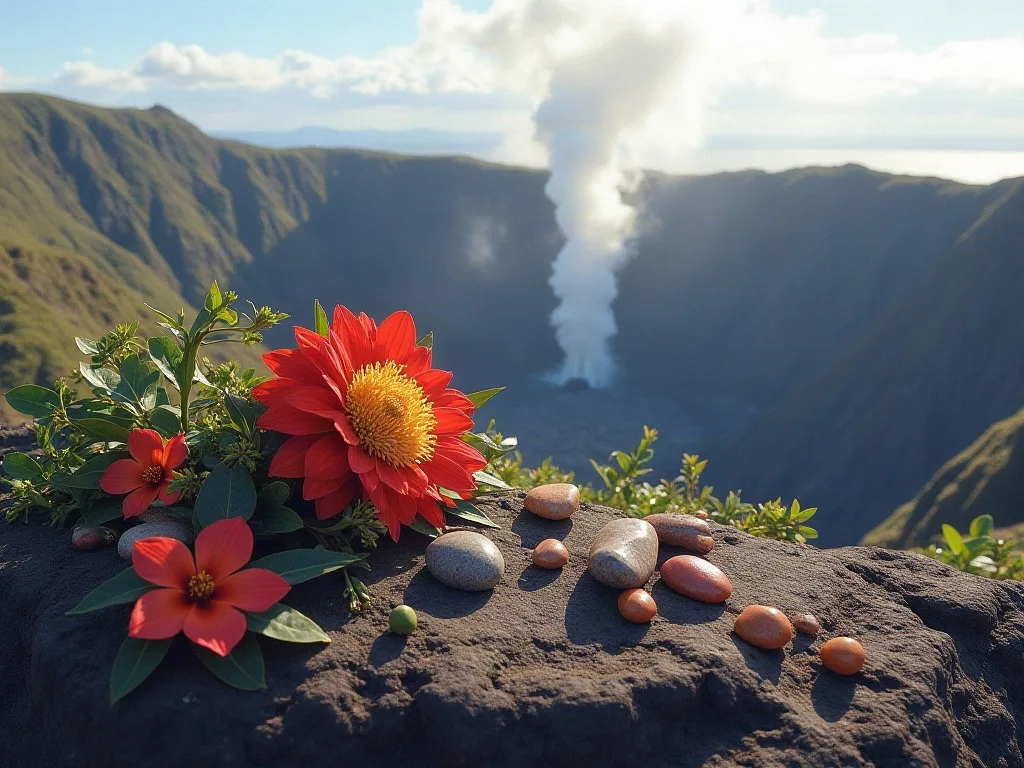
Offerings at Halemaumau continue to be made. Visitors to Hawaii Volcanoes National Park can see small piles of flowers, coins, and stones left at the crater rim by people honoring Pele. Some of these are left by tourists with only a vague awareness of who they are honoring; others are left by devoted practitioners who see the offering as a serious spiritual act. The National Park Service has struggled with how to manage these offerings (some of which can harm the ecology) while respecting Hawaiian cultural practice.
In 2018, when Kilauea erupted spectacularly, destroying homes in the Lower Puna region, Hawaiian spiritual practitioners mobilized. They made offerings, conducted ceremonies, and spoke to Pele about the impact on the community. Some families who lost everything to the lava reported that their grief was shaped by a complex understanding: Pele had taken their home, yes, but she was also creating new land, and in Hawaiian philosophy, land is sacred. The disaster was real and devastating; so too was the sense that they were participants in something larger than individual loss.
In 2021, when a new lava lake formed in Halemaumau crater, it was photographed extensively by tourists but also acknowledged by Hawaiian communities as a sign of Pele's changing presence or mood. Some practitioners interpreted it as a softening, a blessing, a moment of Pele revealing herself in a more accessible form.
Scholarly Perspectives and Comparative Contexts
Modern scholarship on Hawaiian mythology has moved away from 19th-century missionary accounts (which often dismissed Hawaiian beliefs as primitive superstition) and toward approaches that take Hawaiian sources, oral traditions, and indigenous knowledge systems seriously.
Scholars like Haunani-Kay Trask have emphasized that Hawaiian mythology is not historical fantasy but a system of knowledge that encoded practical information about the landscape, ecology, and social order. The Pele myths contain geological accuracy (the age and erosion patterns of the islands), ecological wisdom (the kapu kept people safe and preserved resources), and psychological insight (the gods embody human passions and conflicts).
The anthropologist Martha Beck and others have examined how Pele functions in contemporary Hawaiian identity and spirituality. They argue that Pele is not a relic of a dead past but an active presence in modern Hawaiian consciousness, particularly among those engaged in cultural revitalization.
In comparative mythology, Pele invites comparison with other fire deities and volcano goddesses across cultures. The Hindu goddess Parvati, consort of Shiva and embodiment of both creative and destructive power, shares some qualities with Pele: both are associated with mountains (Parvati with the Himalaya, Pele with Hawaiian volcanoes), both embody fierce sexuality and rage, both are central to their respective cultures' understanding of sacred landscape. The Maori goddess Pele, a different figure from the Hawaiian Pele but sharing a name and some similar associations with the earth and fertility, appears in New Zealand mythology. These parallels raise interesting questions about how different Polynesian and Pacific cultures understood the intersection of divine power, landscape, and feminine force.
The volcano itself is the comparison that matters most: every culture with active volcanoes has had to create a mythology that makes sense of the ground's unpredictability. The Hawaiian solution, embodied in Pele, was to personify the volcano as a goddess with recognizable human emotions and desires. This allowed Hawaiians to relate to the volcano not as a blind force but as a being with whom they could negotiate, whom they could respect, and whose moods they could read and respond to.
The Enduring Question: Ancient and Modern
One of the most interesting scholarly questions about Pele is how much of her current mythology is ancient and how much developed or evolved in the colonial and post-colonial periods. The earliest written Hawaiian sources, recorded by Westerners in the early 1800s, already describe Pele in the forms we know today. But oral traditions were being disrupted by missionary conversion, disease, and social upheaval. Some versions of Pele's stories may have been shaped, refined, or even created during the period when Hawaiian culture was under assault and Hawaiians were actively resisting erasure by reasserting their spiritual heritage.
This is not to say the myths are false or inauthentic. Rather, it is to recognize that myth is always living, always evolving, always responding to contemporary needs. A myth recorded in 1823 by a missionary (who may have misunderstood it), recovered by a 20th-century cultural revitalist, and reinterpreted by a 21st-century spiritual practitioner is not less true for being adapted. It is more true, because it continues to speak, to move, to live.
The question of authenticity and change matters practically for Hawaiian communities today as they consider how to practice their traditions responsibly. Some practitioners are interested in recovering what they see as the most ancient forms of Pele worship. Others are interested in creating new ceremonies that honor Pele in contemporary contexts. Both approaches involve interpretation, care, and an acknowledgment that Pele herself, as a shape-shifter, might approve of forms that change to meet the moment.
Frequently asked questions about Pele, Hawaiian goddess of volcanoes and fire?
Frequently asked questions
Is Pele still worshipped in Hawaii today?
Yes. While Hawaii is majority Christian, there is an active Hawaiian spiritual community that honors Pele through ceremonies, offerings, and hula practices. Practitioners make offerings at Halemaumau crater, speak to Pele during eruptions, and integrate her into healing and cultural practices. She is central to Hawaiian cultural revitalization movements.
What should visitors do to show respect to Pele?
Visitors are advised not to remove volcanic rocks from Hawaii Volcanoes National Park (a common folk belief holds this brings curse), to avoid defacing the landscape, and to be quiet and mindful in sacred areas like Halemaumau crater. If making an offering, use traditionally appropriate items like flowers, particularly red ohia lehua blossoms, rather than coins or plastic. Many Hawaiian practitioners recommend simply being present with reverence and awareness that you are in Pele's home.
How does Pele appear in Hawaiian chants and dances?
Pele appears extensively in mele (Hawaiian chants), both ancient and modern compositions. She is honored in hula kaholo (ancient hula) performed by trained dancers and kahuna hula (hula masters). The movements, chants, and stories transmitted through these practices teach about her volcano, her loves, her travels, and her power. For practitioners, performing these dances is a spiritual act, not entertainment.
Are there different versions of Pele's mythology across the Hawaiian islands?
Yes. Different islands and different families have their own versions of Pele's stories, emphasizing different episodes, different relationships, and different geographical connections. Kauai emphasizes her connection to Lohiau; the Big Island emphasizes Halemaumau and Kilauea. These variations are not contradictions: they reflect how oral tradition allows for multiple truths and perspectives, each community's relationship with Pele shaped by their local landscape and history.
What is the connection between Pele and volcanology?
Hawaiians did not distinguish between geological and spiritual knowledge: their understanding of Pele as an active, powerful force in the landscape was accurate observation encoded in mythic form. Modern volcanologists studying Kilauea recognize that the traditional Hawaiian understanding of the volcano as a living, responsive force provides valuable insight into how to communicate volcanic risk to communities and how indigenous knowledge systems can complement scientific monitoring.
How did missionary Christianity affect worship of Pele?
Christian missionaries taught Hawaiians that Pele and other akua were demons or illusions, not real gods. The kapu system, in which Pele held central place, was officially abolished in 1819. This disrupted traditional spiritual practice severely, but Pele did not disappear: she persisted in oral tradition, family stories, and the lived experience of volcanoes. In the 20th and 21st centuries, Hawaiian cultural revitalization has brought renewed honor to Pele and traditional practices.
The Volcano Speaks: Pele's Ongoing Presence
Pele: Hawaiian Goddess of Volcanoes and Fire is not a figure confined to ancient texts or museum exhibits. She remains a living presence in the Hawaiian landscape and in the spiritual lives of those who honor the aina.
When Kilauea trembles, when lava flows, when new land forms from molten rock, Pele is at work. She is not a metaphor for geological process; she is the understood reality of living in a place where the earth itself transforms. To know Pele is to understand that the ground beneath your feet is alive, that sacredness is not abstract but embodied, and that respect for landscape is not sentimental but practical wisdom earned over generations.
The goddess continues to demand something of those who live in her islands: attention, respect, acknowledgment that they are guests in her home. In return, she gives them a land of extraordinary beauty and power, constantly renewing itself, constantly surprising, never static. For Hawaiians and for the millions who visit the Hawaiian Islands each year, Pele remains the living heart of the archipelago.
Read the full book
Want the whole story?
The complete edition is an instant PDF download here, with a paperback on Amazon for selected titles.
Polynesian
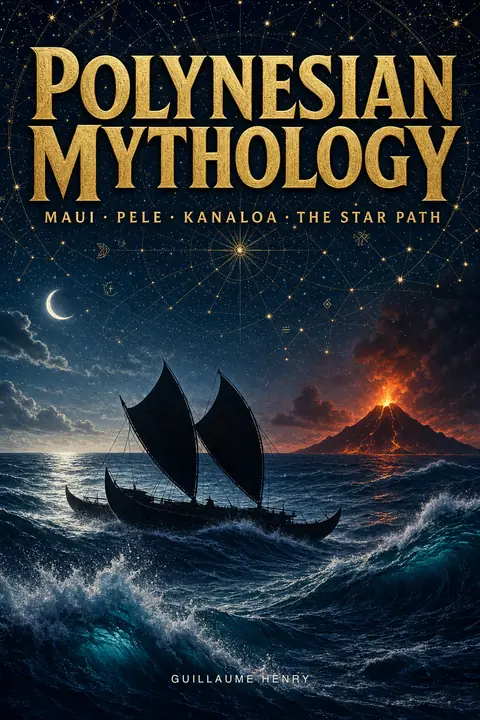
The Polynesian Mythology Book: Maui, Pele, Tangaroa, and the Sacred Stories of the Navigator Cultures
From Hawaii to New Zealand: The Gods Who Shaped the Pacific
The trickster Maui who fished up islands, Pele's volcanic fury, Tangaroa's ocean realm, and the separation of sky and earth. The mythology that sailed 10 million square miles of Pacific.
More from Polynesian
All articles
Polynesian
Tangaroa: God of the Sea and Ocean Depths
Tangaroa rules the ocean across Polynesia, commanding fish, tides, and the boundary between human and divine realms. Discover how this primordial god shaped creation and why fishermen still honor him today.
Polynesian
Māui: The Trickster Hero Who Fished Up Islands
The demi-god Māui outwits gods and giants to reshape the Pacific. Discover how this Polynesian trickster hero slowed the sun, pulled islands from the sea, and became the ancestor of human achievement across the islands.

Polynesian
Tāne: God of Forests, Birds, and Creation in Polynesian Mythology
Tāne stands among Polynesia's most vital deities, separating sky from earth and populating the world with forests, birds, and human life. Discover how this divine carpenter shaped creation itself in Māori, Hawaiian, and Tahitian traditions.
Polynesian
Hina: The Moon Goddess Across Polynesian Cultures
Hina appears across the Pacific as the moon's keeper and shaper of tides. From Hawaii to Tahiti to Samoa, she embodies cycles, creation, and the feminine sacred. Discover why this goddess matters to modern Polynesian identity.