
Tangaroa: God of the Sea and Ocean Depths
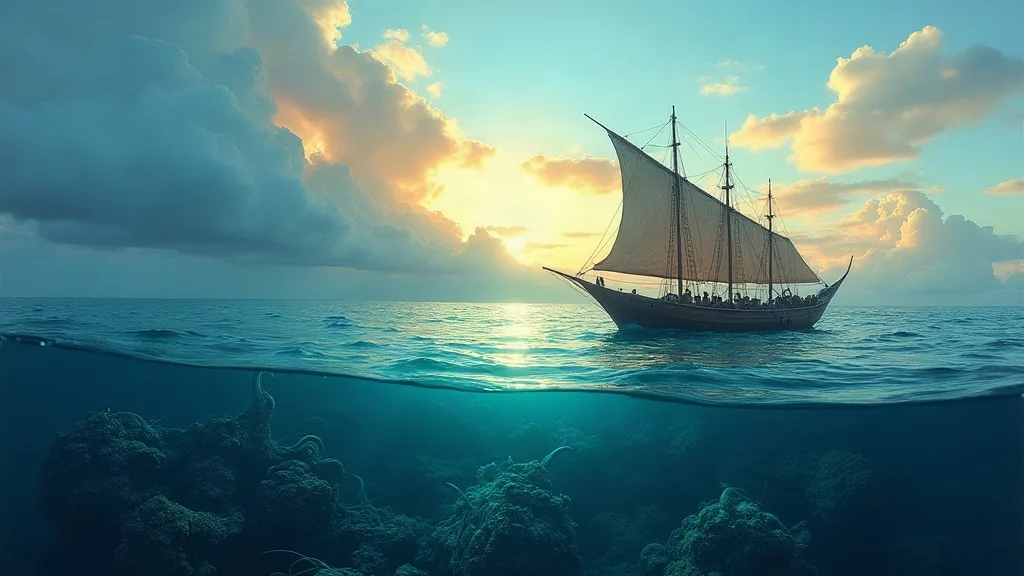
Tangaroa rules the ocean across Polynesia, commanding fish, tides, and the boundary between human and divine realms. Discover how this primordial god shaped creation and why fishermen still honor him today.
Contents
The ocean spoke first. Before anything else moved, before the sky took shape or the earth drew breath, Tangaroa emerged in the waters of creation. In Polynesian cosmology, he was not a god who claimed dominion over the sea, he was the embodiment of it, the living principle of liquidity, depth, and the vast unknowable. From Hawaii to New Zealand, from Samoa to Tahiti, islanders heard one name when the tide turned and the fisherman prepared his nets: Tangaroa.
He stands as one of the great primordial deities in the Polynesian pantheon, ancestor to other gods, keeper of the boundary between death and life, and the patron whose blessing meant sustenance or whose anger meant starvation. To understand Tangaroa is to understand why an island people saw the ocean not as obstacle but as kinship.
The Birth of Tangaroa in Polynesian Creation
The world began as chaos. In the beginning, according to traditions recorded across the Polynesian islands, there was only Void (called Te Kore in Maori, Po in Hawaiian). From this emptiness emerged two primordial beings: Rangi (the Sky Father) and Papa (the Earth Mother), locked in an embrace so tight that nothing could grow between them.
Their children writhed in darkness. Among them was Tangaroa, born into the compressed space between his parents' bodies. When his brothers, including Tane, the forest god, and Tu, the war god, grew tired of confinement, they pushed their parents apart. The sky rose. The earth sank. Light poured in. But Tangaroa, angry at being left behind in the separation, fell back into the void that had become the ocean. He never fully escaped. The sea became his domain, his territory, his prison and kingdom both.
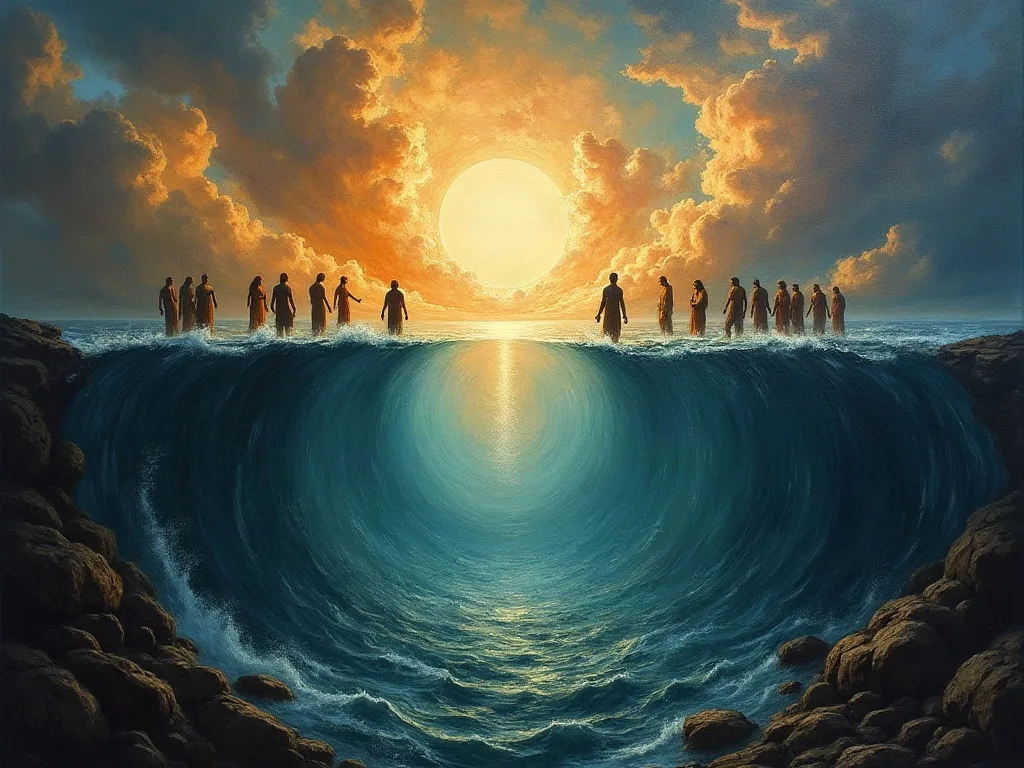
Different island traditions tell variations of this story. In some Maori accounts, Tangaroa (called Tawhirimatea in certain contexts, though sources vary) becomes a figure of cosmic spite. In Hawaiian genealogies, he appears as Kanaloa, associated with the ocean, the underworld, and sometimes depicted as a squid or eel. In Samoan tradition, his role overlaps with other ocean deities, yet his name persists. What unites these versions is the core idea: Tangaroa is the ocean itself, personified and divine.
Tangaroa and the Separation of Worlds
After Rangi and Papa parted, the universe needed order. Each god received his dominion. Tane took the forest and growth. Tu took war and human struggle. Tawhirimatea, the Storm God, controlled wind and turbulence. But Tangaroa's gift was paradoxical: he received the ocean, yet the ocean had already rejected him. He ruled it, yet was bound to it, unable to fully claim the land his siblings inherited.
This tension shaped his character. Tangaroa possessed abundance, the ocean teems with fish, the source of protein for every island culture, yet his realm was also hostile, dangerous, a barrier that isolated islands and took lives. Fishermen depended on him. Sailors feared him. Navigators prayed to him before each voyage across the vast Pacific, knowing that only Tangaroa's permission allowed safe passage.
In some traditions, Tangaroa held a grudge. The Maori tale of the gods' separation includes a moment where, after his brothers pushed apart Rangi and Papa, Tangaroa decided to claim retribution. When Tane created humans and filled the forests, Tangaroa determined to reverse creation by pulling the land back into the sea, to reclaim what had been taken from him. This mythology echoes in later Polynesian stories of floods, of islands sinking, of the boundary between safety and obliteration remaining perpetually fragile.
The Abundance and Wrath of the Ocean God

Tangaroa governed fish and marine life. Every hook that caught a meal, every net that returned heavy, these were Tangaroa's gifts. Fishermen developed rituals to honor him, to ask permission, to maintain the relationship between hunter and hunted. In the Marshall Islands and throughout Micronesia and Polynesia, offerings were made to the sea before fishing expeditions. The first catch sometimes went back to the water as an acknowledgment: this came from Tangaroa; this returns to Tangaroa.
But the ocean took lives too. Storms rose without warning. Canoes capsized. Men drowned. Islands that sailed out never returned. These deaths were not punishment in a moral sense, not because someone sinned, but rather accidents in a world where human and divine realms meet without clear boundaries. Tangaroa did not need motive. He was force, indifferent and vast.
Navigators and canoe-builders understood this. The great Polynesian voyages that settled the Pacific, from Hawaii to Easter Island to New Zealand, were undertaken with full awareness that Tangaroa could end them at any moment. Yet they sailed anyway, because human curiosity and the need for new lands outweighed fear. The navigators who succeeded developed deep knowledge of stars, waves, bird behavior, and ocean swells, a maritime science that worked with Tangaroa's nature rather than against it.
Tangaroa and the Underworld
In some Polynesian contexts, particularly Maori and Hawaiian traditions, Tangaroa held dominion over the underworld, the realm where spirits traveled after death. The boundary between ocean and death was not always clear. Drowning victims entered a liminal space. Spirits might journey by sea to ancestral lands. The ocean bottom became, in some accounts, a pathway to other worlds.
This association likely arose because the ocean was unknowable. What lay beneath the surface? What existed beyond the horizon? The Polynesian peoples, masters of wayfinding across open water, still acknowledged depths they could not reach. The underworld and the ocean abyss served the same mythological function: they were places where human knowledge ended, where the divine remained sovereign, where transformation and death and rebirth happened away from the safety of land.
Tangaroa Across the Polynesian Triangle
The name and character of Tangaroa echo across the entire Polynesian cultural sphere, though local variations emerge:
In Hawaii, he appears as Kanaloa, sometimes depicted as a cephalopod (an octopus or squid), sometimes as a dragon-like serpent in the depths. Kanaloa and the creator-god Kane are often paired; Kane represents the sky and growth, while Kanaloa rules the ocean and sometimes represents a fallen or shadow aspect of divinity.
In Aotearoa (New Zealand), Tangaroa remains central to Maori cosmology. The Maori creation narrative recorded in the Kumulipo (a genealogical chant) includes Tangaroa among the primordial deities. His role overlaps with Tawhirimatea, the Storm God, though each has distinct attributes. The ocean surrounding New Zealand was (and is) dangerous; Tangaroa reflected that reality.
In Samoa and Tonga, Tangaroa appears in genealogies and creation accounts, though his prominence varies by tradition. Some sources suggest that regional gods absorbed his attributes or that his name took different forms, yet the essential identity, god of the sea, primordial, often associated with abundance and danger, remains consistent.
In Tahiti and the Society Islands, Tangaroa held particular importance to navigators and fishermen. Oral traditions preserved by European observers in the 18th and 19th centuries describe him as a creator deity and lord of the ocean. The great double-hulled canoes that carried Polynesians across millions of square miles of ocean were built with prayers to Tangaroa, sailed under his watchful presence.
Tangaroa and the Creation of Land
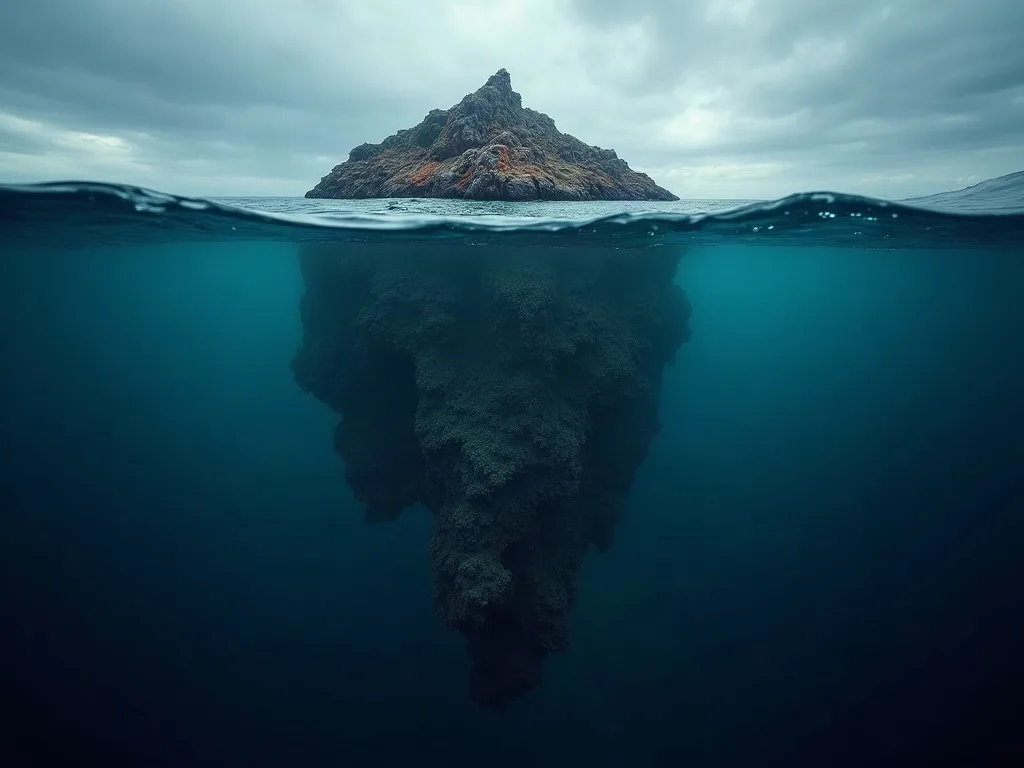
One cluster of myths associates Tangaroa with the dredging or raising of islands. In some accounts, Tangaroa or allied deities pulled land up from the ocean floor. The Hawaiian Kumulipo genealogy and related creation chants speak of emergence from the deep, of solid matter arising from water. Tangaroa did not create land in the sense that Tane created forests, rather, land rose from his domain, torn or coaxed from the ocean depths.
This mythology likely reflects the lived experience of Polynesian peoples encountering islands after long voyages. Land emerged from the ocean, literally visible after weeks at sea. The appearance of an island after open water seemed like a miracle, an act of divine grace. Tangaroa, as the ocean's embodiment, became the god who released or revealed islands, who permitted arrival.
In some traditions, specific heroes or demigods worked with Tangaroa to shape geography. These narratives rarely survive in complete form in modern sources; most were preserved orally and lost as European colonization disrupted transmission. But fragments appear in place names, in local stories tied to particular bays or channels, in the landscape itself understood as sacred history.
Rituals, Offerings, and the Fisherman's Prayer
The relationship between human and Tangaroa was transactional but also relational. Fishermen did not demand; they asked. Before setting out, they might chant or make offerings. The first fish of the catch sometimes returned to the sea. Some traditions required that the fisherman abstain from certain foods or practices on the day of a voyage. These were not punishments but protocols, ways of maintaining proper relationship with a force vastly more powerful than any individual human.
In some islands, particular beaches or reefs held sacred status. Tangaroa's presence was felt more intensely there. A fisherman might avoid certain areas during certain seasons, not from practical fear of rocks or current alone, but from religious conviction that Tangaroa had claimed that space.
Women sometimes held special status in relation to Tangaroa worship. Some traditions restricted women from certain fishing areas or practices, interpreting this as Tangaroa's preference or taboo. Other traditions granted women authority as priestesses or keepers of ocean knowledge. The specifics varied by island and lineage.
Tangaroa and the Maui Cycle
The legendary hero Maui appears in the mythologies of nearly every Polynesian island. Maui performs impossible deeds: he slows the sun, he fishes up islands, he steals fire. In several versions of the Maui cycle, Tangaroa plays the role of adversary or test. When Maui attempts to fish up new land, he must do so in Tangaroa's domain, with Tangaroa's tacit permission. Some accounts describe Maui tricking Tangaroa or outsmarting him. Others depict genuine conflict between the heroic human and the primal god.
One widespread Maui narrative describes him fishing up islands from the ocean floor using a magical hook and his brothers' assistance. What he pulls up is part of Tangaroa's body, in some tellings, flesh of the sea god made solid. The islands are therefore both gift and violation, land stolen from the ocean god's substance. This mythology hints at ecological understanding: islands exist in tension with the sea, perpetually at risk of erosion or submersion.
The relationship between Maui and Tangaroa parallels the broader Polynesian relationship with the ocean: necessity, cleverness, slight transgression, and the awareness that human achievement always occurs within divine tolerance.
Tangaroa in Art and Carving
Archaeological and ethnographic evidence shows that Tangaroa held visual representation in Polynesian art. Fish-hooks, often elaborately carved, were sacred objects associated with both the fisherman's skill and Tangaroa's domain. Canoe prows and sterns were sometimes carved with figures representing sea gods. In some traditions, octopus motifs or wave patterns in bark cloth (tapa) or tattoo designs (tatau in Samoan, moko in Maori) referenced ocean deities.
European observers and later anthropologists recorded Polynesian artifacts with descriptions of their spiritual meaning. Tangaroa often appeared as a figure with exaggerated features, large eyes, open mouth, sometimes depicted as partially human and partially fish or cephalopod. These representations were not fanciful decoration but visual theology: the artist conveyed the god's nature through form.
Tangaroa's Later Echo and the Christian Encounter
When European missionaries arrived in Polynesia beginning in the late 18th century, they encountered living worship of Tangaroa and other gods. Some missionaries documented these practices in journals; others sought to erase them. Conversion to Christianity meant, in many contexts, the formal abandonment of Tangaroa worship. Churches were built on sites that had been sacred to ocean deities.
Yet Tangaroa did not vanish. His name persisted in genealogies, in place names, in the stories elders told children. The ocean itself, still dangerous, still abundant, still the source of livelihood, continued to evoke his presence even after the formal pantheon shifted. Some Polynesian Christians found ways to honor both traditions, interpreting Tangaroa through Christian frameworks or maintaining private acknowledgment of ancestral gods alongside public Christian practice.
In the 20th and 21st centuries, as Polynesian peoples reclaimed cultural identity and resisted colonial erasure, Tangaroa reappeared in literature, art, and spiritual practice. Modern Polynesian writers and artists drew on traditional mythology to assert cultural continuity. Tangaroa became a symbol of ocean sovereignty, of indigenous knowledge, of the deep history that colonization could not fully suppress.
The Scholarly Question: Tangaroa, Kanaloa, and Regional Variants
Historians and anthropologists have long debated how much variation in Tangaroa's depiction reflects genuine regional difference versus loss of information through European disruption of oral transmission. Did different island groups develop independent ocean gods that coincidentally share similar names? Or did a single proto-Polynesian deity fragment into regional variants as island communities separated?
The linguistic evidence suggests that Tangaroa-Kanaloa names derive from a common ancestral form, implying that the deity predates the settlement of the Pacific. That settlement occurred over roughly 2,000 years (from around 1200 BCE to 1000 CE), so a unifying god-figure makes sense: islanders carried Tangaroa in their canoes and their memories as they spread across the ocean.
What varied was emphasis and interpretation. Hawaii's Kanaloa develops the cephalopod association more fully than other islands record. Maori traditions emphasize Tangaroa's role in the creation separation more directly. Samoan sources stress his abundance for fishermen. These differences reflect both the unique environment of each island group and the particular oral transmissions that survived to modern documentation.
Frequently Asked Questions About Tangaroa
Frequently asked questions
Was Tangaroa worshipped across all Polynesian islands?
Tangaroa or his direct equivalent (Kanaloa in Hawaii, regional variants in other groups) appears in the mythologies of virtually every major Polynesian culture. However, the intensity of worship and specific practices varied. Island groups with larger fishing industries or greater reliance on ocean travel tended to emphasize his role more prominently in recorded traditions.
Did Tangaroa have a physical form or was he purely abstract?
In oral and later recorded traditions, Tangaroa is sometimes depicted in animal form (particularly as an octopus or eel in Hawaiian accounts) and sometimes as humanoid or entirely abstract. He was understood primarily as a force, the personified ocean, rather than a fixed being. This reflects how Polynesians conceptualized divinity: gods were principles made manifest, not necessarily confined to single bodies.
How did fishermen actually honor Tangaroa in daily life?
Practices included offering the first catch back to the sea, chanting prayers before voyages, maintaining certain taboos on fishing days, and performing rituals at temples or sacred beaches. The specific customs varied by island and lineage. These were not formal organized religions but intimate, embodied relationships maintained through repetition and community knowledge.
Is Tangaroa still honored in modern Polynesia?
Yes. Contemporary Polynesian communities, as part of broader cultural revitalization movements, have renewed engagement with traditional deities including Tangaroa. He appears in modern art, literature, and spiritual practices. For many Polynesians, honoring ancestral gods represents continuity, resistance to colonial erasure, and assertion of indigenous sovereignty.
How does Tangaroa compare to other ocean gods in world mythology?
Like Poseidon in Greek tradition or Yemaya in West African and Afro-Caribbean traditions, Tangaroa embodies oceanic power and governs marine life and human safety at sea. However, Tangaroa's integration into creation mythology and his role as a primal force sets him apart; he is not a god who merely rules the ocean but is inseparable from it and from the beginning of all things.
Tangaroa and the Question of Ocean Stewardship
Today, as Polynesian islands face rising sea levels and climate change threatens ancestral ways of life, Tangaroa carries new weight in cultural and spiritual discourse. For many Polynesians and observers of Polynesian culture, the ancient god becomes a figure through which to articulate relationships with the ocean that differ from industrial exploitation.
Traditional Polynesian ocean knowledge, wayfinding by stars, understanding wave patterns, sustainable fishing practices, represents a form of deep expertise that worked with Tangaroa rather than against him. The god was never conceived as a resource to be conquered but as a force to be negotiated with, understood, respected. As the Pacific region confronts environmental crisis, some voices argue that reconnection with Tangaroa and traditional values offers not just spiritual comfort but practical wisdom: a way of inhabiting an island world without destroying the very force that sustains it.
The ocean god who once seemed quaint or obsolete to colonizing powers has become, in some contexts, a figure of indigenous future-thinking: how might honoring Tangaroa shape different choices about fishing, shipping, plastic pollution, and climate response?
Read the full book
Want the whole story?
The complete edition is an instant PDF download here, with a paperback on Amazon for selected titles.
Polynesian
The Polynesian Mythology Book: Maui, Pele, Tangaroa, and the Sacred Stories of the Navigator Cultures
From Hawaii to New Zealand: The Gods Who Shaped the Pacific
The trickster Maui who fished up islands, Pele's volcanic fury, Tangaroa's ocean realm, and the separation of sky and earth. The mythology that sailed 10 million square miles of Pacific.
More from Polynesian
All articles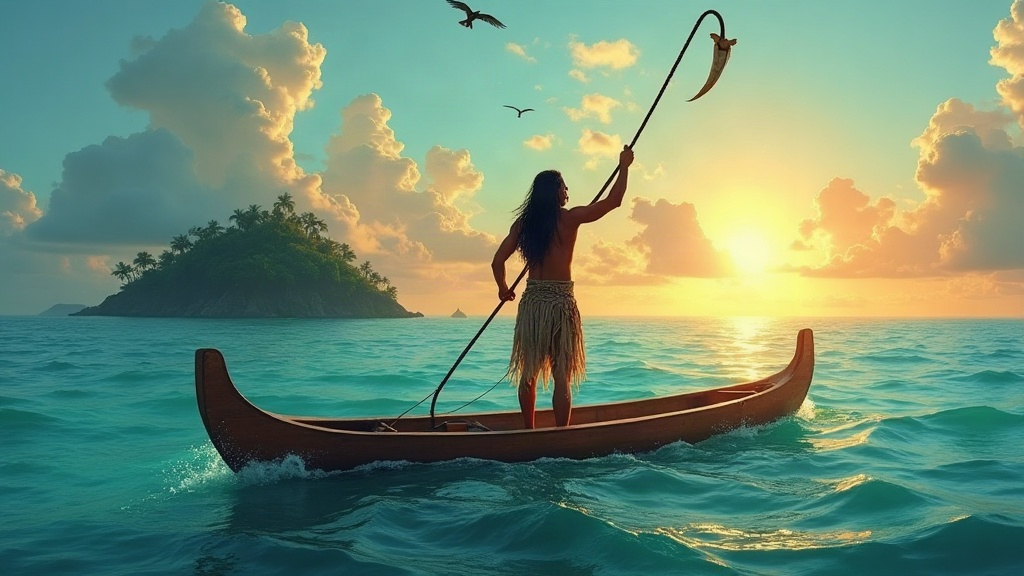
Polynesian
Māui: The Trickster Hero Who Fished Up Islands
The demi-god Māui outwits gods and giants to reshape the Pacific. Discover how this Polynesian trickster hero slowed the sun, pulled islands from the sea, and became the ancestor of human achievement across the islands.
Polynesian
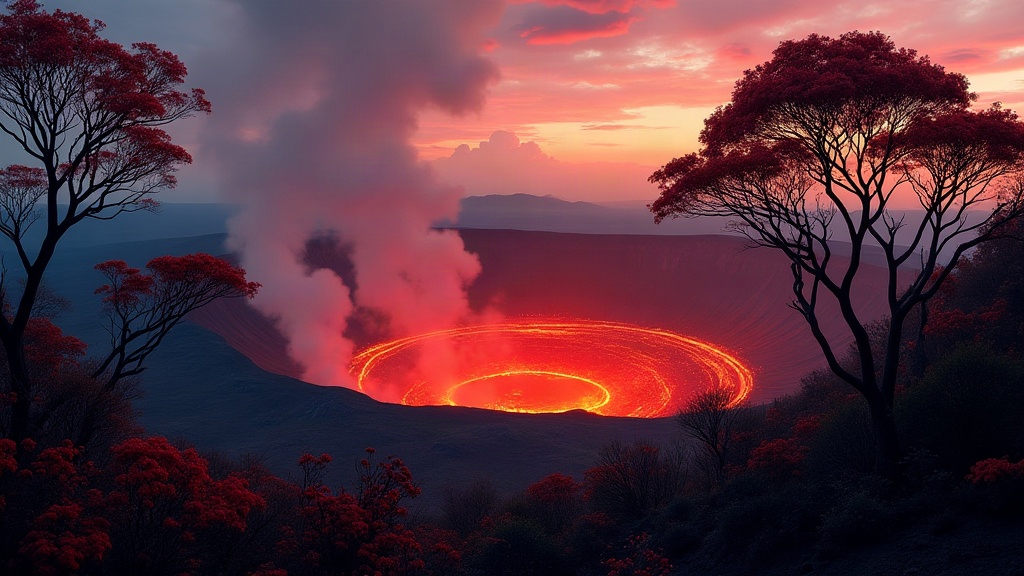
Pele: Hawaiian Goddess of Volcanoes and Fire
Pele is the fierce Hawaiian goddess who creates and destroys islands through volcanic fire. Learn how this shape-shifting deity shaped Hawaiian cosmology, sacred landscape, and cultural identity from ancient times to today.

Polynesian
Tāne: God of Forests, Birds, and Creation in Polynesian Mythology
Tāne stands among Polynesia's most vital deities, separating sky from earth and populating the world with forests, birds, and human life. Discover how this divine carpenter shaped creation itself in Māori, Hawaiian, and Tahitian traditions.
Polynesian
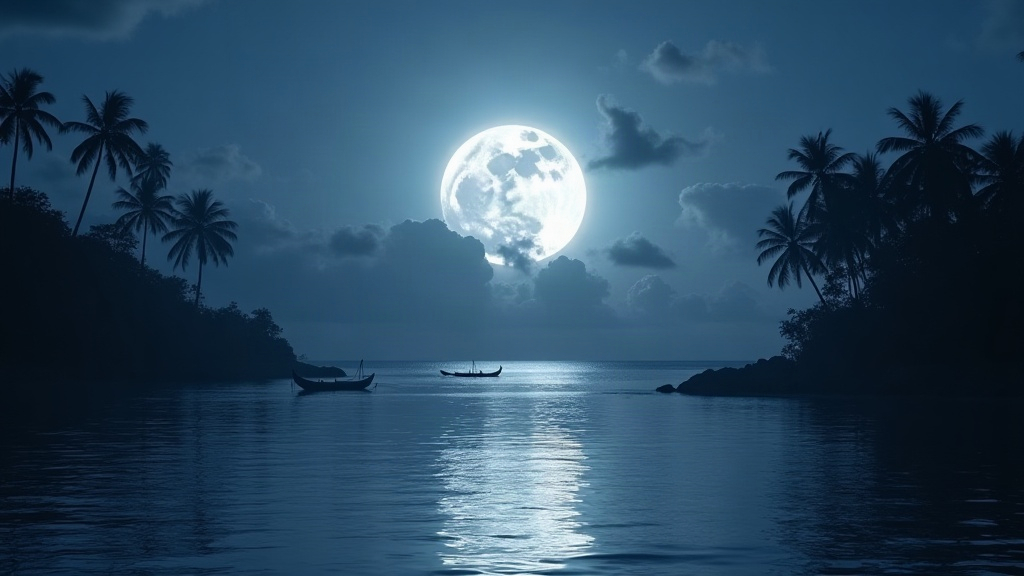
Hina: The Moon Goddess Across Polynesian Cultures
Hina appears across the Pacific as the moon's keeper and shaper of tides. From Hawaii to Tahiti to Samoa, she embodies cycles, creation, and the feminine sacred. Discover why this goddess matters to modern Polynesian identity.