
Sundiata Keita: The Lion King of Mali
Born crippled and scorned, Sundiata Keita transformed himself into the warrior-king who forged the Mali Empire. His rise from exile to power changed West African history forever.
Contents
A boy born paralyzed in his legs lay despised in a royal household. Griots, the West African storytellers and historians, whispered that he would never walk. His father was already dead; his mother cared for him in Niani, a small town in what is now Guinea. His name was Sundiata Keita, though some called him Mari-Djata or Sogolon-Djata. No one imagined he would become the figure who united the savanna, defeated an empire, and left a name that echoed through five centuries of oral tradition.
The year was sometime in the early 13th century. Mali did not yet exist as we know it. The region was dominated by the Sosso kingdom, a neighboring power whose king, Sumanguru Kante, ruled through fear and sorcery. Sundiata's father had been a Mandinka chief of some standing, but that lineage meant nothing when you could not stand. The boy grew up in the shadow of that disability, and in the shadow of his older brother, who was groomed to inherit what little remained of their family's prestige.
Then came the exile that changed everything.
The Crippled Prince and His Flight from Power
Sundiata Keita was born into a moment of fragmentation. The Mandinka people, scattered across dozens of chiefdoms and towns, had no unified power. The Sosso kingdom under King Sumanguru pressed down from the north and east, absorbing territory and extracting tribute. Sundiata's father, Maghan Konfara, was one of many regional leaders who held power by sufferance, not strength.
The boy's disability made him seem like a curse rather than a crown prince. In warrior cultures of the Sahel, a king must ride, hunt, and fight. A crippled heir was a contradiction. Sundiata's mother, Sogolon Kedjou, was a captive woman from a neighboring kingdom, married to Maghan Konfara in a political alliance. Her son inherited both his father's Mandinka line and the stigma of his mother's foreign origin.

When Maghan Konfara died, his first wife's son, Dankaran Tuman, became the legitimate heir. Sundiata remained in the household, ignored and pitied. But Dankaran Tuman's mother, the first wife, saw the younger boy as a rival and a threat. According to the Epic of Sundiata, a long poem preserved by Mandinka griots and recorded by scholars like Djibril Tamsir Niane in the 20th century, the jealous wife conspired to drive Sundiata and his mother from Niani.
The griots sing that Sundiata was forced into exile, along with his mother and sisters. They fled to the neighboring kingdom of Mema, ruled by King Tounkara. This exile would have seemed like death. A young man without standing, paralyzed, far from his own people, dependent on the mercy of a foreign king. Yet the griots also say that during these years, something shifted in Sundiata. He grew strong. He learned to walk.
The Enemy: Sumanguru and the Sosso Terror
While Sundiata lived in exile, King Sumanguru Kante of the Sosso kingdom was tightening his grip on the Mandinka lands. Sumanguru is remembered in the griots' songs not as a conventional king, but as a sorcerer and tyrant. He ruled through terror and through what the griots describe as jinn possession, a supernatural power that allowed him to withstand ordinary weapons.
In the Epic of Sundiata, Sumanguru is depicted as having made a pact with forces beyond the human world. He wore a tunic made of human skin and kept a sacred arrow that gave him power. To defeat him, you would need to know his weakness. The griots say it was only by understanding Sumanguru's curse, by learning where his power was hidden, that anyone could challenge him.
For the Mandinka people, Sumanguru was not just a rival king. He was a symbol of oppression. Tribute flowed to the Sosso kingdom. Mandinka merchants could not travel safely. Families were divided. The sense among the scattered Mandinka chiefdoms was that they were fragments under the heel of a conquering force.
That is the world Sundiata Keita returned to when he finally left Mema.
The Return and the Quest for the Griot's Secret
The Epic of Sundiata tells that a griot named Balla Fasséké came to Sundiata in exile, bearing a message from the Mandinka people: they were ready for a leader. They remembered that Sundiata's family had been chiefs. The boy who could now walk, the man who had trained in King Tounkara's court, was called home.
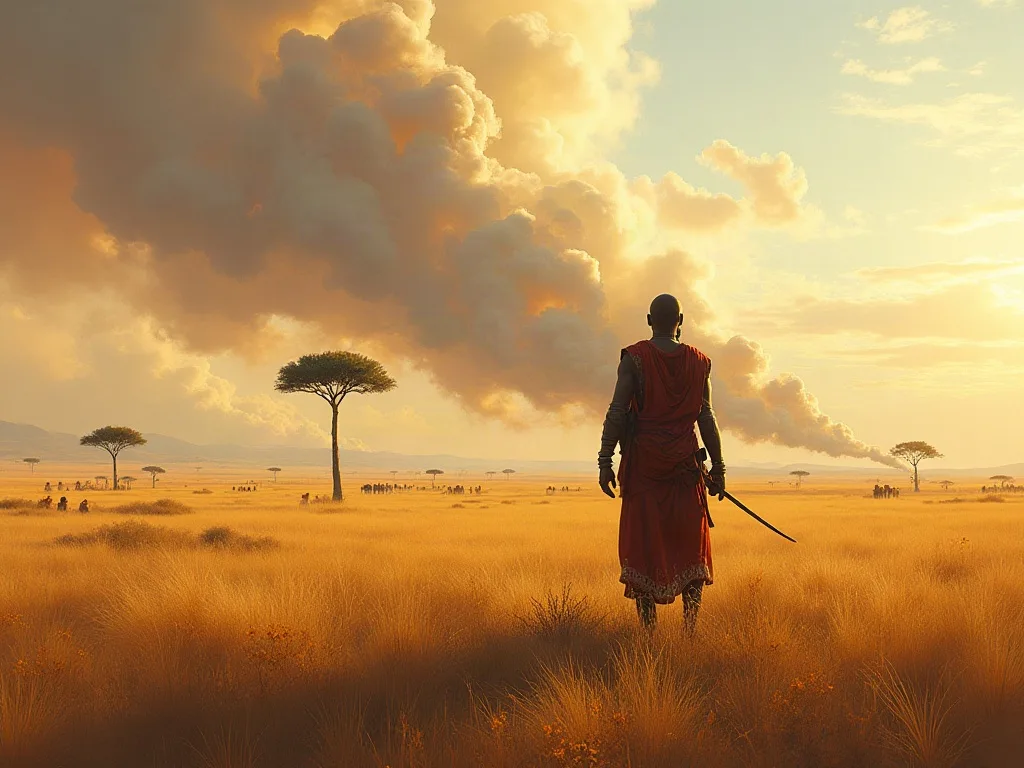
Sundiata did not arrive with an army. He arrived with a small band of companions, bound by loyalty and by the old ties of kinship and alliance. His first move was to gather support among the Mandinka chiefdoms. But before he could challenge Sumanguru directly, he had to find something crucial.
According to the griots, Sundiata sought out Manding Bory, his half-brother from another wife of their father, who had remained in the Sosso court. Manding Bory had access to knowledge that outsiders did not possess. Through him, Sundiata learned of Sumanguru's vulnerability: the Sosso king's power came from a sacred arrow or, in some versions, from a particular feather. The weapon that could kill him was not iron, but knowledge of this secret.
This pattern recurs throughout African heroic legends. The hero's victory depends not on strength alone, but on knowing what to do. Sundiata was not the strongest warrior in the savanna. But he was the one who understood his enemy. You can trace the same logic in the legend of Shaka Zulu, where political intelligence matches raw military power.
The Battle of Kirina and the Birth of Mali
In 1235, or around that time (the exact date is debated by scholars, as the Epic was passed orally for centuries before being written down), Sundiata Keita and his allies met the forces of King Sumanguru Kante at a place called Kirina. The armies clashed in what the griots sing as the moment when the future of the savanna was decided in a single day.
The Epic describes the battle with vivid imagery: warriors on horseback, drums calling out across the plain, the clashing of spears. Sumanguru was confident. His sorcery had never failed. But Sundiata's hunters knew how to aim. According to the griots, it was the sacred arrow, the one that could pierce Sumanguru's curse, that finally brought the Sosso king down. Some versions say Sundiata shot the arrow himself; others say it was one of his generals.
Sumanguru fell. The Sosso army fragmented. The king himself fled and is said to have died in exile, his power broken.
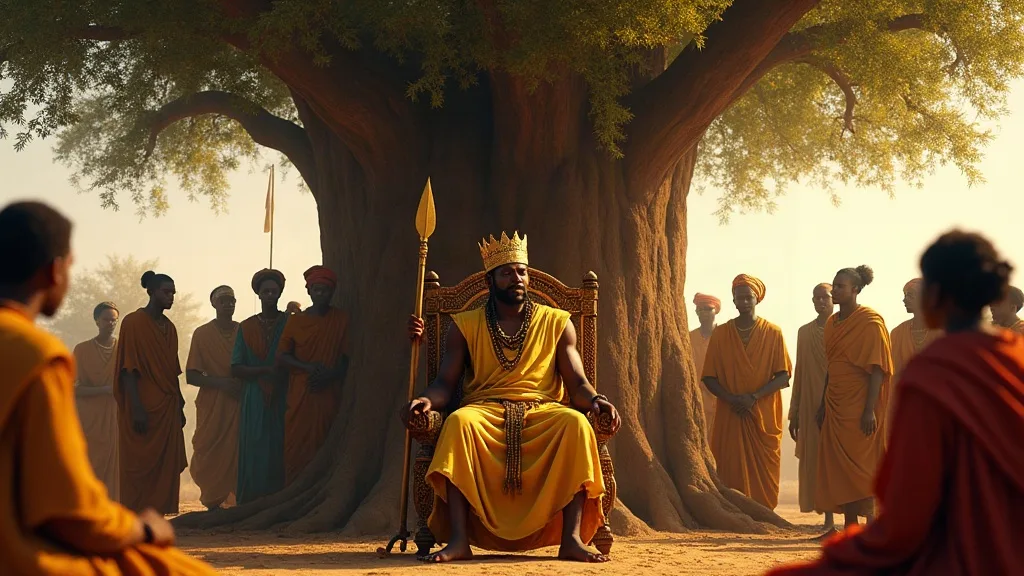
With that victory, the Mandinka chiefdoms united. They recognized Sundiata as their mansa, or king. He established his capital at Niani, the very town where he had been despised as a crippled child. The Mali Empire was born. Over the next decades, under Sundiata and his immediate successors, Mali would grow to become one of the largest and richest empires the world had seen.
The Architecture of Empire
Sundiata was not only a warrior. He was an administrator and a visionary. The Mali Empire he built rested on several foundations.
First was territorial control. Sundiata extended Mali's reach to the east, west, and south, incorporating or allying with neighboring chiefdoms. The empire eventually stretched from the Sahara in the north to the forest lands in the south, and from the Atlantic coast in the west to the salt mines of Taoudenni in the east.
Second was trade. Mali sat at the heart of the trans-Saharan trade routes. Gold flowed north across the desert to the Islamic world and Europe. Salt, iron, and other goods flowed south. Sundiata encouraged merchants and warriors to use the same routes. His protection of trade helped make Mali prosperous. By the time of his grandson Mansa Musa, two centuries later, Mali was so wealthy that a pilgrimage to Mecca could crash the gold markets of Egypt. Mansa Musa's legendary pilgrimage remains one of the most documented acts of wealth display in medieval history.
Third was Islamic authority. Sundiata was a Muslim, or at least nominally so. He patronized Islamic scholars and established Quranic schools. Yet he also honored the old religion of the Mandinka people, respecting the griots and the traditional chiefs. This duality allowed Mali to appeal to both Islamic powers to the north and the traditional African kingdoms to the south.
Fourth was the griot system. Sundiata understood that power rests partly on narrative. Griots were not just entertainers. They were historians, advisors, and the keepers of legitimacy. By patronizing griots and allowing them to compose and sing his story, Sundiata ensured that his legacy would be preserved and celebrated. The Epic of Sundiata that we know today was shaped by this understanding. The griot tradition connects directly to other great oral legacies of the region: the praise songs of the Yoruba tradition serve a similar function, anchoring royal legitimacy in sung memory.
The Historical Sundiata and the Legendary One
It is important to pause here and acknowledge what scholars know and what they do not. The Epic of Sundiata is a work of legend, preserved in oral form by griots for centuries before being transcribed. It mixes verifiable history with mythic elements. Sundiata Keita was almost certainly a real person who founded the Mali Empire around the early 13th century. Archaeological evidence and written records from Islamic scholars like Ibn Khaldun confirm that Mali emerged as a major power in this period, and that its founding was connected to a figure of immense prestige.
But the details of his life in the Epic, the miraculous events, the curses and sorcery, the exact date of the Battle of Kirina, these are harder to verify. Scholars have tried to separate the historical kernel from the legendary shell. Some key facts seem solid: Sundiata did emerge as a unifying force among the Mandinka; he did defeat a rival power (though whether this was the Sosso kingdom under Sumanguru, or a different configuration, remains debated); he did establish Mali as an empire. The disability, the exile, the return: these are narrative patterns that appear in many African hero-tales and may reflect deeper truths about trials and transformation, even if the specific events are uncertain.
The oral variants told by different Mandinka communities add another layer to this complexity. Griots from the Gambia, from Guinea-Conakry, from Mali, and from Senegal each carry their own version of the Epic. Some stress Sundiata's Islamic devotion more than others. Some give greater weight to Sogolon Kedjou, his mother, casting her as a shape-shifting sorceress in her own right. In certain Gambian tellings, Balla Fasséké plays a much larger role as the architect of the coalition, almost a co-founder of the empire. In versions recorded near the Sosso heartland, Sumanguru becomes a more tragic figure, a king seduced by power rather than a simple villain. These variations are not inconsistencies to be ironed out. They are evidence of a living tradition, one that each community has shaped to speak to its own circumstances. Scholars like Gordon Innes and Fa-Digi Sisòkò, who worked with Gambian griots in the mid-20th century, produced transcriptions that differ meaningfully from Niane's Guinean version. Reading them side by side reveals how the Epic functions less like a fixed scripture and more like a constellation: the same stars, arranged slightly differently depending on where you stand.
This uncertainty is not a weakness of the legend. It is part of its strength. The Epic of Sundiata has survived for over 700 years because it speaks to something universal: the possibility of transformation, the power of unity, the cost of overcoming oppression. Whether Sundiata walked on crutches or rode a horse, whether he shot the sacred arrow himself or commanded someone else to do it, the core truth endures.
The Mandate of Mali: Sundiata's Legacy
Sundiata ruled Mali for approximately 20 years after the Battle of Kirina, though the exact length of his reign is uncertain. He died sometime around 1255. By then, Mali was firmly established as a power in West Africa. His children and successors continued to expand and refine the empire.
One of Sundiata's greatest achievements was to plant the idea that the Mandinka people could be unified, that a single ruler of prestige and power could bring order to the savanna. This idea outlasted him. Subsequent mansas, particularly Mansa Musa (who reigned in the 14th century) took the Mali Empire to even greater heights. But they were building on foundations Sundiata had laid. The Songhai Empire would later absorb many of those same trade routes and administrative patterns, suggesting that Sundiata's model of governance echoed far beyond Mali's own borders.
In the griots' tradition, Sundiata established what came to be called the Sundiata Mandate. This was not a formal document, but a set of principles: the king should protect merchants and travelers; the king should honor the griots and the nobility; the king should be just and generous; the king should embrace both Islam and the old religions of his people. These principles shaped Mali's governance for generations.
Sundiata also codified something more subtle: the idea that a truly great king was not born to power, but was forged by challenge. A king's authority came not merely from inheritance, but from what he could accomplish. This is reflected in the Epic's insistence on his disability, his exile, his transformation. A born king might be weak. A made king, one who had overcome, had proven himself.
Sundiata Across the Centuries
After Sundiata's death, Mali endured for about 200 years as a major power before fragmenting under pressure from the rising power of Songhai and other rivals. By the 17th century, Mali was reduced to a small kingdom in the same region where it had begun. But the memory of Sundiata never faded.
The griots continued to sing the Epic of Sundiata, passing it orally from generation to generation. In the 20th century, scholars like Djibril Tamsir Niane, a Guinean historian and folklorist, recorded the Epic from griots and published it in written form. This made the legend available to readers beyond West Africa. In recent decades, the Epic of Sundiata has been adapted into novels, stage plays, and even operas. Writers and artists outside Africa have been drawn to its themes of overcoming, of unity forged from fragments, of the hero who must first be broken.
For West Africans, particularly for Mandinka people and the broader Mande cultural group, Sundiata remains a symbol of cultural identity and pride. His story is taught in schools. His name appears on currency and in the names of buildings. The lion, which features in his story and his name (Sundiata means something like "the lion"), is a symbol of Mali itself.
Frequently asked questions about Sundiata Keita and the Mali Empire
Frequently asked questions
Was Sundiata Keita a historical figure, or is he purely legendary?
Sundiata almost certainly existed as a real person, but the Epic of Sundiata mixes history with mythic elements. Islamic sources like Ibn Khaldun confirm that Mali emerged as a major power around the early 13th century and that it was founded by a figure of great prestige. The specific details of the Epic, including the disability, the sorcery of Sumanguru, and exact dates, are harder to verify and likely contain legendary embellishment.
Did Sundiata actually have a disability that he overcame?
The Epic of Sundiata emphasizes his paralysis and his transformation into a walker and warrior. Whether this reflects a literal disability or a metaphorical one (representing his initial powerlessness) is debated by scholars. The detail serves the narrative purpose of showing that greatness is achieved, not given; it need not be strictly historical to convey a profound truth.
What is the connection between Sundiata Keita and Islamic tradition in Mali?
Sundiata was nominally Muslim, and he patronized Islamic scholars and schools. However, he also respected the indigenous religions and practices of the Mandinka people. Mali under Sundiata and his successors became known as a place where Islamic and traditional African practices coexisted. His grandson Mansa Musa was a famous Islamic pilgrim.
How large was the Mali Empire at its height under Sundiata?
During Sundiata's lifetime, Mali grew to control much of the savanna region of West Africa, stretching from the Sahara to the forest lands, and from the Atlantic coast to the salt mines and trade centers of the interior. The exact boundaries are difficult to define, as Mali was more a confederation of chiefdoms than a centralized state, but it was one of the largest empires of its time.
What happened to Mali after Sundiata's death?
Mali continued to be a major power for about 200 years after Sundiata. It reached its greatest wealth and fame under Mansa Musa in the 14th century. However, Mali gradually declined due to pressure from rival powers, internal fragmentation, and the rise of the Songhai Empire. By the 17th century, Mali was greatly reduced, though the Mandinka people and their culture have endured to the present day.
How do we know about Sundiata's life today?
The primary source is the Epic of Sundiata, preserved through oral tradition by West African griots and recorded in written form by scholars in the 20th century. The most famous written version comes from griots' accounts collected by Djibril Tamsir Niane. Islamic historical sources like Ibn Khaldun also mention Mali's founding, though not in narrative detail. Archaeological evidence supports the existence of Mali as a major empire in this period.
What role did griots play in preserving the history of the Mali Empire?
Griots were the living archives of Mandinka society. They memorized royal genealogies, battle accounts, alliances, and the moral lessons attached to each. A griot attached to a ruling family was called a jeli, and the jeli's knowledge was passed from parent to child across generations. This made the griots indispensable: without them, there was no official history. When scholars like Niane, Innes, and Sisòkò sat down with griots in the 20th century to record the Epic, they were tapping into a chain of memory stretching back at least seven centuries. The griots did not merely preserve facts. They preserved the meaning of those facts, the lessons about kingship, sacrifice, and identity that each generation of Mandinka listeners needed to hear.
The Lion's Roar Beyond the Centuries
Today, Sundiata Keita belongs to a special category of historical figures: those whose legends have become inseparable from their lives, and whose lives have become myths that continue to teach and inspire. The Epic of Sundiata is not unique in this regard. Homer's Iliad blends history with legend; the Mahabharata of Hindu tradition intertwines narrative with doctrine. What is distinctive about Sundiata is that his story, rooted in African oral tradition, was passed with fidelity for over seven centuries, crossing through the colonial period and into the modern world.
Schools in Mali, Guinea, Senegal, and across West Africa teach children about Sundiata. The image of the boy who could not walk rising to become the king who united a people, the disabled heir becoming the empire-builder, resonates across time. In an age of disruption and fragmentation, when old orders crumble, the legend of Sundiata Keita speaks to the possibility of transformation. It says: you begin broken, you begin despised, you begin in exile. But if you know your enemy, if you gather your people, if you move with purpose, you can be reforged. You can become the lion.
That is why the griots still sing his name, and why scholars still study his story. Sundiata Keita is not only a figure of African history. He is a living myth.
Free 25-page sample
Want the whole story?
Take the first 25 pages free. If it pulls you in, the full edition is yours as an instant PDF download, with a paperback on Amazon for selected titles.
African
The African Mythology Book: Yoruba Orishas, Anansi, Mami Wata, and the Sacred Stories of Sub-Saharan Africa
From the Yoruba Pantheon to the Spider's Web
Eleven chapters on the gods, heroes, and spirits of Africa south of the Sahara: Eshu, Shango, Oshun, Anansi, Mami Wata, Nyame, the Dogon Nommo, and Unkulunkulu, drawn from oral tradition and ethnographic record.
More from African
All articles
African
Ifa Divination: Sacred Oracle of the Yoruba
Ifa divination is the oral oracle system of the Yoruba people of West Africa, used for over a thousand years to read destiny and guide human life. Learn how the babalawo (priests) cast sacred palm nuts to access divine wisdom.

African
The Separation of Earth and Sky: A Pan-African Myth
Across Africa, from the Congo to the Sahel, Earth and Sky once lay tangled together. Learn how their separation shaped creation, split existence into realms, and continues to echo in ritual and belief across the continent.
African
Eshu: The Trickster Messenger of the Orisha
Eshu walks the boundary between worlds, carrying words between gods and humans, blessing and cursing with equal power. The trickster orisha rewrites the rules of divinity itself.

African
The Dogon Creation Myth: Nommo and the Cosmic Egg
The Dogon people of Mali preserve one of Africa's most intricate creation stories: how the universe began in a cosmic egg, split by the voice of Nommo, and how order emerged from primordial chaos through rhythm and sacrifice.