

Aramazd: The Creator God and Father of All
Aramazd stands at the foundation of Armenian myth as the supreme creator, the father from whom all life and divinity flow. Discover how this ancient god shaped the cosmos and why he vanished from Armenia's religious life after the conversion to Christianity.
Contents
Before the mountains rose and the rivers carved their valleys, there was Aramazd. In Armenian cosmology, Aramazd was not merely a god among many; he was the first principle, the uncreated creator who brought forth the entire universe and fathered the divine pantheon itself. His name appears in the oldest Armenian sacred texts, whispered in temples that stood for millennia before Christianity reshaped the spiritual landscape.
Yet today, few know his story outside Armenia's borders. Aramazd: The Creator God and Father of All represents one of antiquity's most powerful creation deities, a figure whose influence shaped how Armenians understood existence, time, and the sacred order of the cosmos.
The story of Aramazd begins not in a book but in the silence before creation. Armenian cosmological thought, preserved in fragments of pagan liturgy and later theological writings, held that Aramazd existed in a state of primordial wholeness. From his divine essence flowed all that is: the heavens, the earth, the waters, and every god who would rule them. Unlike some creator gods who toil or struggle to shape the world, Aramazd emanated creation the way the sun radiates light; his very nature was generative.
The Supreme Father and Cosmic Architect
Aramazd's primary function in Armenian religion was as the "father of gods and men," a role that echoes across Indo-European mythologies. He held dominion over the sky and the upper cosmos, a position that placed him at the apex of the divine hierarchy. Unlike the warring, jealous Olympians of Greece or the Aesir of Norse tradition, Aramazd embodied a quieter majesty: the eternal principle from which order emerged.
The Armenian sources describe him as formless yet present everywhere, invisible yet the source of all visibility. This conception places him alongside monotheistic creator figures in other religions, though in a polytheistic context. Aramazd did not rule alone; rather, he presided over a divine family, each member governing specific aspects of creation. His sons and daughters took on particular domains: Anahit controlled waters and fertility, Vahagn embodied war and storm, Astghik presided over love and harvest.

The relationship between Aramazd and these deities mirrors paternal authority without tyranny. He created them with purpose and allowed them their own dominions and power. This reflects a mature theological vision: even the supreme god respects the agency of his offspring.
Birth of the Gods and the Cosmic Order
Armenian myths reveal that Aramazd's creative act was not a single moment but an unfolding process. The earliest surviving Armenian religious fragments, recorded by later Christian writers like the 5th-century historian Agathangelos, mention that Aramazd "brought forth" the divine family in a sequence that established cosmic order.
The procreation of the gods through Aramazd established what scholars call the "Indo-European pantheon structure" in Armenian form. Vahagn, god of war and thunder, was said to be born amid cosmic violence; his birth was announced by storms and celestial upheaval. Anahit, the goddess of waters, fertility, and wisdom, was understood as both daughter and divine mother figure herself, a paradox that reflects ancient Near Eastern theological thinking blended with Indo-European inheritance.
This family of gods was not static. Aramazd's creation continued through cycles. Time itself, in Armenian cosmology, was understood as emanating from his eternal nature. The seasons, the movements of stars, the rhythm of life and death all flowed from principles established when Aramazd shaped the cosmos.
The Name and Its Meanings
The etymology of Aramazd reveals deep layers of religious thought. Scholars propose that the name derives from Indo-European roots; some connect it to ara, meaning "noble" or "mighty," combined with mazd, possibly related to the Zoroastrian Ahura Mazda, the supreme wisdom god. If this connection holds, it suggests contact and theological cross-pollination between Armenian and Persian religious traditions during the centuries before Christianity arrived.
However, the Armenian Christian tradition, eager to minimize pagan associations, sometimes rendered the name differently in later texts. What survived in living memory was preserved in place names, personal names, and scattered ritual formulas passed from priest to priest before the old temples fell silent.
Aramazd and the Indo-European Heritage
Aramazd occupies a crucial position in comparative mythology. The Armenian plateau, where these traditions took root, sat at the crossroads of Mesopotamian, Hittite, Persian, and Greek influences. Yet Armenian religion maintained a distinct character, and Aramazd stands as proof of that independence.
The parallels are instructive. Like Zeus in Greek tradition, Aramazd ruled the sky. Like Dyaus Pita in Vedic Hinduism, he was the "father of gods and men." Like Odin in Norse myth, he represented the supreme principle from which cosmic order emerged. Yet Aramazd was not jealous like Zeus, not distant like Dyaus Pita, not mysterious like Odin. He was described in Armenian sources with an almost paternal gentleness, a god secure in his supremacy, needing neither to fight his children nor to hide his nature.
This peculiarity may reflect Armenia's own character: a culture that synthesized influences without losing itself, that accepted the sacred as both transcendent and intimate.
Aramazd (Armenian)
Supreme creator; father of gods and men; embodies primordial cosmic order; present but not actively intervening in divine politics; represents stable, eternal principles.
Dyaus Pita (Vedic Hindu)
Sky father; progenitor of the divine family; represents the highest principle; gradually fades from active worship as other gods (Indra, later Brahman) assume prominence; venerated but distant.
The Temples and Rituals of Aramazd
Before the 4th-century Christianization of Armenia under King Tiridates III and Saint Gregory the Illuminator, Aramazd was venerated at major sanctuaries across the land. The most significant was at Armavir, an ancient capital, where a great temple stood dedicated to his worship. Pilgrims traveled long distances to make offerings and seek blessings.

The rituals performed in these temples remain partially recoverable through Armenian Christian writings that record what pagans once did, often with disapproving tone. Priests made offerings of grain, wine, and animals at specified times in the calendar. The spring equinox held particular significance, as it marked the renewal of creation, a time when Aramazd's generative power was especially present and accessible.
Sacred fires burned in his honor. Fire held deep significance in Armenian tradition, possibly influenced by Zoroastrian practice, and Aramazd was honored through flames kept constantly alive. These fires were not mere symbols; they were understood as extensions of divine presence, visible manifestations of the cosmic order Aramazd maintained.
The Fading of Aramazd: Christianity and Cultural Memory
The conversion of Armenia to Christianity in 301 CE marked a profound transformation. By royal decree and missionary zeal, the old temples were repurposed or destroyed. The gods were abandoned, their worship declared heretical. Yet Aramazd did not vanish entirely.
What happened to Aramazd in the Armenian imagination was theologically ingenious: he was absorbed into the figure of God the Father in Armenian Christian doctrine. The supreme, uncreated creator became identified with the Christian God. This was not mere syncretism but a genuine theological move that allowed Armenians to preserve something essential of their ancestral vision while adopting the new faith.
This strategy appeared nowhere else in early Christendom with such clarity. In other lands, pagan gods were demonized or forgotten. In Armenia, the supreme pagan god was reinterpreted as the God whom Christians had always worshipped. The shift was profound yet paradoxically gentler than it might have been.
However, something precious was lost. The divine family surrounding Aramazd, the rich theological complexity of the pantheon, the specific rituals and sacred sites, all faded. Within a century, only scholars and the elderly remembered the old ways. By the medieval period, Aramazd was a name in history, not a living presence.
Aramazd in Modern Armenian Culture
In contemporary Armenia, Aramazd has experienced a modest revival among those interested in pre-Christian heritage. Scholars, cultural enthusiasts, and some spiritual practitioners have sought to recover knowledge of the old gods as part of a broader effort to understand Armenian identity before Christianity.
This is not a return to active worship; Armenia remains overwhelmingly Christian. Rather, it reflects a recognition that Aramazd and the pagan tradition represent a crucial chapter of Armenian history and spiritual development. Understanding Aramazd illuminates how Armenians once organized their cosmos, what values they honored, and how they understood humanity's place in a divinely structured universe.
Modern Armenian literature and art occasionally invoke Aramazd, especially in historical fiction or poetry that reaches back to pre-Christian times. His name appears in academic journals studying comparative Indo-European religion. He has become a bridge, connecting contemporary Armenians to ancestors separated by seventeen centuries.
Aramazd's Legacy in Comparative Religious Thought
Scholars of Indo-European religion recognize in Aramazd a figure of considerable importance. His profile as a stable, generative, fundamentally paternal supreme being offers a counterpoint to the more combative or capricious sky fathers of other traditions. He demonstrates that the Indo-European pantheon was not monolithic; different peoples shaped the inherited template to reflect their own values and worldview.
The Armenian vision, represented by Aramazd, emphasized harmony within hierarchy, creative emanation rather than violent generation, and the compatibility of divine supremacy with genuine respect for the autonomy of lesser gods. These themes may reflect something of the Armenian character: a people who survived millennia through adaptability, pragmatism, and the ability to synthesize without losing identity.
Frequently asked questions about Aramazd
Frequently asked questions
Was Aramazd worshipped throughout the Armenian plateau, or only in specific regions?
Aramazd was venerated across the Armenian plateau, with major temples at Armavir and other significant cities. However, local variations existed; different regions maintained their own particular cults alongside devotion to the supreme creator. His worship was not localized but represented the shared cosmological framework across Armenian communities.
How does Aramazd compare to the Zoroastrian Ahura Mazda?
Both are supreme creators associated with wisdom and cosmic order, and the names suggest possible etymological connection. However, scholars debate the extent of direct influence. Aramazd represents an independent Armenian theological tradition shaped by Indo-European inheritance, while Ahura Mazda embodies the dualistic framework of Zoroastrianism. The similarities suggest regional exchange rather than one deity borrowing from the other.
Did Aramazd have a consort or divine partner in Armenian mythology?
The surviving sources suggest Aramazd operated as a solitary creator whose essence generated the divine family, rather than pairing with a consort in the way some pantheons functioned. This reflects a theological emphasis on his absolute generative power. However, fragmentary sources make certainty difficult; some late pagan texts hint at feminine principles, though these remain unclear.
What primary sources tell us about Aramazd today?
Direct pagan sources are lost. Most knowledge comes from later Christian Armenian historians like Agathangelos and the 5th-century writer Movses Khorenatsi, who recorded pre-Christian beliefs while Christianizing them. Archaeological findings from temple sites and fragmentary ritual texts preserved in manuscripts provide additional clues. Comparative methodology, studying Aramazd against known Indo-European pantheons, fills certain gaps.
Did Aramazd have a specific symbol or sacred animal associated with him?
The surviving sources mention that sacred fires were kindled in his honor and that certain rituals involved offerings at specified seasons. However, detailed symbolic associations that may have existed are largely lost. The cosmic principle he represented, sky and generative power, suggests connections to celestial imagery, though concrete evidence remains limited.
How did the shift to Christianity affect how Armenians understood divine creation?
The absorption of Aramazd into God the Father allowed Armenians to maintain their creator theology while adopting Christianity. However, the loss of the rich pantheon surrounding Aramazd represented a genuine theological simplification. The interconnected family of gods gave way to monotheism; the intimate cosmology became more abstract. This was both gain and loss: theological clarity, yet loss of nuanced cosmological poetry.
Aramazd's Unfinished Story
The disappearance of Aramazd from active worship represents one of history's quieter losses. A supreme deity, creator of the cosmos, father of gods and men, faded not through violent suppression alone but through institutional replacement and the passage of centuries. What was lived became learned; what was prayed became studied.
Yet the resilience of memory ensures Aramazd has not truly vanished. Modern Armenian scholars restore him to historical consciousness. Writers and artists invoke his name. The cosmic vision he embodied, the theological sophistication he represents, survives in fragments, waiting for those curious enough to listen.
To understand Aramazd is to understand not only ancient Armenian religion but also how cultures absorb transformative change. It is to recognize that beneath Christianity's victory lay older sanctities, older visions of the sacred order. And it is to realize that the gods, even when forgotten by the living, never entirely cease to speak to those who know how to hear them.
Free 25-page sample
Want the whole story?
Take the first 25 pages free. If it pulls you in, the full edition is yours as an instant PDF download, with a paperback on Amazon for selected titles.
Armenian
The Armenian Mythology Book: Vahagn, Anahit, Aramazd and the Sacred Stories of the Caucasus Before Christ
Gods of Fire, Bronze, and the Forgotten Kingdom of Urartu
The pre-Christian gods of Armenia: Vahagn the dragon-slayer, Anahit the mother goddess, and the syncretic pantheon that merged Urartian, Persian, and Greek traditions before vanishing in 301 CE.
More from Armenian
All articles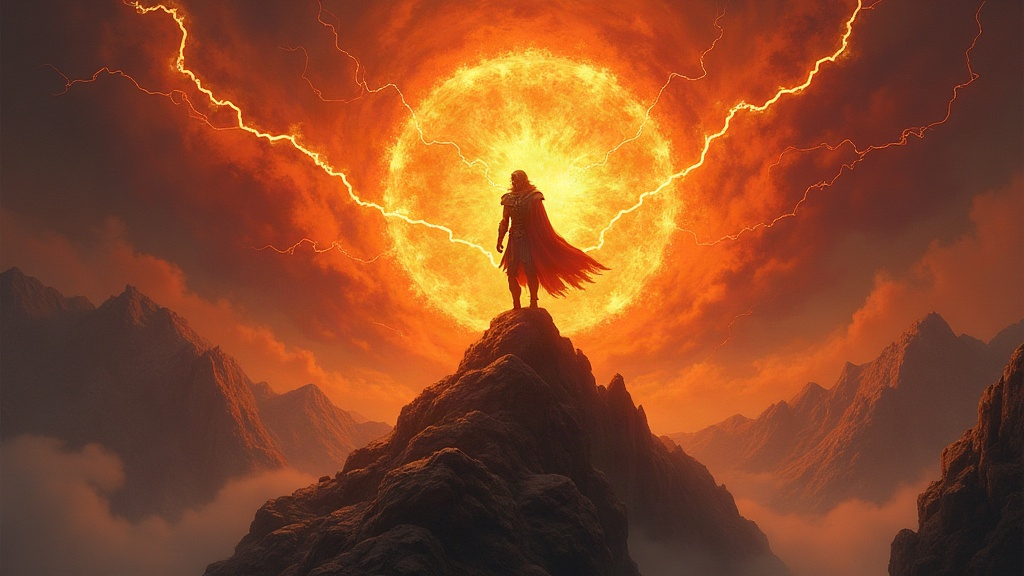
Armenian
Vahagn: Armenian God of Fire, Thunder, and War
Vahagn roars through the red dawn, the Armenian god of fire, thunder, and war whose bronze-voiced hymns echo in the oldest Christian prayers. Discover the warrior deity who conquered chaos, shaped Armenia's spiritual identity, and survived conquest itself.
Armenian
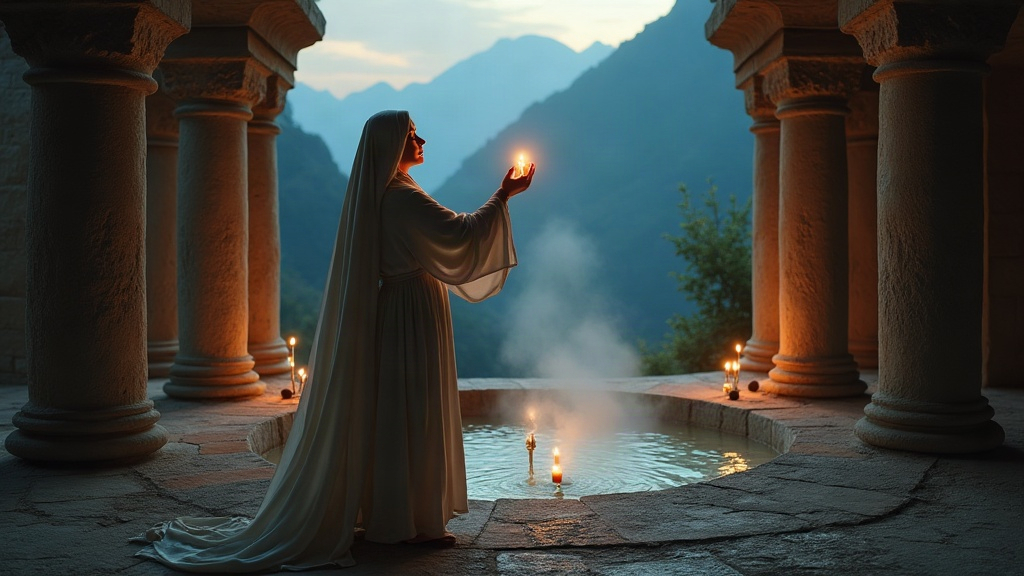
Anahit: The Great Mother Goddess of Armenia
Anahit ruled Armenia's spiritual world for millennia as the Great Mother, keeper of waters, fertility, and wisdom. Discover how she shaped an entire civilization's understanding of divine power.

Armenian
Hayk and Bel: The Founding Myth of Armenia
The story of Hayk's rebellion against the tyrant Bel explains how Armenia was born. A warrior's defiance, a nation's origin, and a line of kings that would rule for centuries.

Armenian
Ara the Beautiful: The Dying God of Armenian Legend
Ara the Beautiful is the hero at the heart of Armenian myth, a radiant king slain in an impossible conflict, whose death shapes the moral landscape of his people. A god-man whose blood sanctifies the land and whose loss echoes through time.