Armenian
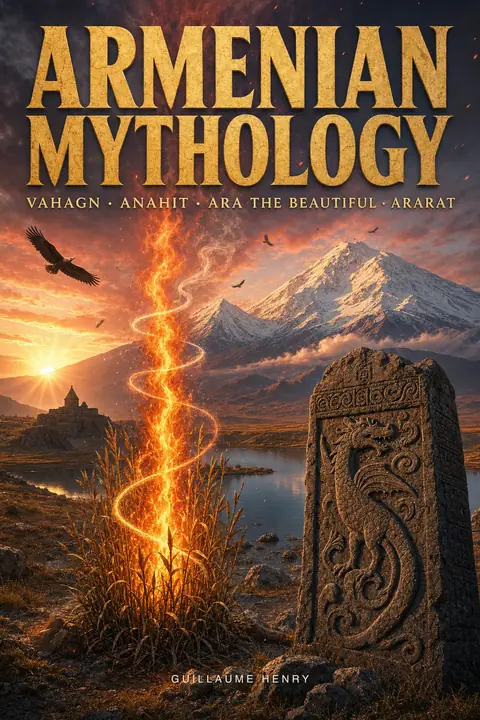
Pre-Christian Armenian gods, cosmology, and sacred sites. From Aramazd to Vahagn, how Urartian, Zoroastrian, and Greek traditions merged before 301 CE.
The pantheon that ruled the Armenian highlands before 301 CE survives in fragments: a few pages in fifth-century chronicles, inscriptions carved into fortress walls, and the polemics of Christian bishops intent on erasing what they had replaced. Unlike Greece or Rome, Armenian mythology left no epic poems, no Hesiod to catalogue the gods. What remains must be reconstructed from hostile witnesses and comparative evidence, a cryptographer's task of pattern recognition across Urartian, Iranian, and Hellenistic layers.
The result is a coherent cosmology that fused Indo-European storm gods with Zoroastrian fire worship and Hellenistic temple architecture, producing a tradition distinct from its neighbours yet legible within the broader Indo-Iranian family.
Sources and the Problem of Reconstruction
The difficulty begins with chronology. The Armenian alphabet was invented in 405 CE, a century after the official conversion to Christianity. Every written account of the old gods comes from Christian authors describing what their grandfathers had destroyed.
Movses Khorenatsi and the Fifth-Century Historians
Movses Khorenatsi, writing in the late fifth century, provides the most systematic account in his History of the Armenians. Book two, chapters twelve through fourteen, catalogues the pre-Christian pantheon with the detachment of an archivist. He names Aramazd as creator, Anahit as "glory of our nation," and Vahagn as dragon-slayer, attributing their worship to King Tigranes I in the second century BCE. Agathangelos, whose History of the Armenians survives in Greek and Armenian recensions, describes the destruction of temples at Ashtishat and Eriza in sections 783 through 787, preserving details of ritual practice even as he celebrates their abolition.
Eznik of Kolb's Refutation of the Sects, composed around 450 CE, attacks Zoroastrian dualism but inadvertently records how Armenian theology had absorbed Iranian concepts of fire, light, and cosmic struggle. These authors wrote to justify the new order, but they could not help documenting what they replaced.
Urartian Inscriptions and Archaeological Evidence
The Urartian kingdom, centred on Lake Van from the ninth to sixth centuries BCE, left cuneiform inscriptions that predate Armenian sources by a millennium. The god Haldi appears as supreme deity, Teisheba as storm god, Shivini as sun god. When Armenian-speaking peoples moved into the region after Urartu's collapse, they adapted these divine functions into their own pantheon. Excavations at Erebuni and Van reveal temple foundations, sacrificial altars, and dedicatory inscriptions that map directly onto later Armenian sacred sites.
Strabo, writing in the first century CE, describes Armenian temples in his Geography 11.14.16, noting the presence of sacred prostitutes at Anahit's sanctuary in Acilisene and comparing Armenian rites to Persian fire worship. His account, though brief, confirms that the system Movses describes three centuries later had deep roots.
The Armenian Pantheon Before Christianity
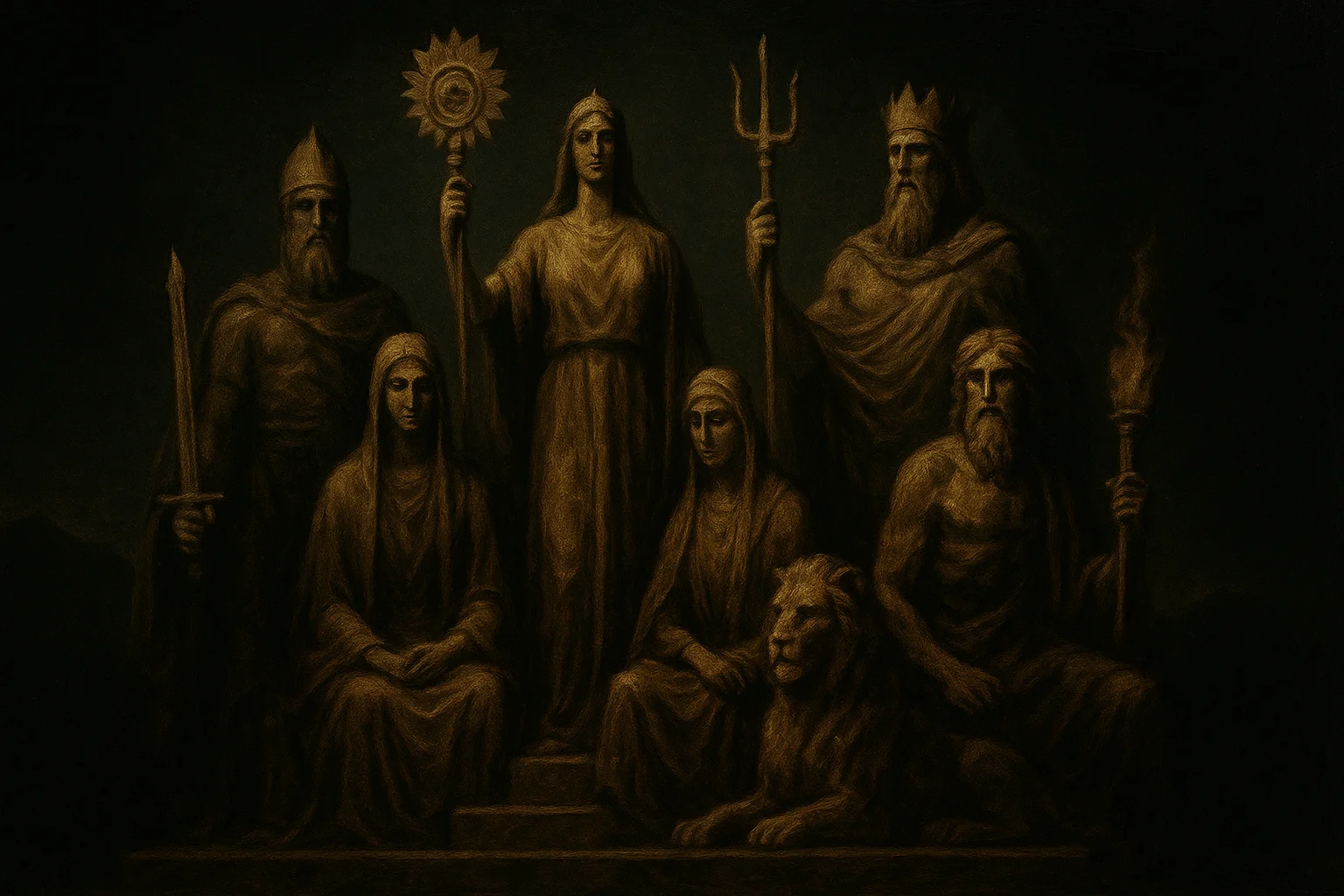
Aramazd: Creator and Sky Father
Aramazd stands at the apex of the pantheon, a sky father whose name derives from Ahura Mazda, the supreme god of Zoroastrianism. Movses calls him "the creator of heaven and earth," attributing to him the generation of all other deities. His cult centre at Ani-Kamakh, near the Euphrates headwaters, functioned as the religious capital of pre-Christian Armenia. Unlike Ahura Mazda, however, Aramazd was not locked in cosmic struggle with an evil counterpart. Armenian theology absorbed the Iranian god but stripped away the dualist framework, leaving a benevolent creator who delegated specific functions to subordinate deities.
The New Year festival, celebrated at the spring equinox, belonged to Aramazd. Sacrifices of white animals, particularly bulls, marked the occasion. The god's iconography, where it survives, shows him enthroned with a solar disc, a fusion of Iranian and Hellenistic visual language.
Anahit: Goddess of Fertility and Waters
Movses names Anahit "the glory and sustenance of the Armenian nation," a goddess whose cult rivalled Aramazd's in popular devotion. Her temples at Eriza in Acilisene and Armavir drew pilgrims from across the highlands. Strabo's account of sacred prostitution at her shrines aligns with practices at Ishtar's temples in Mesopotamia, suggesting continuity with ancient Near Eastern fertility cults. The goddess governed water sources, agricultural abundance, and human fertility. Her name connects to the Iranian Anahita, goddess of the celestial river, but Armenian tradition localised her to specific springs and rivers.
Gold and silver statues of Anahit stood in her temples until Gregory the Illuminator ordered them melted down in the early fourth century. Agathangelos describes the destruction with enough detail to reconstruct the ritual calendar: spring rites for planting, autumn festivals for harvest, and purification ceremonies at river sources.
Vahagn: Dragon-Slayer and Storm God
Movses preserves a fragment of a pre-Christian hymn to Vahagn, the only surviving verse from the oral tradition:
In travail were heaven and earth, in travail too the purple sea. The travail held in the sea the small red reed. Through the hollow of the stalk came forth smoke, through the hollow of the stalk came forth flame, and out of the flame a youth ran. Fiery hair had he, ay, too, he had flaming beard, and his eyes, they were as suns.
The birth from fire and water, the solar eyes, the association with reeds all point to an Indo-European storm god refracted through local geography. Vahagn's primary myth involves the slaying of vishaps, the dragon spirits of storms and chaos. This dragon-slaying myth parallels Indra's battle with Vritra in the Rigveda, Thor's encounters with Jörmungandr, and the Zoroastrian hero Thraetaona's defeat of the three-headed dragon Azi Dahaka.
Vahagn's cult centre at Ashtishat in the Taron region remained active until the fourth century. His festival, celebrated in mid-summer, involved fire rituals and athletic competitions, practices that suggest continuity with both Iranian and Hellenistic traditions.
Mihr: Sun, Oaths, and Fire
The god Mihr, transparently derived from the Iranian Mithra, governed solar light, contractual oaths, and sacred fire. His temples maintained perpetual flames, tended by hereditary priesthoods. Eznik's polemic against Zoroastrianism preserves details of Mihr's cult that Movses omits: the sacrifice of bulls, the sharing of consecrated bread and wine among initiates, and the emphasis on truth-telling as sacred duty.
Mihr's iconography, known from coins and seals, shows him in Persian dress with a radiate crown, sometimes flanking Aramazd or Anahit. The god's association with oaths made him particularly important to warriors and merchants, groups whose livelihoods depended on binding agreements.
Astghik: Love, Beauty, and Starlight
Astghik, whose name means "little star," presided over love, beauty, and the planet Venus. Movses describes her as the beloved of Vahagn, a pairing that mirrors Ishtar and Tammuz, Aphrodite and Ares. Her festival, called Vartavar, involved the sprinkling of water and the release of doves, rites that survived Christianisation by being reassigned to the Transfiguration. The continuity of practice, stripped of its original theological context, is a pattern repeated across Armenian sacred calendar.
Nane and Tir: Wisdom and the Written Word
Nane, daughter of Aramazd, governed wisdom and strategic warfare. Her cult, less prominent than Anahit's, centred on the city of Til in Sophene. Tir, sometimes called Grogh (the Scribe), served as divine secretary, recording human deeds and transmitting prayers to the higher gods. His association with writing and learning made him patron of scribes and students, a function that transferred seamlessly to Christian saints after conversion.
Cosmology and the Structure of the World
Armenian cosmology conceived the world as a flat disc surrounded by a cosmic ocean, with the dome of heaven arching overhead. Mount Ararat, visible from much of the Armenian plateau, served as the axis mundi, the point where heaven and earth touched. The gods dwelt in the heights, humans in the middle realm, and the spirits of the dead descended to a shadowy underworld.
The cosmos was not static. Vishaps, serpent spirits dwelling in mountains and waters, periodically threatened the order established by the gods. Vahagn's ongoing battle with these creatures maintained cosmic stability, a struggle that required human participation through ritual and sacrifice. The calendar marked this cycle: spring festivals celebrated Vahagn's victories and the renewal of fertility, while autumn rites prepared for the dormant season when the vishaps' power waxed.
Unlike Zoroastrian dualism, Armenian cosmology did not posit an evil creator opposing the good. Vishaps and other hostile forces were part of the created order, necessary antagonists whose defeat and temporary binding allowed human flourishing. This theological structure resembles the Norse concept of Ragnarök more than the Zoroastrian apocalypse: a cyclical struggle rather than a final resolution.
Armenian Vahagn
Storm god born from fire and water who battles vishaps to maintain cosmic order. His victories are temporary, requiring perpetual vigilance and ritual support from human worshippers.
Vedic Indra
Storm god who slays the dragon Vritra to release the waters. Each year the battle must be ritually re-enacted through sacrifice to ensure the monsoon rains and agricultural fertility.
Sacred Sites and Ritual Practice
Temples at Armavir, Ani-Kamakh, and Bagaran
The temple at Armavir, dedicated to Aramazd, functioned as the political and religious centre of the Orontid dynasty. Built in Hellenistic style with Iranian decorative elements, it housed a cult statue and maintained a permanent priesthood. Ani-Kamakh, further east, served similar functions for the Artaxiad dynasty. Bagaran, in the Araxes valley, hosted Anahit's principal sanctuary, where Tigranes II reportedly deposited a golden statue after his campaigns in Syria.
These were not isolated shrines but administrative centres controlling agricultural land, collecting tithes, and maintaining archives. The priesthoods formed a hereditary caste, the qrmapet, who conducted daily sacrifices, maintained sacred fires, and advised kings on matters of ritual purity and cosmic timing.
Priesthoods and Sacrifice
Sacrifice followed a pattern familiar across Indo-European traditions: animal victims, typically bulls or rams, were slaughtered at dawn, their blood poured on altars, their flesh shared among priests and worshippers. Fire played a central role, not merely as a means of cooking but as a sacred element that transformed the offering and carried it to the divine realm. Wine libations accompanied most rites, and bread baked from the first harvest was offered at seasonal festivals.
The priesthoods were not celibate. Hereditary succession ensured continuity of ritual knowledge across generations. Priests wore white robes, maintained ritual purity through frequent ablutions, and observed dietary restrictions that varied by deity and season.
Dragons, Vishaps, and Mythical Creatures
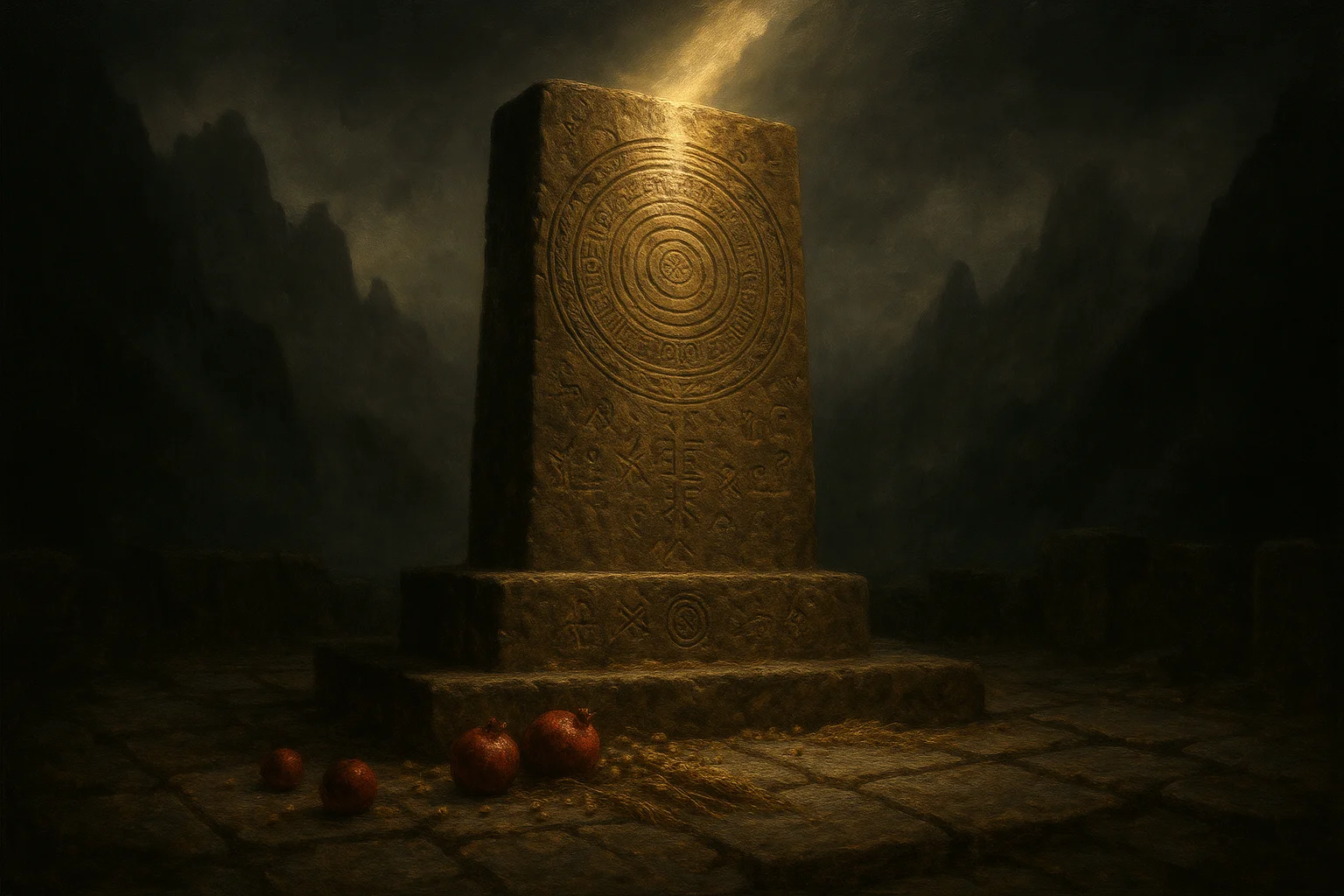
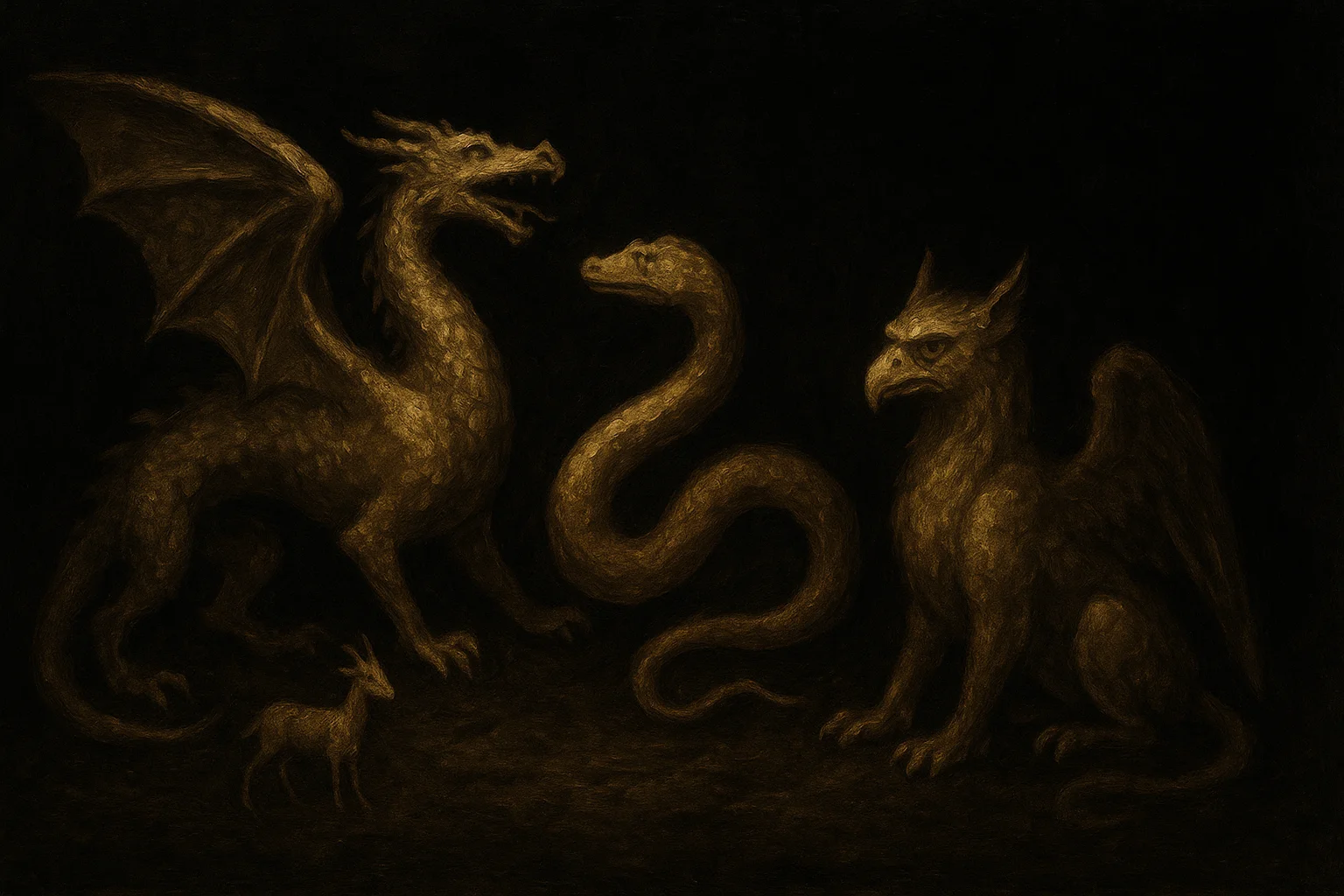
The term vishap in Armenian denotes both the vishaps, the serpent spirits of storms and water, and the stone monuments carved in their image. These standing stones, found across the Armenian highlands, typically show a fish or serpent emerging from water, sometimes with wings or multiple heads. They marked springs, river sources, and mountain passes, places where the boundary between human and divine realms grew thin.
Vishaps were not uniformly hostile. Some guarded treasure, others controlled rainfall, still others tested heroes. The pattern resembles the serpent guardians found across Indo-European traditions: ambivalent powers that could bless or destroy depending on how humans approached them. Vahagn's role was not to exterminate vishaps but to bind them, to negotiate the terms of their interaction with the human world.
Other mythical creatures populated the Armenian cosmos: dev (giants), nhang (water spirits), and pari (beautiful but dangerous female spirits). The catalogue of fantastic creatures overlaps significantly with Iranian and Mesopotamian traditions, suggesting a shared Near Eastern substrate beneath the Indo-European overlay.
Cultural Synthesis: Urartian, Iranian, and Hellenistic Layers
The Armenian pantheon as it existed in the first century CE was not pristine Indo-European tradition but a synthesis of three major influences. The Urartian substrate provided temple sites, seasonal festivals tied to agricultural cycles, and the basic structure of a sky god, storm god, and sun god triad. The Iranian overlay, arriving with the Achaemenid conquest in the sixth century BCE, introduced Ahura Mazda (transformed into Aramazd), Mithra (Mihr), and Anahita (Anahit), along with fire worship and dualist cosmological concepts.
The Hellenistic layer, imposed after Alexander's conquest and reinforced under the Seleucids, contributed temple architecture, cult statues in Greek style, and the practice of identifying local gods with Olympian equivalents. Aramazd was equated with Zeus, Anahit with Artemis, Vahagn with Heracles. These identifications were not mere translations but theological claims about the gods' functions and relationships.
The result was a system that felt coherent to its practitioners while remaining legible to outsiders. A Greek traveller could recognise familiar divine types, a Persian could identify Zoroastrian elements, yet the whole remained distinctly Armenian, rooted in the specific geography and history of the highlands.
- Urartian foundation: temple sites, agricultural calendar, basic divine triad
- Iranian overlay: fire worship, Ahura Mazda, Mithra, Anahita, dualist cosmology
- Hellenistic veneer: temple architecture, cult statues, divine identifications with Olympian gods
- Indo-European structure: sky father, storm god, divine marriages, hero myths
- Local adaptation: vishap stones, Mount Ararat as axis mundi, specific river and spring cults
The Conversion to Christianity and the Fate of the Old Gods
In 301 CE, King Tiridates III declared Armenia the first officially Christian nation, a political decision with theological consequences. Gregory the Illuminator, the king's spiritual advisor, led a systematic campaign to destroy temples, melt cult statues, and suppress priesthoods. Agathangelos describes the destruction of Anahit's temple at Eriza in triumphant terms: the golden statue was broken, the sacred prostitutes expelled, the perpetual fires extinguished.
The speed of the conversion should not be overstated. Rural areas maintained old practices for generations, reframing them as folk customs rather than worship. The Vartavar festival, originally Astghik's celebration, became a Christian feast. Sacred springs dedicated to Anahit were rededicated to the Virgin Mary. Vishap stones remained in place, too numerous and remote to destroy, their original meanings gradually forgotten.
The old gods did not vanish but transformed. Vahagn's dragon-slaying was attributed to Saint George. Anahit's maternal protection transferred to Mary. Aramazd's creative power was absorbed into the Christian God. The theological framework changed completely, but the ritual calendar, the sacred geography, and the basic human needs that generated the myths persisted.
What was lost was the priesthoods' institutional knowledge, the oral traditions, the systematic theology that made sense of the whole. What survived were fragments: place names, folk tales, and the testimony of Christian historians who documented what they destroyed. From these pieces, the outline of a coherent pre-Christian worldview can be reconstructed, a mythology that fused multiple traditions into something distinctly Armenian.
Frequently asked questions
What gods did Armenians worship before Christianity?
The supreme triad consisted of Aramazd (creator and sky father), Anahit (fertility and waters), and Vahagn (storm god and dragon-slayer). Secondary deities included Mihr (sun and oaths), Astghik (love and Venus), Nane (wisdom), and Tir (writing and learning). This pantheon fused Urartian, Iranian, and Indo-European elements into a coherent system by the first century BCE.
How did Zoroastrianism influence Armenian mythology?
Armenian mythology absorbed several Zoroastrian deities directly: Aramazd from Ahura Mazda, Mihr from Mithra, Anahit from Anahita. Fire worship, perpetual flames in temples, and the emphasis on oaths and truth-telling all derive from Iranian practice. However, Armenians rejected Zoroastrian dualism, preferring a cosmology where hostile forces like vishaps were part of the created order rather than emanations of an evil principle.
What are vishaps in Armenian tradition?
Vishaps are serpent spirits associated with storms, water sources, and mountains. They function as ambivalent powers: some guard treasures, others control rainfall, still others threaten cosmic order. Vahagn's primary role was binding vishaps rather than exterminating them. Stone monuments carved with serpent imagery, also called vishaps, mark springs and mountain passes across the Armenian highlands, many predating Indo-European arrival.
Why did Armenia adopt Christianity in 301 CE?
King Tiridates III's conversion was both political and personal. After years of persecution under Diocletian's anti-Christian edicts, Tiridates sought to distinguish Armenia from Rome and align with emerging Christian networks. Gregory the Illuminator's influence, combined with the king's desire for religious unity within his realm, led to the official declaration. The conversion provided political advantages in an era when Armenia balanced between Roman and Persian spheres.
What primary sources survive for Armenian mythology?
The main sources are fifth-century Christian historians: Movses Khorenatsi's History of the Armenians, Agathangelos' History, and Eznik of Kolb's Refutation of the Sects. These are supplemented by Urartian cuneiform inscriptions from the ninth to sixth centuries BCE, Strabo's first-century account in his Geography, and archaeological evidence from temple sites at Armavir, Ani-Kamakh, and Bagaran. No pre-Christian Armenian texts survive because the alphabet was invented in 405 CE.
How does Armenian mythology compare to other Indo-European traditions?
Armenian mythology preserves the standard Indo-European structure: sky father (Aramazd), storm god (Vahagn), divine marriages, and hero myths. The dragon-slaying narrative parallels Indra versus Vritra, Thor versus Jörmungandr, and Apollo versus Python. However, Armenian tradition uniquely synthesised this Indo-European base with Urartian temple sites, Iranian fire worship, and Hellenistic cult practices, creating a hybrid system that remained distinct from neighbouring Greek, Persian, and Mesopotamian traditions.