

Astghik: Goddess of Love, Beauty, and Water in Armenian Mythology
Astghik rules love, fertility, and flowing water in Armenian myth. Discover how this ancient goddess shaped ritual, art, and the spiritual landscape of the Caucasus for millennia.
Contents
A woman stands at the edge of a sacred spring at dawn. She has traveled three days to reach this shrine, hoping for a child, a healed heart, or the blessing of a good harvest. She kneels, whispers her prayer, and touches the cold water to her forehead. This scene repeats across Armenia for centuries: the ordinary meeting the divine through Astghik, goddess of love, beauty, and water.
Astghik occupies a unique place in Armenian spirituality. She is not distant thunder or abstract fate. She flows through rivers, hides in flowers, listens to the hopes of ordinary people. When Armenian women wanted fertility, when warriors sought courage, when farmers needed rain, they called her name. Even after Christianity arrived and reshaped Armenia's religious landscape, devotion to Astghik persisted in folk practice, woven so deeply into the culture that her memory outlived official prohibition.
Origins and the Pre-Christian Armenian Pantheon
Armenian mythology belongs to the broader Indo-European tradition, but it developed its own voice shaped by geography, trade, and the collision of cultures in the Caucasus. The Armenians, an ancient people who emerged in the region around the second millennium BC, built a pantheon that reflected both their warrior heritage and the fertile valleys they inhabited.
Astghik (sometimes spelled Asdghik or Astik) likely descends from older fertility and water deities worshipped across the ancient Near East. Her name possibly derives from Mesopotamian or Hittite roots, a linguistic echo of centuries of contact and exchange. The exact origin remains debated among scholars, but her presence in Armenian religion is documented: classical Greek and Roman writers noticed her, and Armenian texts preserve fragments of her worship.
In the pre-Christian period, Astghik shared the sky with other major deities. Anahit, the high goddess of wisdom and protection, often received top billing in official cult. Vahagn, the storm god and warrior deity, embodied raw power. Yet Astghik commanded fierce loyalty. She had her own temples, her own priesthood, and rituals tied to seasons and human life passages. Unlike gods whose stories emphasize conquest or cosmic order, Astghik's domain was intimate: the body, desire, the blessing of children, the continuity of families and flocks.
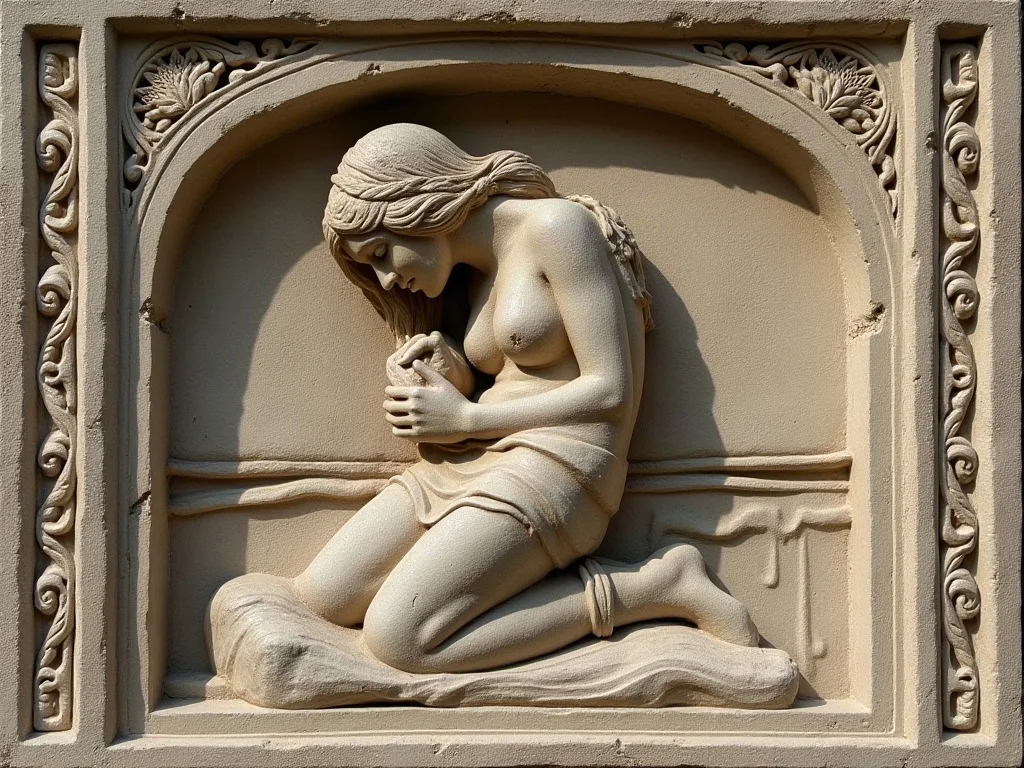
The Goddess of Spring and Running Water
Water in Armenia is not abstract; it is survival. The country sits on high plateaus cut by deep valleys, fed by mountain springs and rivers that freeze in winter and run fierce in spring. To ancient Armenians, moving water was alive. It cleansed, it nourished, it could heal or destroy.
Astghik embodied this living water. She was not just any water, but the running kind: springs, rivers, fountains. Static water, the kind in wells or cisterns, belonged to other domains. Astghik's water moved, flowed, renewed itself. She was associated with dawn, with the first light touching water and making it shimmer. Paintings and carvings show her near cascades and bubbling springs, sometimes with fish or water birds, sometimes alone in profile with her arms open like flowing channels.
The most famous shrines to Astghik were built near springs. One major temple stood at Armavir, an ancient capital in the Araxes valley. Another, at Eriza (in what is now eastern Anatolia), drew pilgrims from across Armenian territories. Women approached these places seeking blessings for fertility, safe childbirth, and the health of their children. The spring water itself became medicine: drinking it, bathing in it, or washing a sick child carried the goddess's power directly into the body.
Astghik's connection to beauty flowed from this embodied presence. Water reflects light and makes all things gleam. Beauty, in her domain, was not ornamental but vital. A beautiful woman was fertile, healthy, capable of bearing children and sustaining a household. Beauty was a sign of the goddess's favor.

Fertility, Love, and the Continuity of Life
Astghik as a fertility goddess extended far beyond romantic love. She blessed wombs and harvests alike. Farmers poured libations to her at planting time, asking that seeds would sprout and flocks would multiply. Young women brought offerings when they reached marriageable age. Pregnant women invoked her name for safe delivery. New mothers thanked her when children were born healthy.
The spring festival called Nawasard (which later absorbed into the Christian calendar as a celebration of the Virgin Mary) centered on Astghik. Fires were lit, special foods prepared, water from sacred springs distributed. The festival marked renewal: winter's grip loosened, flowers bloomed, animals gave birth, the land came alive. Astghik was the cosmic reason for this return to plenty.
Love in her mythology was not sentiment alone but binding force. She united people, sealed marriages, forged loyalty. A warrior might seek her blessing before proposing to a bride. A merchant might ask her protection over a partnership. She was called upon in oaths and vows. To invoke her name over a promise was to invoke a power that would hold both parties accountable.
The goddess's sexuality was not hidden or shameful but celebrated. Armenian sources hint at erotic elements in her worship: perfumed oils, music, dance. Some scholars suggest that priestesses of Astghik may have practiced forms of ritual sacred sexuality, a commonality in ancient Near Eastern temples. These rituals were understood not as transgression but as participation in the creative forces the goddess embodied.
The Classical Sources: How Greeks and Romans Knew Her
Greek and Roman writers encountered Armenian culture and recorded what they learned about local gods. These foreign perspectives offer invaluable snapshots of how Astghik was understood.
Strabo, the Greek geographer writing in the first century BC, documented Armenian religious practices. He noted temples dedicated to various gods and described public rituals. While he did not always grasp the finer points of Armenian theology, his accounts confirm that Astghik held major status.
Other classical writers associated her loosely with Aphrodite, the Greek goddess of love, or with Artemis, goddess of the hunt and wild nature. These comparisons were imperfect; they were the closest the Greek and Roman mind could reach for an unfamiliar divinity. Astghik had elements that reminded outsiders of these goddesses, but she was distinctly Armenian, shaped by her landscape and history.
The classical accounts also preserved details about her temples and priesthoods. Some sources mention that sacrifices were made to her: animals offered, their meat shared in ritual feasts, their blood poured over altars. Wine, honey, and grains were typical offerings. The goddess's priests and priestesses conducted ceremonies and interpreted omens drawn from the sacrifice.
Resistance, Survival, and the Transition to Christianity
When Armenia adopted Christianity as its official religion around 301 AD (making it the first state to do so), the religious landscape shifted radically. New gods now ruled the cosmic order: the Christian God, Christ, the Virgin Mary, and a host of saints. Pagan temples were closed, rituals banned, and old practices condemned as demonic.
Yet Astghik did not vanish. Instead, she transformed. In Armenian Christian practice, many of her attributes merged with those of the Virgin Mary. Mary became the protector of women in childbirth, the source of blessing for fertility and health. The spring festivals dedicated to Astghik were rededicated to Mary. The water rituals, the offerings, the whispered prayers at sacred fountains, persisted but now carried Christian language.
This was not always a clean substitution. Folk tradition remembered Astghik even as Christianity officially replaced her. In some remote villages, women continued to leave offerings at old shrines, sometimes calling on Mary, sometimes on Astghik, sometimes both together as if the line between them had blurred. The church tolerated much of this rather than eradicate it entirely; syncretic practices often proved more durable than prohibition.
Astghik in Art and Material Culture
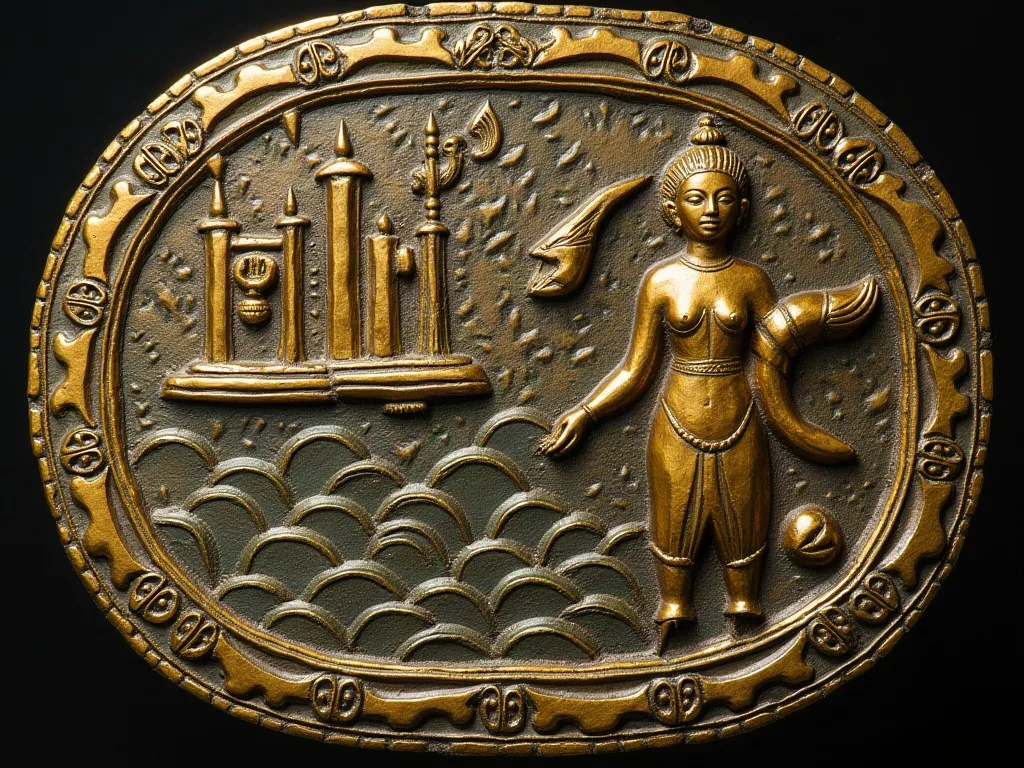
Astghik appears in surviving Armenian art, though the record is fragmentary. Coins minted by Armenian kings sometimes bear her image or symbols associated with her: water lilies, fountains, or a female figure in profile. Carved stone monuments and temple reliefs, though many were destroyed or lost, show traces of her worship. Descriptions in historical texts and archaeological finds suggest she was depicted as a beautiful woman, often with her hands raised in blessing or flowing like water itself.
Armenian metalwork and ceramics from the pre-Christian period sometimes show water-related imagery alongside female figures, possibly Astghik or her priestesses. The artistic record is limited by time and destruction, yet what survives confirms her prominence. She was not a marginal deity worshipped only by women or peasants; kings and princes honored her temples and made offerings.
Astghik and the Broader Indo-European Tradition
Astghik belongs to a family of Indo-European goddesses associated with love, beauty, and fertility. Scholars have traced parallels to the Vedic Apsaras (water nymphs associated with fertility and dance in Hindu mythology), to Freyja in Norse tradition (goddess of love and fertility), and to various Anatolian and Hittite goddesses of water and spring.
This is not to say Astghik was simply a copy of a foreign model. Rather, the Armenian peoples shared common ancestral roots with other Indo-European cultures, and their pantheon reflected both ancient inheritance and local development. Over centuries, Astghik absorbed influences from Mesopotamian traditions (through trade and conquest), Greek contact, and Iranian religions. She remained distinctly Armenian, her worship shaped by the rivers and springs of the Caucasus and the spiritual needs of Armenian communities.
The comparison with other traditions offers insight. Like Freyja, Astghik commanded loyalty and was invoked in matters of the heart and home. Like the Apsaras, she embodied water's fecundity and beauty. Yet she had no exact match; her story is her own.
Sacred Rituals and the Role of Priestesses
Astghik's temples employed priestesses who conducted rituals, interpreted omens, and maintained the sanctuary. These women occupied roles of real authority within Armenian society. They were educated, often came from noble families, and wielded influence in matters of fertility, healing, and divination.
The rituals themselves followed patterns common in ancient Near Eastern religion. The priestess would perform purification (washing in spring water), offer gifts or sacrifice to the goddess, chant prayers or hymns, and then interpret signs: the flight of birds, the patterns of smoke, the movements of animals, the behavior of the sacred springs themselves. Women seeking the goddess's help would present their request, leave an offering, and wait for a sign that their prayer had been heard.
Some scholars suggest that priestesses of Astghik may have practiced forms of healing, using knowledge of herbs and waters. Springs in the Caucasus often carry minerals that can ease certain ailments; a priestess aware of these properties could advise pilgrims on bathing or drinking, actions that would seem like divine intervention to those seeking relief from infertility or illness.
The Question of Astghik's Later Influence on Armenian Identity
Even after centuries of Christianity, Astghik has not been entirely forgotten. Armenian folklore preserves memory of her, sometimes explicitly, sometimes in stories about water sprites, healing springs, or the protection of women. In the 19th and 20th centuries, as Armenia struggled for independence and cultural sovereignty, some intellectuals and writers returned to pre-Christian mythology as a source of national identity.
Astghik, as a uniquely Armenian goddess with deep roots in the land itself, became a symbol of Armenian cultural continuity. She represented not foreign conquest or imposed order but local power, feminine resilience, and spiritual connection to the Armenian landscape. While not worshipped in the literal sense, she was remembered as a guardian spirit of Armenian women and the Armenian homeland.
This memory persists today, though often quietly. Astghik appears in modern Armenian literature and art, sometimes as a figure of nostalgia, sometimes as an active symbol. She reminds Armenians of a spiritual heritage that predates both Christianity and modern politics, rooted in the springs and valleys of their ancestral homeland.
Frequently asked questions about Astghik
Frequently asked questions
What was Astghik's relationship to Anahit, the other major goddess in Armenian mythology?
Anahit and Astghik occupied different roles in the Armenian pantheon. Anahit was the high goddess of wisdom, protection, and chastity; she received official state cult and was invoked by kings. Astghik was more intimately tied to fertility, beauty, and running water. Both were worshipped, but Anahit was more formal and public, while Astghik commanded devotion that was more personal and domestic. Some sources suggest they were called sisters, and their temples sometimes stood in the same cities, but their followers and rituals were distinct.
Did Astghik survive into the modern era, or was she erased by Christianity?
Astghik was not erased but transformed. Many of her functions and devotions merged with Christian veneration of the Virgin Mary. Pilgrimage to sacred springs, prayers for fertility and the safety of childbirth, and the spring renewal festivals continued but with new religious language. In Armenian folk tradition, memory of Astghik as a distinct goddess persisted, especially in remote areas. In the 20th century, intellectuals and artists deliberately recovered her as a symbol of pre-Christian Armenian identity and cultural continuity.
What offerings were made to Astghik in her temples?
Typical offerings included wine, honey, grains, flowers, and perfumed oils. Animals were sacrificed at major festivals: cattle, sheep, goats. The meat was shared in ritual feasts, and the blood was poured over altars or into sacred springs as an act of devotion. Women sometimes left personal items: woven cloth, jewels, or hair. The water from her springs was collected and taken home as a blessing, and women bathed in the sacred pools seeking her blessing for fertility and health.
How do scholars know about Astghik if so few written texts survive from ancient Armenia?
Knowledge of Astghik comes from multiple sources: references in Greek and Roman writers who encountered Armenian culture, Armenian Christian texts that mention or condemn pagan practices, archaeological finds of temples and artifacts, coins bearing her image, and surviving folklore. Armenian historians and theologians writing centuries after Christianity's adoption sometimes recorded details about pre-Christian religion, partly to explain why folk practices persisted. Comparative mythology also helps; parallels with other Indo-European goddesses illuminate how Astghik likely functioned within her tradition.
Was Astghik worshipped in ways that were considered immoral or transgressive by outsiders?
Likely. Ancient Near Eastern religions sometimes incorporated ritual sexuality or sensual celebration as part of goddess worship. Armenian sources hint at erotic elements in Astghik's rituals. Classical Greek and Roman writers sometimes condemned such practices as immoral, viewing them through their own cultural lens. For Armenians, however, these rituals were understood as participation in creative, generative divine forces, not as transgression. The gap between outsider judgment and insider meaning reflects how easily sacred practices can be misread across cultural boundaries.
Astghik's Enduring Echo in the Caucasus and Beyond
The story of Astghik is the story of how a local goddess becomes a thread in a larger tapestry of memory, faith, and identity. She was born from Armenian need: the need for water to flow, for bodies to conceive, for beauty to bless a life. Her worship reflected the real conditions of life in the Caucasus, the cycles of season and fertility that determined survival.
When Christianity came, Astghik did not simply die. Instead, she migrated into the margins of official religion, where folk practice and spiritual hunger kept her alive. The women who left offerings at springs, the priestesses who remembered the old words, the families who marked the spring festival: they preserved her memory even as the official church moved on.
Today, Astghik invites us to see how ancient faiths resist erasure. They transform, hide, merge, adapt. They live in landscape and practice long after formal temples close. To study Astghik is to understand not just an ancient goddess but the resilience of human spirituality, the way people hold onto sacred meaning even as the world around them changes.
Free 25-page sample
Want the whole story?
Take the first 25 pages free. If it pulls you in, the full edition is yours as an instant PDF download, with a paperback on Amazon for selected titles.
Armenian
The Armenian Mythology Book: Vahagn, Anahit, Aramazd and the Sacred Stories of the Caucasus Before Christ
Gods of Fire, Bronze, and the Forgotten Kingdom of Urartu
The pre-Christian gods of Armenia: Vahagn the dragon-slayer, Anahit the mother goddess, and the syncretic pantheon that merged Urartian, Persian, and Greek traditions before vanishing in 301 CE.
More from Armenian
All articles
Armenian
Vahagn: Armenian God of Fire, Thunder, and War
Vahagn roars through the red dawn, the Armenian god of fire, thunder, and war whose bronze-voiced hymns echo in the oldest Christian prayers. Discover the warrior deity who conquered chaos, shaped Armenia's spiritual identity, and survived conquest itself.
Armenian
Anahit: The Great Mother Goddess of Armenia
Anahit ruled Armenia's spiritual world for millennia as the Great Mother, keeper of waters, fertility, and wisdom. Discover how she shaped an entire civilization's understanding of divine power.

Armenian
Aramazd: The Creator God and Father of All
Aramazd stands at the foundation of Armenian myth as the supreme creator, the father from whom all life and divinity flow. Discover how this ancient god shaped the cosmos and why he vanished from Armenia's religious life after the conversion to Christianity.

Armenian
Hayk and Bel: The Founding Myth of Armenia
The story of Hayk's rebellion against the tyrant Bel explains how Armenia was born. A warrior's defiance, a nation's origin, and a line of kings that would rule for centuries.