
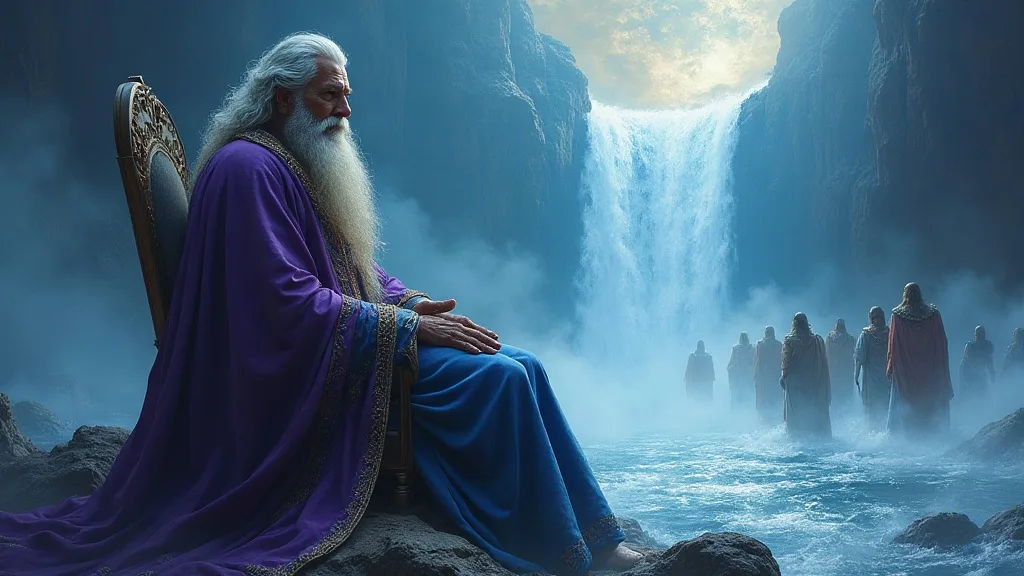
El: The Father of Gods in Canaanite Religion
El ruled the Canaanite pantheon as the ancient king of gods, a weathered father whose name meant simply "god." Discover how this Syrian deity shaped Near Eastern belief for a thousand years before fading from memory.
Contents
In the ruins of Ras Shamra, buried under Syrian sand for three millennia, archaeologists uncovered clay tablets that rewrote our understanding of ancient religion. Among them were the words of El, a god so ancient and so revered that his very name became the word for "god" itself across the ancient Near East.
El was not a storm god or a war god. He was something rarer and perhaps stranger: a weathered, distant father. The Canaanite texts describe him sitting at the edge of the world, in a place called the "source of the two deeps," dispensing wisdom and justice to younger deities who came to him with their problems. For over a thousand years, before Yahweh and before the Greco-Roman gods took hold, El was the supreme lord of the Canaanite world, the progenitor of gods and men alike.
His story is not one of dramatic victories or passionate love affairs. It is the story of a god who faded. Yet in that fading lies something profound: how the idea of the ultimate father persisted across cultures, how it transformed, and how the memory of El lives hidden inside the texts we still read today.
The Ancient Origins of El in Canaanite Religion
The Canaanites were a Semitic people who inhabited the Levant, the region along the eastern Mediterranean coast, from roughly 1500 BCE onward. They did not speak of themselves as "Canaanites", that was a name given by later Greek and Hebrew speakers. They were simply the people of the land, builders of ports, traders, farmers, and devotees of a complex pantheon that reflected their world: a world of storms, fertility, death, and rebirth.
El was their oldest god, or at least the one they believed had always been. His name, 'il in the Canaanite language, is so simple it almost disappears into meaning. It simply meant "god." To say "El" was to say "the God", the one who stands above all others, the king who rules the assembly of lesser deities.
The clearest picture of El and his world comes from a remarkable collection of poems discovered at the city of Ugarit (modern Ras Shamra) in what is now northern Syria. These texts, written on clay tablets in the 14th and 13th centuries BCE, are called the Baal Cycle and related mythological texts. They describe a divine realm that mirrors the human world: councils, disputes, construction projects, even building a palace. At the center of this realm sits El, the aged father.
The tablets describe him in physical terms that are surprisingly vivid. He had a grey-white beard that was described as flowing and majestic. He wore robes. He ate and drank. He fathered children with multiple goddesses. Yet he was also distant, mysterious, and not often directly involved in the drama unfolding among the younger gods. When important decisions needed to be made, the other gods went to him. His word was final.
El's Role as King and Father of the Gods
In the assembly of Canaanite deities, El held a position unique even among supreme gods. He was not known for heroic feats like his counterpart Baal (also called Haddu), who fought the sea god Yamm and the death god Mot. Rather, El was known for kingship itself: the quiet authority of one who has ruled long and will rule long still.
His children included most of the major Canaanite gods. Baal, the storm deity who brought rain and fertility, was sometimes called the "son of El," though his parentage is complex in the texts. Asherah, the great mother goddess and queen of heaven, was also associated closely with El, she is sometimes described as his consort, though she was clearly a powerful figure in her own right. The god Mot, who represented death, disease, and the barren desert, was also numbered among the younger generation. Even the sea god Yamm appears to defer, at least sometimes, to El's authority.
What makes El's kingship different from the tempestuous rule of gods in other mythologies is its restraint. When younger gods brought disputes before him, El listened. When the goddess Asherah asked him to authorize the building of a palace for the rising god Baal, El considered it. He had the power to refuse, yet he was willing to deliberate. This portrait suggests that the Canaanites imagined ultimate divine authority not as autocratic rage but as wisdom tempered by listening.
The texts also reveal that El was connected to justice and covenant. His decisions had weight because they were fair. This aspect of his character echoes later in Hebrew thought, where the God of Israel is called judge and keeper of the covenant. Indeed, scholars have long noted that when the Hebrew Bible refers to God using the word "El," especially in the phrases "El Elyon" (God Most High) or "El Shaddai" (God Almighty), there are distinct echoes of the older Canaanite deity.
The Divine Assembly and El's Authority
The Canaanite gods did not simply inhabit a palace in the sky. They met in a council, an assembly where matters of cosmic importance were debated. El presided over this assembly, not as an absent monarch but as a present (if aged) authority figure. The parallels to human governance are deliberate; the texts describe the divine realm in terms immediately recognizable to Canaanite audiences who lived under kings and in city-states.
One of the most revealing scenes in the Ugaritic texts involves the goddess Asherah approaching El with a petition. She wishes Baal to have a palace built, as the other great gods already have. Asherah walks to El's dwelling at the "source of the two deeps," a liminal place between the inhabited world and the realm of waters below. There she finds El, and she approaches him with respect and flattery. She reminds him of his role as creator and nourisher.
El responds not with anger at her boldness but with willingness to hear her out. He grants the petition, and Asherah goes forth to tell Baal the good news. This exchange reveals something essential about El: he was not a god of spontaneous action but of considered judgment. He represented order, continuity, and the proper functioning of the cosmos.
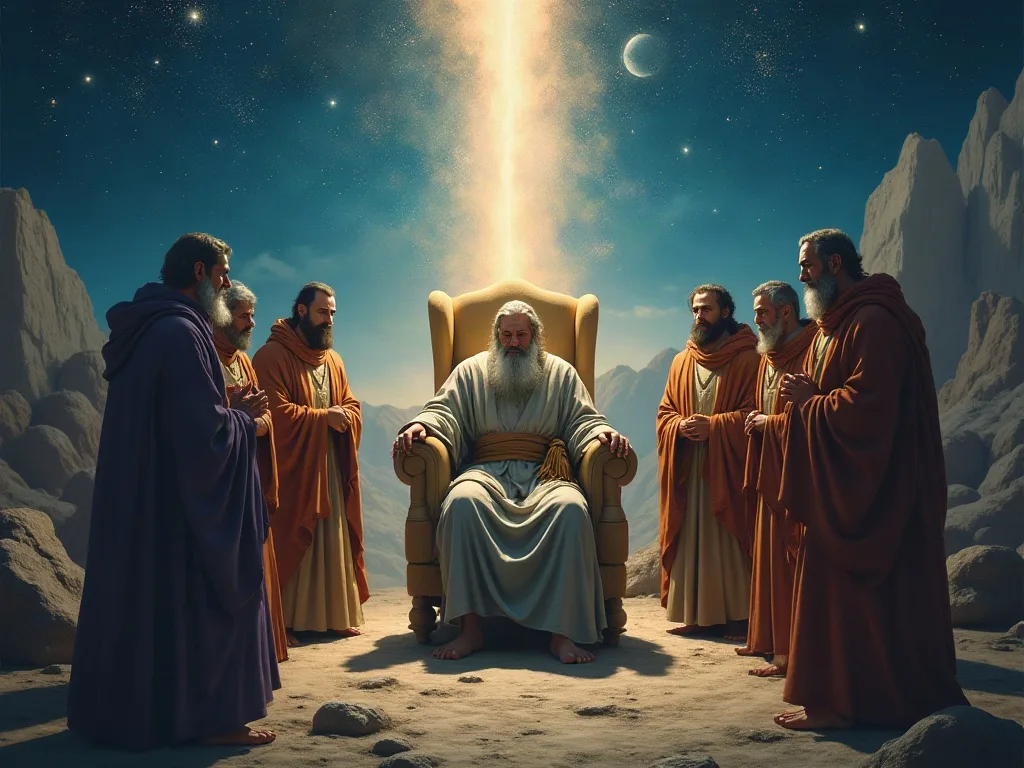
The assembly of gods also met to deal with crises. When the sea god Yamm threatened the other deities and demanded tribute, they turned to El. In some versions, El seems almost exhausted by the constant demands of kingship, yet he does not shirk his duty. The implication is that El has seen it all before, has ruled through countless upheavals, and possesses a deep, almost weary wisdom.
El's Attributes, Symbols, and Divine Names
The Canaanite texts assign to El several titles and epithets that reveal different facets of his nature. He is called "Bull El," reflecting his association with strength, virility, and the natural power of the land's most imposing animal. The bull was sacred across the ancient Near East; it represented both fertility and sovereignty. When the Bible later forbids the worship of a golden calf, it is likely reacting against exactly this kind of bovine imagery associated with the divine.
El is also called "The Kind One," reflecting his gentle aspect. This epithet emphasizes that his rule, while absolute, was not arbitrary. His wisdom was tempered with compassion.
He is described as "Creator of Creatures," qnyu 'ilm in the Ugaritic language, suggesting that El was understood as the source of all life and all existence. This aspect of his character foreshadows the later Jewish, Christian, and Muslim understanding of God as sole creator. The Canaanite El may never have been monotheistic in the strict sense, but he was clearly understood as the ultimate source, the one from whom all other beings derived their power.
El was also associated with destiny and fate. The concept of km't, or "decisions," belonged to him. He was the one who spoke things into being, whose word determined what would occur. This too echoes later monotheistic theology, where God's word is creative force.
His symbols included the bull, the serpent (less commonly but significantly), and the spring or source of water. The connection to water is particularly important. El dwelt at the "source of the two deeps," suggesting he lived at the place where fresh water and salt water met, or where the waters of heaven and earth converged. Water, in the arid Near East, was life itself. To associate El with the source of waters was to associate him with the source of all life.
El and the Younger Gods: Baal, Asherah, and the Pantheon
To understand El fully, one must understand his relationship with Baal, the god who would eventually come to rival him in importance. This relationship is never one of simple superiority and subordination; it is richer and more complicated than that.
Baal, whose name simply means "lord" or "master," was a storm god associated with rain, fertility, and the cycle of death and rebirth. He was vital to the Canaanite economy; in a region where rainfall was intermittent and unreliable, a god who brought rain held immense power over people's lives. The Baal Cycle, the great mythic text from Ugarit, centers on Baal's struggles and triumphs, not on El.
Yet even as Baal grows in importance and power, the texts never quite place him above El. When major decisions need ratification, it is El who is consulted. The texts even suggest a kind of generational tension: the old father El represents stability and law, while the younger Baal represents change, violence, and passion.
Asherah, known as the Queen of Heaven and the great mother goddess, occupied an equally complex position. She was associated with fertility, motherhood, and the sacred groves where worship took place. Some scholars believe Asherah was originally an independent deity with her own following, later incorporated into the pantheon as El's consort. Her relationship to El in the texts is intimate but not submissive. When she needs something, she goes to him directly and argues her case.
The god Mot, who embodied death, drought, and the underworld, also played a crucial role in the younger generation. His conflict with Baal, where Baal dies and descends into Mot's realm before being resurrected, is one of the central myths. Yet Mot too ultimately answers to El's authority.
This pantheon structure reveals the Canaanite worldview: a cosmos where ultimate authority is centralized but not tyrannical, where younger gods can challenge each other and even rebel, yet where the father's word carries weight. It is a family of gods, complete with tensions and growth.
The Creation of the World and El's Generative Power
The texts do not give us a detailed creation myth centered on El, as we might hope. The Canaanite sources are fragmentary, and what we have often focuses on the struggles among the gods rather than the origins of the cosmos itself. Yet hints appear throughout.
El is described as having fathered an enormous number of gods and divine beings. The texts say that he had "seventy sons" and in some versions many more divine offspring. This generative power, his capacity to create, is one of his defining attributes. He is not merely the king of gods but the progenitor of gods, the source from which the pantheon springs.
One text hints at a creation process involving El and Asherah together. Asherah is described as "she who bears the gods," suggesting that while El was the progenitor, Asherah was the mother who brought the gods forth. This partnership between father and mother, creator and nurturer, appears to be central to Canaanite cosmology.
The natural world, mountains, springs, valleys, was understood as animated by divine presence. El's authority over these places was not ownership in the human sense but rather a kind of sacred stewardship. The mountains where the gods met were real mountains in the Canaanite landscape, yet they were also cosmic mountains where divinity resided.

El's Decline and the Rise of Younger Deities
A crucial moment in the mythological record comes when younger, more active gods begin to outshine El. This is not portrayed as rebellion or usurpation but rather as natural succession. The old king, still present and still respected, gradually yields center stage to younger powers.
Baal becomes the god to whom people pray for rain during drought. Asherah's cult becomes increasingly widespread, with sacred groves established throughout Canaanite territory. The god Yamm, representing the chaotic sea, threatens order, and it is Baal who stands against him. Mot represents the cycle of death and rebirth so central to agricultural religion. Each of these younger gods fills a niche that El, in his distant majesty, does not.
The texts suggest that El, aware of his age and the changing needs of his people, accepts this. He remains the ultimate authority, the father whose blessing is necessary, yet he is not the one doing the work. This may reflect a historical reality: as Canaanite civilization evolved, the needs of the people changed. The abstract, distant kingship that El represented gave way to the more immediate, present powers of storm and fertility that Baal embodied.
El's Connection to Later Monotheistic Traditions
The influence of the Canaanite El extends far beyond the borders of ancient Canaan. When Hebrew speakers in what became ancient Israel and Judah developed their own conception of God, they inherited vocabulary and concepts directly from the Canaanite tradition they encountered.
The Hebrew Bible uses the word "El" for God throughout, particularly in older texts and in compound names like "El Elyon" (God Most High) and "El Shaddai." These titles carry echoes of the older Canaanite deity. Some scholars argue that the development of monotheism in ancient Israel involved, in part, a process of absorbing the powers of all the Canaanite gods into the single God of Israel. The characteristics of El, kingship, wisdom, justice, creative power, became attributes of the Hebrew God. The characteristics of Baal, storm, rain, fertility, were also incorporated.
The process was not simple or smooth. The Bible contains repeated warnings against worshipping Baal and against setting up Asherah poles. These warnings suggest that the transition from Canaanite polytheism to Hebrew monotheism was contested. Yet the vocabulary remained. The God of Israel was understood through concepts inherited from El.
This influence extended even further, into Greek and Roman religion. Some scholars see parallels between El and the Greek Zeus as king of gods, and between El and the Roman Jupiter as supreme deity and keeper of order. While these connections should not be overstated, they suggest that the archetype of the distant, authoritative father-god transcended individual cultures.
The Islamic tradition, which also originated in the Near East and inherited many concepts from both Judaism and Christianity, uses the name "Allah," which is derived from the same Semitic root as "El." The Arabic "Allah" literally means "the god," much as the Canaanite "El" meant "god." There is a direct line of descent in terminology and in some conceptual frameworks from the ancient Canaanite El to the God worshipped in Islam today.
The Scholarly Debate: Who Was El Really?
Scholars have long debated El's origins and nature. Was he originally a storm god like Baal, later elevated to supreme kingship? Was he, as some older scholars suggested, a purely abstract principle? Or was he, as the texts most straightforwardly suggest, an ancient supreme deity whose worship predated the rise of Baal in Canaanite society?
The discovery of the Ugaritic texts in the 1920s settled some questions but opened others. We now know that El was not invented by later Hebrew theology but was genuinely central to pre-Israelite Canaanite religion. We know he was conceived as an aging, authoritative figure. We know he was revered as creator and judge.
Yet questions remain. Did El have a consort, or was Asherah an independent goddess only associated with him? Was El truly in decline during the later periods of Canaanite civilization, or do the texts simply reflect a shift in emphasis? How did the worship of El vary across different Canaanite city-states?
These are not questions with simple answers. The texts we have are fragmentary and reflect specific moments in a long history. The Canaanite civilization lasted over a thousand years; gods and their relationships evolved, shifted, and sometimes reverted to earlier forms. Any attempt to describe "the" Canaanite pantheon must acknowledge this fluidity.
El's Legacy in Art, Literature, and Modern Imagination
Though El faded from active worship after the fall of Canaanite civilization, he did not disappear entirely. His image was preserved in texts that survived through Jewish and later Christian transmission. Medieval and Renaissance scholars, encountering the name "El" in biblical commentaries and theological discussions, sometimes misunderstood it, conflating it with individual gods or treating it as an abstract principle.
In the 19th and 20th centuries, as archaeology revealed the Canaanite texts, El returned to consciousness. Artists have attempted to visualize him, drawing on the textual descriptions. He appears as a bearded, kingly figure, often shown enthroned or in contemplation. Contemporary fantasy literature has also drawn on Canaanite mythology, sometimes featuring El as a wise elder among gods or a distant creator figure who remains aloof from the drama of younger deities.
The Canaanite cosmology, with its vision of a pantheon headed by an aging father-god, continues to resonate. It speaks to human experience: the challenge of aging, the passing of authority to new generations, the tension between stability and change. El embodies a particular vision of power, not aggressive or dramatic, but steady, wise, and hard-won through long experience.
Frequently Asked Questions About El and Canaanite Divinity
Frequently asked questions
Was El the same god as the God of the Hebrew Bible?
Not exactly, but there is significant overlap and inheritance. The Hebrew God adopted many characteristics and titles from the Canaanite El, particularly "El Elyon" (God Most High) and "El Shaddai." The process was gradual, as Hebrew monotheism absorbed elements from the Canaanite polytheistic system. So while El was not identical to Yahweh, the Hebrew God's attributes derive partly from El's tradition.
Why is El so absent from the most dramatic Canaanite myths?
El represented order, stability, and ultimate authority, while gods like Baal represented action and change. The myths focus on the drama of struggle and transformation, which are more narratively interesting than the quiet kingship El provided. His absence from the action reflects his role as a kind of supreme court to which lesser gods appeal, rather than a warrior deity directly involved in conflict.
Did all Canaanite city-states worship El in the same way?
Probably not. The texts we have come primarily from Ugarit, and local traditions elsewhere would have varied. Some cities may have emphasized Baal more heavily, others Asherah. Yet El appears as a recognizable figure across the surviving textual tradition, suggesting he held a place in the broader Canaanite religious consciousness, even if his worship was not uniform.
What happened to the worship of El after Canaanite civilization ended?
As Canaanite political independence was lost to the Assyrian and later Babylonian empires, Canaanite religious practices gradually merged with or were absorbed into neighboring traditions. The Hebrew tradition preserved and transformed El's legacy through biblical texts. The specific worship of El as a distinct deity faded, but his conceptual and linguistic legacy persisted in Judaism, Christianity, and Islam, all of which are historically rooted in the Near East where El was once supreme.
Is there archaeological evidence for El worship?
Yes. Beyond the texts, archaeologists have found votive offerings, altar remains, and temple inscriptions that reference El. Some shrines appear to have been dedicated to El specifically, while others show evidence of mixed worship of multiple deities. The physical remains confirm that El was not merely a literary invention but a genuinely worshipped god with temples, priests, and devotees throughout the Canaanite world.
How did El compare to other ancient supreme gods like Zeus or Marduk?
All three were conceived as kings of gods who ruled through wisdom and law rather than pure tyranny. Yet El appears more distant and passive than Zeus, who frequently intervenes in human and divine affairs. Marduk, the supreme god of Babylon, gained his position through violent conquest. El, by contrast, appears to have held kingship through antiquity and respect. His style of rule is more advisory and less confrontational than these other supreme deities.
El's Place in a Changing Religious World
The story of El is ultimately a story of transformation. A god who was once supreme, consulted on all important matters, gradually yielded the center stage to younger, more active deities. Yet he was never overthrown or forgotten. He became the foundation upon which others stood, the father whose authority remained even as his direct involvement decreased.
This pattern of religious evolution, the aging of old gods, the rise of new ones, the absorption of older deities' characteristics into new frameworks, is not unique to Canaan. It happened in Greece, in Rome, in India, in every human civilization. What makes El's story particular is how clearly the texts preserve this process, and how extensively his legacy flowed into later traditions that shaped billions of lives.
The Canaanite El reminds us that the idea of a distant, supreme creator-god, a father who governs through law and wisdom rather than arbitrary violence, has roots that stretch back further than we sometimes imagine. That idea shaped Canaanite civilization, influenced Hebrew monotheism, and echoes still in the conception of God held by over three billion people today. The weathered father sitting at the source of the two deeps, listening to the petitions of younger gods, remains present in the religious imagination thousands of years after his temples crumbled into sand.
Read the full book
Want the whole story?
The complete edition is an instant PDF download here, with a paperback on Amazon for selected titles.
Canaanite
The Canaanite Mythology Book: Baal, El, Anat, and the Gods of the Ancient Levant
Baal, El, Anat, and the Gods of the Levant
The gods the Hebrew Bible warned against, recovered from the clay tablets of Ugarit: El the patriarch, Baal the storm-rider, Anat the war goddess, and Mot the lord of death. The mythology behind the Bible’s great rival.
More from Canaanite
All articles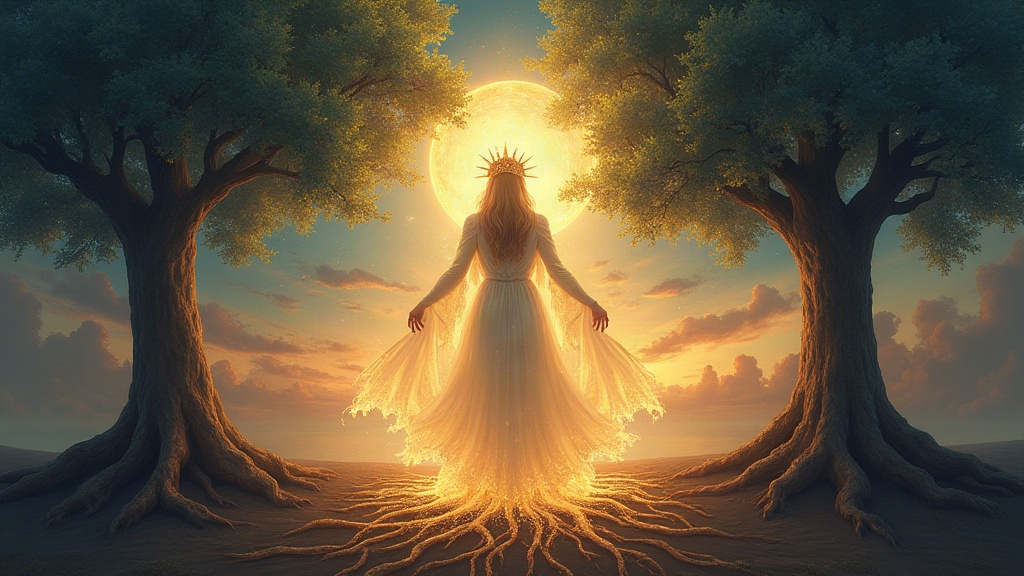
Canaanite
Asherah: The Queen of Heaven and Consort of El
Asherah ruled the Canaanite pantheon as the Queen of Heaven, the consort of El, and the mother of seventy gods. Discover how this ancient goddess shaped Levantine belief and why her worship scandalized biblical writers.

Canaanite
Mot: The God of Death and the Underworld in Canaanite Myth
Mot rules the Canaanite underworld with an insatiable hunger, devouring all things mortal. Explore how this ancient god of death embodied fear, finality, and the cosmic struggle between life and extinction.
Canaanite
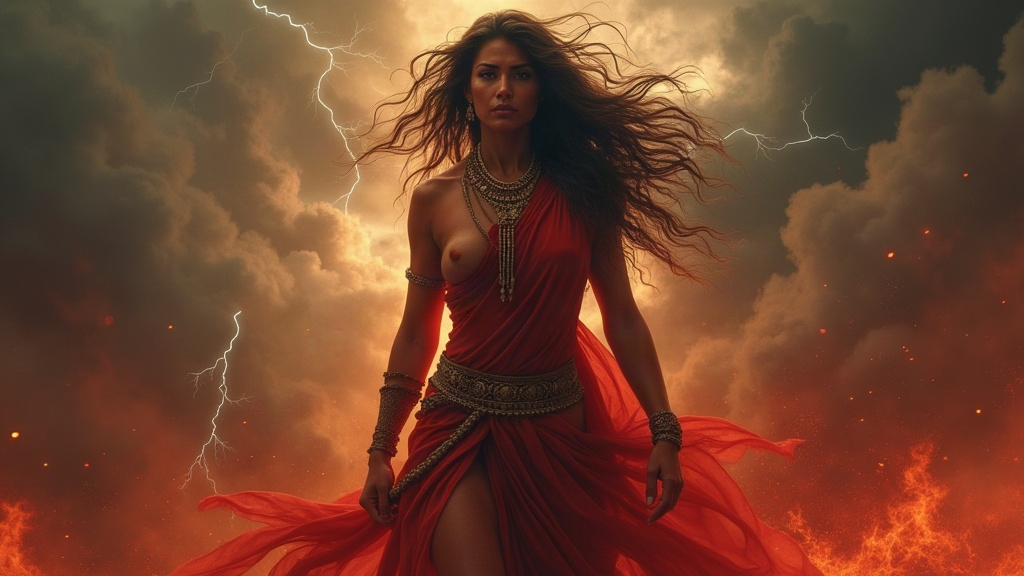
Anat: The Warrior Goddess of Love and Battle
Anat stands alone in Canaanite myth: a goddess who commands bloodshed and desire with equal fury. Explore the warrior deity who protected kings, seduced gods, and defied every boundary of her world.

Canaanite
Yamm: The Sea God and Chaos Monster of Canaanite Myth
Yamm rules the Canaanite cosmos as both divine sovereign and terrifying chaos force. Discover how this turbulent sea god challenged the gods themselves and shaped the earliest Near Eastern creation myths.