

Yamm: The Sea God and Chaos Monster of Canaanite Myth
Yamm rules the Canaanite cosmos as both divine sovereign and terrifying chaos force. Discover how this turbulent sea god challenged the gods themselves and shaped the earliest Near Eastern creation myths.
Contents
Waves crash against an ancient harbor. The spray tastes of salt and menace. In Canaanite belief, that power was not blind nature but divine will: Yamm, the sea god, whose currents carried both bounty and annihilation. He was no gentle water nymph. He was a king with ambitions to rule all existence, a monster whose very name spelled chaos, a force that the other gods feared enough to go to war against him.
The story of Yamm sits at the heart of Canaanite mythology. It is a tale of cosmic order against primal disorder, divine authority tested and reforged. The Ugaritic texts that preserve this myth, inscribed on clay tablets in the 14th century BCE, show us a pantheon locked in struggle, not serene harmony.
Origins and Divine Authority in Canaanite Cosmology
Yamm: The Sea God and Chaos Monster emerges from the Ugaritic religious literature as one of the most powerful deities in the Canaanite pantheon. The clay tablets recovered from Ugarit (modern-day Ras Shamra in Syria) in the 1930s reveal his central role in creation and conflict mythology. Yamm appears under several names: Prince Sea (Yamm), Judge River (Nahar), and sometimes simply as the personification of oceanic and fluvial dominion.
The Ugaritic texts present Yamm not as a minor water spirit but as a god of considerable authority. He holds dominion over all waters: the sea itself, rivers, springs, and even the moisture-bearing clouds. In the cosmology of the ancient Levantine peoples, control of water meant control of fertility, weather, and survival. A farmer whose crops depend on seasonal rains answers, in a real sense, to the sea god.
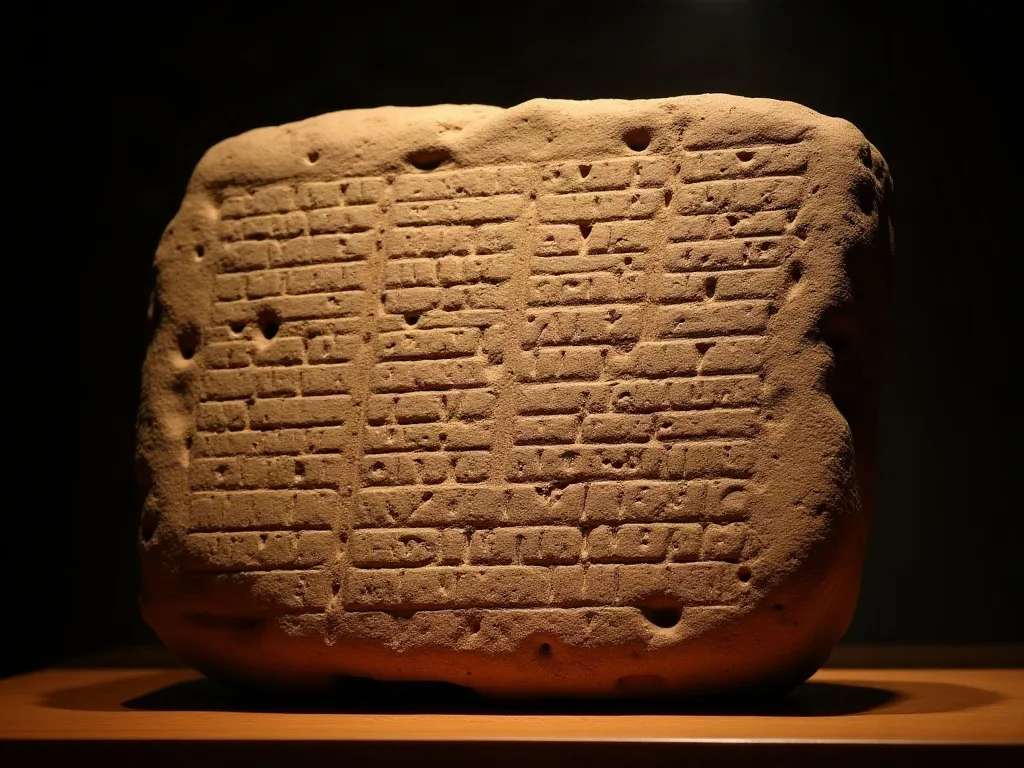
What made Yamm distinctive was his ambition. He did not remain content in his watery domain. According to the Baal Cycle, a collection of mythological narratives preserved in cuneiform, Yamm sent messengers to the assembly of the gods demanding submission and tribute. He declared himself king of all gods and demanded a throne higher than any other deity. This was not a mere theological dispute; it was a claim to universal sovereignty that threatened the established divine order.
The god El, the patriarch and creator deity of the Canaanite pantheon, was called upon to arbitrate. El, typically portrayed as wise but passive, seemed inclined to grant Yamm's demand. This alignment of the supreme creator with the chaos-adjacent sea god placed the other deities in existential danger.
The War of Yamm Against Cosmic Order
The conflict between Yamm and the rest of the divine hierarchy forms the narrative spine of Canaanite mythology. The text known as the Baal Cycle documents this cosmic war with vivid intensity. The battle is not merely physical; it is theological. It asks: what principle governs existence? Order or chaos? Will or appetite?
Baal (also known as Hadad), the storm god and fertility deity, became the champion against Yamm's encroachment. Baal was younger and more volatile than El, but he possessed the will to act. The Ugaritic tablets describe Baal preparing for war, arming himself, and moving against Yamm with the backing of other divine allies.
The actual combat is rendered in the text with remarkable literalness. Baal struck Yamm with two weapons: a club called "Chaser" (Amoq) and a lance called "Driver" (Yagarish). The tablets describe Yamm writhing as the weapons found their mark. His body convulsed; he collapsed. Baal did not merely wound him; he fragmented him, scattering his form across the cosmic landscape.
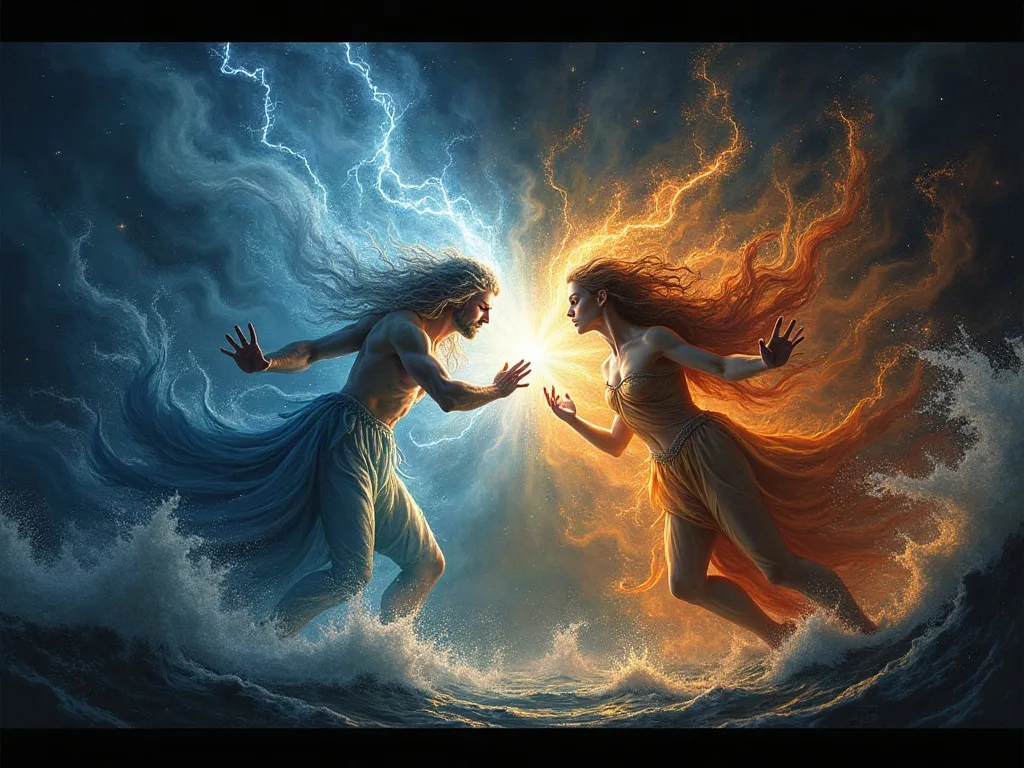
The victory was complete but not total extinction. Yamm was subdued, bound, dispersed. Yet the sea remained. Yamm's very essence could not be annihilated because the waters themselves were necessary to creation. Instead, he was relegated to his proper realm, his sovereignty curtailed, his threat neutralized. Baal's triumph established a new cosmic order: a hierarchy of authority in which younger, more active deities held dominion over the forces of chaos.
Scholars see in this myth echoes of much older Mesopotamian traditions, particularly the Babylonian Enuma Elish, where Marduk defeats Tiamat, the chaos serpent. Both narratives pit order-bringing deities against aquatic chaos forces. Yet the Canaanite version has its own distinctive character: Yamm is not simply evil, not purely monstrous. He is a legitimate divine power whose claims are politically disruptive rather than cosmically illegitimate.
Yamm as Chaos, Not Evil
A critical distinction separates Yamm from later conceptions of demonic evil. In Canaanite theology, Yamm was dangerous and disruptive, but not malevolent in a moral sense. He represented the principle of chaos (tohu in Hebrew, the primordial disorder). Chaos in ancient Near Eastern thought was not necessarily wicked; it was simply undifferentiated, pre-cosmological, fundamentally other than the ordered world humans inhabited.
The Canaanite pantheon did not operate within a rigid good-versus-evil binary. Yamm's ambition to rule was transgressive, but his power was real. His claim to authority possessed logic: he was ancient, his domain was vast, his resources immense. That El might grant his request was not absurd; it reflected a plausible power dynamic.
Furthermore, Yamm retained divine status even after his defeat. He was bound but not destroyed, weakened but not stripped of divinity. The Ugaritic texts suggest that Yamm continued to exist in a diminished capacity, still a member of the divine assembly, still requiring acknowledgment and propitiation. Defeated gods in Canaanite mythology did not vanish; they were repositioned within a new hierarchy.
This theological pragmatism reflects the lived experience of Canaanite peoples. The sea was both life-giving and lethal. It brought trade, sustenance from fish, and connection to distant lands. It also brought storms that drowned sailors, floods that destroyed crops, and invasions by maritime raiders. Yamm embodied both aspects. He could not be wished away or moralized as pure evil. He had to be respected, feared, and managed.
The Weapons of Chaos: Yamm's Embodied Threat
The Ugaritic texts describe Yamm with corporeal specificity that reveals how the Canaanites imagined cosmic forces. Yamm had a physical form that could be wounded. His body exhibited damage from Baal's assault. He bled; he broke apart. Yet he was not simply a body. The text suggests that Yamm also manifested as a force, a principle of dissolution and return.
Some scholars have argued that Yamm may have been depicted with serpentine characteristics, though the tablets do not explicitly state this. The connection between water deities and serpents appears across ancient Near Eastern traditions. Tiamat, the Babylonian chaos dragon, was explicitly an serpent. Whether Yamm shared this form remains debated among Ugarit specialists, but the possibility enriches our understanding of how ancient Levantines imagined aquatic divinity.
Yamm's allies in mythology included other water entities and forces associated with chaos and disorder. The texts sometimes reference "the beloved of Yamm" and other minor aquatic spirits whose allegiance lay with the sea god. These subsidiary figures did not receive extensive narrative attention, but they reinforced the sense that Yamm's power extended beyond his individual existence; he commanded an entire faction within the cosmos.
The weapons used against Yamm (Chaser and Driver) were not ordinary; they were enchanted implements, divine tools crafted specifically to wound a god. This detail underscores how seriously the Canaanite mythmakers took the threat. Ordinary weapons would have no effect. Only specially consecrated implements, blessed by the divine assembly and wielded by a god of sufficient power, could bind the sea.
Yamm's Ritual and Religious Function
The mythological narrative of Yamm's defeat had profound implications for Canaanite religious practice. The story was not told merely for entertainment or moral instruction; it shaped how Canaanite peoples related to the sea, weather, and divine power.
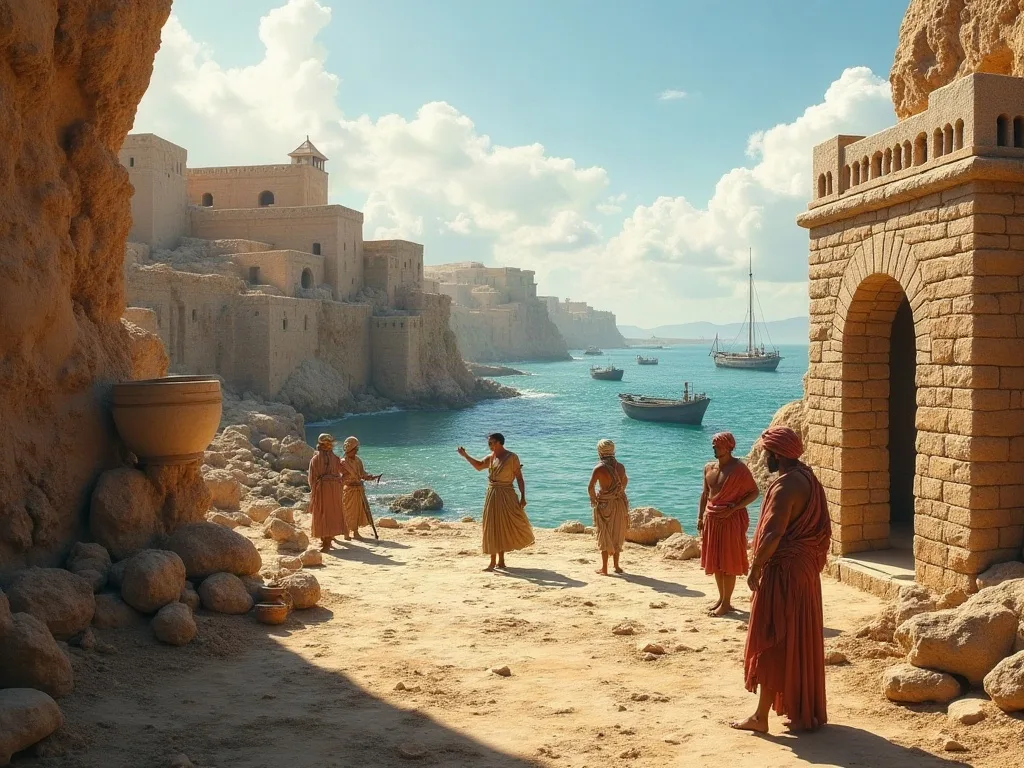
Coastal Canaanite cities like Sidon and Tyre maintained cults dedicated to sea deities. Archaeological evidence, including dedicatory inscriptions and votive figurines, suggests that fishermen and merchants made offerings to secure safe passage and abundant catches. While Yamm was the king of the sea, other specialized deities like Dagon (a grain and fertility god with maritime associations) received more direct propitiation in daily religious life.
The Baal Cycle itself may have functioned as a liturgical text. Some scholars propose that it was recited during festivals, particularly those connected to the agricultural cycle and the coming of rains (which came from Baal, the storm god, and which required Yamm's cooperation to remain within bounds). The performance of the myth would have ritually reenacted cosmic order, reassuring the community that the forces threatening their survival were contained, that the gods had once fought and triumphed, and that order could be maintained through proper worship.
The periodicity of flooding and tidal phenomena would have reinforced Yamm's psychological presence. Every storm that threatened the coast was Yamm pressing against his bonds. Every calm sea was Baal holding him at bay. The religious calendar likely included festivals when the boundaries between ordered and chaotic forces seemed most permeable, requiring especially careful propitiation and ritual.
Yamm
Divine sovereign of waters, rivers, and the abyss. Pursues universal authority. Represents chaos, appetite, primordial disorder. Subdued through divine conflict. Ancient, passive in some accounts, ambition-driven in others. His realm is necessary but dangerous.
Baal
Storm god and fertility deity. Active, warrior temperament. Champion of ordered creation. Victorious through combat. Younger, more dynamic. His power sustains agriculture and civilization. His rain fertilizes; Yamm's unchecked waters destroy.
Yamm in the Broader Ancient Near Eastern Context
Yamm: The Sea God and Chaos Monster cannot be fully understood apart from the wider mythological traditions of the ancient Near East. Canaanite civilization occupied a crossroads, culturally and geographically. Egyptian, Hittite, and Mesopotamian influences flowed into Canaanite religious thought, and Canaanite traditions in turn influenced neighboring cultures.
The combat myth pattern appears throughout the region. The Babylonian Enuma Elish features Marduk's victory over Tiamat. Hittite texts preserve the myth of the storm god defeating the serpent Illuyankas. Egyptian mythology includes Set, the god of chaos and desert storms, whose opposition to Osiris and Horus mirrors the divine conflict theme. Yet each tradition adapted the basic pattern to its own theological concerns and environmental realities.
In Canaanite hands, the chaos-monster myth took on particular significance because of geography. The Canaanites lived on a coastline perpetually contested by great powers and constantly threatened by maritime forces. The sea was not a distant abstraction but a daily reality. Yamm was not merely a symbol; he was a neighbor.
Some scholars have suggested that the Yamm conflict myth may have influenced later Hebrew mythology. The biblical book of Job contains passages that evoke similar cosmological struggles. The image of God controlling the sea, making a covenant with it, holding it back, these themes appear in biblical poetry (Psalm 93, Proverbs 8) and may reflect absorption of earlier Canaanite thought into Israelite tradition. Yahweh, the God of Israel, in some biblical passages inherits the cosmological functions that Baal or El played in Canaanite myth.
The Legacy of Yamm: From Ugarit to Modernity
The Ugaritic texts were buried when the city fell in the 12th century BCE, lost to history for millennia. Their rediscovery in the 20th century transformed our understanding of ancient Near Eastern religion. Yamm, forgotten for 3,000 years, returned as a figure of scholarly fascination.
Modern biblical scholars and ancient religionists have recognized Yamm's influence on later Mediterranean and Semitic thought. Some have argued that Yamm's defeat influenced Greek mythology, particularly in accounts of gods subduing monsters and establishing cosmic order. The parallels are suggestive but debated; direct transmission is difficult to prove, though trade and cultural contact between the Levantine coast and the Aegean certainly occurred.
In contemporary fiction and gaming, Yamm has experienced a modest revival. Fantasy writers and game designers who have encountered Ugaritic mythology through scholarly sources have drawn on Yamm as a symbol of primordial power and aquatic dominion. He appears in some modern occult and neopagan reconstructions, though often with significant creative reinterpretation divorced from historical sources.
The real legacy of Yamm lies not in popular culture but in what his myth reveals about how ancient peoples organized their cosmologies. Yamm embodies the principle that order is not natural; it must be established and defended. Civilization, agriculture, and settled society exist because forces like Baal have triumphed over forces like Yamm. Yet that triumph is not permanent or absolute. Chaos remains, bound but present, requiring perpetual vigilance and ritual maintenance.
Frequently asked questions about Yamm, the Canaanite sea god?
Frequently asked questions
Was Yamm purely evil, or did he have redeeming qualities?
Yamm was not evil in a moral sense; he represented primordial chaos and untamed power. He was dangerous and ambitious, but not malevolent. In the Canaanite worldview, he was a legitimate divine being whose claims to authority were politically disruptive rather than cosmically illegitimate. Even after his defeat, he retained divine status and continued to exist within the pantheon.
How do we know about Yamm if the Canaanite civilization ended over 3,000 years ago?
Our knowledge comes from cuneiform texts inscribed on clay tablets discovered at Ugarit (modern-day Ras Shamra in Syria) in the 1930s. These tablets, dating to around the 14th century BCE, preserve the Baal Cycle and other mythological narratives that detail Yamm's role in Canaanite cosmology. These are among our most direct sources for understanding the religion of the ancient Levant.
Did the Canaanites actually worship Yamm, or was he only a mythological figure?
Yamm appears to have been both. While the Baal Cycle presents him as a major mythological character, archaeological and textual evidence suggests that Canaanite peoples made offerings and petitions to sea deities, including Yamm and related water gods. Coastal cities maintained cults devoted to securing safe maritime passage and abundant catches. Yamm's mythology gave theological meaning to the religious practices people performed to appease the dangerous sea.
What is the Baal Cycle, and why is it important for understanding Yamm?
The Baal Cycle is a collection of Ugaritic mythological narratives preserved on clay tablets that describe conflicts and relationships among the Canaanite gods. It is our primary source for Yamm's story, including his demand for universal authority, his battle with Baal, and his subdual. The Cycle is one of the oldest extensive religious narratives from the ancient Near East and provides crucial insight into how the Canaanites understood divine power, cosmic order, and the nature of chaos.
How did Yamm influence later religions, including biblical Judaism and Christianity?
Scholars debate the degree of direct influence, but the theological patterns are clear. Some biblical passages reflect themes found in Yamm mythology: God's control of the sea, his covenant with chaotic forces, and his triumph in cosmic conflict. Hebrew poetry sometimes uses language and imagery that echo the combat-myth pattern seen in the Baal Cycle. Whether this represents direct borrowing or parallel development of shared Near Eastern traditions remains a matter of scholarly discussion.
Why was Yamm not destroyed permanently, only bound and subdued?
The sea itself was necessary to creation and to human survival. Yamm could not be annihilated without destroying the waters that sustained life. Instead, he was bound and relegated to his proper realm, his sovereignty curtailed but his existence retained. This reflects a pragmatic theology: the dangerous forces must be managed and contained, not wished away, because they remain essential parts of creation.
Yamm's Afterlife in Scholarly Imagination
The recovery of Yamm from the clay tablets of Ugarit has fascinated scholars precisely because he challenges modern assumptions about ancient religion. We tend to imagine ancient pantheons as stable hierarchies, with clear divisions between divine and demonic realms. Yamm disrupts that picture. He is neither god nor demon, neither good nor evil, neither real nor merely symbolic.
The Ugaritic texts present a cosmos more philosophically complex than later monotheistic traditions allowed. The gods are powerful, capricious, ambitious, and subject to conflict. They are not omniscient or omnibenevolent. They struggle for dominion just as humans do. The myth of Yamm reveals that even in the divine realm, order must be won and maintained; it is not given.
This vision resonates strangely with modern readers. In an age of ecological awareness, some have read Yamm as a proto-environmental figure: the untamed natural forces that human civilization attempts to control and exploit. In an age of psychological sophistication, others see him as an embodiment of the unconscious or the id: the primal appetites that civilization seeks to suppress but can never fully eliminate. These modern interpretations are not strictly historically accurate, but they suggest why Yamm's myth continues to speak across millennia.
Read the full book
Want the whole story?
The complete edition is an instant PDF download here, with a paperback on Amazon for selected titles.
Canaanite
The Canaanite Mythology Book: Baal, El, Anat, and the Gods of the Ancient Levant
Baal, El, Anat, and the Gods of the Levant
The gods the Hebrew Bible warned against, recovered from the clay tablets of Ugarit: El the patriarch, Baal the storm-rider, Anat the war goddess, and Mot the lord of death. The mythology behind the Bible’s great rival.
More from Canaanite
All articles
Canaanite
El: The Father of Gods in Canaanite Religion
El ruled the Canaanite pantheon as the ancient king of gods, a weathered father whose name meant simply "god." Discover how this Syrian deity shaped Near Eastern belief for a thousand years before fading from memory.
Canaanite
Asherah: The Queen of Heaven and Consort of El
Asherah ruled the Canaanite pantheon as the Queen of Heaven, the consort of El, and the mother of seventy gods. Discover how this ancient goddess shaped Levantine belief and why her worship scandalized biblical writers.

Canaanite
Mot: The God of Death and the Underworld in Canaanite Myth
Mot rules the Canaanite underworld with an insatiable hunger, devouring all things mortal. Explore how this ancient god of death embodied fear, finality, and the cosmic struggle between life and extinction.
Canaanite
Anat: The Warrior Goddess of Love and Battle
Anat stands alone in Canaanite myth: a goddess who commands bloodshed and desire with equal fury. Explore the warrior deity who protected kings, seduced gods, and defied every boundary of her world.