
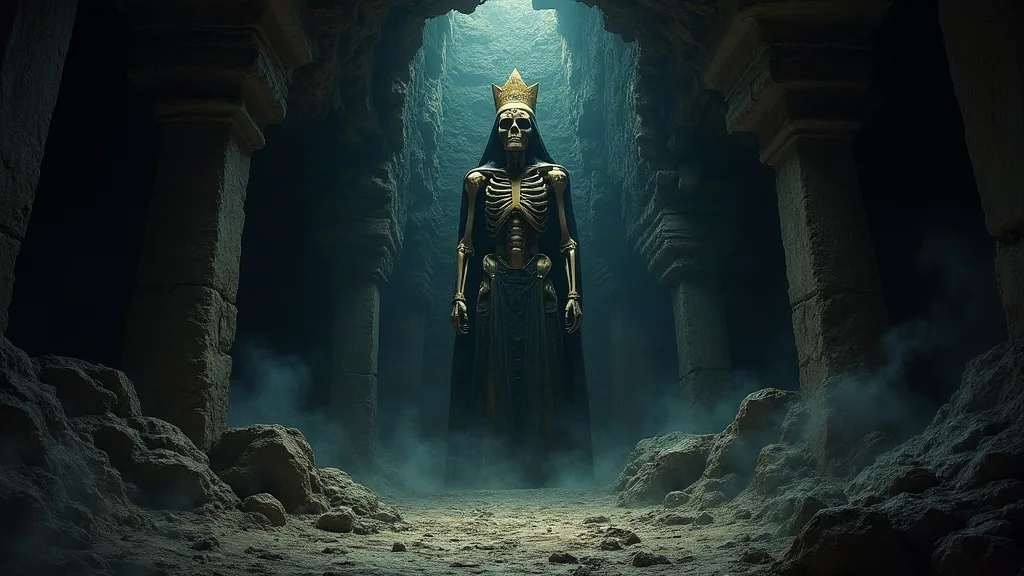
Mot: The God of Death and the Underworld in Canaanite Myth
Mot rules the Canaanite underworld with an insatiable hunger, devouring all things mortal. Explore how this ancient god of death embodied fear, finality, and the cosmic struggle between life and extinction.
Contents
In the Canaanite cosmos, death is not a gentle passing but a voracious hunger. Mot, whose name simply means "death" in the Ugaritic language spoken in ancient Levantine cities, does not merely preside over the dead. He consumes them. He swallows them whole, dragging the living into his vast, insatiable throat and transforming them into shade, dust, and memory. Unlike the distant, orderly death-gods of other ancient religions, Mot is raw appetite. He is the universe's indifference to human life, personified as a god of boundless appetite and eternal emptiness.
This is no decorative deity. Mot emerges from the mythological tablets discovered at Ugarit (modern-day Syria) as a force so fundamental that even Baal, the storm-god and king of the world, must reckon with him. Their conflict, preserved in a dozen cracked clay tablets written in cuneiform, forms one of the ancient Near East's most psychologically complex myths about mortality. It is a story of kingdoms defended and surrendered, of resurrection and recurrence, and of the relentless fact that death cannot be defeated only managed.
The Canaanite Cosmos and Mot's Place in It
The gods of Canaan (the Levantine region that included modern Syria, Lebanon, Israel, Palestine, and parts of modern Jordan) dwelt in a carefully ordered hierarchy. At the top sat El, the distant creator and father of all gods. Below him commanded the active deities: Baal the warrior and rain-bringer, Anat the fierce virgin warrior, Astarte the mother and fertility goddess. But beneath the living world sprawled another realm entirely.
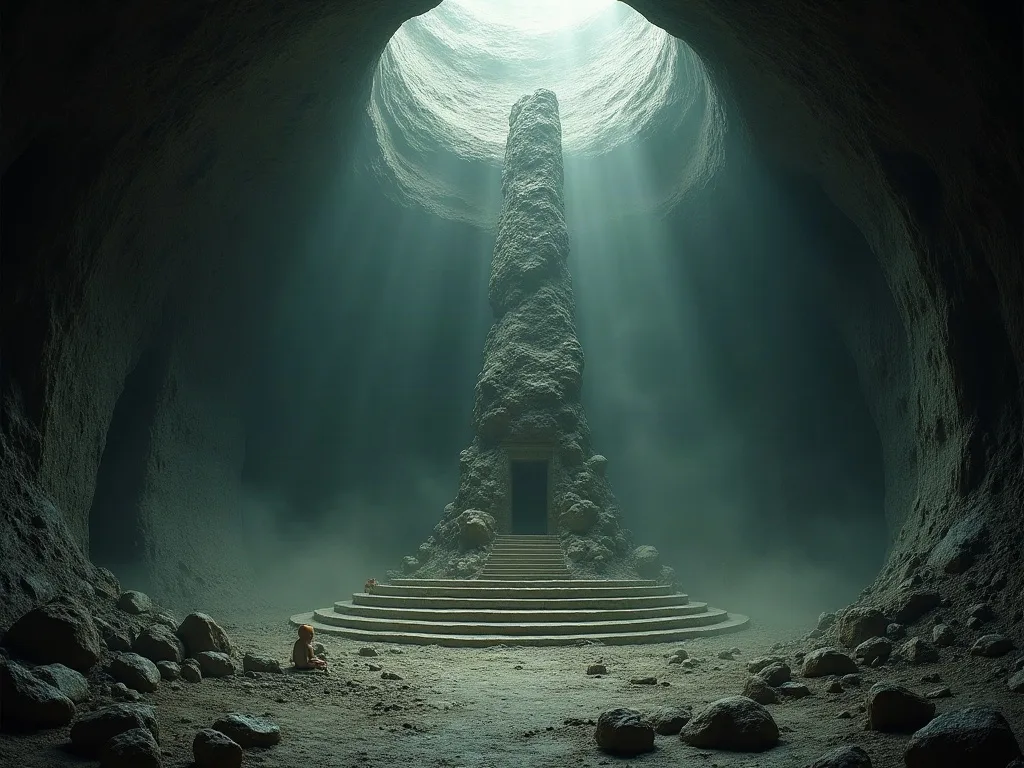
Mot's kingdom was called Mot's House, or sometimes simply "the earth" (a euphemism for the underworld among Canaanites, as it was for many ancient peoples). The tablets describe it as a place of no return, a chasm so deep and so dry that the dead arrive parched and exhausted. There is no light there, no water, no mercy. The dead do not become shades or spirits with agency. They are simply collected, folded into the insatiable body of Mot itself.
The Canaanites believed the underworld was ruled by divine law, just like the upper world. El, the high god, had decreed the boundaries of each realm. Baal's father, Dagan, occupied another tier. But Mot alone ruled his domain with absolute sovereignty. He was not a servant of El or answerable to Baal's authority. He was autonomous, and that autonomy made him terrifying.
Mot and Baal: The Myth of Conflict and Consumption
The core myth survives in a text scholars call the "Baal Cycle," preserved on clay tablets excavated in the 1930s by French archaeologists at Ugarit. The story is fragmented (clay cracks, scribes erased sections, time has gnawed at its edges), but the essential confrontation is clear: Baal, riding high as king of the gods and bringer of rain, must face Mot's claim on all living things.
The quarrel begins with pride and jurisdiction. Baal had defeated Yam, the chaos waters, and claimed supreme authority. But Mot saw no reason why the storm-god should escape his final fate. In some versions, Baal sends a messenger to Mot's house with an insulting refusal to acknowledge the death-god's dominion. In others, Mot simply grows hungry and demands his due. The tablets are damaged here, but the result is unmistakable: Mot swallows Baal whole.
The phrase used in the Ugaritic text is brutal and visceral. Baal "descends into the throat of Mot, into his mouth, into the depths of the death-god." It is not a symbolic binding or a poetic imprisonment. Mot has ingested the king of the gods. The world above loses its rain. Famine spreads. The earth becomes a barren, cracked wasteland. The rivers dry. The crops wither. Mot has won, it seems, the final victory.
But the myth does not end in permanent darkness. Baal's sister (and sometimes consort) Anat, the virgin warrior goddess, learns of her brother's fate. Enraged, she descends to Mot's house seeking vengeance. In some tablet versions, she fights Mot directly. In others, she threatens him: she will grind his bones, she will scatter his flesh like grain, she will break his power. Mot, confronted by Anat's fury, yields. Baal is released. He rises from the underworld, returns to his throne, and the rains return. The crops grow again.

The Nature of Death in Canaanite Theology
Mot was not evil in the moral sense. The Canaanites, like many ancient peoples, did not imagine death as punishment or as the triumph of an adversary. Death simply was. Mot was the god of that necessity, just as Baal was the god of storm. To curse someone to Mot's house was not to say they deserved it; it was to acknowledge the human condition itself.
Yet the myth reveals a deep anxiety in Canaanite culture. The cyclical nature of the Baal-Mot confrontation (it recurs each year, suggesting the agricultural cycle of death and growth, drought and rains) suggests that mortality is not a one-time event but a recurring threat. Every harvest season, Mot threatens to return. Every drought whispers that he might win. The gods must fight him not once but perpetually.
The Canaanites lived in a precarious environment: drought, famine, and plague were constants. Their mythology encoded that precariousness. Unlike cultures with more abundant resources, Canaanite religion did not dream of permanent paradise. Instead, it imagined a cosmos where order (Baal's kingdom) and chaos or dissolution (Mot's hunger) were locked in eternal struggle, balanced on a knife's edge.
Mot's Appearance and Attributes
The tablets do not describe Mot's physical form in detail, which itself is significant. Unlike Baal, who is imagined as a warrior with a spear and a voice that shakes the heavens, Mot has no fixed image. He is sometimes described as having a mouth so large he can swallow the earth. In one passage, he eats what is put before him as if his belly were the sea itself. He is appetite embodied, hunger personified, but without the specific musculature or features of a warrior-god.
This abstraction was intentional. The Canaanites, writing in a practical alphabet (one of the earliest alphabetic scripts) on clay tablets meant for administrative and religious use, did not allegorize casually. The absence of a detailed visual description of Mot suggests he represented something beyond the mortal eye. He was absence itself, the void that swallows presence.
His voice, when quoted in the tablets, is arrogant and dismissive. He speaks of the vastness of his throat, the insatiability of his appetite. He does not rage or argue as Baal does. Mot simply states facts: all things die. All things come to him. His tone is almost bureaucratic, as if death were simply an administrative reality that gods and mortals must accept.
Mot and the Broader Ancient Near East
The Canaanite death-god was not unique. Across the ancient Near East and Mediterranean, cultures imagined death as a god or goddess: the Egyptians had Osiris, who ruled the underworld and judged the dead; the Greeks had Hades (and Persephone as his queen); the Mesopotamians had Ereshkigal and Nergal. But Mot differs from these figures in crucial ways.
Osiris is a god who was murdered, dismembered, and resurrected; he represents renewal and justice. Hades is often portrayed as a gentleman who does not torture but simply holds dominion. Ereshkigal rules by divine appointment. Mot, by contrast, is defined entirely by his appetite, his isolation, and his irreversibility. The dead in Mot's realm do not undergo judgment (as in Egypt), nor do they inhabit a neutral, shadowy kingdom (as in Greece). They are consumed. They cease to exist as individual entities.
This reflects the Canaanite geographic and existential position: caught between empires, between climates, perpetually threatened by drought and famine. In Egypt's Nile-fed abundance, death could be imagined as a transition to another life. In Mesopotamia's managed irrigation, death fit into a bureaucratic cosmos. In Canaan's marginal, precarious terrain, death was simply the most likely outcome. Mot embodies that stark realism.
Religious Practice and Worship
How did the Canaanites actually worship Mot? The archaeological record is spare. There are few temple remains clearly dedicated to him, and no surviving ritual texts describe sacrifices made in his honor. This is in sharp contrast to Baal and Astarte, who had elaborate cults throughout the Levant.
Scholars suggest that worship of Mot was less about appeasement (one does not ask death to spare you in return for a goat) and more about acknowledgment. To name Mot was to acknowledge mortality. To recite the myth was to rehearse humanity's place in a cosmos where death was not aberrant but structural. The tablets were preserved in the royal archive, which suggests they served official religious purposes, likely recited during festivals or rituals tied to the agricultural cycle.
During the long dry season (roughly summer into early autumn), when rains failed and crops withered, the myth of Mot's temporary victory over Baal may have been recited. During the season when rains returned, the account of Anat's fury and Baal's resurrection might have been performed, perhaps by priests or royal bards. The myth thus became a kind of calendar, encoding the terror and relief that defined life on the edge of a desert.
Mot's Influence on Later Religions
As Canaanite civilization declined under Assyrian and then Babylonian pressure, and as the Mediterranean world came to be dominated by Greek and Roman culture, Mot faded from active worship. He was not absorbed into other pantheons (unlike some Canaanite gods, who merged with Greek or Roman deities). Instead, he became a memory, preserved only in clay tablets that lay buried for thousands of years.
However, the psychological and mythological structures Mot represented continued to echo. The Jewish Bible (Hebrew Bible), written by peoples descended from or influenced by Canaanite culture, features the concept of Sheol, an underworld realm where the dead go, which some scholars argue may owe something to the Canaanite imagination of the underworld. The figure of Death itself, as a personified force rather than merely a condition, appears in later European literature and theology, inherited through Greco-Roman and Christian mediation, yet carrying something of the ancient Near Eastern reverence for death as a sovereign power.
In modern scholarship and creative work, Mot has been rediscovered. Writers, artists, and mythologists drawn to the ancient Levant have been struck by the rawness of the god: his refusal to be sympathetic, his complete indifference to human suffering, his embodiment of a universe that does not care about human desires. He represents a view of death that is neither malevolent nor kind, but simply true.
The Myth's Enduring Resonance
What makes Mot linger in the imagination, even millennia after the last priest ceased to invoke his name? Perhaps it is the honesty of the figure. Mot does not deceive. He does not offer false hope. He simply states reality: all things are consumed, all things are forgotten, all things descend into his throat. There is a kind of mercy in that honesty, or at least a refusal of the false comforts that many religions offer.
The recurring pattern of his conflict with Baal also speaks to something universal: the cyclical nature of survival itself. In any culture that depends on seasons, harvests, weather, the eternal return of both fertility and scarcity is felt in the bones. Mot embodies the scarcity side of that cycle. He is not defeated permanently. He always returns. And somehow, the living must learn to live with that knowledge, must create meaning and order despite it.
The tablets crumble, the kingdoms that worshipped these gods vanished into history, and yet when we read the Ugaritic words carved into clay, we hear a voice speaking across 3,400 years: I am Mot. All things come to me. This is not cruelty. This is law. That voice has never quite gone away.
Frequently asked questions about Mot, the Canaanite god of death?
Frequently asked questions
What does the name Mot mean?
The name Mot simply means "death" in Ugaritic, the language spoken in ancient Canaan. Unlike many gods whose names describe their attributes or domains (Baal means "lord"), Mot's name is synonymous with the force he embodies, making him inseparable from the concept of mortality itself.
How did Mot's myth influence later religions?
While Mot was not directly inherited by later cultures, the concept of an underworld presided over by a sovereign death-god resonated through Jewish, Greek, and eventually Christian theology. The Hebrew concept of Sheol shows structural similarities to Mot's realm, and the later European personification of Death as a powerful, indifferent force carries echoes of the Canaanite god's cold realism.
Was Mot considered evil by the Canaanites?
No. Mot was not morally evil but cosmically necessary. The Canaanites understood death as a fundamental law, not as punishment or malice. To curse someone to Mot's house was to acknowledge human mortality, not to wish them extra suffering. Mot was feared and respected but not reviled as a villain.
Could anyone escape Mot's underworld?
In the primary myth, only Baal escaped Mot's realm, and only because Anat intervened with fury and threats. For ordinary mortals, the Canaanite tablets give no indication that escape was possible. The underworld was imagined as a one-way journey: once consumed by Mot, the dead became part of his domain forever, losing their individual identity and any connection to the living world.
Where can we read the original Mot myth today?
The Baal Cycle survives in clay tablets discovered at Ugarit (modern Ras Shamra in Syria) in the 1930s. These tablets are housed in museums and published in scholarly editions. Accessible modern translations appear in Ugaritic Narrative Poetry and collections of ancient Near Eastern myths. The text is fragmentary but remains one of the most vivid and psychologically rich mythological documents from the ancient world.
Read the full book
Want the whole story?
The complete edition is an instant PDF download here, with a paperback on Amazon for selected titles.
Canaanite
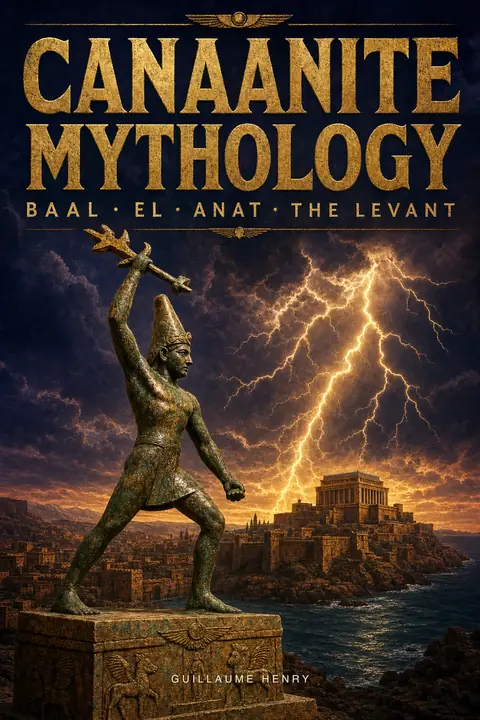
The Canaanite Mythology Book: Baal, El, Anat, and the Gods of the Ancient Levant
Baal, El, Anat, and the Gods of the Levant
The gods the Hebrew Bible warned against, recovered from the clay tablets of Ugarit: El the patriarch, Baal the storm-rider, Anat the war goddess, and Mot the lord of death. The mythology behind the Bible’s great rival.
More from Canaanite
All articles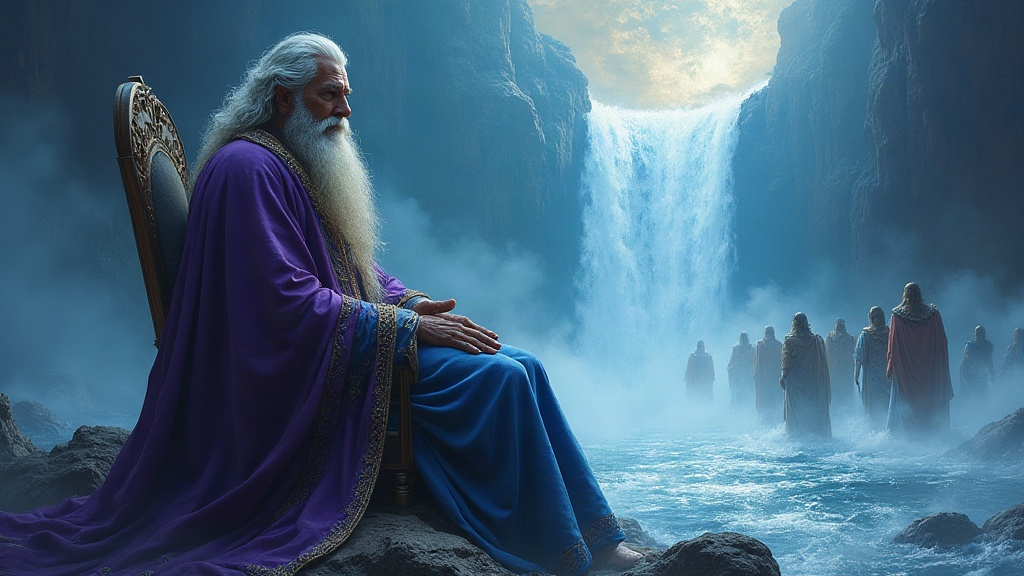
Canaanite
El: The Father of Gods in Canaanite Religion
El ruled the Canaanite pantheon as the ancient king of gods, a weathered father whose name meant simply "god." Discover how this Syrian deity shaped Near Eastern belief for a thousand years before fading from memory.
Canaanite
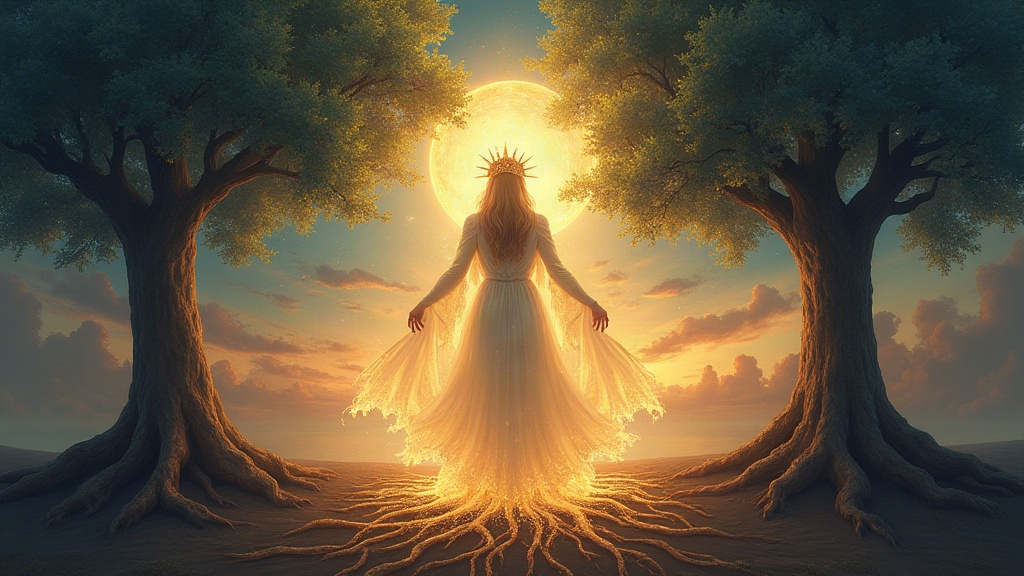
Asherah: The Queen of Heaven and Consort of El
Asherah ruled the Canaanite pantheon as the Queen of Heaven, the consort of El, and the mother of seventy gods. Discover how this ancient goddess shaped Levantine belief and why her worship scandalized biblical writers.
Canaanite
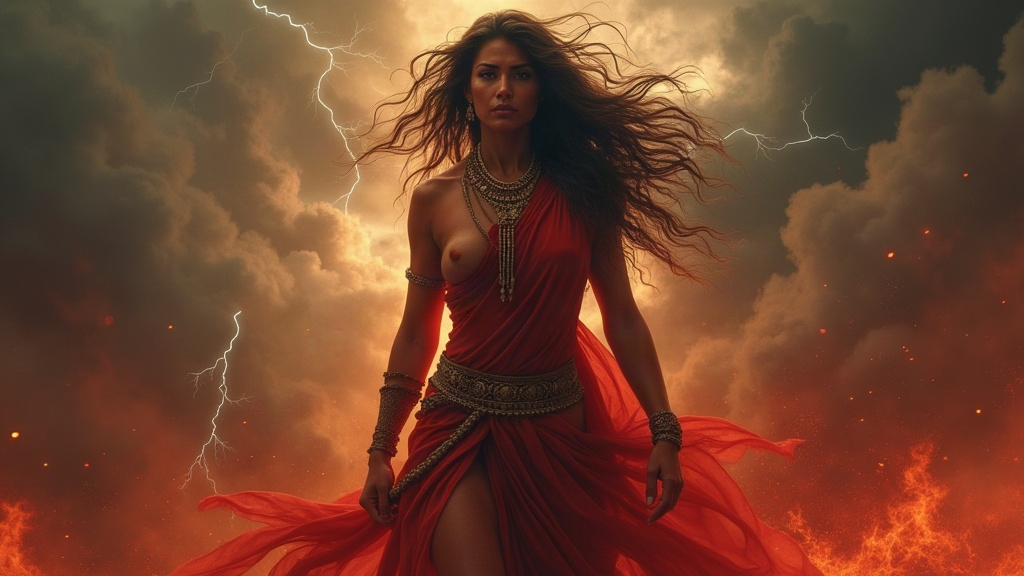
Anat: The Warrior Goddess of Love and Battle
Anat stands alone in Canaanite myth: a goddess who commands bloodshed and desire with equal fury. Explore the warrior deity who protected kings, seduced gods, and defied every boundary of her world.

Canaanite
Yamm: The Sea God and Chaos Monster of Canaanite Myth
Yamm rules the Canaanite cosmos as both divine sovereign and terrifying chaos force. Discover how this turbulent sea god challenged the gods themselves and shaped the earliest Near Eastern creation myths.