

Shapash: The Sun Goddess and Divine Messenger of Canaanite Mythology
Shapash rises over Canaanite religion as the sun goddess who carries messages between gods and mortals. Discover her dual role as cosmic light-bringer and divine intermediary in one of the ancient Near East's oldest faiths.
Contents
The sun climbs over the eastern horizon. In Canaanite theology, that moment is not merely astronomy. A goddess takes her place in the heavens, an eye that sees all, a voice that carries divine will from one realm to another. Her name is Shapash, and she is far more than light. She is the link between the immortal gods and the mortal world below, a messenger who cannot be ignored, a judge whose verdict no one disputes.
The Ugaritic texts that preserve her story were buried in sand for three thousand years. When archaeologists uncovered them in the 1920s at Ras Shamra on the Syrian coast, they found a civilization gripping its gods with a literalism that modern readers find startling. Every cup of wine, every ritual act, had cosmic weight. And Shapash stood at the center: watching, witnessing, carrying the weight of heaven's will into the earth.
The Canaanite Religious Landscape
To understand Shapash, you must first see the world she inhabited. Canaan in the second millennium BC was not one kingdom but a network of city-states bound by trade, warfare, and shared religion. The people who lived there shared a pantheon that had grown over centuries, shaped by waves of migration, invasion, and cultural exchange. Gods like Baal, the storm deity, El, the father of the gods, and Asherah, the mother goddess, held titles and territories. They fought, loved, deceived one another, and demanded human veneration.
Shapash occupied a unique station. She was not a deity of wine or war, sex or storm. She was something older, more fundamental: the sun itself, but more than the sun. The Canaanites understood divinity as embedded in natural forces, yet transcendent. A god was both the thing itself and the consciousness that animated it. Shapash was the disk of light that rose each morning and the watchful awareness that never slept, the cosmic principle that ordered day and night, seen and unseen.
Her Names and Titles
The word Shapash derives from a Semitic root meaning "to burn" or "to shine." In cuneiform tablets from Ugarit, she appears as SPŠ, the abbreviated form used in ritual texts and divine genealogies. Her role as messenger earned her the epithet "the Great Lamp of the Gods," a poetic description that captures both her luminous power and her function as a light that reveals hidden truths.
In some texts, she is called the "Eye of Ilu," referencing El, the high god. This title hints at a cosmic hierarchy. Just as a ruler's eye surveys the kingdom, Shapash's gaze encompasses all creation. Nothing happens on earth or in heaven that escapes her notice. The sun, after all, sees everything it illuminates.
Unlike the volatile storm gods or the seductive fertility deities, Shapash carries an air of inevitability. She rises. She sets. She judges. She reports. The Canaanites depended on the sun's regularity in a way they did not depend on Baal's capricious rains. That reliability translated into respect bordering on awe.

Shapash as Divine Messenger
The most striking feature of Shapash's mythology is her role as intermediary between heaven and the underworld, between the immortal and the mortal, between intention and action. The Ugaritic texts preserve scenes in which she carries messages between gods who have quarreled or between deities and the realm of the dead.
In the Baal Cycle, one of the foundational myths preserved in Ugarit, Shapash appears at a crucial moment. Baal, the god of storm and fertility, has been defeated and imprisoned by Mot, the god of death and the underworld. The other gods mourn. Baal's beloved Anat, the war goddess, seeks vengeance. But how does one reach Mot in his dark kingdom, how does one even send a message to a realm where the sun does not shine?
The answer is Shapash. At the end of each day, the sun descends into the west, into the underworld itself. She traverses the same passage that the dead follow. She moves between the worlds as no other deity can. When a god needed to speak to the underworld, to deliver a ultimatum to Mot or a plea for a lost soul, they spoke to Shapash. She was the eternal traveler, the only being guaranteed passage through the abyss.
This makes her indispensable. A sky god like El might command authority through lineage and age. Baal might inspire terror through storms. But Shapash alone could bridge the gap. When the universe was split between light and darkness, life and death, seen and unseen, she was the bridge itself.
The Role of Witness and Judge
Beyond her function as messenger, Shapash served as a cosmic witness. Her light revealed truth. In legal contexts, oaths sworn before the sun goddess carried special weight. If you lied under the sun, Shapash herself knew of it. The gods sometimes invoked her as a judge in disputes, trusting that she who sees all would also judge fairly.
The Canaanites lived under that gaze. Farmers working their fields, merchants in their bazaars, priests in their temples, warriors on their battlefields, all knew that Shapash watched. This was not the paranoid surveillance of a totalitarian state. Rather, it was a kind of cosmic order. Just as the sun's light made work possible, made agriculture and trade viable, her witnessing made justice possible. A god could not hide from the sun. A mortal could not escape her sight.
In some traditions, Shapash also held a role in healing and purification. Light destroys corruption. The sun's rays killed parasites, dried swamps that bred disease, made visible the rot that grew in darkness. When the Canaanites performed rituals of cleansing or invoked the goddess for health, Shapash's dual nature as light and truth was part of the prayer. Expose the illness. Burn away the impurity. See clearly.
Shapash in the Family of Gods
Shapash occupied a curious position in the Canaanite pantheon. She was both integrated into the divine hierarchy and somewhat apart from it. The texts mention her parentage inconsistently. Some sources call her a daughter of El, the high god. Others suggest she was a peer of the major deities, ungoverned by genealogy but by function.
This ambiguity reflects how the Canaanites thought about cosmic order. Not all power derived from a single source. The universe was complex, populated by competing and cooperating forces. El held authority as the eldest, but he did not control everything. Baal commanded the storms. Mot ruled the underworld. Asherah held dominion over fertility and the sea. And Shapash held her station as the eternal light, the universal witness, the messenger who could go anywhere.
She did not compete for dominion the way the other gods did. You could not worship Shapash and ignore Baal; the rains mattered too much. But the sun was never in doubt. Every dawn confirmed her power anew. This gave her a stability, even a quietness of strength, that made her presence felt less as drama than as inevitability.
Rituals and Worship
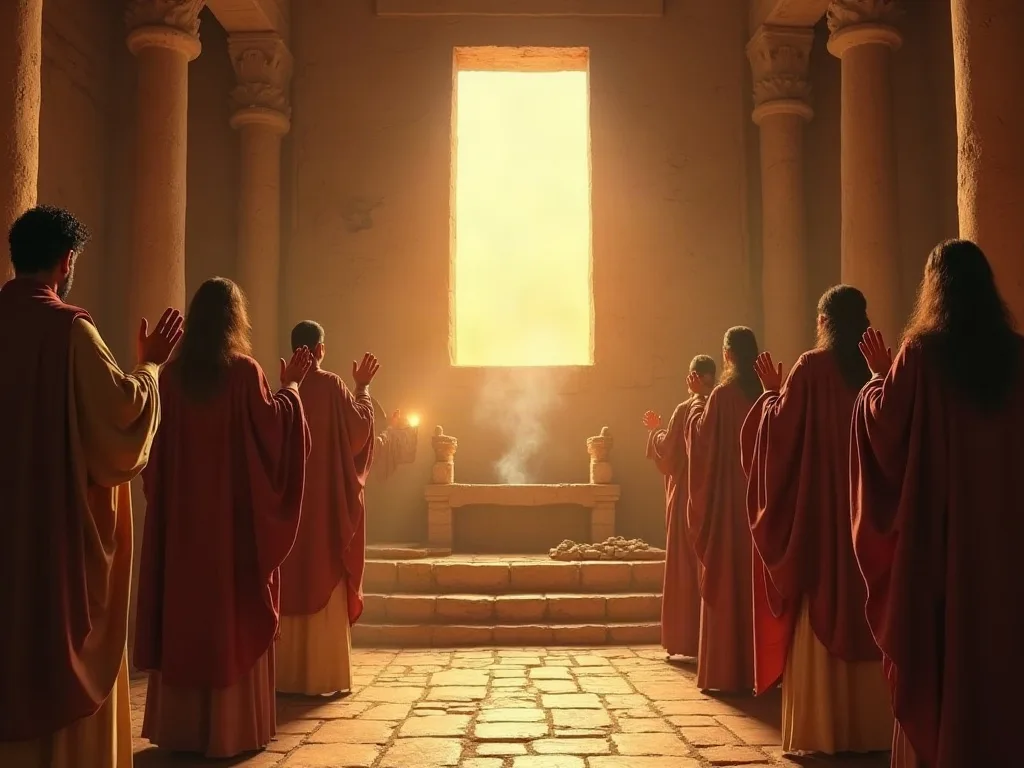
The Canaanites worshipped Shapash through rituals timed to the solar cycles. Dawn prayers greeted her ascent. Evening offerings marked her descent. Some temples oriented their sacred spaces toward the rising sun, creating an architecture that embodied her importance.
Unlike the elaborate fertility rites that honored Baal or the ecstatic priesthoods of Asherah, Shapash's worship was restrained, almost austere. It had to be. You could not bargain with the sun the way you bargained with a fertility god. You could not seduce her into giving what she was not inclined to give. Shapash gave light and witnessed truth. The correct response was gratitude and honesty.
Priests would invoke her name in certain contexts. When a legal oath needed to be sworn, when a contract needed absolute verification, when someone sought healing or clarity, Shapash was invoked. The sun goddess did not negotiate. She did not have moods. She was steady, reliable, and absolutely fair. That made her the preferred witness for human justice.
Shapash and the Underworld: A Unique Relationship
The Canaanite underworld, ruled by Mot, was not a place of punishment in the way later Christian and Islamic traditions conceived of hell. It was simply the realm of the dead, a dark mirror of the world above. Mot himself was not evil, merely powerful and final. Death was his kingdom, and he did not let go easily.
But every evening, Shapash entered that realm. She descended into the west, into the underworld, and she alone walked there with impunity. The dead did not seize her. Mot did not claim her. She was passage itself, the bridge between sunset and sunrise, between the day world and the dark.
This gave Shapash a unique position. She was the one being who belonged to both realms simultaneously. She understood the world of the living through her day and the world of the dead through her night. When messages had to cross between them, when the living sought the blessing of an ancestor or when the dead had a claim on the world above, Shapash was the messenger whose authority no one could dispute.
In the Baal Cycle, when Baal is imprisoned by Mot and seems lost forever, it is Shapash who ultimately ensures that justice is served. Not through violence, but through her role as the medium between realms. The goddess who carries messages is the goddess who ultimately restores order.

The Cosmic Order
The Canaanites understood the universe as an ordered but precarious thing. Chaos always threatened at the edges. Every night was a small death, a victory of darkness. Every dawn was a resurrection, a renewal of the contract between order and chaos.
Shapash embodied that renewal. She was not merely a force of nature but a principle: that light returns, that hidden things will be revealed, that justice rooted in witnessing cannot be escaped, that messages will reach their destination, that the dead and the living remain connected. Each sunrise reaffirmed all of this.
Because she was reliable in a way that Baal with his storms or Mot with his inexorable hunger could never be, Shapash held a quiet authority. She was the thread of continuity in a mythology otherwise full of conflict and change. Gods rose and fell from favor. Cults moved with shifting political power. But Shapash rose every morning without fail, indifferent to human politics, answerable only to the cosmic order itself.
Shapash in Comparative Mythology
Solar deities appear in nearly every ancient mythology. The Egyptian Ra commanded respect as creator and king. The Greek Helios drove his chariot across the sky. The Hittite sun god served as a judge and protector. Yet Shapash stands apart in one crucial way: she is rarely depicted as a warrior or a creator, yet she is indispensable as a messenger and bridge between worlds.
This reflects the particular preoccupations of Canaanite civilization. A coastal, mercantile, often-invaded culture needed gods who could facilitate communication and witness truth. Canaanites lived in a world where messages mattered: news from distant traders, treaties with neighboring kingdoms, knowledge of crops and seasons. They needed a god who could move freely, see clearly, and be trusted absolutely.
The sun goddess of Egypt served as a creator, sailing through the underworld each night in a cosmic drama of regeneration. Shapash carried no such cosmic freight. She was leaner, more functional, more about passage and witness than mythology and drama. That functional clarity, that focus on what she actually did rather than elaborate stories about her origins or adventures, marks her as distinct even among solar deities.
Shapash in the Archaeological Record
The texts that mention Shapash come primarily from Ugarit, the great trading city on the Syrian coast that fell to the Sea Peoples around 1200 BC. The royal library there, discovered in the 1920s and still being analyzed, contains hymns, rituals, letters, and myth-cycles that mention her dozens of times. She is woven into the fabric of daily religion in a way that suggests she mattered to everyone: priests performing rituals, scribes recording oaths, rulers negotiating treaties.
Iconographically, Shapash appears less frequently than other gods. No temple reliefs show her in triumph. No votive statues depict her as a focus of personal devotion in the way Baal or Asherah did. This may reflect her nature: how do you carve the sun in stone? How do you capture in a static image something that moves across the sky?
Yet the very fact that her name appears so often in texts, so consistently in mythological narratives, speaks to her importance. She was everywhere because she was the sun, yet almost invisible in monumental art because her monument was the sky itself.
Shapash After Canaanite Civilization
When the Late Bronze Age collapsed around 1200 BC, the Canaanite civilization as it had existed in Ugarit fell with it. Cities burned. Trade routes fractured. The mythological texts were abandoned, their clay tablets left in rubble. Shapash did not vanish entirely. Elements of her worship probably persisted in folk religion and in the beliefs of Phoenician settlers who carried Canaanite religion across the Mediterranean. But as a major deity of an organized religious system, she faded.
What remained was memory, preserved in text. The scribes who copied and preserved the Ugaritic myths were, in a sense, doing what Shapash herself did: carrying messages between a living world and a dead one, ensuring that what the ancients believed would not be lost in the night.
Later Semitic religions inherited elements of Canaanite theology but not always with clarity. When Judaism and Christianity emerged from the cultural matrix of the Near East, they did not incorporate Shapash directly. Yet the image of an eye that sees all, a light that reveals truth, a messenger who moves between realms: these concepts resonate through later monotheistic traditions. The sun becomes the symbol of divine presence. Light becomes the image of knowledge. The messenger becomes the prophet.
Shapash herself became a memory. But the functions she embodied, witness, messenger, light, bridge between worlds, never lost their power.
Frequently asked questions about Shapash: The Sun Goddess and Divine Messenger
Frequently asked questions
Was Shapash actually worshipped as a deity, or was she only a mythological figure?
Shapash appears in both contexts. Ritual texts from Ugarit invoke her name for specific purposes like oath-taking and healing, showing she was an active focus of religious practice. However, she generated less elaborate temple worship than gods like Baal. Her worship was more functional than dramatic; she was invoked for what she did rather than celebrated through mythology.
How does Shapash compare to the sun gods of other ancient Near Eastern religions?
Unlike the Egyptian Ra, who actively participated in cosmic drama and creation, Shapash was more austere and functional. She did not create the world or sail through the underworld in a narrative arc. Instead, she served as witness, messenger, and bridge between realms. Her power came from reliability and access rather than drama or creative force.
What was Shapash's relationship to Mot, the god of death?
Shapash was the only deity who could freely move through Mot's realm, the underworld, because she traveled there each sunset. This gave her unique authority in disputes between the living and the dead. In the Baal Cycle, her role as messenger proves crucial to resolving Baal's conflict with Mot, though she acts through her position rather than through combat or deception.
Why is Shapash less famous than other Canaanite gods like Baal?
Baal generated dramatic myths full of conflict, seduction, and cosmic struggle. Shapash was quieter, more consistent, and less prone to narrative drama. Her strength lay in inevitable function rather than compelling stories. The myths that survived give more space to conflict than to cosmic order, so the god of stability draws less attention than the gods of storm and fertility.
Did Shapash worship influence later religions like Judaism and Christianity?
Direct continuity is difficult to trace, but the concepts she embodied, an all-seeing divine presence, light as symbol of truth and knowledge, a messenger who bridges worlds, resonate through later traditions. The image of divine light watching over creation appears in Jewish and Christian theology, though not always tied explicitly to a sun goddess.
The Enduring Mystery of Cosmic Witnessing
Shapash raises a question that the Canaanites never answered explicitly but understood implicitly: who watches the watchers? Who witnesses the witness? In a cosmos full of competing gods with competing claims, where did final authority rest?
The Canaanite answer, encoded in their theology, was: with the sun. Not because the sun was the most powerful, storms could shake mountains, death claimed all mortals, fertility sustained life. But because the sun saw everything, reached everywhere, and could be trusted to tell the truth about what it saw. The sun goddess rose every morning with a message: the night has passed, light has returned, the order holds another day.
That message mattered more than any myth.
Read the full book
Want the whole story?
The complete edition is an instant PDF download here, with a paperback on Amazon for selected titles.
Canaanite
The Canaanite Mythology Book: Baal, El, Anat, and the Gods of the Ancient Levant
Baal, El, Anat, and the Gods of the Levant
The gods the Hebrew Bible warned against, recovered from the clay tablets of Ugarit: El the patriarch, Baal the storm-rider, Anat the war goddess, and Mot the lord of death. The mythology behind the Bible’s great rival.
More from Canaanite
All articles
Canaanite
El: The Father of Gods in Canaanite Religion
El ruled the Canaanite pantheon as the ancient king of gods, a weathered father whose name meant simply "god." Discover how this Syrian deity shaped Near Eastern belief for a thousand years before fading from memory.

Canaanite
Asherah: The Queen of Heaven and Consort of El
Asherah ruled the Canaanite pantheon as the Queen of Heaven, the consort of El, and the mother of seventy gods. Discover how this ancient goddess shaped Levantine belief and why her worship scandalized biblical writers.

Canaanite
Mot: The God of Death and the Underworld in Canaanite Myth
Mot rules the Canaanite underworld with an insatiable hunger, devouring all things mortal. Explore how this ancient god of death embodied fear, finality, and the cosmic struggle between life and extinction.

Canaanite
Anat: The Warrior Goddess of Love and Battle
Anat stands alone in Canaanite myth: a goddess who commands bloodshed and desire with equal fury. Explore the warrior deity who protected kings, seduced gods, and defied every boundary of her world.