
The Tale of Kirta: Divine Kingship and Dynastic Crisis
The Tale of Kirta is one of the oldest royal myths ever set down in writing, a Canaanite story where a king loses everything and must bargain with the gods to rebuild. What does it reveal about Bronze Age power, duty, and mortality?
Contents
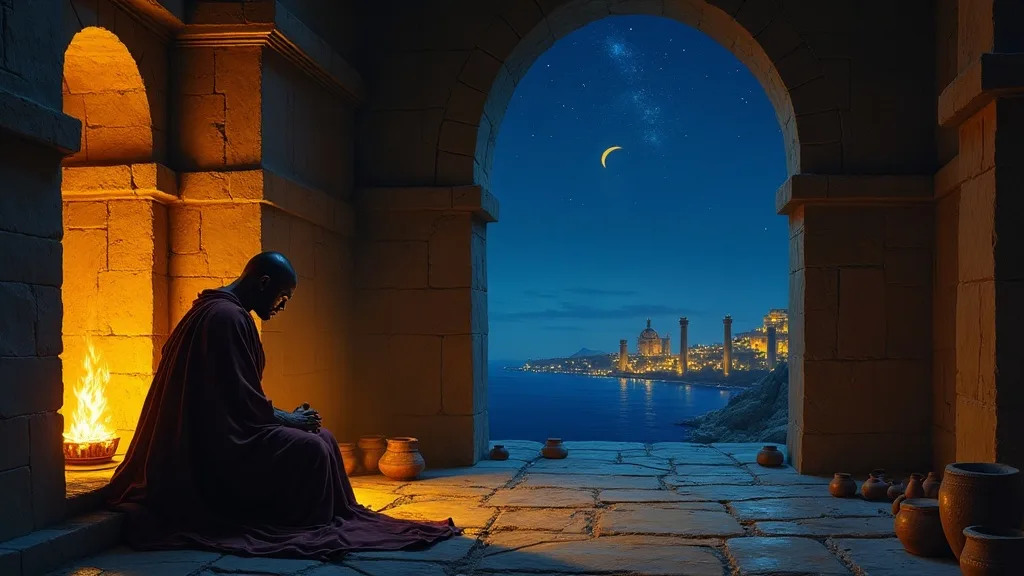
A king sits in his palace and weeps. His wives are gone. His children are gone. His line stands at the edge of nothing. Outside, the gods watch. One of them descends.
This is how the Tale of Kirta begins: not with triumph, not with a hero charging into battle, but with a man broken by loss, alone in a room, crying himself to sleep. The scene is intimate in a way that surprises readers who expect ancient myth to deal only in thunder and glory. Kirta is a king, supposedly touched by the divine, and yet here he is, hollowed out by grief, exactly like any mortal.
The poem was composed sometime in the fourteenth or thirteenth century BC and written in Ugaritic, a language spoken on the coast of what is now northern Syria. It was carved onto clay tablets at Ugarit, a prosperous port city whose scribes preserved some of the richest mythological literature the ancient Near East ever produced. When archaeologists uncovered these tablets at Ras Shamra in 1929, they pulled back a curtain on a tradition that had shaped Canaanite religion for centuries before the Hebrew Bible was written. The Tale of Kirta stood at the center of that tradition, a meditation on what it means to be a king chosen by the gods and what happens when that king forgets his obligations.
The King Who Lost His Dynasty
Kirta, sometimes spelled Keret in older scholarship, is the king of a land called Hubur in the tablets. The poem opens with a genealogy that marks him as a son of El, the chief deity of the Canaanite pantheon, the grey-bearded "Father of Years" who sat enthroned at the source of two rivers. This divine parentage does not protect Kirta from catastrophe. The tablets describe how seven wives died in succession: one to disease, one to drowning, one in warfare, others to different fates. With them, any hope of legitimate heirs vanished.
Scholars such as John Gray and Cyrus Gordon, who worked on the Ugaritic texts throughout the mid-twentieth century, note that this accumulation of losses is not mere backstory. It is the central problem the entire poem circles around. In Bronze Age Canaan, a king without an heir was a political emergency. The royal house connected the community to the gods; a broken dynastic line was a rupture in cosmic order, not merely a personal tragedy. Kirta's grief is therefore both deeply human and politically catastrophic at the same time.
He falls asleep in his tears, and El appears in a dream. The encounter is warm, almost parental. El does not rebuke Kirta for weeping. He asks simply: what do you need? Shall I give you silver, gold, slaves, horses? Kirta refuses all of it. He wants one thing. He wants a son.
El's Command: The March to Udum
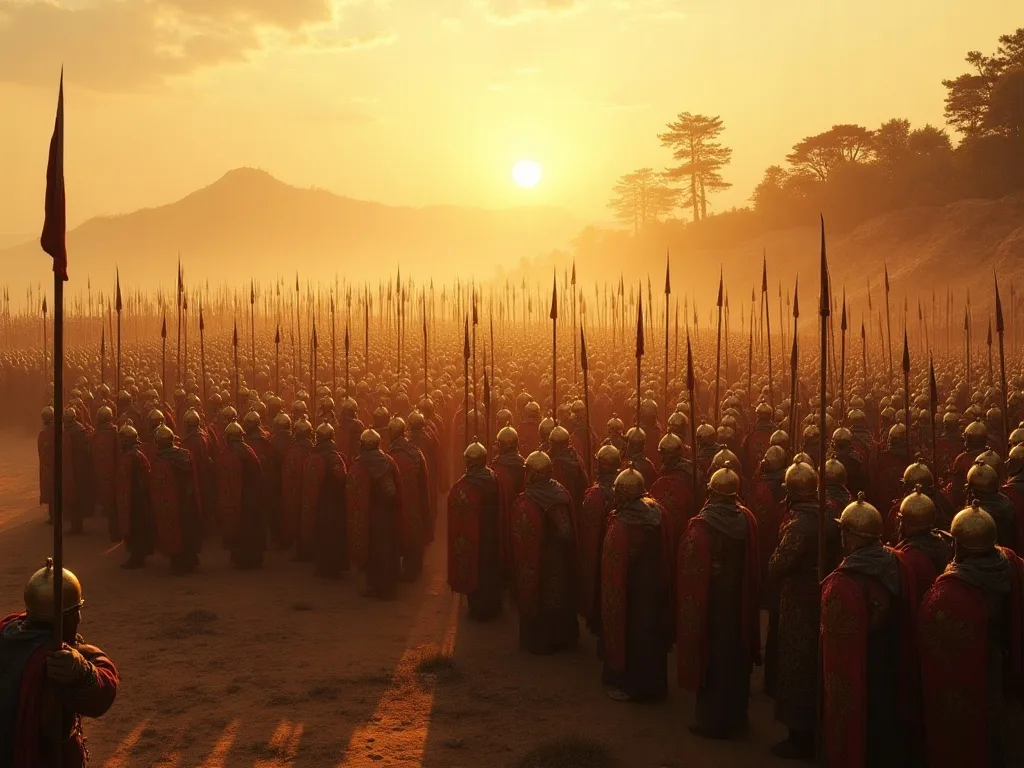
El's instructions are precise. Kirta must raise an army of hundreds of thousands, march to the city of Udum, and request the hand of Hurray, daughter of King Pabel. The descriptions of the army assembling are among the most vivid passages in the poem: soldiers pouring out of the city like locusts covering a field, the sheer scale of the force meant to impress and intimidate rather than to conquer by bloodshed.
Before he departs, Kirta offers a vow to Athirat, the great mother goddess of the Canaanite world, consort of El. He promises to give her silver and gold, a substantial votive offering, if he returns with Hurray safely. This vow becomes important later. Vows made to gods in ancient Near Eastern literature were binding in the most serious sense. Breaking one was not a personal failing; it was a tear in the fabric of the relationship between humans and the divine order.
The march itself is rendered cinematically. The army stops at a shrine of Asherah (another name for Athirat in some textual traditions), and the soldiers are told not to disturb anything sacred along the route. When they arrive outside Udum, King Pabel sends messengers offering gold, silver, horses, everything valuable. Kirta refuses each offer. He wants only Hurray. Eventually, Pabel agrees.
Hurray is described in extraordinarily beautiful terms. The tablets call her graceful as Anat (the fierce warrior goddess), beautiful as Athirat herself. Her birth was blessed. The poem lingers on her beauty not as decoration but as proof that Kirta has, in fact, received something of divine quality, a woman whose children will be worthy of the divine bloodline El promised.
Anat, the Canaanite warrior goddess, appears throughout the Ugaritic texts as one of the most active divine figures in the pantheon, and her mention here as a standard of beauty signals Hurray's significance to the gods themselves.
A Wedding, a Feast, and a Forgotten Vow
Kirta returns home with Hurray. El blesses the marriage personally. Children are promised: seven sons, an eighth who will be blessed above the others, and daughters as well. The royal line will be restored. The dynastic crisis, it seems, is resolved.
Then the poem shifts. Scholars believe a section of the tablets is damaged or missing here, a frustrating gap in the clay. What is clear is that time passes, children are born, and at some point, Kirta has still not fulfilled his vow to Athirat.
The goddess does not forget. The poem is unambiguous about this. Whatever Kirta offered in his hour of desperation, he owes, and the debt sits unpaid.
The King Falls Ill: When the Gods Withdraw Their Favor
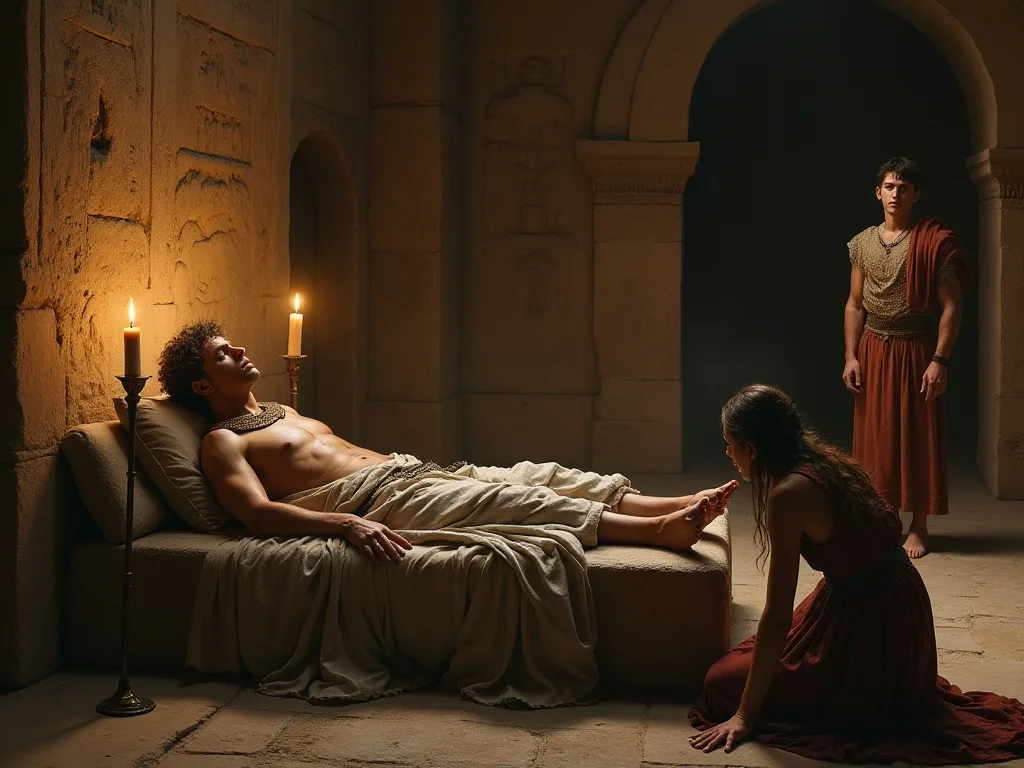
Divine kingship and dynastic crisis reconverge when Kirta falls catastrophically ill. The nature of the illness is not specified, but its effects are total. He cannot eat, cannot drink, cannot perform the duties of kingship. His physical collapse is simultaneously a royal and a cosmic failure: without the king functioning properly, rain may not fall, crops may not grow, the whole machinery of divine-human cooperation stalls.
His daughter Thitmanit sees him wasting away and weeps. His son Yasib goes further. In a passage that shocked early translators for its bluntness, Yasib goes to his father's bedside and essentially tells him to step down. You cannot rule from a sickbed, Yasib argues. You cannot judge the widow's case, defend the fatherless, maintain justice. Let me take the throne.
Kirta, even sick, has enough left in him to curse his own son for this. The curse is terrible and swift. The scene reveals something the poem has been building toward: kingship in the Canaanite world was not merely administrative. It was a sacred office. To demand it prematurely from a sick father was not ambition; it was sacrilege.
The contrast between Thitmanit's grief and Yasib's opportunism defines the poem's moral center. The daughter weeps. The son schemes.
El's Council: The Gods Mobilize a Healer
El himself intervenes to save Kirta. He calls an assembly of the divine council and asks which of the gods will go down and heal the king. No one volunteers. This silence, in the context of ancient Near Eastern divine councils, is itself significant: the gods are uncertain how to act, whether Kirta even deserves saving.
El does not wait for volunteers. He fashions a healing figure, Sha'tiqat (her name roughly translates as "she who causes the disease to pass"), a divine being created specifically for the crisis. She flies through the air, she breaks the grip of the illness, she anoints Kirta, and she commands him to eat and drink.
Kirta recovers. The poem ends, as best as scholars can reconstruct it from the damaged tablets, with the king restored.
Whether Kirta then fulfills his vow to Athirat, whether Yasib faces further punishment, and what becomes of the children El promised: these questions remain partially unanswered. The end of the third tablet is broken, and the text cuts out before the full resolution arrives. Readers have sat with this open ending for three thousand years.

What "Divine Kingship" Actually Meant in Bronze Age Canaan
The phrase "divine kingship" can sound abstract, but the Kirta poem makes it concrete. Kirta is called a "son of El," yet he bleeds, grieves, falls ill, and nearly loses his throne to his own child. His divinity is relational, not intrinsic. He is sacred because El claims him, because the cosmic order runs through his office, because the fertility of the land depends on his functioning correctly.
This model of kingship echoes across the ancient Near East. In Mesopotamian traditions, kings were "shepherds" chosen by the gods but never fully divine themselves. In Egypt, the Pharaoh was the incarnation of Horus; in Canaan, the king was a son of El. The mechanics differ, but the logic is the same: the king is the hinge between heaven and earth. When he fails morally or ritually (a forgotten vow counts as both), the hinge buckles.
Scholars like Mark Smith, whose work on the Ugaritic texts remains foundational, have pointed out that the Kirta poem is also an argument for legitimate succession. The poem is not only about one king's personal crisis; it is about the entire system of dynastic continuity. A king who cannot produce heirs is not merely unfortunate. He is a structural problem for the divine order itself.
The vow to Athirat carries weight beyond simple piety. Athirat as the mother goddess, the creatrix figure, the one who balances El's patriarchal authority, has a direct stake in the continuity of life and generation. Kirta's failure to honor her after she (in some sense) enabled his recovery of dynastic hope is a failure toward the very principle his kingship serves.
The Kirta Poem and Its Echoes in Biblical Literature
Scholars noticed early that the Tale of Kirta shares structural and thematic patterns with several narratives in the Hebrew Bible. The most discussed parallel is with the story of Abraham and Sarah: a patriarch desperate for an heir, a divine promise of children against all odds, the restoration of the dynastic line through divine intervention.
The name Kirta itself has been compared to Keret, which some older scholars connected to broader Semitic root words meaning "city" or "community," though this etymology remains debated. More convincing are the parallels in narrative structure. A childless or bereft leader, a divine dream-encounter, a command to march toward a distant king's daughter, a vow that creates trouble: these elements appear with notable consistency across Northwest Semitic literary traditions.
El, the Canaanite father god, who dominates the Kirta poem, appears in the Hebrew Bible as El or El Shaddai, absorbed into the monotheistic framework but carrying traces of his older character. His tenderness toward Kirta in the dream scene, asking "what do you need?" rather than issuing commands, matches the image of El in other Ugaritic texts as a compassionate, sometimes weary patriarch of the gods.
The Ugaritic scholar Frank Moore Cross devoted substantial attention to these connections in his 1973 work "Canaanite Myth and Hebrew Epic," arguing that the Kirta cycle was part of a shared literary inheritance that shaped early Israelite narrative traditions before they were transformed by the Hebrew Bible's editors.
The Tablets Themselves: Ilimilku and the Archives of Ugarit
None of this survives by accident. The three tablets that preserve the Kirta poem were found in a structure archaeologists call the "House of the High Priest" at Ras Shamra, modern-day Latakia in Syria. The city of Ugarit was destroyed around 1185 BC, almost certainly as part of the broader Late Bronze Age Collapse that wiped out or severely disrupted civilizations across the eastern Mediterranean.
The tablets survived because clay, once dried or fired, is almost indestructible. The scribe who copied them, Ilimilku, also left his name on the Baal Cycle tablets, which tells us something: this was a single trained scholar working at the end of a great tradition, copying down texts that were already old when he set his stylus to clay.
Three tablets survive. Tablet I introduces Kirta's loss and El's dream-command. Tablet II covers the march to Udum and the marriage to Hurray. Tablet III deals with the illness, Yasib's confrontation, and the intervention of Sha'tiqat. Each tablet has damaged sections, particularly at the ends and beginnings, which means that important transitions in the plot are sometimes missing. Scholars work with the gaps, noting where the narrative logic can be reconstructed and where genuine uncertainty remains.
The Ugaritic language in which these tablets are written is a Northwest Semitic language, closely related to Phoenician and early forms of Hebrew. It uses a cuneiform alphabet (one of the earliest alphabets ever created) rather than the syllabic scripts common in Mesopotamia. The Ugaritic alphabet has thirty signs. Deciphered in 1930, just a year after the first tablets were found, it opened up a literature that had been completely unknown to modern scholarship.
Kirta's Illness as Political Philosophy
It is worth pausing on Yasib's speech to his sick father, because it is one of the most politically literate passages in any ancient Near Eastern text. Yasib does not simply want power. He articulates a theory of legitimate rulership: a king who cannot hear the widow's plea, who cannot protect the poor, who cannot administer justice, has forfeited the moral basis of his authority.
This is not a cynical argument, even if Yasib's motives are. It draws on a set of values that recur throughout Ugaritic and broader ancient Near Eastern royal ideology: the king's primary duty is to maintain justice, protect the vulnerable, and ensure that the divine-human covenant functions. These are the same values articulated in the Mesopotamian Hammurabi's Code (written around 1754 BC), in Egyptian royal inscriptions, and in the Hebrew Bible's prophetic literature.
Kirta's curse on Yasib in response suggests he agrees, at least in principle, that a king who cannot function should cede authority. But Yasib's mistake is the timing, the manner, and the presumption: demanding succession before the king has formally chosen his heir violates the sacred nature of that transmission. The gods, not the son, decide when a king's time is done.
The poem does not tell us Yasib was wrong about the facts. It tells us he was wrong about the process. That distinction is the poem's sharpest political insight.
The Place of Kirta among Ugaritic Myths
The Kirta poem is one of three major literary cycles found at Ugarit, alongside the Baal Cycle and the Tale of Aqhat. Each cycle operates on a different register. The Baal Cycle is cosmic, dealing with the struggles of Baal Hadad, the storm god, against death and chaos. The Tale of Aqhat is a hero tale focused on a young man, a divine bow, and mortality.
Kirta occupies the middle ground. Its protagonist is human but royally touched, mortal but divinely connected, subject to grief and illness but also capable of divine intercession. The poem is the most intimate of the three cycles, the most concerned with the interior life of its central figure and the drama of a family rather than the drama of the cosmos.
Together, the three cycles give us a picture of Canaanite religious thought in extraordinary depth. The gods are not remote or indifferent. They involve themselves in human affairs constantly, sometimes gently (El's tender dream), sometimes violently (Anat's warfare), sometimes with a craftsman's care (El fashioning Sha'tiqat). The humans, even kings, are morally responsible for maintaining the relationships that hold everything together.
Frequently Asked Questions About the Tale of Kirta
Frequently asked questions
Who is Kirta in Canaanite mythology?
Kirta (also spelled Keret) is a king described as a son of El, the chief Canaanite deity. He is a human king, not a god, but his royal office gives him a special sacred status. His story, preserved on three damaged clay tablets found at Ugarit, deals with the loss of his wives and heirs, a divine quest to obtain a new bride, and a near-fatal illness caused by breaking a vow to the goddess Athirat.
What are the Ugaritic tablets and how were they found?
The Ugaritic tablets are a collection of clay tablets found in 1929 at the archaeological site of Ras Shamra in northern Syria, the ancient city of Ugarit. They date to roughly the fourteenth and thirteenth centuries BC and were written in Ugaritic, a Northwest Semitic language using a cuneiform alphabet. Scholars deciphered the script by 1930. The tablets include mythological cycles, ritual texts, administrative records, and correspondence, making Ugarit one of the most important literary archives of the ancient Near East.
Why does Kirta fall ill in the tale?
The poem strongly implies that Kirta's illness is connected to his failure to fulfill a vow he made to Athirat (the great mother goddess) before his campaign to win Hurray. Before marching to Udum, Kirta promised Athirat gold and silver. After his successful return and the birth of his children, the vow goes unpaid. The divine order, upheld partly by the goddess whose generative powers underpin dynastic continuity, withdraws its protection. Kirta's illness is the consequence.
How does the Tale of Kirta relate to the Hebrew Bible?
Scholars including Frank Moore Cross and John Gray have noted structural parallels between the Kirta story and biblical narratives, particularly the Abraham cycle, where a patriarch without heirs receives a divine promise of descendants. The Canaanite deity El appears in the Hebrew Bible under the same name and shares several characteristics with the El of the Ugaritic texts. The shared literary conventions suggest both traditions drew on a common Northwest Semitic narrative inheritance, though the theological frameworks diverged sharply over time.
What is the significance of divine kingship in the Kirta poem?
In the Kirta poem, the king's authority is not simply political; it is relational and sacred. Kirta is a "son of El," meaning his rule is legitimized by the chief deity's patronage. When the king fails ritually (by breaking a vow) or functionally (by being too ill to administer justice), the entire system falters. The poem argues that kingship is a covenant: the gods support the king, the king fulfills his religious and social obligations, and the land prospers. Any break in that covenant has consequences that ripple outward from the palace into the cosmos.
Is the Tale of Kirta complete or are parts missing?
Parts are missing. The three tablets are damaged, with significant lacunae (gaps) at the end of each tablet and at several internal points. The conclusion of the story, in particular, is fragmentary. Scholars can reconstruct the general outline: Kirta recovers from his illness after El sends the divine healer Sha'tiqat, and Yasib is cursed for demanding his father's throne prematurely. What happens after, including whether Kirta fulfills his vow and what becomes of the dynasty, remains uncertain because the text breaks off.
The Broken Tablets and the Living Question
The Tale of Kirta ends in a crack in the clay. Somewhere in that final damaged section, a resolution exists that no modern reader will ever see clearly. What we have is a king restored to life, a son cursed for ambition, a divine system still intact, and a vow whose fulfillment remains unconfirmed.
That incompleteness is not a defect. It mirrors the poem's own argument. Divine kingship and dynastic crisis are not problems with clean solutions. They are ongoing conditions. A king secures his dynasty, loses it, bargains for it again, falls ill, recovers, and faces new claims from his children. The cycle does not stop. The gods remain watchful. The vows accumulate.
What the Kirta poem gave its ancient audience at Ugarit was not reassurance but recognition. A king listening to this poem at a palace feast would hear, in the story of Kirta's weeping and El's midnight visit, a picture of his own obligations. He owed his gods something. He owed his people their rain and their justice. He owed the goddess a gift he had not yet delivered.
In the century since these tablets were first read, the debate around Kirta has sharpened. Some scholars, following the lead of Daniel Pardee at the University of Chicago, argue the poem is primarily a ritual text, designed to be recited as part of royal cult ceremonies. Others, including Gregorio del Olmo Lete, read it as a genuinely literary composition with psychological depth, a work of art as much as a religious document. Both can be right. The best sacred texts always are.
The clay tablets sleep now in museum vaults in Aleppo, Paris, and other collections. The scribe Ilimilku, who copied them sometime before 1185 BC and the catastrophe that ended Ugarit forever, left no other trace of himself. He had no way of knowing that his work would outlast his city by three thousand years, or that readers far from any Bronze Age palace would still sit with Kirta's grief, El's tenderness, and the unanswered question of a vow forgotten in the happiness of answered prayer.
Read the full book
Want the whole story?
The complete edition is an instant PDF download here, with a paperback on Amazon for selected titles.
Canaanite
The Canaanite Mythology Book: Baal, El, Anat, and the Gods of the Ancient Levant
Baal, El, Anat, and the Gods of the Levant
The gods the Hebrew Bible warned against, recovered from the clay tablets of Ugarit: El the patriarch, Baal the storm-rider, Anat the war goddess, and Mot the lord of death. The mythology behind the Bible’s great rival.
More from Canaanite
All articles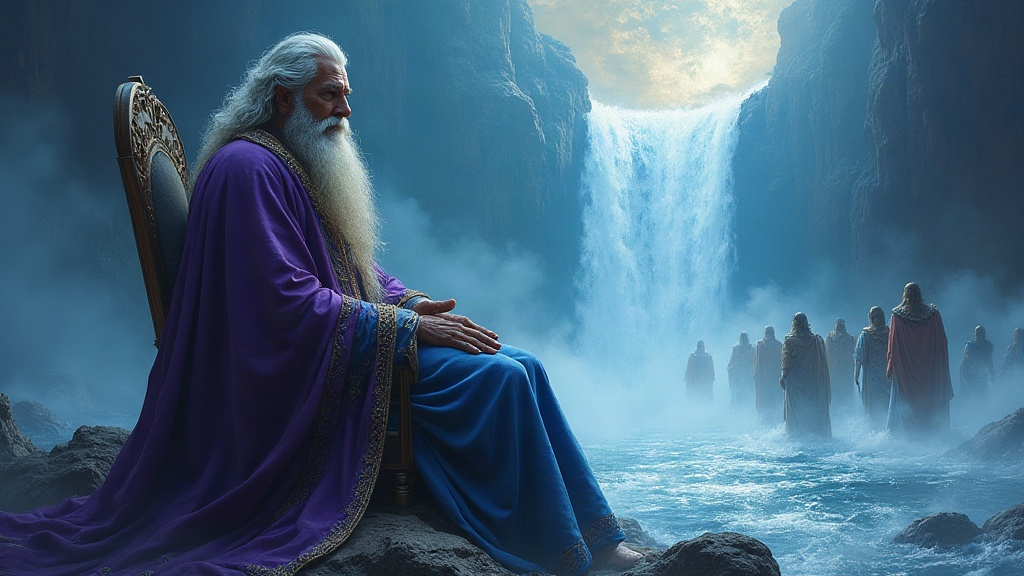
Canaanite
El: The Father of Gods in Canaanite Religion
El ruled the Canaanite pantheon as the ancient king of gods, a weathered father whose name meant simply "god." Discover how this Syrian deity shaped Near Eastern belief for a thousand years before fading from memory.
Canaanite
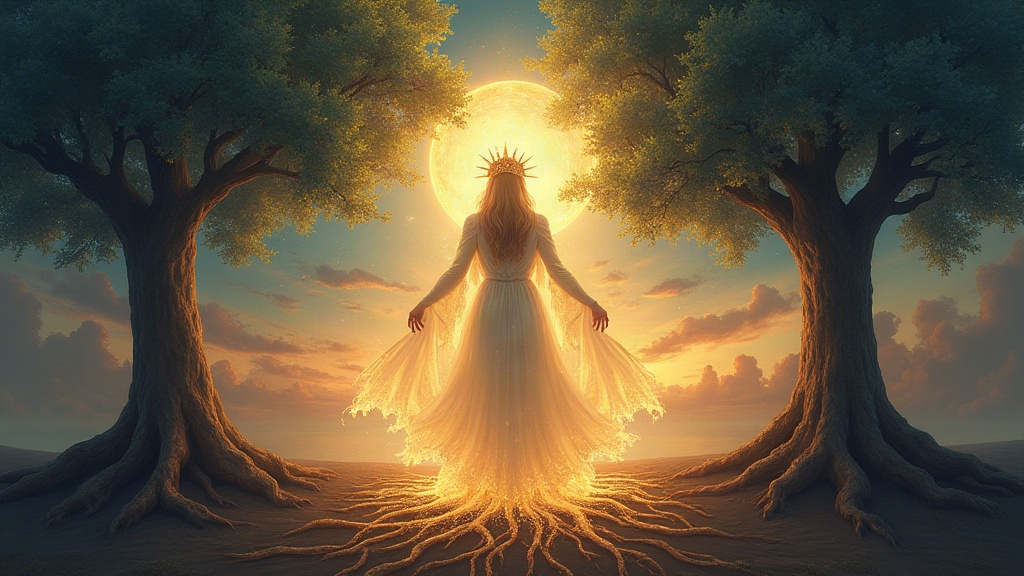
Asherah: The Queen of Heaven and Consort of El
Asherah ruled the Canaanite pantheon as the Queen of Heaven, the consort of El, and the mother of seventy gods. Discover how this ancient goddess shaped Levantine belief and why her worship scandalized biblical writers.

Canaanite
Mot: The God of Death and the Underworld in Canaanite Myth
Mot rules the Canaanite underworld with an insatiable hunger, devouring all things mortal. Explore how this ancient god of death embodied fear, finality, and the cosmic struggle between life and extinction.
Canaanite
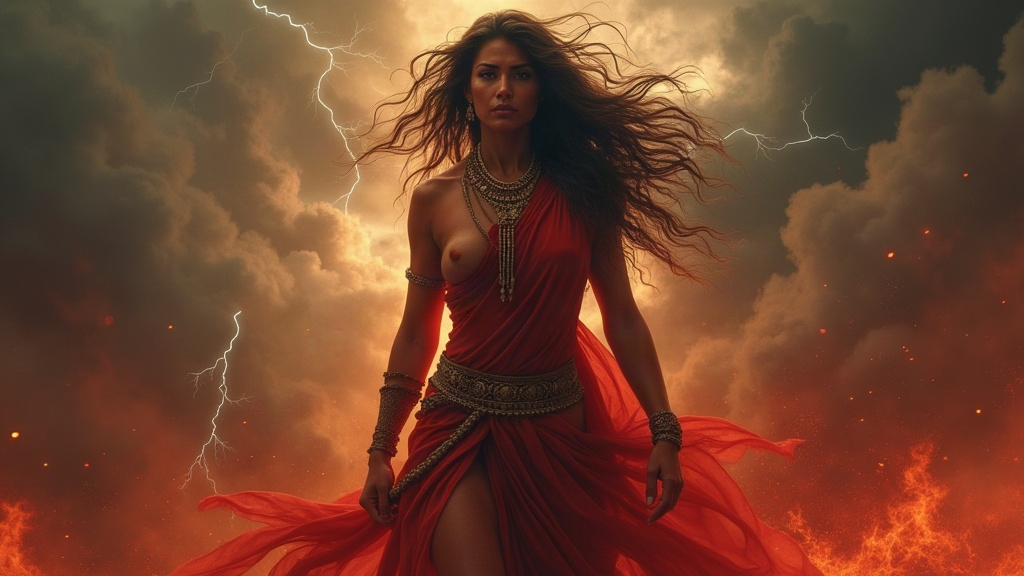
Anat: The Warrior Goddess of Love and Battle
Anat stands alone in Canaanite myth: a goddess who commands bloodshed and desire with equal fury. Explore the warrior deity who protected kings, seduced gods, and defied every boundary of her world.