
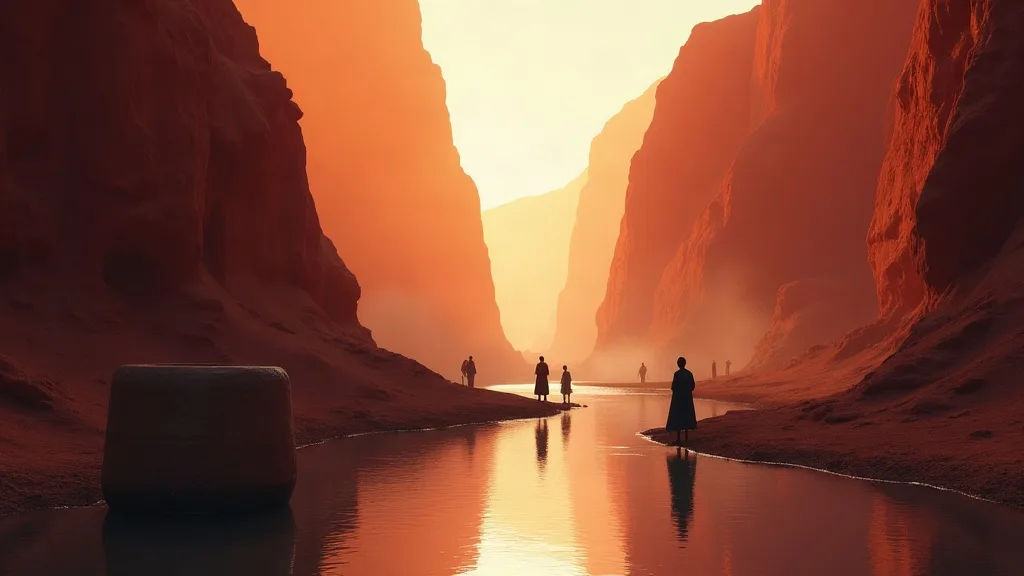
The Nommo: Ancestral Water Spirits and Culture Heroes of the Dogon
The Nommo are the Dogon people's ancestral water spirits who brought civilization, language, and moral order to humanity. Descended from the sky god Amma, they shaped the world through sacrifice and remain central to Dogon ritual, art, and identity today.
Contents
In the beginning, the Dogon people say, the Nommo emerged from the waters carrying everything needed to teach humans how to live. They arrived not as distant gods but as direct ancestors, amphibious beings who moved between water and land, bringing agriculture, weaving, and the structure of society itself. For the Dogon of Mali, these water spirits are not mythical abstractions but real presences whose influence flows through ritual, sculpture, masks, and daily life even now.
The story of the Nommo is a story of sacrifice, descent, and return. It is also one of the richest and most intricate mythologies in Africa, one that shows how indigenous knowledge systems encode astronomy, natural philosophy, and moral teaching in a single narrative frame.
The Creation of the Nommo and Their Divine Origins
The Dogon universe begins with Amma, the distant sky god, who existed alone in primordial darkness. Amma did not speak the world into being; instead, he shaped it through the act of creation itself, gradually bringing order from void. The first being Amma created was Nommo, the primal water spirit, whose name means "one who drinks" or "one who is wet." Some accounts describe a single primordial Nommo; others speak of multiple Nommo siblings or pairs who were born together.
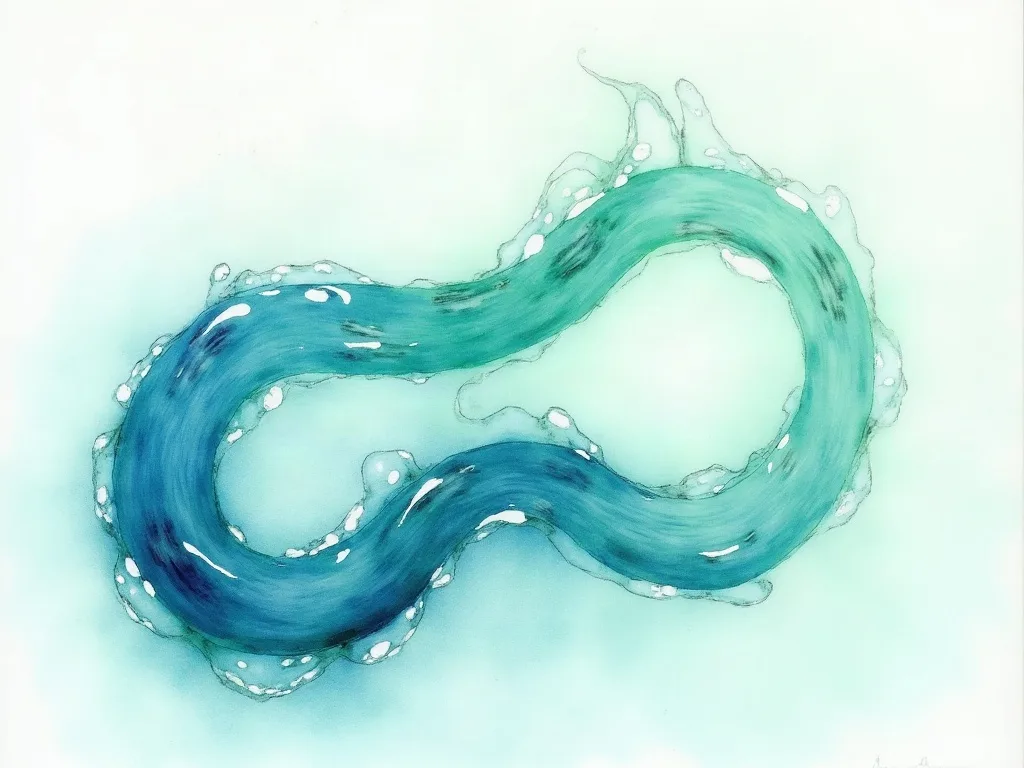
The creation of Nommo was not instantaneous. According to Dogon elders recorded by French anthropologist Marcel Griaule in the mid-20th century, Amma brought the Nommo into being gradually through a process of cosmic gestation. In some versions, Amma mixed earth with water to form the first Nommo. In others, Nommo was born from Amma's own body, emerging complete with the knowledge of how to structure and civilize the world. This ambiguity is not weakness in the narrative; it is deliberate. The Dogon preserve multiple versions because myth is not a fixed text but a living conversation between teacher and student, between past and present.
The Nommo received a sacred charge from Amma: to descend to the earth and organize it for human habitation. The spirits were given dominion over water and water-based life. They were appointed guardians of the natural order and teachers of human civilization. In Dogon thought, the Nommo did not merely create the world passively; they actively shaped it through presence, speech, and sacrifice.
Nommo as Ancestors and Descent to Earth
The Nommo as ancestral beings distinguishes them from many other African water spirits. They are not simply nature forces; they are the first civilized beings, the template upon which human society is modeled. This concept is crucial to understanding Dogon theology: the Nommo are closer to humanity than to the distant sky. They are intermediaries, bridges between the transcendent and the earthly.
The Dogon describe the Nommo's descent to earth as a journey toward humanity. In some tellings, the first Nommo came down in an ark or vessel (often described as shaped like a fish or boat), bringing seeds, tools, and the knowledge of craftsmanship. This descent was not punishment or exile; it was purposeful. The Nommo came to earth because the world was incomplete without them. The spirits landed in water, particularly in rivers and lakes, because water was their natural element and the source of all fertility.
Once on earth, the Nommo took on more human-like forms, though they retained their aquatic nature. They walked among the first humans, teaching them how to build, how to cultivate, how to speak properly, and how to organize themselves into families and communities. The Nommo taught language itself; in Dogon myth, before the Nommo arrived, humans communicated only through gesture and simple sound. The spirits brought the gift of articulate speech, the ability to name and therefore to know the world.

This teaching role gave the Nommo a status similar to that of culture heroes in other mythologies. Like Prometheus among the Greeks, Maui among the Polynesians, or Quetzalcoatl among the Aztecs, the Nommo brought transformative knowledge to humanity. But unlike those heroes, who often acted against divine will or suffered for their gift-giving, the Nommo acted as direct agents of Amma's will. Their teaching was not transgressive; it was the very purpose for which they were created.
The Nommo and Water: Mastery, Fertility, and Danger
Water is the Nommo's domain and their essence. For the Dogon, who live on the Bandiagara Plateau in Mali, water is precious and powerful. Rivers carve canyons into the red stone. Wells sustain communities through drought. Rainfall determines survival. The Nommo embody all this: the life-giving power of water and its capacity for sudden, destructive force.
The Nommo are described as amphibious beings who can live in water as naturally as on land. Some accounts give them scales, fins, or fish-like lower bodies. Others describe them as fully human in appearance but with an inexplicable affinity for water, an ability to remain underwater without drowning or to call water to them through speech or gesture. This fluidity is not a contradiction in Dogon thought; it reflects the Nommo's status as beings who transcend fixed categories, who move between worlds.
The relationship between the Nommo and water is generative. Wherever water flows, the Nommo are present. Lakes, rivers, and wells are not merely geographical features; they are the Nommo's temples. Women who go to the well to fetch water may encounter the Nommo, though direct meetings are rare and always significant. The Nommo bless the waters with fertility, ensuring that fish swim in rivers, that crops grow when rivers flood, that children are born healthy. But the Nommo also demand respect. Water that is polluted or misused angers the spirits. Floods that destroy villages are sometimes understood as the Nommo's response to human transgression.

The Sacrifice of Nommo and the Origin of Human Mortality
One of the most distinctive features of Nommo mythology is the account of Nommo's sacrifice or death. In several versions of the creation narrative, the Nommo does not simply vanish after teaching humanity. Instead, the spirit dies, is dismembered, or is transformed, and from this death arises the possibility of human existence.
In some tellings, the Nommo drowns or is consumed by water, and from the spirit's body arises the first humans. In others, Nommo is sacrificed deliberately so that human society can be born. This sacrifice is not punishment. It is generative. The death of Nommo is to human civilization what the death of grain is to the harvest, what the death of an animal is to sustenance. It is a necessary transformation, an exchange in which one form of being becomes another.
This theme connects the Nommo to broader patterns in African and world mythology. The death and dismemberment of a divine or semi-divine being, with the subsequent creation of the ordered world from the body of the dead being, appears in mythologies across cultures. What is distinctive in the Dogon case is the emphasis on the sacrifice as ongoing. The Nommo does not die once in the distant past; the spirits continue to die and be reborn in seasonal cycles, in rituals, in the life and death of water itself. The Nommo are eternal because they renew themselves through continual transformation.
Nommo in Dogon Ritual and Spiritual Life
The Nommo are not distant deities to whom the Dogon pray in hope of response. They are incorporated into the fabric of daily and ceremonial practice. Water used in birth rituals is believed to carry the blessing of the Nommo. Masks worn in certain dances are understood to be inhabited by or represent the Nommo, who wear them to communicate with the living. The elaborate wooden sculptures carved by Dogon artists often depict figures with elongated torsos and stylized features that evoke the otherworldly presence of the Nommo.
The most important ritual involving the Nommo is the Sigui, a ceremony that takes place every 60 years to celebrate the creation of the world and the original descent of the Nommo. The Sigui procession is a complex performance that can last for weeks and involve multiple villages. Masked dancers move through the landscape, enacting the journey of the Nommo from the sky down to the earth, re-presenting the original act of civilization-bringing that continues to sustain the Dogon world.
In water-based rituals, the Nommo are explicitly invoked. Before fishing, before drawing water from a well, before crossing a river at a dangerous point, the Dogon may speak words of greeting or respect to the Nommo, acknowledging the spirits' presence and asking for their protection. This is not prayer in the Western sense; it is address, a speaking-to rather than a speaking-at. It assumes that the Nommo are present and listening, that the boundary between human and spirit worlds is permeable and negotiable.
Nommo and the Dogon Understanding of Life Force
The Nommo represent a concept central to Dogon philosophy: the idea that life force, intelligence, and consciousness are not confined to individual beings but flow through networks of relationship. The Nommo are ancestral, which means they are both dead and alive. They are past presences that remain active in the present. When a Dogon person drinks water, they are, in a sense, taking the Nommo into their own body. When they bathe, they are immersed in the element over which the Nommo reign.
This understanding extends to conception and birth. The Nommo are associated with fertility and with the transmission of life from one generation to the next. Some accounts describe the Nommo as guardians of the souls of unborn children, holding them in the watery realm until the proper moment for birth. Other versions suggest that the Nommo are reborn through human descendants, that ancestor and child are the same being returning in a new form. This is not reincarnation in the Hindu or Buddhist sense, with its emphasis on karma and progression. Rather, it is a cyclical return, a continuous conversation between the living and the dead.
Scholarly Interpretations and Debates
The study of Nommo mythology owes much to Marcel Griaule, a French anthropologist who spent decades among the Dogon beginning in the 1930s. Griaule's work was groundbreaking in its depth and in its respect for Dogon intellectual traditions. He produced detailed accounts of Dogon cosmology, including the narratives of the Nommo, often presented in dialogue form that preserved the voices of Dogon teachers.
However, Griaule's work has also been subject to scrutiny. Some scholars have questioned whether his accounts were always carefully sourced, whether his collaborators fully endorsed all of his interpretations, or whether the mystique Griaule created around Dogon "secret knowledge" actually reflected historical reality or rather the anthropologist's own desire to find hidden wisdom. Later scholars, including Dogon-centered researchers, have offered corrections and alternative readings of these same traditions.
What is certain is that the Nommo are real and important to the Dogon. The spirits appear in visual art, in oral narrative, in ritual practice, and in the lived experience of Dogon communities. Whether every detail Griaule recorded represents the authentic voice of Dogon tradition or whether some elements reflect the interaction between researcher and subject, the Nommo remain central to how the Dogon understand their own origins, identity, and place in the cosmos.
The Nommo in Artistic and Aesthetic Expression
The Nommo have inspired some of the most distinctive visual art of the Dogon region. Wooden figures, often stylized and abstract, represent the Nommo in human or semi-human form. These sculptures are not idols in the Western sense; they are focal points for meditation and address, objects through which the living communicate with the ancestors. The elongated bodies, the carefully carved features, and the smooth finish of these pieces reflect a philosophy of beauty in which abstraction and economy of form allow the spirit to emerge more clearly.
The masks worn in Dogon dances also draw on Nommo imagery. Some masks represent the Nommo directly; others represent beings or events shaped by the Nommo's presence in the world. The kanaga mask, one of the most famous and recognizable Dogon masks, is often interpreted as representing a water spirit or a cosmic being associated with the original creation. When a dancer wears the kanaga, moving across the village square in the context of ceremony, the mask is believed to become a channel through which the Nommo or other spiritual presences communicate with the living.
Textiles woven by Dogon women also incorporate Nommo-related symbolism. Patterns in cloth can represent water, vegetation, or the pathways through which the Nommo move. These textiles are not simply decorative; they are mnemonic devices, visual representations of mythology and philosophy that can be "read" by those who know the symbolic language. A woman weaving cloth is, in some sense, participating in the ongoing work of civilization that the Nommo began.
The Nommo in Contemporary Dogon Life
The Nommo remain central to Dogon identity and spirituality today. The rituals involving water, the respect shown to wells and rivers, the narrative traditions kept alive through storytelling and performance: these continue even as the Dogon navigate modern pressures, including tourism, economic change, and religious conversion.
The Sigui ceremony, though less frequently performed than in the past due to its enormous expense and the difficulty of coordinating multiple villages, still takes place. When it occurs, it reaffirms the connection between the living Dogon and the ancestral Nommo, reminding the community of their origins and their ongoing debt to the spirits who brought civilization into being.
Outside the Dogon regions, the Nommo have become known through anthropological literature, museum exhibitions, and the increasing global interest in African indigenous knowledge systems. Some scholars and artists have drawn on Nommo mythology in their own work, seeing in the water spirits a philosophy of exchange, sacrifice, and ancestral presence that offers alternatives to Western individualism and linear time.
Nommo and Cross-Cultural Echoes
The Nommo are distinctive to Dogon tradition, but elements of their mythology resonate with broader patterns in African spirituality and world religion. Water deities appear across African mythologies. Ancestor veneration, the belief that the dead remain present and active in the community, is widespread across the continent. The idea of culture heroes who bring civilization to humanity appears in mythologies from Mesopotamia to Mesoamerica to Australia.
What makes the Nommo unique is the synthesis: the combination of ancestor, water spirit, civilization-bringer, and sacrifice in a single complex being or family of beings. The Nommo are not simply rulers of nature; they are models of social order. They are not simply ancestors; they remain active, transformative presences. They did not bring civilization in the past tense; they continue to bring it, to renew it, to demand that humans live up to the standards they set.
Nommo, Time, and the Cycling Cosmos
One of the most sophisticated elements of Dogon cosmology, inseparable from Nommo mythology, is the understanding of time as cyclical rather than linear. The Nommo do not create the world once and then retire. They renew it continuously. The 60-year Sigui cycle is one expression of this. Another is the seasonal cycle, in which the Nommo withdraw into the depths during dry seasons and emerge during floods. A third is the cycle of human generations, in which the ancestors return as new members of the community.
This cyclical understanding has profound implications for how the Dogon relate to their own mortality. Death is not an ending but a transformation, a return to the realm of water and spirit from which new life emerges. The Nommo taught this lesson through their own deaths and rebirths. Living in a world shaped by the Nommo means accepting that all beings participate in cycles of destruction and renewal, that nothing is simply lost but rather transformed.
Frequently asked questions about the Nommo and ancestral water spirits
Frequently asked questions
Who created the Nommo?
According to Dogon mythology, the sky god Amma created the Nommo as the first beings through a process of cosmic gestation. Amma gave the Nommo the charge to descend to earth and organize it for human habitation, making them direct agents of creation rather than independent deities.
Are the Nommo still present in the Dogon world today?
Yes. For the Dogon, the Nommo remain active presences. They inhabit waters, guide rituals, and are invoked in daily practices involving water. The 60-year Sigui ceremony, still performed by some Dogon communities, explicitly celebrates and renews connection with the Nommo.
Why is water so significant to Nommo mythology?
Water is the Nommo's natural element and domain. For the Dogon, living on a plateau where water is precious, the Nommo embody both the life-giving power of water and its unpredictability. Rivers, wells, and lakes are understood as temples where the Nommo are especially present.
What is the relationship between the Nommo and human ancestors?
The Nommo are ancestral beings, though prior to human ancestors. They are the template of ancestry itself. Human ancestors are understood as continuous with the Nommo; the boundary between first ancestor and contemporary deceased relative is porous, with all ancestors participating in the ongoing renewal of the world.
How did scholars like Marcel Griaule come to document Nommo mythology?
Marcel Griaule spent decades among the Dogon beginning in the 1930s, learning directly from Dogon elders and teachers. He produced detailed, dialogic accounts of Dogon cosmology. While some of Griaule's methods and interpretations have been questioned by later scholars, his work remains a primary source for understanding how the Nommo are understood within Dogon intellectual tradition.
How are the Nommo depicted in Dogon art?
The Nommo appear in Dogon sculptures, masks, and textiles. Wooden figures often show stylized, elongated human forms. Masks worn in ceremonies may represent the Nommo or spirits shaped by their presence. Woven patterns can represent water, vegetation, or the pathways of spirit movement.
The Nommo as a Mirror of Dogon Philosophy
The story of the Nommo is not simply ancient history or quaint tradition. It is a philosophy encoded in narrative form. The spirits teach that creation is never finished, that the universe requires continual renewal through exchange and sacrifice, that the boundary between living and dead is permeable, and that civilization is not a human achievement but a gift that demands perpetual gratitude and renewal.
For the Dogon, remembering the Nommo means living in awareness of these principles. It means respecting water, honoring ancestors, participating in ritual, and accepting one's place in a cosmic order that stretches backward to Amma and forward to generations not yet born. The Nommo carry knowledge that is at once mythological and practical, spiritual and grounded in the realities of life on the Bandiagara Plateau. They show how a people can maintain continuity with their past, transmit wisdom across generations, and understand themselves not as isolated individuals but as participants in a vast community of living and ancestral beings.
That vision, sustained across centuries and lived in ritual and daily practice, is the living legacy of the Nommo in the Dogon world today.
Free 25-page sample
Want the whole story?
Take the first 25 pages free. If it pulls you in, the full edition is yours as an instant PDF download, with a paperback on Amazon for selected titles.
Dogon
The Dogon Mythology Book: Amma, the Nommo, and the Mystery of Sirius
Amma, the Nommo, and Sirius
The cosmology of a people who carved their villages into a cliff in Mali, and who, some claim, knew of an invisible companion star to Sirius. The creator Amma, the amphibious Nommo, the cosmic egg, and one of anthropology’s great controversies.
More from Dogon
All articles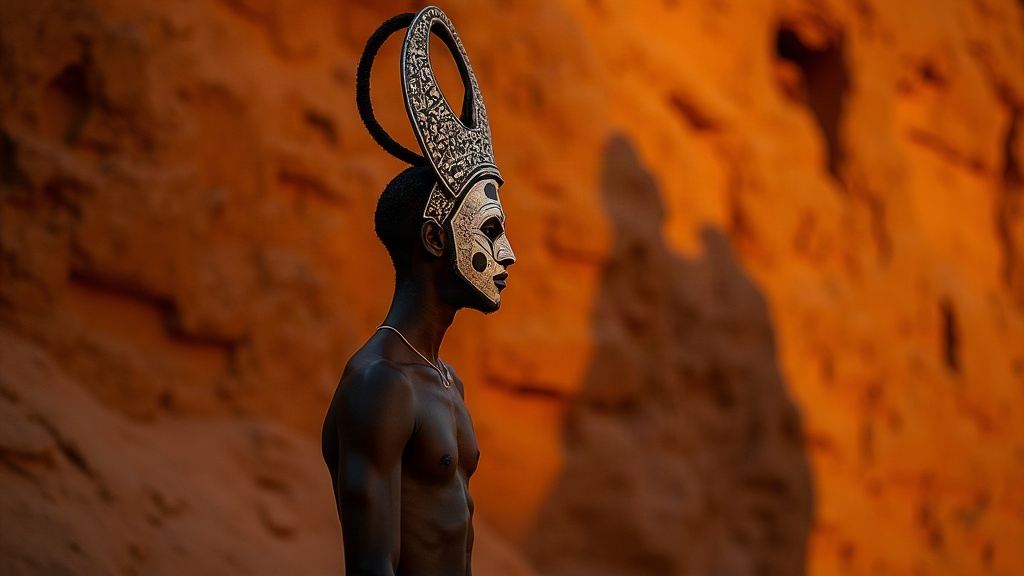
Dogon
The Dogon Mask Tradition: Kanaga, Sirige, and Ritual Performance
The Dogon people of Mali have preserved one of Africa's most intricate mask traditions for centuries. Kanaga and Sirige masks embody cosmology, death, and the animate power of wood in ceremonies that bind the living to ancestors.
Dogon
The Binu Shrines: Sacred Altars to Ancestral Spirits in Dogon Tradition
The Binu Shrines are sacred wooden altars where the Dogon people of Mali honor their ancestors and the primordial water spirits that shaped their world. Built into cliff dwellings and family homes, these shrines connect the living to the dead through ritual, offering, and careful ceremonial action.
Dogon
The Dama Funeral Rites: Guiding the Dead to Ancestorhood
The Dama is the Dogon people's most sacred ceremony, a multi-stage funeral rite that transforms the dead into protective ancestors. Masked dancers, secret societies, and months of ritual guide the soul through the spirit world while honoring the body's return to earth.
Dogon
The Sigui Festival: The Dogon's 60-Year Renewal Ceremony
The Sigui Festival marks every 60 years when the Dogon people of Mali gather to renew their covenant with the Nommo, sacred water spirits, through masked dances, sacred narratives, and a pilgrimage that echoes creation itself. Discover why this rare ceremony transforms villages and reshapes identity.