
Lebe: The First Mortal and Earth Priest Ancestor
Lebe was the first human to die in Dogon belief, then swallowed by a serpent and reborn as the living spirit of the earth. Meet the ancestor at the heart of Dogon ritual life.
Contents
The old man died first. That is the short version. But death, in Dogon thought, is never the end of a story; it is more like the place where the real story begins.
Lebe: The First Mortal and Earth Priest Ancestor stands at the origin of everything the Dogon people understand about human life on earth. He was the first person to die. He was swallowed by the primordial serpent Nommo. He was remade, bone by bone, into something that could no longer be called simply human. Then he was buried beneath the soil of the land where his descendants would settle, and from that burial the earth itself became sacred.
That sequence matters. Lebe is not a god in the detached, unreachable sense. He is an ancestor, which in Dogon cosmology carries more weight than divinity alone. He is the proof that the earth remembers the dead, that the soil repays the body placed inside it, and that a lineage of priests called the Hogon can still hear him breathing beneath their feet.
Lebe's Place in the Dogon Cosmos
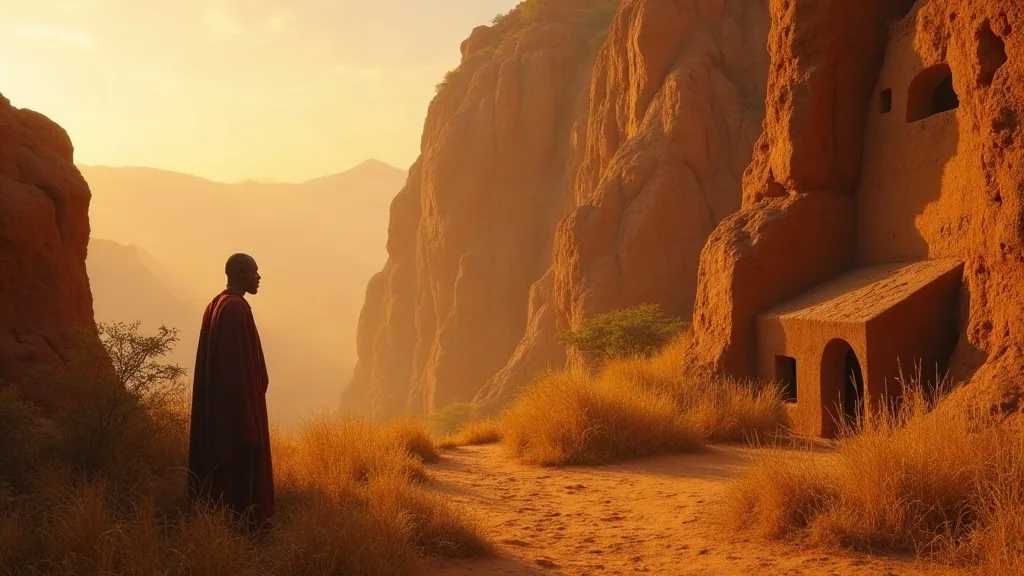
To understand Lebe, you need a quick map of Dogon cosmology. The Dogon live primarily in the Bandiagara Escarpment region of present-day Mali, a landscape of sandstone cliffs and villages that seem to grow from the rock itself. Their mythology, recorded extensively by the French anthropologist Marcel Griaule through decades of fieldwork beginning in 1931, is among the most elaborately structured cosmological systems documented in West Africa.
At the centre of that system sits Amma, the supreme creator god. Amma made the universe from a single word, or more precisely from a vibration, and from that first act came the Nommo: four pairs of twin spirits, amphibious and serpentine, who are the ideal forms of living creation. The Nommo are pure, ordered, generative. Humans, by contrast, are impure, mortal, and in constant need of ritual renewal to stay connected to the cosmic order that the Nommo embody.
The first humans emerged from this cosmological frame already compromised. The jackal spirit Ogo, sometimes called Yurugu, disrupted Amma's creation through premature, disordered action. The Nommo paid the price for restoring order, one of them sacrificed and reconstituted so that the earth could be purified and life could proceed. Lebe enters at the far end of that chain, the point at which divinity finally touches ordinary human death.
The Death That Remade the World
Griaule's records, drawn chiefly from conversations with the Dogon sage Ogotemmêli in 1946, describe Lebe as the eldest of the early humans, the first of the ancestral generation to reach the end of life. When he died, the Dogon were still in a kind of primordial homeland, before the great migration that would carry his descendants to the Bandiagara Escarpment.
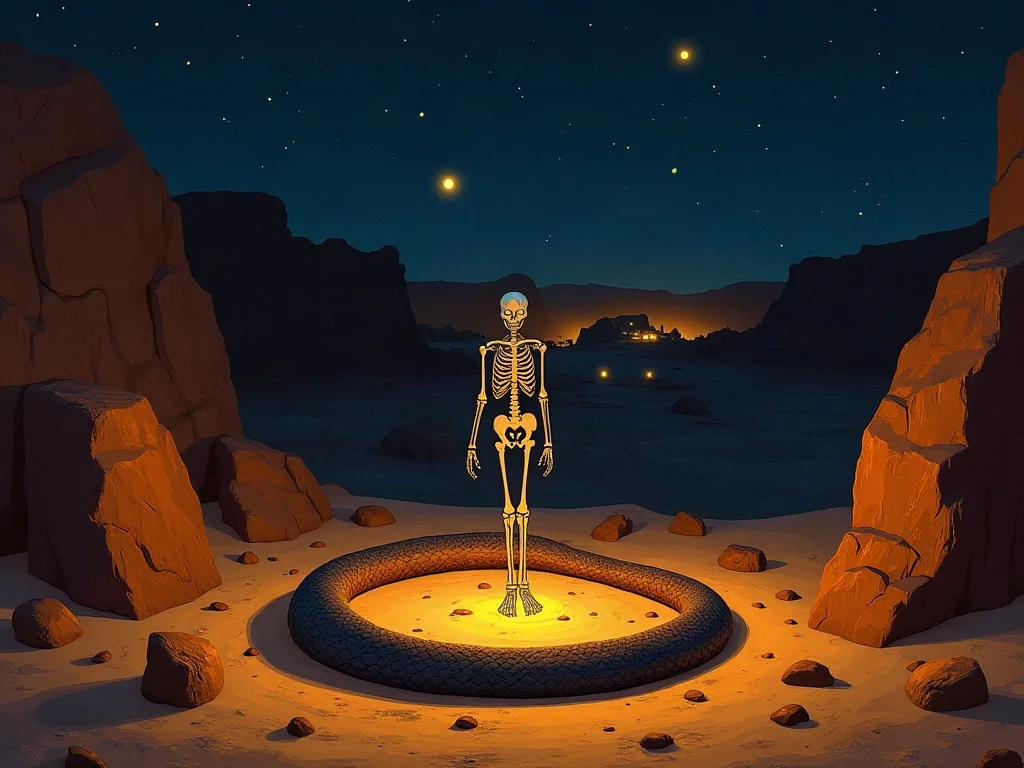
His body was placed in the earth in the usual way. Then something unusual happened. One of the Nommo spirits, taking the form of a great serpent, came to the burial site and swallowed Lebe whole. This was not predation. It was transformation. The Nommo passed the bones back out, rearranged and interpenetrated with small stones that carry the life-force of the Nommo themselves. Lebe, reconstituted in this way, became neither fully human nor fully spirit. He became the first ancestor in earth, a being whose presence saturates the soil.
This act accomplished something critical. It meant that the ground where Lebe was reburied was no longer merely dirt. It held the life-force of a Nommo, transmitted through a human body. When the Dogon migrated to their current lands, they did not leave Lebe behind. The Hogon, the senior ritual authority, carried Lebe's reconstituted remains to the new settlement. Wherever Lebe's bones rested, the earth was alive and could sustain a people.
The historian and comparative religion scholar Germaine Dieterlen, who collaborated with Griaule and extended much of his fieldwork, described Lebe's reconstituted state as a condition of permanent mediation: he holds the living world and the ancestral world in communication through the soil, much as a radio antenna holds two frequencies in one frame.
The Hogon: Lebe's Living Mouth
The priest who carries Lebe's authority is called the Hogon (sometimes spelled Hogohn). Each major Dogon district has one, chosen from among the eldest men of the dominant lineage. The selection is not simply social seniority. The Hogon is understood to be elected by Lebe himself, confirmed through dreams and through physical signs that the community reads as messages from the ancestor.
Once installed, the Hogon lives under strict ritual rules that make ordinary life impossible. He cannot be touched by another person. No one may watch him eat. He cannot leave his compound on certain days. These rules exist because the Hogon's body is now partly Lebe's body: it serves as a vessel for ancestral presence, and that presence must be kept uncontaminated by the ordinary disorder of daily existence.
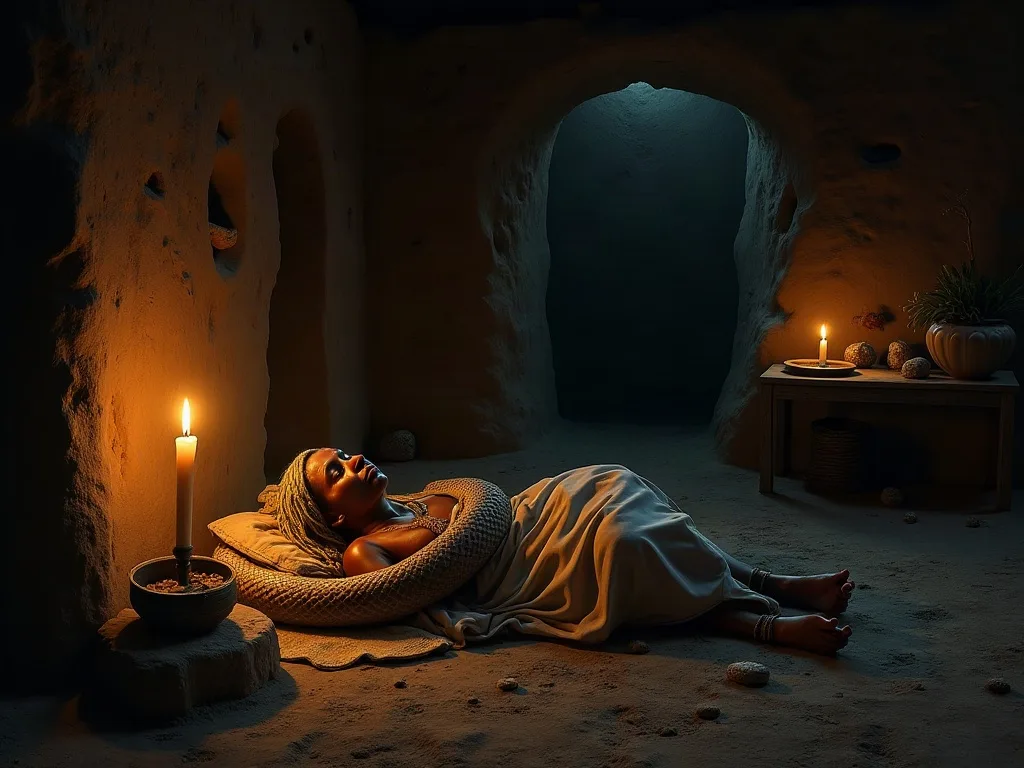
The most telling detail is what happens at night. According to Dogon accounts recorded by Griaule and Dieterlen, Lebe's serpent form visits the Hogon while he sleeps, licking his skin clean and renewing the vital energy, the nyama, that the priest needs to function as the earth's ritual guardian. When the Hogon wakes, he carries fresh power. When the visits stop, it signals that the Hogon is failing, that Lebe has withdrawn, and that a successor must be found.
This nightly renewal is not metaphor in Dogon understanding. It is a real transaction between the ancestral and the living world, conducted through the medium of the serpent form that Lebe has inhabited since his reconstitution by the Nommo.
Lebe and the Ginna: The Sacred House of the Lineage
Every Dogon family compound contains a structure called the ginna, the great house of the lineage head. The ginna is not just a building. It is a cosmological model: its rooms correspond to organs of the body, its facade maps the Dogon understanding of the cosmos, and its altar connects the living family to its founding ancestors.
Lebe presides over this system at the highest level. The earthen altar at the base of the ginna pillar is his altar. Offerings of grain, water, and sometimes the blood of sacrificed animals go to Lebe first, before any other ancestor is addressed. He is the foundation layer, literally and symbolically. Without Lebe's acceptance, the lineage has no standing in the earth it occupies.
Marcel Griaule documented elaborate granary facades on Dogon cliff dwellings whose geometric patterns encode the Dogon creation story. The triangles, lines, and checkerboard panels represent, among other things, the stages of Amma's word becoming matter. Lebe sits at the bottom of this visual theology, as he sits at the bottom of the actual soil. He is the hinge between above and below.
The Sigi Ceremony and Lebe's Sixty-Year Cycle
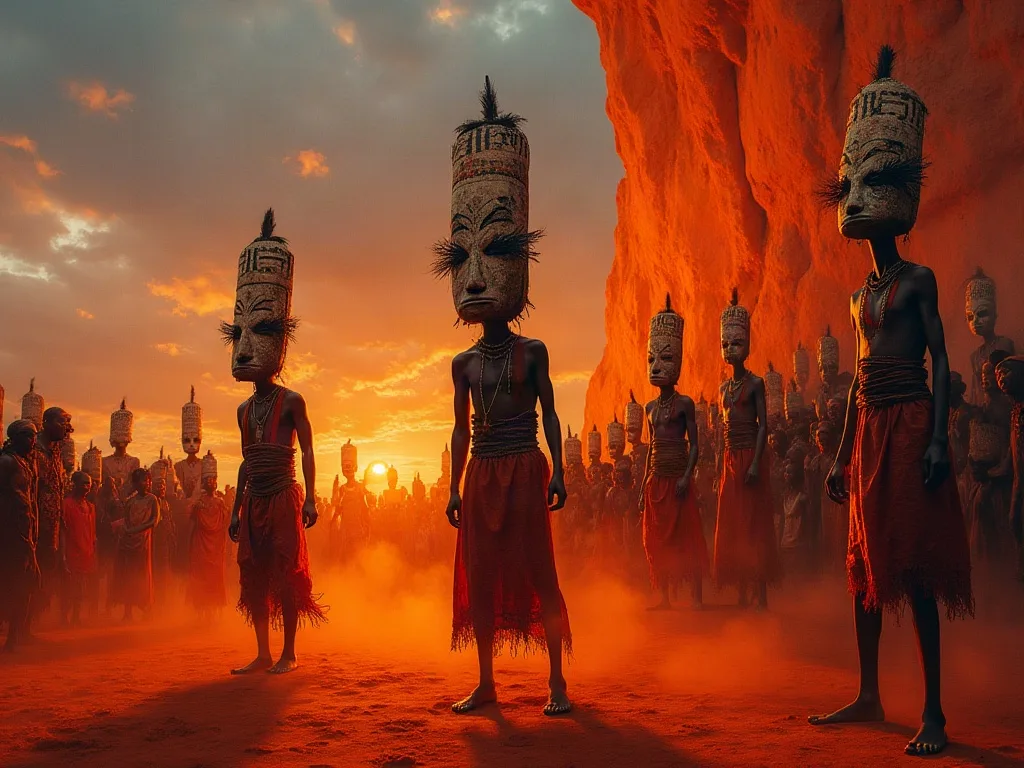
Every sixty years, the Dogon hold a ceremony called the Sigi, one of the most elaborate ritual cycles in West African religious life. The Sigi lasts seven years, moving from village to village across the escarpment region, and it marks the renewal of ancestral masks, the transmission of esoteric knowledge to a new generation, and the reaffirmation of the community's bond with its founding ancestors.
Lebe is central to the Sigi's purpose. The ceremony, in part, commemorates the death of the first ancestor, processes collective grief about mortality, and renews the contract between the living and the dead that Lebe's original reconstitution made possible. New great masks are carved, the Imina na or Great Mask, a towering plank mask that represents the spirit of a dead Hogon and, by extension, Lebe himself.
The last Sigi before extensive modern documentation was recorded between 1967 and 1973. Griaule's student Jean Rouch filmed portions of the 1967 opening at Yougo Dogorou, providing rare visual records of a ritual cycle most outsiders had never witnessed. The ceremony confirmed that Lebe's role had not diminished with modernisation. The bones of belief, like Lebe's own reordered bones, held their shape.
Lebe, Serpents, and the Living Soil
The serpent form that Lebe inhabits after his reconstitution is not incidental. Across West African traditions, serpents carry a specific symbolic weight: they move between surface and underground, they shed skin and appear renewed, they connect the world of the living to the world of the ancestors beneath the earth. The great serpent Nommo who swallowed Lebe chose that form deliberately, according to Dogon accounts, because a serpent is the only creature that embodies both death and renewal in a single body.
The Dogon word for the kind of vital energy Lebe transmits through the soil is nyama, a term that appears across many Mande-speaking cultures (the Dogon are often classified near the Mande language family, though the classification is debated). Nyama is not precisely a soul, and not precisely a force. It is more like an inherent power that every living thing carries, which must be carefully managed when life ends so that it does not cause harm. Lebe's reconstitution by the Nommo transformed his nyama from the dangerous kind released by death into the ordered, life-sustaining kind that feeds the earth.
This is why Dogon agriculture is inseparable from Lebe's ritual. Before sowing, before harvesting, before any major act that involves the earth, the Hogon makes offerings. He speaks to Lebe. He asks the ancestor to receive the seed, to hold the rain, to return the labour of the planting as food. Lebe is not being asked to perform a miracle. He is being reminded of the contract. The earth holds him. His people hold the earth. That exchange is the basis of life.
Lebe in Comparative Perspective
Dogon mythology does not exist in isolation. Scholars including Christopher Wise and Dieterlen herself have traced structural parallels between the Lebe narrative and other West African accounts of a founding ancestor who dies, undergoes a transformative process, and becomes the spiritual anchor of a people's territory.
Among the Yoruba, the relationship between the Egungun ancestor masquerade tradition and the soil of a lineage compound operates on comparable logic: the dead do not leave, they persist beneath the ground and must be addressed if the living are to prosper. The Egyptian figure of Osiris, who died, was reconstituted piece by piece, and became lord of the dead and guarantor of agricultural fertility, maps onto Lebe's narrative with striking closeness.
Lebe (Dogon)
First human to die; swallowed and reconstituted by the serpent Nommo; bones become the spiritual foundation of fertile land; represented through living priests (the Hogon) who serve as his earthly vessels; renewed annually through offerings and the nightly serpent visit.
Osiris (Egyptian)
God of the afterlife killed and dismembered by Set; reassembled by Isis; became ruler of the dead and guarantor of Nile fertility; represented through pharaoh as his living son; renewed through annual inundation rituals tied to Osiris's resurrection myth.
These parallels do not mean one tradition borrowed from the other. They suggest something about how humans, across centuries and continents, have worked through the same problem: what happens to the body after death, and how can the living keep faith with those who came before them.
Lebe in the Modern Dogon World
The Bandiagara Escarpment was designated a UNESCO World Heritage Site in 1989, recognising both its geological drama and its cultural depth. Dogon villages on the cliffs still hold Hogon priests. The office remains active. The ritual relationship with Lebe, maintained through offerings and through the restrictions that structure the Hogon's daily life, has not dissolved under the pressure of Islam, Christianity, or the broader shifts of Malian political life since independence in 1960.
This persistence is itself a form of testimony. Lebe's story does not require a temple or a written scripture to survive. It lives in the soil of the settlement, in the stones an old Hogon keeps near his sleeping place, in the grain poured at the foot of the ginna pillar before a family eats. It lives in the knowledge that the first ancestor is still listening, still moving through the dark in serpent form, still doing the patient work of holding the living and the dead in one unbroken conversation.
Scholars like Walter van Beek, who conducted extensive fieldwork among the Dogon beginning in the 1990s and raised important questions about the universality of some of Griaule's findings, have documented real variation in Dogon belief across villages and lineages. Not every Dogon community tells the Lebe story in identical form. But the core remains consistent across the variations van Beek and his collaborators recorded: a first ancestor, a transformation through the earth, a living priest who holds the connection open. The details shift. The architecture stays.
Frequently Asked Questions About Lebe and the Dogon Ancestor Cult
Frequently asked questions
Who exactly was Lebe in Dogon mythology?
Lebe was the first human being to die, according to Dogon belief recorded by Marcel Griaule and Germaine Dieterlen through fieldwork in Mali beginning in the 1930s. He was an elder of the earliest ancestral generation. After his death, the primordial serpent spirit Nommo swallowed his body and reconstituted it, lacing his bones with sacred stones that carry Nommo's life-force. This made Lebe the spiritual anchor of the Dogon earth, a being whose presence persists in the soil and is renewed through ritual by the senior priest, the Hogon.
What is the Hogon and how does the role connect to Lebe?
The Hogon is the highest ritual priest in a Dogon district, drawn from the eldest men of the dominant lineage and understood to be chosen by Lebe himself through dreams and physical signs. Once installed, the Hogon lives under strict purity rules: no one may touch him, he must not be seen eating, and his movements on certain days are restricted. According to Dogon tradition, Lebe's serpent form visits the Hogon each night, licking his skin to renew his vital energy. When those visits cease, the community understands that Lebe has withdrawn and a successor must be found.
What is the Sigi ceremony and why does Lebe matter to it?
The Sigi is a seven-year ritual cycle held every sixty years among the Dogon, moving village to village across the Bandiagara Escarpment. It renews ancestral masks, transmits esoteric knowledge to a new generation of initiates, and reaffirms the community's bond with its founding ancestors. Lebe is central to its logic because the Sigi commemorates the first death and processes the collective understanding of mortality that Lebe's story encodes. The great plank mask carved for the Sigi, called the Imina na, represents a dead Hogon and, by extension, Lebe himself. The last well-documented Sigi cycle ran from 1967 to 1973.
Is there any debate among scholars about the accuracy of Griaule's accounts of Dogon belief?
Yes. Griaule's fieldwork, particularly his conversations with the Dogon sage Ogotemmêli published as "Conversations with Ogotemmêli" in 1948 and the later collaborative work with Dieterlen, has been questioned since the 1990s. Anthropologist Walter van Beek and his collaborators conducted independent fieldwork and found that many Dogon they spoke to did not share the elaborate cosmological knowledge Griaule attributed to the tradition as a whole. Van Beek argued that Griaule may have received a highly specialised or partially constructed account from a small group of initiates. Most scholars now treat Griaule's material as a valuable but partial record of esoteric Dogon knowledge, not a complete map of what all Dogon people believe.
How does Lebe's story compare to other African ancestor traditions?
The core structure of Lebe's narrative, a founding ancestor who dies, undergoes a transformative process, and becomes the spiritual guardian of a territory held by his descendants, appears in various forms across West and Central Africa. Among the Yoruba, the Egungun masquerade tradition rests on the idea that the dead persist beneath the lineage compound and must be honoured for the living to prosper. The Egyptian Osiris myth shares a striking structural parallel: death, dismemberment or reconstitution, and rebirth as a lord of agricultural fertility represented through a living priestly figure. These similarities reflect broad human patterns in ancestor veneration rather than direct borrowing between traditions.
What role does Lebe play in Dogon agriculture and daily life?
Lebe is the ritual foundation of Dogon agriculture. Before sowing and before harvesting, the Hogon makes offerings to Lebe at the earthen altar of the ginna, the lineage's great house. Grain, water, and sometimes animal blood are presented as a reminder of the contract: the earth holds Lebe's reconstituted body, and in return the earth sustains the people who work it. This is not symbolic. In Dogon practice, the ritual address to Lebe is considered a practical necessity, not an optional observance. Without it, the relationship between the living community and the land they occupy lacks its foundational legitimacy.
How Lebe's Bones Still Shape a Living Tradition
Most mythological systems keep their founding figures safely in the past. The creation happened long ago, the hero died, the age ended. Lebe refuses that arrangement. He is not safely historical. He is active: moving through the dark in serpent form, feeding the Hogon's skin with renewed nyama, listening for the grain poured at the altar's base.
This quality, presence without resolution, is what makes the Lebe tradition genuinely different from a simple ancestor cult. Lebe did not become a ghost. He became the earth. His reconstituted bones do not decay further because the Nommo's sacred stones hold them in perpetual life. Every seed pushed into Dogon soil is, in a literal ritual sense, placed into Lebe's body. Every harvest pulled from that soil comes back through him.
For researchers working in philosophy of religion, this raises questions that have no clean answer: where is the boundary between a living tradition and a living belief? If a Hogon in a Bandiagara village wakes each morning having been visited in the night by a serpent he cannot see but whose effects he can feel in his body, and if his community orients its entire agricultural and spiritual life around that visit, what precisely has died?
The answer, in Dogon terms, is simple. Nothing has died that matters. Lebe saw to that.
Free 25-page sample
Want the whole story?
Take the first 25 pages free. If it pulls you in, the full edition is yours as an instant PDF download, with a paperback on Amazon for selected titles.
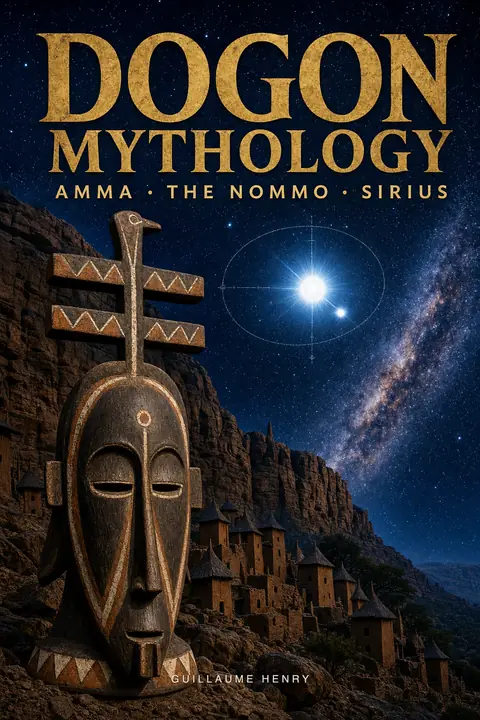
Dogon
The Dogon Mythology Book: Amma, the Nommo, and the Mystery of Sirius
Amma, the Nommo, and Sirius
The cosmology of a people who carved their villages into a cliff in Mali, and who, some claim, knew of an invisible companion star to Sirius. The creator Amma, the amphibious Nommo, the cosmic egg, and one of anthropology’s great controversies.
More from Dogon
All articles
Dogon
The Nommo: Ancestral Water Spirits and Culture Heroes of the Dogon
The Nommo are the Dogon people's ancestral water spirits who brought civilization, language, and moral order to humanity. Descended from the sky god Amma, they shaped the world through sacrifice and remain central to Dogon ritual, art, and identity today.
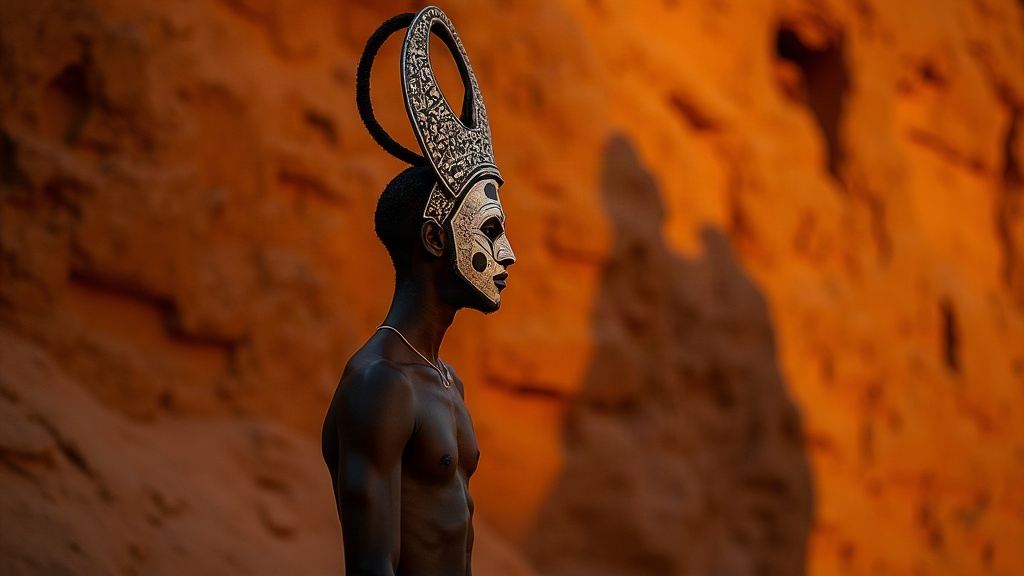
Dogon
The Dogon Mask Tradition: Kanaga, Sirige, and Ritual Performance
The Dogon people of Mali have preserved one of Africa's most intricate mask traditions for centuries. Kanaga and Sirige masks embody cosmology, death, and the animate power of wood in ceremonies that bind the living to ancestors.
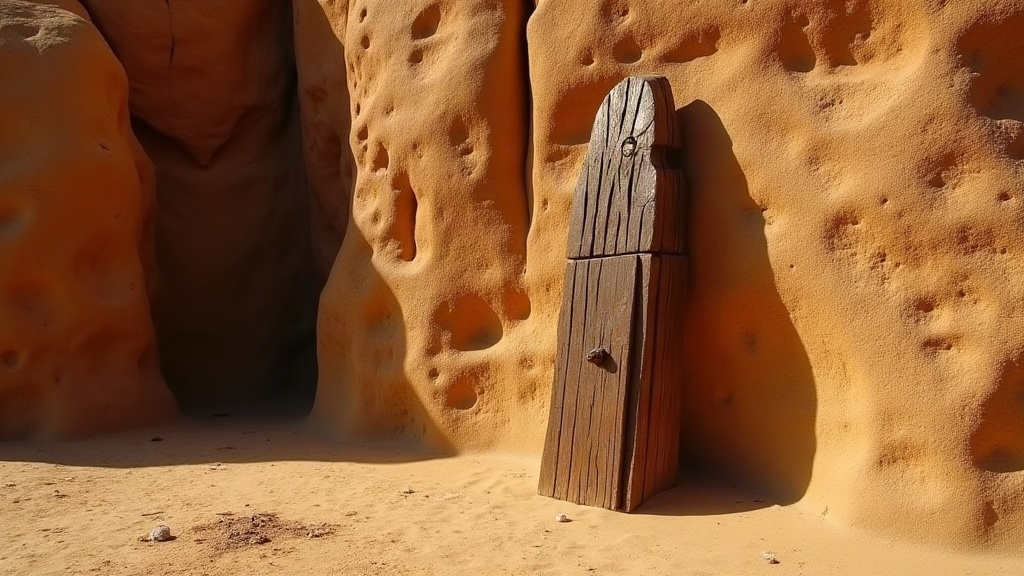
Dogon
The Binu Shrines: Sacred Altars to Ancestral Spirits in Dogon Tradition
The Binu Shrines are sacred wooden altars where the Dogon people of Mali honor their ancestors and the primordial water spirits that shaped their world. Built into cliff dwellings and family homes, these shrines connect the living to the dead through ritual, offering, and careful ceremonial action.
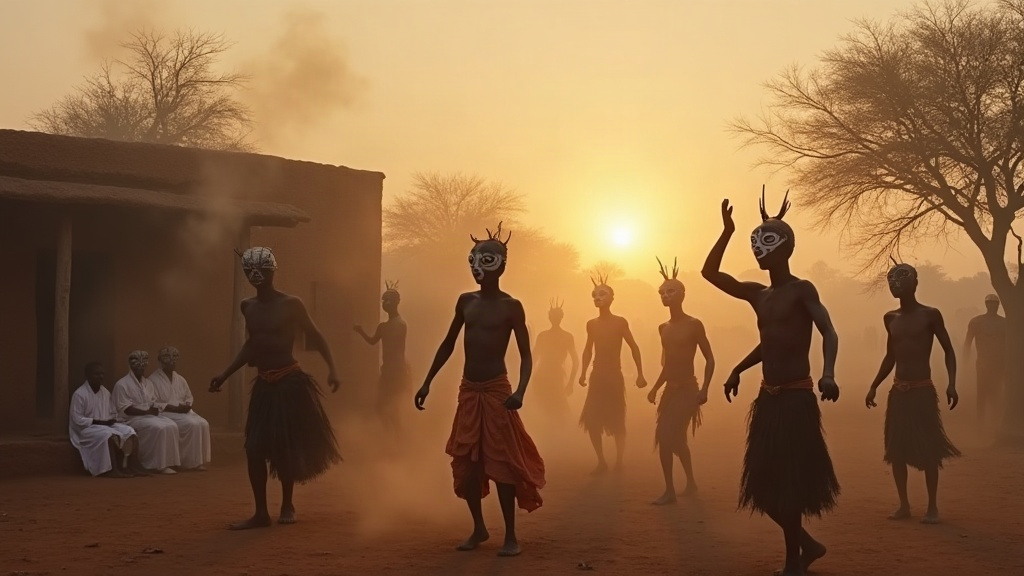
Dogon
The Dama Funeral Rites: Guiding the Dead to Ancestorhood
The Dama is the Dogon people's most sacred ceremony, a multi-stage funeral rite that transforms the dead into protective ancestors. Masked dancers, secret societies, and months of ritual guide the soul through the spirit world while honoring the body's return to earth.