
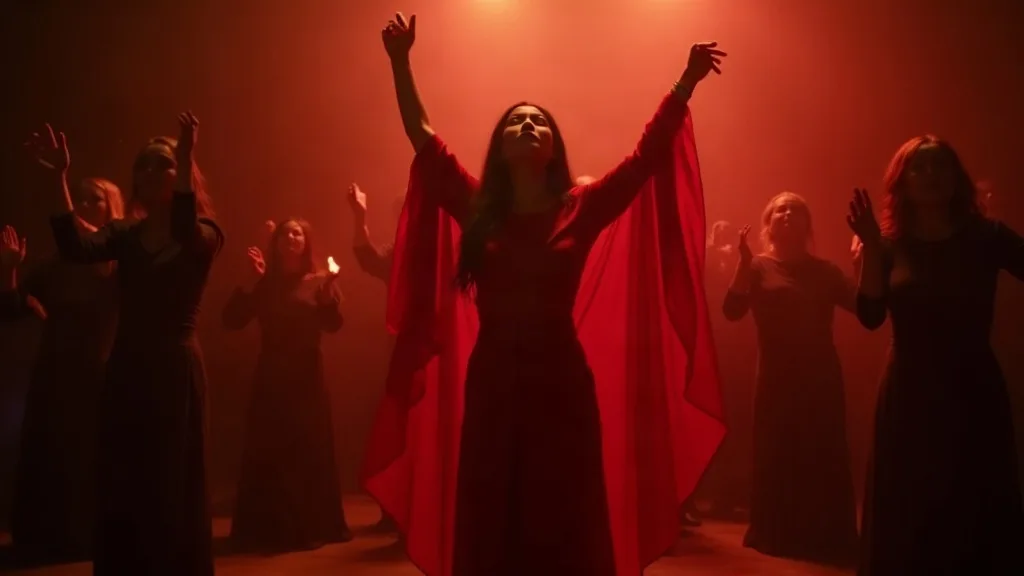
Zar Spirits: Possession Cults of the Horn of Africa
Zar spirits haunt the Horn of Africa, possessing the afflicted through trance and ritual. These powerful entities blur the line between illness and sacred calling, demanding appeasement through music, dance, and ceremony. Enter a living tradition that survives in Ethiopia, Sudan, Egypt, and Eritrea today.
Contents
A woman begins to shake. Her eyes roll back. Her voice drops into a register not her own. Her kin recognize the signs: a zar has arrived. What follows is not an exorcism but a negotiation. Over the coming hours, she will learn its name, its origin, its demands. Musicians will play for it. An animal will be slaughtered. A feast will follow. By dawn, she will have a new status: possessed by a spirit, yes, but also initiated into a community that has managed the presence of the zar for centuries.
Zar spirits, entities of the Horn of Africa, are not demons in the Western sense. They do not seek to destroy. They arrive with purpose, often targeting the marginalized, the grief-stricken, and the already vulnerable. To the people who live with them, zar possession is a crisis that becomes a calling. The afflicted becomes initiated. The suffering becomes sacred. The zar demand recognition, and in return, they grant status, agency, and entry into an order of initiated women and men who understand that some spirits will always be present.
This is not folklore. It is a living religious practice. From Addis Ababa to Khartoum, from the Eritrean highlands to southern Egypt, zar possession cults remain active, practiced, and integral to how millions navigate suffering, dignity, and belonging.
The Nature of the Zar: Spirit or Illness
The first obstacle to understanding the zar is Western taxonomy. We ask: is it a spirit or is it an illness? The question itself misses the point. In the Horn of Africa worldview, the zar is both. It inhabits the body. It causes real suffering. It speaks through the afflicted. It has a voice, a will, and genealogy. To call it "merely psychological" or "merely spiritual" imposes foreign categories onto a seamless reality.
A zar arrives suddenly. The afflicted person begins to convulse, to sing or shout in a voice not recognizably their own. The seizures may last hours. Pain radiates through the limbs. The person may become temporarily unresponsive or speak in fragmented utterances that only the initiated understand. Women are afflicted far more often than men, though men are not immune. The symptoms resemble epilepsy, trance states, possession trance, dissociative episodes. Medical science can describe the neurology. The Horn of Africa knows it as a zar demanding to be named.
Scholars who have studied zar possession, including the anthropologist Janice Boddy, who conducted fieldwork in Sudan in the 1970s and 1980s, have documented that the distinction between "possession" and "illness" collapses entirely in these communities. A woman whose husband left her, whose children died, whose status in the household crumbled might be seized by a zar suddenly. That the zar arrives at a moment of profound social vulnerability does not make it less real. Rather, it makes the timing significant. The spirit chooses those already broken. Once the zar is named and its demands met, the afflicted person's social position often transforms. She becomes known as an om (mother) or abb (father), a person of power, sought out for her ability to channel and communicate with the spirits.
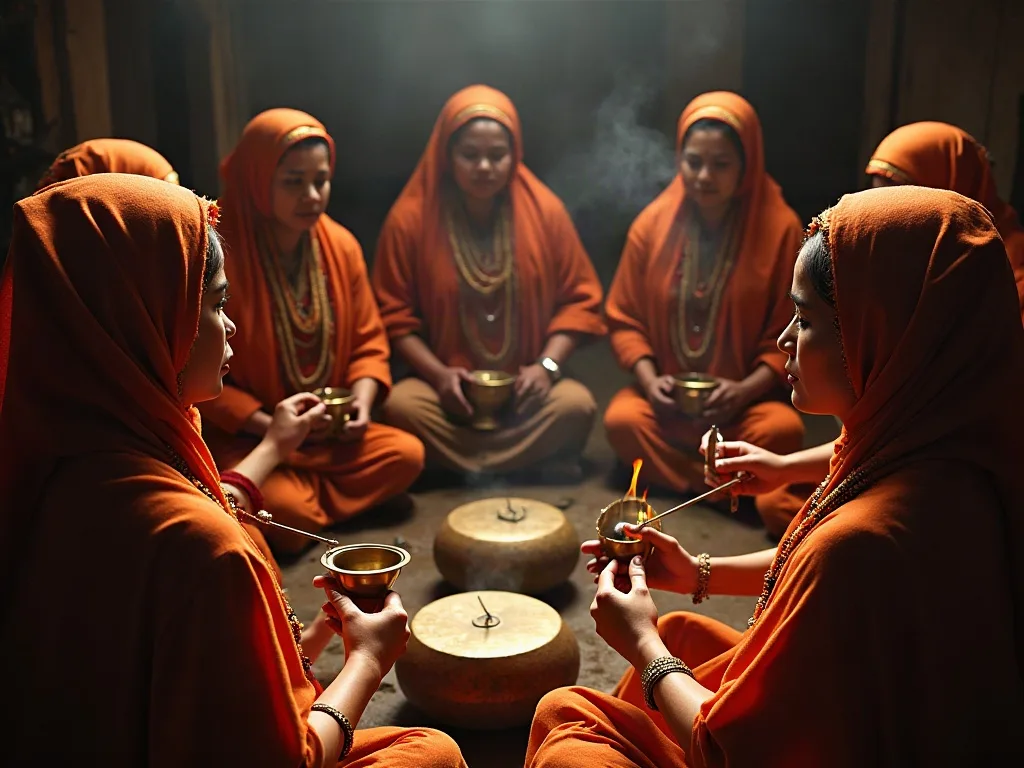
The zar pantheon is vast. Some spirits are ancient, with lineages traced back generations. Others are recent arrivals, named after distant lands or recent catastrophes. An individual might be possessed by a zar from Egypt, Sudan, or the Red Sea. Some spirits claim descent from pre-Islamic traditions; others identify themselves as Muslim, even invoking Quranic language. This fluidity reflects the actual history of the Horn of Africa: a region where Christianity, Islam, and older animistic traditions have coexisted, competed, and syncretized for over two thousand years.
Origins and Historical Roots
The exact origins of zar possession cults remain contested. The practice is documented in Sudan and Ethiopia by at least the 16th century, though oral tradition places it older. Some scholars argue it arrived with Egyptian settlers or through Red Sea trade routes. Others propose it emerged from pre-Islamic Cushitic religions, reinterpreted through Islamic and Christian lenses over centuries.
What is certain is that zar is deeply entangled with the history of slavery, displacement, and trauma across the Horn of Africa. The spirits often identify themselves as strangers, as captives, as those who died far from home. A zar might claim to be a Turkish soldier, an Egyptian merchant, a woman taken across the Red Sea. This genealogy of displacement suggests that zar possession became a way for communities to absorb, name, and ritually metabolize the suffering brought by the slave trade, colonialism, and forced migration. The spirits are, in some sense, the voices of the uprooted, given language and recognition in a ritual space.
In Sudan, zar cults were particularly visible by the 19th century. British colonial officers who encountered them often pathologized them as hysteria. Local Islamic authorities sometimes condemned them as un-Islamic. Yet the practice persisted, protected by its own logic: the zar could not be wished away. To ignore a zar was to invite worse illness. To acknowledge it, to name it, to feed it, was to establish a treaty with forces that could not be defeated but could be managed.
Ethiopian traditions, particularly among the Amhara and Oromo peoples, developed their own zar idioms, sometimes overlapping with those documented in Sudan but retaining distinct characteristics. The Cushitic roots of both populations may explain some continuities, though detailed tracing of how zar practices evolved within each culture remains incomplete in the scholarly literature. What is clear is that by the 20th century, zar possession was a recognized, if contested, feature of religious life across the Horn.
The Ritual Structure: Diagnosis, Negotiation, Appeasement
When a zar possesses someone, the affliction does not resolve itself. Unlike some possession traditions in which spirits are exorcised through prayer or sacrament, the zar must be satisfied. This requires diagnosis, negotiation, and ritual appeasement.
The first step is diagnosis. A family recognizes that ordinary medicine will not help. The convulsions, the strange speech, the inexplicable illnesses do not respond to pills or injections. They consult an experienced zar practitioner, often a woman known for her authority and knowledge of the spirits. This om or abb enters trance themselves, or listens carefully to the afflicted person's utterances, to identify which zar has arrived and what it demands.
The spirit is not hiding. In fact, it is eager to be recognized. A zar might speak through the afflicted person saying: "I am from Egypt. My name is Abu Jifan. I died at sea. I am hungry. I need a chicken. I need music. I need to dance." The specificity is crucial. The zar is not vague about its needs. It knows who it is.
Once identified, negotiation begins. The family and the zar reach an understanding. If a zar demands an animal sacrifice, the family must provide one. If it demands music, musicians are summoned. The sacrifice is typically a chicken, a goat, or a sheep. The animal is slaughtered ritually, cooked, and its blood is sometimes applied to the afflicted person's body. The ritual space is purified. Music begins.
The musical performance is central. Drums, hand clapping, ululation, and singing create an acoustic environment in which the spirit is present and active. The afflicted person may dance, often with movements that appear involuntary or extremely difficult to achieve consciously. The zar is dancing through her body. Her relatives hold her, guide her, sometimes dance alongside her. This can last for hours. By the end, the afflicted person is exhausted but transformed. She has been seized, recognized, and released into a new identity.
The feast that follows is not mourning but celebration. The animal's meat is divided. Neighbors and fellow initiates gather. Stories are shared. The om or abb who performed the ritual is compensated with food, money, or goods. The entire community participates in acknowledging that a zar has arrived, has been properly received, and will now be managed rather than suffered.
The Initiated Order: Community, Status, and Agency
What happens after the initial ritual? The possessed person does not return to her former life unchanged. She has become om or abb, initiated into an order of people who live in relationship with the spirits. This status carries both burden and privilege.
The burden is real. The zar remains. It may return with demands. The initiated person may need to conduct periodic rituals to keep the spirit satisfied. If the spirit becomes restless or angry, the person may fall ill again. There is a permanent obligation. The om or abb must remember the spirit's needs and honor them.
But the privilege is equally significant, particularly for women, who constitute the majority of initiates. In many societies of the Horn of Africa, women's authority outside the home is limited. A woman's status depends on her husband, her family of birth, her fertility. A woman without these anchors is powerless. Yet a woman who is om has autonomous status. She is sought out. People come to her for counsel about their own zar possessions. She can earn money through her knowledge and her ability to communicate with the spirits. She has a public role and an income. In some cases, an om has more authority and influence than women who rely solely on family ties.
The zar community also provides belonging. Initiates recognize each other. They gather for ceremonies not tied to any particular affliction but simply to honor the spirits and maintain the relationships. These gatherings have their own social calendar, their own protocols, their own aesthetic. Women wear specific clothing colors, often bright reds and greens, associated with particular spirits. They sing songs composed specifically for zar rituals. They exchange knowledge about which spirits are arriving, which demands they are making, how to handle difficult possessions.
This community is particularly vital for women who are otherwise isolated: widows, divorced women, childless women, enslaved women historically, and in modern times, women displaced by conflict or poverty. The zar cult offers them a name, a role, a network, and a way to articulate suffering that might otherwise remain unspeakable.
The Spirits Themselves: Genealogy and Identity
The zar pantheon is not fixed. New spirits arrive. Old ones fade. Yet certain spirits appear consistently across the Horn of Africa, suggesting deep roots or widespread transmission.
One common class of spirits are the abyan (literally, "merchants" or "aliens"), spirits identified with distant lands, particularly Egypt, Turkey, and the Arabian Peninsula. These spirits often speak Arabic or Turkish or claim descent from Islamic sultanates. They are sometimes styled as wealthy, powerful, and demanding. An abyan might insist on particular foods (Turkish coffee, Egyptian sweets), on specific music, on acknowledgment of its foreign prestige.
Another class are the spirits of the dead, particularly those who died violently or far from home. These zar carry the trauma of displacement. A woman possessed by the spirit of a woman who died in childbirth far from her family might articulate through her possessed body the loss and longing of that dead woman. The living afflicted becomes a conduit for the unresolved grief.
There are also spirits associated with water: the Nile, the Red Sea, wells. These water spirits are often described as female, sometimes beautiful and sometimes dangerous. They may possess someone who has come near water, or they may identify themselves as spirits of drowning victims demanding proper burial rites or remembrance.
Some zar identify themselves with pre-Islamic deities or with Christian saints. This religious fluidity reflects the actual landscape of belief in the Horn of Africa. A zar might invoke the Archangel Michael while simultaneously demanding ritual appeasement through dance and music that Islamic orthodoxy would condemn. The spirits themselves are syncretistic, existing in the gaps between official religions.
The identity of a zar is not arbitrary. Once identified, it is consistent. An om knows the difference between an Egyptian zar and an Eritrean one. She knows which spirits are known to be gentle and which are volatile. She knows which ones accept a chicken and which demand a goat. This knowledge is transmitted within the order. Younger initiates learn from elders. Manuals of zar knowledge, sometimes handwritten, sometimes memorized, circulate among practitioners.
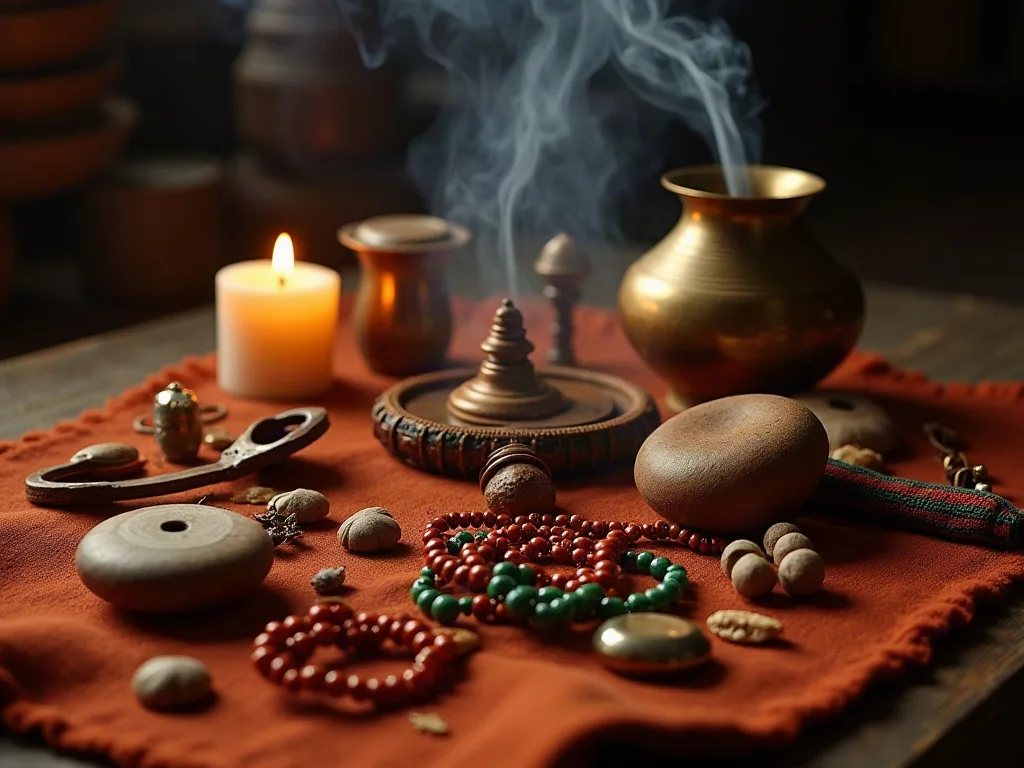
Conflict with Religious Authorities
The zar cults have never existed uncontested. Islamic authorities, particularly reformist movements that gained influence from the 18th century onward, condemned the cults as un-Islamic. The music, the ecstatic trance, the veneration of spirits outside the framework of Islamic theology, the prominent role of women as om: all of these seemed to contradict Islamic law and orthodoxy.
Ethiopian Christian authorities expressed similar concerns. The veneration of spirits, the acceptance of possession, the syncretism with older pagan traditions: these practices existed in an uneasy relationship with both Orthodox Christianity and Pentecostal movements that arrived later.
Yet the cults persisted. Local Islamic teachers sometimes developed theological justifications for the practice. Some argued that the zar were jinn, beings recognized in Islamic theology, and that managing them was a form of Islamic wisdom. Others simply acknowledged that the practice was too embedded in popular practice to suppress. Over time, a modus vivendi emerged in many places: the zar cults were tolerated as long as they did not directly challenge the authority of official religious institutions.
This tension remains. In contemporary Ethiopia, Sudan, Egypt, and Eritrea, the zar cults continue despite intermittent hostility from both Islamic and Christian authorities and from modernizing elites who view the practice as backward or psychologically unhealthy. The cults survive because they meet a need that official religion does not: they offer a way to acknowledge suffering, to give it a face and a name, and to integrate it into community and identity rather than to erase it.
Women, Marginality, and the Politics of Possession
The zar cult is overwhelmingly a space of female power and female community. Scholars have recognized this and debated what it means. Is the zar cult an expression of resistance? Is it a way for women to voice grievances that would otherwise be silenced? Is it a space of agency within patriarchal systems?
The anthropologist Janice Boddy's work in Sudan suggested that the zar cult allowed women to critique their social positions, to demand respect and resources, and to build authority independent of male approval. She noted that the ceremonies often occurred when women's positions were most precarious: after a divorce, after a loss, in times of economic hardship. The spirits arrived at moments when women's agency was most constrained by their social roles.
At the same time, some scholars have warned against romanticizing the zar cult as feminist resistance. The spirits themselves are often patriarchal, demanding deference and obedience. The om who manages the cult does gain authority, but it is a very specific kind of authority tied to her ability to communicate with powerful spirits, not a generalized political power that would reshape gender relations in the wider society.
The reality is more complex. The zar cult is neither purely oppressive nor purely liberatory. It is a social technology that allows women to survive and sometimes to thrive within systems that constrain them. It offers them money, status, community, and a language for expressing suffering. It does not change the wider patriarchal structures in which they live, but it creates space within those structures for female autonomy and female authority.
The Zar Today: Adaptation and Persistence
In the 21st century, the zar cults of the Horn of Africa remain active. They are not disappearing or being replaced by Western medicine, despite the availability of psychiatric treatment and antipsychotic medications. Why?
One reason is that zar possession addresses suffering that biomedicine does not. A woman possessed by a zar may have a real neurological or psychiatric condition, but she also has real social, economic, and spiritual needs that hospitals cannot meet. The zar ritual addresses all of these simultaneously. It names the suffering, locates its source in a being with whom negotiation is possible, and offers a community-based treatment that restores the afflicted person to social participation.
Another reason is that the zar cults have adapted. In cities like Addis Ababa and Khartoum, zar ceremonies occur in private homes rather than in public gathering spaces, but they occur. Practitioners have adopted new technologies: some use phones to communicate with distant clients, some promote their services through social media. The spirits themselves have adapted: newer zar sometimes identify themselves with more recent arrivals to the Horn of Africa, with nationalities that reflect contemporary geopolitics.
The rituals themselves have been modified to accommodate modern life. A ceremony that might have lasted three days in a rural setting is condensed into a single night in an urban home. Yet the core remains: possession, diagnosis, negotiation, ritual appeasement, and the initiation into an order that continues to exist across generations.
In contemporary Ethiopia, particularly among the Amhara and Oromo communities, zar possession remains common enough that it features in popular film and television, often depicted with ambivalence: as both authentic cultural practice and as a problem that modern medicine or education ought to solve. The tension between traditional and modern understanding of zar possession reflects a wider tension across the Horn of Africa about how to honor the past while navigating rapid social change.
Cross-Cultural Echoes: Zar in Egypt and Beyond
The zar cults of Egypt, Sudan, and Ethiopia are not isolated phenomena. Similar possession cults appear across North Africa, the Middle East, and parts of South Asia. The Egyptian zar, in particular, has been extensively documented. Cairo hosts large communities of om and abb, and zar ceremonies are more visible in urban Egypt than they are in Ethiopia or Sudan.
The Egyptian zar shares much with the Sudanese and Ethiopian versions but has its own characteristics. Egyptian spirits often demand a specific kind of music, particularly percussion-heavy rhythms that allow for ecstatic trance. The ceremonies often last longer and involve more elaborate costuming. Some Egyptian zar have been syncretized with Sufi Islamic mysticism, particularly in rural Upper Egypt, where the boundaries between orthodox Islam and folk practice are more fluid.
Scholars have noted that the zar cults across the Muslim Mediterranean and Indian Ocean world share common features, suggesting either ancient roots in a pre-Islamic world that stretched across this vast region, or more recent transmission through trade, migration, and cultural exchange. The spirits themselves often claim to travel: a zar might move from Egypt to Sudan to Ethiopia, carried (according to the logic of the tradition) by possessed individuals who migrate or who maintain ritual contact with distant kin.
Comparative study of zar and other possession cults like the Brazilian Candomblé or the Haitian Vodou reveals both similarities and critical differences. All three address suffering through possession and ritual. All three were shaped by slavery and displacement. All three create communities and power structures for the marginalized. Yet they differ in their theology, their ritual language, and their relationship to dominant religions. The zar is not the same as Vodou, but understanding one illuminates possibilities in the other.
The Zar in Religious and Anthropological Discourse
For Western scholars, the zar has been a persistent puzzle. Early colonial-era accounts dismissed the cult as superstition or psychopathology. Later anthropologists approached it with more respect, attempting to understand it on its own terms. Janice Boddy's work in Sudan in the 1970s and 1980s remains foundational. She moved beyond pathologization to argue that zar possession was a sophisticated response to social inequality, particularly gender inequality, and that it offered women a way to voice and manage the constraints imposed on them.
Subsequent scholars have engaged with questions about the nature of trance, the relationship between psychology and culture, and the ethics of diagnosing possession as illness. The German anthropologist Bildhauer Bea has written about the zar as an expression of contested modernity, arguing that the persistence of the cults in contemporary urban settings challenges narratives of secularization and the inevitable supersession of tradition by modernity.
Within the Horn of Africa, intellectuals, religious figures, and medical professionals debate the zar regularly. Some reformist Islamic scholars argue for stronger action against the cults. Some Christian leaders similarly oppose the practice. Yet others, including some within these traditions, recognize the zar as a legitimate indigenous response to suffering and argue for coexistence with official medicine and religion.
From the perspective of the people who practice zar and live with the spirits, these academic and religious debates are secondary to the reality of the spirit's presence. A woman possessed by a zar may not care whether Western psychiatrists classify her condition as dissociative identity disorder or whether Islamic scholars debate whether the spirits are jinn or demons. What matters to her is the recognition of her suffering, the naming of its source, and the community that gathers to help her manage it.
Frequently asked questions about Zar spirits and possession cults
Frequently asked questions
Are Zar spirits demons?
Not in the Western sense of purely evil entities. The spirits are complex agents with their own desires and genealogies. Some are described as peaceful or even benevolent; others are volatile. They are not trying to destroy the possessed person but to establish a relationship, usually one of mutual obligation. A successful Zar ceremony results not in the spirit's expulsion but in the establishment of a treaty between the possessed person and the spirit.
Why do women become possessed by Zar spirits more often than men?
Women in traditional Horn of Africa societies face significant social constraints on their authority and autonomy. Possession by a Zar spirit transforms a woman into an om (mother), a figure of power and expertise who is sought out for her ability to communicate with spirits. This can provide income, status, and community that would otherwise be unavailable. The spirits appear to arrive at moments when women's social positions are most precarious, such as after divorce or loss.
Is Zar possession recognized as legitimate in contemporary Ethiopia, Sudan, and Egypt?
Recognition varies. Urban educated elites in capital cities often dismiss the practice as backward. Islamic and Christian religious authorities express skepticism or opposition. Yet the cults continue to operate in both rural and urban settings. In Egypt, Zar is more openly practiced in urban areas. In Ethiopia and Sudan, it persists but often with more discretion, particularly in communities where religious authorities are influential.
What is the relationship between Zar possession and Western psychiatric categories like dissociation?
The relationship is complicated and contested. The symptoms of Zar possession (trance states, involuntary movement, altered speech) resemble what Western psychiatry labels dissociation or possession-type dissociative disorder. However, the cultural framework is entirely different. Within the Horn of Africa, Zar possession is not understood as pathology but as the arrival of a spirit being. Treating it requires not medication but ritual negotiation.
What do the Zar spirits themselves represent or symbolize?
The spirits embody marginality and displacement. They often identify as foreigners, as the dead far from home, as victims of violence or enslavement. By possessing someone and demanding to be named and fed, the spirits give voice to suffering that might otherwise remain hidden. They represent the ruptures and traumas of the Horn of Africa's history while simultaneously offering a path through which those ruptures can be acknowledged and managed.
How have Zar cults changed in the 21st century?
The core ritual structure remains consistent, but the contexts have shifted. Urban practitioners operate in private homes rather than public spaces. Some have adopted digital communication. The spirits themselves have adapted, with newer arrivals claiming contemporary nationalities. Yet the fundamental relationship between the possessed and the spirit, and the role of community in managing that relationship, persists.
The Zar and the Unresolved Spiritual Landscape of the Horn
The zar cults reveal something crucial about the Horn of Africa that official histories sometimes obscure: the coexistence of multiple, overlapping religious frameworks, none of which has achieved total dominion. Christianity has been present in Ethiopia since the 4th century. Islam arrived by the 7th century and has shaped the religious life of much of Sudan, Eritrea, and the lowlands of Ethiopia for over a millennium. Yet older animistic traditions, never fully erased, continue to circulate in practices like zar possession.
The spirits are theological anarchists. They recognize no single authority. A zar might invoke Islamic language while demanding rituals that formal Islam condemns. Another might emerge from Christian contexts while embodying pre-Christian cosmologies. This refusal to be contained within a single religious framework is not syncretism in the sense of a coherent blending of traditions. Rather, it reflects the lived reality of communities that have always navigated multiple sources of meaning and power.
The persistence of zar possession cults into the 21st century suggests that neither modernization nor religious reform has answered all the questions that these cults address. How do we give voice to suffering? How do we locate agency when social systems have stripped it away? How do we maintain connection to the past and to displaced kin? How do we live with forces we cannot control? These are not quaint questions that technology or education will resolve. They are enduring human problems, and the zar cults, for all their complexity and contestation, continue to offer answers that resonate across generations.
Read the full book
Want the whole story?
The complete edition is an instant PDF download here, with a paperback on Amazon for selected titles.
Ethiopian
The Ethiopian Mythology Book: The Queen of Sheba, the Ark of the Covenant, and the Sacred Legends of Aksum
The Queen of Sheba, the Ark of the Covenant, and the Kingdom of Aksum
The sacred legends of Ethiopia, the one African kingdom never conquered: the Queen of Sheba and her journey to King Solomon, the Ark of the Covenant said to rest at Aksum, Waaqa the sky-god of the Oromo, and the saint-kings who carved the churches of Lalibela. Drawn from the Kebra Nagast and the living oral tradition.
More from Ethiopian
All articles
Ethiopian
The Kebra Nagast: Ethiopia's Sacred National Epic
The Kebra Nagast, Ethiopia's greatest literary and spiritual treasure, tells how the Queen of Sheba bore Solomon's son and founded a dynasty that would claim descent from Israel's king. Discover the epic that shaped an empire's identity and survives as living scripture today.
Ethiopian
Lalibela: The Rock-Hewn Churches and King's Vision
Discover how King Lalibela carved twelve churches from solid rock in Ethiopia's highlands, creating a sacred landscape that blends ancient Christian devotion with legendary ambition. A journey to Jerusalem without leaving home.

Ethiopian
Atete: Oromo Goddess of Fertility and Femininity
Atete embodies the generative power at the heart of Oromo spirituality. This goddess shapes the cycles of birth, growth, and renewal across the Ethiopian highlands and pastoralist cultures of the Horn of Africa.

Ethiopian
The Nine Saints: Founders of Ethiopian Monasticism
Nine Syrian monks arrived in Ethiopia in the 5th century and transformed its spiritual landscape. Discover how the Nine Saints founded Ethiopian monasticism, shaping the Tewahedo Church and a monastic tradition that endures today.