
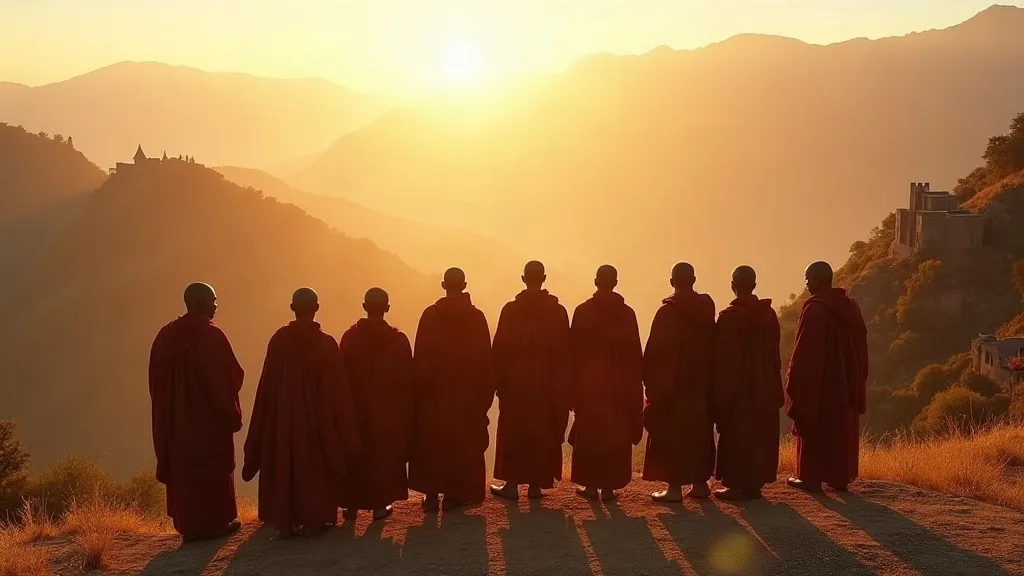
The Nine Saints: Founders of Ethiopian Monasticism
Nine Syrian monks arrived in Ethiopia in the 5th century and transformed its spiritual landscape. Discover how the Nine Saints founded Ethiopian monasticism, shaping the Tewahedo Church and a monastic tradition that endures today.
Contents
When nine monks set foot on the Red Sea coast of Aksumite Ethiopia in the 5th century, they carried with them a vision of ascetic discipline, liturgical learning, and spiritual resistance. These foreigners would reshape the religious fabric of an entire nation. They arrived when Christianity was already the state religion, declared by King Ezana around 330 CE, but remained fragile, threatened by pagan practice in the highlands and political upheaval. What the Nine Saints built was not a single monastery but an entire ecosystem of monastic communities, scriptural translation, and spiritual practice that outlasted empires.
Their names echo through Ethiopian Christian memory: Pantalewon, Ioasaph, Guba, Alef, Yemata, Selsewya, Aragawi, Gabre-Menfes-Qeddus, and Gabre-Kristos. Each carried a different gift. Some were theologians; others, ascetic extremists willing to suffer for their faith. One lived in a cave so narrow he could barely move. Another became a bishop and administrator. Together, they forged something unprecedented: a monasticism rooted in the Ethiopian highlands yet shaped by the desert spirituality of Egypt and Syria.
The Arrival and the Age That Received Them
The Nine Saints did not arrive in a vacuum. Ethiopia, or Aksumite Ethiopia as historians call it then, had converted to Christianity roughly a century earlier under King Ezana, but conversion at the court did not mean spiritual transformation in the countryside. Pagan shrines still operated. Rural communities maintained their own rituals and gods. The Tewahedo Church, the Ethiopian Orthodox faith, needed depth, infrastructure, and indigenous teachers rooted in local soil.
The 5th century was a time of theological ferment across the Christian world. The Council of Chalcedon in 451 CE divided Eastern Christianity over the nature of Christ. Was he one person with two natures, or one nature only? The Tewahedo Church would eventually reject Chalcedon and embrace the Miaphysite position, seeing Christ as one united divine-human nature. This doctrinal stance, rooted in the theology the Nine Saints helped establish, became part of Ethiopian Christian identity and set Ethiopia apart from other Christian nations.

The monks arrived when the Aksumite Kingdom was declining. By the 6th century, Aksumite power had fragmented into regional kingdoms. No central authority could impose Christianity from above. What worked instead was quiet, persistent monastic presence in the highlands and remote valleys. The Nine Saints built monasteries in places people inhabited, in places people could reach. They did not hide in the deepest desert as some Egyptian monks did; they embedded themselves in Ethiopian geography and culture.
Who Were the Nine, and What Did Each Bring?
Historical sources for the Nine Saints are sparse and late. The earliest accounts appear in hagiographies written centuries after their deaths, passed down through monastic oral tradition before being written down. Modern historians treat these texts with caution, but they preserve memory of real people and real monastic foundations.
Pantalewon the Elder was likely a leader among them, possibly the oldest. The tradition holds that he came from Syria and was learned in theology. He founded a monastery in the Kasala region and became known for his scriptural knowledge. The exact dates of his life vary in sources: some place him in the 5th century, others extend his life into the early 6th. He represented the scholarly, theological side of the group.
Ioasaph became the most prominent in organizational terms. He is credited with establishing the monastic rule that would shape Ethiopian communities. He was a theologian and lawgiver as much as an ascetic. His contribution was to transplant Eastern monastic discipline into Ethiopian soil, adapting it to the landscape and circumstances he found.
Yemata the Wonder-Worker stands out for extreme asceticism. The tradition says he lived in a cave at Debre-Damo, a remote mountain monastery still standing today, in a space so confined he could not fully lie down or stand up. He remained there for decades, sustained by minimal food brought by disciples. His witness was not to doctrine but to the possibility of sustained human suffering offered as prayer. He represents the ascetic tradition of the Syrian desert monks, transplanted wholesale to Ethiopia.
Aragawi founded the monastery of Debre-Damo itself, which became one of the most influential centers of Ethiopian monasticism. Debre-Damo sits on a flat-topped mountain accessible only by climbing a long woven rope. It became a place of refuge, learning, and intense spiritual community. Aragawi's legacy was institutional and practical: he showed how to build a functioning monastic community in Ethiopia's difficult terrain.
Gabre-Menfes-Qeddus (whose name means "Servant of the Holy Spirit") founded Debre-Libanos, another monastery of lasting importance. He is portrayed as a bridge-builder, someone who worked with both monastic communities and secular rulers. His role included negotiation and adaptation; not all of the Nine were equally radical in their asceticism.
Alef, Guba, Selsewya, and Gabre-Kristos remain more shadowy in the sources, but each founded monasteries and established communities. Alef is associated with Debre-Tsehay. Guba with Debre-Maro. The tradition preserved their names but recorded fewer details of their individual lives.
The Translation of Scripture and the Birth of Ethiopic Christianity
One of the most profound gifts of the Nine Saints was linguistic. They arrived speaking Greek and possibly Syriac. Ethiopia's ruling elite and educated classes spoke Ge'ez, the ancient liturgical language of Ethiopia. The monks set about translating scriptures and liturgical texts into Ge'ez. This was not a quick project; it took decades, and subsequent generations of monks refined and expanded the work.
The translation of the Bible into Ge'ez created a distinctly Ethiopian Christianity. It was no longer borrowed wholesale from Syria or Egypt but rooted in local language and therefore local practice. Priests could teach in the language their congregations understood. Monks could read scripture and chant the liturgy in a language that belonged to their world.

This translation work also shaped which texts became authoritative. The Ethiopian Tewahedo Church preserved books of the Bible that other Christian traditions later rejected or lost, including the Book of Enoch and additional apocalyptic texts. The Nine Saints' translation efforts set the boundaries of the Ethiopian scriptural canon, which remains distinct to this day.
Monasticism as Spiritual Resistance
The Nine Saints arrived with a model of Christianity that was countercultural. They taught renunciation of wealth, celibacy, manual labor, and submission to a superior in community. This was not the Christianity of kings and courts but the Christianity of the desert fathers and mothers, the radical ascetics of Egypt and Syria who had chosen hardship as a path to holiness.
In the Ethiopian context, this monasticism had political implications even when not intended. Monastic communities became places where a person could live outside the feudal hierarchy of the highland kingdoms. A peasant who entered a monastery left behind obligations to a local lord. A monk owed obedience to an abbot, not to a chieftain. Monastic lands, protected by religious status and later by formal church law, operated as semi-autonomous zones.
Over centuries, this created a parallel structure of authority and wealth. The church accumulated land and resources. Monasteries became centers of learning and cultural preservation. When political powers shifted or changed hands, the monastery endured. This resilience, seeded by the Nine Saints' model, allowed Ethiopian Christianity to survive when kingdoms fell.
The Monastic Revival After the Axumite Decline
By the 7th century, Aksumite political power had nearly collapsed. Arab expansion into the Red Sea and Mediterranean disrupted Aksumite trade. The rise of Islam in the region isolated Ethiopia from Christian Mediterranean networks. Yet this very isolation protected the monastic system the Nine Saints had built.
With no external authority to impose doctrine or practice, the monasteries became guardians of Ethiopian Christian tradition. They copied manuscripts. They trained priests. They maintained the liturgy. They also, over time, developed distinctive Ethiopian practices: the use of instruments like the sistrum and drum in worship, the practice of priests taking wives while deacons remained celibate, the celebration of feasts on days that matched Ethiopian rather than Byzantine calendars.
The Tewahedo Church that emerged from this period bore the mark of the Nine Saints' foundational work but also showed how monasticism could adapt, change, and absorb local custom without losing its essential character.
The Individual Monasteries and Their Legacy
The Nine Saints left behind a string of monasteries that became architectural, theological, and cultural monuments. Each developed its own character while sharing the monastic rule and vision.
Debre-Damo, founded by Aragawi, is built on a mountain plateau accessible only by a woven rope that pilgrims still climb today. The name means "Mountain of Judgment." The monastery houses an ancient church with simple stone columns and an ornate ceiling decorated with interlocking geometric patterns. The design suggests both Syrian influence and local Ethiopian innovation. The monastery became famous as a school of theology where disputations over scriptural meaning would continue for centuries.
Debre-Libanos, founded by Gabre-Menfes-Qeddus, became the second most important monastic center after Axum itself. It produced theologians, bishops, and saints. The monastery developed a particularly strong tradition of mystical theology, emphasizing the experiential union with God rather than abstract doctrine alone. Later monastic renewal movements in Ethiopia would often trace their inspiration back to Debre-Libanos.
Debre-Tsehay (Mountain of Light) associated with Alef became a center of liturgical music. Ethiopian Christian worship is inseparable from chant and musical prayer. The tradition of qene (sacred poetry) and zema (chanting) developed in monastic centers, and Debre-Tsehay was a primary source. The style of Ethiopian liturgical music, with its unique scales and rhythms, reflects centuries of development in monasteries like this.
The monasteries also became places of hospitality. Travelers could find shelter. The poor could receive food and medical care. Monks developed herbal remedies and maintained gardens. Over centuries, monasteries became economic engines, operating mills and workshops, managing agricultural land, and employing lay workers. This economic foundation ensured their survival and growth even when political fortunes shifted.
Doctrine and the Miaphysite Tradition
The Nine Saints arrived with a theological inheritance from Syria and Egypt. By the time they were establishing monasteries, the major Christian controversy was Christology: the nature of Christ's person. The Council of Chalcedon in 451 CE had proclaimed that Christ was one person in two natures, divine and human, unmixed but inseparable. This became the doctrine of the Byzantine church and the Western church.
But in Syria and Egypt, where the Nine Saints came from, many Christians rejected Chalcedon. They held instead to the doctrine of the one unified nature of Christ (miaphysis in Greek, meaning "one nature"). This was not a denial of Christ's humanity or divinity but an assertion that these could not be separated into two distinct natures; they were one united reality.
The Nine Saints brought this Miaphysite theology to Ethiopia. They taught it in monasteries, translated scripture according to its principles, and shaped the theological tradition that would become the defining identity of the Tewahedo Church. When the rest of Christendom aligned with Chalcedon, Ethiopia stood with the Miaphysite communities of Egypt, Syria, and Armenia. This doctrinal stance, rooted in the work of the Nine Saints, became part of Ethiopian national identity.
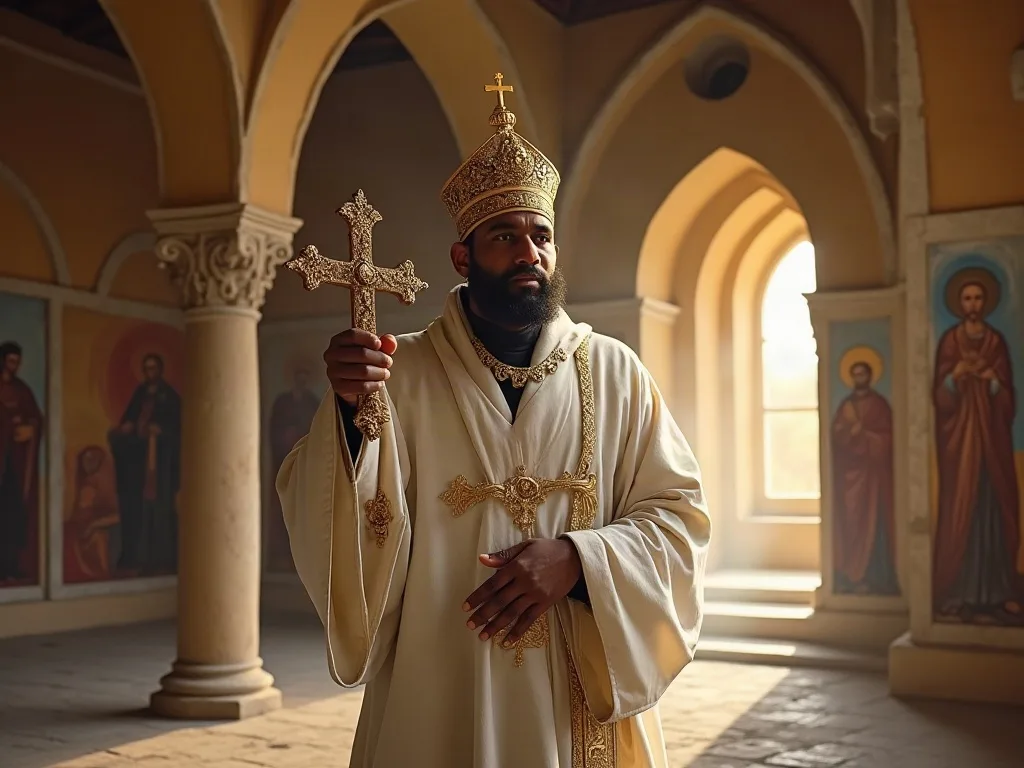
Later, when Muslim expansion isolated Ethiopia from the Mediterranean Christian world, this doctrinal difference did not disappear. Instead, it deepened. The Tewahedo Church continued to teach and develop Miaphysite theology through monastic scholarship. By the medieval period, Ethiopian theologians had produced sophisticated philosophical defenses of their position. The Nine Saints had given the church not just monasteries but a theological voice that would speak for centuries.
The Spiritual Geography They Created
One remarkable aspect of the Nine Saints' work was their attention to place. They did not build monasteries haphazardly but chose locations with spiritual and practical significance. Mountains held special meaning in Ethiopian Christianity, as in many traditions; they were seen as places where heaven and earth drew close. Debre-Damo, Debre-Libanos, Debre-Tsehay: the word debre means "mountain" in Ge'ez.
The monasteries were also positioned to serve existing communities. They were not entirely isolated retreats but placed in regions where people lived and could benefit from the monks' learning and spiritual guidance. A pilgrim in the highlands would encounter monastic communities along the routes connecting settlements.
This created a spiritual geography that persisted for centuries. Pilgrims traveled from monastery to monastery. Refugees fled to monasteries during violence. The sick came seeking healing. The penitent came seeking guidance. The network of communities, each with its own character but all sharing the monastic vision, became the living backbone of Ethiopian Christian practice.
The Tension Between Isolation and Influence
The Nine Saints embodied a tension that would persist in Ethiopian monasticism: the pull between isolation and engagement. Some of them, like Yemata, lived as extreme ascetics, barely eating, spending years in caves or confined spaces. Their spirituality was one of radical renunciation; they sought to escape the world entirely.
Others, like Ioasaph and Gabre-Menfes-Qeddus, remained active in the world's affairs. They organized communities, trained disciples, wrote rules, and sometimes even influenced political decisions. They saw monasticism not as flight from the world but as a different way of engaging it: through prayer, learning, and the quiet witness of community.
Both impulses were necessary. The radical ascetics kept alive a vision of total dedication to God. They reminded the church that not everything is negotiable. The institutional founders ensured that monasticism would endure, that it would shape the broader Christian tradition, that it would survive and grow even as the world around it changed.
This productive tension became a defining feature of Ethiopian monasticism. It never became purely contemplative or purely activist, but held both together in creative balance.
How the Nine Saints Shaped Christianity After Their Deaths
The deaths of the Nine Saints did not end their influence; it transformed it. They became saints, their tombs pilgrimage sites, their lives recorded in hagiographies that were read aloud in monasteries during meals and on their feast days. Their lives became templates for virtue, examples of how a Christian should live.
More practically, the monasteries they founded became centers of training for subsequent generations of monks. The rule they established became the foundation for later monastic reform. When Tekle Haymanot emerged in the 13th century as a great reformer and organizer of monasticism, he was working within the framework the Nine Saints had built. When Ewostatheos came a century later with his austere reform movement, he appealed back to the example of the Nine Saints as his inspiration.
The monasteries also became institutions of cultural preservation. When the Aksumite state collapsed and Ethiopia's political map fragmented, the monasteries kept alive the memory of Christian empire, the liturgical tradition, the theological learning, and the literary culture. Ethiopia's most ancient manuscripts, preserved in monastery libraries, are windows into the world the Nine Saints inhabited.
By the medieval period, the Nine Saints had become legendary. Their numbers became symbolically perfect: nine like the nine orders of angels. Their individual stories grew more miraculous in the retelling. But beneath the legendary accretion lay historical fact: nine monks (or perhaps a monastic movement crystallized around nine leaders) transformed the Christian landscape of Ethiopia in the late 5th and early 6th centuries.
Ethiopian Monasticism and the Broader Christian World
The Nine Saints were not isolated figures but part of a larger story of Christian monasticism's expansion in late antiquity. The desert fathers and mothers of Egypt and Syria, living in the 3rd through 5th centuries, had developed monasticism as a radical alternative Christian lifestyle. By the 5th century, this movement was spreading beyond the deserts into settled lands and foreign territories.
The Nine Saints represented the eastward extension of this movement. While Benedictine monasticism was developing in Italy and Gaul with its emphasis on community work and intellectual labor, the Nine Saints brought the more austere Eastern desert tradition to Ethiopia. The result was a monasticism that was more ascetic, more theologetically engaged with Miaphysite doctrine, and more integrated with local Ethiopian culture than Western monasticism would become.
Over time, Ethiopian monasticism developed its own distinctive practices. Monks wore white cotton garments rather than heavy woolen robes suited to colder climates. They practiced total fasting on certain days, abstaining not just from meat but from all food and water. The liturgy, chanted in Ge'ez, became increasingly elaborate and ornate, especially in cathedrals, though monasteries preserved older, simpler forms. These adaptations were not betrayals of the original vision but developments of it, responses to Ethiopia's climate, culture, and spiritual needs.
The Nine Saints had given Ethiopian Christianity not a fixed blueprint but a living tradition. It could grow, adapt, and change while remaining rooted in their foundational work: the commitment to ascetic discipline, to scriptural learning, to communal life, and to Miaphysite theology as the lens through which to understand Christ.
Frequently asked questions about the Nine Saints and Ethiopian monasticism?
Frequently asked questions
What is the exact date when the Nine Saints arrived in Ethiopia?
Most historical sources place their arrival between 480 and 500 CE, though the precise dates are debated. The earliest accounts of their work appear in hagiographies written 200-300 years after their deaths, which means exact chronology is difficult. What is clear is that they arrived in the late 5th century, during the reign of the Aksumite King Zara Yaeqob or his successors, and began establishing monasteries that would endure for centuries.
Did the Nine Saints come from Syria, Egypt, or another region?
The tradition consistently places them as coming from Syria, though some accounts mention possible Egyptian connections. They spoke Greek and possibly Syriac, languages of the Eastern Mediterranean. Their theological training and ascetic practices reflect the Syrian desert monastic tradition, particularly the theology that would later be codified as Miaphysitism. A few monks may have had different origins, but Syria appears to be the primary source.
How do we know about the Nine Saints if historical sources are sparse?
We know about them primarily through hagiographical texts written in Ge'ez, the ecclesiastical language of Ethiopia. These texts were preserved in monastic libraries and transmitted orally before being written down. The Ethiopian historian and theologian can trace hagiographies back through manuscript tradition to see how accounts changed and developed. Archaeology has also revealed architectural evidence from monasteries attributed to the Nine Saints, providing physical corroboration of their presence. Modern scholars compare these sources with contemporary accounts from other regions to test their reliability.
What made Ethiopian monasticism different from other Christian monastic traditions?
Ethiopian monasticism inherited the ascetic, theologically engaged character of Syrian monasticism but developed distinctive features. It embraced Miaphysite theology while most other Christian traditions moved toward Chalcedon. It integrated with Ethiopian culture more completely than Western monasticism did, adopting local languages, musical styles, and even accepting that some clergy could marry (deacons and priests, though bishops remained celibate). The monasteries also played a more central role in preserving Christian tradition during Ethiopia's political fragmentation, becoming nearly independent institutions rather than subordinate to secular power.
Are there pilgrimages to monasteries founded by the Nine Saints today?
Yes. Debre-Damo remains an active monastery and pilgrimage site, still accessible only by the ancient rope climb. Debre-Libanos, Debre-Tsehay, and other monasteries associated with the Nine Saints continue as religious communities and receive pilgrims. The Ethiopian Orthodox Church celebrates the feast day of the Nine Saints on the 27th of Hdar (a date in the Ethiopian calendar). Monks still live in these ancient communities, maintaining the liturgical tradition and the scriptural learning that the Nine Saints established.
The Nine Saints and the Unbroken Chain
What strikes most about the Nine Saints is not their individual biographies, vivid as those legends are, but their collective achievement. They arrived as foreigners in a land where Christianity was law but not yet life. They chose hardship: living in caves, translating scripture into an unfamiliar language, building communities from scratch in difficult terrain.
Yet they did not impose themselves. Instead, they embedded themselves so deeply in Ethiopian soil that within a few centuries, their monasteries seemed as Ethiopian as the mountains themselves. The monasteries they founded operated continuously for over 1,500 years. The theological tradition they taught still shapes the Tewahedo Church. The Ge'ez liturgy they helped establish remains in use today. Pilgrims still climb the rope to Debre-Damo.
The Nine Saints understood something profound: that Christianity would survive and flourish in Ethiopia not through the power of the state but through the quiet persistence of communities committed to prayer, learning, and spiritual discipline. They gave that understanding institutional form. They gave it geographical reality in the monasteries that still stand. They embedded it in the language and liturgy that still speak.
Their gift to Ethiopia was not a single doctrine or a political achievement but a way of being Christian that was rooted, adaptable, and enduring. It is a gift still active today, still drawing seekers to ancient monasteries, still shaping the spiritual practice of millions of Ethiopians who trace their faith back to the day nine foreign monks set foot on the Red Sea shore and began, quietly, to transform a nation.
Read the full book
Want the whole story?
The complete edition is an instant PDF download here, with a paperback on Amazon for selected titles.

Ethiopian
The Ethiopian Mythology Book: The Queen of Sheba, the Ark of the Covenant, and the Sacred Legends of Aksum
The Queen of Sheba, the Ark of the Covenant, and the Kingdom of Aksum
The sacred legends of Ethiopia, the one African kingdom never conquered: the Queen of Sheba and her journey to King Solomon, the Ark of the Covenant said to rest at Aksum, Waaqa the sky-god of the Oromo, and the saint-kings who carved the churches of Lalibela. Drawn from the Kebra Nagast and the living oral tradition.
More from Ethiopian
All articles
Ethiopian
The Kebra Nagast: Ethiopia's Sacred National Epic
The Kebra Nagast, Ethiopia's greatest literary and spiritual treasure, tells how the Queen of Sheba bore Solomon's son and founded a dynasty that would claim descent from Israel's king. Discover the epic that shaped an empire's identity and survives as living scripture today.
Ethiopian
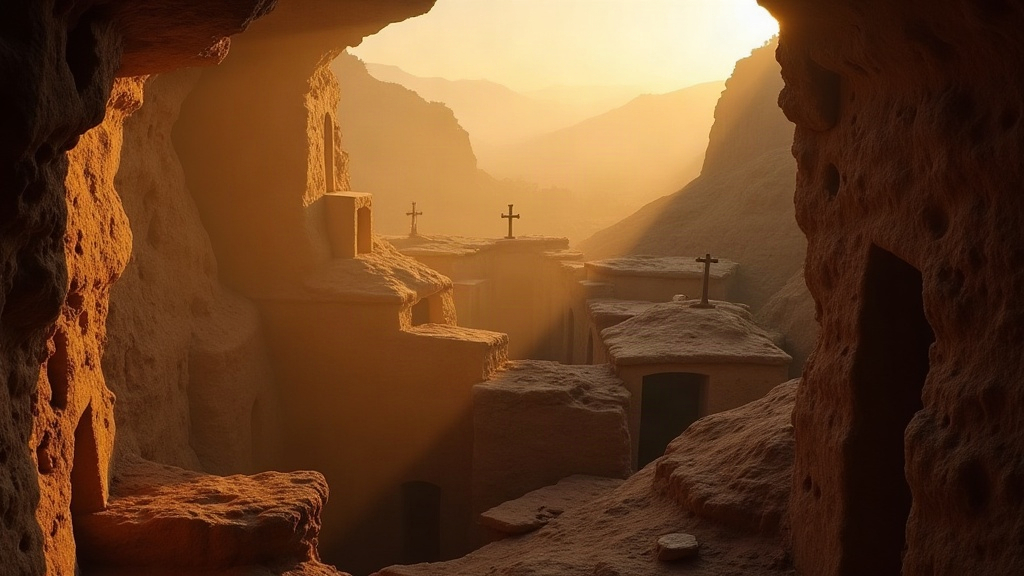
Lalibela: The Rock-Hewn Churches and King's Vision
Discover how King Lalibela carved twelve churches from solid rock in Ethiopia's highlands, creating a sacred landscape that blends ancient Christian devotion with legendary ambition. A journey to Jerusalem without leaving home.

Ethiopian
Atete: Oromo Goddess of Fertility and Femininity
Atete embodies the generative power at the heart of Oromo spirituality. This goddess shapes the cycles of birth, growth, and renewal across the Ethiopian highlands and pastoralist cultures of the Horn of Africa.
Ethiopian
Timkat: The Epiphany Festival and Ark Processions
Timkat celebrates Christ's baptism through Ethiopia's most sacred ritual: the parading of the Ark of the Covenant. This ancient festival weaves Old Testament reverence, water blessings, and centuries of royal ceremony into a living theology that still shapes Ethiopian Christianity today.